St. Bartholomew the Apostle
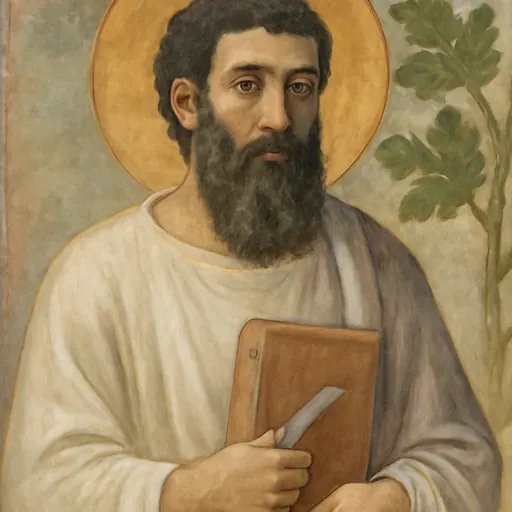
St. Bartholomew was one of the Twelve Apostles. He is usually identified with Nathanael, the man Philip brought to Jesus and to whom Jesus said, "Behold an Israelite indeed, in whom is no guile!" Tradition says he preached in India and Armenia and was martyred in Armenia, flayed and beheaded. His feast day is August 24, and he is a patron saint of Armenia and of tanners and leatherworkers.
Who was St. Bartholomew?
St. Bartholomew was one of the Twelve Apostles of Jesus. The Gospels of Matthew, Mark and Luke and the Acts of the Apostles each name him in their lists of the Twelve, and that is all the New Testament says about him under that name. His name is a family name, Bar-Talmai in Aramaic, "son of Talmai."
Since the Middle Ages, the Church has generally identified him with Nathanael, the man whom Philip brought to Jesus in the first chapter of John's Gospel. If that is right, Bartholomew came from Cana in Galilee and was among the first disciples Jesus called. Everything after the Gospels comes from tradition: a mission to India, preaching in Armenia, and death there as a martyr. Pope Benedict XVI, speaking about him in 2006, admitted, "We have no special information about Bartholomew."
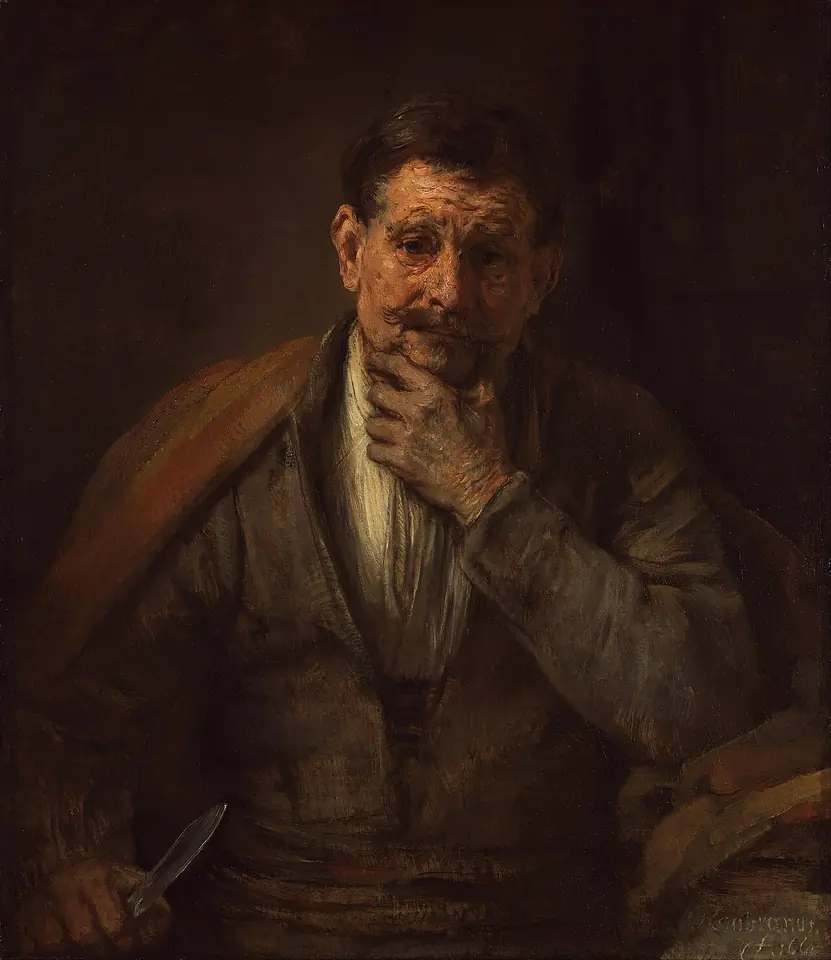

Bartholomew and Nathanael
The Catholic Encyclopedia lays out the reasons for treating the two names as one man. Matthew and Luke list Bartholomew right after Philip, and Mark puts them side by side; John, who never uses the name Bartholomew, tells how Philip brought his friend Nathanael to Jesus. John calls Jesus' first followers "disciples," and Nathanael appears again among them on the shore of the Sea of Tiberias after the Resurrection (John 21:2). Nathanael was from Galilee, like most of the Twelve. The Encyclopedia calls this "chain of circumstantial evidence" "ingenious and pretty strong," while noting that Nathanael could still have been a different disciple. The identification is traditional, not something the Gospels state.
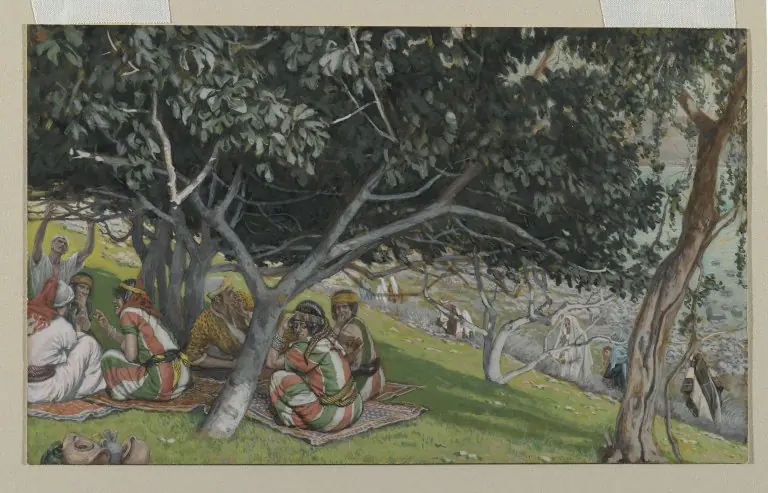
The call under the fig tree
John's Gospel tells the story this way (John 1:45–51, King James Version):
Philip findeth Nathanael, and saith unto him, We have found him, of whom Moses in the law, and the prophets, did write, Jesus of Nazareth, the son of Joseph.
And Nathanael said unto him, Can there any good thing come out of Nazareth? Philip saith unto him, Come and see.
Jesus saw Nathanael coming to him, and saith of him, Behold an Israelite indeed, in whom is no guile!
Nathanael saith unto him, Whence knowest thou me? Jesus answered and said unto him, Before that Philip called thee, when thou wast under the fig tree, I saw thee.
Nathanael answered and saith unto him, Rabbi, thou art the Son of God; thou art the King of Israel.
Jesus answered and said unto him, Because I said unto thee, I saw thee under the fig tree, believest thou? thou shalt see greater things than these.
And he saith unto him, Verily, verily, I say unto you, Hereafter ye shall see heaven open, and the angels of God ascending and descending upon the Son of man.
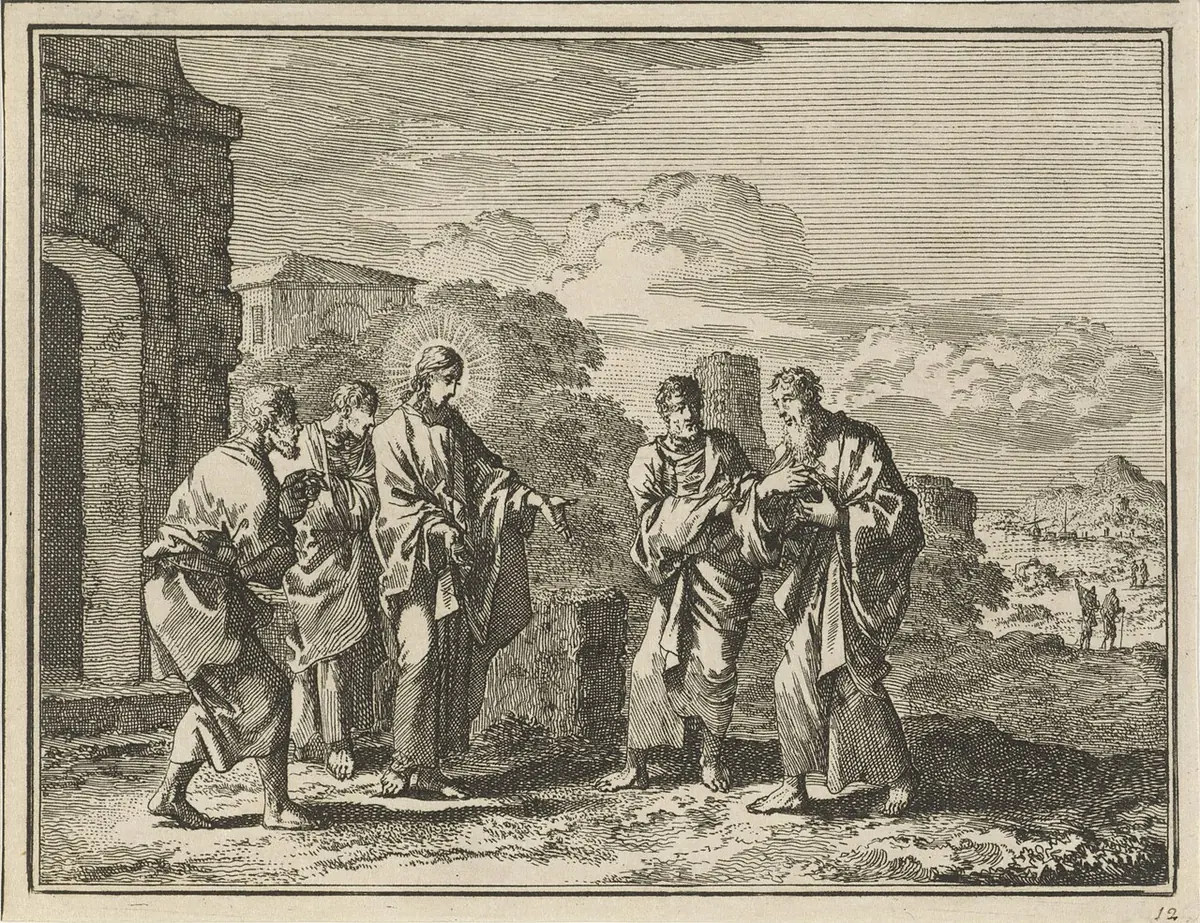

The scene moves from skepticism to faith in a few lines. Benedict XVI pointed out that Nathanael's doubt about Nazareth reflected what people expected of the Messiah, and that Philip's answer, "Come and see," is still the way faith begins: through meeting Jesus in person. No one knows what happened under the fig tree. Benedict suggested only that it "had to do with a decisive moment in Nathanael's life."

Bartholomew's mission: India and Armenia
The earliest report of Bartholomew's later life comes from Eusebius, writing around 325. He tells how the teacher Pantaenus traveled to "India" in the late 2nd century and found Christians who already had a Gospel:
For Bartholomew, one of the apostles, had preached to them, and left with them the writing of Matthew in the Hebrew language, which they had preserved till that time.
The Catholic Encyclopedia cautions that ancient writers used "India" for a vast area, possibly including southern Arabia. Other traditions send Bartholomew to Mesopotamia, Persia, Egypt, Phrygia and the shores of the Black Sea. The Orthodox life has him preaching with the apostle Philip at Hierapolis in Asia Minor before going on to India and Armenia.
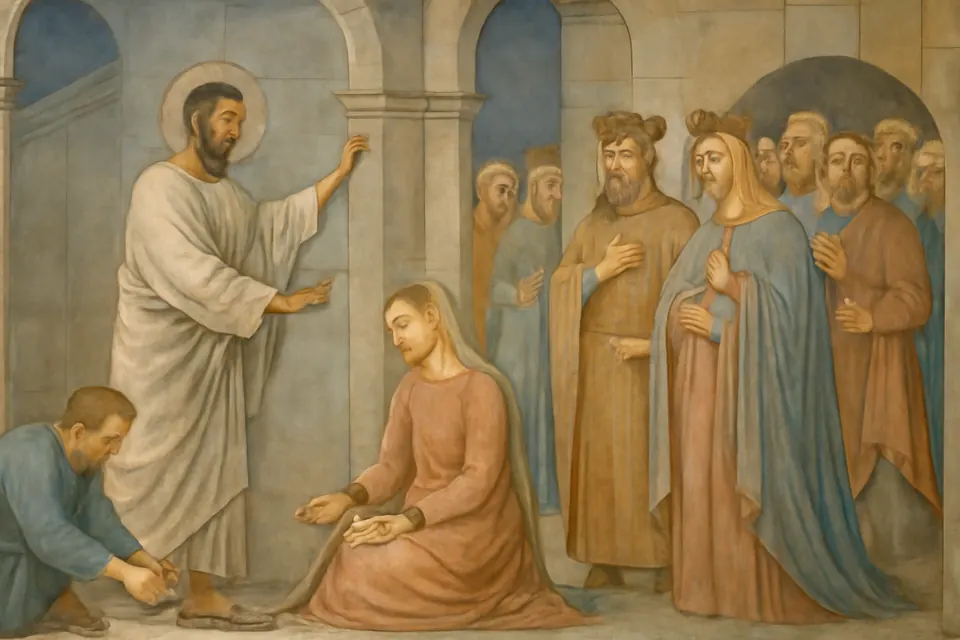
The strongest tradition connects him with Armenia. The Armenian Apostolic Church honors Bartholomew and St. Jude Thaddeus as the first apostles of the Armenian people. In the Golden Legend and in the Orthodox life, Bartholomew frees the daughter of King Polymius from a demon, the king and his household are baptized, and the pagan priests complain to the king's brother, Astyages.
The martyrdom
The traditions agree that Bartholomew died a martyr in Armenia, at a place called Albanopolis, on the orders of Astyages. They disagree about how. The Catholic Encyclopedia reports that some say he was beheaded, others that he was flayed alive and crucified head downward. The Golden Legend (about 1260) lists the different accounts and suggests that he was crucified, taken down, flayed and finally beheaded. The Orthodox life places his death at Albanus, which it identifies with present-day Baku.
The flaying is the detail that shaped his image in art, and medieval painters often showed it in full. This page does not. The account is traditional, recorded in texts written centuries after his death.

The miracles of St. Bartholomew
No miracle of Bartholomew has been investigated under modern procedures. Using this encyclopedia's labels:
- Silencing the idol Astaroth in India (traditional): the Golden Legend says the demon in a temple idol could no longer give answers once the apostle arrived.
- Healing the king's daughter in Armenia (traditional): from the Golden Legend and the Orthodox life.
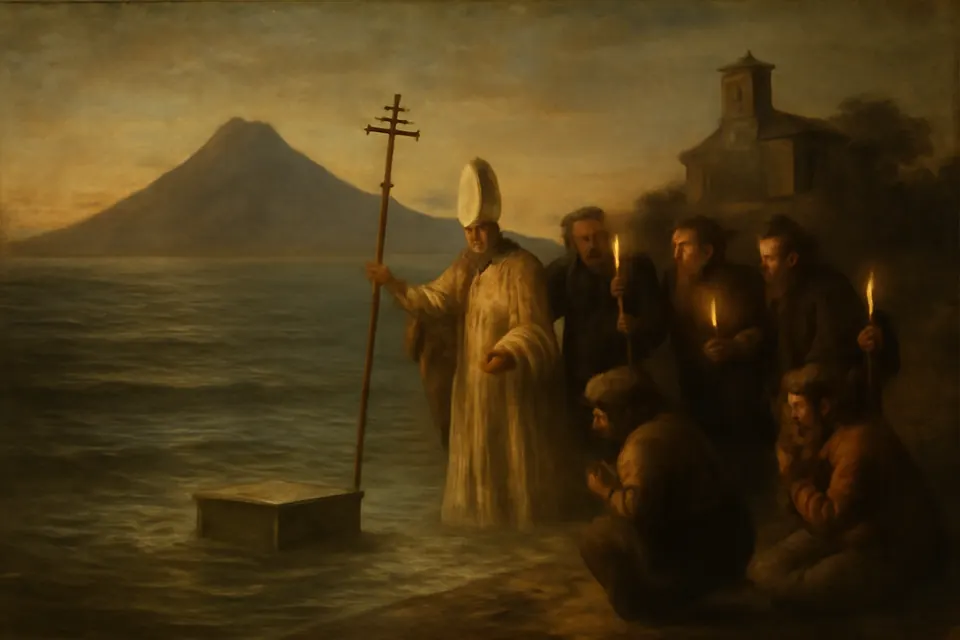
- The relics crossing the sea to Lipari (traditional): the Orthodox Church tells how his lead coffin, thrown into the sea, floated to the island of Lipari, north of Sicily.
- Healings at his relics (reported): the Orthodox account says myrrh flowed from his relics at Lipari and healed the sick.
Why St. Bartholomew is a patron saint
Bartholomew is a patron of Armenia because of the tradition that he preached and died there. The story of his flaying made him the patron of trades that work with skins: tanners, leatherworkers, bookbinders (who bound books in leather) and butchers. Plasterers claim him too. Find more on our patron saints page.
Symbols of St. Bartholomew in art
You can recognize Bartholomew by:
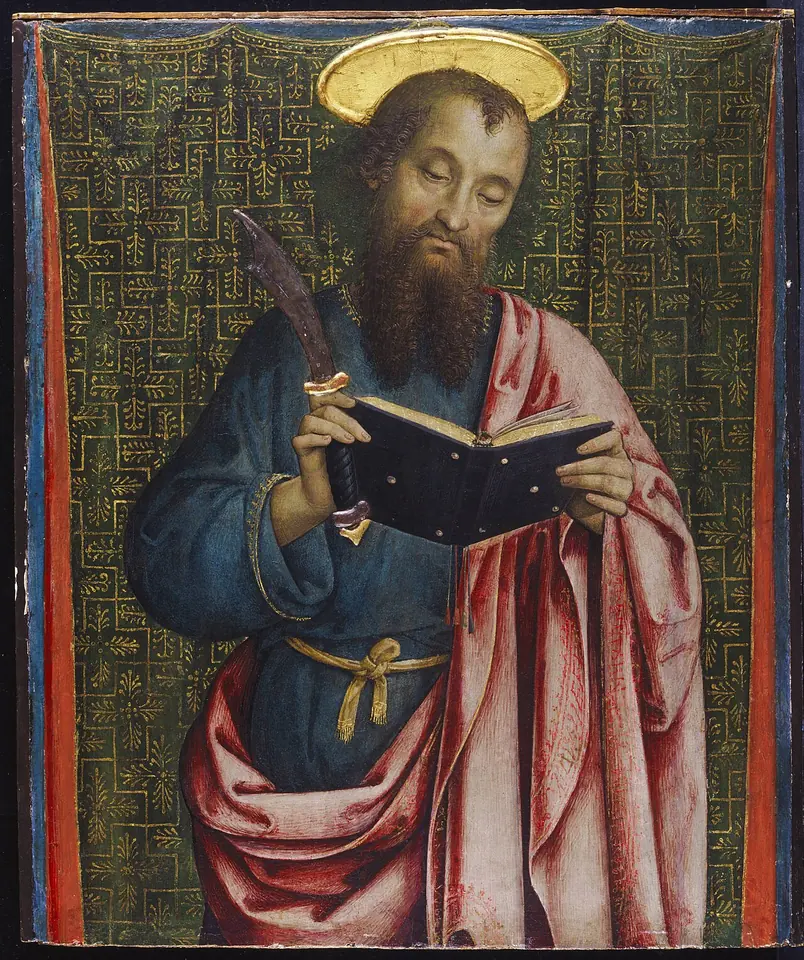
- A flaying knife: a short, often curved blade. Rembrandt's and Pinturicchio's portraits both show it.
- A book or scroll: the Gospel he preached. Western painters give him a book; Orthodox icons normally give him a scroll.
- His own skin, draped over his arm: the most striking attribute.
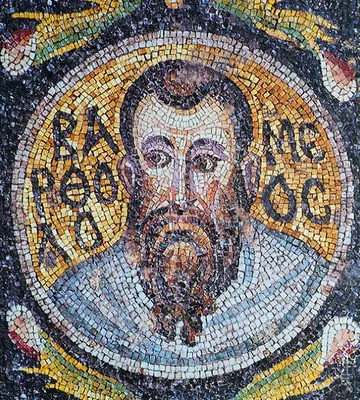
- Dark curly hair and a beard: the Golden Legend has a demon describe him: "He hath his hairs black and crisp." Western images after the 13th century follow the curly hair.

The most famous image of him is in Michelangelo's Last Judgment in the Sistine Chapel (1536–1541). Bartholomew sits on a cloud near Christ, a powerful bearded figure holding a knife in one hand and, in the other, a limp human skin. The face on that skin is a distorted portrait of Michelangelo himself. Benedict XVI mentioned it in his 2006 audience: Michelangelo painted Bartholomew "holding his own skin in his left hand, on which the artist left his self-portrait."
Eastern icons are calmer. They show a young or middle-aged apostle with curly dark hair, holding a scroll, as in the 16th-century fresco at Stavronikita on Mount Athos.


Relics of St. Bartholomew
The Orthodox account follows his relics from Armenia to Mesopotamia and then, after a Persian attack, to the sea, which carried them to Lipari. Lipari was raided in the 9th century, and the relics were taken to Benevento in southern Italy in 838.
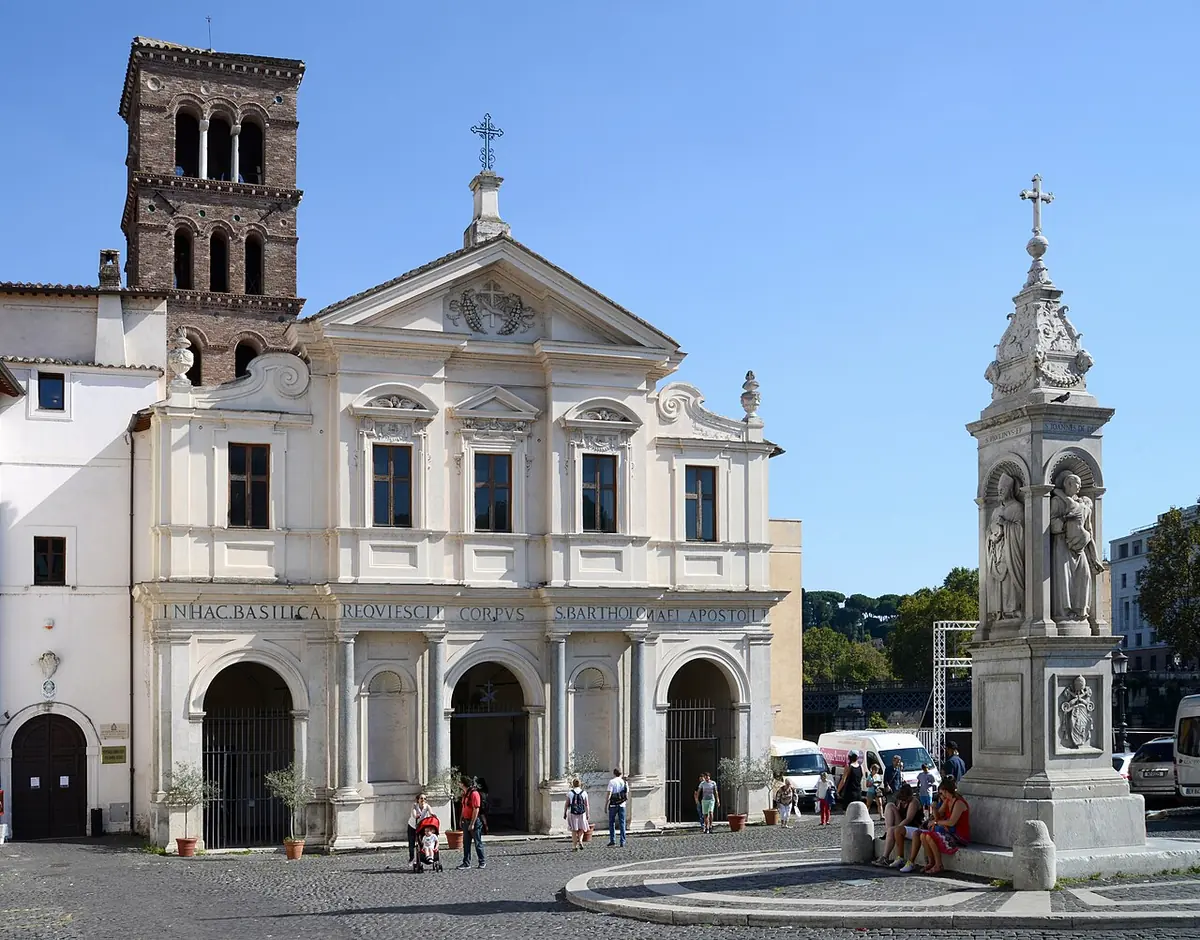
From Benevento, part or all of the relics went to Rome. Benedict XVI said the relics venerated on Tiber Island "are said to have been brought by the German Emperor Otto III in the year 983." The Basilica of San Bartolomeo all'Isola, founded about the year 1000, keeps them under its high altar. Pope John Paul II made the basilica a memorial to the Christian martyrs of the 20th century, and in 2023 the Community of Sant'Egidio opened an exhibition in its crypt with belongings of modern martyrs, among them a prayer book of St. Maximilian Kolbe.

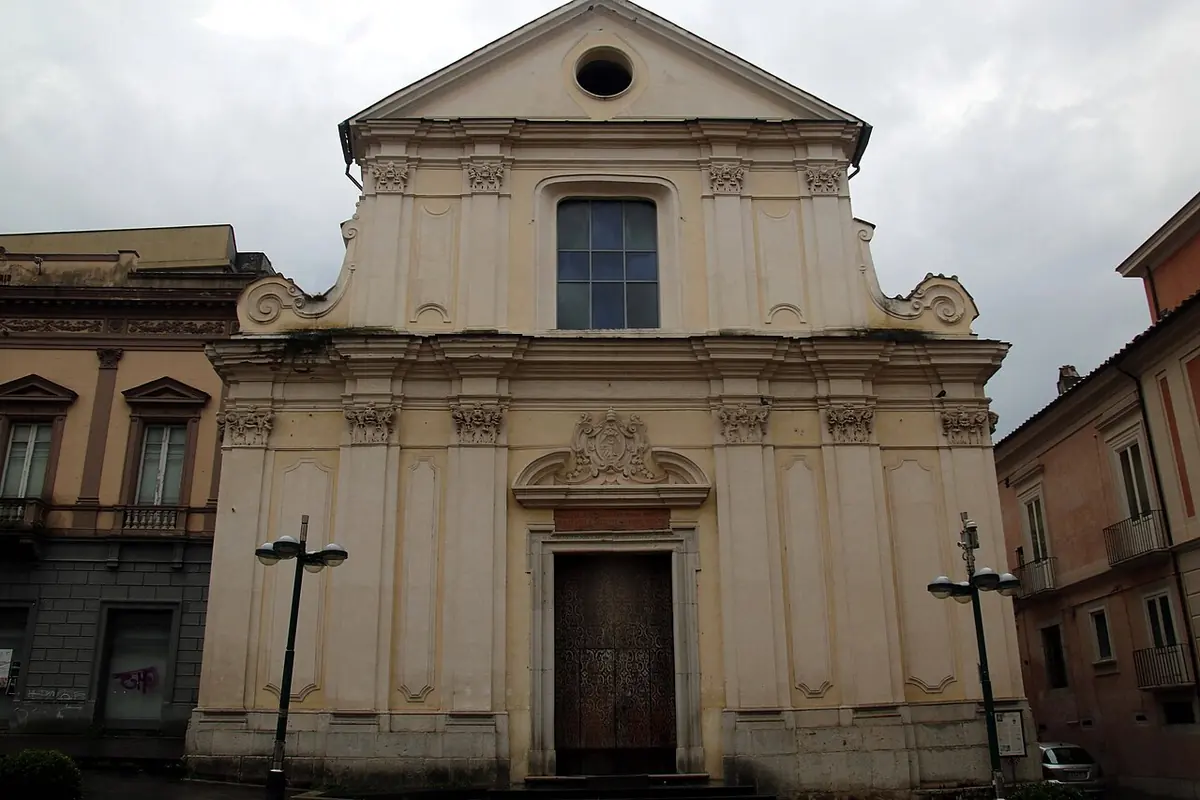
Benevento never gave up its own claim. The Golden Legend already noted the dispute in the 13th century: "it is said now that they be at Rome, howbeit they of Benevento say they have the body." The Basilica of San Bartolomeo in Benevento still honors the apostle as the keeper of his body.

Feast day and the 1572 massacre
Bartholomew's feast is August 24 in the Catholic Church and in the Anglican calendars. The Orthodox Church keeps June 11 for him and St. Barnabas, and August 25 for the return of his relics. See more saints of late August on our feast days page.
The date is also remembered for the St. Bartholomew's Day Massacre. On August 24, 1572, Catholic mobs in Paris began killing Protestants, and the violence spread through France in the following weeks. The Catholic Encyclopedia describes it as a massacre "of which Protestants were the victims." It took its name only from the calendar.
Prayer to St. Bartholomew
The best-known prayer for his feast in English is the collect from the Book of Common Prayer (1662), still used in the Church of England:
O Almighty and everlasting God, who didst give to thine Apostle Bartholomew grace truly to believe and to preach thy Word: Grant, we beseech thee, unto thy Church, to love that Word which he believed, and both to preach and receive the same; through Jesus Christ our Lord. Amen.
The Roman Missal has its own collect for the Mass of August 24. Catholics and Orthodox Christians ask him to pray for them, and many keep the Gospel scene of his call, "Come and see," as their reading for the day.
Frequently asked questions
Is St. Bartholomew the same person as Nathanael?
Probably, though it cannot be proven. The other Gospels list "Bartholomew" next to Philip but never mention Nathanael, while John tells of Philip bringing Nathanael to Jesus but never mentions Bartholomew. "Bartholomew" is a family name meaning "son of Talmai," so Nathanael could have been his personal name. Catholic and Orthodox tradition treat them as one man, and Pope Benedict XVI spoke of him as "Bartholomew-Nathanael."
How did St. Bartholomew die?
The traditions disagree. The Catholic Encyclopedia reports that some accounts say he was beheaded, and others that he was flayed alive and crucified head downward at Albanopolis in Armenia, on the order of King Astyages. The Golden Legend tries to reconcile them, saying he may have been crucified, then flayed, then beheaded.
When is St. Bartholomew's feast day?
August 24 in the Catholic Church and in the Anglican Communion. The Orthodox Church honors him on June 11, together with St. Barnabas, and keeps the return of his relics on August 25.
What is St. Bartholomew the patron saint of?
Armenia, where tradition says he preached and died, and trades that work with skins and hides because of the story of his flaying, such as tanners, leatherworkers, bookbinders and butchers. Plasterers also claim him.
What was the St. Bartholomew's Day Massacre?
The killing of French Protestants (Huguenots) that began in Paris on the night of August 23–24, 1572, the eve and feast of St. Bartholomew, and spread to the provinces over the following weeks. The massacre is named for the date; it has nothing to do with the apostle himself.
Sources
- Catholic Encyclopedia (1907): St. Bartholomew
- Benedict XVI, General Audience of 4 October 2006: Bartholomew
- John 1:45-51 (King James Version), Bible Gateway
- Eusebius, Church History, Book V, chapter 10 (New Advent)
- Jacobus de Voragine, The Golden Legend (Caxton translation): Life of St. Bartholomew
- Christian Iconography: St. Bartholomew
- Orthodox Church in America: Apostle Bartholomew of the Twelve
- Orthodox Church in America: Return of the Relics of the Apostle Bartholomew from Anastasiopolis to Lipari
- Community of Sant'Egidio: New Martyrs' Memorial inaugurated in the crypt of St Bartholomew's Basilica
- Catholic Encyclopedia (1912): Saint Bartholomew's Day Massacre
- The Church of England: Book of Common Prayer, Collect for Saint Bartholomew the Apostle
- Roman Martyrology, August 24