St. Paisios of Mount Athos (Paisios the Athonite)
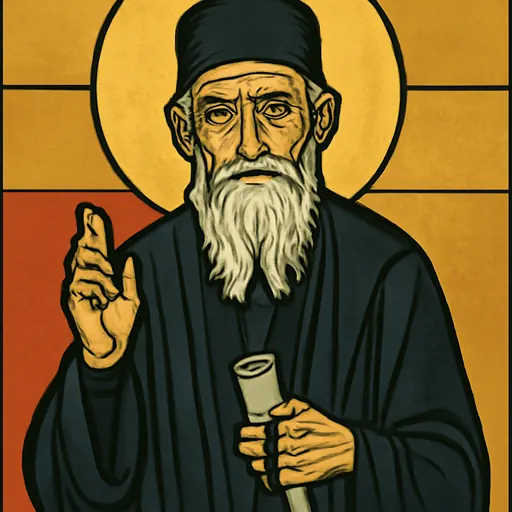
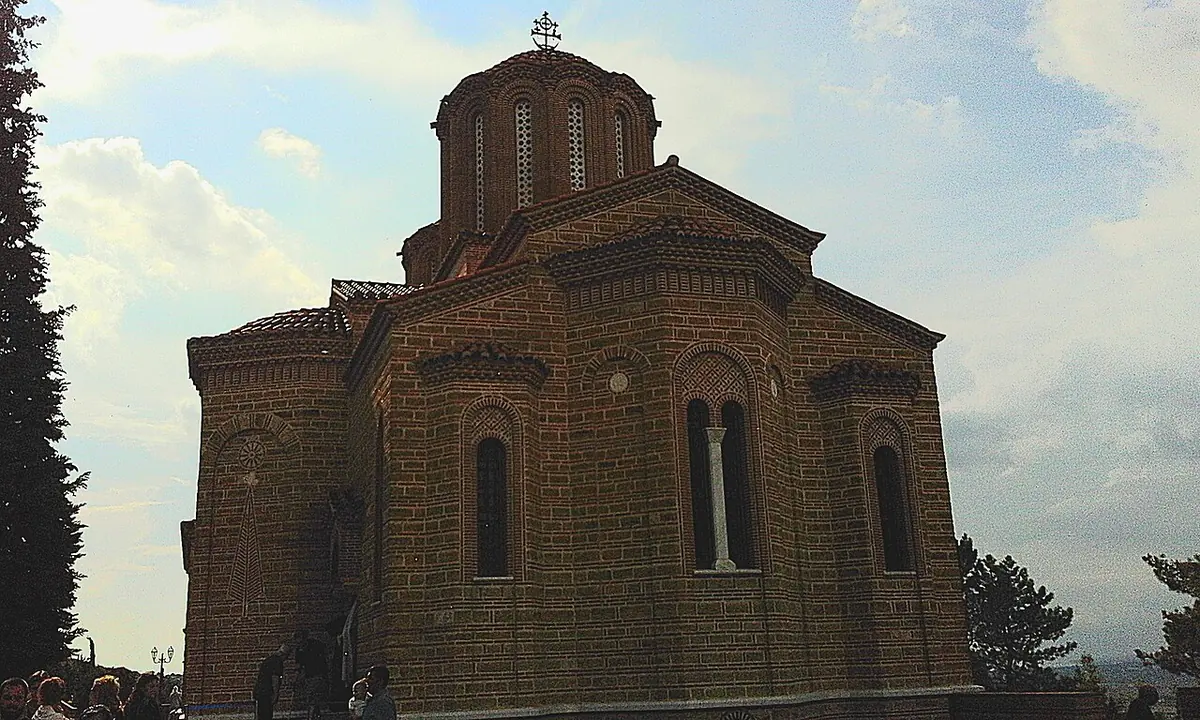
St. Paisios of Mount Athos (1924–1994) was a Greek Orthodox monk who lived for most of his life as a hermit on Mount Athos and became one of the most visited spiritual fathers of modern Greece. The Ecumenical Patriarchate of Constantinople canonized him in 2015. His feast day is July 12, and his tomb is at the Monastery of St. John the Theologian in Souroti, near Thessaloniki.
Who was St. Paisios?
St. Paisios of Mount Athos, also called Paisios the Athonite, was a Greek Orthodox monk who spent most of his adult life as a hermit on Mount Athos, the monastic peninsula in northern Greece. He had no theological degree and never became a priest or an abbot. Yet by the time he died in 1994, thousands of people, from farmers to government ministers, had climbed the path to his hut for advice, and his talks, collected by the nuns of Souroti, are among the most widely read spiritual books in modern Greece.
The Orthodox Church honors him as a hosios, a holy monk, and as an elder (geron), a spiritual father whose counsel is sought by others. The Ecumenical Patriarchate of Constantinople canonized him on January 13, 2015, about twenty years after his death.
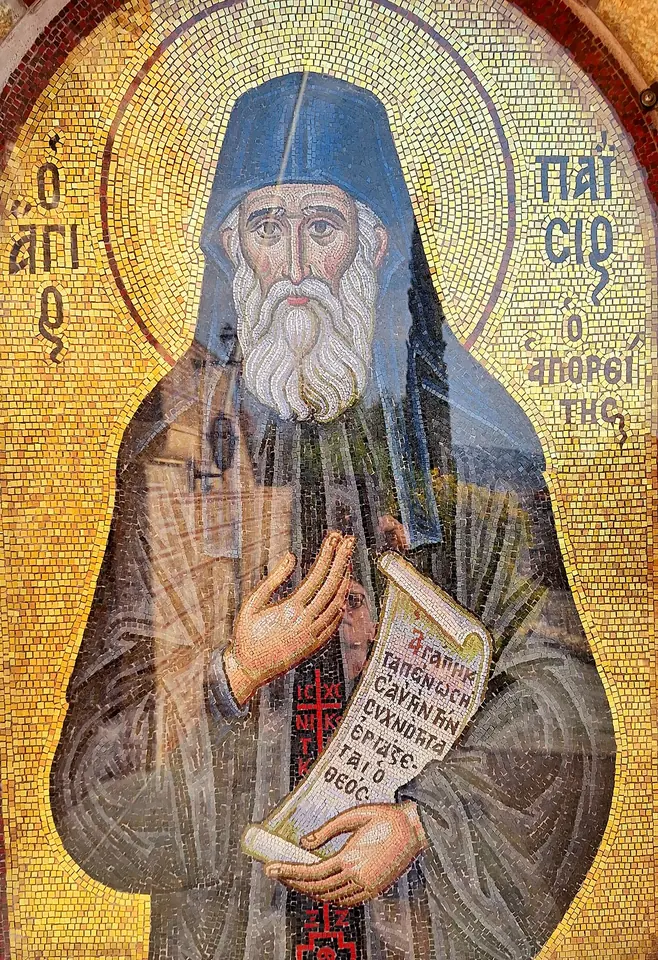

Because he lived so recently, the facts of his life are well documented, mostly through the people who knew him and through the life published by the Souroti monastery. The account below follows the life published by the Orthodox Church in America (OCA). The visions and wonders in it are told as the Church tells them; this entry labels them reported.
The life of St. Paisios
A refugee child from Cappadocia
He was born Arsenios Eznepidis on July 25, 1924, in Farasa, a Greek village in Cappadocia, in present-day Turkey. His parents were Prodromos and Evlampia. Soon afterward the family was uprooted in the exchange of populations between Greece and Turkey. Before they left, the village priest, St. Arsenios of Cappadocia, baptized the baby and gave him his own name.
The family settled in Konitsa, in the mountains of Epirus in northwestern Greece. The OCA life says the boy announced at five that he would become a monk, and that he went into the woods to pray. Instead of continuing at school he trained as a carpenter, a craft he used for the rest of his life.
Soldier and carpenter
From 1945 to 1949, during the Greek Civil War, he served in the army as a radio operator. The OCA life says he often volunteered for dangerous assignments in place of men with families. After his discharge he went back to carpentry to help support his family until his sisters were provided for.
Monk on the Holy Mountain
He reached Mount Athos in 1950 and joined the Monastery of Esphigmenou, where on March 27, 1954, he was tonsured with the name Averkios. He moved to the Monastery of Philotheou, and on March 12, 1956, he received the small schema and the name Paisios.
From 1958 to 1962 he lived near Konitsa at the ruined Monastery of the Mother of God at Stomio, which he helped restore.
Sinai
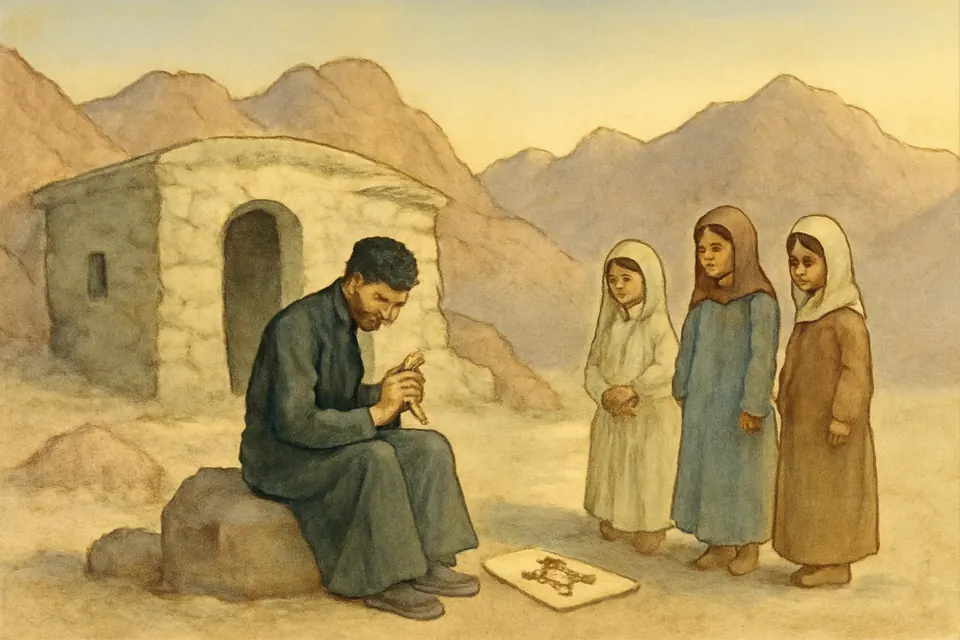
In 1962 he went to Mount Sinai and lived alone in the cell of Sts. Galaktion and Episteme, above St. Catherine's Monastery. He carved small wooden crosses to sell to pilgrims and spent the money on the Bedouin families and children around him.
Illness, Katounakia and Stavronikita
He came back to Athos in 1964 and lived at the Skete of Iviron. In 1966 he had part of a lung removed in a Thessaloniki hospital. Young women gave blood for him there, and he later helped some of them found a women's monastery at Souroti. Sources disagree on when he received the great schema, the highest monastic rank: the OCA life gives August 12, 1968, at the Holy Cross hermitage of Stavronikita, from his elder Tikhon.
For a time illness kept him off the Mountain, and he lived in northern Greece. The OCA life says he took the relics of St. Arsenios of Cappadocia with him; part of them is now kept in the main church at Souroti.


Panagouda
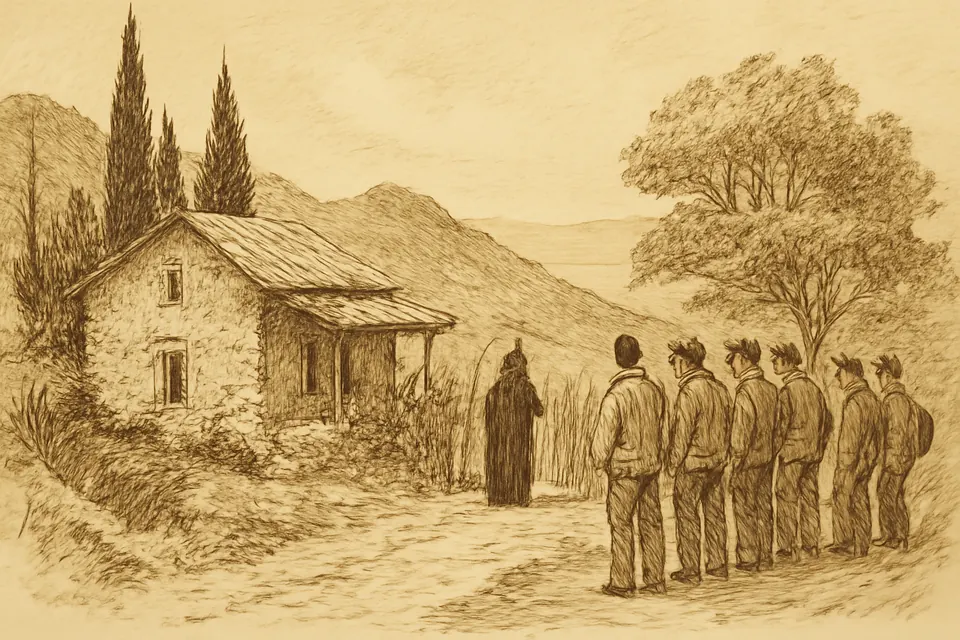
In 1979 he settled at Panagouda, a hermitage belonging to the Monastery of Koutloumousiou, near Karyes, the small capital of Mount Athos. This is the Paisios most people remember. Visitors came all day. OrthodoxWiki says he received them by day and kept vigil at night, sleeping two or three hours. He handed out small paper icons as blessings, along with his advice.
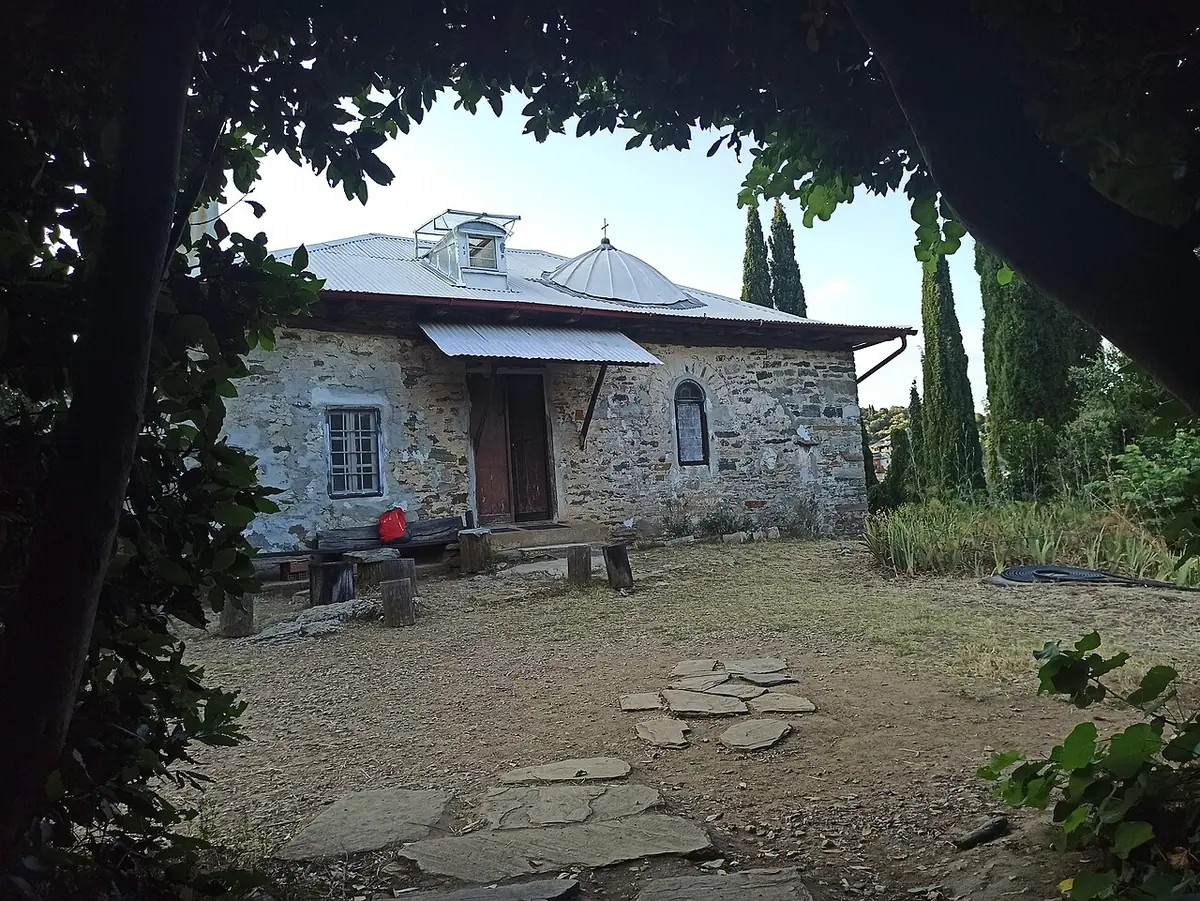

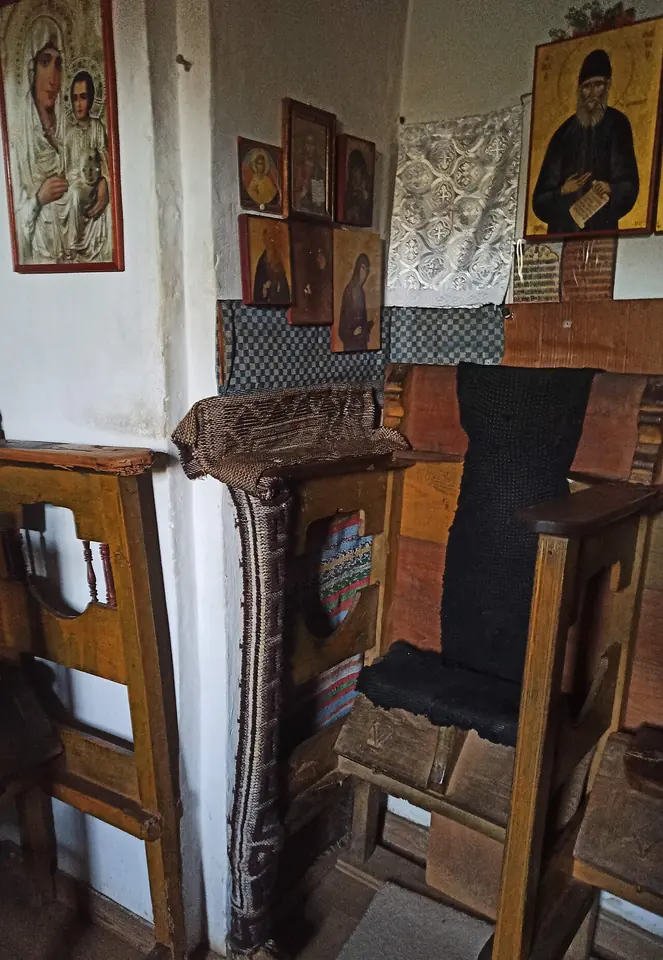
Panagouda is a short walk below Karyes, through chestnut woods. Paisios kept the place poor and simple: a small house, a chapel and a garden. Visitors brought him questions about work, marriage, illness and faith. He prayed in the little chapel, where his stall is still kept.

Last illness and death
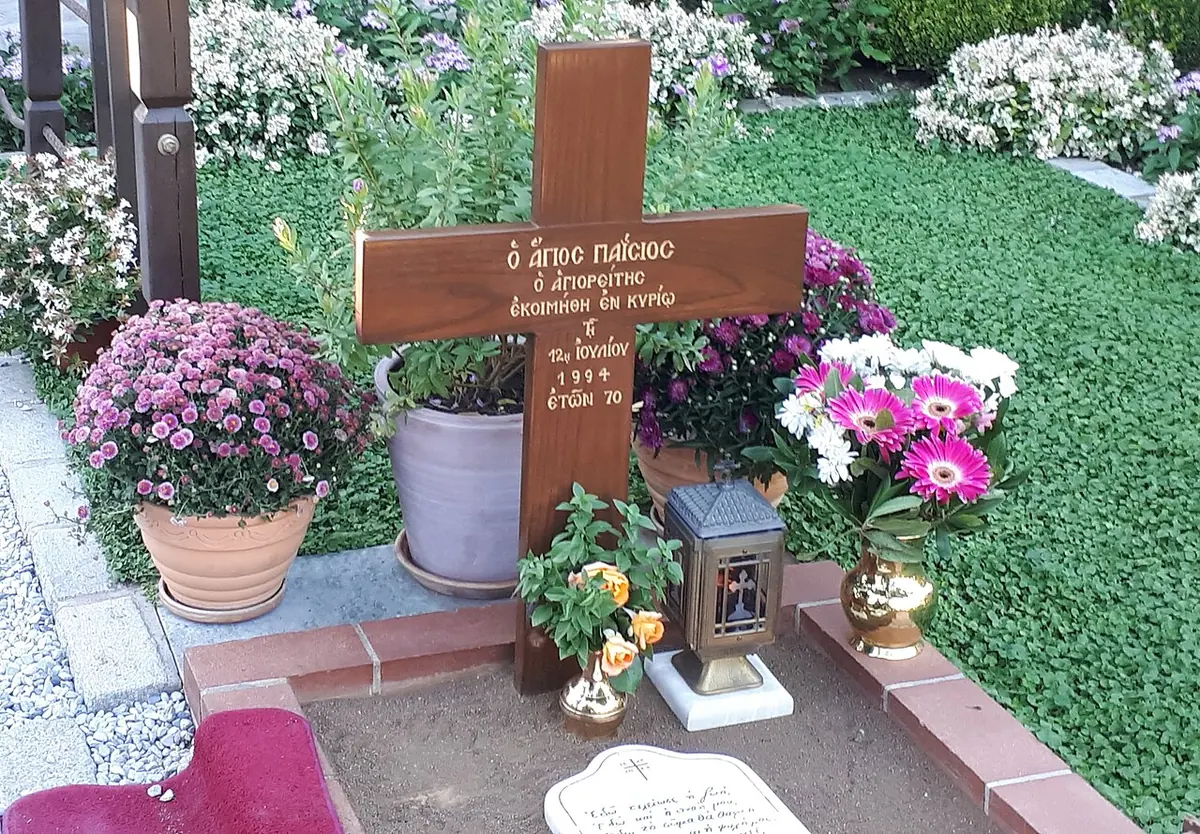
In his final years he suffered from a hernia and colitis, and then cancer. He left Athos for the last time in late 1993, and doctors in Thessaloniki found a tumor in his large intestine. He had surgery in February 1994, but the cancer spread. The OCA life says he refused painkillers in his last days. He received Communion on July 11, 1994, and died the next day at the Souroti monastery. He was buried there, as he had asked, beside St. Arsenios of Cappadocia.

The counsels of St. Paisios
Paisios wrote little himself: letters, a short life of St. Arsenios, and a book about the monks he had known on Athos. Most of his teaching survives as talks recorded by the nuns of Souroti and published by the monastery as Spiritual Counsels, beginning with With Pain and Love for Contemporary Man (English edition 2006).
A few themes run through these talks, as the title of the first volume suggests. He asks people to pray for others with pain and love, as if their troubles were their own. He warns against the noise and worry of modern life and against judging others. He speaks often of the "good thought" (kalos logismos), the habit of interpreting other people's actions charitably. This entry does not quote him from secondary collections, because many sayings attributed to him online cannot be traced to the published editions.
The same caution applies to the "prophecies" about wars, Turkey and Constantinople that circulate under his name. Many appeared in magazines and books only after his death, and people who knew him have said that some were never his words. The monastery's books are the reliable source for his teaching.
Miracles of St. Paisios
The Orthodox Church does not have a formal process, like the Catholic one, for examining and approving individual miracles before a canonization. Recognition comes from long veneration and the synod's decision. By the labels this encyclopedia uses:
- Visions and wonders during his life, including the Uncreated Light at Katounakia, which the OCA life describes: reported, mostly by Paisios himself or by those close to him.
- His insight into visitors' lives, of which many pilgrims tell: reported.
- Healings and answered prayers at his tomb since 1994: reported. Pilgrims leave notes and letters there, and the monastery receives many accounts.
Symbols of St. Paisios in art
Icons of Paisios were painted soon after his canonization, and since photographs of him exist, painters keep close to his real appearance:
- A thin elderly monk with a long white beard.
- A black knitted cap (skoufos), the everyday cap of Athonite monks, rather than the tall hat of a priest.
- A plain black cassock, often with the prayer rope in his hand.
- An open scroll with a short saying from his teaching, as in the Souroti mosaic.
- A raised right hand in blessing.
To tell him from other modern Greek saints, look for the soft cap and the absence of bishop's or priest's vestments. St. Nektarios, for example, wears a bishop's robes.
Feast day, tomb and the hermitage
His feast is July 12. On that day and the night before, pilgrims fill the Monastery of St. John the Theologian at Souroti, about 13 miles (20 km) southeast of Thessaloniki. His grave is a plain one in the courtyard, with a wooden cross and an oil lamp.

Only men may visit Mount Athos, with a permit, but many make the walk from Karyes to Panagouda, which is still kept as a place of prayer.
He has no traditional patronages; Orthodox Christians ask his prayers for illness, family troubles and every kind of worry. See other saints on our patron saints and feast days pages.
Hymns to St. Paisios
Orthodox Christians ask for his intercession with the hymns of his feast. The troparion, in the translation published by the Orthodox Church in America, reads:
O you faithful, let us honor Paϊsios, the offspring of Phárasa, / the glory of Athos, emulator of the Holy Ascetics of old, and equal to them in honor; / O grace-filled vessel, who hastens speedily to the pious faithful who cry out: / "Glory to Him Who strengthened you. / Glory to Him Who crowned you. / Glory to Him Who, through you, works healings for all."
Frequently asked questions
When is the feast of St. Paisios?
July 12, the day he died in 1994. Churches that follow the Old (Julian) Calendar, such as the Russian Orthodox Church, keep the same day, which falls on June 29 by their reckoning. The largest gathering is at his tomb in Souroti.
When was Elder Paisios canonized?
The Holy Synod of the Ecumenical Patriarchate added him to the list of saints on January 13, 2015. The Russian Orthodox Church added his name to its own calendar later the same year.
Where is St. Paisios buried?
At the Monastery of St. John the Theologian in Souroti, about 13 miles (20 km) southeast of Thessaloniki, Greece. He chose to be buried there, beside the relics of St. Arsenios of Cappadocia, the priest who had baptized him.
What books contain the teachings of St. Paisios?
The Souroti monastery publishes his talks as Spiritual Counsels in several volumes, including With Pain and Love for Contemporary Man, Spiritual Awakening, Spiritual Struggle, Family Life and Passions and Virtues, along with his Epistles and his own book on St. Arsenios of Cappadocia. English editions are available.
Are the prophecies of Elder Paisios real?
Many sayings about wars and world events circulate under his name, most of them published only after his death. People who knew him have said that some were never spoken by him, and the books published by his monastery are the safest guide to what he actually taught.
Sources
- Orthodox Church in America: Venerable Paisios of the Holy Mountain
- Orthodox Church in America: Venerable Paisios of the Holy Mountain, Troparion and Kontakion
- OrthodoxWiki: Paisios of Mount Athos
- Pravmir: The Russian Church adds the name of the Venerable Paisios of Mount Athos to its Menology (2015)
- Holy Cross Bookstore: Spiritual Counsels, Volume I: With Pain and Love for Contemporary Man
- Mystagogy Resource Center: Caution regarding the prophecies of Elder Paisios (John Sanidopoulos, 2012)