St. Nektarios of Aegina
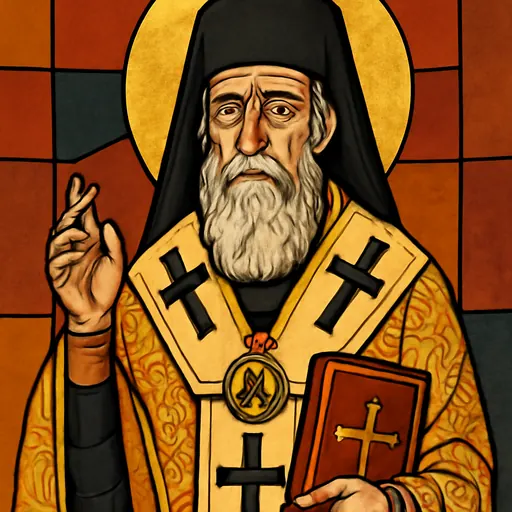
St. Nektarios of Aegina (also spelled Nectarios) was a Greek Orthodox bishop, teacher and monk, Metropolitan of Pentapolis, who was removed from his post in Egypt on false rumors, spent his last years in a convent he founded on the island of Aegina, and died in 1920. Orthodox Christians call him a wonderworker and pray to him especially for the sick and for people with cancer. His feast day is November 9.
Who was St. Nektarios?
St. Nektarios of Aegina is one of the most loved saints of the modern Orthodox Church. He was a poor boy from Thrace who became a monk, a bishop in Egypt, the head of a seminary in Athens and finally the spiritual father of a small community of nuns on the Greek island of Aegina. He died in a charity hospital in Athens in 1920. The Orthodox Church in America calls him "the great wonderworker of modern times" and says there are more churches dedicated to him than to any other modern Orthodox saint.
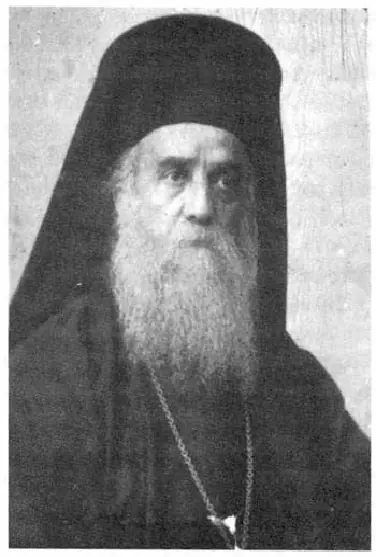

Because he lived so recently, his life is known from letters, official records and people who knew him. Some of the stories told about him, especially from his youth, come from later devotional lives and are noted as such below.
His life
A poor boy in Constantinople
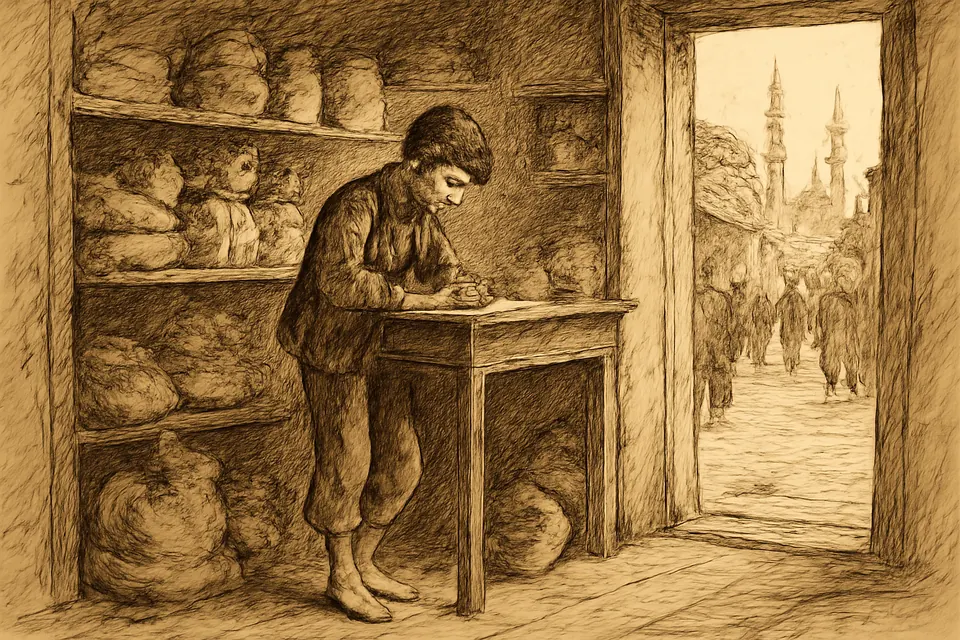
He was born Anastasios Kephalas on October 1, 1846, in Selymbria (today Silivri, Turkey), to a poor family. At fourteen he went to Constantinople to find work. The Orthodox life tells that he found a job in a tobacco shop, where he wrote short sayings from spiritual books on the paper bags. With no shoes and no one to write to, he wrote a letter "To the Lord Jesus Christ in Heaven": "My little Christ, I do not have an apron or shoes. You send them to me." A neighboring merchant opened it, was touched, and sent the boy money without signing his name.
Monk, priest and bishop
On November 7, 1875, he was tonsured a monk at the Nea Moni monastery on the island of Chios, taking the name Lazarus. Two years later he was ordained a deacon and renamed Nektarios. He studied at the University of Athens, then went to Egypt, where he was ordained a priest and served in Cairo. In 1889 he was consecrated Metropolitan of Pentapolis, an ancient see in Libya under the Patriarchate of Alexandria, and he served in Cairo.
Removed on false rumors
His popularity brought jealousy. According to the Orthodox Church in America, some bishops told Patriarch Sophronios that Nektarios wanted to make himself patriarch. He was removed from his post with a letter that said only that it was "for reasons known to the Patriarchate." He kept the rank of bishop, but the rumors followed him to Greece. For a time he had no money and no place to live, until a friend found him work as a humble preacher on the island of Euboea.
Rizarios School and Aegina
On March 8, 1894, he was named director of the Rizarios School, a seminary in Athens, and he stayed until December 1908. He taught, celebrated the services and wrote books on theology and the spiritual life. In 1904 he began restoring an abandoned monastery of the Holy Trinity on Aegina for a group of nuns, and in 1908 he retired there. The nuns saw him working in the garden in a worn cassock and carrying stones for the buildings.
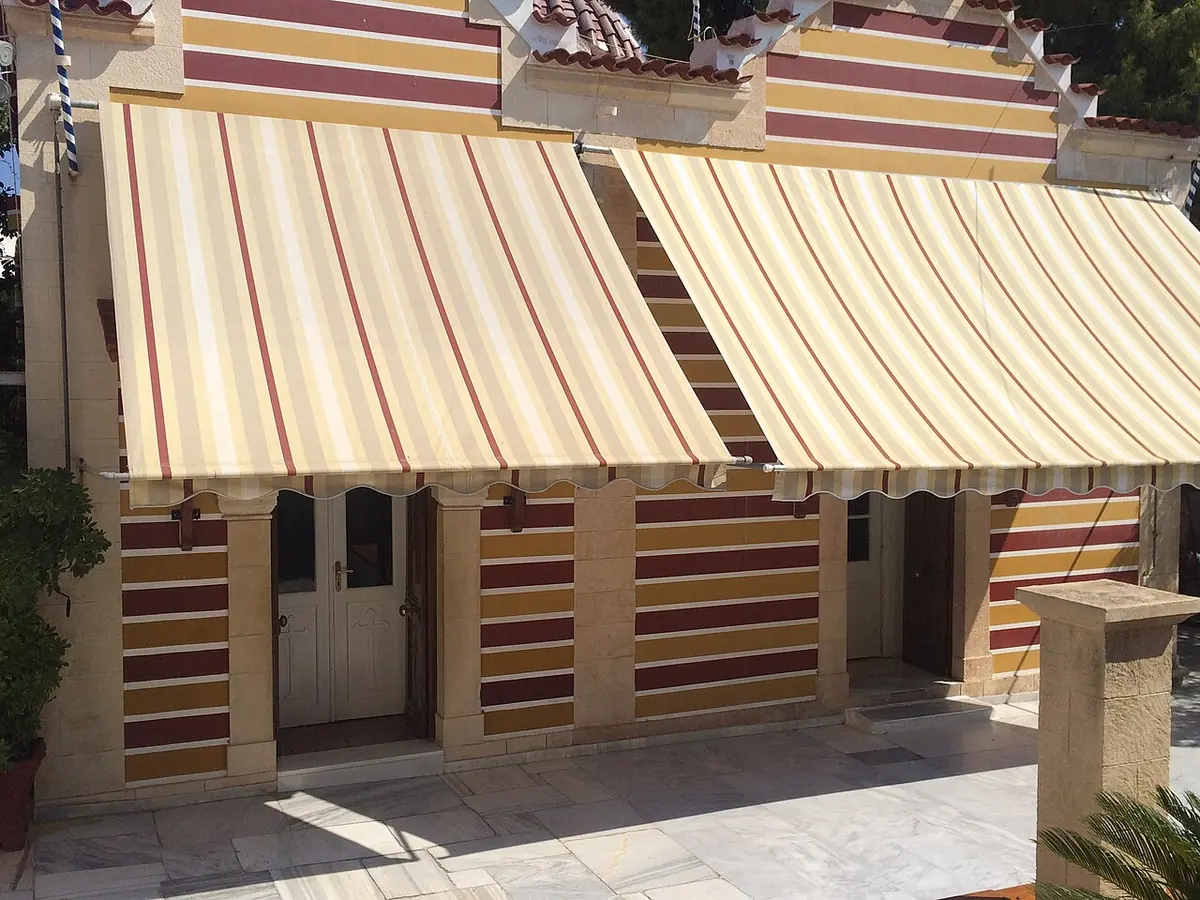

He told them, the OCA life says: "I am building a lighthouse for you, and God shall put a light in it that will shine forth to the world."
Death in a hospital for the poor
In September 1920, seriously ill, he was taken to the Aretaieion, a state hospital for the poor in Athens. The intern who admitted him at first did not believe that the old man in plain black robes was a bishop. He died there late on November 8, 1920, at 74, and was buried at his monastery on Aegina.
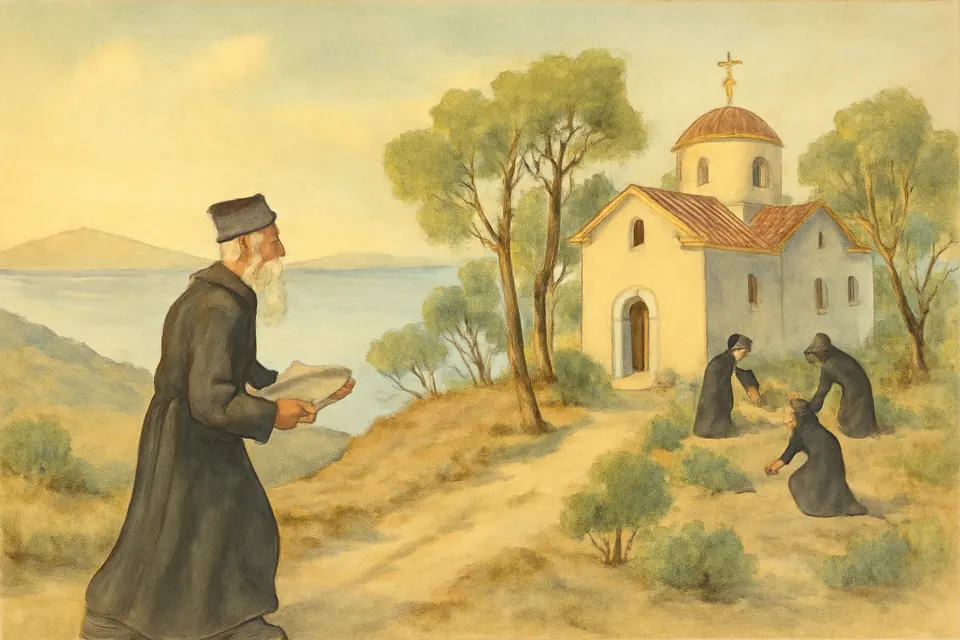
The miracles of St. Nektarios
Nektarios was recognized by the Orthodox Church, which does not use the Catholic categories of formal miracle approval. The miracles below are told in Orthodox lives of the saint; none was examined in the Catholic sense, so they are labeled reported or traditional here.
- Traditional: the boat that would not start in Constantinople until the captain let the poor boy aboard, and the storm on a voyage to the Holy Land, which calmed when he dipped his grandmother's cross into the sea; the cross was later found stuck to the ship's hull.
- Reported: the first miracle after his death. The OCA life says that when the nurse and the nun preparing his body laid his sweater on the bed of a paralyzed man next to him, the man got up, "glorifying God."
- Reported: his body was found whole when his grave was opened some years later, as is the Greek custom. OrthodoxPhotos says it stayed incorrupt and fragrant for more than twenty years, then returned to bones; the relics were moved in 1953.
- Reported: countless healings since then, especially of cancer, claimed by pilgrims to Aegina and by people who pray to him around the world.
Why St. Nektarios is the patron of the sick and of cancer patients
He suffered for two months from the illness that killed him; OrthodoxWiki and other Orthodox sources describe it as cancer of the prostate. After his death the reports of healings grew so fast, especially among people with cancer, that he became the saint Greek Orthodox Christians turn to first for serious illness. See more patron saints.
Recognition as a saint
The Ecumenical Patriarchate of Constantinople, under Patriarch Athenagoras, officially recognized Nektarios as a saint on April 20, 1961. On September 15, 1998, the Holy Synod of the Patriarchate of Alexandria, the church that had removed him, formally restored his "ecclesiastical order" and asked his forgiveness for "all which, due to human weakness or error," he had suffered.
Symbols of St. Nektarios in art
Icons show Nektarios as an old bishop with a long white beard and a gentle, sorrowful face. He usually wears full bishop's vestments, the sakkos and the omophorion (a broad stole with crosses), and over his head the black monastic veil of a monk who became a bishop. He holds a Gospel book or scroll and often raises his right hand in blessing. His name is written beside him in Greek, Ο ΑΓΙΟΣ ΝΕΚΤΑΡΙΟΣ.


Because he was photographed, icon painters follow his real face closely: compare the photograph above with the icon. Some icons add small scenes from his life around the border.
Feast day, relics and his monastery
The Orthodox Church keeps his feast on November 9. When he was recognized as a saint, Patriarch Athenagoras also moved the name day of everyone called Nektarios or Nektaria to that date. See the feast day calendar.
His relics are at the Holy Trinity Monastery on Aegina, which most visitors simply call Agios Nektarios. A small domed chapel stands over his first grave.
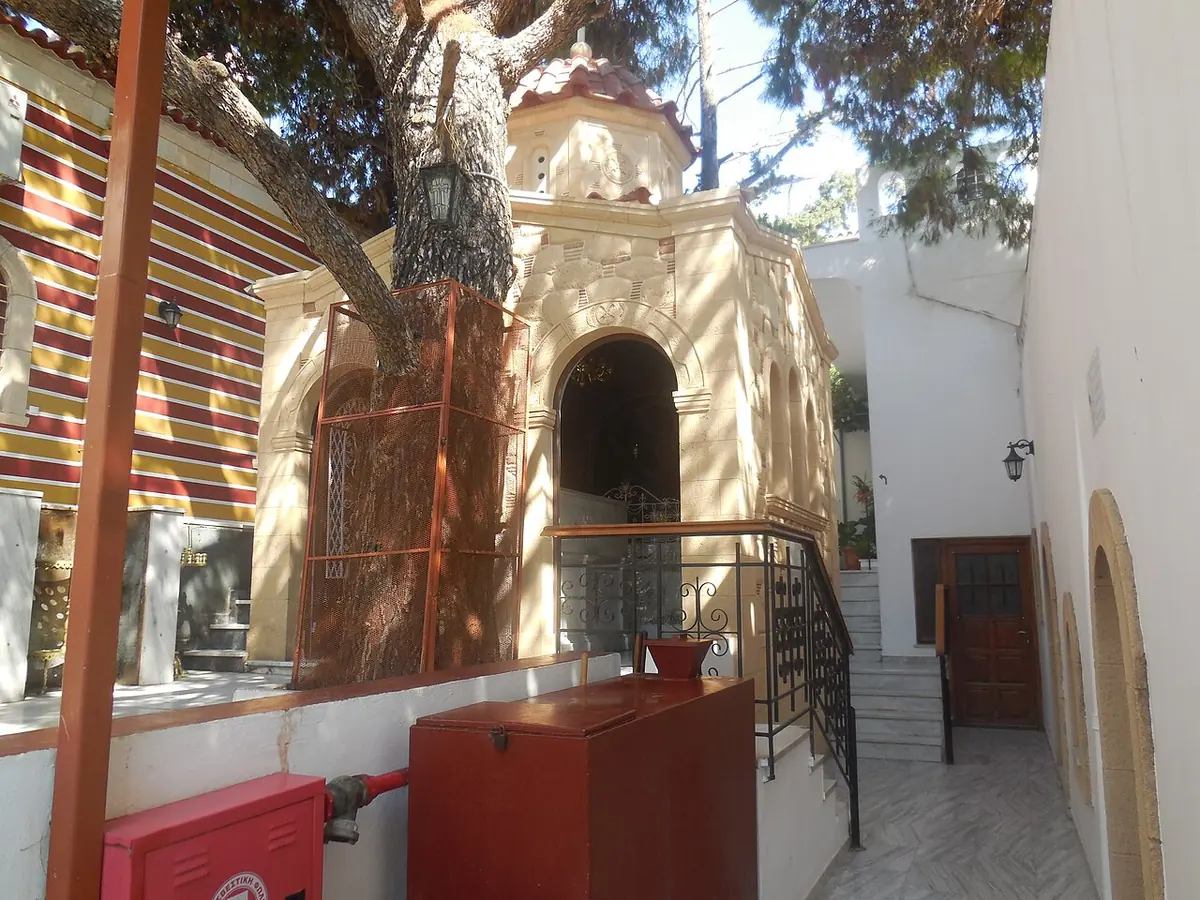

His cell can still be seen at the monastery.


Prayers and hymns to St. Nektarios
Orthodox Christians ask St. Nektarios to pray for them using the hymns of his feast. These are the official English texts of the Orthodox Church in America.
Troparion (Tone 1):
O faithful, let us honor Nectarius the divine servant of Christ, / offspring of Silyvria and guardian of Aegina, / who appeared in these last times as a true friend of virtue, / pouring forth all manner of healing upon those who reverently cry: / Glory to Him who gave you strength! / Glory to Him who granted you a crown! / Glory to Him who through you grants healing to all!
Kontakion (Tone 8):
Let us sing praises with gladness of heart / to the newly-shining star of Orthodoxy, the newly-built rampart of the Church. / Being glorified by the power of the Spirit, he pours forth the abundant grace of healings upon those who cry: / "Rejoice, Father Nectarius."
Nektarios was also a hymn writer. OrthodoxWiki credits him with Agni Parthene ("O Virgin Pure"), a hymn to the Mother of God sung in Orthodox churches around the world.
Frequently asked questions
When is the feast of St. Nektarios?
November 9 (November 22 for churches on the Old Calendar). He died on the evening of November 8, 1920, but the Orthodox Church keeps the Archangel Michael on that day.
What is St. Nektarios the patron saint of?
He is invoked above all by the sick, and especially by people with cancer. The Orthodox Church in America writes that he has worked thousands of miracles, "especially for those suffering from cancer." He is also the protector of the island of Aegina.
When was St. Nektarios canonized?
The Ecumenical Patriarchate of Constantinople, under Patriarch Athenagoras, officially recognized him as a saint on April 20, 1961. In 1998 the Patriarchate of Alexandria, which had removed him from his see in Egypt, formally restored his honor.
Where are the relics of St. Nektarios?
At the Holy Trinity Monastery he founded on Aegina, Greece. A small chapel stands over his first grave, and his head is kept in a bishop's miter for pilgrims to venerate.
Sources
- Orthodox Church in America: Saint Nectarius Kephalas, Metropolitan of Pentapolis
- Orthodox Church in America: Saint Nectarius Kephalas, Troparion and Kontakion
- OrthodoxPhotos.com: Saint Nektarios of Egina (1846-1920)
- OrthodoxWiki: Nectarios of Pentapolis
- John Sanidopoulos, The Canonization of Saint Nektarios and Patriarch Athenagoras (Orthodox Christianity Then and Now)
- Pravoslavie.ru: Saint Nektarios of Aegina