St. Kateri Tekakwitha
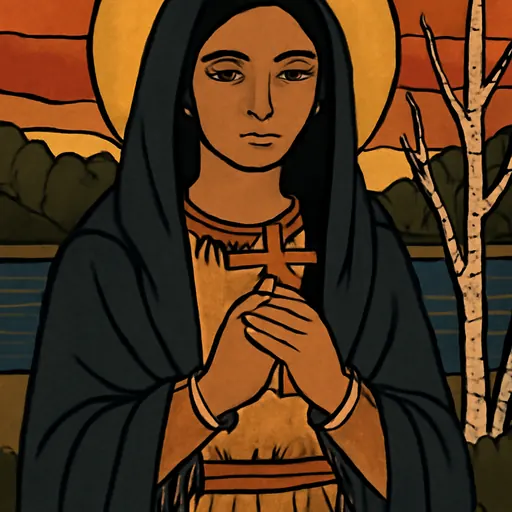
St. Kateri Tekakwitha (1656–1680) was a Mohawk and Algonquin woman from what is now upstate New York who became a Catholic at twenty and died at a Christian mission near Montreal at about twenty-four. Known as the Lily of the Mohawks, she was canonized in 2012 as the first Native American saint. Her feast is July 14 in the United States and April 17 in Canada.
Who was St. Kateri Tekakwitha?
Kateri Tekakwitha was a young Mohawk woman who became a Christian in her village on the Mohawk River, moved to a Catholic mission near Montreal, and died there in 1680 at about twenty-four. She left no writings. What we know of her comes mostly from two French Jesuits who knew her at the end of her life, Claude Chauchetière and Pierre Cholenec, who wrote her life in 1695 and 1696.
Her father was a Mohawk chief. Her mother was a Christian Algonquin woman who had been captured in a raid and taken into the Mohawk people. When Kateri was about four, smallpox swept through the village and killed her parents and her little brother. She survived with a scarred face and weak eyes.


The Church beatified her in 1980 and canonized her in 2012, making her the first Native American saint. At the canonization, Pope Benedict XVI said: "In her, faith and culture enrich each other! May her example help us to live where we are, loving Jesus without denying who we are."
The life of St. Kateri Tekakwitha
Childhood among the Mohawk
Kateri was born in 1656 at Ossernenon, near present-day Auriesville, New York. Ten years earlier, the Jesuit St. Isaac Jogues had been killed in the same village. After the smallpox epidemic, she was raised by her father's sister and her husband, a leading man in the Turtle Clan.
In 1666 a French-led army burned the Mohawk towns on the south side of the river. Her family moved to the north bank and built a new palisaded village called Caughnawaga, near today's Fonda, New York. The archaeological site of that village is now part of the Saint Kateri National Shrine. Her poor eyesight kept her from much field work, and the shrine notes that she became skilled at beadwork and other handwork.
As she grew, her relatives arranged a marriage for her, as was the custom. She refused. The Catholic Encyclopedia says she "shrank with great aversion" from every match they proposed.
Baptism at twenty
A peace treaty with the French in 1667 brought Jesuit missionaries back into Mohawk country, and three of them stayed for three days in her uncle's longhouse. The Catholic Encyclopedia says that was her first contact with Christianity. Some years later Father Jacques de Lamberville took charge of the mission, and at her request he prepared her for baptism. She was baptized on Easter Sunday, 1676, and took the name Catherine (Kateri in Mohawk) after St. Catherine of Siena. Shrine tradition holds that the water came from the spring that still flows on the shrine grounds.

Life in the village became hard for her after that. The Catholic Encyclopedia, following the Jesuit lives, says she practiced her faith "in the face of almost unbearable opposition," until her uncle's longhouse was no longer a safe place for her. The Saint Kateri Shrine adds a caution: Mohawk oral history remembers much less persecution than the Catholic accounts written after her death, and some traditional Mohawks still object to the way her story has been told. Both should be kept in mind.
The journey to Kahnawake
Late in 1677, with help from Christian Native men visiting from the north, she left her uncle's village and traveled to the Mission of St. Francis Xavier on the St. Lawrence River, a Catholic settlement of Mohawk and other Native converts across from Montreal. The Catholic Encyclopedia calls it an escape.
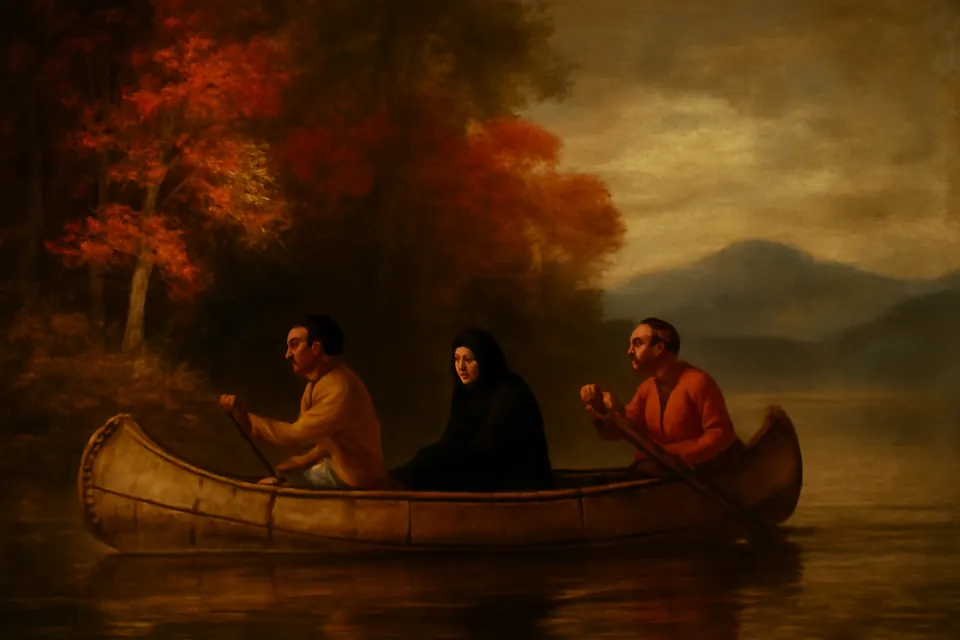
She lived in the longhouse of Anastasia Tegonhatsiongo, an older Christian woman who had been a friend of her mother. She made her first Communion on Christmas Day, 1677. On the feast of the Annunciation in 1679 she made a private vow of virginity, something almost unheard of among Native women of her time, whose security depended on marriage.
At Kahnawake she spent long hours in the chapel, cared for the sick and the old, and took up severe penances; the Catholic Encyclopedia calls her mortifications "extreme." The shrine notes that some of these practices came from Iroquois ascetic custom and were harsher than anything the Jesuits asked; the priests told her to moderate them for the sake of her health. With her friend Marie-Thérèse Tegaiaguenta she hoped to found a community of Native religious women, but the missionaries discouraged the idea.

Death in Holy Week
Her health failed during Lent of 1680. She died on the afternoon of Wednesday of Holy Week, April 17, 1680. According to Chauchetière, her last words to Marie-Thérèse were: "I am leaving you. I am about to die.... Take courage, despise the discourse of those who have no faith... I will love you in heaven, I will pray for you, I will assist you."
The miracles of St. Kateri Tekakwitha
- Her face after death: reported. The Jesuits who were present wrote that within minutes of her death her smallpox scars faded and her face became clear and beautiful. Leonard Foley's Saint of the Day gives the same account.
- Appearances after death: reported. Anastasia, Marie-Thérèse and Father Chauchetière each said they saw Kateri in the weeks after she died, according to the shrine's summary of the early lives.
- Healings at her grave: reported. Within four years pilgrims were coming to her tomb, and the Jesuits recorded cures attributed to her intercession. None was formally investigated at the time.
- The healing of Jake Finkbonner: approved. In February 2006, five-year-old Jake, whose father is a member of the Lummi Nation in Washington state, cut his lip on the base of a basketball hoop. The cut became infected with Strep A, which caused necrotizing fasciitis, the "flesh-eating" infection. At Children's Hospital in Seattle surgeons operated again and again, and a family friend, Father Tim Sauer, came expecting to give him last rites. The family, their friends and their parish prayed for Kateri's intercession. A relic of hers came from the Tekakwitha Conference in Great Falls, Montana, and was placed on the boy's pillow. The infection stopped. Pope Benedict XVI approved the healing as a miracle on December 19, 2011, and it opened the way to her canonization.
John Paul II had waived the usual miracle requirement when he beatified her in 1980, so the Finkbonner healing is the only miracle the Church has formally approved for her.
Why St. Kateri is the patron saint of Native Americans and ecology
- Native Americans and Indigenous peoples: she was the first Native American beatified and canonized. Benedict XVI entrusted "the renewal of the faith in the first nations" to her prayers.
- Ecology and the environment: a popular title rather than one set by decree. It draws on her life close to the land and her habit of praying alone in the woods, and her national shrine at Fonda calls her "patroness of ecology and ecologists." Many Catholics pair her with St. Francis of Assisi here.
- Exiles: she left her home and people for her faith.
- Loss of parents: she was orphaned at about four.
- People ridiculed for their faith: for the mockery the Jesuit accounts say she endured after baptism.
- Canada: Benedict XVI called her "Protectress of Canada" at her canonization.
See more on our patron saints page.
Symbols of St. Kateri Tekakwitha in art
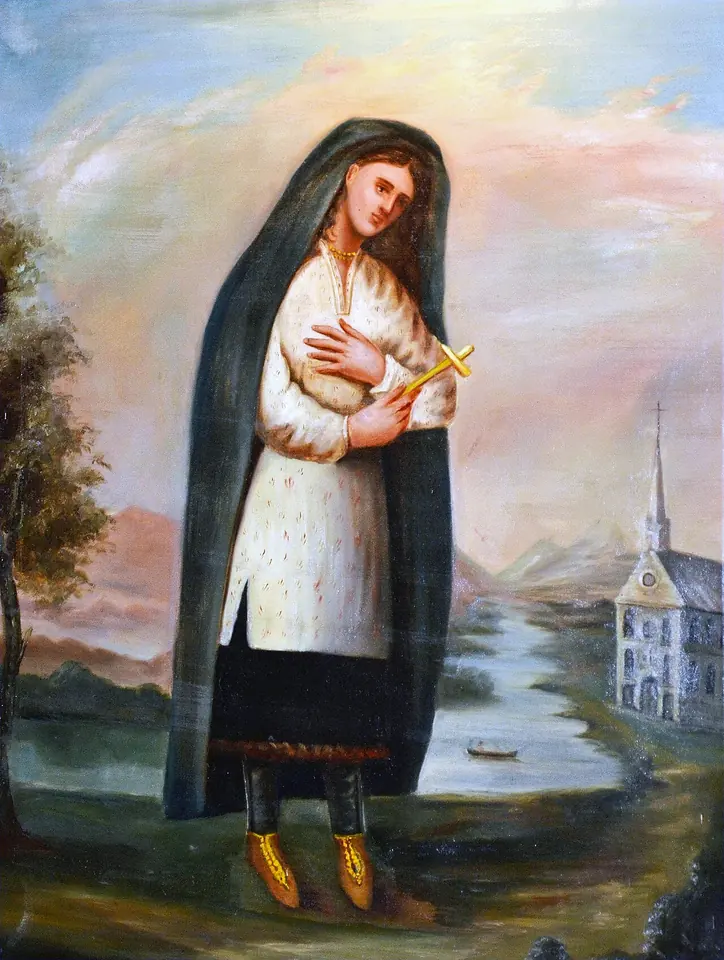
Kateri is easy to recognize. Almost every image goes back to Chauchetière's portrait, which hangs in the mission church at Kahnawake. Look for:
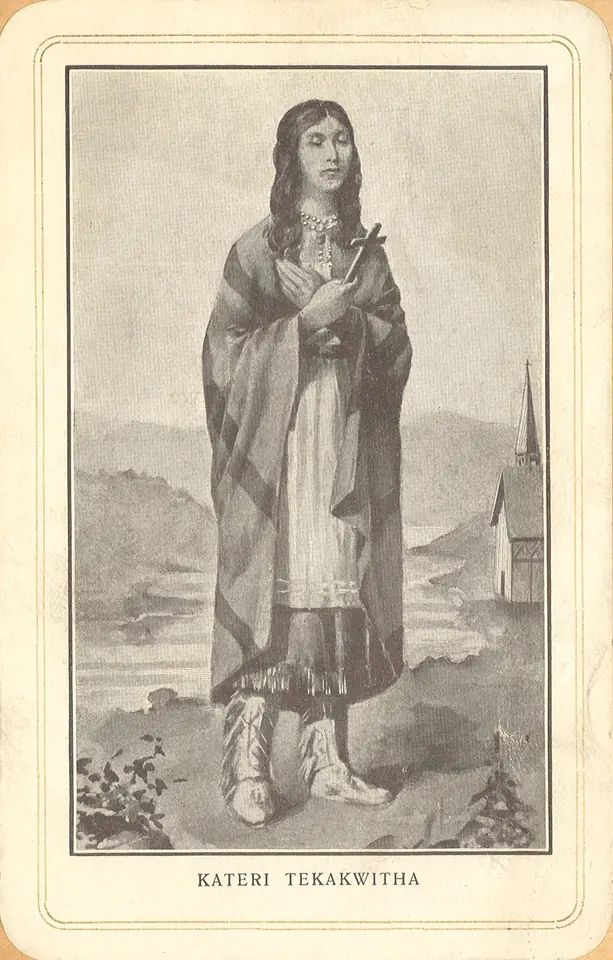
- A small wooden cross held to her chest, her most constant attribute.
- A lily: for her title "Lily of the Mohawks" and her vow of virginity.
- A turtle: the emblem of her clan, the Turtle Clan of the Mohawk.
- A rosary.
- Deerskin leggings and moccasins, a fringed tunic, and in older images a dark blanket drawn over her head.
The Christian Iconography project at Augusta University notes how her image has changed: Chauchetière gave her light skin and European features, an 18th-century print made her much darker, early 20th-century holy cards gave her braids and a "princess" look, and recent statues show her plainly as a Mohawk woman. Joseph Légaré's 1843 copy keeps Chauchetière's pose and adds the mission church on the shore.

Modern medals and statues often add a feather or a turtle to the old pattern.


Feast day, tomb and shrines
In the United States, St. Kateri's feast is July 14, an obligatory memorial. In Canada it is April 17, the anniversary of her death. She is not on the General Roman Calendar. Find her neighbors on our feast days page.
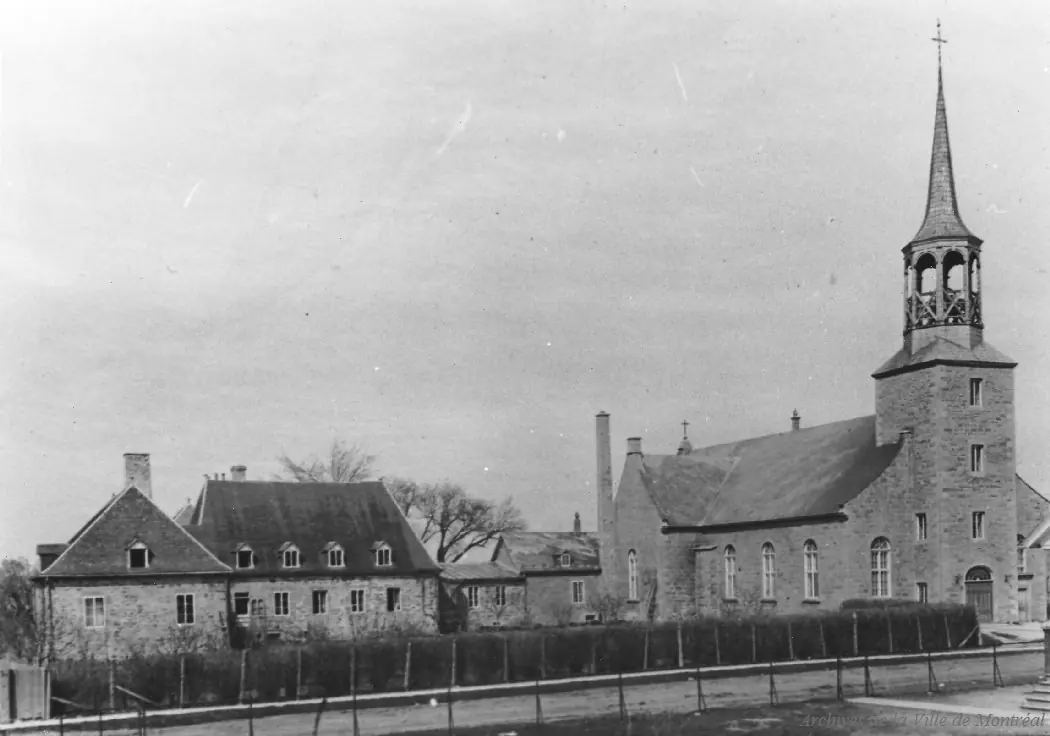
Her tomb is at Kahnawake, the Mohawk community south of Montreal that grew from the mission where she died. Her remains are enshrined in the Church of St. Francis Xavier there.
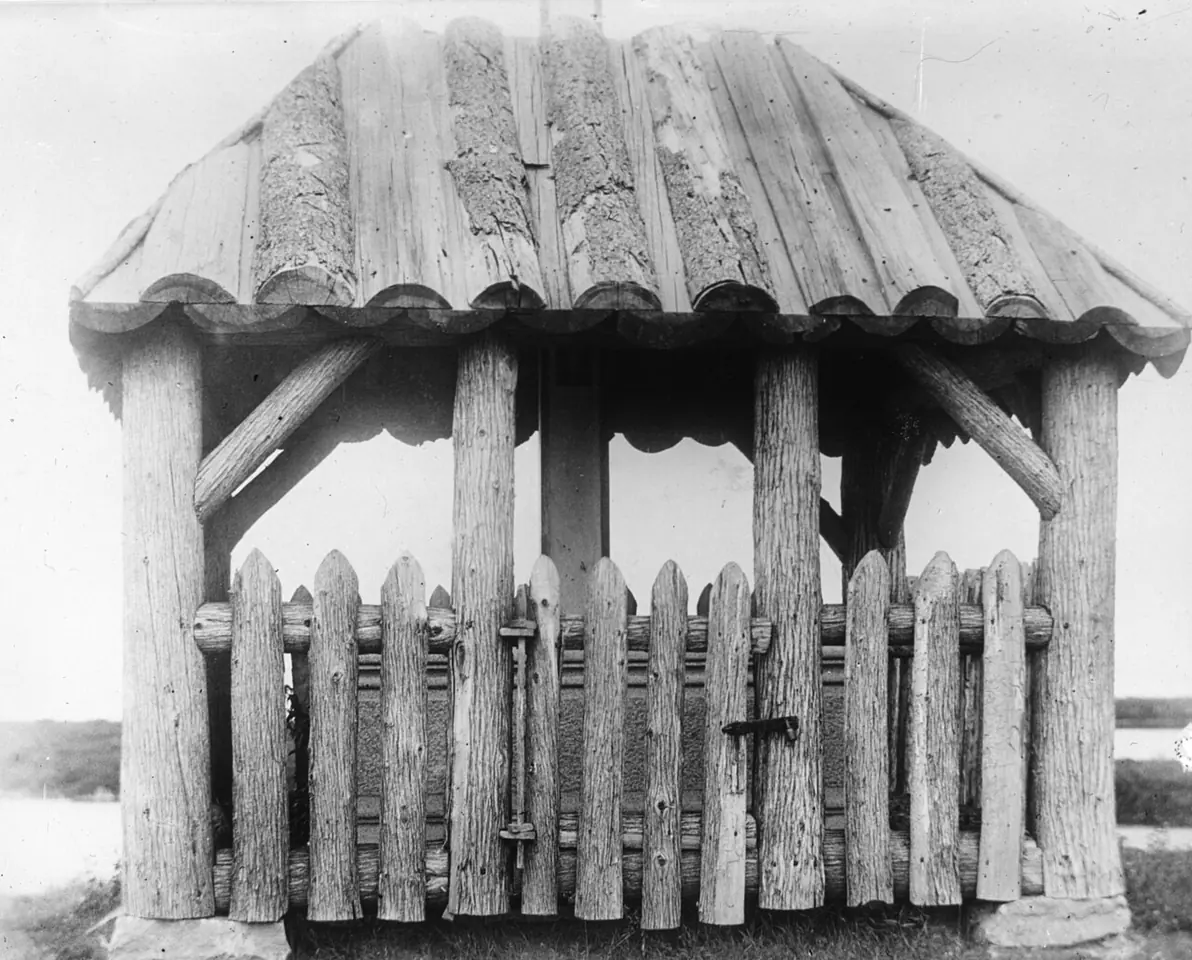

The Catholic Encyclopedia notes that Father Clarence Walworth erected a monument at her grave in 1884, and that the Councils of Baltimore and Quebec had already petitioned Rome for her canonization.

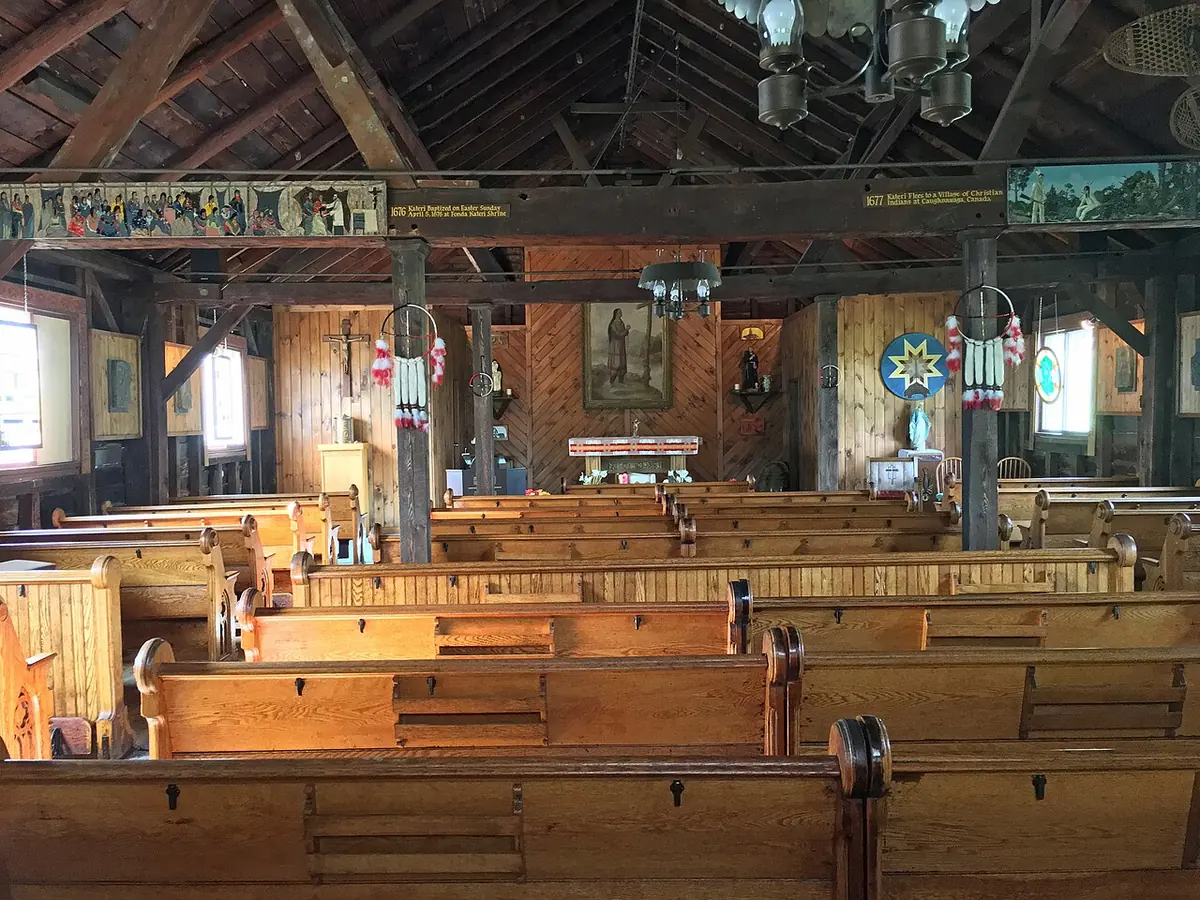
In New York, the Saint Kateri National Shrine and Historic Site near Fonda, run by the Conventual Franciscan friars, preserves the site of the Caughnawaga village where she lived from about age ten until she left in 1677, along with the spring associated with her baptism. On the south side of the river, the Shrine of Our Lady of Martyrs at Auriesville marks Ossernenon, her birthplace and the site where the North American Martyrs died.

Her canonization day, October 21, 2012, was shared with St. Marianne Cope, who cared for leprosy patients on Molokai.
Prayer to St. Kateri Tekakwitha
The Church's own prayer for her feast is the collect of the Mass on July 14 in the United States:
O God, who desired the Virgin St. Kateri Tekakwitha to flower among Native Americans in a life of innocence, grant, through her intercession, that when all are gathered into your Church from every nation, tribe and tongue, they may magnify you in a single canticle of praise. Through our Lord Jesus Christ, your Son, who lives and reigns with you in the unity of the Holy Spirit, God, for ever and ever.
The Saint Kateri Shrine also offers a Litany of Saint Kateri Tekakwitha among its prayer resources. Pilgrims at Fonda and Kahnawake ask her prayers for healing, for their families and for Native communities, and many visit the spring at Fonda.
Frequently asked questions
Why is St. Kateri Tekakwitha important?
She is the first Native American to be canonized a saint. Pope Benedict XVI canonized her on October 21, 2012, and in his homily called her the "Protectress of Canada and the first native American saint." Catholics in North America, especially Native Catholics, see her as a sign that faith and Indigenous culture can belong together.
What miracle made Kateri Tekakwitha a saint?
The healing of Jake Finkbonner, a boy in Washington state who nearly died of a flesh-eating bacterial infection in 2006. His family and friends prayed for Kateri's intercession, a relic of hers was placed on his pillow, and the infection stopped. Pope Benedict XVI approved the miracle on December 19, 2011. It is an approved miracle.
When is St. Kateri's feast day?
July 14 in the United States, where it is an obligatory memorial, and April 17 in Canada, the anniversary of her death in 1680.
What is St. Kateri the patron saint of?
Native Americans and Indigenous peoples, ecology and the environment, exiles, people who have lost their parents, and people ridiculed for their faith. Benedict XVI also named her Protectress of Canada.
What does "Tekakwitha" mean?
The Saint Kateri National Shrine gives the meaning as "she who bumps into things," probably because smallpox left her nearly blind. "Kateri" is the Mohawk form of Catherine, the name she took at baptism in honor of St. Catherine of Siena.
Sources
- Benedict XVI, Homily for the Canonization of Seven Saints, October 21, 2012 (Vatican)
- Catholic Encyclopedia (1912): Blessed Kateri Tekakwitha
- Saint Kateri National Shrine and Historic Site: Saint Kateri
- Catholic Culture: Memorial of St. Kateri Tekakwitha, Virgin (USA), July 14
- NBC News: Boy's survival of flesh-eating bacteria deemed miracle (December 20, 2011)
- Christian Iconography: St. Kateri Tekakwitha in Art
- Claude Chauchetière, S.J., La vie de la B. Catherine Tegakoüita (written 1695, published 1887)
- Pierre Cholenec, S.J., Life of Catherine Tekakwitha (1696)