St. José Sánchez del Río
St. José Sánchez del Río was a Mexican boy from Sahuayo, Michoacán, who joined the Cristero rebels as a flag bearer and was killed by government troops on February 10, 1928, at the age of 14, after refusing to deny his faith. He died crying "Viva Cristo Rey!" ("Long live Christ the King!"). Pope Francis canonized him in 2016, and Catholics ask his prayers especially for young people.
Who was St. José Sánchez del Río?
José Sánchez del Río was born on March 28, 1913, in Sahuayo, a town in the state of Michoacán in west-central Mexico. His parents, Macario and María, were devout Catholic ranchers. He grew up in the years when Mexico's government turned hard against the Church, and he died in that conflict, on February 10, 1928, at fourteen. His family and friends called him Joselito.
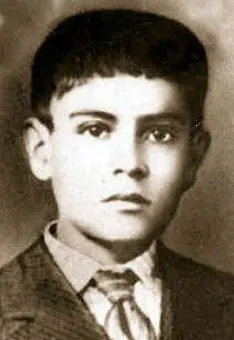
Because he lived in the age of photography, we know what he looked like. A surviving picture shows a solemn boy with thick dark hair, in a jacket and a loosely knotted tie.

The Cristero War
Mexico's constitution of 1917 placed strict limits on the Church. When President Plutarco Elías Calles began enforcing them in 1926, the bishops suspended public worship, and in several states Catholics rose in armed revolt. They were called Cristeros, after their cry, "¡Viva Cristo Rey!", "Long live Christ the King!" The war lasted until 1929. Thousands died on both sides, among them priests and lay Catholics whom the Church has since honored as martyrs, such as St. Toribio Romo.
José's older brothers joined the Cristeros. He wanted to go too. According to the Alliance for Catholic Education at Notre Dame, he begged his mother, who had refused, with the words: "Mama, do not let me lose the opportunity to gain Heaven so easily and so soon."
The flag bearer
In 1927, at fourteen, José went to a Cristero camp near Cotija, Michoacán. The commanders thought him too young to fight. The Clairval Abbey's account, the most detailed published in English, says he was put under the Cristero leader Rubén Guízar Morfín, who on December 12, 1927, the feast of Our Lady of Guadalupe, made him the unit's flag bearer and bugler. The soldiers nicknamed him Tarcisius, after the boy martyr of early Rome who died protecting the Eucharist.
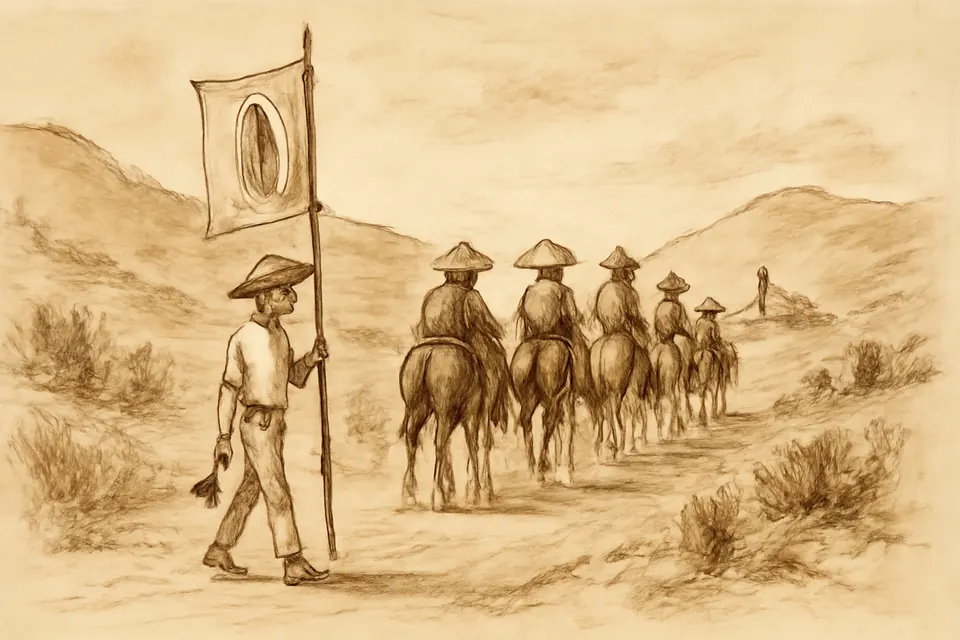
On February 6, 1928, government troops attacked. When Guízar Morfín's horse was shot from under him, José gave the general his own horse so he could escape. José was captured.

Prison in Sahuayo
The soldiers took him back to his hometown, where he was held in a church they had turned into a jail and a stable. The Clairval account says a local official, Rafael Picazo, who had been José's sponsor at his first Communion, offered him a way out: escape, or a place at a military school. José refused. Picazo then demanded 5,000 pesos from his father as ransom, and his father was ready to pay. José asked him not to, saying he had already offered his life to God.
Clairval also preserves a letter he wrote to his mother from captivity, telling her he expected to die and asking her to accept it bravely and give him her blessing.
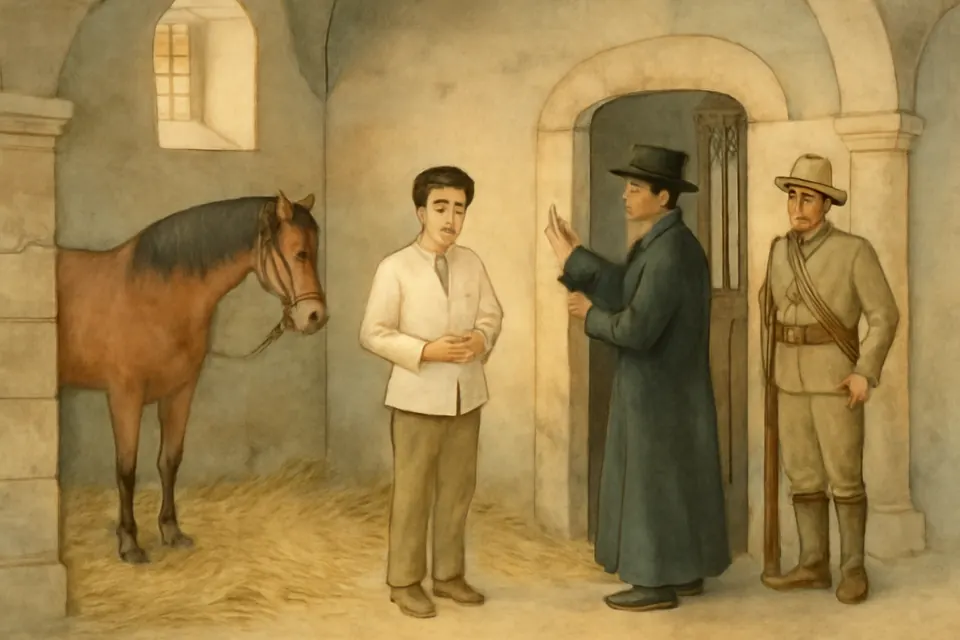
His death
On the evening of February 10, 1928, the soldiers tortured him to make him renounce his faith and then marched him through the streets to the town cemetery. Again and again they told him he could live if he would deny Christ. He answered with the Cristero cry. At the cemetery he was killed, and, according to the accounts of his death, his last words were: "Viva Cristo Rey! Viva la Virgen de Guadalupe!" He was fourteen.
Beatification, canonization and miracle
The Church recognized José as a martyr, one killed out of hatred of the faith. Pope John Paul II declared that he had died a martyr in 2004, and on November 20, 2005, Cardinal José Saraiva Martins beatified him in the stadium of Guadalajara on behalf of Pope Benedict XVI, together with twelve other martyrs of the persecution.
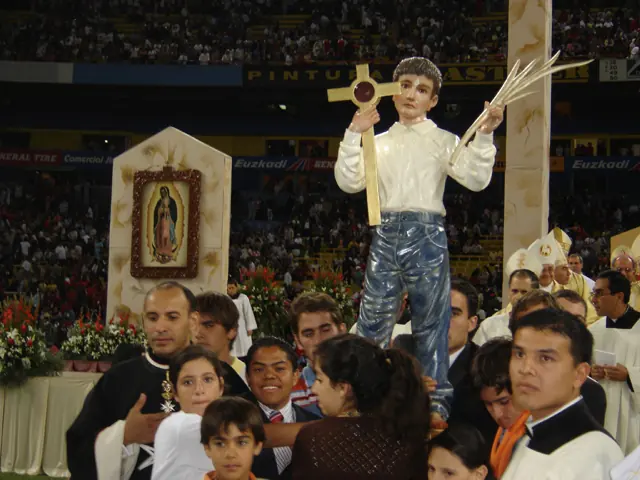

A martyr does not need a miracle to be beatified, but canonization requires one. The miracle the Church accepted is approved: the healing of a baby girl from Sahuayo, Ximena Gálvez. In 2008, when she was a few weeks old, she became so ill that doctors judged her near death; her mother told Aleteia that they gave her 72 hours to live. Her mother asked José's intercession, and the girl recovered. Pope Francis approved the miracle in January 2016 and canonized José in St. Peter's Square on October 16, 2016, together with six others, among them St. Elizabeth of the Trinity.
Symbols of St. José Sánchez del Río in art
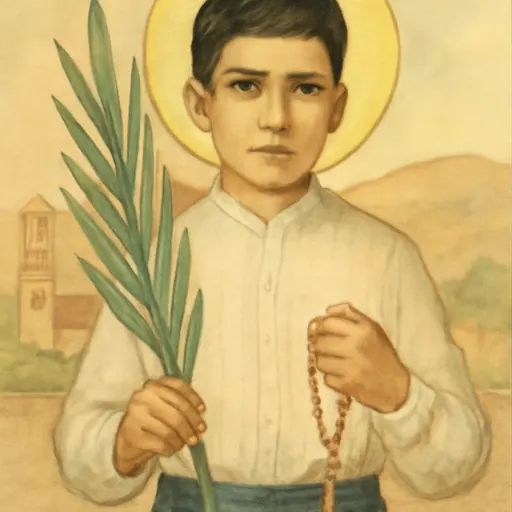
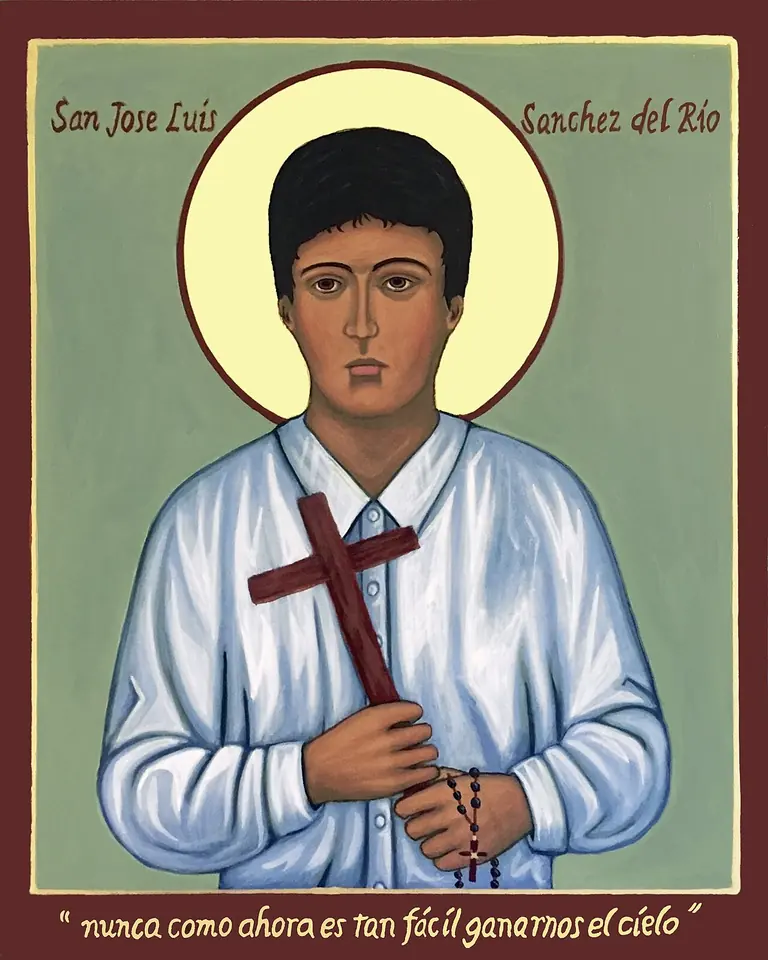
Images of José are new, since devotion to him spread only after 2005, and most are based on his photograph. Look for:
- A teenage boy in a white shirt and plain trousers, the clothes of a Mexican country boy in the 1920s.
- A palm branch, the ancient sign of a martyr.
- A cross or crucifix held up high, recalling his cry for Christ the King.
- A rosary, often in his hands.
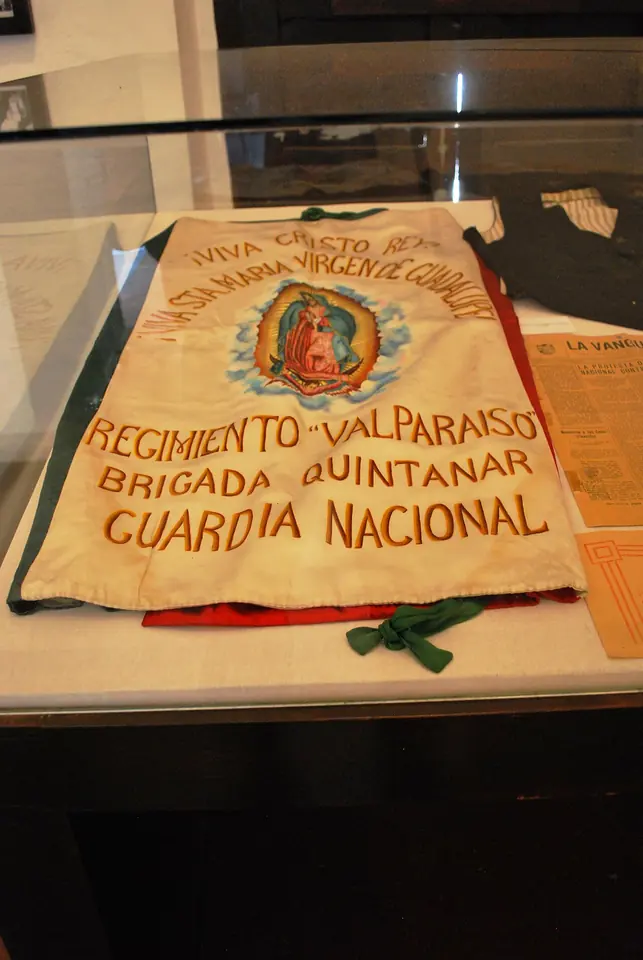
- The Cristero flag with Our Lady of Guadalupe, for his service as flag bearer, and sometimes a bugle.
The icon below adds a halo and a saying attributed to him, in Spanish: "nunca como ahora es tan fácil ganarnos el cielo" ("never has it been so easy to win heaven as now").

Where he is honored
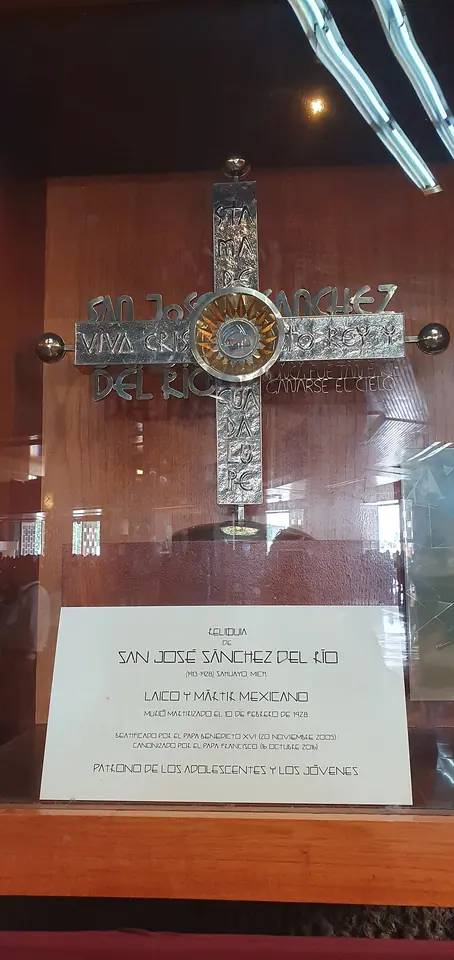
José's remains are kept in his hometown of Sahuayo, where the parish of Santiago Apóstol broadcasts the place where they rest. A relic is also kept at the Basilica of Our Lady of Guadalupe in Mexico City, in a silver cross inscribed "Viva Cristo Rey."

His feast is February 10, the day he died; see our feast days page. Catholics ask his prayers for young people and for Christians persecuted for their faith; see our patron saints page. No traditional prayer to him has come down from his time. Devotees ask his intercession in their own words, and many repeat his cry, "Viva Cristo Rey!" The 2012 film For Greater Glory brought his story to a wide English-speaking audience.
Frequently asked questions
Why was José Sánchez del Río killed?
He was a Catholic boy who served with the Cristeros, Catholics who took up arms against the Mexican government's laws restricting the Church in the late 1920s. Captured in February 1928, he was offered his freedom if he would give up his faith and refused. The Church recognizes his death as martyrdom, a death suffered out of hatred of the faith.
When is St. José Sánchez del Río's feast day?
February 10, the day he died in 1928. It is kept in Mexico and by his devotees elsewhere; he is not on the General Roman Calendar.
What miracle made José Sánchez del Río a saint?
As a martyr he was beatified without a miracle. For canonization, the Church approved the healing of a baby girl from Sahuayo, Ximena Gálvez, who in 2008 was so ill that doctors gave her little or no chance to live. Her mother prayed for José's intercession, and the girl recovered. Pope Francis approved the miracle in January 2016.
What does "Viva Cristo Rey" mean?
It means "Long live Christ the King." It was the battle cry of the Cristeros, and witnesses said it was the last thing José shouted before he died.
Sources
- Holy See: Holy Mass and Canonization of Seven Blesseds, including José Sánchez del Río (October 16, 2016)
- Catholic News Agency (EWTN News): 14 year-old Mexican martyr to be beatified Sunday (2005)
- Abbaye Saint-Joseph de Clairval: Saint José Sánchez del Rio
- Alliance for Catholic Education, University of Notre Dame: ¡Viva Cristo Rey! Honoring Saint José Sánchez del Río
- Aleteia: The miracle in Mexico that confirmed young José's sainthood
- Parroquia de Santiago Apóstol, Sahuayo: Beato José Sánchez del Río