St. Mark the Evangelist
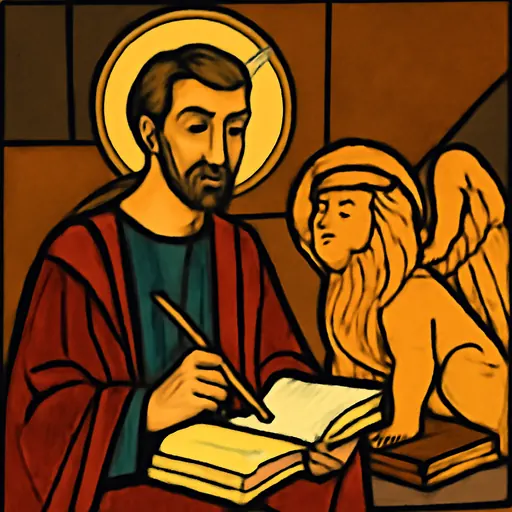
St. Mark the Evangelist is the John Mark of the Acts of the Apostles, a companion of Barnabas, Paul and Peter, whom the early Church named as the writer of the second Gospel. Tradition says he founded the Church of Alexandria and died a martyr there. His feast day is April 25, and he is the patron saint of Venice, which has kept his relics since the 9th century, as well as of notaries and lawyers.
Who was St. Mark?
St. Mark the Evangelist was not one of the Twelve. He was a younger Jewish Christian from Jerusalem, called John Mark in the Acts of the Apostles, whose mother's house was a meeting place for the first believers. He traveled with his cousin St. Barnabas and with St. Paul, quarreled with Paul and later made peace with him, and worked with St. Peter in Rome. From the early 2nd century on, Christians named him as the writer of the second Gospel.


Two great churches trace their story to him. The Coptic Orthodox Church of Egypt honors him as its founder and first bishop, martyred in Alexandria, and its pope is still called the successor of St. Mark. Venice, which carried his body away from Alexandria in the 9th century, made him its patron and his winged lion its emblem for a thousand years.
St. Mark in the New Testament
The New Testament mentions a man called Mark, or John Mark, about eight times. Catholic and Orthodox tradition takes all of them to be the same man, the evangelist.
The house of Mary in Jerusalem
When an angel freed Peter from Herod's prison, Peter "went to the house of Mary, the mother of John whose other name was Mark, where many were gathered together and were praying" (Acts 12:12, RSV). The Catholic Culture biography of St. Mark identifies this house with the upper room where the first Christians met. The Coptic Synaxarium goes further and calls it "the first Christian church," where Jesus ate the Passover and where the Holy Spirit came at Pentecost. The Coptic tradition also says Mark's family was from Cyrene, in present-day Libya, and later moved to Jerusalem.
The young man in Gethsemane
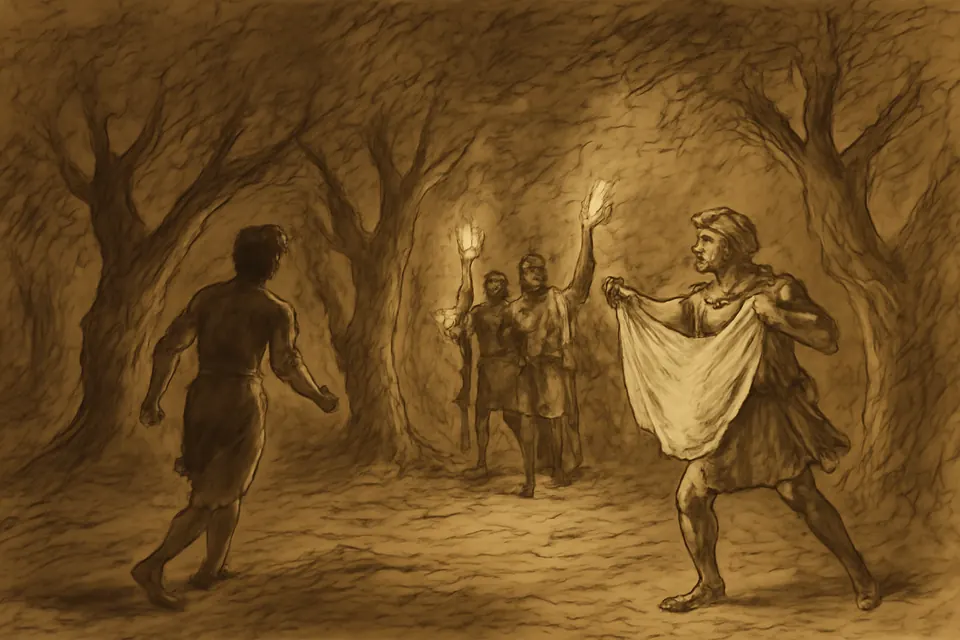
Only Mark's Gospel tells this small, odd detail of Jesus' arrest: "And a young man followed him, with nothing but a linen cloth about his body; and they seized him, but he left the linen cloth and ran away naked" (Mark 14:51–52). No other Gospel mentions him, and he is never named. For that reason, readers since the early Church have wondered whether Mark was quietly putting himself into the story. The Orthodox life of St. Mark says so outright. It is a guess, though an old one.
With Barnabas and Paul
Paul and Barnabas took Mark with them when they returned from Jerusalem to Antioch (Acts 12:25), and on their first missionary journey "they had John to assist them" in Cyprus (Acts 13:5). When they sailed on to Perga, on the coast of present-day Turkey, "John left them and returned to Jerusalem" (Acts 13:13). Luke does not say why.
Paul didn't forget it. Before the second journey, Barnabas wanted to take Mark again, "but Paul thought best not to take with them one who had withdrawn from them in Pamphylia." The argument grew so sharp that the two missionaries split up: "Barnabas took Mark with him and sailed away to Cyprus, but Paul chose Silas and departed" (Acts 15:38–40). Paul's letter to the Colossians explains Barnabas's loyalty: Mark was "the cousin of Barnabas" (Colossians 4:10).
Reconciled with Paul
Years later the quarrel was over. In the letter to the Colossians, Mark is with Paul and sends greetings. In the letter to Philemon, Paul lists "Mark, Aristarchus, Demas, and Luke, my fellow workers" (Philemon 24). And in 2 Timothy, written as Paul awaited death, he tells Timothy: "Luke alone is with me. Get Mark and bring him with you; for he is very useful in serving me" (2 Timothy 4:11). The young man who had gone home from Perga ended as one of the few friends Paul asked for at the end.
"My son Mark"
The First Letter of Peter closes: "She who is at Babylon, who is likewise chosen, sends you greetings; and so does my son Mark" (1 Peter 5:13). Eusebius says "Babylon" was a figure for Rome. "Son" here is spiritual: Mark was Peter's disciple and helper, and that link is the root of everything the early Church said about his Gospel.
The Gospel of Mark
Peter's interpreter
The oldest testimony again comes from Papias, bishop of Hierapolis, writing around 130 and quoted by Eusebius. Papias passes on what "the presbyter" told him:
Mark, having become the interpreter of Peter, wrote down accurately, though not in order, whatsoever he remembered of the things said or done by Christ. For he neither heard the Lord nor followed him, but afterward, as I said, he followed Peter, who adapted his teaching to the needs of his hearers, but with no intention of giving a connected account of the Lord's discourses, so that Mark committed no error while he thus wrote some things as he remembered them.
St. Irenaeus, around 180, wrote that after the deaths of Peter and Paul, "Mark, the disciple and interpreter of Peter, also transmitted to us in writing those things which Peter had preached." Clement of Alexandria, quoted by Eusebius, told it a little differently: Peter's hearers in Rome begged Mark, "who had followed him for a long time and remembered his sayings," to write them down, and Peter, when he learned of it, approved the book for reading in the churches. St. Jerome repeats this and calls the result "a short gospel."
What modern scholars think
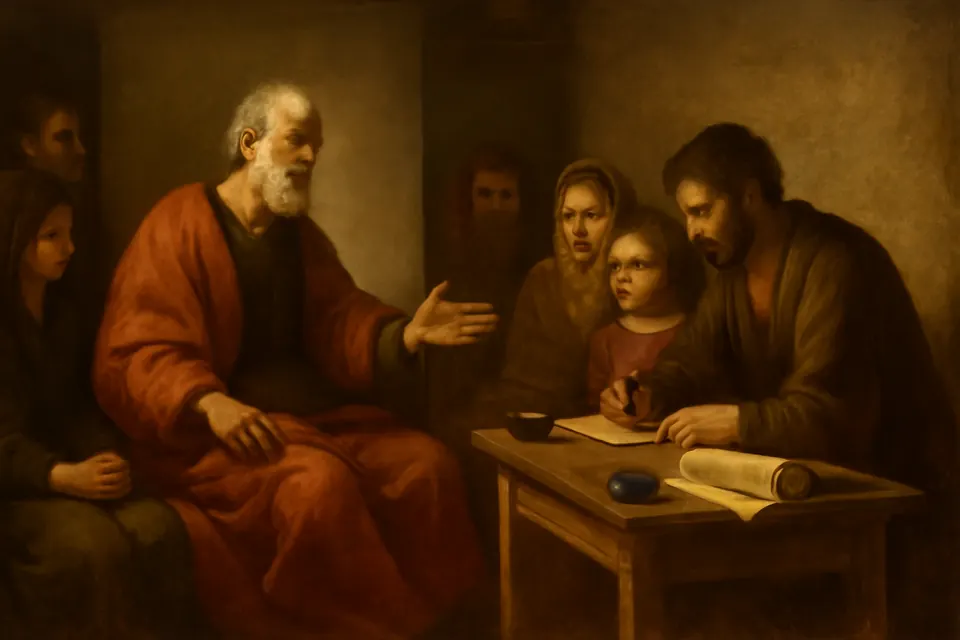
The Gospel itself doesn't name its author. The introduction to Mark in the New American Bible says the book "has traditionally been assigned to John Mark" and that it is traditionally dated shortly before 70, in Rome, during a time of persecution. It adds that "modern research often proposes as the author an unknown Hellenistic Jewish Christian, possibly in Syria, and perhaps shortly after the year 70," and warns that Peter's influence "should not, however, be exaggerated."
Most scholars today think Mark's is the oldest of the four Gospels and that Matthew and Luke used it. The same Bible's introduction to Matthew says that almost every verse of Mark was taken into Matthew. It is the shortest Gospel, quick and vivid, full of the word "immediately," and it shows Jesus' emotions more openly than the others: pity, anger, sadness. Its last twelve verses (Mark 16:9–20) are missing in some of the oldest manuscripts, and the Catholic Encyclopedia discusses at length why the Church still receives them as Scripture.
Founder of the Church of Alexandria
The first to preach in Egypt
Eusebius writes that "this Mark was the first that was sent to Egypt, and that he proclaimed the Gospel which he had written, and first established churches in Alexandria." St. Jerome adds that Mark's church there was so admirable in doctrine and in self-denial that the Jewish philosopher Philo wrote about it, and that Mark "died in the eighth year of Nero and was buried at Alexandria, Annianus succeeding him."


The cobbler Anianus
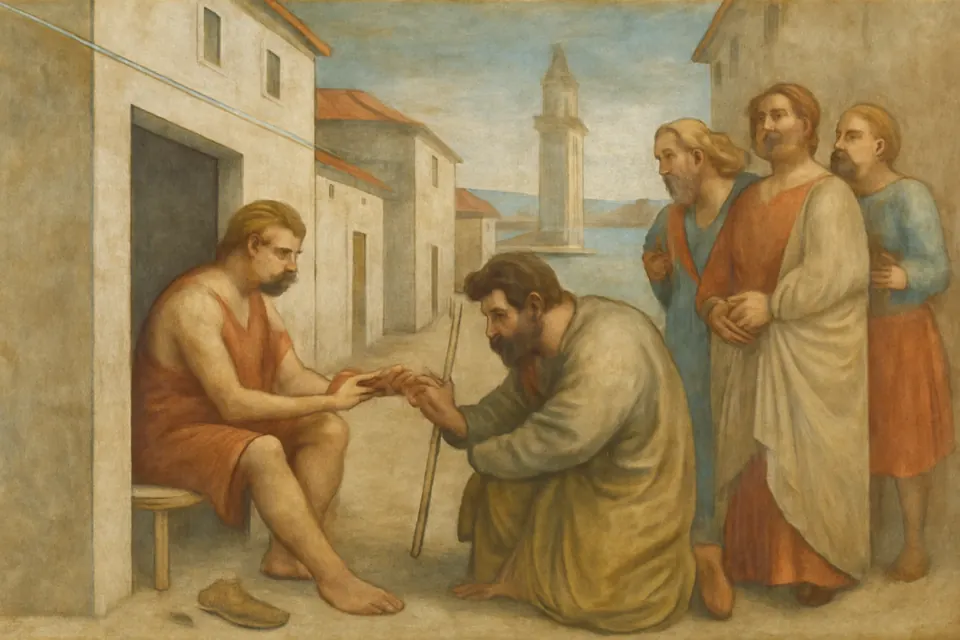
The Coptic Church tells how Mark first came to Alexandria, a story the Golden Legend also tells with the cobbler's name as Ananias. Mark had walked so far that his sandal tore, and he took it to a cobbler named Anianus. As the man worked, his awl went through his hand, and he cried out in Greek, "Heis Theos," "God is one." Mark took this as his opening. He spat on a little clay, pressed it to the wound in the name of Jesus Christ, and the hand healed. Anianus took him home, heard him preach, and was baptized with his whole household. Mark later ordained him bishop, and Anianus is counted as the second bishop of Alexandria.
The martyrdom of St. Mark
The Coptic Synaxarium, the church's book of saints' lives, gives the fullest account. Mark built a church at a place called Baucalis, "the place of cows," on the shore east of the city. In the year 68, Easter fell on the same day as a great feast of the god Serapis. A crowd broke into the church while Mark was celebrating the liturgy, tied a rope around his neck and dragged him through the streets, crying, "Drag the dragon to the place of cows." They threw him into prison for the night. There, the Synaxarium says, an angel came to him and then Christ himself, who gave him peace. The Golden Legend gives Christ's words: Pax tibi, Marce, evangelista meus, "Peace be to thee Mark, mine Evangelist."
The next morning they dragged him again until he died. They meant to burn the body, but a storm broke and drove them off, and the Christians carried him back to the church and buried him there. The Orthodox life says his last words were, "Into Your hands, O Lord, I commend my spirit." St. Bede the Venerable told the same story in his martyrology in 731, so it was known across the Church by then.


The dates differ. Jerome gives the eighth year of Nero, about 62. The Orthodox Church in America gives April 4, 63. The Coptic Church keeps the year 68, and in 1968 Pope Paul VI sent his delegates to Egypt for the 1,900th anniversary of St. Mark's death.
The miracles of St. Mark
None of Mark's miracles is approved in the modern sense; his cult is far older than the Church's process for examining miracles.
- Traditional: the healing of the cobbler Anianus's hand in Alexandria, from Coptic tradition and the Golden Legend.
- Traditional: the storm that drove off the crowd before they could burn his body.
- Traditional: in the Coptic Synaxarium, the boy Mark prays and two lions that threaten him and his father near the Jordan fall dead, and his father becomes a Christian.
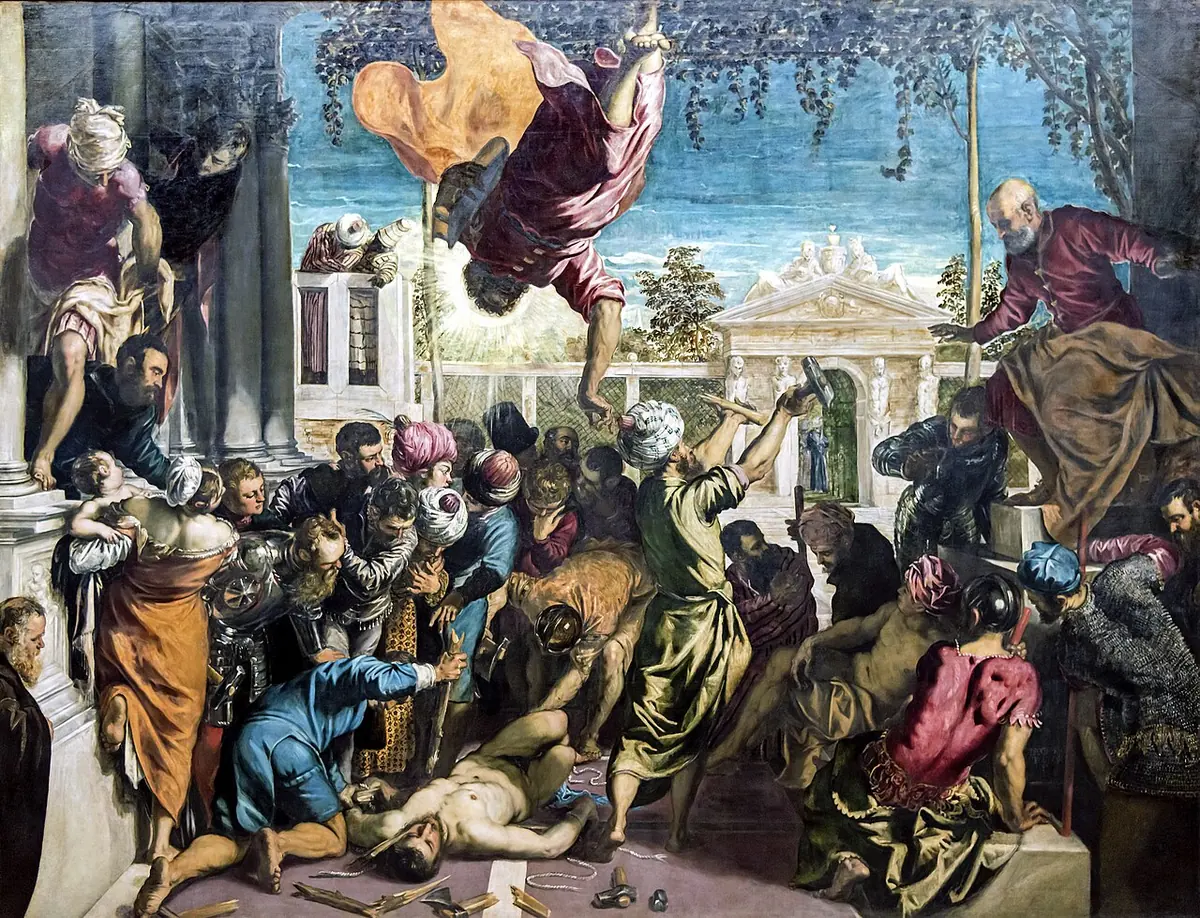
- Traditional: the Golden Legend's Venetian miracles. A servant of a gentleman of Provence goes on pilgrimage to Mark's tomb without permission, and when his master orders him blinded and his legs broken, the tools break. A Saracen sailor thrown into the sea in a storm promises to be baptized if Mark saves him, and a shining man lifts him back into the ship.
- Traditional: Venetian stories of how the saint guarded his body on its voyage and, later, revealed its lost hiding place.
- Reported: answered prayers attributed to St. Mark by Venetians, Copts and others, which the Church has not formally examined.

From Alexandria to Venice
The theft of the relics
By the 9th century Mark's tomb at Alexandria was a famous shrine, and Egypt was under Muslim rule. The Venetian account of what happened next was written down in the 9th century, and Christian Iconography summarizes it from the Acta Sanctorum. Two Venetian merchants, remembered as Buono of Malamocco and Rustico of Torcello, took the body from its tomb with the help of a priest and a monk who kept the church. They wrapped the body of St. Claudia in Mark's grave cloths and left it in his sarcophagus. They hid Mark's body in a large basket, covered it with olive leaves and then with pork. At the harbor, the Muslim customs officers saw the pork and refused to search the basket. On the voyage home a storm came up at night, and the saint appeared to a monk on board and told him where the ship could land safely. The story of the pork is traditional, but the theft itself is history. The Catholic Encyclopedia puts it more politely, saying the merchants "purchased" the relics.


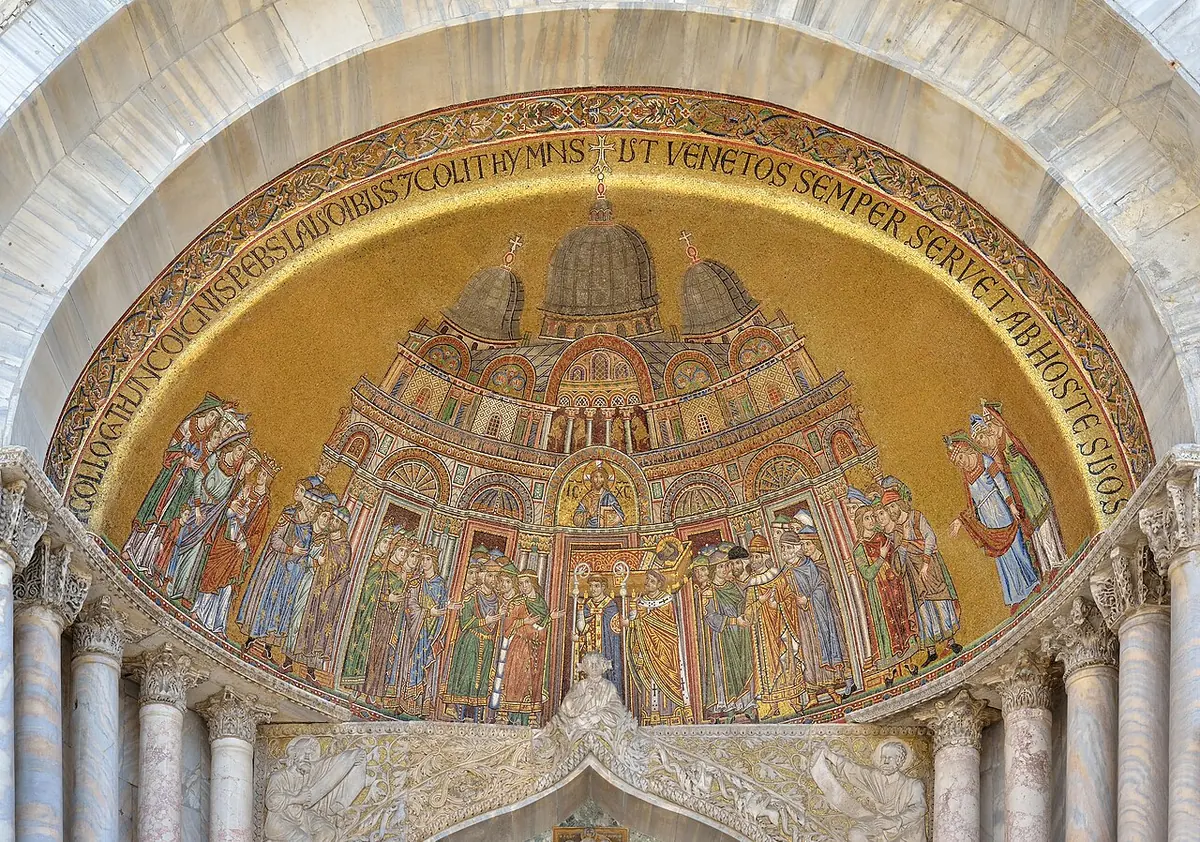
The basilica's own chronology dates the arrival of the body in Venice to 829, under Doge Giustiniano Partecipazio; many accounts give 828. The first Church of St. Mark was consecrated in 832. The present basilica was begun in 1063 and consecrated in 1094. The 13th-century mosaic over the Porta di Sant'Alipio, dated about 1265 in the basilica's chronology, shows the body being carried into the church.
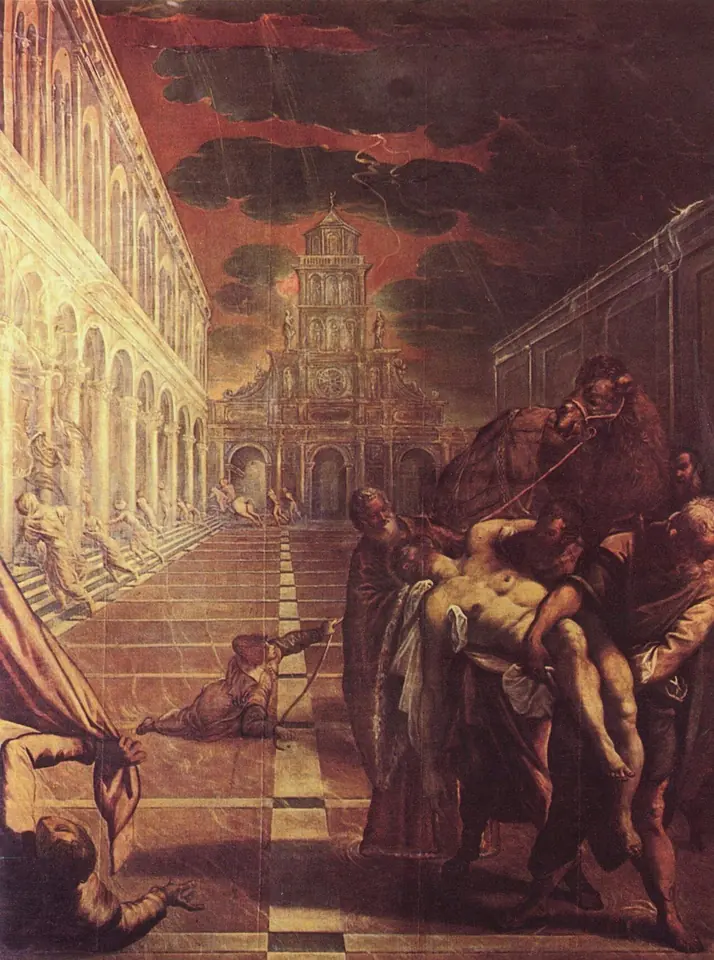

The relics were hidden during later rebuilding, and according to a Venetian legend they were lost and found again when a pillar opened after three days of prayer. The Catholic Encyclopedia records that work on the choir in 1808 brought the relics to light again.

The head and the return of 1968
The Coptic Church has never accepted that all of St. Mark left Alexandria. It holds that his head stayed in the city, and every year on 30 Baba (November 9) it commemorates "the appearance of his holy head in the city of Alexandria" and the consecration of his church there. The present St. Mark's Coptic Orthodox Cathedral in Alexandria stands on the site Copts honor as his church.
In June 1968, as the Coptic Church dedicated its new cathedral of St. Mark in Cairo, Pope Paul VI received a Coptic delegation in Rome and gave them a relic of St. Mark, "dont les restes vénérés sont conservés à Venise" ("whose venerated remains are kept in Venice"), to be placed in the new cathedral's main altar. He called the gift "a new bond between the Church of Rome and the Coptic Church, between the chair of Peter and the see of Mark." The body itself stayed in Venice.


Why St. Mark is the patron saint of Venice
Venice took Mark as its patron as soon as it had his body. The doge built the church of St. Mark next to his palace, and for about a thousand years, the basilica says, it served as the doge's chapel. The republic fought under the banner of the winged lion, put the lion on its coins and public buildings, and called itself the Republic of St. Mark. Venetian legend added that Mark, sailing through the lagoon long before the city existed, was greeted by an angel with the words of Christ in prison, Pax tibi, Marce, evangelista meus, and told that his body would one day rest there.
His other patronages are smaller. Notaries and lawyers claim him because he wrote down Peter's preaching with care, a scribe's work. Catholic Culture also lists glaziers and stained-glass workers, prisoners and captives (he was imprisoned before his death), and Egypt. See all the patron saints.
Symbols of St. Mark in art
Mark is the easiest evangelist to recognize, because of his lion.
- A winged lion: the second of the four living creatures of Revelation 4:7 and Ezekiel 1:10. St. Jerome, in the preface to his commentary on Matthew, explained it: Mark is the lion because in his Gospel "the voice of a lion roaring in the wilderness is heard," John the Baptist crying, "Prepare the way of the Lord." In the earliest Christian art, such as the 5th-century dome of the Mausoleum of Galla Placidia in Ravenna, the lion alone stands for Mark.
- An open book reading Pax tibi Marce evangelista meus: the words of Christ to Mark in prison. The lion of Venice holds this book.
- A book or scroll and a pen: his Gospel.
- Bishop's vestments or a throne with lions: for Mark as bishop of Alexandria.
- A dark beard and dark hair: in Byzantine icons Mark is usually a man in middle age with thick dark hair and a short beard, as in the Hilandar icon at the top of this page.


In Venice and across its old empire, from Istria to Crete, a winged lion on a gate or a column marks a Venetian building.
Tintoretto's Miracles of St. Mark
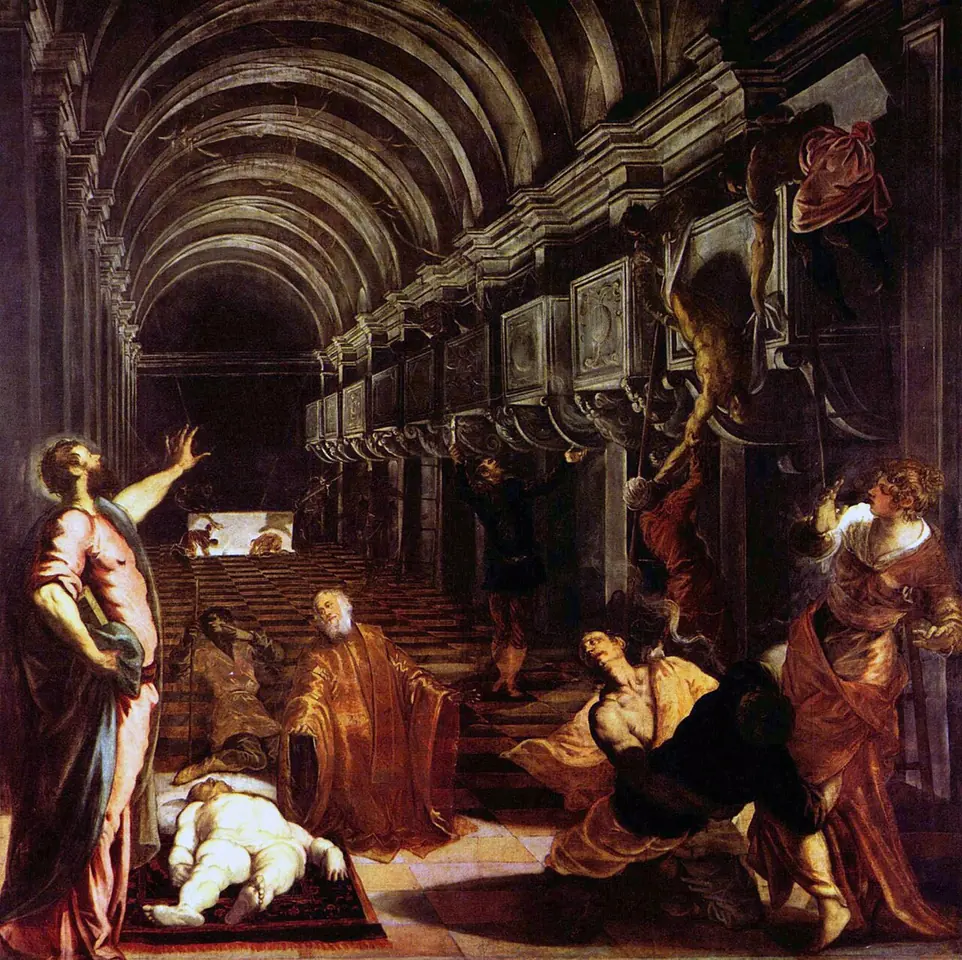
Jacopo Tintoretto painted four large canvases of Mark's miracles for the Scuola Grande di San Marco, the confraternity of St. Mark in Venice. The Miracle of the Slave (1548) shows the saint diving from the sky to save the tortured servant. Three later canvases (1562–1566) show the Christians of Alexandria carrying away Mark's body in a storm, the saint saving the Saracen sailor, and the finding of his body, in which Mark himself appears in a long vault of tombs and points to where his body lies. The first three are in the Gallerie dell'Accademia in Venice; the Finding is in the Brera in Milan.

Feast day and where St. Mark is honored
The Catholic and Orthodox churches keep St. Mark's feast on April 25. April 25 is also the traditional day of the Major Rogation, when Catholics walked in procession singing the Litany of the Saints to ask God's blessing on the year's crops. The Coptic Orthodox Church celebrates his martyrdom on 30 Baramouda, May 8 on the civil calendar. See the feast day calendar.
The great shrines are St. Mark's Basilica in Venice, where his relics lie under the high altar, and the Coptic cathedrals of St. Mark in Alexandria and Cairo. The Pope of Alexandria and Patriarch of the See of St. Mark, head of the Coptic Orthodox Church, sits in Cairo's St. Mark's Cathedral.
Prayer to St. Mark
No prayer by St. Mark survives, and there is no widely used traditional novena to him. The prayer of the Church on his day is the collect of the feast in the Roman Missal:
O God, who raised up Saint Mark, your Evangelist, and endowed him with the grace to preach the Gospel, grant, we pray, that we may so profit from his teaching as to follow faithfully in the footsteps of Christ. Who lives and reigns with you in the unity of the Holy Spirit, God, for ever and ever.
Eastern Christians pray the troparion and kontakion of his feast, and the Coptic Church remembers him in every liturgy as its founder. Many Christians mark his day by reading his Gospel, the shortest of the four, from beginning to end.
Frequently asked questions
When is St. Mark's feast day?
April 25 in the Catholic, Orthodox, Anglican and Lutheran calendars. The Coptic Orthodox Church celebrates his martyrdom on 30 Baramouda, which falls on May 8.
What is St. Mark the patron saint of?
Venice above all, along with notaries, lawyers, glaziers and stained-glass makers, prisoners and Egypt. The Coptic Orthodox Church honors him as its founder.
Why is St. Mark's symbol a lion?
Early Christians matched the four evangelists with the four living creatures of Ezekiel 1 and Revelation 4. St. Jerome explained that Mark is the lion because his Gospel opens with "the voice of a lion roaring in the wilderness," John the Baptist crying, "Prepare the way of the Lord."
Was St. Mark one of the twelve apostles?
No. He was a younger man from Jerusalem whose mother's house was a meeting place for the first Christians. The Orthodox Church counts him among the Seventy disciples Jesus sent out in Luke 10.
Where is St. Mark buried?
His body is in St. Mark's Basilica in Venice, brought from Alexandria by Venetian merchants in 828 or 829. The Coptic Orthodox Church holds that his head stayed in Alexandria, and in 1968 Pope Paul VI gave a relic from Venice to the new Coptic cathedral in Cairo.
Is the young man who ran away naked in Mark's Gospel St. Mark?
Possibly. Only Mark's Gospel tells of the young man who fled from Gethsemane leaving his linen cloth behind (Mark 14:51–52). Many readers since the early Church have thought the writer was quietly describing himself, and the Orthodox life of St. Mark says so, but the Gospel does not name him.
Did St. Mark really write the Gospel of Mark?
The tradition goes back to Papias around 130, who said Mark wrote down what Peter preached. The New American Bible's introduction notes that the book itself is anonymous and that modern research often proposes an unknown Jewish Christian writing shortly after the year 70.
Sources
- Catholic Encyclopedia (1910): Gospel of Saint Mark
- Eusebius, Church History, Book II (Mark's Gospel, chapter 15; Mark in Egypt, chapter 16)
- Eusebius, Church History, Book III (Papias on Mark, chapter 39)
- Jerome, De Viris Illustribus (Lives of Illustrious Men), chapter 8
- New American Bible (Revised Edition), Introduction to the Gospel according to Mark (USCCB)
- Orthodox Church in America: Apostle and Evangelist Mark
- Coptic Synaxarium, 30 Baramouda: The Martyrdom of Saint Mark the Apostle (CopticChurch.net)
- Coptic Synaxarium, 30 Baba: Consecration of the Church of St. Mark and the Appearance of His Holy Head (CopticChurch.net)
- Paul VI, Address on the inauguration of a new Coptic cathedral in Cairo, 22 June 1968
- Jacobus de Voragine, The Golden Legend (Caxton translation): Life of Saint Mark
- Christian Iconography: St. Mark in Art
- Christian Iconography: The Translation of St. Mark, Fooling the Customs Officials (mosaic)
- Christian Iconography: The Four Evangelists in Art
- Basilica di San Marco: Essential Chronology
- Basilica di San Marco: The Doges and the Basilica
- Catholic Encyclopedia (1912): Venice
- Catholic Culture: Feast of St. Mark, Evangelist
- Roman Martyrology, April 25