Relics and incorruptible saints

Relics are the bodies or bodily remains of saints and objects connected with them, which Catholic and Orthodox Christians venerate, not worship, out of honor for the saint and for God. Catholics speak of first-class relics (part of the body), second-class relics (things the saint used) and third-class relics (objects touched to a first-class relic). Incorruptible saints are those whose bodies were reported to resist normal decay; incorruption is not a requirement for sainthood, and many famous examples are partly covered with wax.
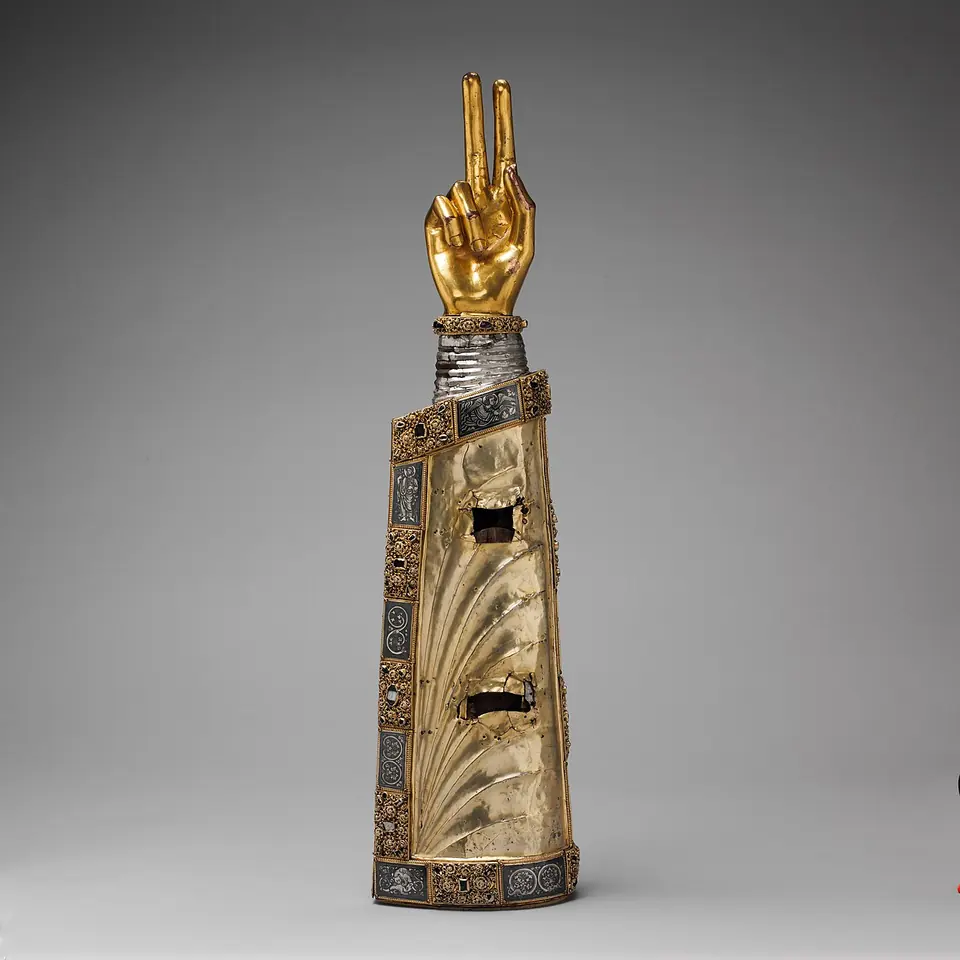
A bone fragment the size of a grain of rice, sealed behind glass in a silver case. A golden arm with its hand raised in blessing. A nun lying in a glass reliquary in Nevers, looking asleep more than a century after her death. Relics are among the oldest and, to many modern people, strangest parts of Catholic and Orthodox devotion. This page explains what they are, what the Church teaches and requires about them, the most famous relics in the world, and what "incorruptible" really means when it is said of a saint.
What is a relic?
A relic is the body of a saint, or part of it, or an object closely connected with a saint. Christians have honored such things since the second century. They do so, in Catholic teaching, because the bodies of the saints were temples of the Holy Spirit and will rise again, and because touching or praying near something that belonged to a holy person draws the mind toward that person and toward God.
The Church draws a firm line between this honor and worship. St. Jerome, defending relics around 404 against a priest named Vigilantius who mocked them, wrote: "We do not worship, we do not adore, for fear that we should bow down to the creature rather than to the Creator, but we venerate the relics of the martyrs in order the better to adore Him whose martyrs they are." The Council of Trent in 1563 taught the same, and in the same decree told bishops to root out superstition and profit-making around relics.


First-, second- and third-class relics
Catholics commonly sort relics into three classes:
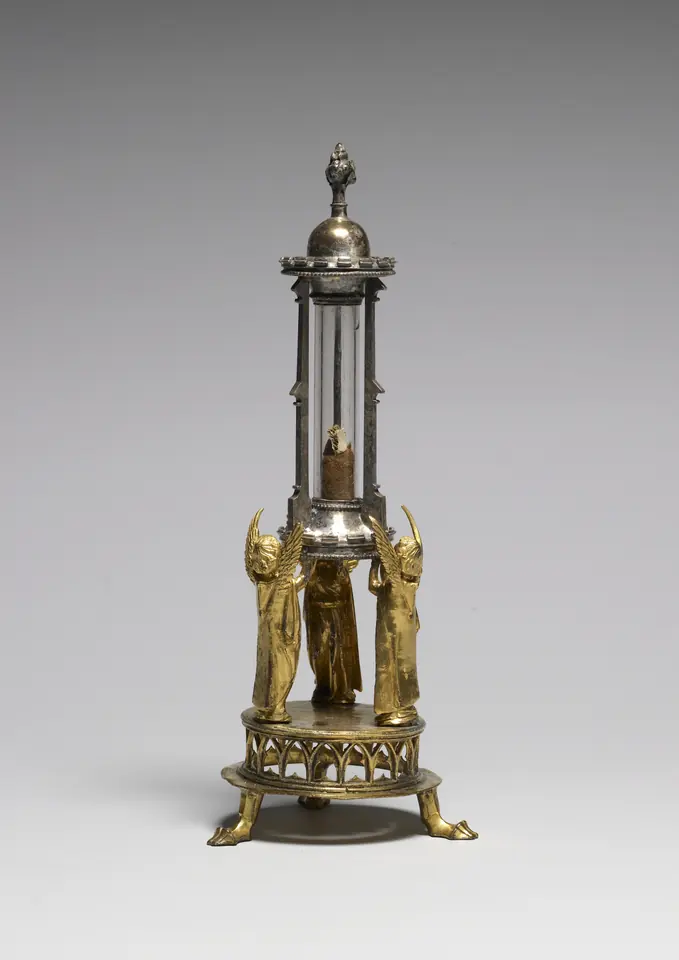
- First-class relics are the body of a saint or part of it: bones, ashes, hair, blood, and sometimes whole bodies. Most first-class relics people see are tiny fragments in a small round case called a theca.
- Second-class relics are things the saint owned or used: a habit, a rosary, a letter, a chair, the instruments of a martyr's death.
- Third-class relics are objects touched to a first-class relic or to a saint's tomb, most often a small square of cloth on a holy card. The custom is ancient. The Catholic Encyclopedia describes cloths called brandea that pilgrims lowered into the tomb of the apostles in Rome and then treasured as relics.
The classes are a popular custom rather than a legal category. The Vatican's 2017 instruction on relics uses a simpler division. It calls the body of a saint, notable parts of the body, or the whole of the ashes after cremation "significant relics," which bishops must keep in sealed urns in safe places. Small fragments of the body and objects that touched the saint are "non-significant relics," to be kept in sealed cases where possible and treated with reverence, "free from superstition and illicit trade."

The martyrs' tombs and the first altars
The cult of relics began at the graves of the martyrs. When St. Polycarp, bishop of Smyrna, was burned in about 155, his church wrote an account that is the earliest record of relic devotion. In the translation quoted by the Catholic Encyclopedia, "we took up his bones, which are more valuable than precious stones and finer than refined gold." They laid the bones in a fitting place, the letter goes on, where they hoped to gather each year to celebrate the anniversary of his martyrdom.
That pattern shaped the Church for centuries. Christians gathered at martyrs' tombs on the anniversaries of their deaths, which is why a saint's feast day is usually the day the saint died (see feast days and the Church calendar). In the catacombs of Rome they celebrated the Eucharist beside the graves. When the persecutions ended, churches were built over the most honored tombs: St. Peter's on the Vatican Hill over the grave of St. Peter, St. Paul's Outside the Walls over St. Paul, St. Lawrence's over St. Lawrence.

When a new church had no martyr's grave, relics were brought to it. In 386 St. Ambrose of Milan found the bodies of the martyrs Gervasius and Protasius and placed them beneath the altar of his new basilica, saying that the martyrs belonged under the altar where Christ is offered. The custom became law. Canon 1237 of the present Code of Canon Law still says that "the ancient tradition of placing relics of martyrs or other saints under a fixed altar is to be preserved."


Reliquaries
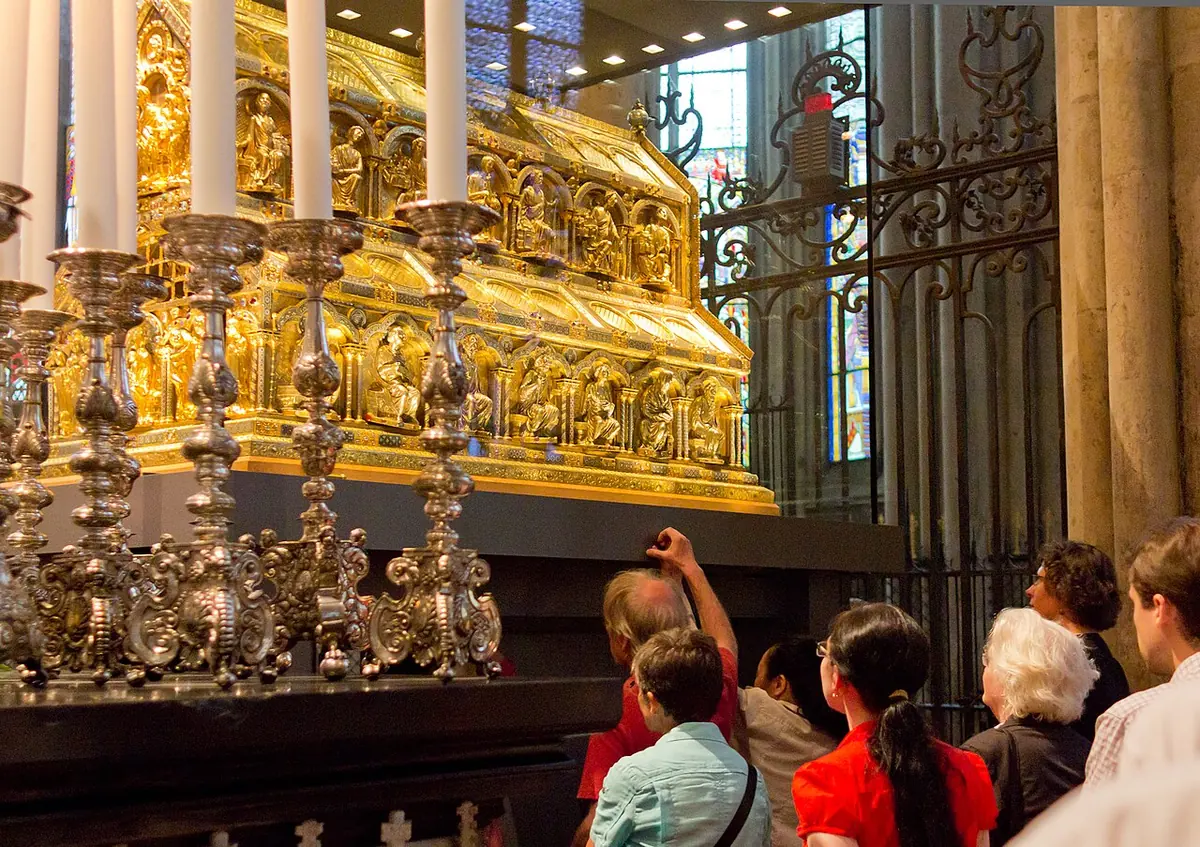
As relics were divided and carried across Europe, goldsmiths made containers worthy of them. Some take the shape of the relic inside: an arm, a foot, a head. Others are small houses or churches of gold and enamel. The reliquary statue of St. Foy at Conques in France, a seated golden figure covered with gems, holds the skull of a girl martyred in the early 4th century and is still carried out on her feast. The Shrine of the Three Kings in Cologne Cathedral, made between about 1180 and 1220, is the largest reliquary in the Western world.


Abuses, and the rules that answer them
The trade in relics flourished in the Middle Ages, and with it fraud. Churches competed for famous relics, relics were stolen (the medieval word was furta sacra, "holy thefts"), and countless fakes were sold. The Catholic Encyclopedia, written by Catholic scholars in 1911, says frankly that many relics shown in famous churches were spurious, and that some, like the boards of the Crib kept in Rome, have no early evidence behind them. The Theodosian Code of the Roman Empire had already forbidden the sale of martyrs' remains, and St. Augustine complained of impostors in monks' habits who peddled false ones.
Modern Church law is strict on both points. Canon 1190 says simply: "It is absolutely forbidden to sell sacred relics." Significant relics, and relics greatly honored by the people, cannot be given away or permanently moved without the permission of the Holy See.
The 2017 instruction on relics
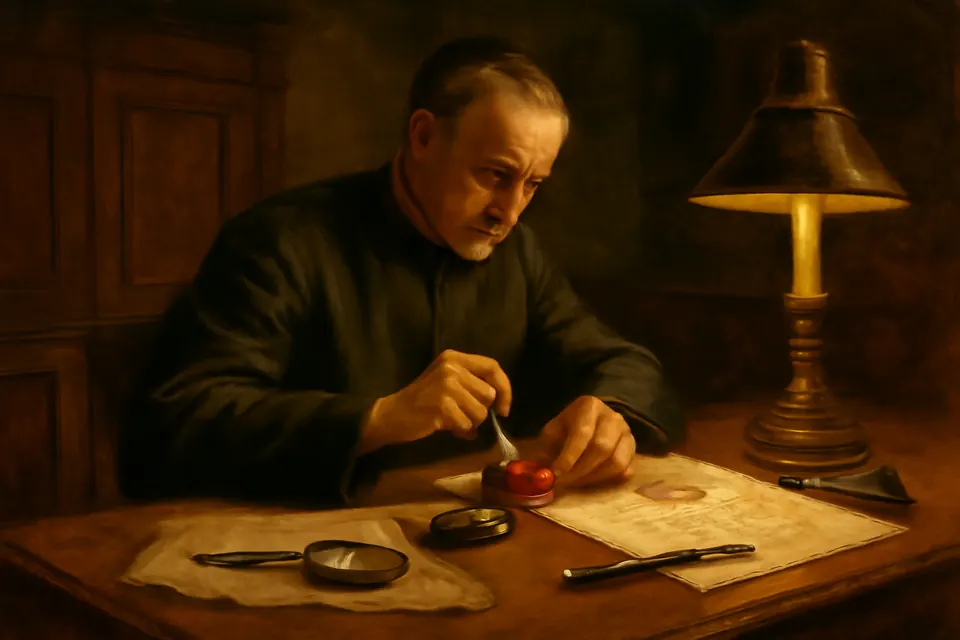
On December 8, 2017, the Congregation for the Causes of Saints issued an instruction, Relics in the Church: Authenticity and Preservation, which sets the current procedures. Its main points:
- Relics "may not be displayed for the veneration of the faithful without a proper certificate of the ecclesiastical authority who guarantees their authenticity."
- The "canonical recognition" of a saint's remains, when a tomb is opened and the body examined, is done under the bishop's authority with doctors and witnesses, and every step is recorded and sealed.
- If the remains need preservation work, it is done with the bishop's consent and "the most accredited techniques."
- Dividing a body into fragments requires the consent of the Vatican's Congregation.
- Selling relics, trading them, or displaying them in profane or unauthorized places is "absolutely prohibited."
- Relics may travel on pilgrimage, but only with a designated guardian and, outside the diocese, with the written consent of each receiving bishop.
Famous relics
Some relics are famous because millions have prayed before them; some because their authenticity has been argued over for centuries. A few are both.

The tilma of Guadalupe
The cloak of St. Juan Diego, which bears the image of Our Lady of Guadalupe, hangs above the altar of the basilica in Mexico City and draws more pilgrims than any other Marian shrine in the world. Strictly speaking it is a second-class relic of St. Juan Diego as well as a sacred image. Catholics believe the image appeared miraculously on the cloth in December 1531. The full story and the debate over the image's origin are in our entry.
The Shroud of Turin
The Shroud is a linen cloth about 14 feet long bearing the faint front and back image of a man who appears to have been scourged and crucified. Many Christians believe it is the burial cloth of Jesus. Its documented history begins at Lirey in France in the 1350s. In 1389 the bishop of Troyes complained to the Avignon pope Clement VII that it was a painting, and Clement allowed it to be shown only if it was announced as a representation. It passed to the House of Savoy, survived a fire at Chambéry in 1532, and has been in Turin since 1578.
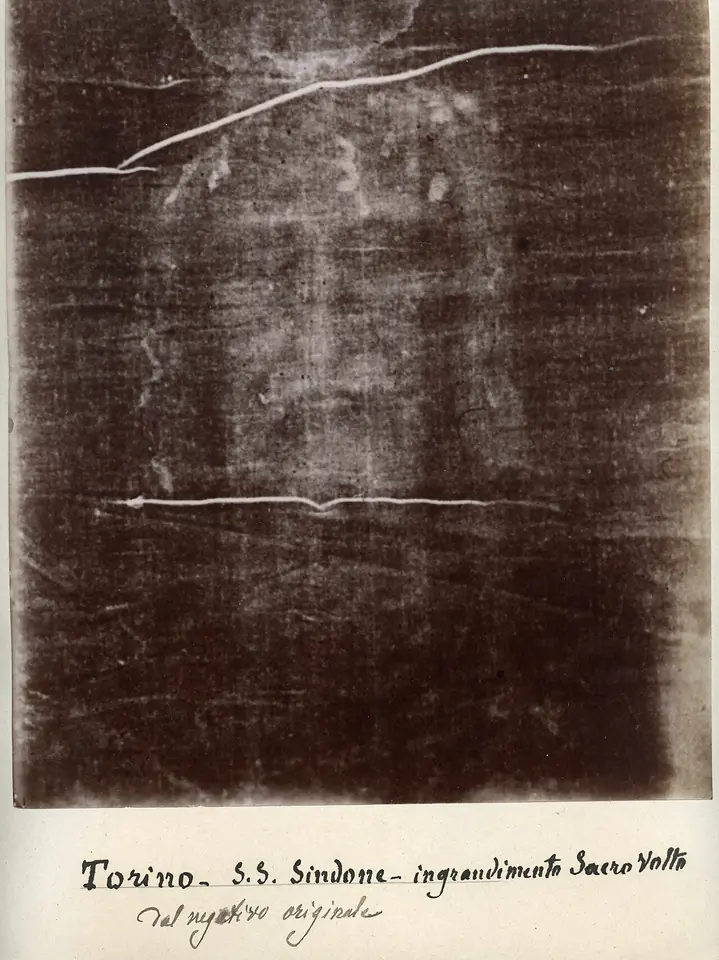

In 1898 the amateur photographer Secondo Pia found that his negative showed the face far more clearly than the cloth itself, as if the image were itself a kind of negative. In 1988 three laboratories, at Oxford, Zurich and Arizona, carbon-dated samples cut from one corner, and their joint report in Nature in 1989 dated the linen to between 1260 and 1390. Many scientists regard that as settling the matter. Defenders of the Shroud argue that the sample came from a repaired edge, point to later statistical criticism of the published data, and note that no one has reproduced the image in all its properties.
The Church has never ruled. Visiting Turin in 1998, John Paul II said: "Since it is not a matter of faith, the Church has no specific competence to pronounce on these questions. She entrusts to scientists the task of continuing to investigate." He added: "For the believer, what counts above all is that the Shroud is a mirror of the Gospel." On this site the Shroud is presented as a disputed relic.
The Holy House of Loreto
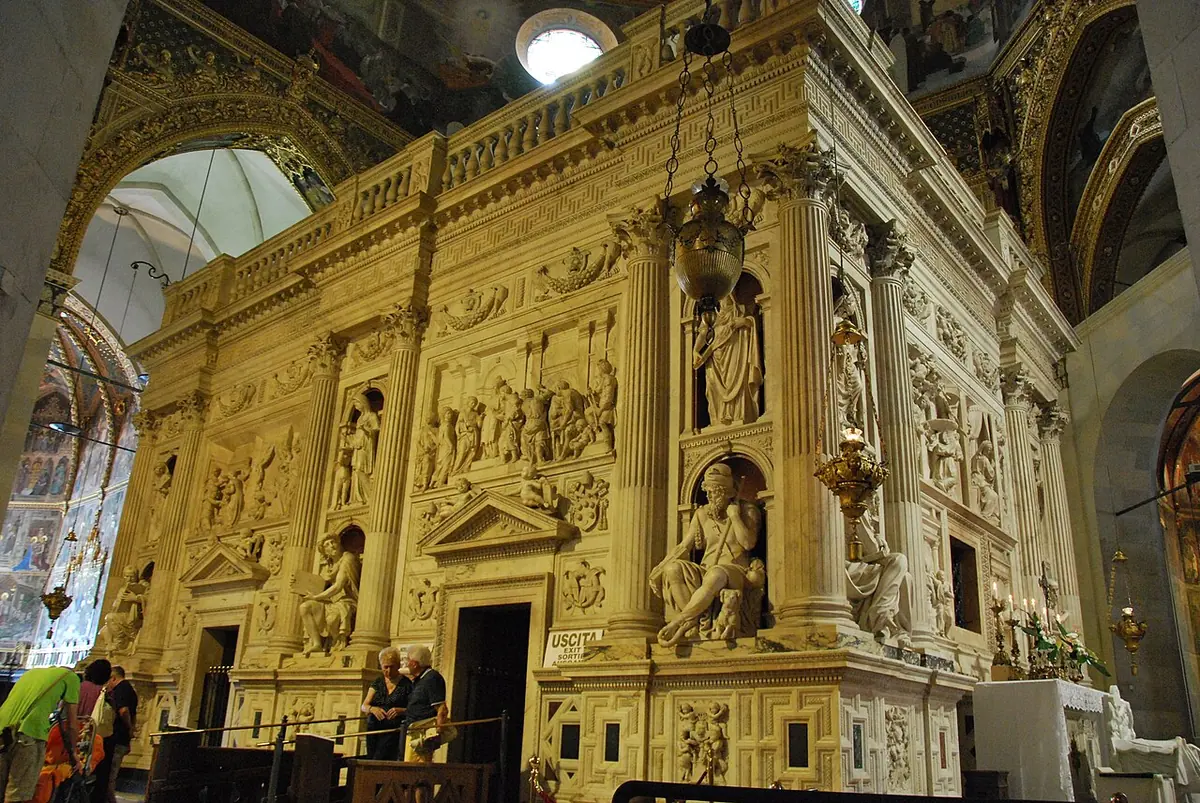
Inside the basilica at Loreto, on Italy's Adriatic coast, a small brick house stands inside a carved marble screen. Tradition holds that it is the house of the Holy Family at Nazareth, carried by angels in 1291 to Tersatto in Croatia and in 1294 to a laurel wood near Recanati. Popes have honored the shrine for centuries, and Our Lady of Loreto is the patron of air travelers.
The historical difficulties are serious, and Catholic scholars have said so. Writing in the Catholic Encyclopedia in 1912, the Jesuit historian Herbert Thurston noted that no writer mentions the miraculous translation until about 1472, nearly two centuries later, that earlier pilgrims to Nazareth describe a cave rather than a cottage, and that a church of Mary already stood at Loreto before 1294. Thurston did not think fraud was needed to explain the story; he suggested that a revered image from Tersatto was later confused with the chapel that housed it at Loreto. This site labels the angelic translation traditional.

The blood of St. Januarius
St. Januarius (San Gennaro) was a bishop martyred around 305, and Naples keeps what it holds to be his blood in two glass ampoules. On the Saturday before the first Sunday in May, on his feast on September 19, and on December 16, the dried dark mass is shown to the people, and most years it is reported to turn liquid, sometimes in minutes, sometimes after hours or days. The liquefaction is first recorded in 1389. When it fails, Neapolitans have long taken it as a bad omen.
The Catholic Encyclopedia reviewed the natural explanations offered in its day and found none adequate. In 1991 three Italian chemists, Luigi Garlaschelli, Franco Ramaccini and Sergio Della Sala, made a gel from chalk, salt and an iron compound that was available in the Middle Ages, which turns liquid when shaken and solid again at rest, and suggested that the relic might work the same way. The ampoules have never been opened for testing. The Church has made no formal judgment, and the liquefaction is a reported wonder.


Incorruptible saints
From time to time the tomb of a holy person is opened, for a canonical recognition or a transfer, and the body is found largely intact, sometimes still flexible, years or centuries after death and without having been embalmed. Catholics call such a saint "incorruptible" or "incorrupt." The phenomenon was widely known through Joan Carroll Cruz's book The Incorruptibles (1977), which collected more than a hundred cases.
What incorruption is, and what it is not
Three points are often misunderstood.
- It is not required for sainthood. Most saints' bodies decayed normally, including some of the greatest. Incorruption plays no formal part in a cause; the miracles approved for beatification and canonization are healings or similar events after death, investigated as described in how the Church investigates miracles.
- It is not always complete. Many "incorrupt" bodies have darkened, dried or partly mummified. Some were embalmed after exhumation. The 2017 instruction expects preservation work where it is needed.
- Wax masks are common. Several of the most visited incorrupt saints wear thin wax coverings over the face and hands, to spare pilgrims the sight of darkened skin. This is not a deception; the shrines say so openly.
Natural factors can preserve a body: a dry, cool or sealed tomb, the conversion of body fat into a waxy substance called adipocere, or the soil. Believers do not deny this. They note that some bodies have stayed intact in conditions where others decayed, and they see in it a sign of God's favor, as Eastern Christians have long done. On this site incorruption is labeled a reported wonder unless a particular case was formally approved, which is rare.


Some well-known examples
- St. Bernadette of Lourdes died in 1879 at the convent of Saint-Gildard in Nevers. Her body was exhumed in 1909, 1919 and 1925, and the Sisters of Charity of Nevers state that it was found incorrupt each time. Before it was placed in its glass reliquary in 1925, wax coverings were made for the face and hands.
- St. Catherine Labouré, the visionary of the Miraculous Medal, died in 1876. When her vault was opened in 1933, the year of her beatification, her body was reported intact. It lies under the side altar of the chapel on the rue du Bac in Paris, with a wax mask over the face. See also Our Lady of the Miraculous Medal.
- St. Charbel, the Lebanese hermit, died in 1898. His body was found intact in 1899, and again in 1927 and 1950, and it gave off a reddish fluid that pilgrims collected. The postulator of his cause reported that by 1976 only the skeleton remained.
- St. Rita of Cascia, who died in 1457, was never buried. Her body lies in a silver and crystal urn made in 1930 in the basilica at Cascia. The monastery describes the face, hands and feet as mummified, with the skeleton intact.
- St. John Vianney, the Curé of Ars, died in 1859. When his body was exhumed in 1904 the official report found it darkened and dried but whole. It lies in a gilded shrine at Ars with a wax mask over the face, and his heart is kept in a separate chapel nearby.
- Padre Pio was exhumed in 2008, forty years after his death, and found by Church officials in "fair condition." His body, with a lifelike silicone mask over the face, lies in a glass coffin at San Giovanni Rotondo.


In Orthodox Christianity incorrupt relics have a still larger place. The bodies of saints such as St. Spyridon on Corfu and St. Seraphim of Sarov are carried in procession and venerated by thousands, and Orthodox tradition has long counted the preservation of a body among the signs that a person was holy.


Veneration and processions
How do Catholics actually honor relics? In most churches, quietly. A relic may be exposed on a feast day, and the faithful come forward to kiss the reliquary or touch it with a rosary or a holy card, which then becomes a third-class relic itself. A priest may bless people with a relic. Many people simply pray in front of a saint's tomb or reliquary, asking the saint to pray for them.

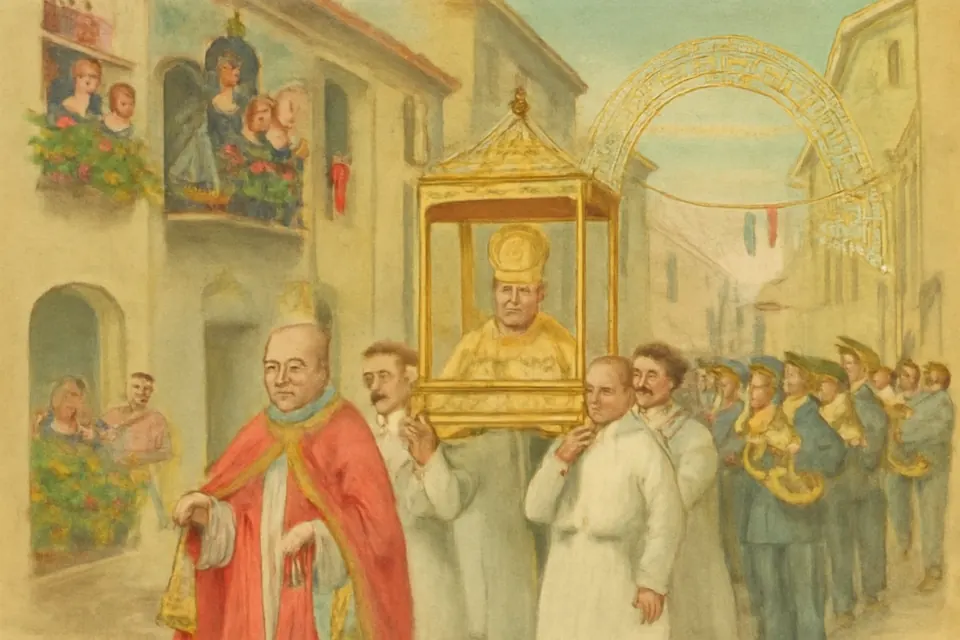
On great feasts relics go out into the streets. St. Foy's golden statue is carried through Conques each October. In Naples the blood of St. Januarius is carried in procession in May. On Corfu St. Spyridon's body is carried around the town four times a year. In Cologne, on the 850th anniversary of the arrival of the relics of the Magi in 2014, pilgrims were allowed to pass beneath the shrine.
Relics also travel. Under the 2017 rules a relic can go on pilgrimage with a guardian and the consent of the bishops involved. The heart of St. John Vianney toured the United States in 2018 and 2019, and relics of St. Thérèse of Lisieux have visited dozens of countries since the 1990s, drawing crowds that astonished the organizers.
The relics map
Most entries on this site already record where the saint's relics or tomb are: the body, the head, the heart, a claimed relic, with the church, city and country. We are building a relics map from that data, so that a reader can see at a glance which saints rest in Rome, Paris or Naples, or plan a pilgrimage around them. It is coming soon.
For more background, see what a saint is, how a person becomes a saint and how the Church investigates miracles.
Frequently asked questions
What are first-, second- and third-class relics?
A first-class relic is the body of a saint or a part of it, such as a bone, hair or blood. A second-class relic is something the saint owned or used, such as clothing, a rosary or a book. A third-class relic is an object, usually a small piece of cloth, that has been touched to a first-class relic. The Vatican's own documents use a simpler division into "significant" relics (whole bodies and notable parts) and "non-significant" ones.
Is it legal to buy or sell relics?
Church law forbids it. Canon 1190 of the Code of Canon Law says, "It is absolutely forbidden to sell sacred relics," and the 2017 instruction on relics repeats that their sale is "absolutely prohibited." Dealers sometimes charge for the reliquary or case. Catholics who find a relic for sale are encouraged to rescue it and give it to a parish or diocese rather than trade in it.
What does incorruptible mean for a saint?
It means the saint's body was found, years after death, without the normal decay, often still flexible and without embalming. Catholics see this as a possible sign of holiness, but it is not a miracle the Church approves in causes, and it is not required for sainthood. Many saints' bodies decayed normally, and some famous incorrupt bodies have darkened or dried and are covered with wax masks.
Is St. Bernadette's body really incorrupt?
The Sisters of Charity of Nevers state that her body was found incorrupt when it was exhumed in 1909, 1919 and 1925. Because the skin of the face and hands had darkened, thin wax coverings were fitted over them in 1925, so what visitors see at Nevers is wax over her real features. On this site the incorruption is a reported wonder.
Do Catholics worship relics?
No. Catholic teaching distinguishes the worship given to God alone from the honor shown to saints and their relics. St. Jerome put it this way around 404, "We do not worship, we do not adore... but we venerate the relics of the martyrs in order the better to adore Him whose martyrs they are."
Why are relics put in altars?
Because the first Christians celebrated the Eucharist at the tombs of martyrs, and later churches were built over those tombs. Canon 1237 says "the ancient tradition of placing relics of martyrs or other saints under a fixed altar is to be preserved." Many Catholic altars still hold a small relic.
Is the Shroud of Turin real?
No one can say for certain. Radiocarbon tests in 1988 dated the linen to between 1260 and 1390, and the cloth's documented history begins in France in the 1350s. Defenders argue the sample was unrepresentative and that no one has explained how the image was made. The Catholic Church has never ruled on its authenticity; John Paul II said "the Church has no specific competence to pronounce on these questions."
How can I get a relic?
Parishes and religious orders sometimes give small relics, usually third-class, on request, and shrines often give cloths touched to a saint's tomb. First-class relics normally go to churches, chapels and religious communities rather than private people, and they should come with a certificate of authenticity from Church authority.
Sources
- Congregation for the Causes of Saints: Instruction, Relics in the Church: Authenticity and Preservation (2017)
- Code of Canon Law, Book IV, canons 1166-1190 (canon 1190 on relics)
- Code of Canon Law, Book IV, canons 1205-1243 (canon 1237, relics under altars)
- Catholic Encyclopedia (1911): Relics
- The Martyrdom of Polycarp (New Advent)
- St. Ambrose, Letter 22 (on the finding of Gervasius and Protasius)
- Catholic Encyclopedia (1912): The Holy Shroud (of Turin)
- P. E. Damon et al., Radiocarbon dating of the Shroud of Turin, Nature 337 (1989)
- John Paul II, Address at the Cathedral of Turin before the Shroud (May 24, 1998)
- Catholic Encyclopedia (1912): Santa Casa di Loreto
- Catholic Encyclopedia (1910): St. Januarius
- L. Garlaschelli, F. Ramaccini and S. Della Sala, Working bloody miracles, Nature 353 (1991)
- Sisters of Charity of Nevers: Son corps (Bernadette's body)
- Monastery of Saint Rita of Cascia: Basilica of Saint Rita
- Sanctuary of Ars: Timeline
- Chapel of Our Lady of the Miraculous Medal: The apparitions and the Miraculous Medal
- Paul VI, Homily for the canonization of Charbel Makhlouf, October 9, 1977 (French)