St. Louis IX, King of France
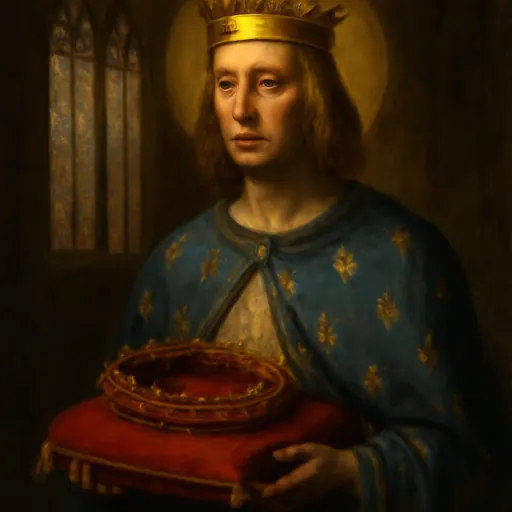
St. Louis IX (1214/15 to 1270) was king of France for 44 years, famous for his piety, his care for the poor and his personal justice. He built the Sainte-Chapelle in Paris for the Crown of Thorns, led the Seventh and Eighth Crusades, and died at Tunis. He was canonized in 1297, and his feast day is August 25. He is a patron saint of France, and the city of St. Louis, Missouri, is named for him.
Who was St. Louis IX?
Louis IX ruled France from 1226 to 1270, longer than almost any medieval king. He is the only French king the Catholic Church has declared a saint. His contemporaries saw him as the model Christian ruler: a man who heard two Masses a day, fed the poor at his own table, judged his people's quarrels in person and twice left his kingdom to fight in the East.
Much of what is known about him comes from people who knew him. The fullest portrait is the memoir of Jean de Joinville, a knight of Champagne who went on crusade with him and dictated his book in old age, around 1309. The inquiry for his canonization, which ran from 1273 to 1297, gathered hundreds of testimonies; only fragments survive, along with a Life by William of Saint-Pathus, confessor to Louis's widow, built from them.

The life of St. Louis IX
Boy king
Louis was born at Poissy, near Paris, on April 25, 1214 or 1215 (sources differ on the year). He was twelve when his father, Louis VIII, died in 1226. His mother, Blanche of Castile, governed as regent for eight years and kept great influence until her death in 1252. The Catholic Encyclopedia gives her famous words to her son: "I would rather see you dead at my feet than guilty of a mortal sin."
In 1234 Louis married Marguerite of Provence. They had eleven children.


The Crown of Thorns and the Sainte-Chapelle
In 1239 Louis acquired the relic venerated as Christ's Crown of Thorns from Baldwin II, the Latin emperor of Constantinople, who had pledged it to Venetian lenders. Louis paid off the debt, and the relic arrived in Paris that summer. He soon added a fragment of the True Cross and other relics of the Passion.
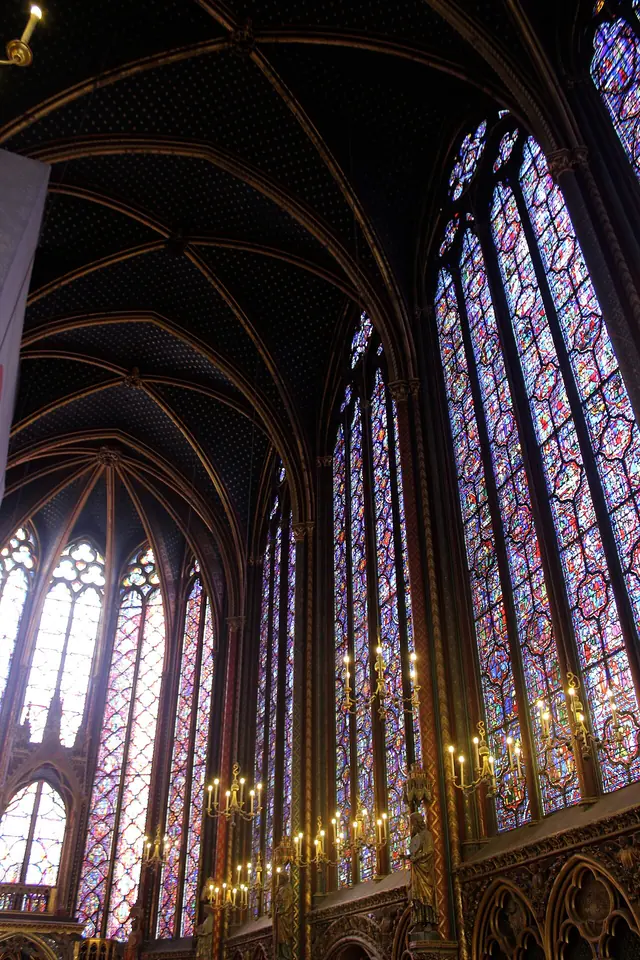
To hold them he built the Sainte-Chapelle inside the royal palace on the Île de la Cité. It was consecrated on April 26, 1248, a few months before he left on crusade. Its upper chapel is almost entirely glass, with 15 great windows telling the Bible from Genesis to the arrival of the relics in Paris. The Crown of Thorns stayed there until the French Revolution and is now kept by Notre-Dame Cathedral.

The Seventh Crusade
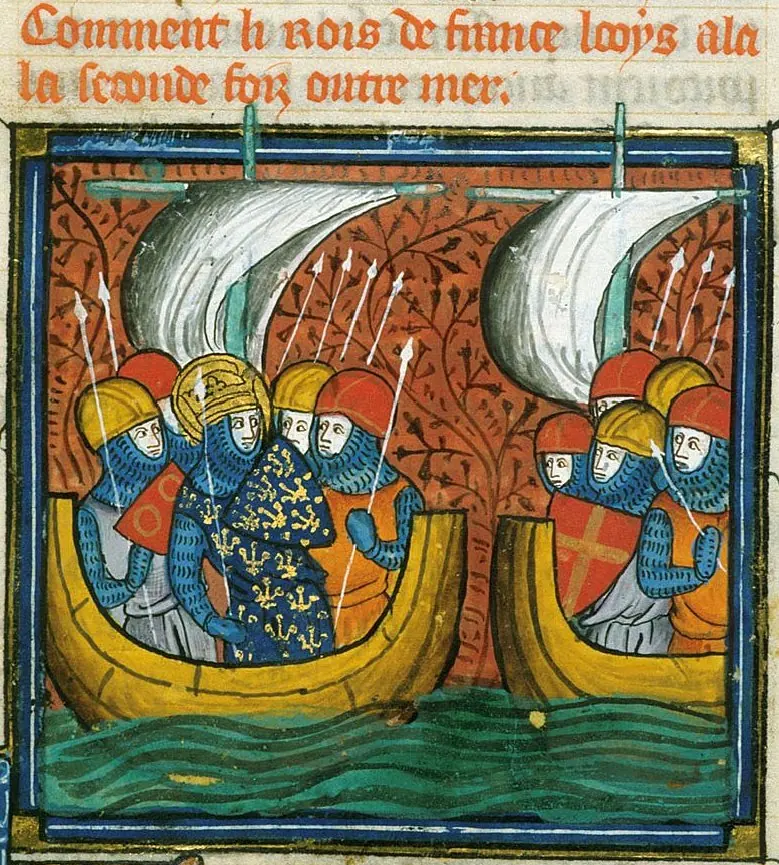
In 1244, gravely ill, Louis vowed to take the cross. He sailed in 1248, and in June 1249 his army took the port of Damietta in Egypt. The march toward Cairo bogged down in the Nile Delta. In the spring of 1250 the army, weakened by disease, was defeated and Louis was taken prisoner. He was freed for a large ransom and the return of Damietta. He then spent four years in the crusader kingdom of Acre, rebuilding the walls of its coastal towns, and did not return to France until 1254.
Joinville was with him through all of it, and his account of the king in captivity, saying his prayers and refusing to bargain with an oath he thought sinful, did much to create Louis's reputation for holiness. Militarily the crusade was a disaster that cost the lives of a great part of his army.
Justice and charity
After 1254 Louis reformed the royal administration. He sent investigators across the kingdom to hear complaints against his own officials. Joinville describes how, in summer, the king would sit in the forest of Vincennes after Mass, "and all who had business would come and talk with him, without hindrance from ushers or anyone." His reputation for fairness was such that Henry III of England and his barons asked him to settle their quarrel in 1264.

He gave alms daily. The Catholic Encyclopedia says he fed more than a hundred poor people every day, washed the feet of beggars and cared for lepers. He founded the Quinze-Vingts in Paris as a home for 300 blind men, along with hospitals at Pontoise, Vernon and Compiègne. Under his patronage Robert de Sorbon founded the college that became the Sorbonne.

Louis and the Jews of France
Louis's piety had a hard edge, and his treatment of the Jews of France is the darkest part of his reign. In 1240, after a convert named Nicholas Donin denounced the Talmud to Pope Gregory IX, a public disputation was held in Paris at which Rabbi Jehiel of Paris defended the book. The Talmud was condemned, and in June 1242, according to the Encyclopaedia Judaica, 24 wagonloads of Jewish books were burned in Paris. Louis ordered further confiscations in 1247 and 1248. He also pressed Jews out of moneylending, ordered their banishment in 1254 (they were readmitted a few years later) and required them to wear a distinguishing badge. Joinville records Louis telling him that a layman who heard the Christian faith insulted by a Jew should answer with the sword. A respectful account of his holiness has to include this record as well.
The Eighth Crusade and death at Tunis
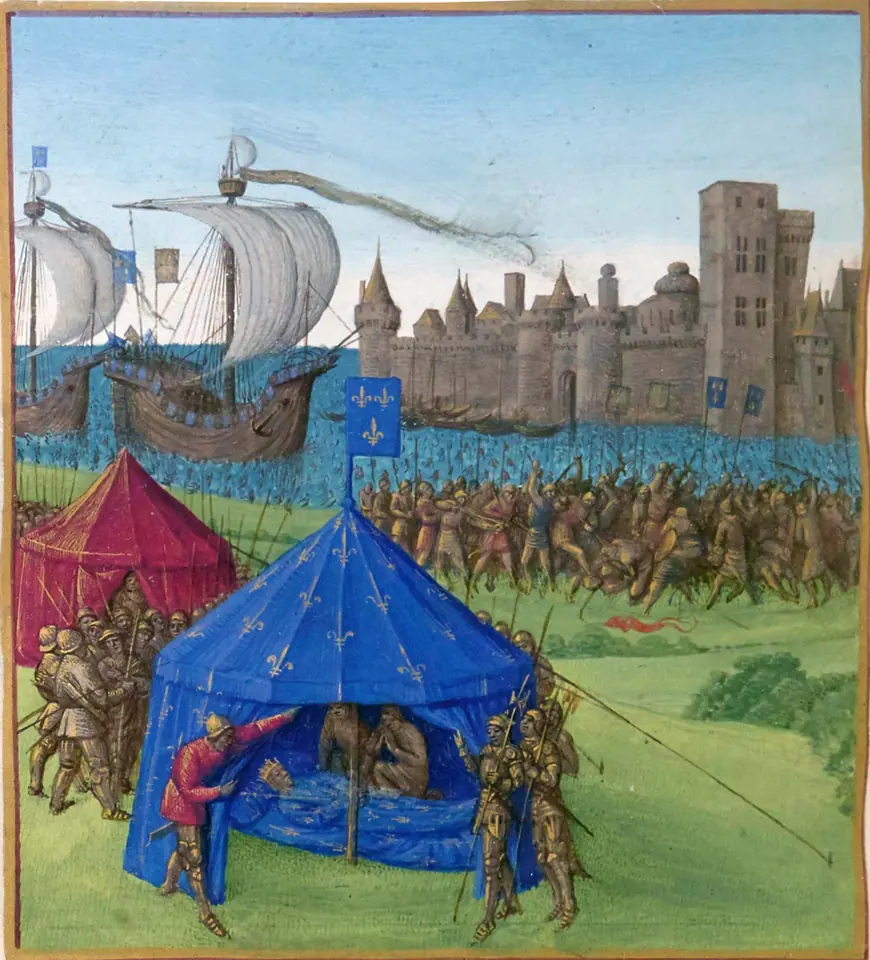
In 1270 Louis, now in poor health, set out again. The fleet went first to Tunis, in the hope that its ruler could be converted or that the city would serve as a base. Disease swept through the camp in the summer heat. Louis's son John Tristan died, and then the king himself fell ill.

Joinville, who refused to go on this crusade, wrote what he heard from Louis's son Peter, Count of Alençon: the dying king called on St. James, St. Denis and St. Genevieve, had himself laid on a bed strewn with ashes, and died "in the very same hour when the Son of God died upon the Cross." It was August 25, 1270.

The miracles of St. Louis
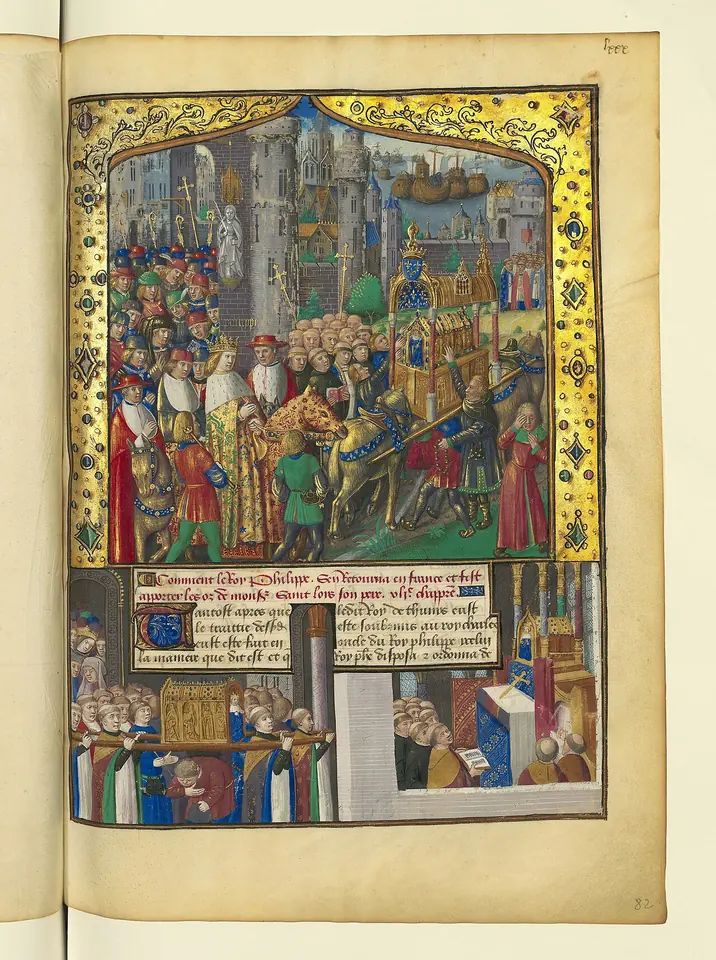
Louis was venerated as a saint almost as soon as he died. Medieval sources tell of sick people healed along the route as his remains were carried home and at his tomb in Saint-Denis; the late medieval Book of the Deeds of Saint Louis pictures the sick crowding around his shrine. The canonization inquiry of 1273 to 1297 examined such cures together with testimony about his life, and Boniface VIII proclaimed him a saint at Orvieto in 1297. Those cures accepted in the process count as approved in the sense this encyclopedia uses, though by the standards of a medieval process, not a modern one. Later healings credited to his intercession are reported. Joinville's stories of his prayer and patience in captivity are not miracles; they are witness accounts of his character.

Why St. Louis is the patron saint of France and of kings
France was his kingdom, and later French kings, who all descended from him, made him the dynasty's saint; the name "Saint-Louis" spread to churches, orders of chivalry and towns. His Instructions to his son Philip, a short letter of advice probably written around 1267, made him a model for Christian rulers:
Dear son, have a tender pitiful heart for the poor, and for all those whom you believe to be in misery of heart or body, and, according to your ability, comfort and aid them with some alms.
He also told Philip: "if a poor man have a quarrel with a rich man, sustain the poor rather than the rich, until the truth is made clear." See more patronages on our patron saints page.
Symbols of St. Louis IX in art
Louis is shown as a king, usually young or middle-aged and beardless. Look for:
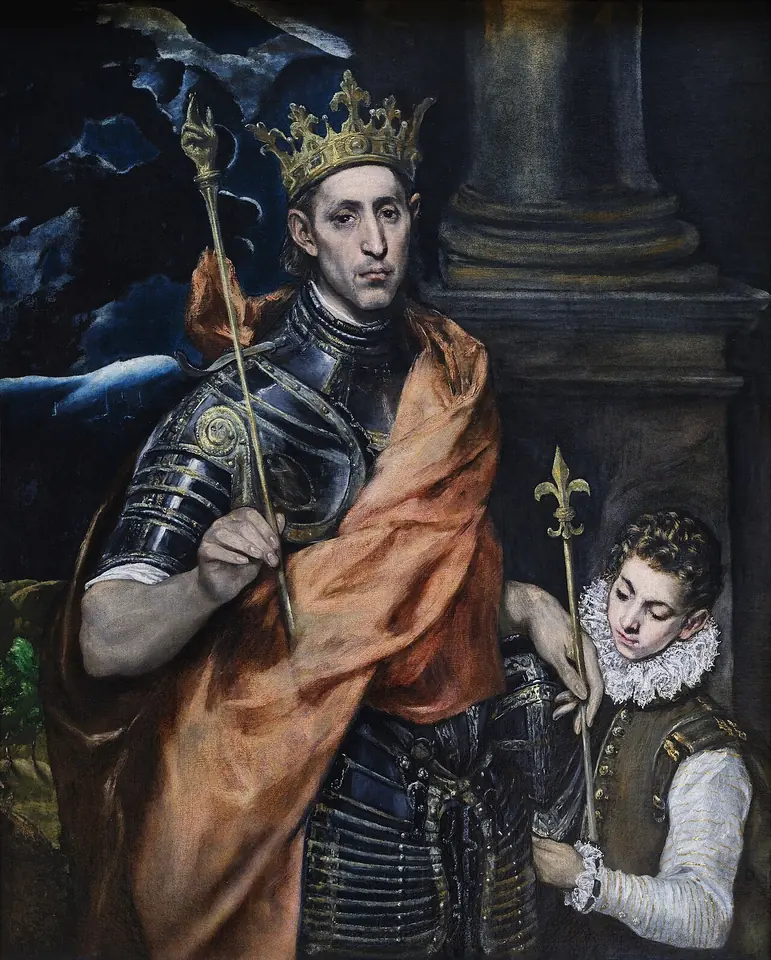
- A crown and scepter: often with the "hand of justice," a rod topped with a carved hand.
- The Crown of Thorns: held on a cushion or in his hands, the most specific sign that a king is Louis.
- A blue mantle with gold fleurs-de-lis: the royal arms of France.
- Nails or a fragment of the Cross: other relics of the Passion he acquired.
- A sword or crusader's cross: for his two crusades.
Medieval manuscripts show him enthroned or on crusade, as in the miniatures on this page. El Greco's Louvre painting gives him Renaissance armor. Modern statues, like the bronze in St. Louis, Missouri, show him on horseback holding his sword up like a cross.
Feast day and places named for St. Louis
His feast is August 25, an optional memorial in the General Roman Calendar. Find his neighbors on our feast days page.
His bones were buried at the royal abbey of Saint-Denis in 1271; his brother Charles of Anjou took his heart and entrails to Monreale Cathedral in Sicily. Over the centuries many of the bones were given out as relics, and the tomb at Saint-Denis does not survive.
The city of St. Louis, Missouri, was founded in 1764 by the French traders Pierre Laclède and Auguste Chouteau, who named it for him. The bronze Apotheosis of St. Louis, designed by Charles Henry Niehaus and unveiled in Forest Park in 1906, was the city's emblem until the Gateway Arch. Many other places carry his name, among them Mission San Luis Rey in Oceanside, California, named by the Franciscans who founded it.


Prayer to St. Louis IX
The Church's own prayer is the collect for his feast in the Roman Missal, which asks that, through his intercession, Christians may seek God's kingdom while doing their work in this world. Catholics also pray in their own words for those who govern, asking St. Louis to pray that they will rule with justice and care for the poor. We have not found a traditional devotional prayer to him with a citable origin, so we don't print one.
Frequently asked questions
When is the feast day of St. Louis IX?
August 25, the day he died at Tunis in 1270. It is an optional memorial in the General Roman Calendar.
Is St. Louis, Missouri, named after St. Louis IX?
Yes. The French fur traders Pierre Laclède and Auguste Chouteau founded the town in 1764 and named it for King Louis IX. The Apotheosis of St. Louis statue in Forest Park, put up after the 1904 World's Fair, shows him on horseback.
What did St. Louis bring to Paris?
The Crown of Thorns, which he acquired from the Latin emperor of Constantinople, Baldwin II, in 1239 by paying off a loan for which it had been pledged to Venetian creditors. He later added a fragment of the True Cross and other relics of the Passion, and built the Sainte-Chapelle to house them.
Was St. Louis IX a crusader?
Yes. He led the Seventh Crusade to Egypt (1248 to 1254), where he was captured and ransomed, and the Eighth Crusade (1270), which ended at Tunis when he died of disease in camp.
How did St. Louis IX treat the Jews of France?
Harshly. He backed the trial of the Talmud in Paris in 1240, which led to the public burning of 24 wagonloads of Jewish books in 1242. He pressed Jews to give up moneylending, ordered their banishment in 1254 (they were later readmitted), and required them to wear a badge. Catholic and Jewish historians alike treat this as a dark side of his reign.
Sources
- Catholic Encyclopedia (1910): St. Louis IX
- Jean de Joinville, The Memoirs of the Lord of Joinville (tr. Ethel Wedgwood, 1906), Medieval Sourcebook
- St. Louis' Advice to His Son (Medieval Sourcebook)
- Jewish Virtual Library: Burning of the Talmud (Encyclopaedia Judaica)
- Jewish Virtual Library: France Virtual Jewish History Tour
- Wikipedia: Louis IX of France (for burial places and dates)
- Wikipedia: Apotheosis of St. Louis