St. Francis of Paola, Hermit and Founder of the Minims
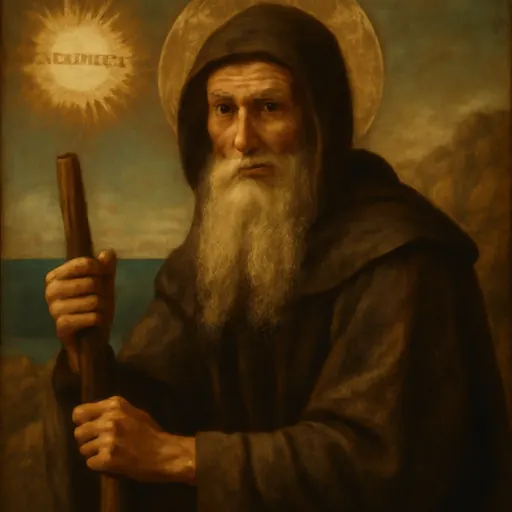
St. Francis of Paola (1416–1507) was a hermit from Calabria, in southern Italy, who founded the Order of Minims, friars vowed to humility and a lifelong Lenten fast. He spent his last twenty-five years in France at the request of King Louis XI. Pope Pius XII named him patron of Italian seafarers in 1943, and he is the patron of Calabria. His feast day is April 2.
Who was St. Francis of Paola?
Francis of Paola was a hermit from the toe of Italy who never meant to found anything. Young men kept coming to live near his cave, and the community that grew around him became the Order of Minims, the "least" of all religious. He fasted all his life, spoke bluntly to kings, and was credited with so many wonders that Pope Pius XII called him the Santo Taumaturgo, the holy wonder-worker, of Paola. In old age a dying French king sent for him, and he spent his last quarter century in France.
The main facts of his life are well documented, and the Catholic Encyclopedia and Vatican News agree on them. The stories of his miracles are another matter, and they are labeled below.

The life of St. Francis of Paola
A child vowed to St. Francis
He was born on March 27, 1416, at Paola, a small town on the Calabrian coast. His parents had been childless for years and prayed to St. Francis of Assisi. As a baby he developed a dangerous infection of one eye, and his parents vowed that if he recovered he would spend a year in the Franciscan habit. He recovered. At fifteen, Vatican News says, he kept the vow at the friary of San Marco Argentano, then went with his parents on pilgrimage to Assisi, Rome, Monte Cassino and Loreto. The splendor of the papal court troubled him. "Our Lord was not like that," he is reported to have said.
The hermit of Paola
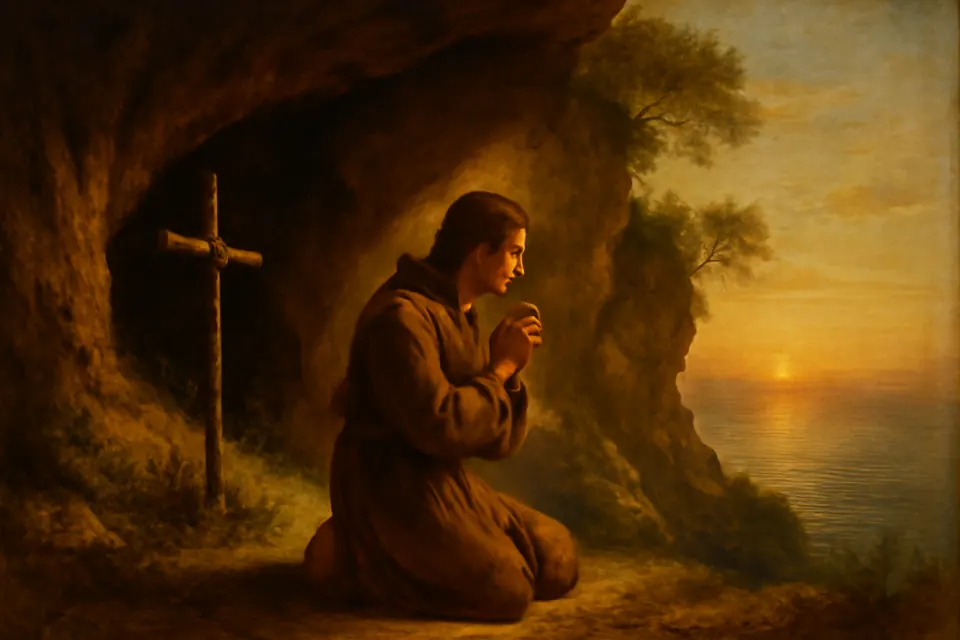
Back home he lived alone, first on his father's land and then in a cave on the coast, for about six years. In 1435 two companions joined him, and they built three cells and a chapel. More followed. Around 1452 the archbishop of Cosenza allowed them to build a monastery and church, and the Catholic Encyclopedia says even the nobles of Paola carried stones for it.
The Minims
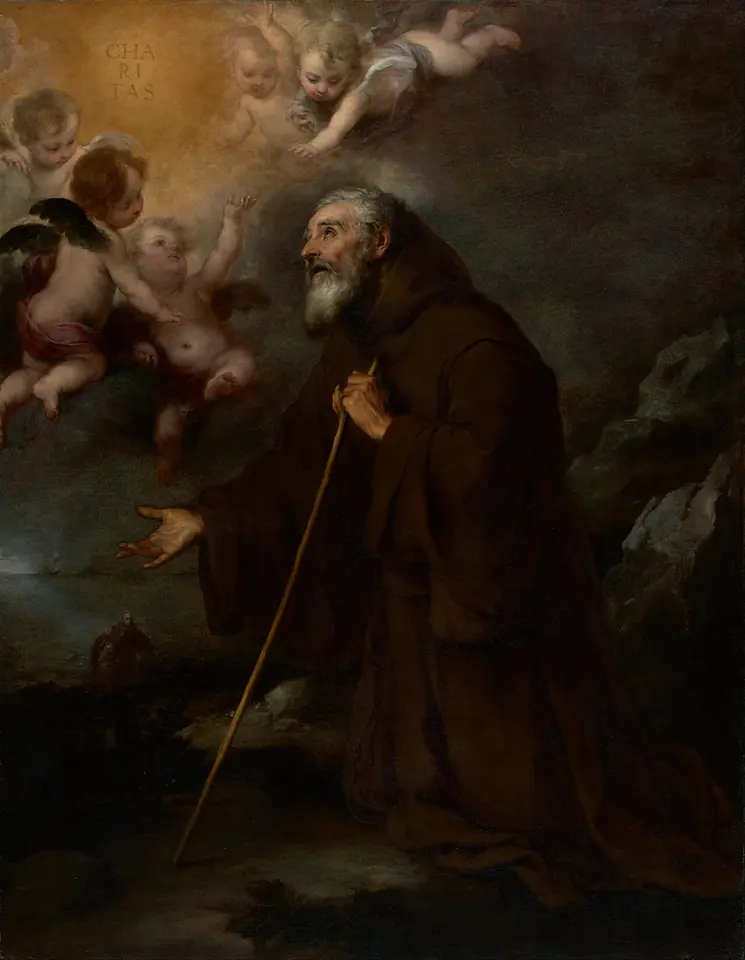
On May 17, 1474, Pope Sixtus IV approved the community as the Hermits of St. Francis of Assisi. Alexander VI later renamed them Minims, and Julius II gave final approval to the rule in 1506, along with rules for nuns and for lay members of a third order. Their rule bound them to perpetual abstinence, a lifelong Lenten fast, and the Catholic Encyclopedia says humility was the distinguishing mark of the order. Pius XII noted that the one word under his images, which he never tired of repeating, was Charitas, charity.
Francis was no courtier. The Catholic Encyclopedia says he rebuked the King of Naples for his misrule and suffered persecution for it, and that he foretold the Turkish capture of Otranto in 1480 and its recovery by the king.
In France
When King Louis XI of France lay dying, he begged the hermit to come and heal him. Francis refused until the pope ordered him to go. Vatican News says the king knelt at his feet when he arrived; Francis did not cure him but stayed with him until his death in 1483. Charles VIII and Louis XII kept him near the court; Charles built Minim houses for him at Plessis and on Rome's Pincian Hill.

He died at Plessis-lès-Tours on Good Friday, April 2, 1507, while the Passion according to St. John was being read to him. He was ninety-one. Leo X canonized him on May 1, 1519, twelve years later.
The miracles of St. Francis of Paola
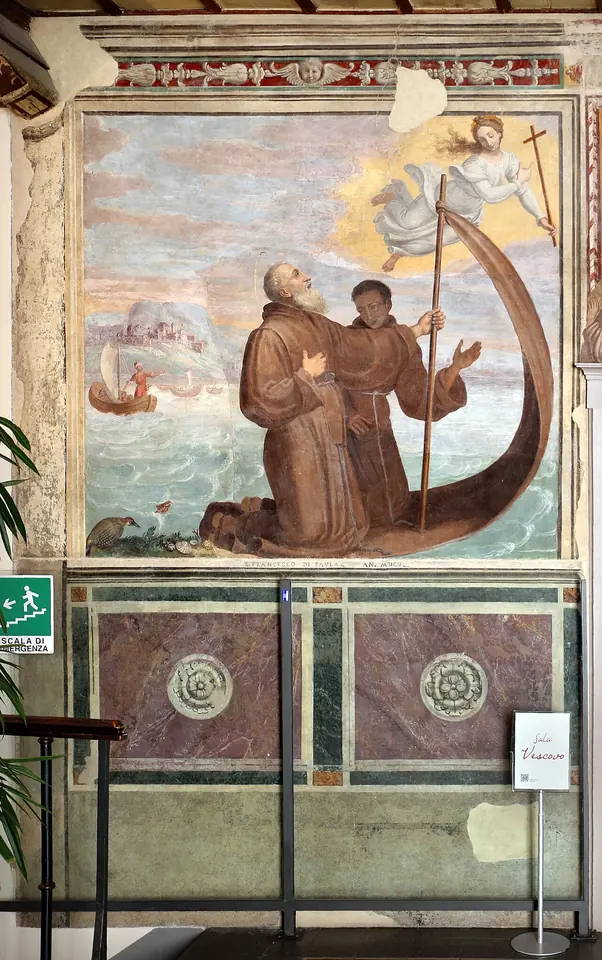
- The crossing of the Strait of Messina (traditional). A boatman refused to take Francis and his companions to Sicily, so he spread his cloak on the water and they crossed on it. Pius XII, in 1957, said the story was handed down by contemporary chronicles.
- The bread in the saddlebags (traditional). During the famine of 1464, Vatican News relates, he asked hungry workmen for bread; when they opened their empty bags at his word, they found them full of warm bread.
- His prophecies, including the fall and recovery of Otranto (reported). Both the Catholic Encyclopedia and Vatican News record them.
- Cures in his lifetime (reported). The Catholic Encyclopedia says the building of his first monastery drew crowds because of the many miracles credited to his prayers. They were examined for his canonization in 1519, by the standards of that time.

Why St. Francis of Paola is the patron saint of sailors
The cloak legend made him the saint of the strait, and of everyone who sails. In his radio message of 1957 to the "gente di mare," Pope Pius XII recalled that by apostolic letters of 1943 he had made Francis the heavenly patron of Italian seafarers. He said that more than six hundred merchant ships carried the saint's image with the prayer Ad litus educ Patriae, "guide us to our homeland's shore." Vatican News adds that John XXIII declared him patron of Calabria on June 22, 1962. See our patron saints page for other patrons of sailors, including St. Erasmus.
Symbols of St. Francis of Paola in art
He is an old man with a long white beard in a coarse brown or black habit with a hood and short cape, usually leaning on a staff. His surest sign is the word CHARITAS, often in a sunburst, painted on a medallion on his breast or carried by angels in the sky, as in Murillo's painting. Scenes of him crossing the sea on his cloak, like Giocchi's fresco above, are a favorite subject. Sebastiano Ricci shows him working a miracle for kneeling petitioners.


Feast day and where St. Francis of Paola is honored
His feast is April 2, the day of his death, an optional memorial on the General Roman Calendar. Find his neighbors on our feast days page.
His body was buried at Plessis, but on April 13, 1562, Huguenots broke open his tomb, found the body incorrupt and burned it. Catholics saved some bones, and Vatican News says the surviving relics are kept in Minim houses, including Palermo, Milazzo and Paola. The Sanctuary of St. Francis at Paola, his birthplace, keeps relics and is the center of his cult. In Naples, the great domed basilica on the Piazza del Plebiscito is dedicated to him.


Prayer to St. Francis of Paola
The Roman Missal gives this collect for his memorial, as printed by Catholic Culture:
O God, exaltation of the lowly, who raised Saint Francis of Paola to the glory of your Saints, grant, we pray, that by his merits and example we may happily attain the rewards promised to the humble. Through our Lord Jesus Christ, your Son, who lives and reigns with you in the unity of the Holy Spirit, God, for ever and ever.


Frequently asked questions
Why is St. Francis of Paola the patron saint of sailors?
Tradition says that when a boatman refused to carry him across the Strait of Messina to Sicily, he spread his cloak on the water and crossed on it with his companions. Pope Pius XII named him heavenly patron of Italian seafarers in 1943, and Italian sailors had honored him long before that.
Who are the Minims?
The religious order he founded, approved by Pope Sixtus IV in 1474 as the Hermits of St. Francis of Assisi and renamed the Minims, "the least," by Alexander VI. Its members keep a perpetual abstinence and make humility their mark. The order also has nuns and a third order for lay people.
When is the feast of St. Francis of Paola?
April 2, the day he died in 1507. It is an optional memorial on the General Roman Calendar.
Is St. Francis of Paola the same as St. Francis of Assisi?
No. Francis of Assisi lived two centuries earlier. The parents of Francis of Paola prayed to him for a child, named their son after him and promised to dress the boy in a Franciscan habit for a year, but Francis of Paola founded a separate order.
Sources
- Catholic Encyclopedia (1909): St. Francis of Paula
- Vatican News: St. Francis of Paola, Information on the Saint of the Day
- Vatican News (Italian): San Francesco di Paola, santo da 500 anni
- Pope Pius XII, Radio message for the 450th anniversary of the death of St. Francis of Paola (June 16, 1957)
- Catholic Culture: Liturgical calendar for April 2 (Collect of St. Francis of Paola)
- Roman Martyrology (1916 English edition), April 2