St. Bruno of Cologne
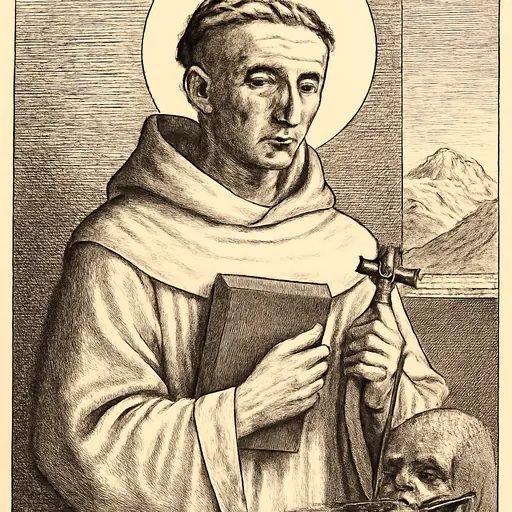
St. Bruno (about 1030 to 1101) was a German-born scholar who ran the cathedral school of Reims for about twenty years, then left everything to live as a hermit. In 1084 he and six companions settled in the Alps above Grenoble at a place called Chartreuse, founding the Carthusian Order. He died in Calabria in 1101, and his feast day is October 6.
Who was St. Bruno?
Bruno was a celebrated teacher who gave up a brilliant church career for silence. Born in Cologne around 1030, he ran the cathedral school of Reims, in France, for about twenty years. In 1084, past fifty, he went into the Alps with six companions and founded the community that became the Carthusian Order, one of the strictest contemplative orders in the Western Church, and one that still lives very much as he set it up.
Our main sources are his own two surviving letters, his profession of faith, and the "mortuary roll" carried around Europe after his death, on which 178 churches and monasteries wrote tributes. The Catholic Encyclopedia (1908) separates them carefully from later legends.


The life of St. Bruno
Teacher at Reims
Bruno studied at Reims and became head of its cathedral school in 1057. His pupils included Odo of Châtillon, who later became Pope Urban II. In 1075 he was made chancellor of the diocese. When a new archbishop, Manasses de Gournai, turned out to be corrupt and violent, Bruno joined the canons who denounced him; Manasses was suspended in 1077, and in revenge he seized Bruno's property. By 1080 Manasses had been driven out, and the clergy wanted Bruno as their archbishop. He had other plans.
The legend of the dead doctor
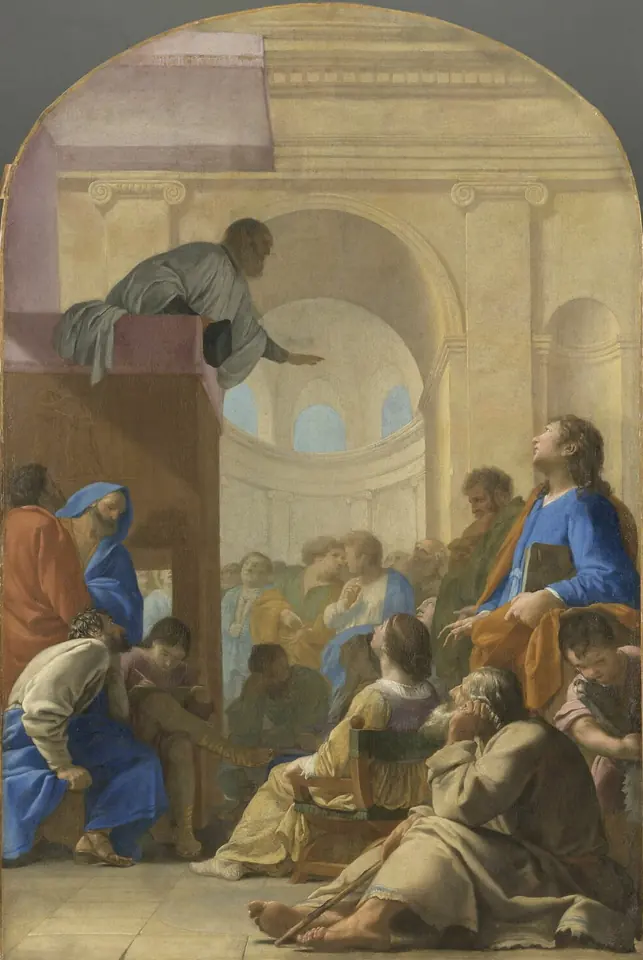
Carthusian tradition tells that Bruno was moved to leave the world after attending the funeral of a famous Paris teacher, Raymond Diocrès, who three times sat up on his bier to announce that he had been judged and condemned. Eustache Le Sueur made the story famous in his series of paintings on Bruno's life for the Paris Charterhouse. The Catholic Encyclopedia rejects it: no contemporary mentions it, Bruno doesn't mention it in his letters, and there is no proof he was ever in Paris. The story is traditional, and late.

What Bruno himself tells, in a letter to his friend Raoul, is simpler. He reminds Raoul of the day the two of them and a third friend, Fulk, sat in "the little garden adjoining Adam's house" in Reims and "vowed to abandon the fleeting shadows of this world at the earliest opportunity." Bruno kept the vow; Raoul did not, and the letter gently presses him to.
Chartreuse
Bruno first went to Robert of Molesme, the abbot whose monks later founded the Cistercians, but decided that was not his calling. With six companions, four clerics and two laymen, he went to Hugh, Bishop of Grenoble. According to the Catholic Encyclopedia, Hugh had dreamed of seven stars and recognized in them the seven men who came to him. In 1084 he led them to a wild valley called Chartreuse, high in the mountains. The seven stars became the emblem of the order.

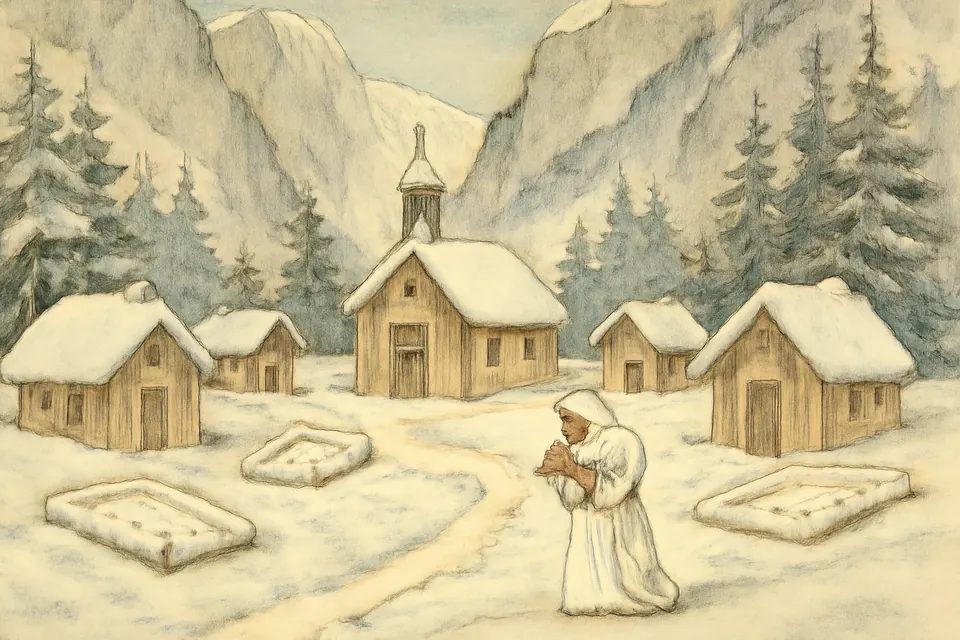
They built small separate cells around a chapel and lived in poverty, prayer and study. The two laymen became the first lay brothers. An avalanche destroyed the first buildings in 1132, but the community rebuilt nearby, and the Grande Chartreuse still stands there today.


Called to Rome, refusing a bishopric
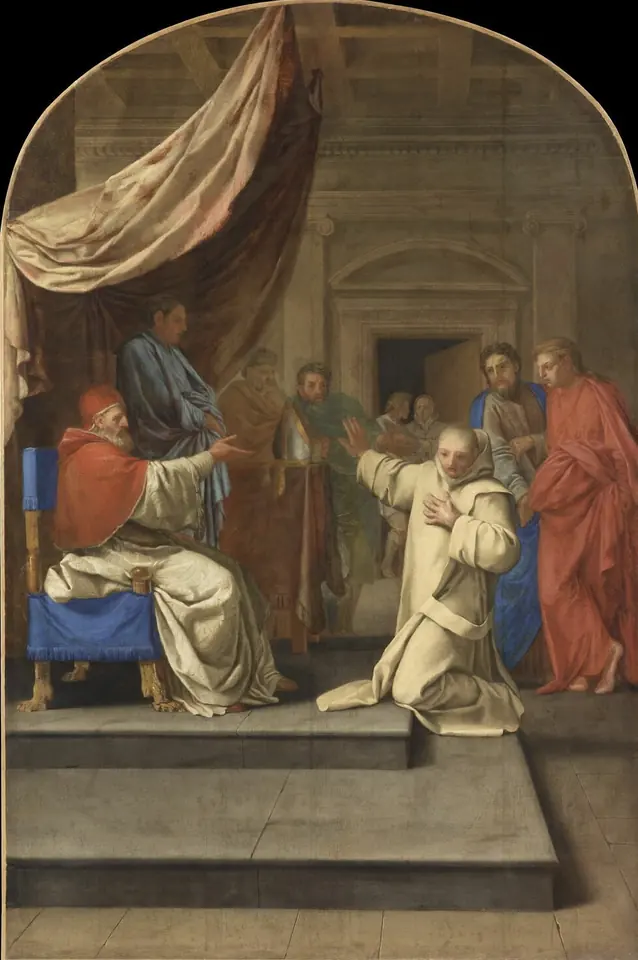
In 1090 his old student, now Pope Urban II, summoned Bruno to Rome to advise him. The clergy of Reggio, in Calabria, elected him archbishop. He refused, as he had at Reims, and asked permission to return to solitude. The pope kept him in southern Italy, so in 1091 Bruno founded a new hermitage in the forested mountains of Calabria, on land given by Count Roger of Sicily, who became his close friend.

From there he wrote to Raoul, describing the life:
In any case, what benefits and divine exultation the silence and solitude of the desert hold in store for those who love it, only those who have experienced it can know.
Death
Before he died, Bruno gathered his monks and made a profession of faith, which they wrote down. He died on October 6, 1101, and was buried at the hermitage of Santa Maria.
The miracles of St. Bruno
The Catholic Encyclopedia says "many miracles were worked at his tomb," and that he is especially invoked for the deliverance of people possessed by evil spirits. These are reported cures; they were never examined in a canonization process, because Bruno never had one. The resurrection of Raymond Diocrès is a traditional legend that historians reject.
Why St. Bruno is the patron of Calabria and the possessed
Bruno spent his last ten years in Calabria and is buried there, and the Catholic Encyclopedia calls him "the popular saint of Calabria." In 1908 it described crowds gathering every year on the Monday and Tuesday after Pentecost at the Charterhouse of Serra San Bruno, where his relics were carried in procession to the hermitage where he lived. His patronage of the possessed comes from the cures reported at his tomb. More patronages are on our patron saints page.


Symbols of St. Bruno in art
Bruno is easy to recognize once you know the Carthusian habit: an all-white robe with a broad white cowl. Look for:
- A skull: for meditation on death and contempt for the world.
- A book: for his learning and his commentaries on the Psalms and St. Paul.
- A crucifix: often held while he gazes at it in prayer.
- Seven stars: the dream of Bishop Hugh.
- An olive branch or a miter at his feet: his refusal of bishoprics.
- A scroll reading "O Bonitas": "O Goodness," a phrase associated with him.
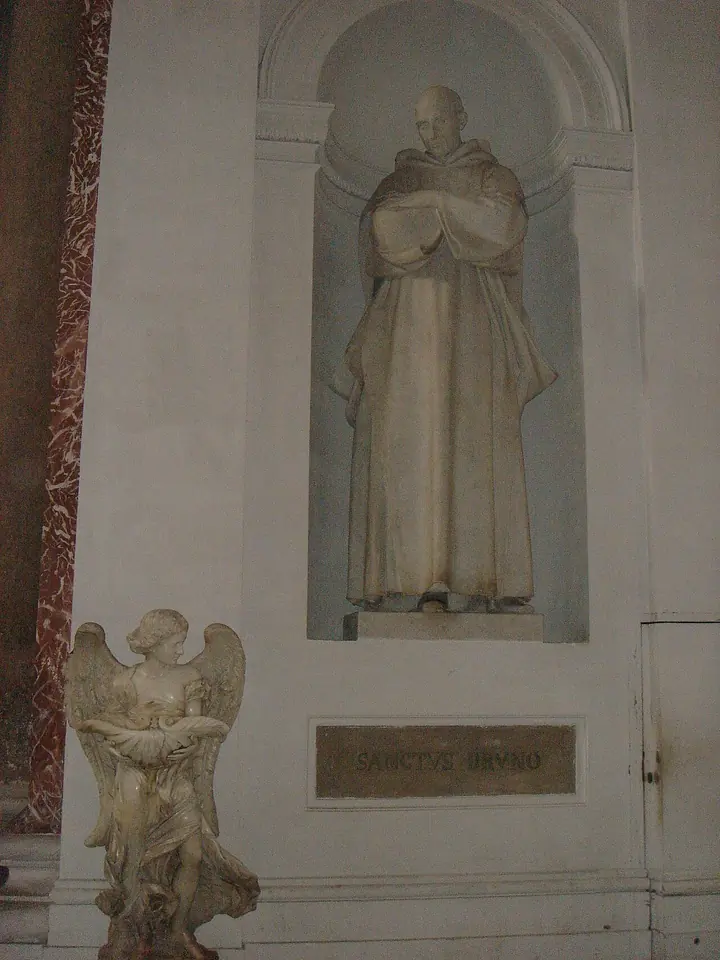
The Catholic Encyclopedia singles out Jean-Antoine Houdon's marble statue in Santa Maria degli Angeli in Rome, "which would speak if his rule did not compel him to silence," and Le Sueur's series of paintings, now in the Louvre.

The Carthusians today and Into Great Silence
Bruno wrote no rule. His Calabrian foundation merged into the Cistercians in 1191, but the Grande Chartreuse way of life spread across Europe and survives today. Carthusians spend most of the day alone in their cells, praying, studying and working, and come together in church for parts of the liturgy, including a long night office. The monks were expelled from the Grande Chartreuse by the French government in 1903 and returned only in 1940.
Most people know their life through Philip Gröning's documentary Into Great Silence (2005). Gröning first asked the monks in 1984; they answered sixteen years later. He lived in the monastery alone for six months in 2002 and 2003, filming without artificial light, and the film has almost no spoken words. It won a Special Jury Prize at the Sundance Film Festival in 2006.
Feast day and prayer
Bruno's feast is October 6, an optional memorial in the General Roman Calendar; see the feast days calendar. The Church's prayer for the day is the collect in the Roman Missal, which recalls that God called Bruno to serve him in solitude. We know of no traditional devotional prayer to St. Bruno with a citable origin. Catholics ask his intercession in their own words, especially for people seeking silence and prayer.
Frequently asked questions
When is the feast day of St. Bruno?
October 6, the day he died in 1101. It is an optional memorial in the General Roman Calendar. Pope Gregory XV extended it to the whole Church in 1623.
What order did St. Bruno found?
The Carthusians, named for the Chartreuse mountains near Grenoble, where he founded the first community in 1084. Their mother house is still the Grande Chartreuse. Carthusian monks live mostly alone in individual cells and meet in church for parts of the daily liturgy.
Was St. Bruno ever canonized?
Not formally. The Carthusians avoided publicity, and no canonization process was held. Pope Leo X approved his cult for the order in 1514, and his feast was extended to the universal Church in 1623.
What film is about St. Bruno's monks?
Into Great Silence (2005), a documentary by Philip Gröning filmed inside the Grande Chartreuse. Gröning lived in the monastery for six months in 2002 and 2003 and filmed without artificial light.