St. Norbert of Xanten
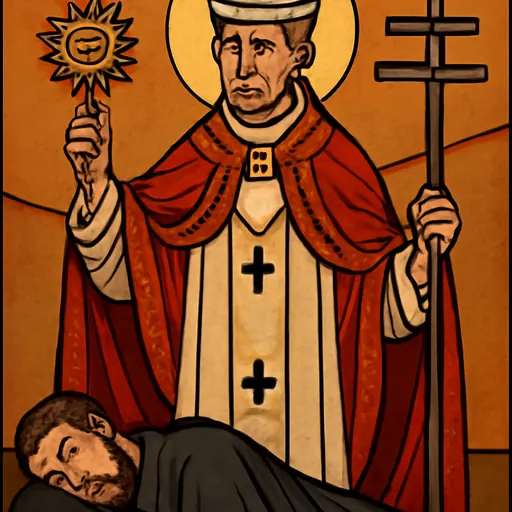
St. Norbert (about 1080 to 1134) was a worldly German court cleric who changed his life after nearly being killed by lightning. He became a barefoot preacher, founded the Premonstratensian Order (the Norbertines) at Prémontré in France in 1120, and ended his life as Archbishop of Magdeburg. He is known for his devotion to the Eucharist, and his feast day is June 6.
Who was St. Norbert?
Norbert was a well-born German cleric who spent his youth enjoying court life and the rest of it trying to reform the Church. He founded the Premonstratensian canons, usually called Norbertines, one of the great religious orders of the 12th century, and died as Archbishop of Magdeburg in 1134.
The main sources are two early Lives, one long attributed to his disciple Hugh of Fosses and another found in Berlin in the 19th century. The Catholic Encyclopedia (1911) draws on both.
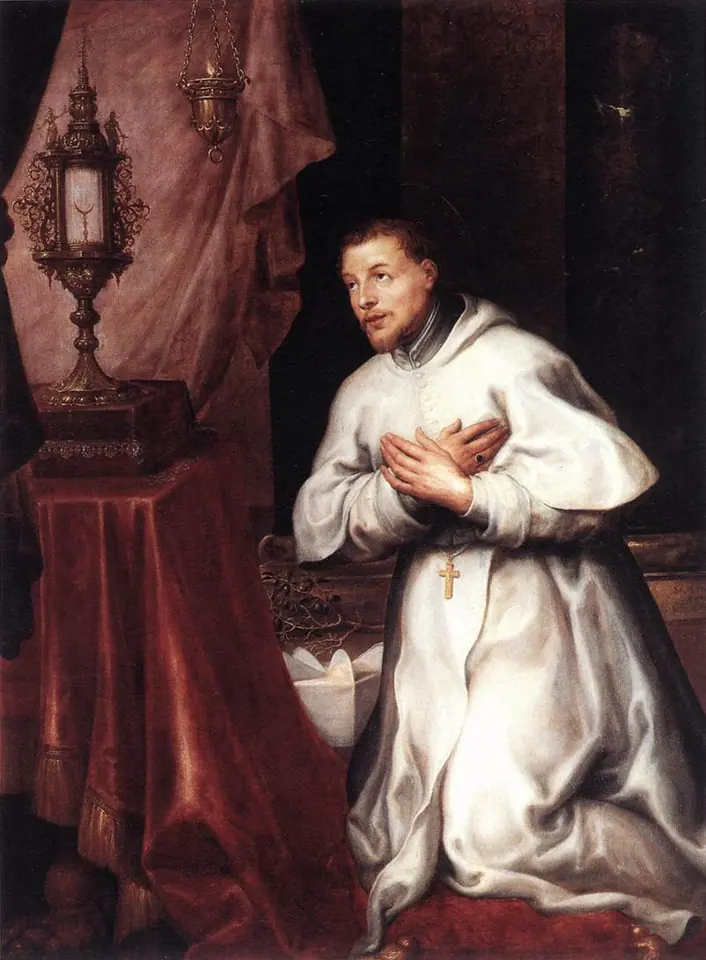

The life of St. Norbert
Court cleric
Norbert was born around 1080 at Xanten, on the lower Rhine, the son of Heribert, Count of Gennep. He became a canon of Xanten while still only a subdeacon, then served at the court of the Archbishop of Cologne and of Emperor Henry V, whose almoner he was. He turned down the bishopric of Cambrai. The Catholic Encyclopedia says plainly that he "allowed himself to be so carried away by pleasure that nothing short of a miracle of grace could make him lead the life of an earnest cleric."
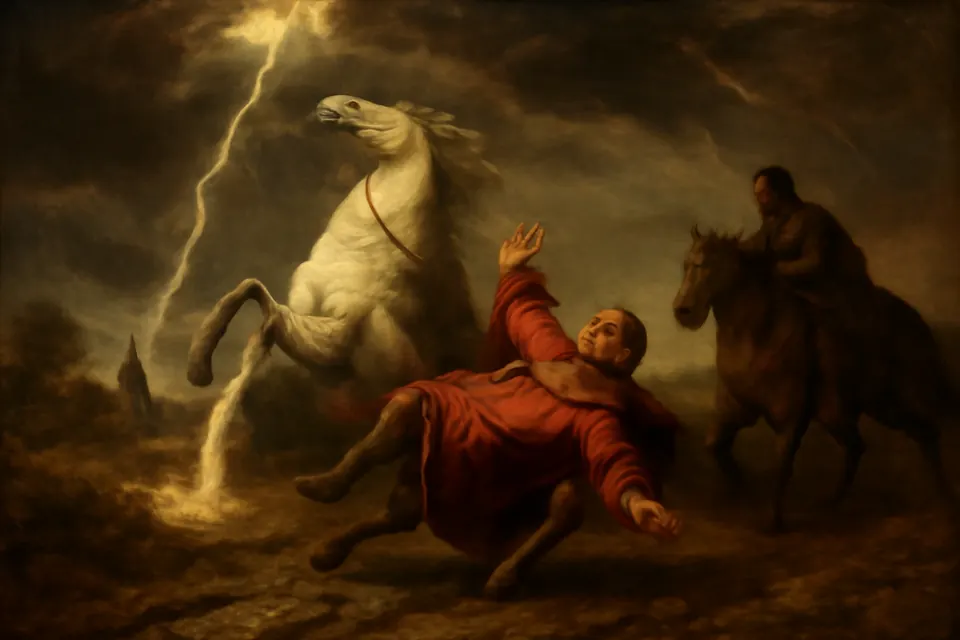
The thunderbolt
Around 1115, riding to the village of Vreden, he was caught in a storm. Lightning struck at his horse's feet, the horse threw him, "and for nearly an hour he lay like one dead." When he came to, he was a changed man. He left the court, put himself under the direction of Abbot Cono of Siegburg, and was ordained a priest at about thirty-five.
His first sermons at Xanten did not go well; one young cleric spat in his face. Accused at the Council of Fritzlar of preaching without authority, he gave his property to the poor and set out barefoot to see Pope Gelasius II at Saint-Gilles in southern France. The pope gave him permission to preach wherever he liked, and Norbert spent the next years walking through northern France and the Low Countries.

Prémontré
Pope Callixtus II and the Bishop of Laon asked him to found a community that would outlast him. In 1120 he chose a marshy valley in the forest of Coucy near Laon called Prémontré. His first followers lived in huts of wood and clay around a chapel of St. John the Baptist. At Christmas 1121 they made their profession under the Rule of St. Augustine, as canons regular: priests living in common, singing the Divine Office, and serving parishes.


The order grew fast. Women joined from the start, and in 1122 Norbert gave Count Theobald of Champagne, whom he advised to marry rather than become a canon, a white scapular and a simple rule of life; this was the beginning of the Norbertine Third Order. Pope Honorius II confirmed the order on February 27, 1126.
Antwerp and the Eucharist
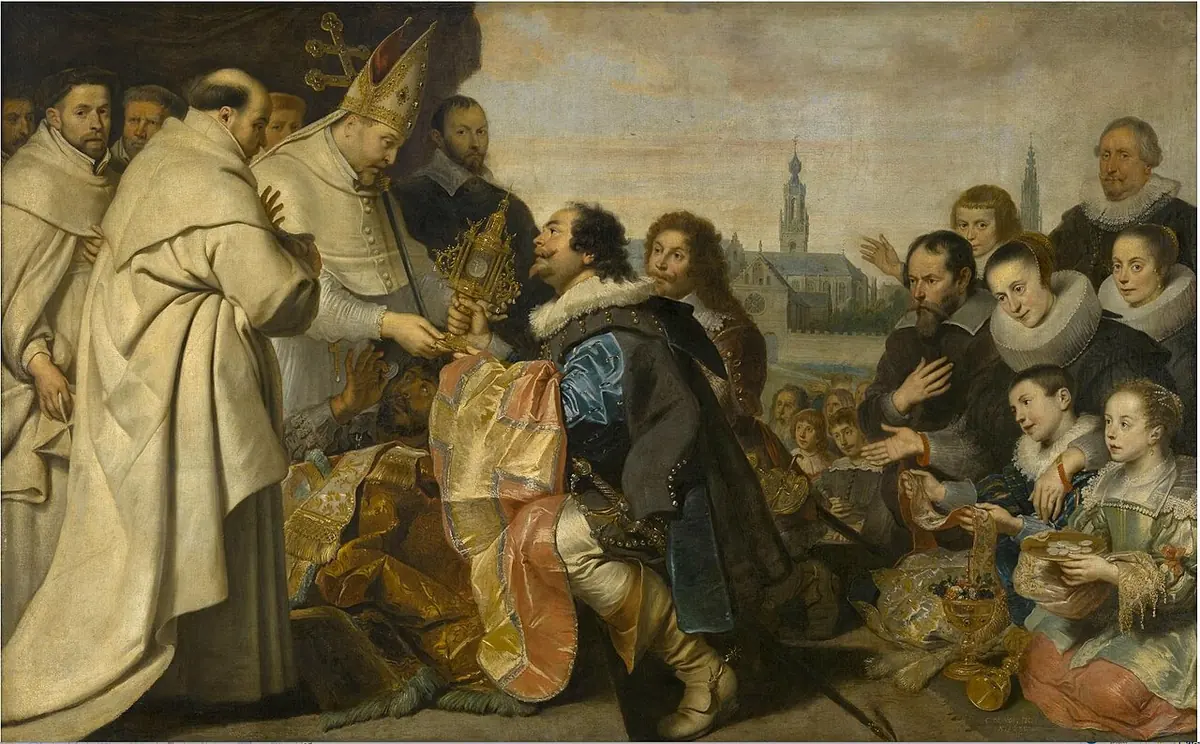
In the 1120s the Bishop of Cambrai asked Norbert to preach in Antwerp, where a preacher named Tanchelm had taught people to reject the sacraments and the clergy. According to the Catholic Encyclopedia, many who heard Norbert returned the consecrated Hosts they had stolen and profaned. That episode earned him the title "Apostle of Antwerp," and it is why he is so often painted with a monstrance.

Archbishop of Magdeburg
In 1126 King Lothair and a papal legate made Norbert accept election as Archbishop of Magdeburg. He found church lands seized by local lords and many of the clergy living scandalously. His reforms made enemies, and the Catholic Encyclopedia says three attempts were made on his life. He supported Pope Innocent II against the antipope Anacletus II and went with Lothair to Rome in 1133. He was carried back to Magdeburg, already very ill, and died there on June 6, 1134.
The miracles of St. Norbert
The early Lives and the Catholic Encyclopedia record several miracles. All are traditional, or at most reported, since his canonization came four centuries later:
- Healing a blind woman at Würzburg in 1126, after which the townspeople wanted him as their bishop and he slipped away.
- Finding relics in Cologne: guided by a vision, he found relics of St. Ursula's companions, St. Gereon and other martyrs.
- Miracles at his tomb in Magdeburg, which the Catholic Encyclopedia calls "numerous."
- The spider in the chalice: a story told of him says a spider fell into the chalice after the consecration and he drank it rather than risk spilling the Precious Blood, and it did him no harm. Catholic Answers notes that the old rubrics didn't require this; the story was told to show his reverence. It explains the spider sometimes painted on his chalice.
Why St. Norbert is the patron of Bohemia
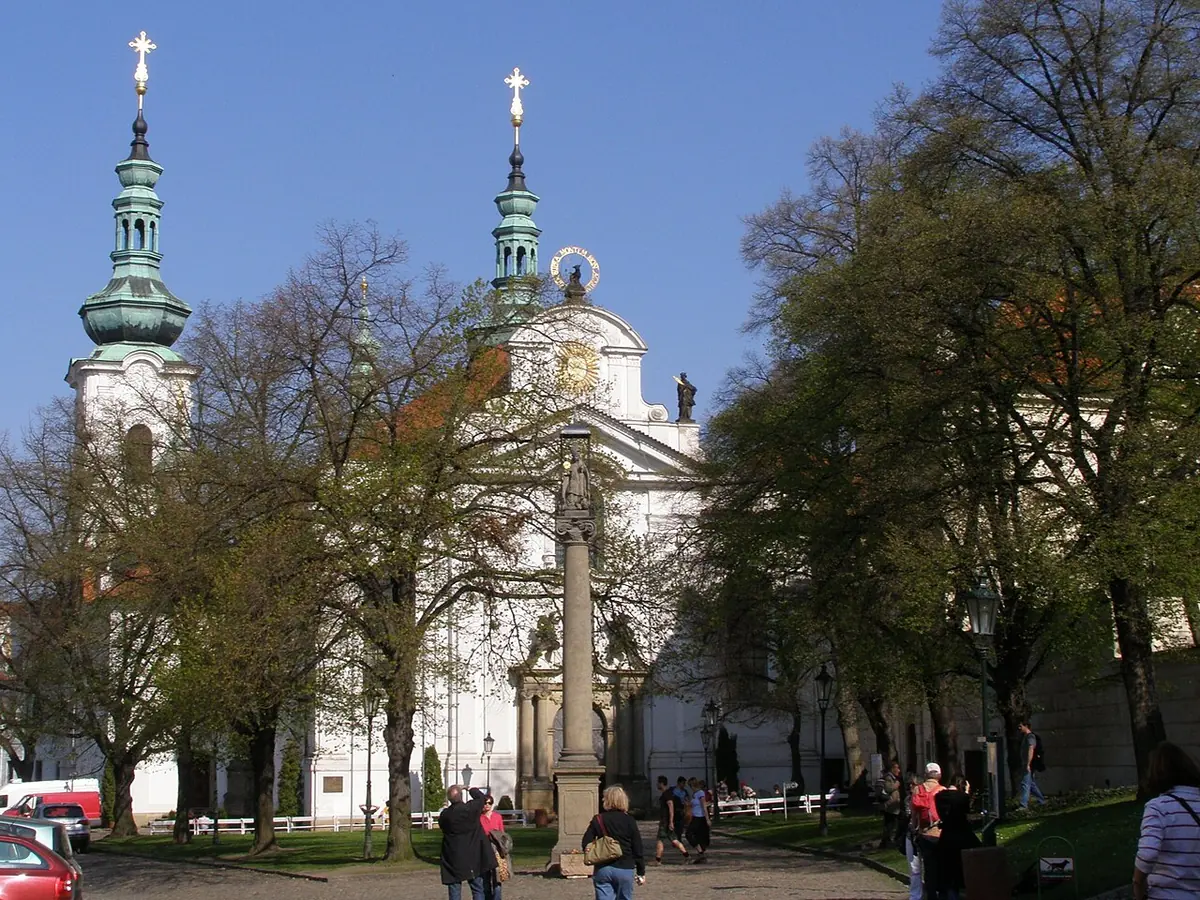
In 1627, during the Thirty Years' War, the abbot of Strahov in Prague brought Norbert's body from Magdeburg, which had been Protestant for a century, to his abbey. The Catholic Encyclopedia says six hundred Protestants returned to the Catholic Church during the celebrations, and the Archbishop of Prague proclaimed Norbert "the Patron and Protector of Bohemia." Catholics also call on him as patron of Magdeburg and, by a popular custom, for a safe childbirth. See our patron saints page.

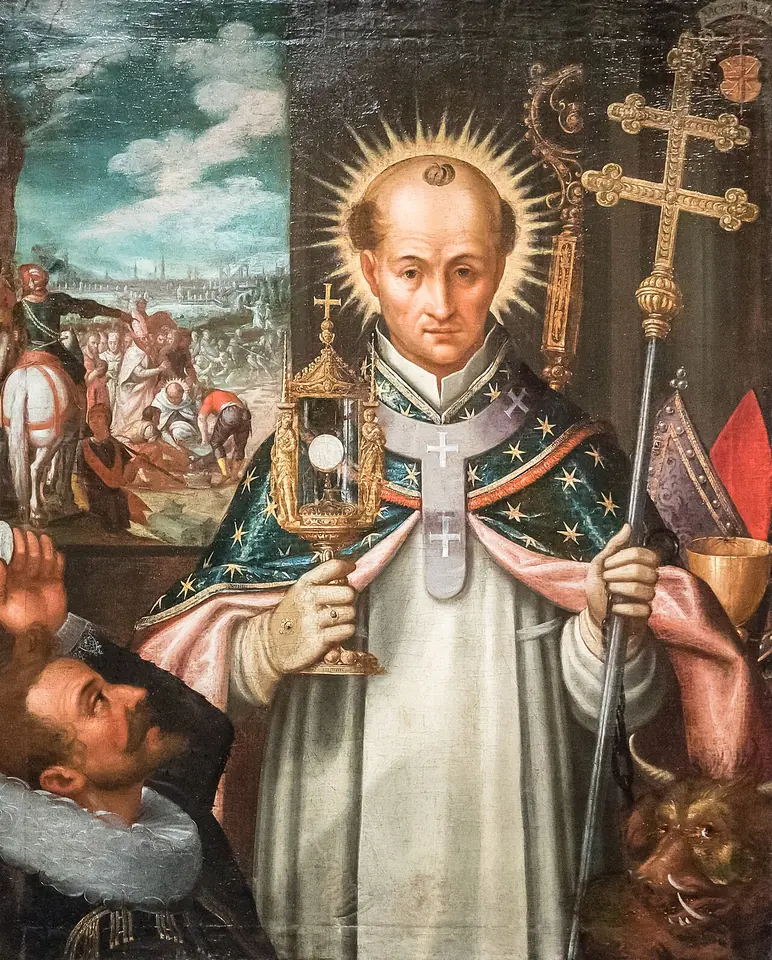
Symbols of St. Norbert in art
Norbert wears either the white habit of his canons or an archbishop's vestments. Look for:
- A monstrance: his most common attribute, for his Eucharistic devotion.
- A defeated man under his feet: Tanchelm, the heretic of Antwerp.
- A double-barred cross and the pallium: signs of an archbishop.
- A chalice with a spider: from the legend above.
- A white habit: the Norbertines are the "White Canons."
Rubens's oil sketch and Jan de Hoey's painting show the standard type: a bishop holding a monstrance aloft, with Tanchelm beneath him.


The Norbertines today
The Catholic Encyclopedia lists the order's particular devotions as the Divine Office in choir, zeal for souls, penance, the Eucharist and the Virgin Mary. Norbertine abbeys still serve parishes and schools in Europe, Africa, Asia and the Americas. In the United States they include St. Norbert Abbey in De Pere, Wisconsin, whose canons founded St. Norbert College there.

Feast day and prayer
Norbert's feast is June 6, an optional memorial in the General Roman Calendar; see the feast days page. The Church's prayer for the day is the collect in the Roman Missal, which remembers him as a minister of the Church outstanding for prayer and pastoral zeal. We have not found a traditional devotional prayer to St. Norbert with a citable origin. Norbertines and the people of their parishes ask his intercession in their own words, often before the Blessed Sacrament.
Frequently asked questions
What order did St. Norbert found?
The Canons Regular of Prémontré, called Premonstratensians, Norbertines or, in England, the White Canons. They are priests living in community under the Rule of St. Augustine who combine choir prayer with parish and pastoral work. The order was confirmed by Pope Honorius II in 1126.
Why is St. Norbert shown with a monstrance?
Because of his devotion to the Eucharist and his preaching in Antwerp against the followers of Tanchelm, who rejected the sacraments. The Catholic Encyclopedia says many Antwerp people then brought back the consecrated Hosts they had taken. Painters from Rubens onward show him holding a monstrance.
When is St. Norbert's feast day?
June 6, the day he died in Magdeburg in 1134. It is an optional memorial in the General Roman Calendar.
Where are St. Norbert's relics?
At Strahov Abbey in Prague. His body was moved there from Protestant Magdeburg in 1627, and the Archbishop of Prague then proclaimed him patron of Bohemia.