St. Charles Lwanga and Companions
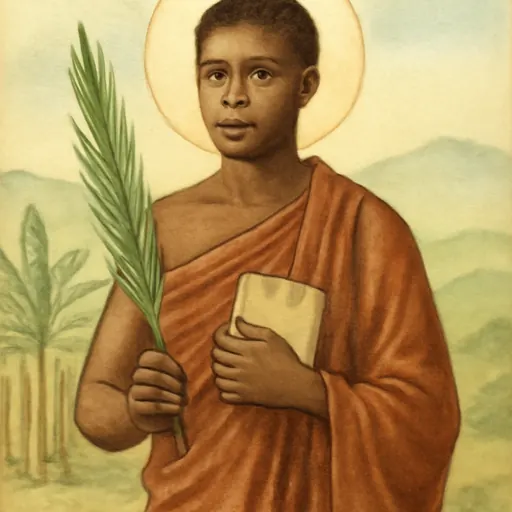
St. Charles Lwanga was the young head of the royal pages at the court of King Mwanga II of Buganda, in present-day Uganda. A Catholic convert, he protected the boys in his care and was burned alive at Namugongo on June 3, 1886, with other Christian pages. He and 21 Catholic companions, the Uganda Martyrs, were canonized in 1964; his feast day is June 3, and he is the patron of African Catholic youth.
Who was St. Charles Lwanga?
Charles Lwanga (Karoli Lwanga in Luganda) was born around 1860 in the Kingdom of Buganda, the heart of present-day Uganda. As a young man he served at the court of the kabaka, or king, and by 1885 he was in charge of the royal pages, the boys and young men who served the king. He was a catechumen of the French Catholic missionaries, the White Fathers, and was baptized in November 1885. Seven months later he was dead, one of the first martyrs of sub-Saharan Africa to be canonized.
He is never honored alone. The Catholic Church remembers him with 21 companions, and Christians in Uganda also remember 23 Anglicans who died in the same persecution.

The Christian pages of Buganda
Anglican missionaries of the Church Missionary Society reached Buganda in 1877, and the White Fathers, Catholic missionaries sent by Cardinal Lavigerie, arrived two years later. Muslim traders from Zanzibar were already at the court. By the mid-1880s each group had converts, some of them in important posts.
King Mwanga II came to the throne in 1884, still a teenager. He grew alarmed at the new faith and at the European powers behind it. In October 1885 he had the Anglican bishop James Hannington killed as he approached the kingdom. Joseph Mukasa Balikuddembe, a Catholic who was majordomo of the court, rebuked the king for it and was executed on November 15, 1885. Charles Lwanga took over his charge of the pages, and that same day he and other catechumens were baptized.


The martyrdom of 1886
Several of the Christian pages had been refusing the king's sexual demands, and Lwanga protected the boys in his care from him. Siméon Lourdel, a White Father who witnessed what followed, gave two causes for the king's anger: the Christians' refusal to obey him in this, and his feeling that the literate converts looked down on him and his religion.
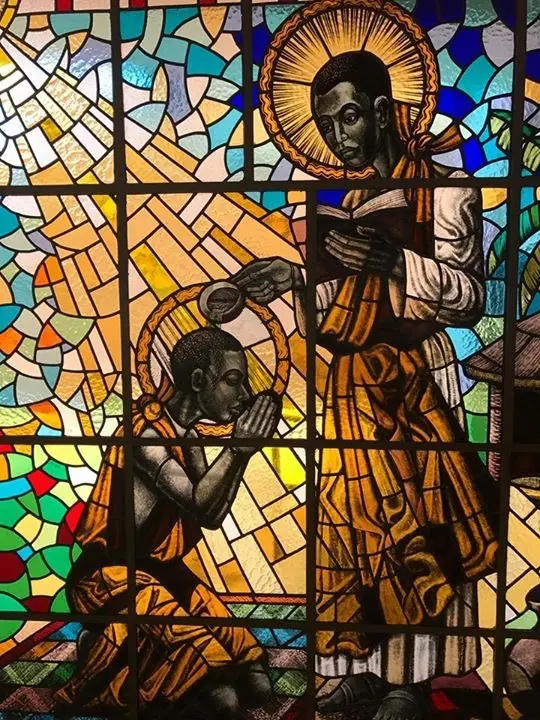
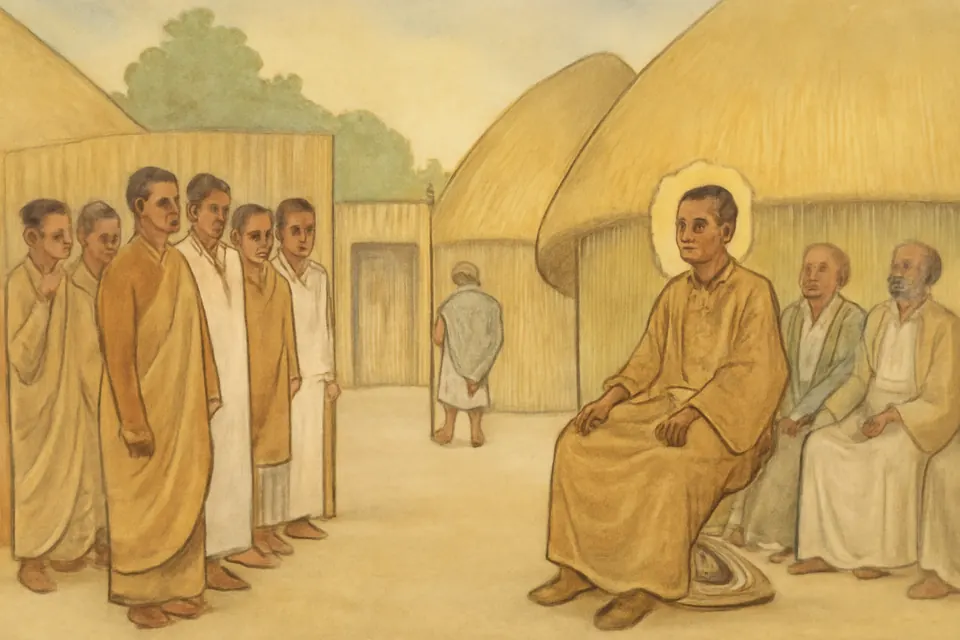
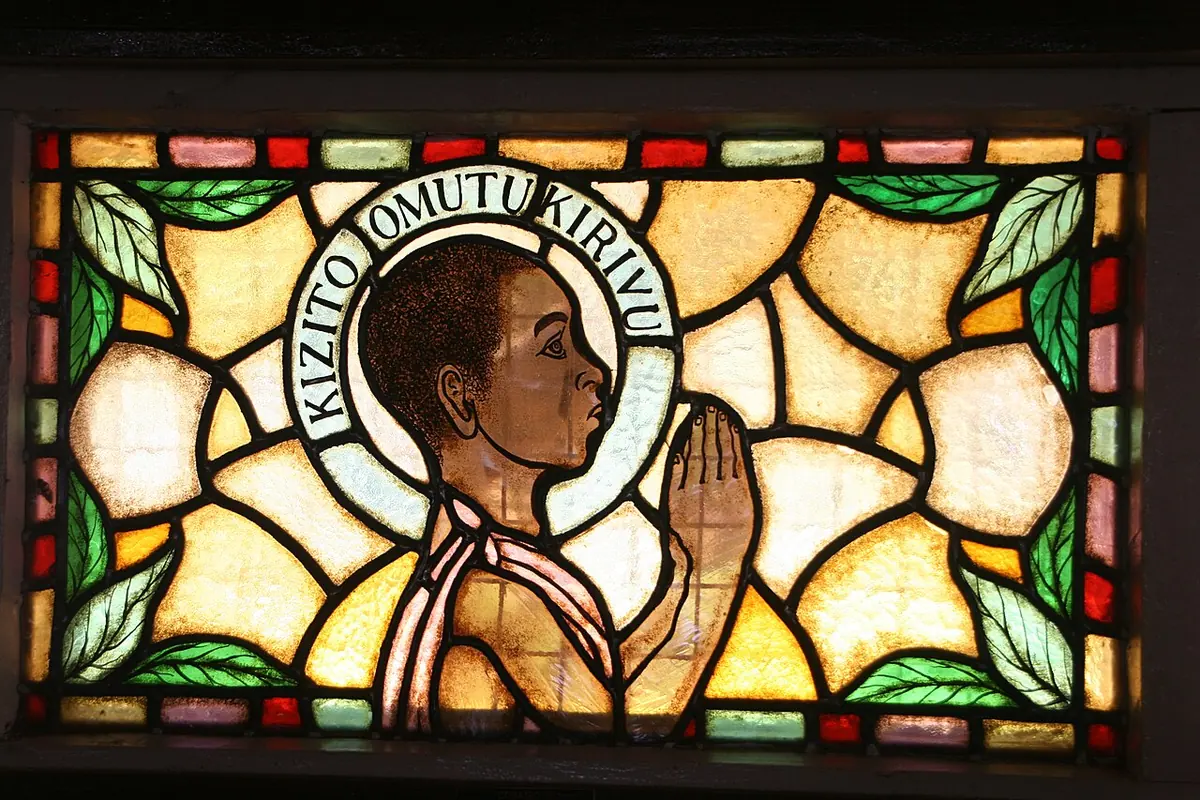
In late May 1886, at the royal enclosure at Munyonyo, the king condemned two pages to death. Early the next morning Lwanga secretly baptized the boys who were still catechumens, among them Kizito, who was about 14. Later that day Mwanga called the court together and ordered those who prayed to stand apart. Lwanga and the pages stepped forward. They were condemned and marched to Namugongo, the traditional place of execution. Three were killed on the way.

On June 3, 1886, Lwanga was taken aside and burned separately, as custom required for a leader. Shrine tradition remembers that he told the executioner to repent and become a Christian. Then twelve Catholic boys and young men and nine Anglicans were burned together on a single pyre. Kizito was the youngest. The killings went on into 1887.
Canonization and the Anglican martyrs
Pope Benedict XV beatified Charles Lwanga, Matthias Mulumba and their 20 companions on June 6, 1920. Pope Paul VI canonized them on October 18, 1964, during the Second Vatican Council. As martyrs they needed no approved miracle for canonization. In his homily Paul VI placed them beside the great saints of early Christian Africa, St. Cyprian, Sts. Perpetua and Felicity and St. Augustine, and added that he did not want to forget the others who, "belonging to the Anglican confession, have faced death for the name of Christ" (our translation of the Vatican's Spanish text: "perteneciendo a la confesión anglicana, han afrontado la muerte por el nombre de Cristo").
In 1969 he went to Uganda himself, the first reigning pope to visit sub-Saharan Africa, and prayed at Namugongo. Pope Francis said Mass there in 2015 and spoke of "the Anglican martyrs whose deaths for Christ testify to the ecumenism of blood."
The Church of England and other Anglican churches remember the Martyrs of Uganda on June 3, and Anglican lists of the martyrs often include Charles Lwanga himself.
Why St. Charles Lwanga is a patron of African youth
Lwanga was in his mid-twenties, and many of those who died with him were teenagers. He taught them the faith, baptized some of them, and kept them from abuse. For this reason he is honored as patron of African Catholic youth and of Catholic Action groups for young people in Africa. Kizito, the youngest, is a patron of children. See more on our patron saints page.
Symbols of St. Charles Lwanga in art
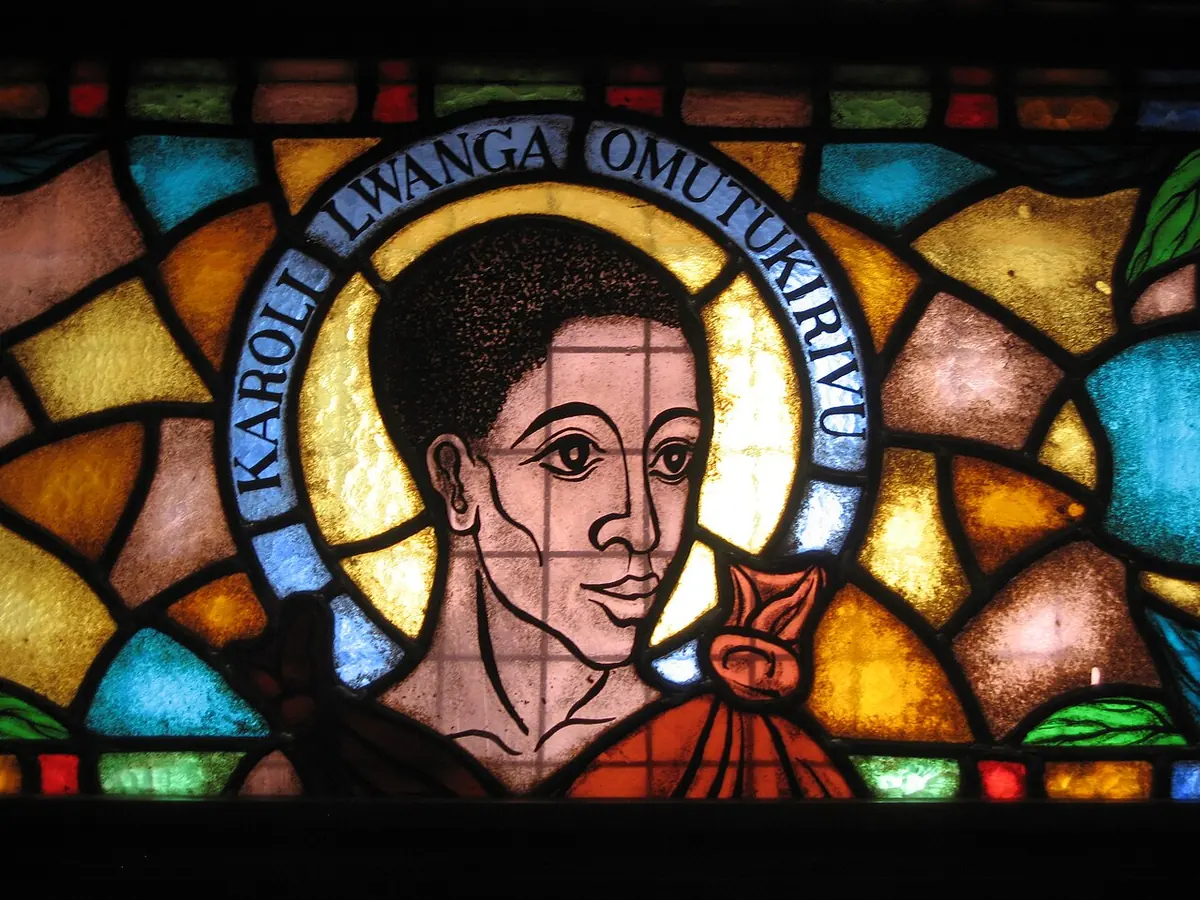
There is no early likeness of Lwanga, so modern African artists have created his image. He usually appears as a tall young man in a long robe of bark cloth or a white kanzu, the Ganda tunic, holding a martyr's palm or a small book of catechism. Other signs:
- Flames or a pyre: the fire at Namugongo, where the martyrs were bound in mats and burned.
- Young pages around him: he is often shown with the other martyrs, with Kizito as a small boy.
- Water and a kneeling boy: the baptism of Kizito.
- Luganda inscriptions: the windows at Namugongo call him "Omutukirivu," saint.

Namugongo and Martyrs Day
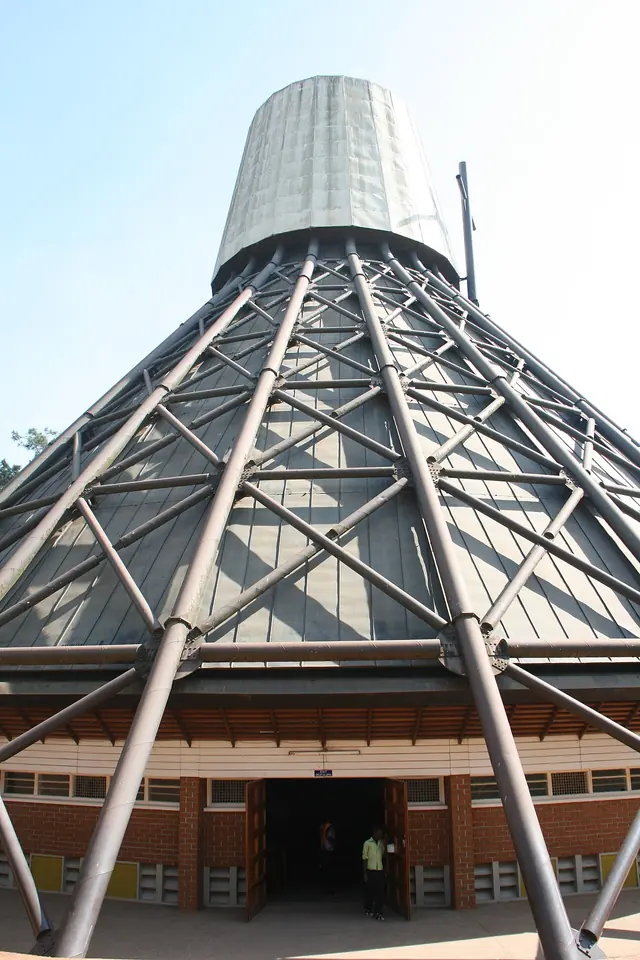
The Catholic Basilica of the Uganda Martyrs stands at Namugongo, near Kampala. Its tall cone-shaped roof rises on a frame of slanting steel columns. A short distance away is the Uganda Martyrs Anglican Shrine. Munyonyo, on Lake Victoria, has a shrine where the pages were condemned and Kizito was baptized.

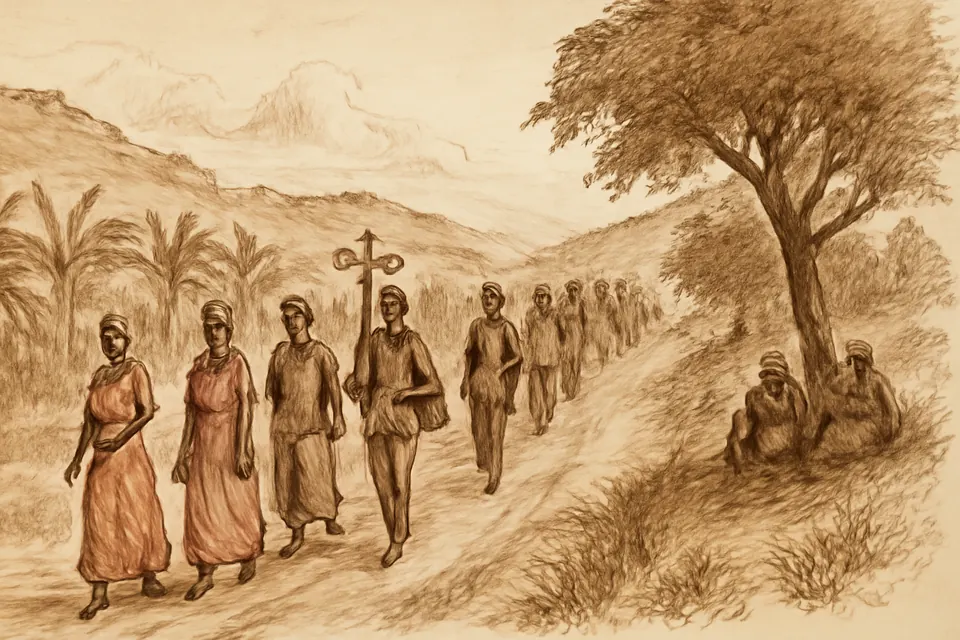
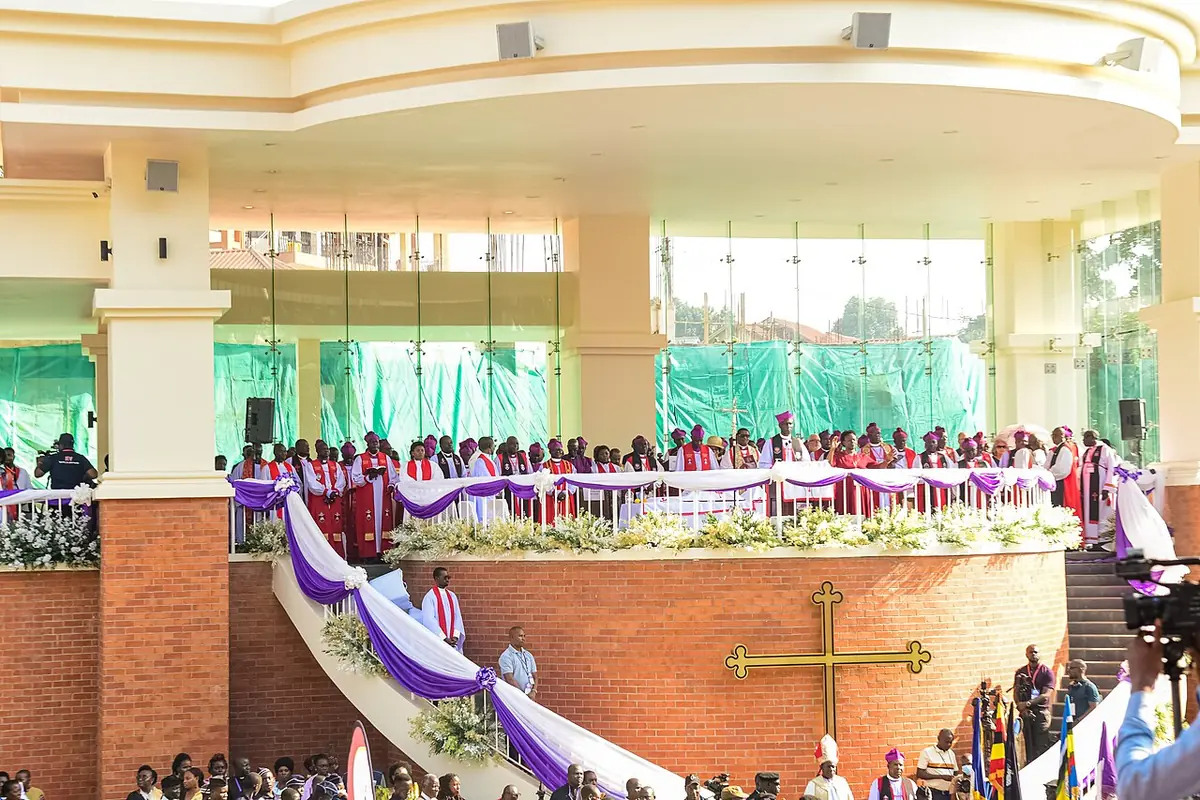
Every June 3, Martyrs Day, crowds come to both shrines. Religion News Service reported that about a million people were expected in 2025, many of them walking for days or weeks from across Uganda and from Kenya, Tanzania, Rwanda, South Sudan and Congo. One woman from Bungoma, Kenya, walked more than 300 kilometers.

Prayer to St. Charles Lwanga and companions
The Roman Missal's collect for June 3 is the Church's official prayer for the day:
O God, who have made the blood of Martyrs the seed of Christians, mercifully grant that the field which is your Church, watered by the blood shed by Saint Charles Lwanga and his companions, may be fertile and always yield you an abundant harvest. Through our Lord Jesus Christ, your Son, who lives and reigns with you in the unity of the Holy Spirit, God, for ever and ever.
Beyond the liturgy, Catholics ask Charles Lwanga and his companions to pray for young people, for converts, for those who suffer abuse and for the Church in Africa.
Frequently asked questions
Who were the Uganda Martyrs?
Forty-five Christians, 22 Catholics and 23 Anglicans, killed in the Kingdom of Buganda between 1885 and 1887 on the orders of King Mwanga II. Many were young pages at the royal court. The 22 Catholics, led by Charles Lwanga and Matthias Mulumba, were canonized by Pope Paul VI in 1964.
When is the feast of St. Charles Lwanga?
June 3, an obligatory memorial in the Catholic calendar. Uganda keeps it as Martyrs Day, a public holiday, and pilgrims walk to Namugongo from across East Africa.
Why were the Uganda Martyrs killed?
Historians give several reasons. Mwanga feared the growing influence of Christianity and of foreign powers at his court, and he was angered by Christian pages who refused his sexual demands. The missionary priest Siméon Lourdel, who witnessed the events, named both causes.
Are Anglicans honored with the Uganda Martyrs?
Yes. Twenty-three Anglicans died in the same persecution, nine of them in the same fire at Namugongo. Paul VI remembered them at the canonization in 1964, and Pope Francis in 2015 called their deaths a witness to "the ecumenism of blood." Catholic and Anglican shrines stand side by side at Namugongo.
Sources
- Paul VI, Homily at the canonization of the Martyrs of Uganda, October 18, 1964 (Spanish text)
- Pope Francis, Homily for the Martyrs of Uganda, Namugongo, November 28, 2015
- Catholic Culture: Memorial of Sts. Charles Lwanga and Companions, Martyrs
- Religion News Service via Word&Way: African Christians Walk Hundreds of Miles for Uganda Martyrs' Day (2025)
- Wikipedia: Uganda Martyrs (lists of the Catholic and Anglican martyrs)
- Wikipedia: Charles Lwanga
- Roman Martyrology, June 3