St. Elizabeth, Mother of John the Baptist
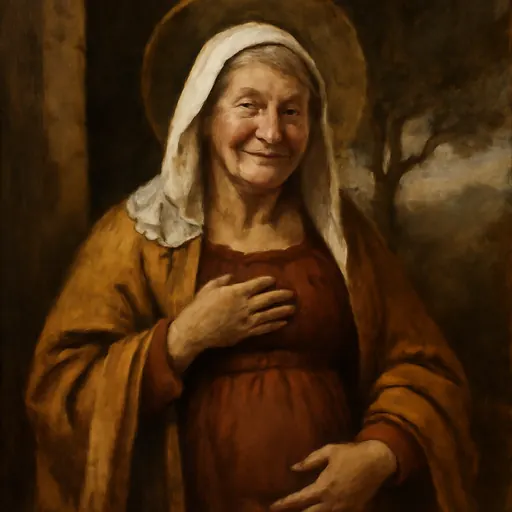
St. Elizabeth was the wife of the priest Zechariah and the mother of St. John the Baptist, whom she bore in her old age after years without children (Luke 1). When her kinswoman Mary came to visit, Elizabeth greeted her with words Catholics still pray in the Hail Mary: "Blessed art thou among women." The Roman Martyrology honors her with Zechariah on September 23; she is a patron of expectant mothers.
Who was St. Elizabeth?
Elizabeth is the mother of St. John the Baptist and the wife of the priest St. Zechariah. Everything certain about her comes from the first chapter of St. Luke's Gospel. Luke introduces the couple this way (Luke 1:5-7, King James Version):
There was in the days of Herod, the king of Judaea, a certain priest named Zacharias, of the course of Abia: and his wife was of the daughters of Aaron, and her name was Elisabeth. And they were both righteous before God, walking in all the commandments and ordinances of the Lord blameless. And they had no child, because that Elisabeth was barren, and they both were now well stricken in years.
Like her husband, she came from the priestly family of Aaron. She was also a relative of the Virgin Mary: the angel Gabriel calls her Mary's "cousin" (Luke 1:36). Her name is the Greek form of Elisheba, the name of Aaron's own wife; the Catholic Encyclopedia gives its meaning as "God is an oath."
Don't confuse her with the later queens and nuns of the same name, such as St. Elizabeth of Hungary or St. Elizabeth Ann Seton.
Elizabeth in the Gospel of Luke
A child in old age
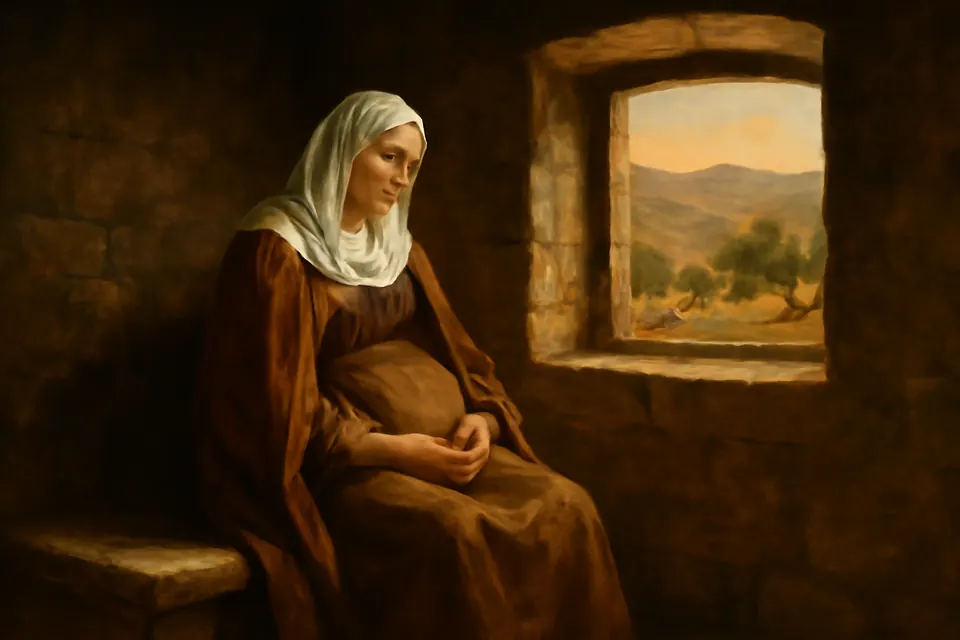
Elizabeth felt her childlessness as a "reproach." While Zechariah was serving his turn in the Temple, the angel Gabriel appeared to him and promised a son. Luke then says only this of Elizabeth: she "conceived, and hid herself five months, saying, Thus hath the Lord dealt with me in the days wherein he looked on me, to take away my reproach among men" (Luke 1:24-25).
The Visitation
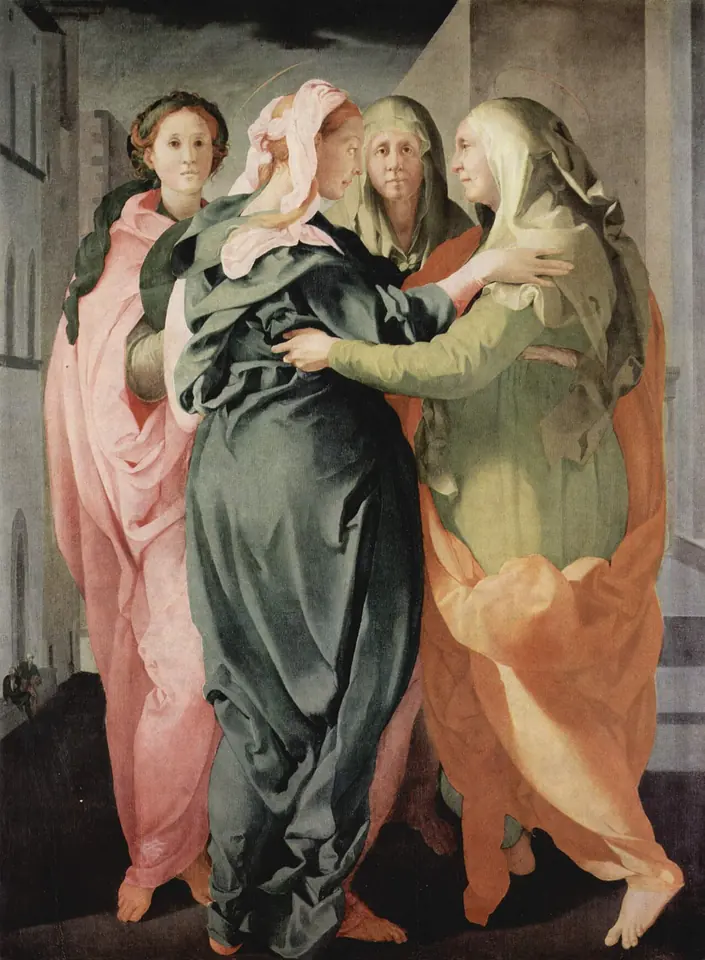
In her sixth month, Mary arrived from Nazareth. Luke tells it in a few verses (Luke 1:41-45, King James Version):
And it came to pass, that, when Elisabeth heard the salutation of Mary, the babe leaped in her womb; and Elisabeth was filled with the Holy Ghost: And she spake out with a loud voice, and said, Blessed art thou among women, and blessed is the fruit of thy womb. And whence is this to me, that the mother of my Lord should come to me? For, lo, as soon as the voice of thy salutation sounded in mine ears, the babe leaped in my womb for joy. And blessed is she that believed: for there shall be a performance of those things which were told her from the Lord.
Catholic teaching, as the Catholic Encyclopedia puts it, holds that John was sanctified in her womb at that moment. Mary answered with the Magnificat and stayed about three months.

"His name is John"
At the baby's circumcision on the eighth day, relatives wanted to name him Zacharias after his father. Elizabeth said, "Not so; but he shall be called John" (Luke 1:60). They objected that no one in the family had that name and turned to Zechariah, who was still unable to speak. He wrote, "His name is John," and his speech returned. After this the Gospels never mention Elizabeth again.

Legends about St. Elizabeth
Later writers filled in her story. These accounts are traditional:
- Sister of St. Anne. The Orthodox Church in America makes Elizabeth the sister of St. Anne, Mary's mother. The Catholic Encyclopedia reports an older version from Hippolytus, that their mothers were sisters, and says it "cannot be ascertained."
- The mountain that opened. The Protoevangelium of James, a 2nd-century apocryphal gospel, says that when Herod's soldiers hunted for the infant John, Elizabeth fled into the hills and cried, "O mountain of God, receive mother and child. And immediately the mountain was cleft, and received her."
- Her death. The Orthodox life says Elizabeth died forty days after Zechariah was killed in the Temple, and that John lived on in the wilderness.
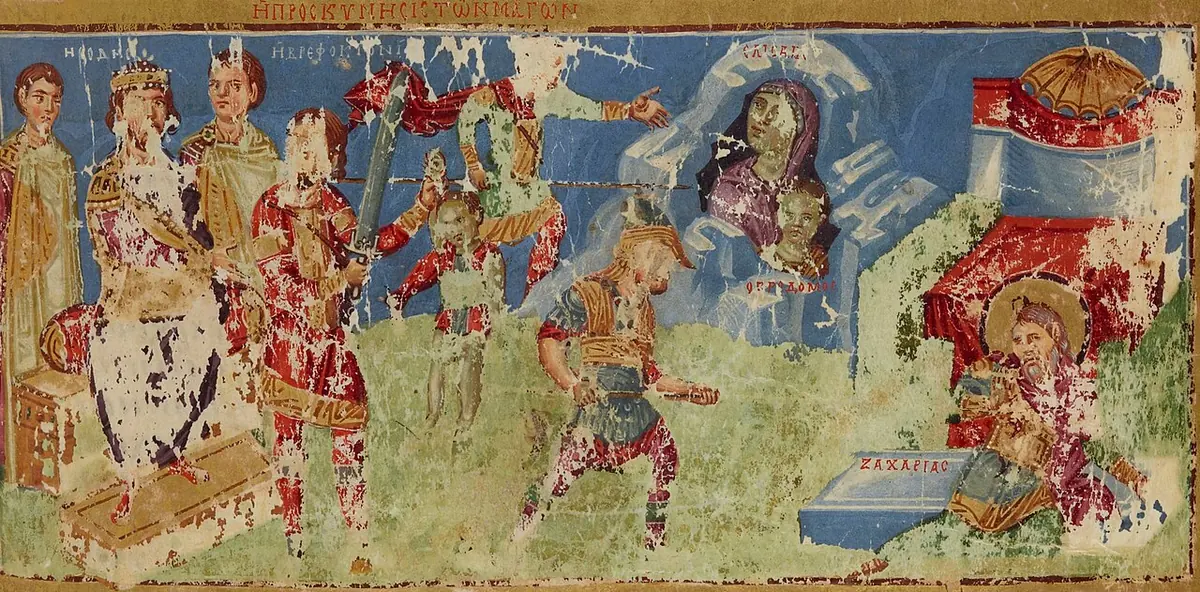

No miracles of Elizabeth's are recorded beyond the Gospel events, and none has been formally investigated.
Why St. Elizabeth is the patron saint of expectant mothers
She waited years for a child and conceived when it seemed impossible, so women who are pregnant, and couples who long for a baby, ask her prayers. Busted Halo calls her "the patron of pregnant women" and notes that couples facing infertility often turn to her. See our patron saints page.
Symbols of St. Elizabeth in art
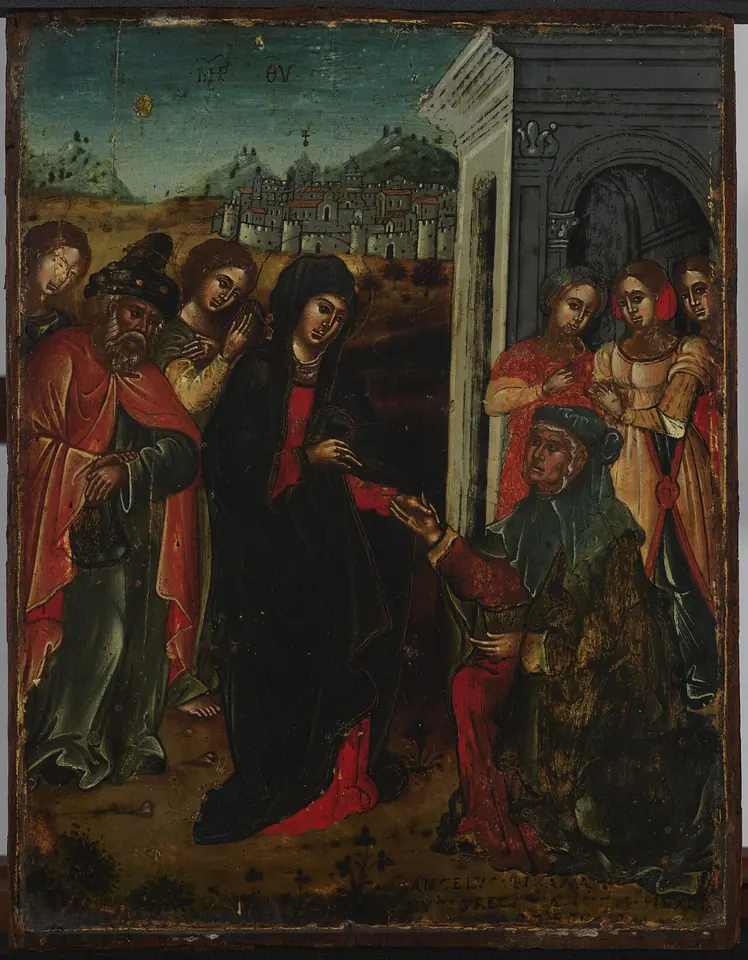
Elizabeth is nearly always shown as an older woman, her head covered with a veil or wimple, next to the young Mary. Look for:
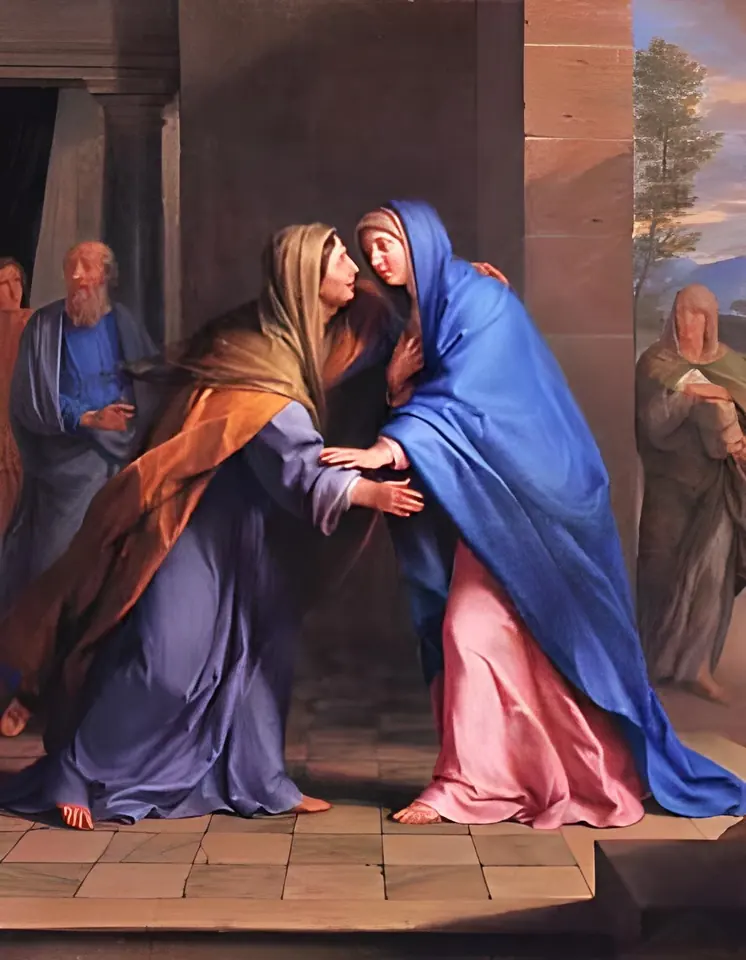
- The embrace of the Visitation, her most common scene. Elizabeth often bows or kneels before Mary.
- Her hand on her own womb or on Mary's, pointing to the two unborn children.
- The infant John the Baptist, in paintings of the Holy Family where she holds or guides him toward the Christ child.
- Zechariah in the background, sometimes at a doorway, as in Champaigne's painting.

Feast day and Ein Karem
The current Roman Martyrology remembers Zechariah and Elizabeth together on September 23; the older edition listed both on November 5. The Orthodox Church keeps their feast on September 5. The Western Church celebrates the Visitation on May 31; the Catholic Encyclopedia notes that the feast was extended to the whole Church in 1389 and long kept on July 2. See our feast days calendar.


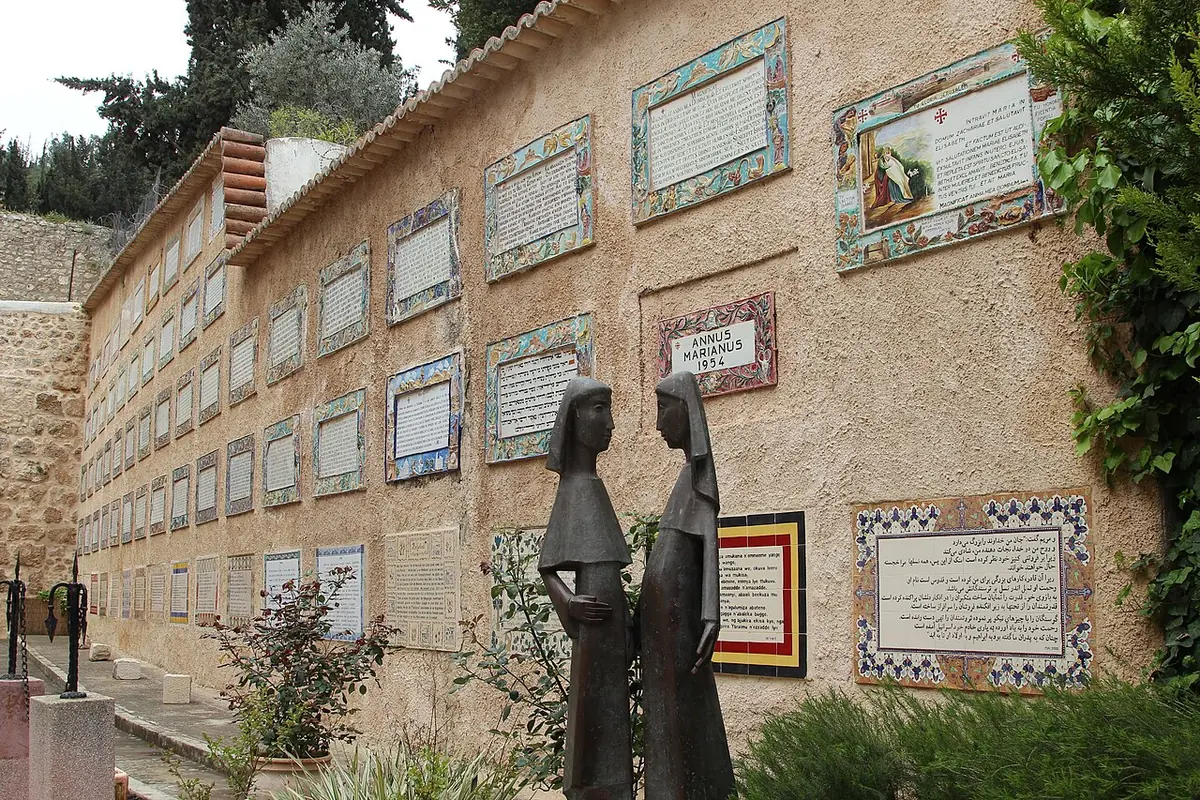
Luke says only that Mary went to "a city of Juda" in the hill country. Tradition places it at Ein Karem, a village about 8 kilometers from the Old City of Jerusalem, according to the Franciscan Custody of the Holy Land. (The Catholic Encyclopedia of 1912 instead placed the Visitation at Hebron.) The Franciscans bought the shrine there in 1679. Its crypt keeps the place where, by tradition, the house of Zechariah and Elizabeth stood, and a rock behind which John is said to have been hidden from Herod's soldiers.

Prayer and St. Elizabeth
Elizabeth's own words are part of the most familiar Catholic prayer. The first half of the Hail Mary joins Gabriel's greeting to Mary with Elizabeth's: "Blessed art thou among women, and blessed is the fruit of thy womb."
There is no single traditional prayer to St. Elizabeth in wide use. Catholics, often expectant mothers and couples hoping for a child, simply ask her to pray for them.
Frequently asked questions
Who was Elizabeth in the Bible?
The wife of Zechariah, a priest, and the mother of John the Baptist. Luke's Gospel says she was "of the daughters of Aaron," righteous, and childless into old age until the angel Gabriel promised a son. Six months into her pregnancy she was visited by her kinswoman Mary, then pregnant with Jesus (Luke 1:5-80).
How was Elizabeth related to Mary?
Luke calls her Mary's "cousin" in the King James Version (Luke 1:36); the Greek word means a relative, without saying how close. Orthodox tradition makes Elizabeth the sister of St. Anne, Mary's mother, while a tradition recorded by Hippolytus makes their mothers sisters. The Catholic Encyclopedia says the real relationship is unknown.
What did Elizabeth say to Mary?
She said, "Blessed art thou among women, and blessed is the fruit of thy womb. And whence is this to me, that the mother of my Lord should come to me?" (Luke 1:42-43, King James Version). Her first words became part of the Hail Mary.
When is St. Elizabeth's feast day?
September 23 in the current Roman Martyrology, shared with Zechariah; the older Martyrology kept them on November 5. The Orthodox Church honors them on September 5. Her meeting with Mary is celebrated on the Feast of the Visitation, May 31.
Sources
- Luke 1:5-25 (King James Version), Bible Gateway
- Luke 1:39-45 (King James Version), Bible Gateway
- Luke 1:57-80 (King James Version), Bible Gateway
- Catholic Encyclopedia (1909): Elizabeth
- Catholic Encyclopedia (1912): Visitation of the Blessed Virgin Mary
- Protoevangelium of James, chapters 12 and 22 (Ante-Nicene Fathers translation)
- Orthodox Church in America: Holy Prophet Zachariah and Righteous Elizabeth, parents of Saint John the Baptist
- Catholic Culture: September 23 (Sts. Zechariah and Elizabeth)
- Custody of the Holy Land: Mary's perfect act of faith, the feast of the Visitation in Ein Karem (2024)
- Busted Halo: Seeking Heavenly Help, 4 Saints to Turn to When Facing Infertility
- Roman Martyrology (traditional English edition), November 5