St. Zechariah, Father of John the Baptist
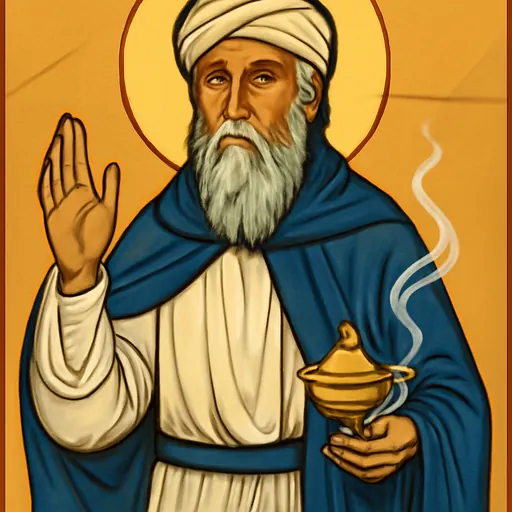
St. Zechariah was the Jewish priest, husband of St. Elizabeth, to whom the angel Gabriel announced the birth of John the Baptist while he offered incense in the Temple (Luke 1). Because he doubted, he was struck mute until he wrote "His name is John" on a tablet. Then he sang the canticle called the Benedictus, prayed every morning in the Church. The Roman Martyrology honors him on September 23.
Who was St. Zechariah?
Zechariah was a Jewish priest in the days of King Herod the Great, the husband of St. Elizabeth and the father of St. John the Baptist. Everything certain about him comes from the first chapter of St. Luke's Gospel, where he receives the first angelic announcement of the New Testament and, nine months later, sings one of its great hymns.
The older English Bibles spell his name Zacharias, and Catholic books long called him Zachary. The name means "the Lord remembers," as Catholic Culture notes. He is not the Old Testament prophet Zechariah, author of the book of that name, who lived some five hundred years earlier. Orthodox calendars do call him "the Holy Prophet Zachariah," because he prophesied in the Benedictus.
Zechariah in the Gospel of Luke
The angel at the altar of incense
Luke says Zechariah belonged to "the course of Abia," one of the divisions of priests who took turns serving in the Temple. He and Elizabeth "were both righteous before God," but they had no child, "and they both were now well stricken in years" (Luke 1:5-7, King James Version).
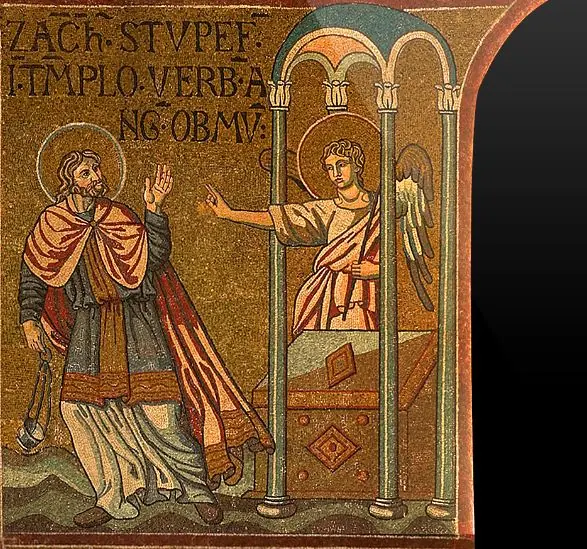
During his division's week of service, the lot fell to Zechariah to burn incense in the sanctuary, while the people prayed outside. An angel appeared "standing on the right side of the altar of incense" and said (Luke 1:13):
Fear not, Zacharias: for thy prayer is heard; and thy wife Elisabeth shall bear thee a son, and thou shalt call his name John.

Struck mute
Zechariah asked for proof: "Whereby shall I know this? for I am an old man, and my wife well stricken in years." The angel answered, "I am Gabriel, that stand in the presence of God," and told him he would be unable to speak "until the day that these things shall be performed, because thou believest not my words" (Luke 1:18-20). St. Gabriel appears again six months later, at the Annunciation to Mary.
The crowd outside wondered why he stayed so long. When he came out he could only make signs, and they understood that he had seen a vision.

William Blake painted the scene around 1800, with the old priest in a tall miter facing the angel across the smoking altar.


"His name is John"
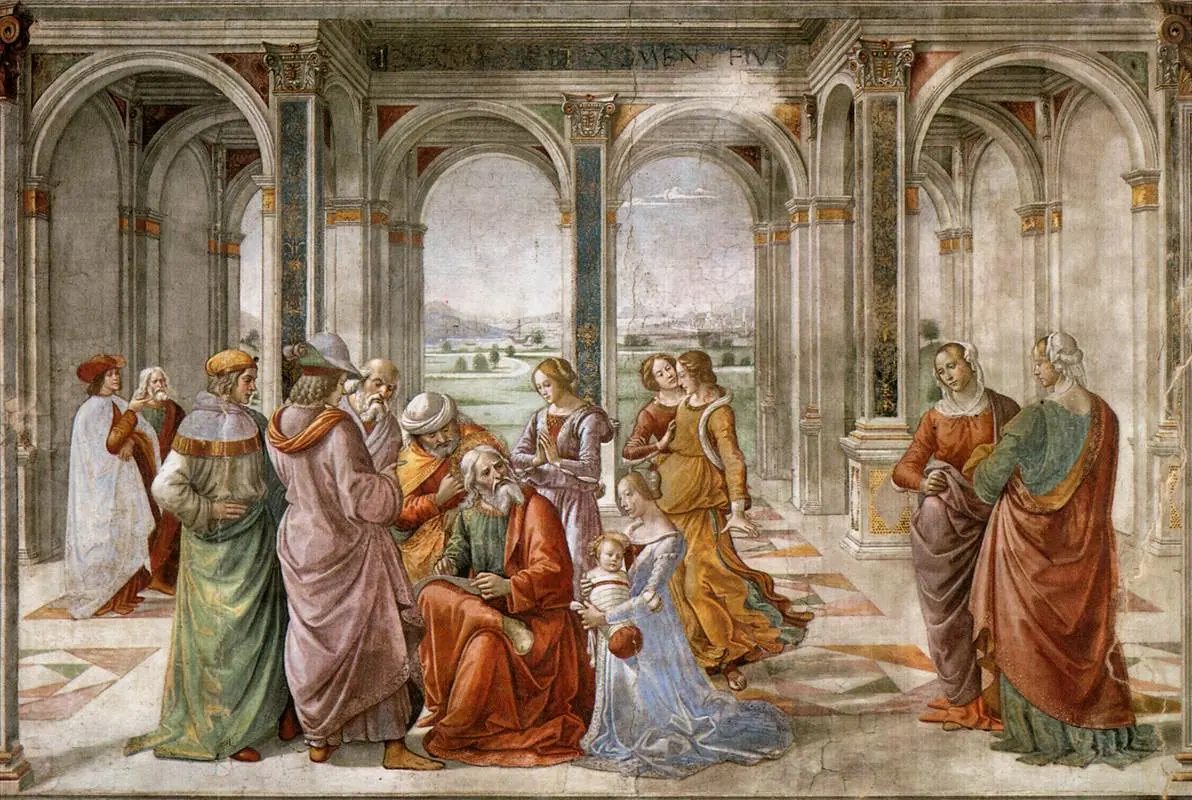
Elizabeth bore a son. On the eighth day the relatives wanted to call him Zacharias, but Elizabeth said he would be called John. They turned to the father, and "he asked for a writing table, and wrote, saying, His name is John. And they marvelled all. And his mouth was opened immediately, and his tongue loosed, and he spake, and praised God" (Luke 1:63-64).

The Benedictus
Luke says Zechariah "was filled with the Holy Ghost, and prophesied." His song is Luke 1:68-79, here in the King James Version:
Blessed be the Lord God of Israel; for he hath visited and redeemed his people, And hath raised up an horn of salvation for us in the house of his servant David; As he spake by the mouth of his holy prophets, which have been since the world began: That we should be saved from our enemies, and from the hand of all that hate us; To perform the mercy promised to our fathers, and to remember his holy covenant; The oath which he sware to our father Abraham, That he would grant unto us, that we being delivered out of the hand of our enemies might serve him without fear, In holiness and righteousness before him, all the days of our life.
And thou, child, shalt be called the prophet of the Highest: for thou shalt go before the face of the Lord to prepare his ways; To give knowledge of salvation unto his people by the remission of their sins, Through the tender mercy of our God; whereby the dayspring from on high hath visited us, To give light to them that sit in darkness and in the shadow of death, to guide our feet into the way of peace.
The Catholic Encyclopedia divides it in two. The first part (verses 68-75) thanks God for the Messiah's coming; the second turns to the baby John, who will "go before the face of the Lord," echoing Isaiah 40:3. As a hymn of thanks for the Redeemer greeting "the dayspring from on high," it found its place in the Church's prayer every morning at Lauds, now called Morning Prayer. The Catholic Encyclopedia adds that it was also sung at funerals, at the moment of burial.


Legends about St. Zechariah
The Gospels say nothing of how Zechariah died. The stories below are traditional:
- Killed in the Temple. The Protoevangelium of James, a 2nd-century apocryphal gospel, says Herod sent soldiers to ask Zechariah where his son was hidden. He answered, "I am God's martyr, if you shed my blood," and was murdered "about daybreak" at the altar. The Orthodox Church accepts this tradition and links it with Jesus' words about "Zacharias son of Barachias, whom ye slew between the temple and the altar" (Matthew 23:35). The Catholic Encyclopedia identifies the Zacharias of that verse with an Old Testament priest killed centuries earlier (2 Chronicles 24:20-21).
- His relics. The church of San Zaccaria in Venice claims his body. According to the Orthodox writer John Sanidopoulos, it came as a gift from a Byzantine emperor in the 9th century; the claim can't be verified.
No miracles of Zechariah's have been formally investigated.
Symbols of St. Zechariah in art
Western artists usually dress Zechariah as the Jewish high priest, with a tall headdress or miter, though Luke never says he was the high priest. Look for:
- A censer or the altar of incense, for the annunciation in the Temple.
- A writing tablet, for the naming of John.
- A finger to his lips, for his silence.
- The infant John or Elizabeth nearby.
In Orthodox icons he wears priestly vestments and stands before the altar, often with Gabriel beside him.


Feast day and where he is honored
The current Roman Martyrology remembers Zechariah and Elizabeth on September 23; the older edition named "St. Zachary, priest and prophet, father of blessed John the Baptist" on November 5. The Orthodox Church keeps their feast on September 5. See our feast days calendar. Tradition places the couple's home at Ein Karem, west of Jerusalem, where the Franciscan Church of the Visitation stands.
Prayer and St. Zechariah
Zechariah's own canticle is his prayer, and the Church prays it every day. There is no separate traditional prayer to him in wide use. Catholics, especially couples hoping for a child, ask Zechariah and Elizabeth together to pray for them.
Frequently asked questions
Who was Zechariah in the Bible?
A priest of the division of Abijah, married to Elizabeth, both "righteous before God" and childless into old age (Luke 1:5-7). While he burned incense in the Temple, the angel Gabriel promised him a son. He doubted and was struck dumb until his son, John the Baptist, was named.
What is the Benedictus?
The song of praise Zechariah sang when his speech returned, Luke 1:68-79, named from its first word in Latin, "Benedictus Dominus Deus Israel." In the King James Version it begins "Blessed be the Lord God of Israel; for he hath visited and redeemed his people." The Church prays it every morning at Lauds (Morning Prayer).
Why was Zechariah struck mute?
Because he did not believe the angel. When he asked, "Whereby shall I know this? for I am an old man," Gabriel answered that he would be "dumb, and not able to speak, until the day that these things shall be performed" (Luke 1:18-20).
When is St. Zechariah's feast day?
September 23 in the current Roman Martyrology, together with St. Elizabeth; the older Martyrology kept them on November 5. The Orthodox Church honors them on September 5.
Sources
- Luke 1:5-25 (King James Version), Bible Gateway
- Luke 1:57-80 (King James Version), Bible Gateway
- Catholic Encyclopedia (1907): The Benedictus (Canticle of Zachary)
- Catholic Encyclopedia (1912): Zacharias (the prophet)
- Protoevangelium of James, chapters 23 and 24 (Ante-Nicene Fathers translation)
- Orthodox Church in America: Holy Prophet Zachariah and Righteous Elizabeth, parents of Saint John the Baptist
- Catholic Culture: September 23 (Sts. Zechariah and Elizabeth)
- Roman Martyrology (traditional English edition), November 5
- Orthodox Christianity Then and Now: The Relics of the Prophet Zechariah, Father of John the Baptist