St. Hubert of Liège
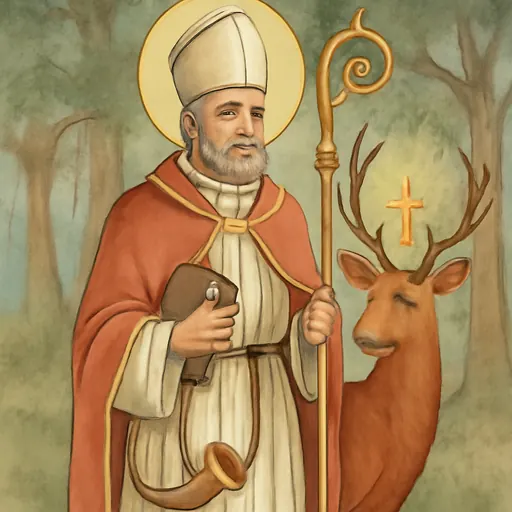
St. Hubert (about 656–727) was the bishop of Maastricht who moved his see to Liège, became its first bishop, and preached to the last pagans of the Ardennes forest. A legend first written down in the 15th century says he was converted while hunting on Good Friday, when a stag turned to face him with a crucifix between its antlers. He is the patron saint of hunters, and his feast day is November 3.
Who was St. Hubert?
St. Hubert was a Frankish nobleman who became a bishop in what is now Belgium and the Netherlands at the end of the 7th century. He succeeded his murdered teacher, St. Lambert, as bishop of Maastricht, moved the seat of the diocese to Liège, and is honored there as its founder and first bishop. He spent his last years preaching to the people of the Ardennes forest, where the old gods were still worshiped, and the Catholic Encyclopedia calls him the "Apostle of the Ardennes." He died on May 30, 727.
He is best known for a story that probably never happened to him: the hunt on Good Friday when a stag turned to show him a crucifix between its antlers. That legend, borrowed from the older story of St. Eustace, made Hubert the patron saint of hunters across Europe. His name still marks hunting clubs, chivalric orders and the town of Saint-Hubert in Belgium, and his stag is on every bottle of Jägermeister.

The life of St. Hubert
The Bollandists published seven early lives of Hubert in the Acta Sanctorum. The first was written by someone who knew him, but it gives few details. Later lives added a noble pedigree, a wife and the stag, and the Catholic Encyclopedia follows these later accounts closely, so the outline below separates the two where it can.
A courtier who loved the hunt
According to the later lives, Hubert was born around 656, the eldest son of Bertrand, Duke of Aquitaine. As a young man he served at the Frankish court in Neustria and then at the court of Pepin of Herstal in Austrasia. The Catholic Encyclopedia describes him in those years as "a worldling and a lover of pleasure, his chief passion being for the chase." He married Floribanne, daughter of a count of Louvain, and they had a son, Floribert.
The stag on Good Friday
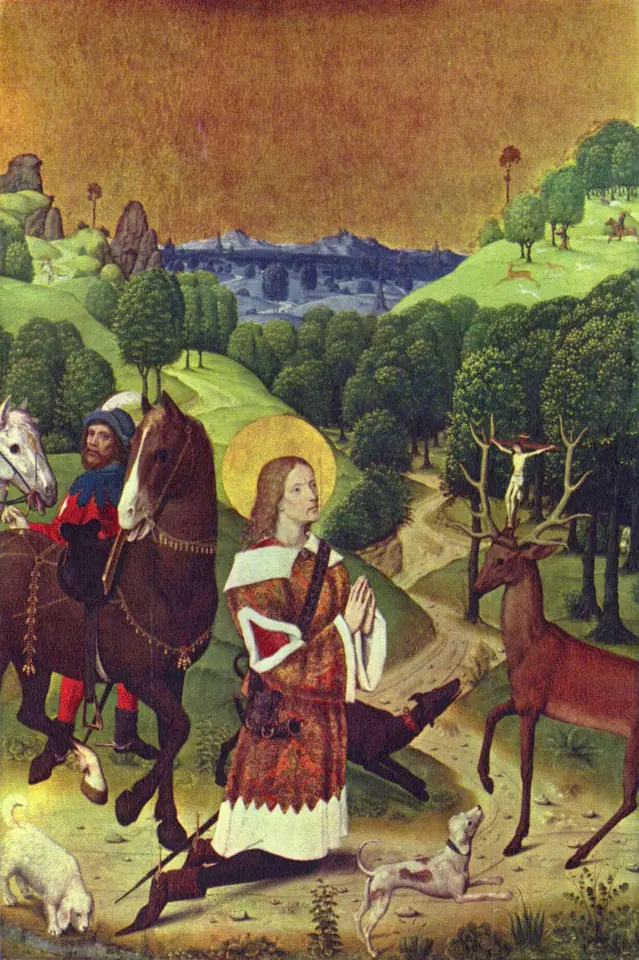
The famous story is told this way. On Good Friday morning, while the faithful filled the churches, Hubert rode out to hunt. A magnificent stag turned to face him, and he saw a crucifix between its antlers and heard a voice:
"Hubert, unless thou turnest to the Lord, and leadest an holy life, thou shalt quickly go down into hell".
Hubert dismounted, fell to the ground and asked, "Lord, what wouldst Thou have me do?" The voice told him to go to Lambert, bishop of Maastricht, who would teach him.
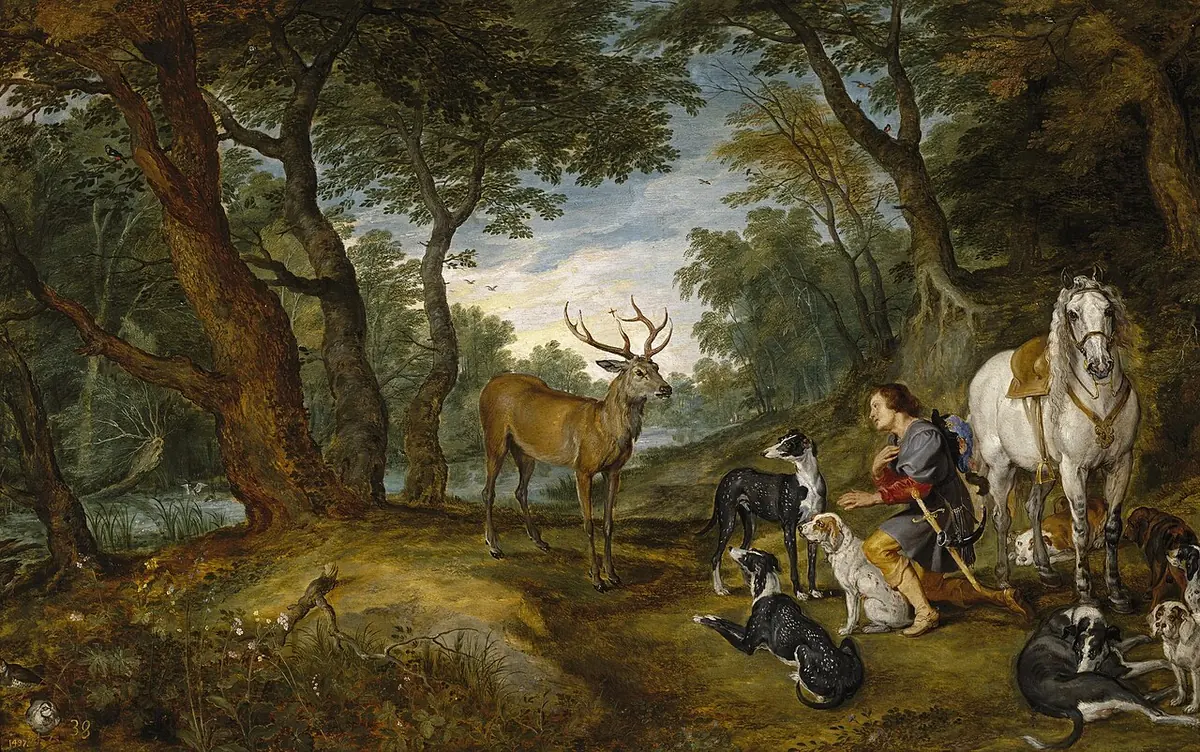

This is a traditional legend, and it is borrowed. The Roman martyr Eustace, according to his own legend, was a pagan general under Trajan who "saw a stag coming towards him, with a crucifix between its horns," and heard a voice calling him to Christ. The Catholic Encyclopedia calls the acts of Eustace "certainly fabulous" and dates them to the 7th century. The stag story was transferred to Hubert in the 15th century, and a 2024 history published for the town of Saint-Hubert agrees that his legend took its settled form only then. Painters often made the two saints hard to tell apart. Eustace is usually a Roman soldier, while Hubert is a Frankish huntsman or a bishop.


Disciple and bishop
Whatever the cause, Hubert did change his life. After his wife died, the later lives say, he gave up his rank and his rights to the duchy of Aquitaine, entrusted his young son to his brother, gave his wealth to the poor, and studied for the priesthood under Lambert. Lambert was murdered around 705; the Catholic Encyclopedia says by followers of Pepin. Tradition says Hubert was on pilgrimage in Rome at the time, and that the pope, told of Lambert's death in a vision, consecrated Hubert as his successor. In one late version an angel brought Hubert a stole from the Virgin Mary at his consecration.


Founder of Liège
In 720, the Catholic Encyclopedia says, Hubert moved Lambert's remains from Maastricht to the small village of Liège, where Lambert had been killed, and built a church over the spot. It became the cathedral the following year, and the seat of the diocese moved with it. "This laid the foundation of the future greatness of Liège," the Encyclopedia notes, which honors Lambert as its patron and Hubert as its founder and first bishop.

Apostle of the Ardennes
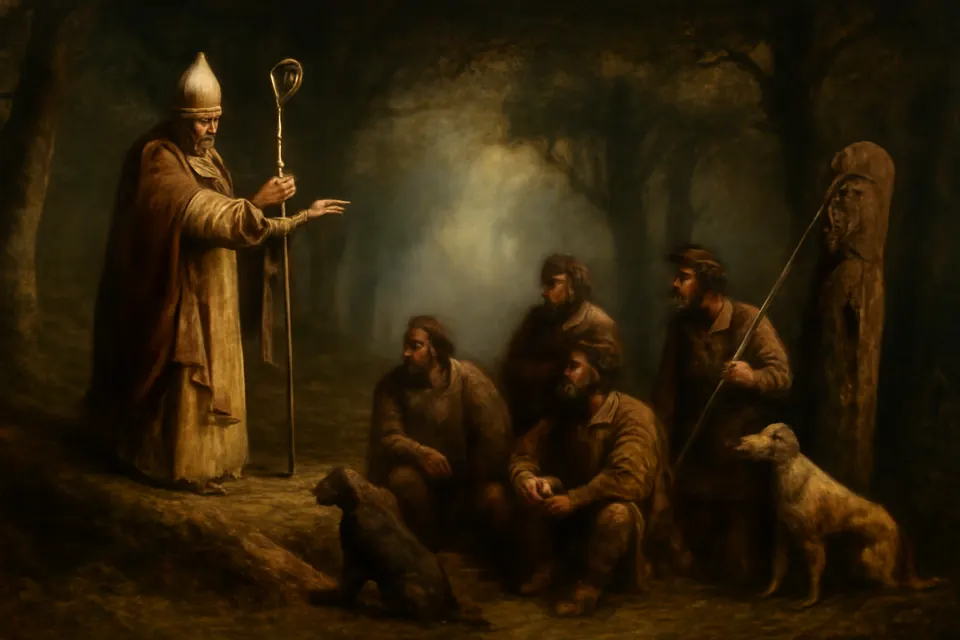
Pagan worship still lingered in the forests of the Ardennes and in Toxandria, the country stretching north toward the Rhine. Hubert went into the remote settlements himself and, the Catholic Encyclopedia says, "finally brought about the abolishment of the worship of idols in his neighborhood." In 727 he went to dedicate a church at Fura, traditionally Tervuren near Brussels. Warned of his death in a vision, he preached a farewell sermon, fell ill, and died six days later, on May 30, with the words "Our Father, who art in Heaven" on his lips.
The miracles of St. Hubert
Hubert's cult is older than any formal canonization. Using this encyclopedia's labels:
- The stag with the crucifix (traditional): borrowed from the legend of St. Eustace and attached to Hubert in the 15th century.
- The stole brought by an angel (traditional): a late legend; the stole kept at Saint-Hubert is described by the town's own history as a later relic.
- The incorrupt body at Liège (traditional): the Saint-Hubert history says that when his tomb was opened on November 3, 743, his body was found intact.
- Healings at Andage and protection from rabies (reported): the monks at Andage wrote down cures of blindness and paralysis after his body arrived in 825, and for centuries people afraid of rabies came to his shrine.
Why St. Hubert is the patron saint of hunters
Hunters claimed Hubert because of the stag. The legend shows a hunter rebuked for hunting on a holy day and for living for the chase, and later hunters read it as a call to hunt with restraint and respect. The 2024 history of Saint-Hubert speaks to hunters in that spirit, praising those whose passion is held in check by care for wildlife and its habitat. Several chivalric orders were named for him, among them the Order of St. Hubert founded in 1444 by Gerhard V of Jülich and Berg.
He became the saint against rabies because his shrine at Andage drew people bitten by rabid animals. The monks performed a rite called the taille, using the stole, on those who came. The Saint-Hubert history notes that he was the recognized protector against rabies until 1885, when Pasteur produced the rabies vaccine. From hunting and from rabies it was a short step to dogs, especially hounds. See more on our patron saints page.
Symbols of St. Hubert in art
There are two ways to show Hubert, and both are common:
- The huntsman before the stag: a young nobleman in hunting clothes, often kneeling, with his horse and hounds, facing a stag with a crucifix between its antlers. If the figure wears Roman armor, it is more likely Eustace.
- The bishop: an older man in miter and cope with a crozier, usually with a small stag at his feet or a crucifix-bearing stag standing on a book he holds.
- Hunting horn and hounds: a horn at the belt marks him even in bishop's dress.
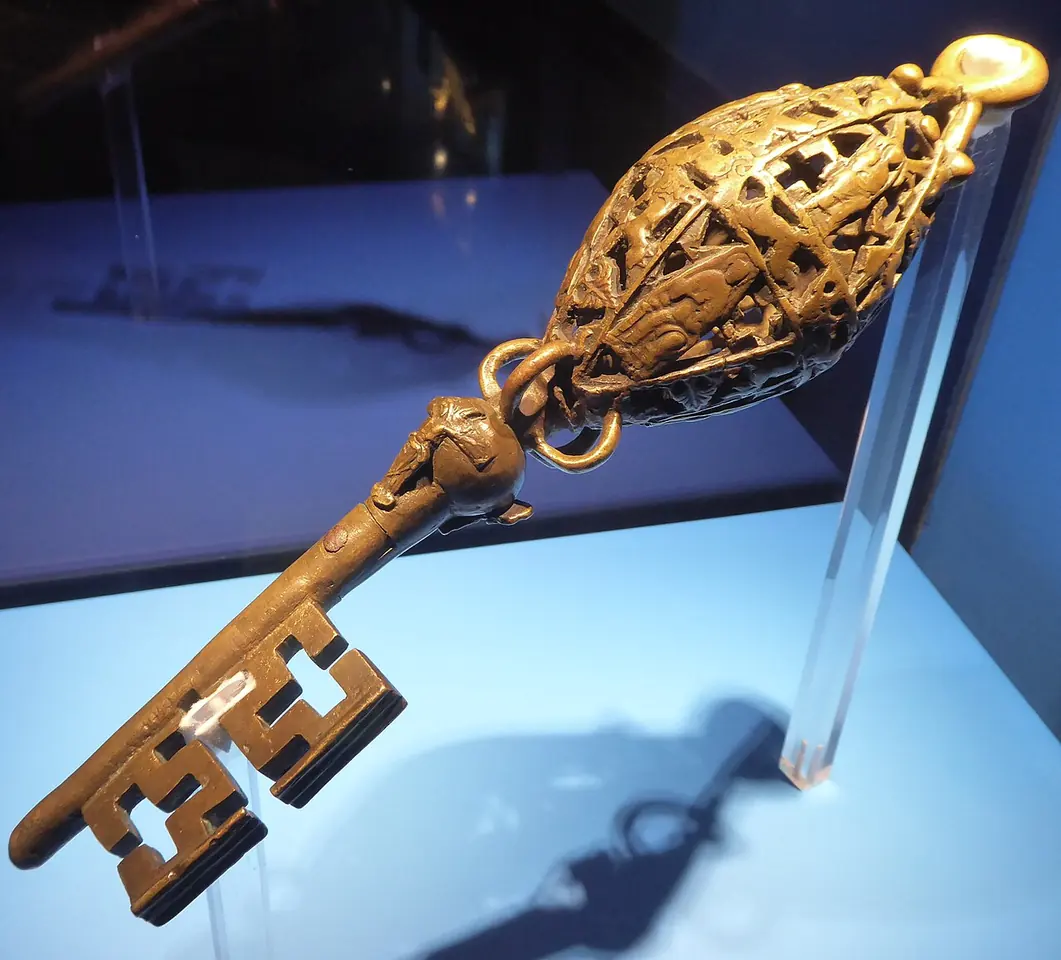
- A key: in Liège, the key-reliquary said to have been given to him by the pope.
- A stole carried by an angel: the scene of his consecration.
At Saint-Hubert itself, a 17th-century statue in the basilica shows him as a bishop with the stag at his side.
St. Hubert's Day and the blessing of the hounds
Hubert's feast is November 3, not the day of his death. The Saint-Hubert history explains that his tomb in Liège was opened on November 3, 743, and that the town still marks that date with a festive Mass and celebrations. You can find his calendar neighbors on our feast days page.
The customs most widely kept today, according to the same history, are the blessing of animals and the giving out of blessed bread. Hunts in France and Belgium gather for a messe de Saint-Hubert, with mounted huntsmen in their coats, horns sounding in the church, and a blessing of the pack at the door.


In Liège Cathedral, the treasury has for years displayed the key of St. Hubert on the high altar each November 3 during a concert of hunting horns.


Saint-Hubert and Liège
Hubert was buried in the church of St. Peter in Liège. On September 30, 825, his body was carried to the Benedictine abbey of Andage in the Ardennes, which from then on took his name. The town of Saint-Hubert grew up around it. The abbey church burned in 1525 and was rebuilt in Flamboyant Gothic between 1525 and 1564, with a Baroque facade added later. It was raised to the rank of a basilica in 1927. Hubert's coffin disappeared in the 16th century, the Catholic Encyclopedia says, but pilgrims still come to his altar, among them a walking pilgrimage from Lendersdorf in Germany that is more than three hundred years old.


In Liège, the cathedral treasury keeps the bronze key-reliquary of St. Hubert. Tradition says the pope gave it to him in Rome, and its handle is said to contain filings from the chains of St. Peter. The treasury's own bulletin calls the legend charming and notes that the documented history of the key begins much later.

Prayer to St. Hubert
No single traditional prayer to St. Hubert is in general use in English. On his feast, priests in the Ardennes bless animals and bread in his name, and huntsmen attend Mass in his honor. Catholics ask St. Hubert to pray for hunters, for those who work in forests, and for animals and the people who care for them. According to his life, his own last words were the opening of the Lord's Prayer.
Frequently asked questions
What is St. Hubert the patron saint of?
Hunters above all, and also foresters, hounds and dogs, and the city of Liège. For about a thousand years people also called on him against rabies, until Louis Pasteur's vaccine in 1885.
When is St. Hubert's Day?
November 3. On or around that day, churches in Belgium and France hold St. Hubert Masses with hunting horns, bless dogs, horses and other animals, and give out blessed bread. In Liège the key-reliquary of St. Hubert is shown in the cathedral during a concert of hunting horns.
Is the story of St. Hubert and the stag true?
It is a traditional legend. The early lives of Hubert, the first written soon after his death, do not mention it. The stag with a crucifix belongs first to the much older legend of St. Eustace, a Roman general, and it was only attached to Hubert in the 15th century.
What is the connection between St. Hubert and Jägermeister?
The Jägermeister label shows a stag's head with a glowing cross between its antlers, an image taken from the legend shared by St. Hubert and St. Eustace, the patron saints of hunters. The brand name is German for "master of the hunt."
Where is St. Hubert buried?
He was first buried in Liège, and in 825 his body was taken to the abbey of Andage in the Ardennes, which then took the name Saint-Hubert. The coffin disappeared in the 16th century. The abbey church, now the Basilica of Saint-Hubert, keeps his altar and a stole venerated as his.
Sources
- Catholic Encyclopedia (1910): St. Hubert
- Catholic Encyclopedia (1909): Sts. Eustachius and Companions
- Saint-Hubert en Ardenne: Fragments d'histoire pour introduire aux jubilés 825, 727, 1927 (Saint-Hubert d'Ardenne asbl, 2024)
- Trésor de Liège, Bloc-Notes no. 2 (2004): La clef de saint Hubert
- Christian Iconography: St. Eustace
- Acta Sanctorum, November 3 (the early lives of St. Hubert, edited by the Bollandists)
- Roman Martyrology, November 3