St. Zita of Lucca
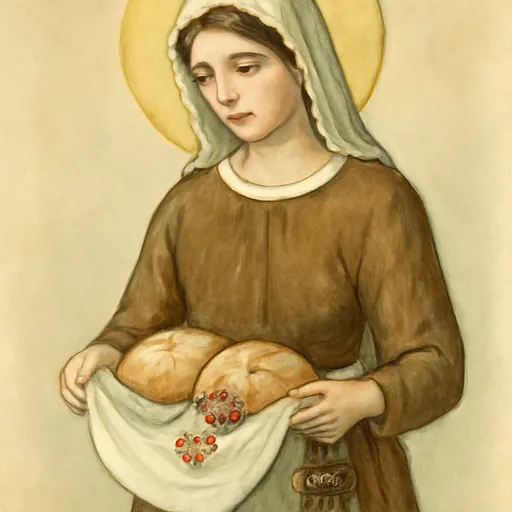
St. Zita (about 1212–1272) was a household servant in Lucca, Italy, who worked for the same merchant family for 48 years and gave much of what she had to the poor. She is the patron saint of housekeepers, maids and domestic servants, and many Catholics ask her help in finding lost keys. Her feast day is April 27, and her body lies in the Basilica of San Frediano in Lucca.
Who was St. Zita?
Zita was a maid. She spent almost her whole life, from the age of twelve until her death at about sixty, working in one house: the home of the Fatinelli family, wealthy silk merchants of Lucca in Tuscany. She never founded an order, wrote a book or traveled far. Her holiness was in the way she did ordinary work and treated people, and her fellow townspeople made her a saint by acclamation long before Rome confirmed it.
She was born around 1212 in Monsagrati, a hill village near Lucca, to a poor and devout family. The Catholic Encyclopedia says that as a child she obeyed at once whenever her mother said something would please or displease God. She died on April 27, 1272, and Lucca took her to its heart so completely that Dante, writing a generation later, called one of the city's magistrates "one of the elders of Santa Zita" in canto 21 of the Inferno.


The life of St. Zita
A hard beginning
The early years were not easy. The Catholic Encyclopedia says her hard work and piety brought her "every manner of ill-treatment" from the other servants, who took her devotion for show, and through their complaints from her employers too. She got up before the household to go to Mass, did her own work and covered for others who neglected theirs.
Over the years her patience won them over. The Fatinellis put her in charge of the house and its servants, and she used her authority gently, excusing others' faults to the family and refusing to settle old scores. She was strict only when, in the encyclopedia's words, there was "a question of checking the introduction of vice among the servants."
The servant who gave everything away
With the family's permission she gave generously to the poor, but carefully, "to assist only those really in need." Catholic Culture says she gave away her own food and made do with scraps. Catholic Culture credits her with a saying that sums up her outlook: "A servant is not pious if she is not industrious; work-shy piety in people of our position is sham piety." She also spent long hours praying for prisoners condemned to death.


The miracles of St. Zita
Most of the stories told about her are traditional, passed down in Lucca and in the lives written after her death:
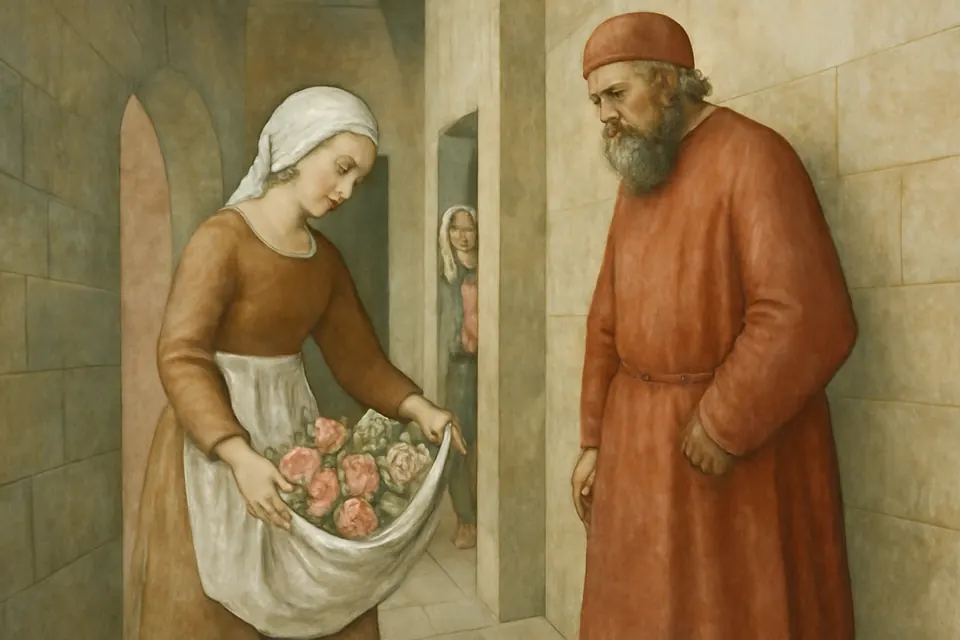
- Bread into flowers: she was carrying bread for the poor in her apron when her suspicious master stopped her; when she opened it, it held only flowers. The same story is told of St. Elizabeth of Hungary.
- The angels' bread: one morning she lost track of time in prayer and forgot to bake; she returned to find the loaves already made.
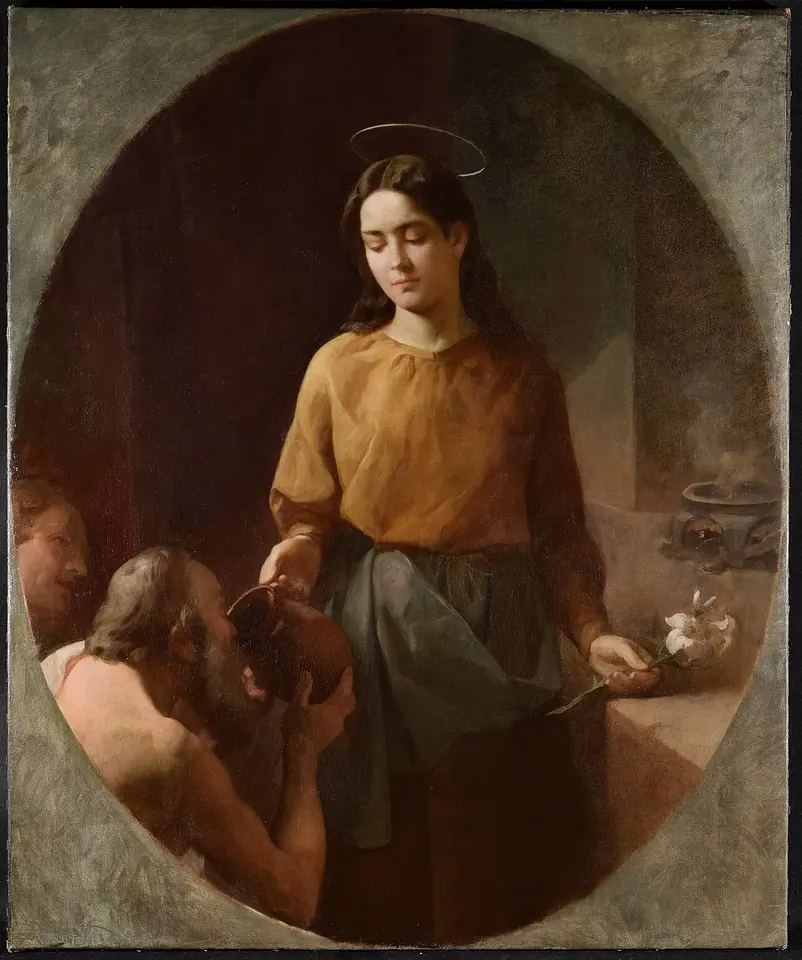
- Water into wine: she drew water at a well for a thirsty pilgrim, made the sign of the cross over it, and he found it had become wine.

- Healings after her death: reported. The Catholic Encyclopedia says "numerous miracles" were credited to her intercession soon after she died, which is how her cult began. They were gathered in the process that led to Innocent XII's confirmation of her cult in 1696.
Why St. Zita is the patron saint of servants and lost keys
She was a servant all her life, so maids, housekeepers, butlers, waiters and homemakers have claimed her for centuries; Catholic Culture's list adds "people ridiculed for their piety," which describes her first years in the Fatinelli house. In late medieval England, where she was called Sitha, maids and housewives prayed to her when they lost their keys, and the custom spread. Find other patrons of household work, such as St. Martha, and of lost things, such as St. Anthony of Padua, on our patron saints page.
Symbols of St. Zita in art
Look for a young woman in plain working clothes, often with an apron, holding:
- A bunch of keys: the sign of the trusted housekeeper.
- Loaves of bread, or flowers in her apron: her charity and the bread miracle.
- A water jug: the miracle at the well, as in de Vuez's and Biedroński's paintings.
- A purse, a rosary or a book: her almsgiving and her life of prayer.
She was surprisingly popular in late medieval England. On the painted rood screen at Barton Turf in Norfolk she stands in a long white apron with her keys and purse, beside St. Apollonia.


Feast day and the shrine in Lucca
Zita's feast is April 27. In Lucca the day is a city festival: people bring flowers to the Basilica of San Frediano and bake bread in her memory. Other April saints are on our feast days page.
The Catholic Encyclopedia says her tomb in San Frediano was found in 1580, which led to the formal approval of her cult in 1696; Pope Leo X had already approved an office in her honor. Her body, reported to be incorrupt when the tomb was opened, lies in a glass case in a side chapel.


Prayer to St. Zita
There is no widely used traditional prayer to St. Zita with a known author or approved liturgical text in English. Catholics ask her to pray for them in their own words: for patience and honesty at work, for the people they serve, for a peaceful household, and, very often, for help finding the keys.
Frequently asked questions
Why is St. Zita the patron saint of lost keys?
As head of the Fatinelli household she held the keys of the house, and keys became her emblem in art. In late medieval England, where she was called Sitha, maids and housewives already called on her when they lost their keys. The custom is popular devotion, not a formal patronage.
When is St. Zita's feast day?
April 27, the day she died in 1272. It is in the Roman Martyrology and is celebrated especially in Lucca, where people bring bread and flowers to her shrine in San Frediano.
Is St. Zita's body incorrupt?
Her tomb was opened in 1580 and her body was reported to be incorrupt. It is displayed in a glass case in the Basilica of San Frediano; visitors see a small, darkened, naturally preserved body.
Is there a prayer to St. Zita?
No traditional prayer to St. Zita has a well-documented origin. Catholics usually ask her intercession in their own words, for help with work, for a household, or when keys or other things are lost.
Sources
- Catholic Encyclopedia (1912): St. Zita
- Catholic Culture: Liturgical calendar for April 27
- Alban Butler, The Lives of the Fathers, Martyrs and Other Principal Saints (1864), vol. 4: St. Zita
- Dante, Inferno, canto 21
- Roman Martyrology, April 27