St. Wenceslaus

St. Wenceslaus (Václav) was a Christian duke of Bohemia in the early 10th century. He spread the faith, cared for the poor, and was murdered on his way to church by his brother Boleslaus in 935 (some sources say 929). He is the patron saint of the Czech Republic, his feast is September 28, and he is the duke behind the 19th-century carol "Good King Wenceslas."
Who was St. Wenceslaus?
Wenceslaus (in Czech, Václav) was the duke of Bohemia, the heart of today's Czech Republic, in the early 10th century. He ruled only a few years. He supported the Church, built churches and was known for his care of the poor, and he was killed by his younger brother Boleslaus at the door of a church. His people honored him as a martyr almost at once, and he has been the patron of the Czech lands ever since. Benedict XVI, at Mass on his feast in 2009, noted that the Czechs call him their "eternal" prince.
English speakers know him from the Christmas carol "Good King Wenceslas." The carol is a Victorian poem, not a historical record, and he was never a king in his lifetime.
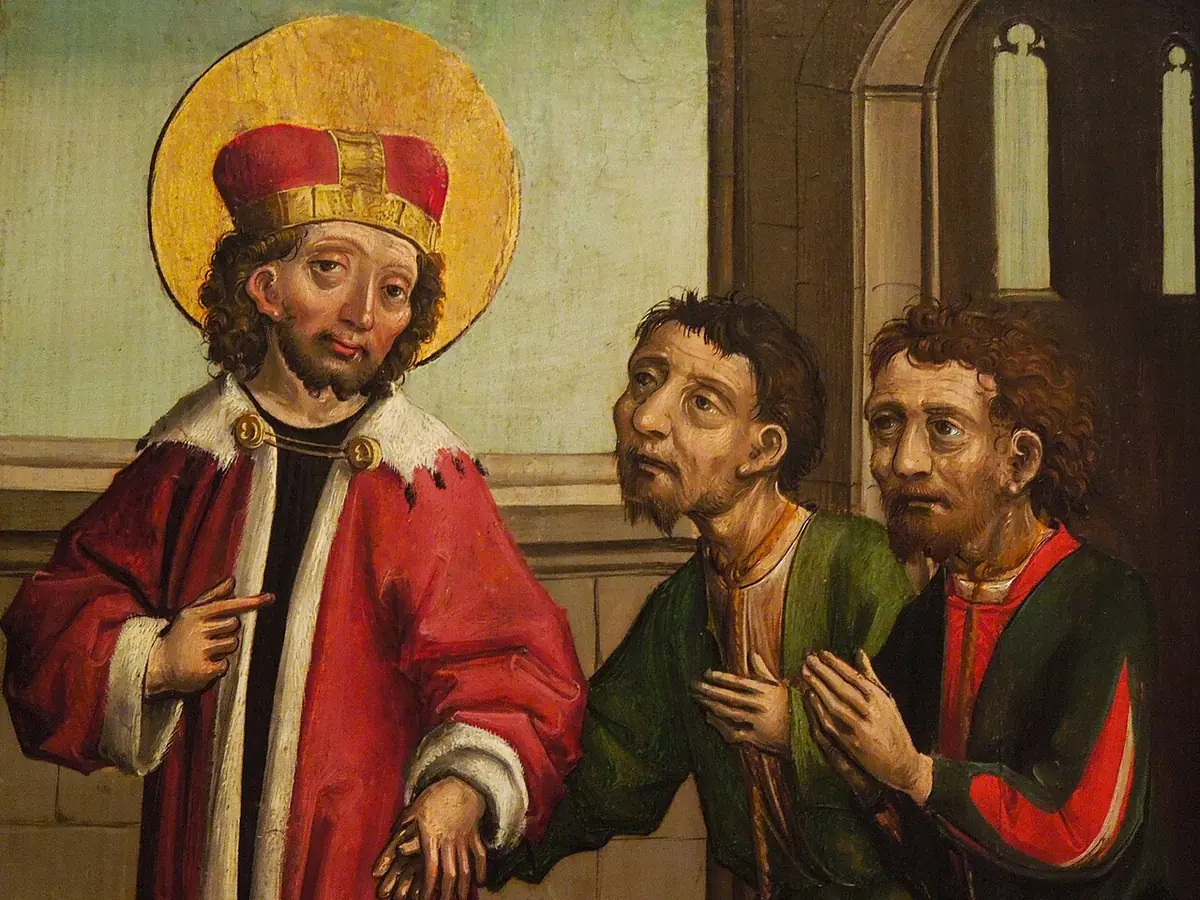

The sources are early but partisan. Several Latin and Old Slavonic lives were written within a few generations of his death, and they disagree on dates; his death is placed in 935 by the Catholic Encyclopedia and in 929 by Catholic Culture.
The life of St. Wenceslaus
Ludmila and Drahomíra
His father, Duke Vratislav, was a Christian. His mother, Drahomíra, was a pagan. Wenceslaus was raised in the faith by his grandmother Ludmila, whom Benedict XVI called "the martyr Ludmila," and she is honored as a saint. After Vratislav died, Drahomíra ruled as regent and, according to the Catholic Encyclopedia, opposed Christianity.
Duke of Bohemia
As a young man Wenceslaus took over the government himself. The Catholic Encyclopedia says he placed his duchy under the protection of the German king, invited German priests and favored the Latin rite. Benedict XVI quoted the first Old Slavonic life, which says that "he assisted God's ministers and he also adorned many churches" and that "he was benevolent to the poor, clothed the naked, gave food to the hungry, welcomed pilgrims." He built a church of St. Vitus at Prague Castle, the ancestor of today's cathedral.

The Hymnology Archive quotes a 13th-century Latin legend, Oriente iam sole, which says that "rising during the night, he would carry wood on his shoulders" to the needy. That detail, centuries old, is the seed of the carol.
The murder at Stará Boleslav
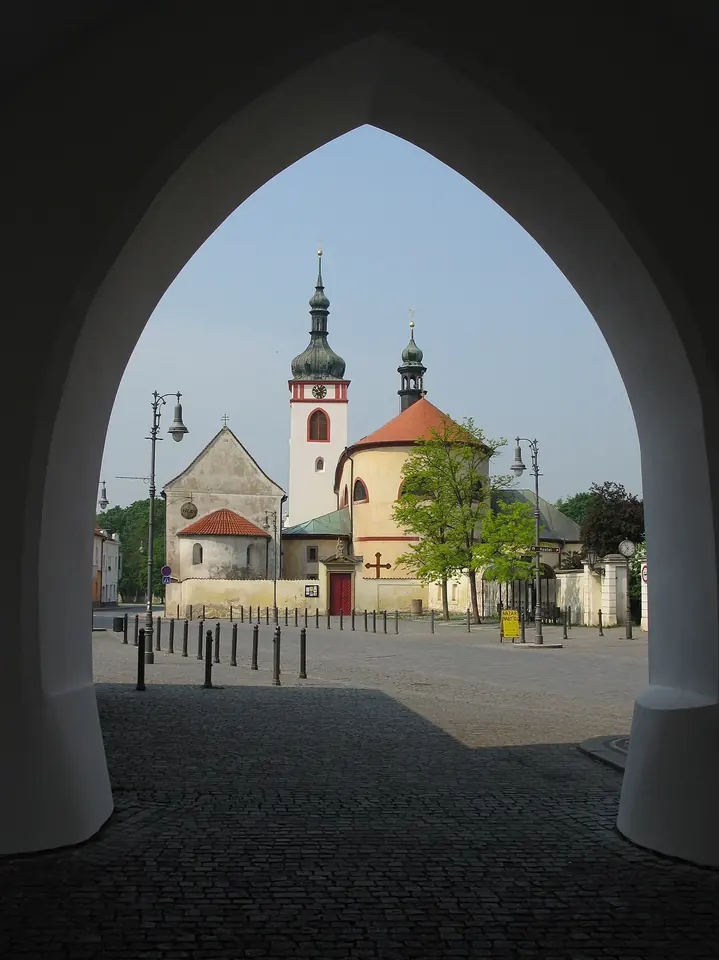
His brother Boleslaus held a fortress at Boleslav, northeast of Prague. Catholic Culture tells the story this way: Boleslaus invited Wenceslaus to a banquet, and the next morning, September 28, as Wenceslaus was on his way to Mass, Boleslaus struck him down at the church door. Before he died, it says, Wenceslaus forgave his brother. Benedict XVI also spoke of him pardoning "his brother who tried to kill him." The Catholic Encyclopedia says the murder had "religious and national motives" and was urged on by Drahomíra.
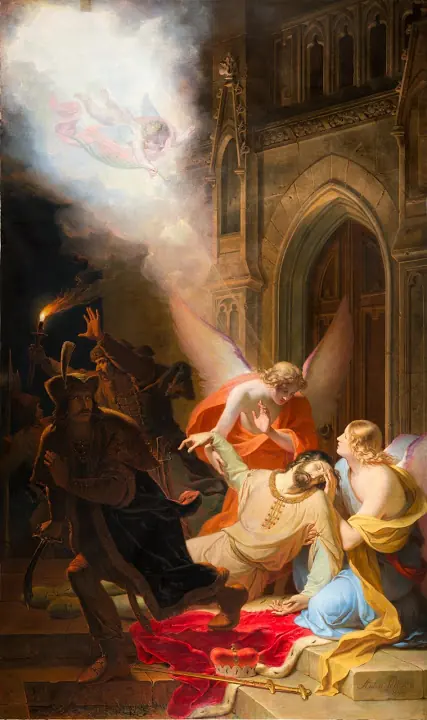

About three years later, Boleslaus repented and had his brother's body moved to the Church of St. Vitus in Prague. A basilica now stands at the place of his death in Stará Boleslav.

"Good King Wenceslas": the carol and the history
The carol was written by the Anglican priest John Mason Neale and first published in his Carols for Christmas-tide in 1853, with Thomas Helmore. According to the Hymnology Archive, Neale based it on a children's story he had published in 1850, which drew on an 1847 poem by the Czech writer Václav Alois Svoboda. The tune, Tempus adest floridum, is a spring song first printed in the collection Piae Cantiones in 1582.
What is historical: Wenceslaus was real, he was known for charity, and an old legend says he carried wood to the poor at night. What is not: the page, the poor man "gath'ring winter fuel," the footprints that warmed the snow and the Feast of Stephen setting are all Neale's. He was also a duke, not a king. The Catholic Encyclopedia says Otto I gave him the royal title, but the Hymnology Archive puts that honor after his death, which fits the dates: Otto became king only in 936.
The miracles of St. Wenceslaus
None was formally investigated, so by this encyclopedia's labels his miracles are traditional. The medieval lives tell of prisoners freed and of wonders at his tomb. Benedict XVI pointed to another sign the Czechs have long seen as God's work: Boleslaus won the throne, but the Bohemian crown made for later kings bears the name of Wenceslaus, not his brother's.
Why St. Wenceslaus is the patron saint of the Czech Republic
From the 10th century on, he was the patron and "heir" of the Czech land. Benedict XVI noted that the people still ask him, "in a well-known song," not to let their nation perish; that song is the old Czech hymn to St. Wenceslas. Catholic Culture lists his patronages as Bohemia, the Czech Republic, Moravia, Slovakia, Prague and its archdiocese, and brewers. See more on our patron saints page.
Symbols of St. Wenceslaus in art
Wenceslaus is a young duke, usually bearded, dressed either in armor or in a red ducal robe and cap trimmed with ermine. His attributes:
- A lance with a banner, often bearing an eagle, the sign of the Bohemian duke.
- A shield with a black eagle, the old arms of St. Wenceslas.
- A ducal crown or cap.
- Freed prisoners or the poor around him, as in the Eggenburg panel.
Catholic Culture also lists a coffin carried by angels, a sword and purse, and corn. Eastern icons show him as a crowned prince holding a cross. In Prague he is everywhere, most famously on horseback at the top of Wenceslas Square.


Feast day, tomb and prayer
His feast is September 28; see our feast days page. His tomb is in the St. Wenceslas Chapel of St. Vitus Cathedral, a Gothic chapel whose walls are set with polished semiprecious stones.
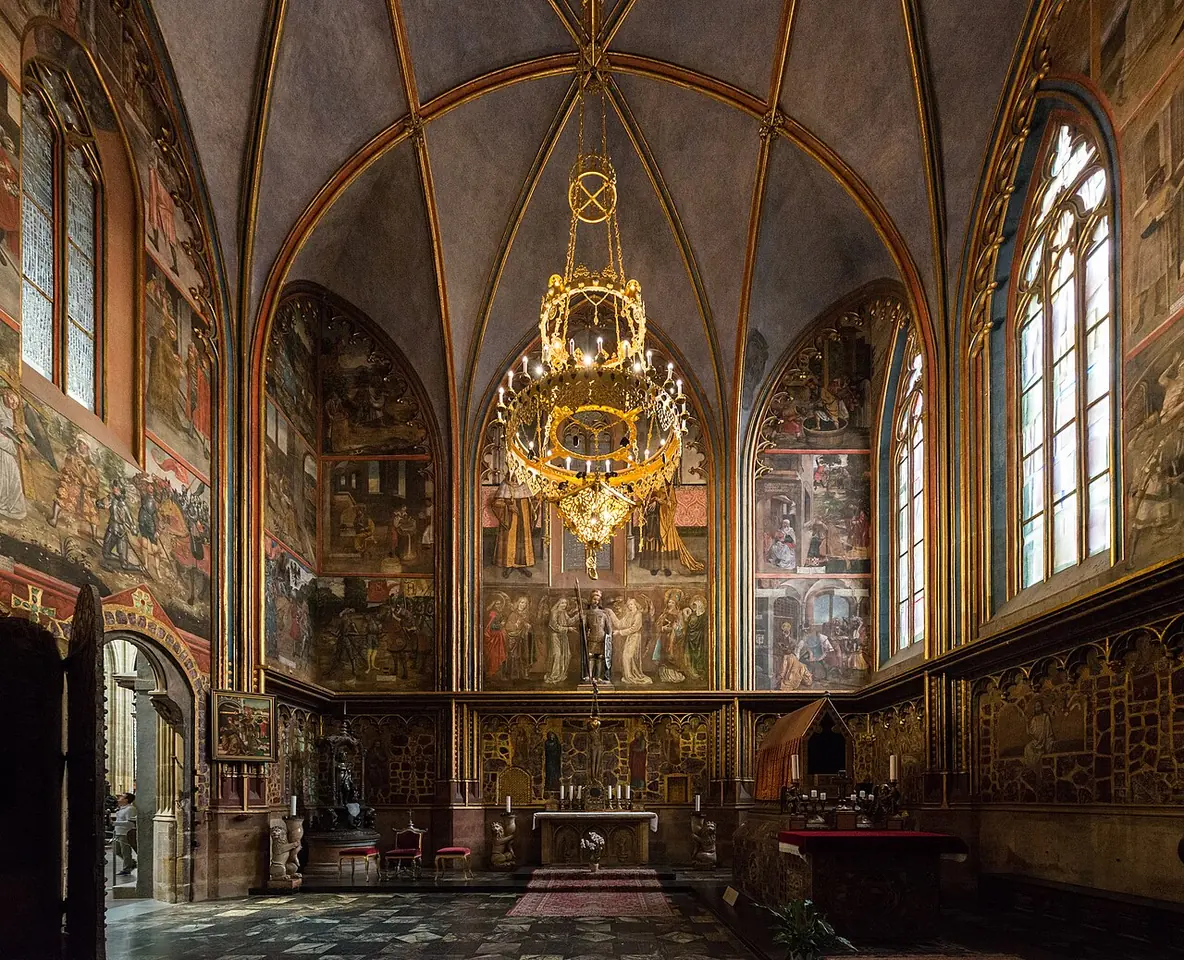

The collect of his memorial in the Roman Missal, as given by Catholic Culture, prays:
O God, who taught the Martyr Saint Wenceslaus to place the heavenly Kingdom before an earthly one, grant through his prayers that, denying ourselves, we may hold fast to you with all our heart.
Frequently asked questions
Was Good King Wenceslas a real person?
Yes, but he was a duke, not a king, and the carol's story is not history. John Mason Neale wrote "Good King Wenceslas" in 1853, basing it on a children's story he had published in 1850 and set it to a spring tune printed in 1582. The medieval legends do say Wenceslaus carried firewood to the poor at night, but the page, the snow and the Feast of Stephen are Neale's.
Why did Boleslaus kill Wenceslaus?
For power and, according to the early accounts, for religion too. The Catholic Encyclopedia says he was killed "for religious and national motives, and at the instigation of" his mother, Drahomíra. Boleslaus took the throne, though he later repented and had his brother's body moved to Prague.
When is St. Wenceslaus Day?
September 28, the day he was killed. It is an optional memorial in the Catholic calendar and a national holiday in the Czech Republic.
What is St. Wenceslaus the patron saint of?
The Czech Republic, Bohemia and Prague. Catholic Culture also lists brewers, Moravia and Slovakia.
Sources
- Catholic Encyclopedia (1912): St. Wenceslaus
- Benedict XVI, Homily on the Liturgical Memorial of Saint Wenceslaus, Stará Boleslav (28 September 2009)
- Catholic Culture: Optional Memorial of St. Wenceslaus (September 28)
- Expats.cz: Czech Statehood Day 2026: What's closed and what to do on Sept. 28
- Hymnology Archive: Good King Wenceslas