St. Titus Brandsma
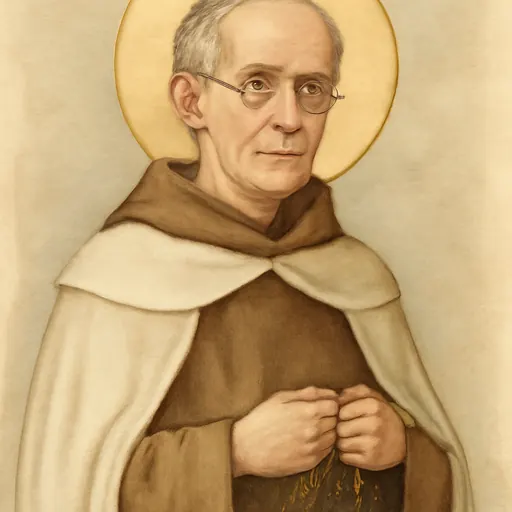
St. Titus Brandsma (1881–1942) was a Dutch Carmelite priest, professor of mysticism and adviser to Catholic journalists. In 1942 he carried the Dutch bishops' instruction that Catholic newspapers must refuse to print Nazi propaganda, and he was arrested and killed at Dachau. Pope Francis canonized him in 2022. He is honored by journalists, and the Carmelites keep his feast on July 27.
Who was St. Titus Brandsma?
Titus Brandsma was a Dutch Carmelite friar, a scholar of mysticism and a working journalist. He spoke against Nazi ideology before the war and, under the German occupation, defended the freedom of the Catholic press. He died at Dachau on July 26, 1942. The Church honors him as a martyr.
His life is recent and well documented: by his own writings, by the interrogation records of the officer who questioned him, and by the testimony of fellow prisoners and of the nurse who killed him, all gathered for his cause. What follows draws mainly on the biography published by the Vatican's Dicastery for the Causes of Saints.


The life of Titus Brandsma
A Frisian farm boy
He was born Anno Sjoerd Brandsma on February 23, 1881, on the Oegeklooster farm near Bolsward in Friesland, in the far north of the Netherlands. His parents, Titus and Tjitsje, had six children; one daughter married, and the other five entered religious life. Anno wanted to be a Franciscan, but his health was judged too poor for their life. He entered the Carmelite novitiate at Boxmeer in 1898 and took his father's name, Titus. He was ordained a priest on June 17, 1905.
Scholar and journalist
After a doctorate in philosophy at the Gregorian University in Rome, he taught at the Carmelite house of studies in Oss. He started a Carmelite magazine, began a Dutch edition of the works of St. Teresa of Ávila, and edited the local newspaper. In 1923 he became professor of philosophy and the history of mysticism at the new Catholic University of Nijmegen, today Radboud University, and in 1932–1933 he served as its rector.
In 1935 the Archbishop of Utrecht, Johannes de Jong, made him spiritual adviser to the association of Catholic journalists, with some thirty papers in his care. The same year he lectured in Ireland and the United States; the talks became the book The Beauty of Carmel. People remembered him as gentle and approachable, always ready to help a student.


Against the Nazi press
In 1938 and 1939 he lectured at the university against National Socialism, calling it pagan and inhuman. Germany invaded the Netherlands in May 1940. In January 1941 the Dutch bishops took a firm public stand against Nazi measures, and Brandsma, now also president of the Catholic schools' association, worked closely with them.
The occupiers then ordered newspapers to print official Nazi announcements. Archbishop de Jong asked Brandsma to carry the bishops' instruction to the Catholic editors: they must refuse. In the first days of January 1942 he traveled by train from one newspaper office to the next. The archbishop later said Brandsma knew exactly what danger he was in. Within days he was arrested, and on January 20 he was taken to the prison at Scheveningen.
Prisoner
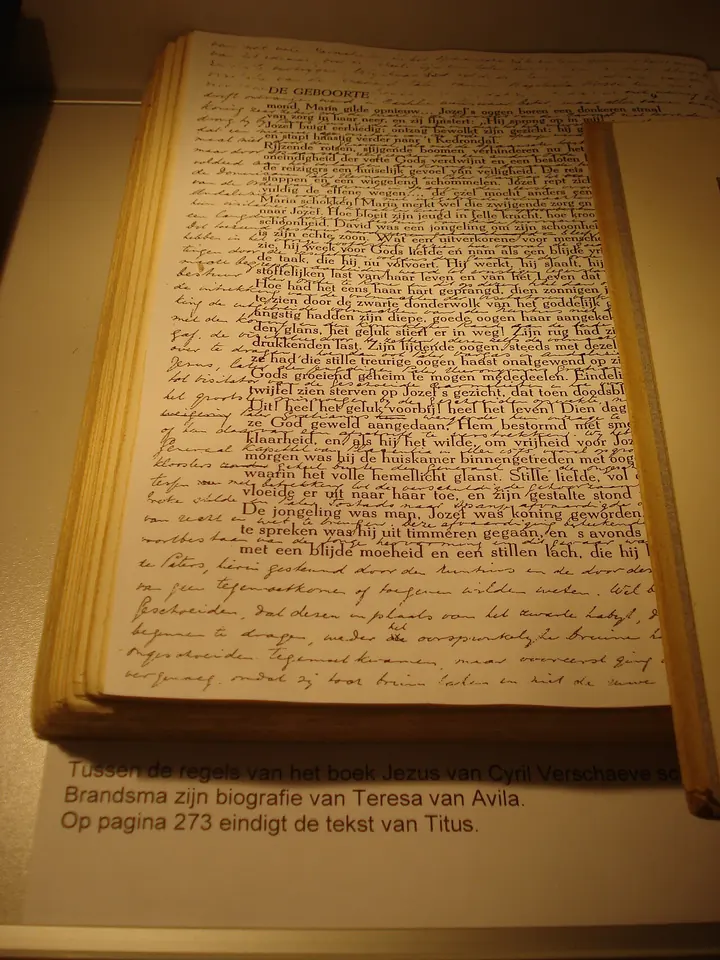
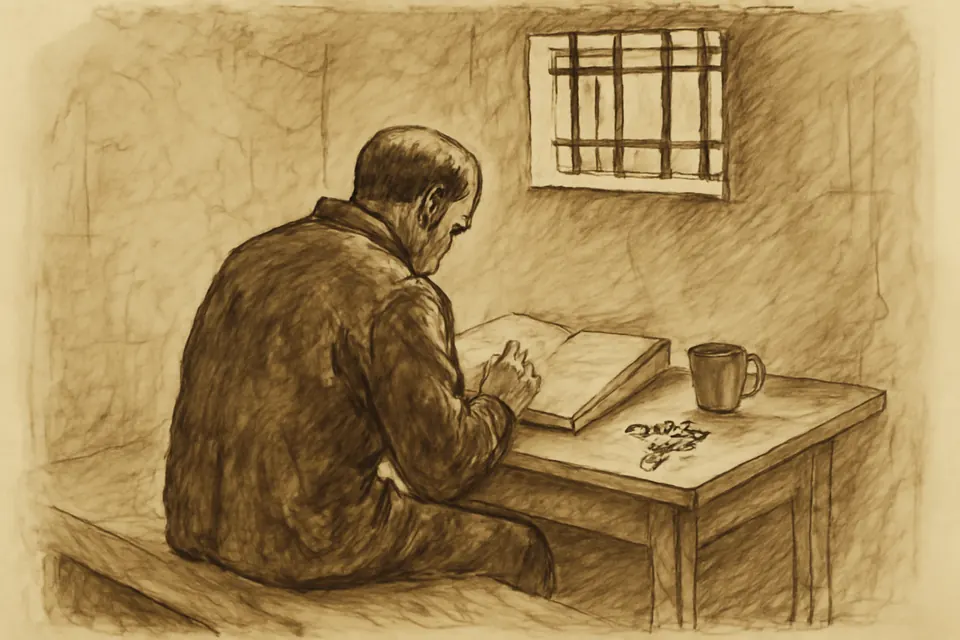
At Scheveningen he wrote a nine-page statement explaining why Catholics could not accept Nazism. Having no paper, he wrote a life of St. Teresa between the printed lines of a book about Jesus that he was allowed to keep. He also kept a diary, My Cell, and wrote a poem, "Before a Picture of Jesus" (the Carmelites title it "Before a Picture of Christ").

He was moved to the camp at Amersfoort, back to Scheveningen, and to a transit camp at Kleve in Germany, where he could attend Mass. On June 13 he was put on a cattle train to Dachau. There he was held in the priests' barracks until his health collapsed, and on July 18 he was taken to the camp hospital.
Death
On Sunday, July 26, 1942, at about two in the afternoon, a nurse killed him with an injection of carbolic acid. Shortly before, he had given her his rosary, which another prisoner had made for him. When she said she could not pray, he told her she could at least say "pray for us sinners." She later converted and testified at his cause about his last hours. His body was almost certainly burned in the camp crematorium.
The canonization miracle
The Church recognized his death as martyrdom in 1984, and John Paul II beatified him on November 3, 1985. In his homily the pope recalled what Brandsma said of his jailers: "Sono anch'essi figli del buon Dio... e chi sa se qualche cosa rimane in loro" (they too are children of the good God, and who knows whether something remains in them; our translation).
For canonization the Church accepted one approved miracle: the cure of a professed Carmelite priest in the Diocese of Palm Beach, Florida, from a recurrence of melanoma that had spread to his lymph nodes. More than fifteen years later no trace of it remained. The medical board judged the cure rapid, complete and lasting in November 2020, and Pope Francis approved the miracle on November 25, 2021. He canonized Titus Brandsma in St. Peter's Square on May 15, 2022, with nine others, among them Charles de Foucauld.
Why journalists honor St. Titus Brandsma
The Church has not formally named him a patron, and St. Francis de Sales remains the official patron of journalists. But Brandsma died for the freedom of the Catholic press, and Vatican News described him as a "journalist-martyr of the 20th Century." The Netherlands' human rights ambassador, speaking at a symposium in Rome before the canonization, called him an "exemplary human rights defender." See our patron saints page.
Symbols of St. Titus Brandsma in art
Images follow his photographs: a slight man with round glasses in the brown habit and white mantle of the Carmelites. Look for:
- A rosary, for the one he gave his killer.
- A pen or newspaper, for his work for the Catholic press.
- A martyr's palm, and sometimes a prisoner's striped uniform or camp badge.


Feast day and where he is honored
The Carmelite Order keeps his memorial on July 27; the Vatican's list of saints gives July 26, the day of his death. See our feast days calendar. In Nijmegen, where he taught for nineteen years, a memorial church bears his name, and in 2005 the city's people voted him the greatest Nijmegener. He is remembered with St. Edith Stein, another Carmelite from a Dutch convent who was killed by the Nazis in the summer of 1942.
Prayer of St. Titus Brandsma
No traditional prayer to him exists yet. The prayer most closely tied to him is his own poem, written in his cell at Scheveningen on February 12–13, 1942. The Carmelite Order publishes a free English version by Gervase Toelle, O.Carm., which ends:
Stay with me, Jesus, only stay;
I shall not fear
If, reaching out my hand,
I feel thee near.
Catholics ask St. Titus Brandsma to pray for journalists, for those imprisoned for their faith, and for the courage to tell the truth.
Frequently asked questions
Why was Titus Brandsma arrested?
In January 1942 he traveled across the Netherlands to the editors of Catholic newspapers with the bishops' instruction to refuse Nazi propaganda notices, which the occupiers were requiring them to print. He was arrested within days. Vatican News reports that he was offered a quiet life in a monastery if he would tell the papers to publish the propaganda, and that he refused.
How did Titus Brandsma die?
He was killed in the hospital of Dachau concentration camp on July 26, 1942, by an injection of carbolic acid (phenol). Before he died he gave his rosary to the nurse who was to kill him. His body was almost certainly burned in the camp crematorium, so there are no relics.
What miracle led to his canonization?
The cure of a Carmelite priest in the Diocese of Palm Beach, Florida, from a recurrence of melanoma that had spread to his lymph nodes. More than fifteen years later there was no trace of the cancer. Vatican medical consultants found the cure rapid, complete and lasting, and Pope Francis approved it as a miracle in November 2021.
When is the feast of St. Titus Brandsma?
The Carmelite Order keeps his memorial on July 27. He died on July 26, which the Dicastery for the Causes of Saints gives as his liturgical memorial.
Sources
- Dicastery for the Causes of Saints: Tito Brandsma (life, cause and beatification homily)
- Vatican News: Titus Brandsma: Journalist, martyr, saint of the 20th Century (May 2022)
- Vatican News: Blessed Titus Brandsma on the road to sainthood (November 2021)
- Order of Carmelites: Before a Picture of Christ, by Titus Brandsma
- Order of Carmelites: Calendar of Feasts and Memorials
- Pope Francis, Holy Mass and Canonization (15 May 2022)