Blessed Solanus Casey
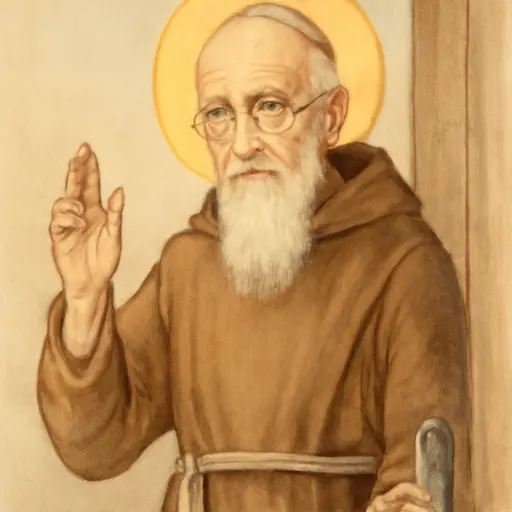
Blessed Solanus Casey (1870–1957) was a Capuchin friar who spent most of his life as a doorkeeper in New York and Detroit. Thousands came to him for prayer, and many reported healings. He has been beatified, not canonized: the Church approved one miracle and declared him Blessed in 2017. His feast day is July 30.
Who was Blessed Solanus Casey?
Solanus Casey was born Bernard Francis Casey on November 25, 1870, in Oak Grove, Wisconsin, one of the many children of Irish immigrant farmers. Family and friends called him Barney. He became a Capuchin friar and priest, but his superiors never let him preach doctrinal sermons or hear confessions. For most of his life he answered the door.
He is a Blessed, not a saint. The Catholic Church beatified him in Detroit on November 18, 2017, after approving one miracle through his intercession. Canonization would require a second.

The life of Solanus Casey
A late vocation
The Caseys prayed the rosary together every evening, and Barney kept the habit all his life. He first wondered about the priesthood at a Christmas Midnight Mass as a boy. After years of farm and town jobs, he entered St. Francis de Sales Seminary in Milwaukee at 21.
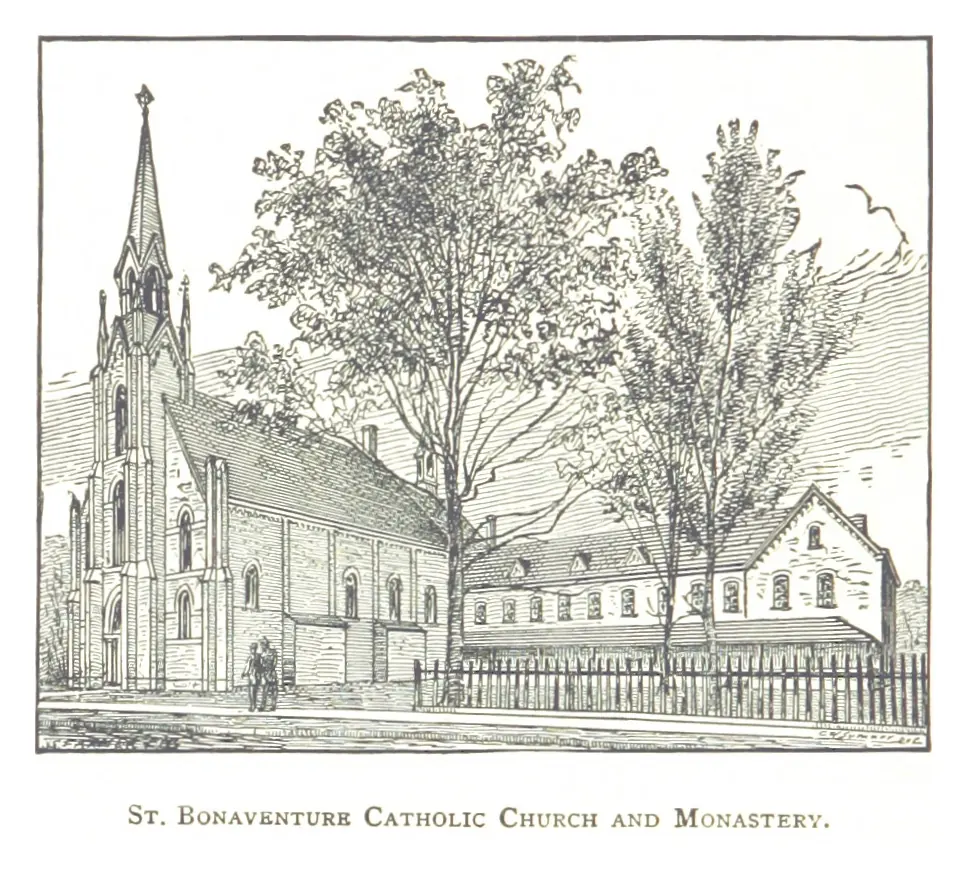
The lessons were in German, and he struggled. His superiors told him he was unlikely to succeed as a diocesan priest and suggested a religious order. In 1896 he made a novena with his mother and sister before the feast of the Immaculate Conception. On the last day, the Capuchins' account says, he distinctly heard Mary tell him, "Go to Detroit." He arrived at St. Bonaventure Monastery through a snowstorm on Christmas Eve.
On January 14, 1897, he received the brown habit and the name Francis Solanus, after the Spanish Franciscan missionary to Peru. Since another friar was already called Francis, he went by Solanus.
A "simplex priest"
His grades stayed average, and his superiors doubted whether to ordain him. They finally decided he would be a "simplex priest," able to celebrate Mass but not to hear confessions or preach doctrinal sermons. He was ordained in Milwaukee on July 24, 1904, and accepted the limits, the Capuchins say, without resentment.
At the door
For twenty years he served in New York: at Sacred Heart in Yonkers, at Our Lady of Sorrows on the Lower East Side, and at Our Lady Queen of Angels in Harlem. He worked as sacristan and then porter, the friar who answered the monastery bell. Visitors began asking for him. The sick wanted his blessing, and the Capuchins say "remarkable cures began to take place." His superiors asked him to keep notebooks of the requests and the answers people reported.
In August 1924 he was sent back to St. Bonaventure in Detroit, where he served as porter for the next twenty years, until 1945. Crowds lined up to see him every day.
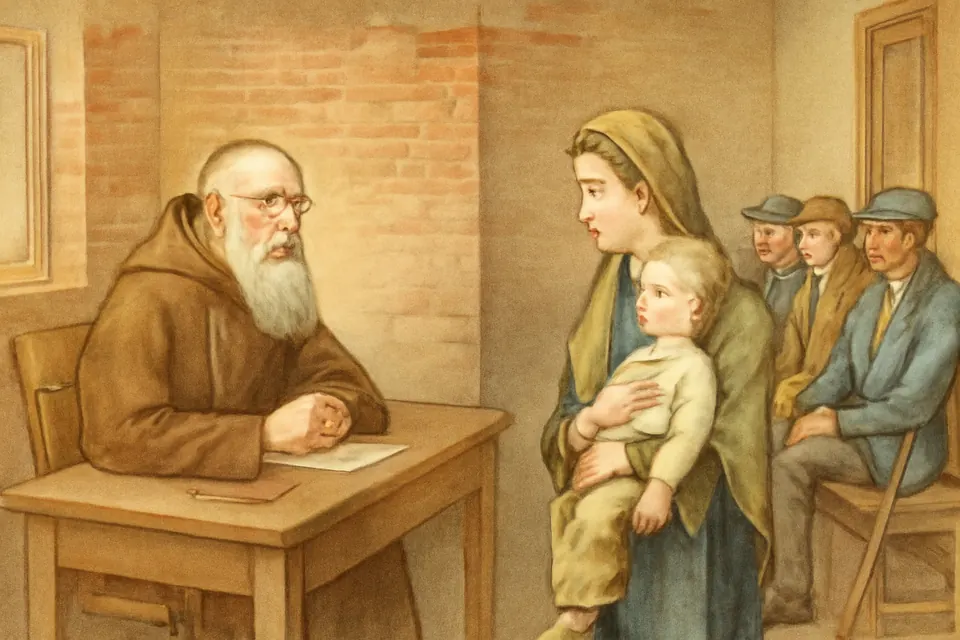
"I have two loves," he said, "the sick and the poor." When the Great Depression threw Detroit's auto workers out of work, his care for the hungry at the door led the friars and lay volunteers to found the Capuchin Soup Kitchen on November 2, 1929. It still feeds people today.


Last years
To give him rest, the Capuchins sent him in 1946 to St. Felix Friary in Huntington, Indiana, where visitors still found him. He came back to Detroit for treatment in 1956 and died at St. John Hospital on July 31, 1957, the 53rd anniversary of his first Mass. His last words, the friars recorded, were "I give my soul to Jesus Christ."


Healings and the approved miracle
The many healings people credited to his prayers during his lifetime are reported. The Church has not examined them one by one.
The Church did examine one healing after his death. Paula Medina Zarate, a schoolteacher and catechist from Chepo, Panama, had suffered all her life from ichthyosis vulgaris, a genetic disease that turned her skin to bleeding scales. In September 2012 she visited his tomb in Detroit and wrote fourteen intentions for other people. As she rose to leave, she told The Michigan Catholic, she heard a voice ask, "And you, what do you need?" She knelt again, asked for healing, and felt "this current of heat in my body." Soon afterward, she said, "the scales began to fall off, with no blood."
Doctors in Panama and Detroit examined her and found no medical explanation. Pope Francis approved the cure as a miracle on May 4, 2017. It is an approved miracle, the one that led to his beatification. More than 70,000 people attended the beatification Mass at Ford Field, home of the Detroit Lions, where Paula carried his relics to the altar.


Why people turn to Blessed Solanus
As a Blessed, he has no official patronages, but Catholics turn to him above all for the sick, the poor and people in trouble. His advice was to "thank God ahead of time," trusting God's answer before it came. The Capuchins close his canonization prayer with a line associated with him: "Blessed be God in all His Designs."
Symbols of Blessed Solanus Casey in art
He lived into the age of photography, so artists keep to his photographs: a thin, elderly friar with a long white beard, a bald head and wire-rimmed glasses, in the brown hooded habit and white knotted cord of the Capuchins. He is often shown with a hand raised in blessing or at a door.

Feast day, tomb and prayer
His feast is July 30. The Solanus Casey Center prepares for it with a novena of Masses and afternoon blessings of the sick. See our feast days calendar.
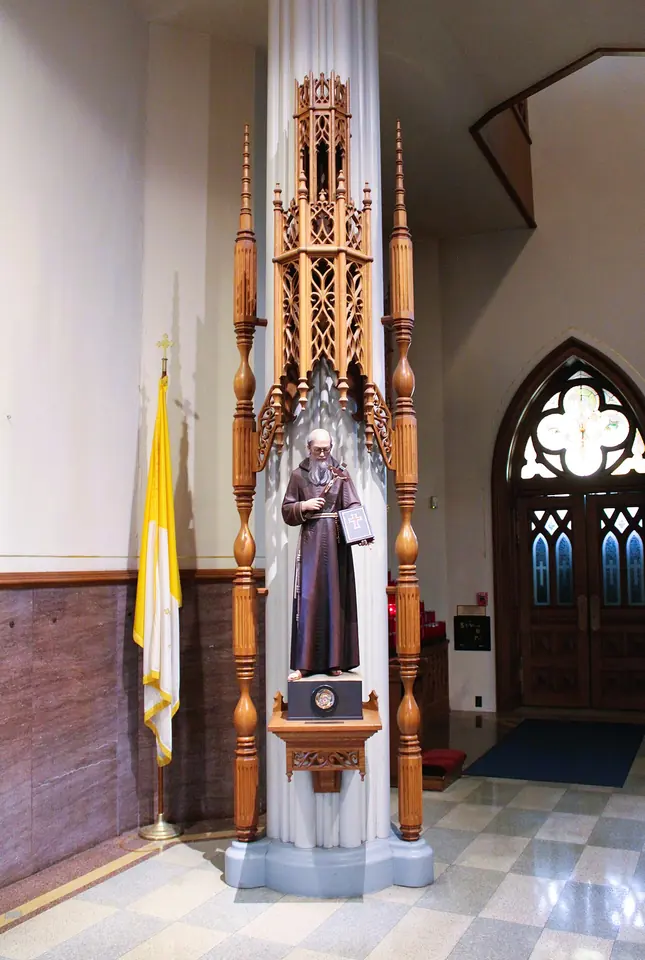
His tomb is in the Solanus Casey Center at St. Bonaventure Monastery in Detroit, where visitors leave written prayers.
The Capuchins publish this Prayer for Canonization of Blessed Solanus Casey:
O God, I adore You. I give myself to You. May I be the person You want me to be, and May Your will be done in my life today.
I thank You for the gifts You gave Father Solanus. If it is Your Will, bless us with the Canonization of Father Solanus so that others may imitate and carry on his love for all the poor and suffering of our world.
As he joyfully accepted Your divine plans, I ask You, according to Your Will, to hear my prayer for… (your intention) through Jesus Christ our Lord. Amen.
"Blessed be God in all His Designs."
Frequently asked questions
Is Solanus Casey a saint?
Not yet. He is a Blessed, the step before sainthood. Pope Francis approved a miracle through his intercession in May 2017, and he was beatified in Detroit on November 18, 2017. A second approved miracle is needed for canonization.
What was the miracle for Solanus Casey's beatification?
The healing of Paula Medina Zarate, a teacher from Panama with ichthyosis vulgaris, a genetic skin disease. In September 2012 she prayed at his tomb in Detroit and felt intense heat in her body; her scaly skin fell away. Doctors in Panama and Detroit found no medical explanation, and the Church approved the cure in 2017. It is an approved miracle.
When is Blessed Solanus Casey's feast day?
July 30. The Solanus Casey Center in Detroit prepares for it with a nine-day novena of Masses and blessings of the sick. He died on July 31, 1957.
What does "Thank God ahead of time" mean?
It is a phrase associated with Fr. Solanus, meaning to trust God so fully that you thank him for his help before it comes. The Capuchins used it as the title of a biography of him by Br. Michael Crosby.
Sources
- Solanus Casey Center: Timeline of Blessed Solanus Casey
- Solanus Casey Center: Call to Priesthood
- Solanus Casey Center: Capuchin Life
- Solanus Casey Center: Love for the Sick and the Poor
- Solanus Casey Center: Road to Sainthood
- Solanus Casey Center: Beatification
- Solanus Casey Center: Novena and Feast Day
- Solanus Casey Center: Canonization Prayer
- Detroit Catholic: 'The scales began to fall': Woman recounts miracle that led to beatification (2017)