The Immaculate Conception
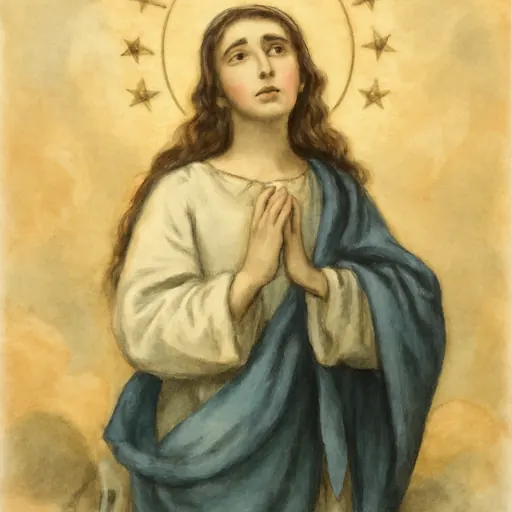
The Immaculate Conception is the Catholic teaching that the Virgin Mary was kept free from original sin from the first moment of her own conception in the womb of her mother, St. Anne, by a special grace of God given in view of the merits of Jesus Christ. It is not the virgin birth of Jesus. Pope Pius IX defined it as dogma in 1854. Its feast, December 8, is a holy day of obligation in the United States, whose patroness is Mary under this title.
What is the Immaculate Conception?
The Immaculate Conception is the Catholic belief that the Virgin Mary was conceived without original sin. From the first moment of her existence in the womb of her mother, St. Anne, God kept her free from the inherited fault that, in Catholic teaching, every other descendant of Adam carries. Catholics believe this was a gift given to her for the sake of her Son, and that it came through his redemption, applied in advance.
Pope Pius IX defined it as dogma on December 8, 1854. Four years later, at Lourdes, a girl named Bernadette heard the Lady in the grotto say, "I am the Immaculate Conception." The feast of December 8 is one of the great Marian days of the year, and in the United States it is a holy day of obligation.

What it means, and what it does not
Not the virgin birth
The commonest mistake about the Immaculate Conception is to think it means the conception of Jesus. It does not.
- The virgin birth, or more exactly the virginal conception, is about Jesus. He was conceived in Mary's womb by the power of the Holy Spirit, without a human father (Luke 1:35).
- The Immaculate Conception is about Mary. She was conceived in the normal way, by a human father and mother, Joachim and Anne. What was unique, Catholics believe, is that she was preserved from original sin from that first moment.
The confusion is easy to understand. The Gospel at Mass on December 8 is the Annunciation (Luke 1:26-38), read because the angel greets Mary as "full of grace," the phrase the Catechism takes as the root of the doctrine. But the feast is counted from Mary's own birthday: December 8 is nine months before September 8.


What the dogma says
The definition in the bull Ineffabilis Deus reads, in the standard English translation:
We declare, pronounce, and define that the doctrine which holds that the most Blessed Virgin Mary, in the first instance of her conception, by a singular grace and privilege granted by Almighty God, in view of the merits of Jesus Christ, the Savior of the human race, was preserved free from all stain of original sin, is a doctrine revealed by God and therefore to be believed firmly and constantly by all the faithful.
The Catechism of the Catholic Church (491-492) adds that Mary was "redeemed from the moment of her conception" and "redeemed, in a more exalted fashion, by reason of the merits of her Son." Catholics also hold that she committed no personal sin in her life (493). The dogma does not say that Mary did not need a savior; it says the opposite, that she was saved in a unique way.
Scripture and the early Church
No verse of Scripture states the doctrine directly, and the Catholic Encyclopedia says so: certain Old Testament texts applied to Mary "do not avail to prove the doctrine dogmatically." Catholic theology points to the angel's greeting, "full of grace" (Luke 1:28), to Genesis 3:15, where God puts enmity between the serpent and the woman, and to the "woman" of Revelation 12. The Fathers of the Eastern Church called Mary Panagia, the "All-Holy," and the Byzantine feast of her conception is older than the Western one.
The long debate: Scotus and Aquinas
A feast before a doctrine
A feast of Mary's conception was kept in the East and, by the 11th century, by Anglo-Saxon monks in England. The Normans suppressed it at the Conquest, and it was revived in English monasteries in the 1120s, largely through Anselm, abbot of Bury St. Edmunds and nephew of St. Anselm. When the canons of Lyon adopted it around 1140, St. Bernard of Clairvaux wrote them a sharp letter: the feast was new, had no Roman approval and, as he understood it, honored a conception that could not have been holy. Bernard had immense authority, and the question stayed open.
St. Thomas Aquinas
The great Dominican St. Thomas Aquinas had a real difficulty. Christ is the Savior of all; if Mary never had original sin, how was she saved? In the Summa Theologiae (III, q. 27, a. 2) he wrote that if her soul "had never incurred the stain of original sin, this would be derogatory to the dignity of Christ, by reason of His being the universal Saviour of all." His answer was that Mary "did indeed contract original sin, but was cleansed therefrom before her birth from the womb." St. Bonaventure and St. Albert the Great held similar views.
Duns Scotus
The solution came from a Scottish Franciscan, Blessed John Duns Scotus (d. 1308), teaching at Oxford and Paris. He answered Thomas's objection directly: preserving Mary from sin was not an exception to Christ's redemption but its most perfect case. In the Catholic Encyclopedia's summary, the Virgin "obtained of her Divine Son the greatest of redemptions through the mystery of her preservation from all sin." Scotus also cited an older argument associated with Eadmer of Canterbury: decuit, potuit, ergo fecit, "it was fitting, God could do it, therefore he did."
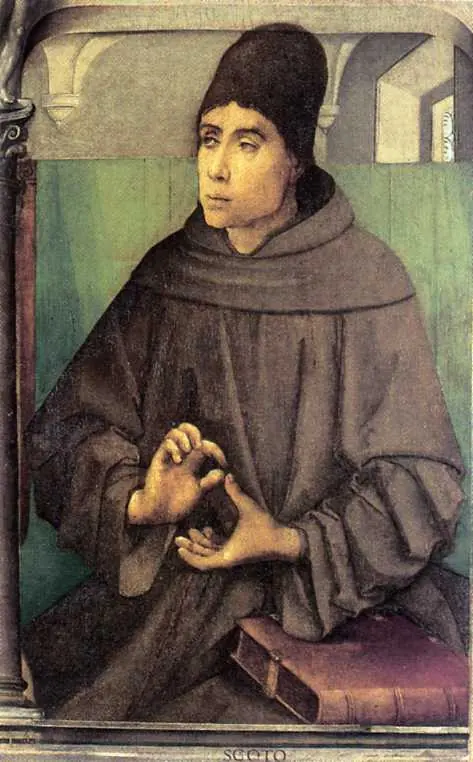

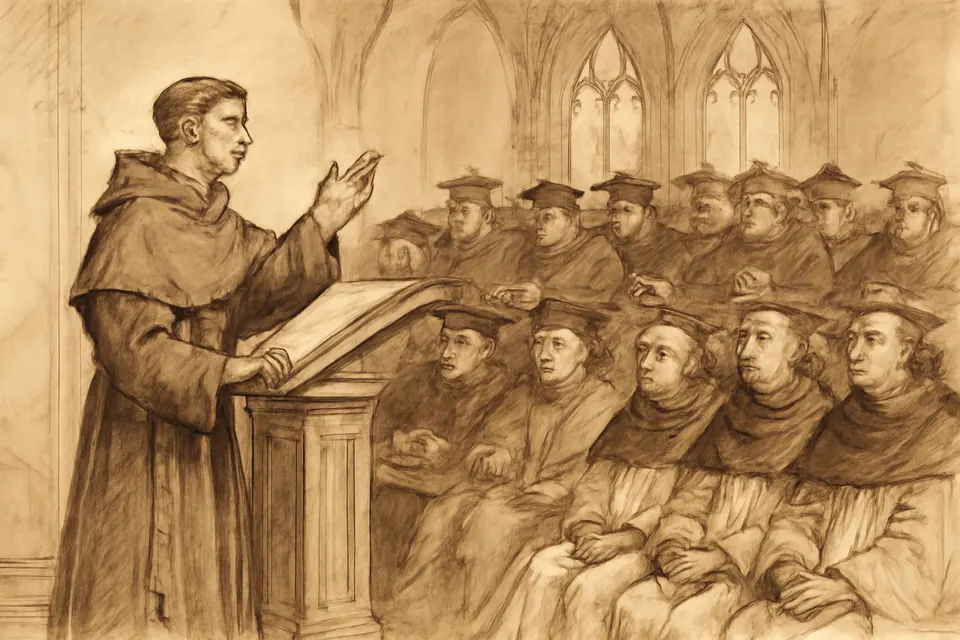
After Scotus, the Encyclopedia says, the doctrine "became the common opinion at the universities," though many Dominicans long opposed it.
Popes and councils
- 1476 and 1483: Pope Sixtus IV, a Franciscan, approved the feast for the whole Latin Church and then forbade either side to call the other heretics.
- 1546: The Council of Trent said its decree on original sin did not intend to include "the Blessed and Immaculate Virgin Mary Mother of God."
- 1708: Clement XI made December 8 a holy day of obligation for the whole Church.
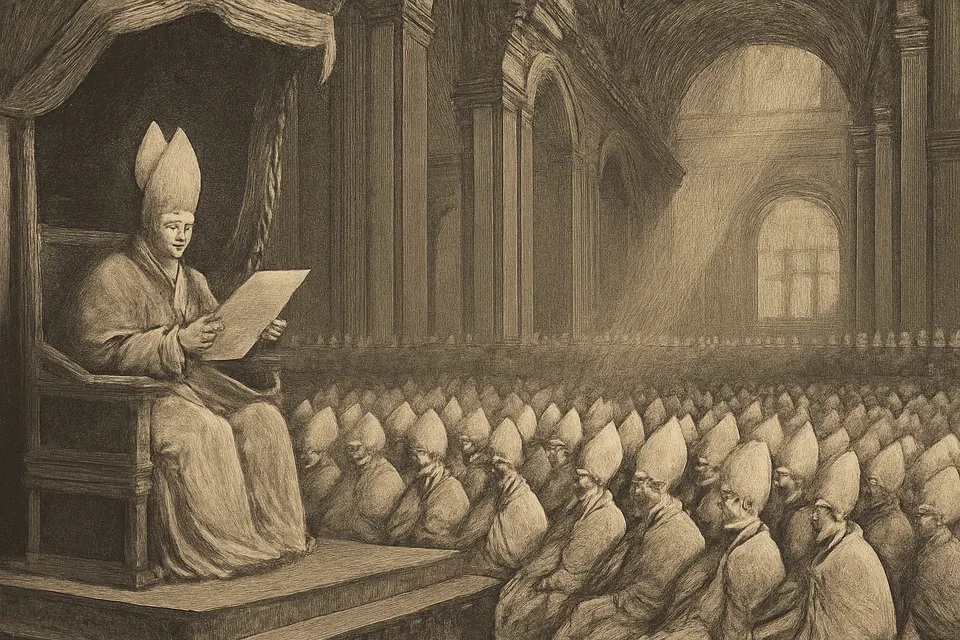
- 1854: Pius IX, after consulting the bishops of the world, defined the dogma on December 8 in St. Peter's.
The Immaculate Conception and Lourdes
On March 25, 1858, at the grotto of Massabielle, Bernadette Soubirous asked the Lady her name. She answered in the local dialect, "Que soy era Immaculada Councepciou." Bernadette did not know what the words meant. The Church approved the Lourdes apparitions in 1862, and many Catholics took the Lady's words as heaven's confirmation of the dogma. That approval, and the 72 cures recognized at Lourdes, are the approved miracles linked to this title; the doctrine itself rests on the Church's teaching, not on any miracle. See the full story at Our Lady of Lourdes.
Twenty-eight years earlier, in 1830, the Miraculous Medal given to St. Catherine Labouré in Paris had carried the prayer "O Mary, conceived without sin, pray for us who have recourse to thee." It spread the doctrine among ordinary Catholics before 1854. In the 20th century St. Maximilian Kolbe founded his Militia of the Immaculata around the same title.
Symbols of the Immaculate Conception in art
Medieval artists had no easy way to paint a conception. Many showed Joachim and Anne embracing at the Golden Gate of Jerusalem, a scene from the apocryphal Gospel of James, which Giotto painted in Padua.
By the late 15th century a new image appeared: Mary alone, young, standing between heaven and earth. Carlo Crivelli's panel of 1492 surrounds her with lilies and roses, symbols of purity.
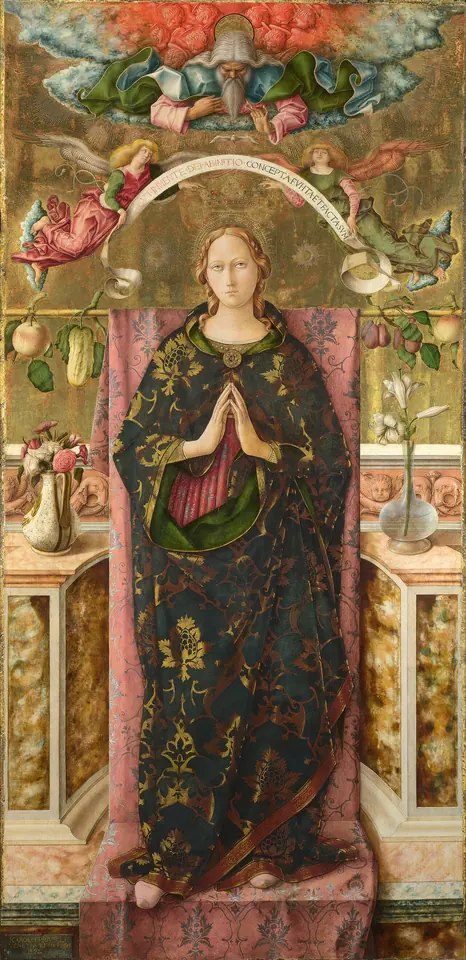

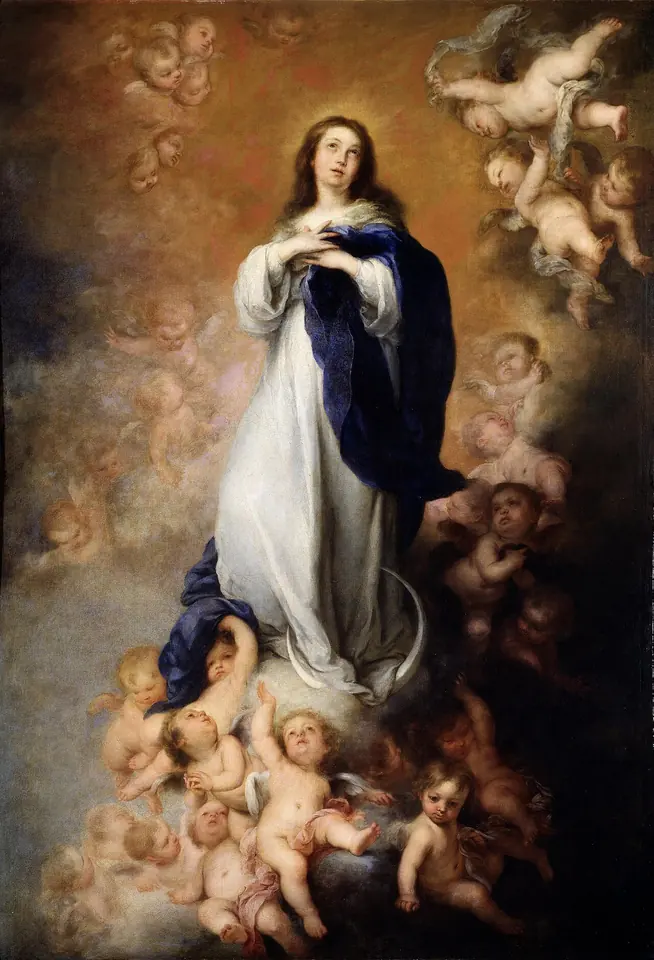
The image that won out came from the "woman" of Revelation 12:1. In the Knox translation, "a great portent appeared; a woman that wore the sun for her mantle, with the moon under her feet, and a crown of twelve stars about her head." Spanish painters of the 17th century, in a country passionately devoted to the doctrine, fixed the type:
- A young girl, often in her early teens, with loose hair.
- White dress and blue mantle, for purity and for heaven.
- The crescent moon under her feet.
- Twelve stars around her head, and sometimes a sunburst behind her.
- Hands joined or crossed on her breast, eyes raised.
- A serpent under her foot, often holding an apple, from Genesis 3:15, which the Latin Vulgate and the Knox translation render "she is to crush thy head." (The Hebrew and most modern translations read "he.")
- Cherubs, clouds, lilies and roses.
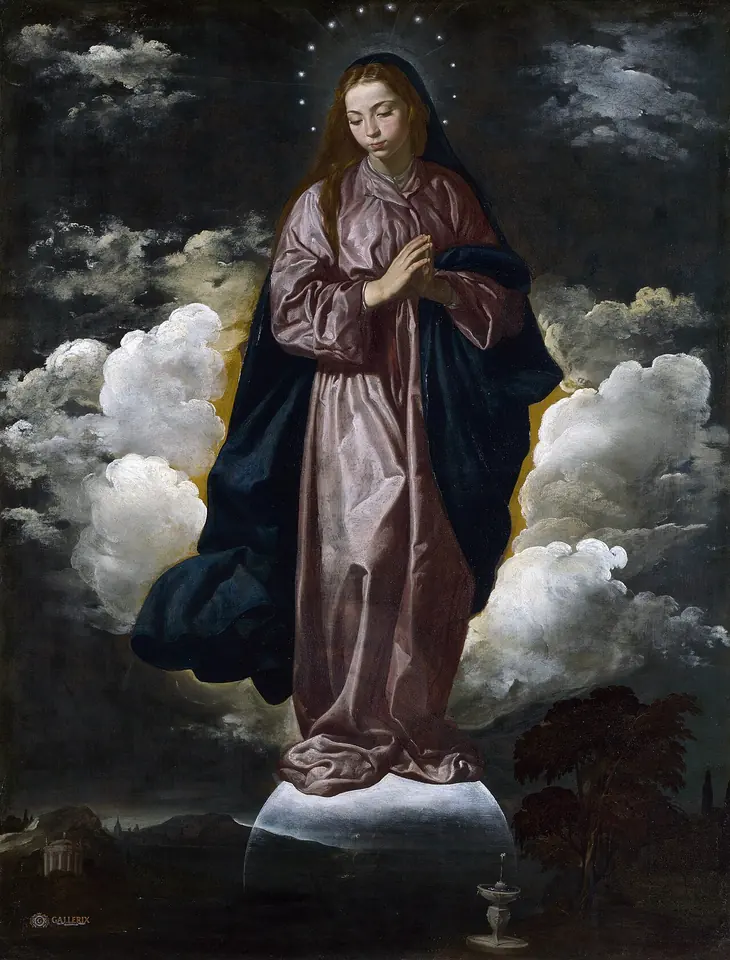

Bartolomé Esteban Murillo of Seville painted around two dozen versions, possibly more than any Spanish painter of his time. The most famous, the Immaculate Conception of Los Venerables of about 1678, was taken from Seville by the French Marshal Soult in 1813, bought by the Louvre in 1852 and returned to Spain in 1941; it hangs in the Prado.


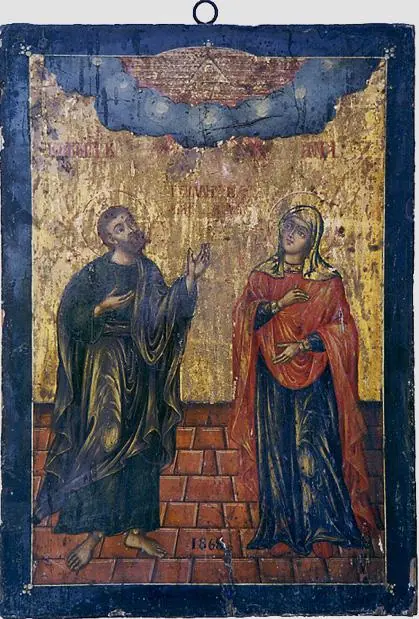
Tiepolo's late version adds the dove of the Holy Spirit above her and the serpent with the apple below. Orthodox icons of the Conception by St. Anna usually show Joachim and Anne together, sometimes embracing.


Feast day, patronage and shrines
December 8
The solemnity of the Immaculate Conception is December 8, celebrated throughout the Latin Church. Clement XI made it a holy day of obligation for the whole Church in 1708, and it remains one in the United States, Italy, Spain and many other countries. When December 8 falls on a Sunday of Advent, the solemnity moves to Monday. In 2024, when that happened, the Holy See told the U.S. bishops that "the feast must be observed as a day of obligation on the day to which it is transferred." See the feast day calendar.
The Eastern Orthodox Church keeps the Conception of the Theotokos by St. Anna on December 9. The Orthodox Church in America states plainly that it "does not accept the teaching that the Mother of God was exempted from the consequences of ancestral sin" at her conception, though it holds that she "committed no personal sins." Most Protestant churches do not hold the doctrine either.

Patroness of the United States
In May 1846 the Sixth Provincial Council of Baltimore chose "The Blessed Virgin Mary Conceived Without Sin" as patroness, and Pius IX confirmed it on February 7, 1847, so the United States had Mary Immaculate as its patroness before the dogma was defined. Spain had made the Immaculate Conception principal patroness of all its crown's possessions, including those in the Americas, in 1760. See patron saints.
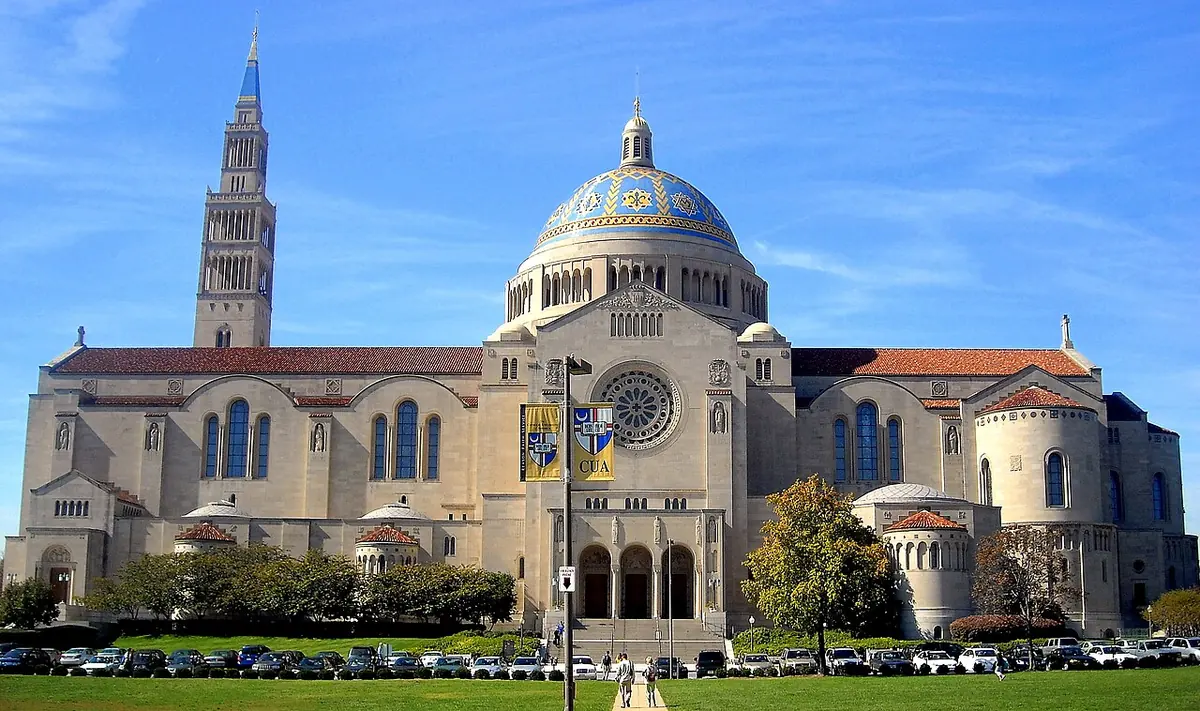
The Basilica of the National Shrine of the Immaculate Conception in Washington, D.C., was the idea of Bishop Thomas Shahan, who presented the plan to Pope Pius X in 1913. Its foundation stone was laid on September 23, 1920, but the Depression and the Second World War delayed it until its dedication in 1959. It is the largest Catholic church in North America.

Rome
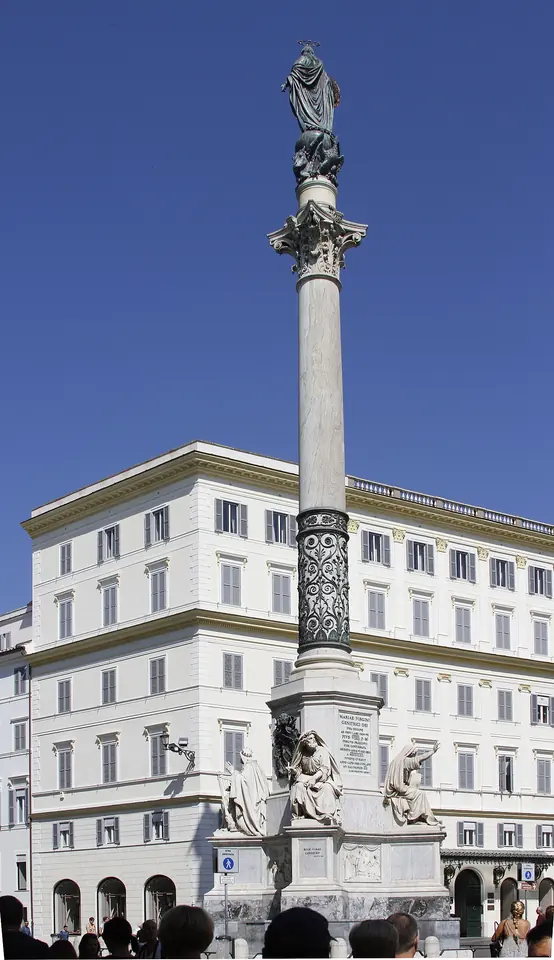
In 1857 a column with a statue of Mary Immaculate was raised in Piazza Mignanelli, beside the Spanish Steps, to mark the definition. Since 1953 the popes have gone there on December 8 to pray and leave white roses at the foot of the column, usually after praying before the icon Salus Populi Romani at St. Mary Major.

Prayers to the Immaculate Conception
The most widely prayed short invocation is the one from the Miraculous Medal: "O Mary, conceived without sin, pray for us who have recourse to thee." Many Catholics also pray a novena from November 29 to December 7; its texts vary from book to book and go back to no single author.
Frequently asked questions
What does the Immaculate Conception mean?
That Mary herself, from the first instant she existed in her mother's womb, was preserved from original sin. In the words of Pius IX's 1854 definition, she was "preserved free from all stain of original sin" by "a singular grace and privilege granted by Almighty God, in view of the merits of Jesus Christ." Catholics believe she was redeemed by Christ like everyone else, but in advance.
Is the Immaculate Conception the same as the virgin birth?
No, though they are often confused. The virgin birth, or virginal conception, is about Jesus, conceived in Mary's womb by the Holy Spirit without a human father (Luke 1:35). The Immaculate Conception is about Mary, conceived in the ordinary way by her parents, Joachim and Anne, but kept free from original sin from that moment. The Gospel read on December 8 is the Annunciation, which adds to the confusion.
When is the feast of the Immaculate Conception?
December 8, nine months before the feast of Mary's birth on September 8. It is a solemnity of the whole Latin Church and a holy day of obligation in the United States and many other countries. When December 8 falls on a Sunday, the solemnity moves to Monday, December 9; in 2024 the Holy See confirmed that the obligation moves with it.
Why is the Immaculate Conception the patroness of the United States?
In May 1846 the Sixth Provincial Council of Baltimore, then the province that covered the whole country, chose "The Blessed Virgin Mary Conceived Without Sin" as its patroness. Pope Pius IX confirmed the choice on February 7, 1847. The Basilica of the National Shrine of the Immaculate Conception in Washington, D.C., is the national church built in her honor.
Did St. Thomas Aquinas believe in the Immaculate Conception?
Not in the form later defined. In the Summa Theologiae he taught that Mary "did indeed contract original sin, but was cleansed therefrom before her birth from the womb," because otherwise she would not have needed Christ as Savior. The Franciscan John Duns Scotus answered that preserving her from sin was the most perfect form of redemption, and his view prevailed.
Sources
- Pius IX, Ineffabilis Deus (1854), English translation (Papal Encyclicals Online)
- Catechism of the Catholic Church, paragraphs 490-493
- Catholic Encyclopedia (1910): Immaculate Conception
- Thomas Aquinas, Summa Theologiae III, q. 27, a. 2: Whether the Blessed Virgin was sanctified before animation
- Catholic Encyclopedia (1907): Archdiocese of Baltimore (Sixth Provincial Council, 1846)
- Orthodox Church in America: Conception of the Most Holy Theotokos by Saint Anna
- Book of Revelation, chapter 12 (Knox translation, New Advent)
- Genesis, chapter 3 (Knox translation, New Advent)
- Archdiocese of Newark: The Solemnity of the Immaculate Conception is a Holy Day of Obligation (2024)
- Diocese of Toledo: Holy Day of Obligation, Mon, Dec 9, 2024
- Catholic Review (CNS): National shrine in Washington celebrates two 100-year milestones this year (2020)
- Vatican News: Pope Francis prays before the Column of the Immaculate Conception (December 8, 2022)
- Wikipedia: The Immaculate Conception of Los Venerables