St. Lorenzo Ruiz of Manila

St. Lorenzo Ruiz was a Filipino layman from Binondo, Manila, a husband, father of three and church calligrapher, who was martyred at Nagasaki, Japan, in 1637 for refusing to give up his Catholic faith. Pope John Paul II canonized him in 1987, making him the first Filipino saint. His feast day, kept with his fifteen companion martyrs, is September 28.
Who was St. Lorenzo Ruiz?
Lorenzo Ruiz was an ordinary Catholic layman from Manila who became the first saint of the Philippines. He was born in Binondo, the Chinese quarter just outside the walls of Spanish Manila, to a Chinese father and a Tagalog mother, both Christians. Vatican News and the UCA News directory give his birth year as 1594; other accounts say about 1600. He grew up around the Dominican friars of Binondo, served at their altar, married, had three children and earned his living as a calligrapher.
In 1636 he fled the Philippines, and a year later he died under torture in Nagasaki rather than renounce his faith. Fifteen companions, Dominicans and lay helpers who died in Japan between 1633 and 1637, share his feast.

The life of St. Lorenzo Ruiz
Altar boy and calligrapher in Binondo
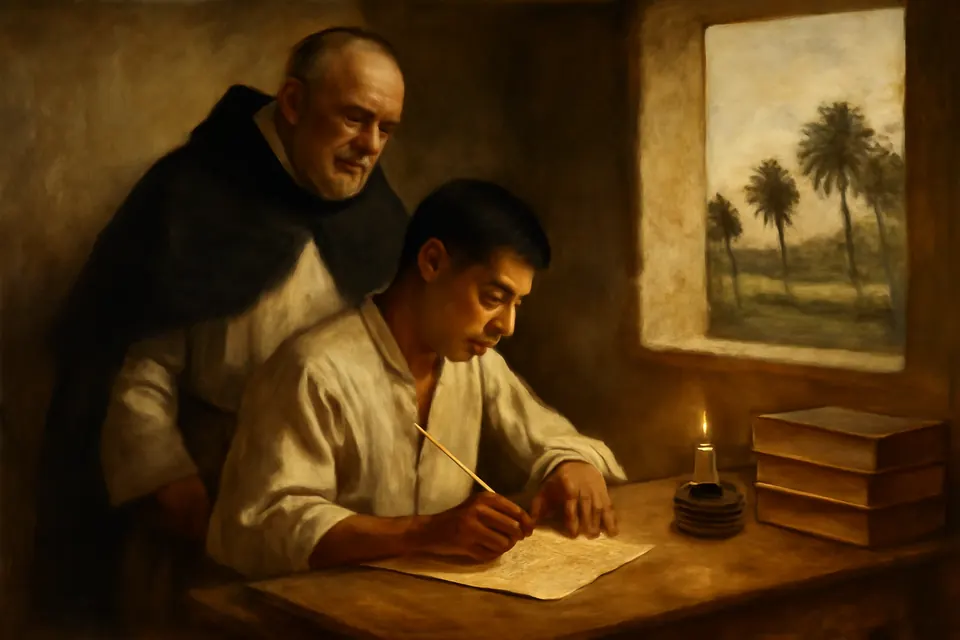
The Franciscan Media life says Lorenzo learned Chinese from his father, Tagalog from his mother and Spanish from the Dominicans, whom he served as altar boy and sacristan. His handwriting was so good that he worked as an escribano, a scribe who copied documents and church records. He joined the Confraternity of the Holy Rosary, which the Dominicans ran in Binondo, and married a woman named Rosario. They had two sons and a daughter.
A false accusation and a journey to Japan
Then his life turned. The only record is a statement by two Dominicans that he "was sought by the authorities on account of a homicide to which he was present or which was attributed to him." Filipino tradition holds that he was innocent.
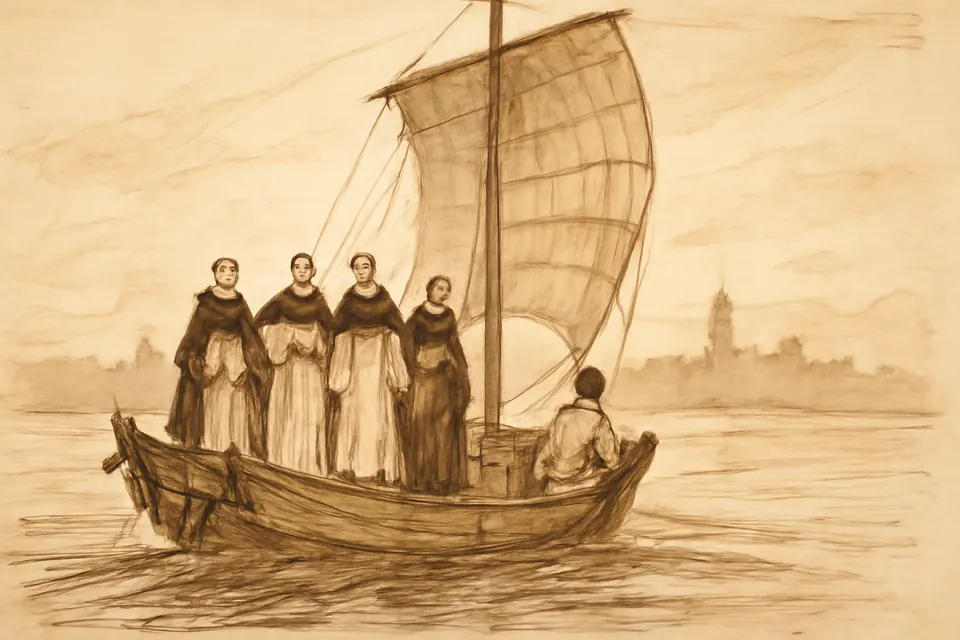
Lorenzo took refuge with three Dominican priests who were about to sail: Antonio González, Guillermo Courtet and Miguel de Aozaraza. With them went a Japanese Dominican, Vicente Shiwozuka de la Cruz, and a Japanese layman with leprosy named Lázaro of Kyoto. They left Manila on June 10, 1636. According to Franciscan Media, Lorenzo learned only at sea that the ship was bound for Japan, where Christianity had been banned and missionaries were being hunted. When they landed at Okinawa he could have gone on to Formosa, but he said, "I decided to stay with the Fathers, because the Spaniards would hang me there."
Prisoner in Nagasaki
The group was soon arrested and, after more than a year in prison, taken to Nagasaki for trial in September 1637. Under torture Father González died, and Father Shiwozuka and Lázaro gave way for a moment before recovering their courage.
Lorenzo had his own moment of fear and asked the interpreter whether giving up his faith would save his life. The interpreter gave no clear answer, and over the next hours, Franciscan Media says, Lorenzo grew steady and even bold.
On September 27, 1637, the prisoners were hung head down over pits on Nishizaka Hill, the punishment the Spanish called horca y hoya, "gallows and pit." One hand was left free so a prisoner could signal that he would recant. Lorenzo did not. He and Lázaro died after two days; the three surviving priests were then beheaded. The authorities burned Lorenzo's body and threw the ashes into the sea so that Christians would have no relics to honor.
The last words of St. Lorenzo Ruiz
At the beatification in Manila, John Paul II quoted the testimony gathered for the cause, in which Lorenzo told the court that he was a Christian, must die for God and would give his life for him a thousand times:
Had I many thousands of lives I would offer them all for him. Never shall I apostatize. You may kill me if that is what you want. To die for God—such is my will.
Another well-known version, quoted by the UCA News directory, reads: "I am a Catholic and wholeheartedly do accept death for God. Had I a thousand lives, all these to Him I shall offer."

Miracles and the road to sainthood
Lorenzo's martyrdom was formally investigated; the Dominican historian Fidel Villarroel prepared the case. On February 18, 1981, John Paul II beatified the sixteen martyrs in Manila, the first beatification ever held outside Rome. He compared Lorenzo to St. Stephen: as the young Church of Jerusalem gave the first martyr, so "the young Church in Manila, founded in 1579, brought forth its first martyr in the person of Lorenzo Ruiz."
- The healing of Alegria Policarpio (1983): approved. According to the UCA News directory, a two-year-old girl was cured of hydrocephalus after prayers to Lorenzo; Filipino and Vatican-era accounts present this as the miracle accepted before his canonization in 1987.
- Favors reported by Filipino Catholics at home and abroad: reported. They are part of a living devotion but have not been examined.
Why St. Lorenzo Ruiz is the patron of Filipinos abroad
Lorenzo is the patron of the Philippines and of Filipinos everywhere. Filipinos working overseas have taken him as their own patron: a family man who left Manila against his plans and died far from his wife and children. He is also a patron of altar servers, because he began as one, and of Filipino young people.


Symbols of St. Lorenzo Ruiz in art
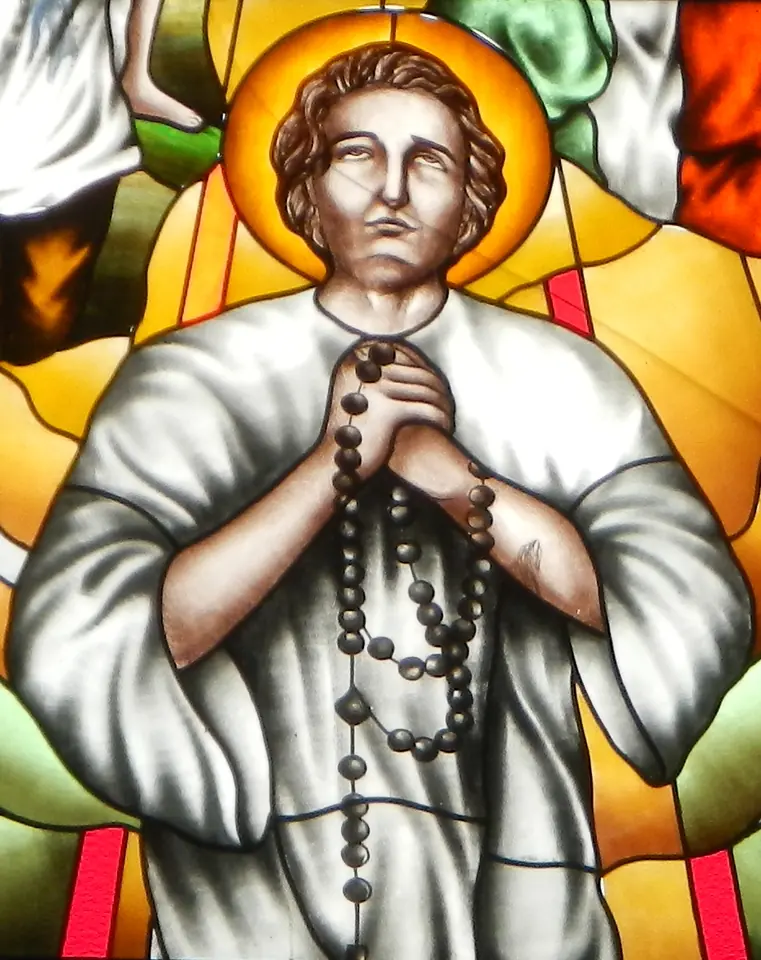
Filipino images make Lorenzo easy to recognize:
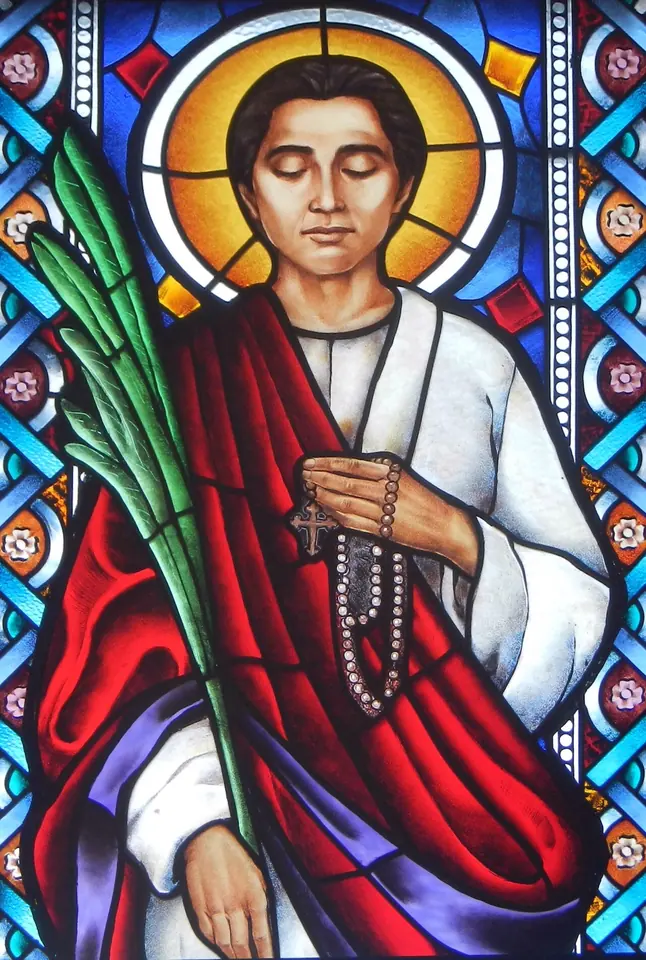
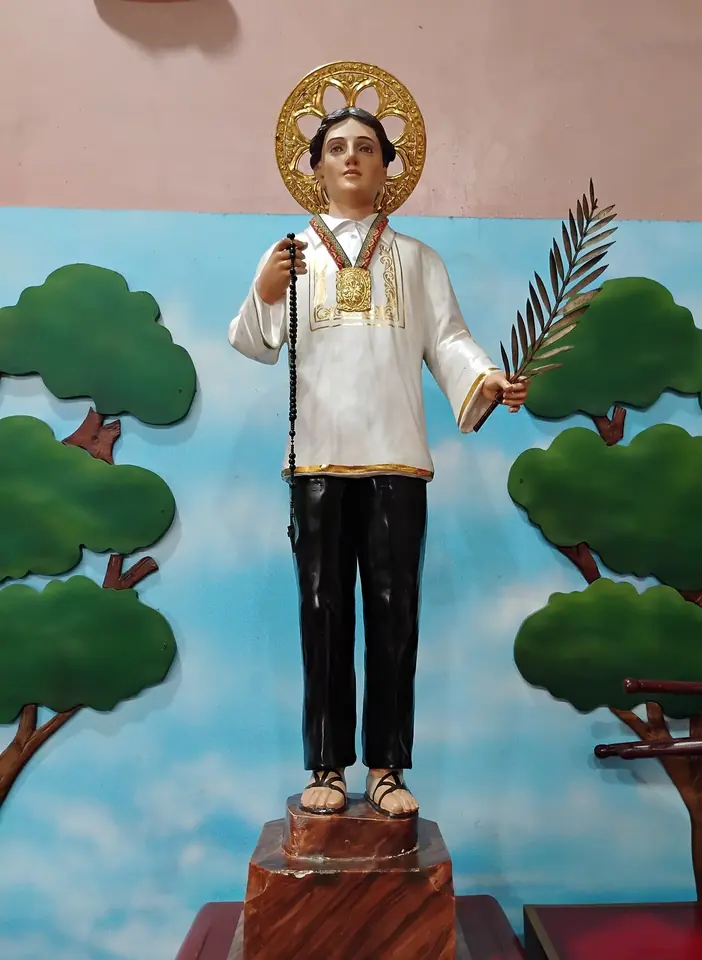
- A rosary in clasped hands: for his membership in the Rosary confraternity of Binondo.
- A white shirt and dark trousers: the dress of a Manila layman, often drawn as a barong or camisa de chino, never a habit or vestments.
- A martyr's palm and a cross: the ordinary signs of a martyr.
- The gallows and the pit: shown in some scenes of his death, usually without detail.
Statues show him young and beardless, often looking upward.

Feast day and devotion
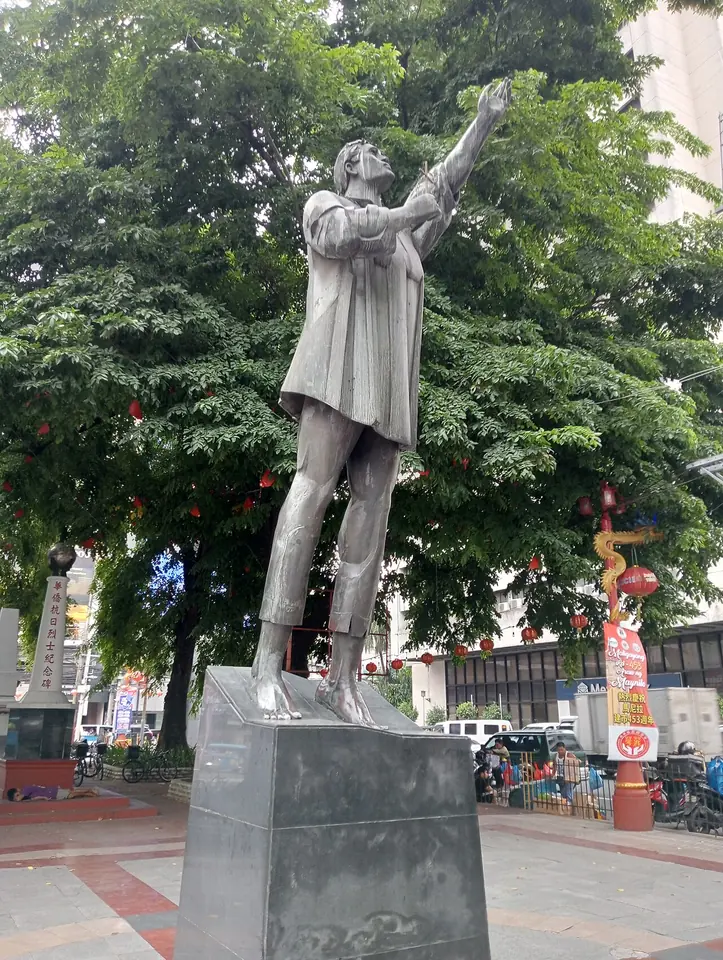
The feast of St. Lawrence Ruiz and Companions is September 28, an optional memorial on the General Roman Calendar (see our feast days page). Nagasaki also remembers St. Paul Miki and his companions, crucified on Nishizaka Hill in 1597. In Manila the center of devotion is Binondo Church and the plaza named for Lorenzo in front of it.

Prayer to St. Lorenzo Ruiz
No prayer written by Lorenzo survives, and the prayers to him in Filipino parish booklets are modern. The liturgy of his feast uses the common prayers for martyrs and the Mass of St. Lawrence Ruiz and Companions in the Roman Missal. Catholics also repeat his own confession, "To die for God—such is my will," and ask him to pray for Filipino families separated by work abroad.
Frequently asked questions
Why is St. Lorenzo Ruiz famous?
He is the first canonized saint of the Philippines. A married layman with no plans to be a missionary, he ended up in Japan during the shogunate's persecution of Christians and died there rather than renounce his faith. John Paul II beatified him in Manila in 1981, the first beatification held outside Rome, and canonized him in 1987.
What were St. Lorenzo Ruiz's last words?
According to the account John Paul II quoted at the beatification in 1981, Lorenzo told the court he was a Christian and would die for God, saying, "Had I many thousands of lives I would offer them all for him. Never shall I apostatize. You may kill me if that is what you want. To die for God—such is my will."
What is St. Lorenzo Ruiz the patron saint of?
The Philippines and Filipinos, and in particular Filipino overseas workers, migrants, young people and altar servers. Filipinos working abroad see their own story in a man who left Manila unexpectedly and died far from his family.
When is the feast of St. Lorenzo Ruiz?
September 28, as the feast of St. Lawrence Ruiz and Companions, an optional memorial on the General Roman Calendar. The Binondo Church in Manila, his national shrine, holds its fiesta in his honor in late September.
Sources
- John Paul II, Homily for the Beatification of Lorenzo Ruiz, Manila, February 18, 1981 (vatican.va)
- John Paul II, Homily for the Canonization of 16 Martyrs in Japan, October 18, 1987 (vatican.va)
- Vatican News: Sts. Lorenzo Ruiz and Companions, Martyrs
- Franciscan Media: Saint Lorenzo Ruiz and Companions
- UCA News Asian Catholic Directory: Lorenzo Ruiz, Filipino layman who became a martyr in Japan
- Fidel Villarroel, OP, Lorenzo de Manila: The Protomartyr of the Philippines and His Companions (UST Publishing, 1988)