St. John of God

St. John of God (1495–1550) was a Portuguese shepherd, soldier and traveling bookseller who, after a dramatic conversion in Granada, Spain, spent his last years caring for the sick poor in a hospital he founded there. His followers became the Brothers Hospitallers of St. John of God. He is the patron saint of hospitals, the sick, the dying and nurses, and his feast day is March 8.
Who was St. John of God?
John of God was a Portuguese drifter who spent four decades as a shepherd, a soldier and a peddler of books before a sermon in Granada turned his life upside down. He spent his last thirteen years begging for the sick poor of that city and nursing them in a house he opened for anyone who came. After his death his companions became the Brothers Hospitallers of St. John of God, one of the largest Catholic health-care orders in the world.
Catholics honor him as the patron of hospitals, the sick, the dying and nurses. He was born in Montemor-o-Novo, Portugal, on March 8, 1495, and he died in Granada on his birthday in 1550.

The oldest account of his life is the History by Francisco de Castro, chaplain of John's hospital, written from the memories of people who knew him and printed in Granada in 1585. The Catholic Encyclopedia of 1910 follows that tradition closely, including the stories of visions and angels, and this article says which parts are history and which are tradition.
The life of St. John of God
A runaway boy and a soldier
At eight, John left home in Portugal with a Spanish priest who was passing through, and ended up in Oropesa in central Spain, where he was put in the care of the town's chief shepherd. His mother, the Catholic Encyclopedia says, died soon after his disappearance. He grew up tending sheep and was trusted enough that his master wanted him to marry his daughter.
To escape the match he enlisted in the army of the emperor Charles V, and later in a regiment marching to Austria to fight the Turks. Military life did nothing for his faith. When he finally went back to his birthplace, he learned that his mother had died long before.
Africa, Gibraltar and books
Back in Spain, John worked as a shepherd near Seville and then set out for North Africa, half hoping to give his life ransoming Christian captives. On the way he met a Portuguese family who had been exiled there and stayed to support them with his labor. On his confessor's advice he returned to Gibraltar.
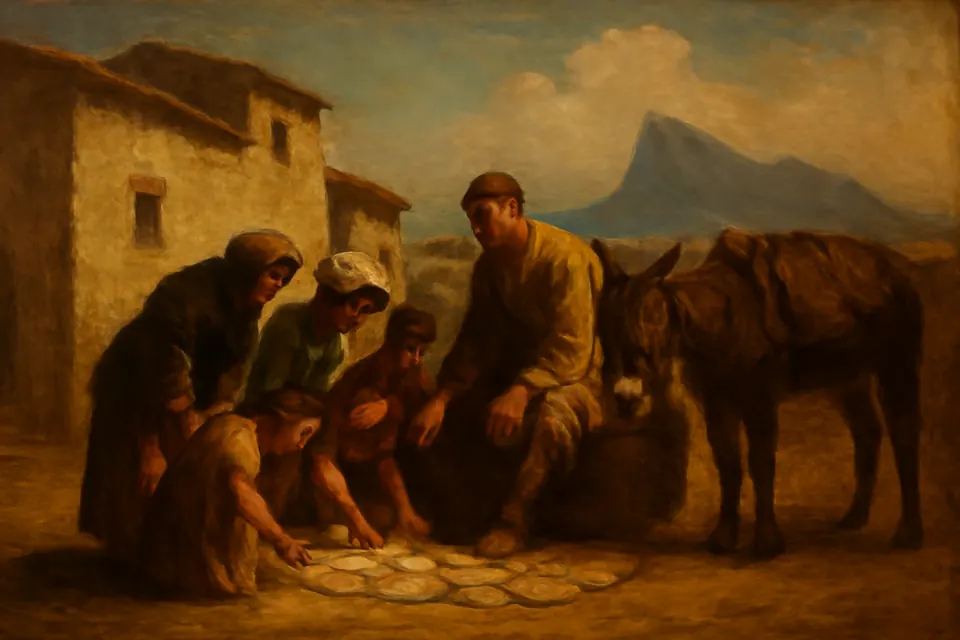
There he started the trade that made him the patron of booksellers. He walked the towns and villages around Gibraltar selling religious books and holy pictures at almost no profit, so that poor people could afford them. The printing press was still young, and the Catholic Encyclopedia calls this his "Apostolate of the printed page."
The same source says that during these years he had a vision of the Child Jesus, who called him John of God and sent him to Granada. That is traditional. What is certain is that he settled in Granada and went on selling books.
The sermon that changed everything
In Granada, John heard a sermon by the priest John of Ávila, a celebrated preacher who was canonized in 1970 and named a Doctor of the Church in 2012. The words struck John so hard that he gave away his books and possessions and ran through the streets beating his breast and begging God for mercy. People took him for a madman. Catholic Culture's account says he was locked up in Granada's Royal Hospital and suffered the cruel treatment then given to the insane.

John of Ávila visited him and told him to stop his public penance and do something useful for others instead. John took the advice. He made a pilgrimage to the shrine of Our Lady of Guadalupe in Extremadura, in Spain (not the Mexican shrine of Our Lady of Guadalupe, though the Mexican title takes its name from it). There, the Catholic Encyclopedia says, Mary showed him his vocation. He came back to Granada to serve the sick.
A hospital for anyone
John rented a house, furnished it with what he could beg, and went through the city looking for sick people with nowhere to go, carrying on his back those who couldn't walk. By day he nursed them. By night he went out begging for food and supplies. Before long, charitable priests and doctors were helping him.
He wrote about the house in a letter that the Church now reads in the Liturgy of the Hours on his feast. In the Vatican's English text he lists who came: "There are people with useless limbs, the maimed, the lepers, the dumb, the insane, paralytics, and some who are suffering from cancer." More than 110 people were living there, he wrote, and he was so deep in debt that he hardly dared go out for fear of being seized by creditors.


The habit, the name and the first brothers
John gave his cloak to every beggar he met. To stop it, Sebastián Ramírez, bishop of Tuy, had a habit made for him and confirmed the name John of God. That habit became the pattern for his followers' dress.
His first two companions, Antonio Martín and Pedro Velasco, had been bitter enemies whose feud scandalized Granada. According to the Catholic Encyclopedia, they were converted through John's prayers. On his deathbed John named Antonio Martín to lead the others.
The fire and his death
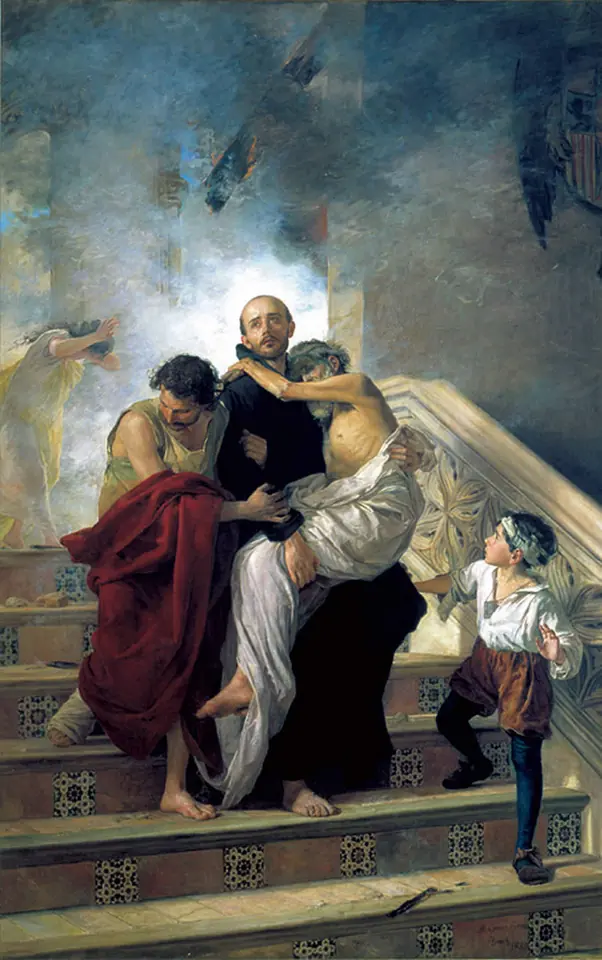
In July 1549, Catholic Culture recounts, fire broke out in Granada's Royal Hospital, the same place where John had once been held as a madman. He ran in, carried and led out the sick, threw bedding and furniture from the windows, and came out of the flames unhurt. The rescue itself is history. That no one died and that John passed through the fire untouched is how the Office of his feast later remembered it.

His last illness, the Catholic Encyclopedia says, came from a brave but failed attempt to save a young man from drowning. He died on March 8, 1550, and the city's magistrates and nobles crowded his deathbed. He was buried with the honors usually reserved for princes.
The miracles of St. John of God
- Miracles accepted for his beatification (1638) and canonization (1690): approved. Urban VIII beatified him and Alexander VIII canonized him after formal processes, which by then required investigated miracles. The individual cures aren't described in the sources used here.
- The rescue from the hospital fire, July 1549: reported. The rescue was public, and the account that he passed through the flames unscathed comes from his early biographers and the liturgy.
- The Child Jesus naming him, Mary's guidance at Guadalupe: traditional.
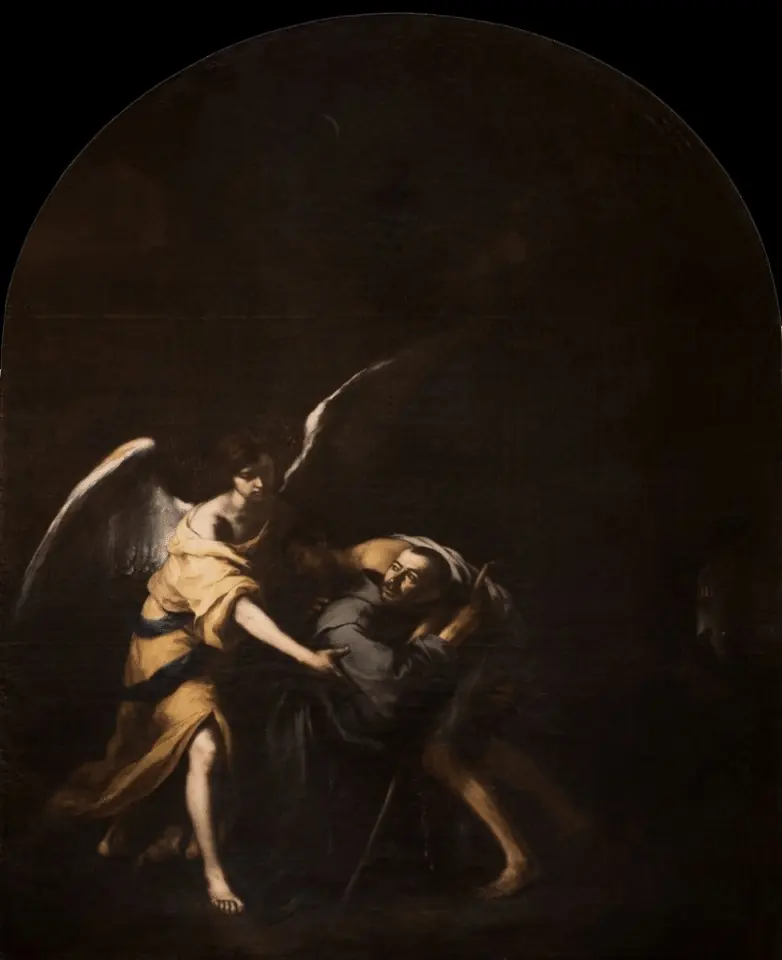
- St. Raphael helping him in the hospital: traditional. The Catholic Encyclopedia says the heavy work was "lightened at times by St. Raphael in person." This is why painters like Murillo put an angel at his side. See St. Raphael the Archangel.
- Washing the feet of Christ: traditional. Catholic Culture notes that art shows him washing the feet of Jesus; the legend behind it tells that a poor man he was serving turned out to be Christ.
Why St. John of God is the patron saint of hospitals and nurses
The reasons for most of his patronages are plain from his life:
- Hospitals and the sick: named by Leo XIII in 1886, because he founded one of the first hospitals of its kind and an order devoted to running them.
- The dying: Leo XIII also put his name in the Litany of the Dying.
- Nurses: named by Pius XI in 1930, alongside St. Camillus de Lellis.
- Booksellers and printers: his years selling books around Gibraltar and in Granada.
- Firefighters: the rescue at the Royal Hospital.
- Heart patients and alcoholics: popular patronages listed by Catholic Culture, without an official decree.
Find more on our patron saints page.
Symbols of St. John of God in art
Look for a man in a plain black or dark brown habit, often bearded and worn, with one of these:
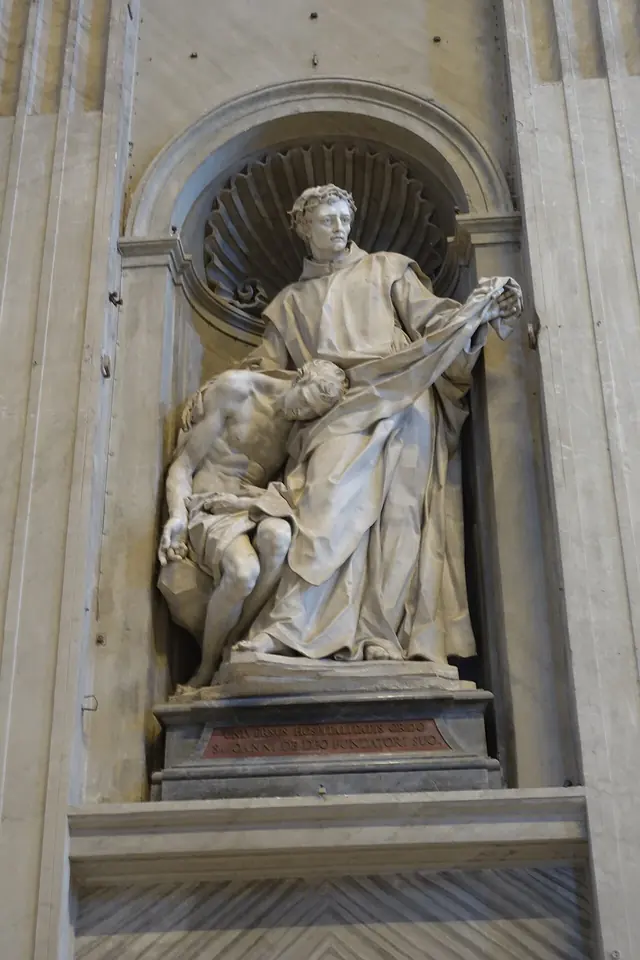
- A sick man on his shoulders or in his arms: the most common image, from the nights he carried patients to his house. The marble founder statue in St. Peter's Basilica shows him this way.
- A pomegranate topped by a cross: granada is Spanish for pomegranate. The fruit is the emblem of the city, and with a cross on it, it became the emblem of his order.
- An alms basket or box: for his nightly begging.
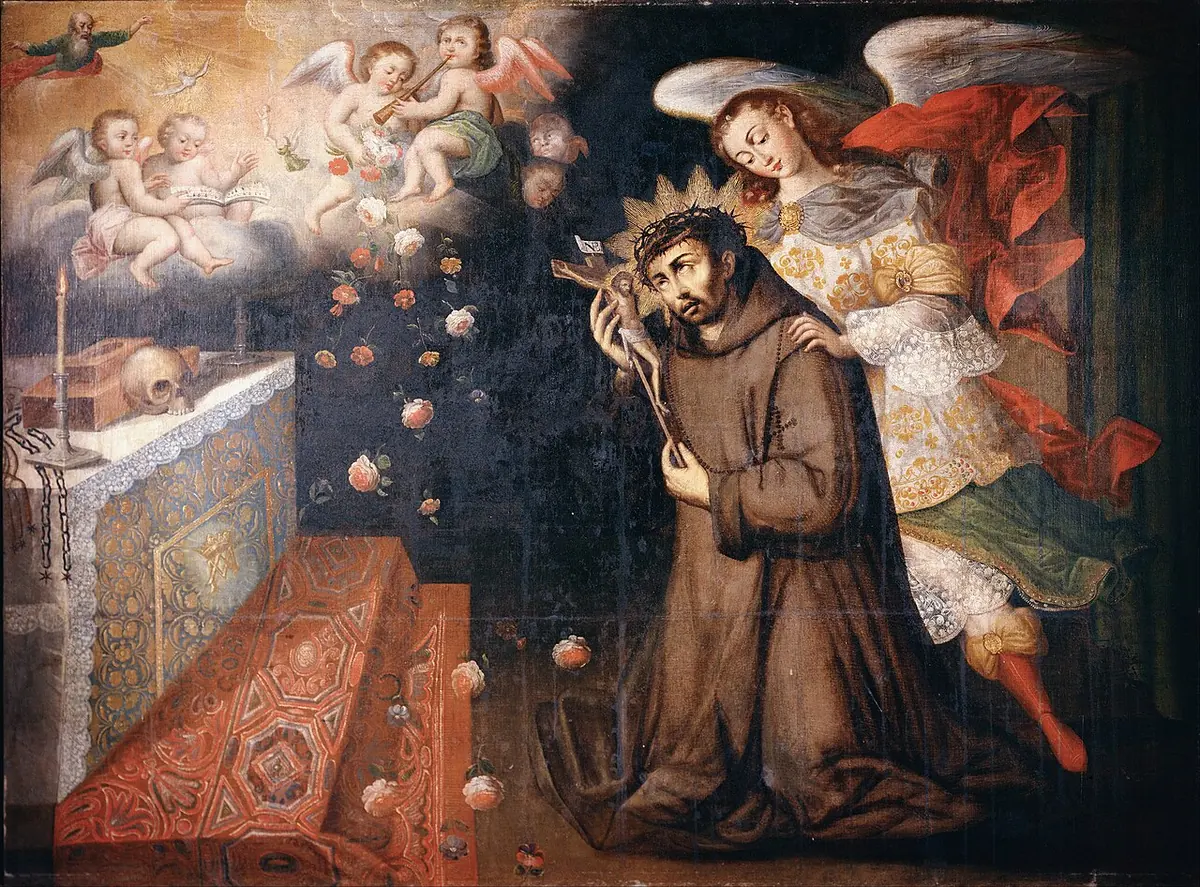
- A crown of thorns and a crucifix: his devotion to Christ's Passion, especially in scenes of his death, when he is shown kneeling.
- An angel beside him: St. Raphael, from the tradition above.
- A heart: charity, the rule of his order.


Feast day and where St. John of God is honored
His feast is March 8, an optional memorial in the General Roman Calendar. Because it nearly always falls in Lent, many parishes only commemorate him. See the calendar on our feast days page.
Granada
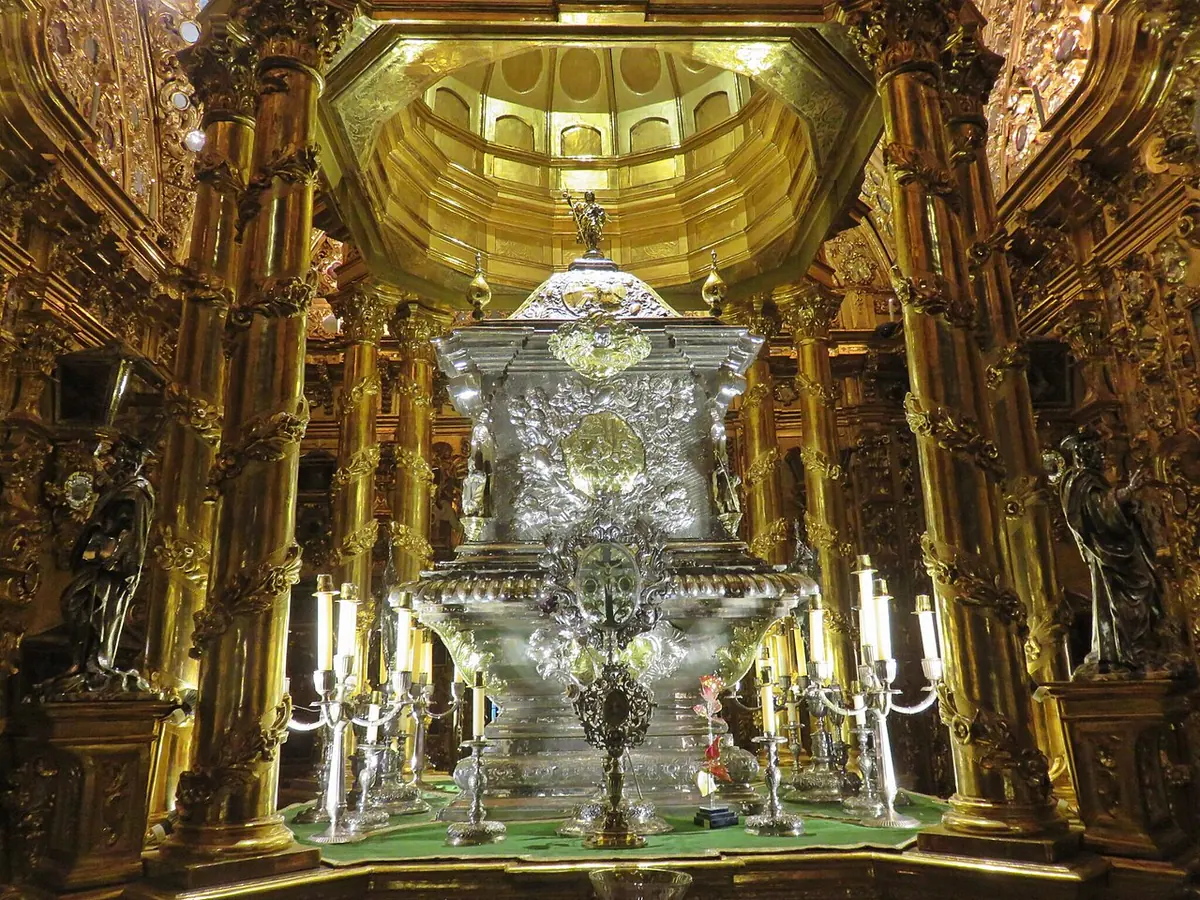
His relics are in the Basilica of San Juan de Dios, an 18th-century Baroque church beside his order's hospital. Catholic Culture notes that his remains rest in a silver urn within the gilded altarpiece above the main altar, in the small chapel Spaniards call a camarín.

The hospital of San Juan de Dios stands next to the basilica, with a statue in a niche above its carved stone doorway.


The Brothers Hospitallers
Pope Pius V approved his followers as a religious order in 1572. In Italy they are called the Fatebenefratelli, "do good, brothers," which by tradition echoes the cry John used while begging. The order's headquarters in Rome reports a presence in fifty countries on five continents, with about 400 hospitals, clinics and social centers, many of them for the mentally ill.
Prayer to St. John of God
The prayer the Catholic Church uses on his feast is the collect of the Roman Missal. In the current English translation, as given by Catholic Culture:
O God, who filled Saint John of God with a spirit of compassion, grant, we pray, that, giving ourselves to works of charity, we may merit to be found among the elect in your Kingdom. Through our Lord Jesus Christ, your Son, who lives and reigns with you in the unity of the Holy Spirit, God, for ever and ever.
In his own words
A few of John's letters survive. The passage from them that the Church reads on his feast begins:
If we kept before us the mercy of God, we would never be deficient in doing good, while strength was in us. For, when we make over to the poor, out of the love of God, what he himself has given us, his promise is that we shall receive a hundredfold in eternal happiness.
Later in the same letter he writes, "But Christ is faithful and is with us always, and he provides all things."
Frequently asked questions
What is St. John of God the patron saint of?
Pope Leo XIII named him patron of hospitals and of the sick in 1886 and placed his name in the Litany of the Dying. Pope Pius XI named him a patron of nurses in 1930. Popular lists add heart patients, booksellers and printers (he once sold books for a living), firefighters (he rescued patients from a burning hospital) and alcoholics.
When is St. John of God's feast day?
March 8, the day he died in 1550, which was also his fifty-fifth birthday. It is an optional memorial in the General Roman Calendar, though in Lent it becomes a commemoration.
How did John of God get his name?
According to the Catholic Encyclopedia, tradition says the Child Jesus gave him the name "John of God" in a vision. Sebastián Ramírez, bishop of Tuy, later confirmed it when he gave John the habit his followers adopted, and the name stuck.
What is the order St. John of God founded?
The Brothers Hospitallers of St. John of God, known in Italy as the Fatebenefratelli. His first companions formed it after his death, and Pope Pius V approved it in 1572. The brothers take a fourth vow of hospitality to the sick, and the order says it now runs about 400 works in some fifty countries.
Why is St. John of God the patron of heart patients?
No decree explains it. The heart is one of his emblems in art, a sign of the charity his followers made their rule, and Catholic Culture lists heart patients among his patronages. The official patronages are hospitals, the sick, the dying and nurses.
Sources
- Catholic Encyclopedia (1910): St. John of God
- Vatican, Spirit of the Liturgy: St John of God, Christ is faithful and provides all things
- Catholic Culture: Liturgical Year, March 8, 2025 (Opt. Mem. of St. John of God)
- Hospitaller Order of St. John of God (Fatebenefratelli), General Curia
- Francisco de Castro, Historia de la vida y sanctas obras de Juan de Dios (Granada, 1585)
- Butler's Lives of the Saints, March 8