St. Andrew Christmas novena
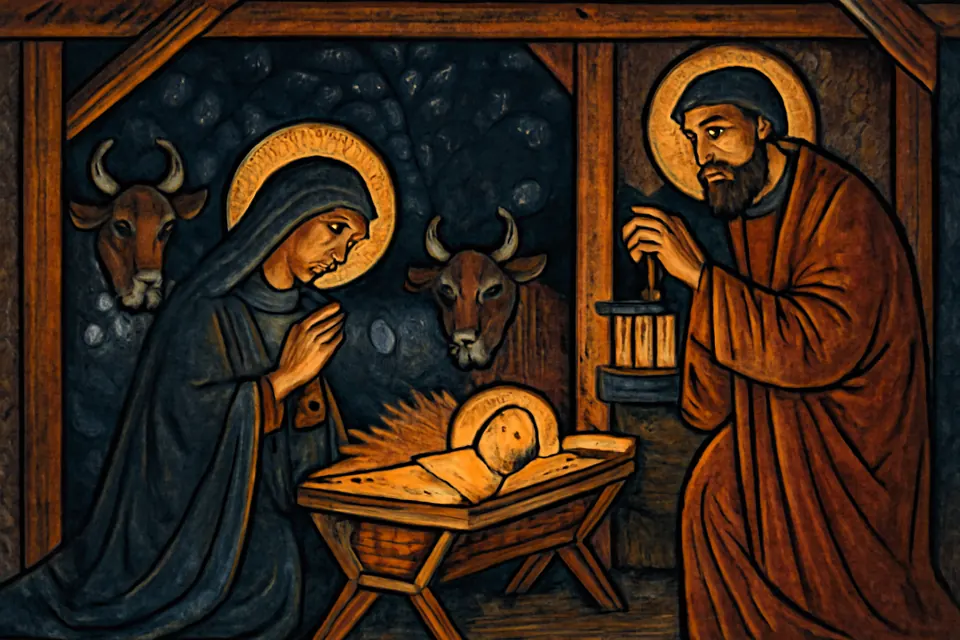
The St. Andrew Christmas novena is a short prayer, "Hail and blessed be the hour and moment in which the Son of God was born...", said 15 times a day from the feast of St. Andrew on November 30 until Christmas. Its author is unknown. It was printed in Dublin by 1914, and despite the name it lasts about 25 days, not nine.
Every year at the end of November, parish bulletins and family refrigerators sprout the same small card. The St. Andrew Christmas novena asks for very little: one short prayer, fifteen times a day, for the weeks of Advent. Here is the text as it was printed more than a century ago, then what can be said about where it came from.
The St. Andrew Christmas novena prayer
This is the text from Little Treasury of Leaflets, Volume II, a collection of Irish prayer leaflets published by Benziger Brothers in New York with the approval of the Archbishop of Dublin, dated June 30, 1914:
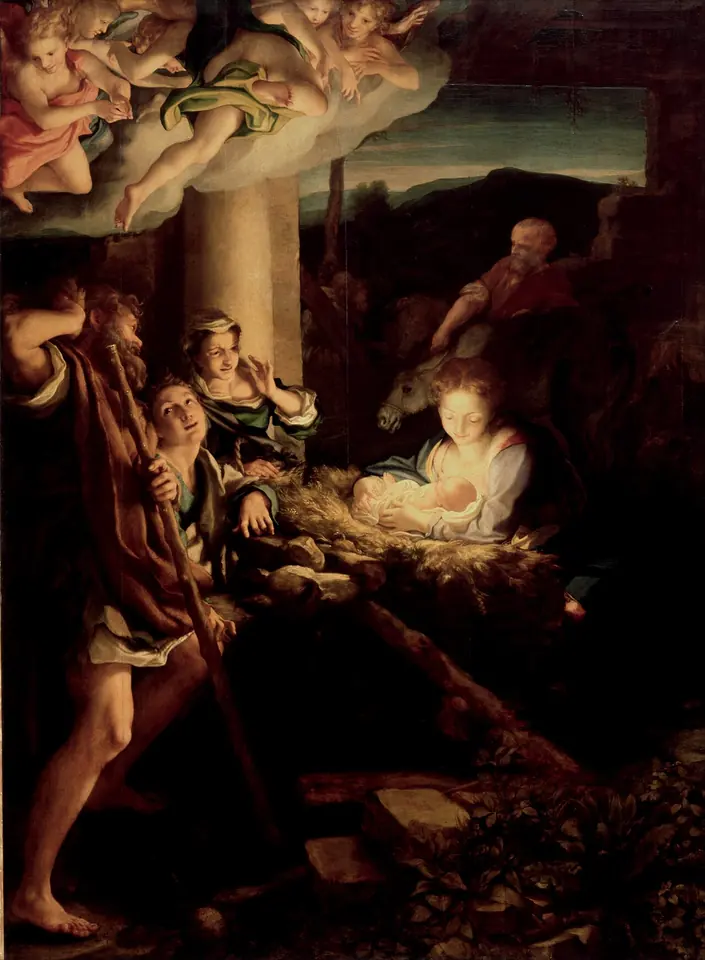
Hail and Blessed be the hour and moment in which the Son of God was born of the most pure Virgin Mary, at midnight in Bethlehem, in piercing cold. In that hour, vouchsafe, O my God! to hear my prayer and grant my desires, through the merits of our Saviour, Jesus Christ, and of His Blessed Mother. Amen.
Below it the leaflet adds: "It is piously believed, whoever recites the above prayer fifteen times a day, from the Feast of St. Andrew (30th Nov.), until Christmas, will obtain what is asked."
Modern cards are nearly identical. Most read "grant my desires" and add a pause for the request, often printed as "(here mention your request)."
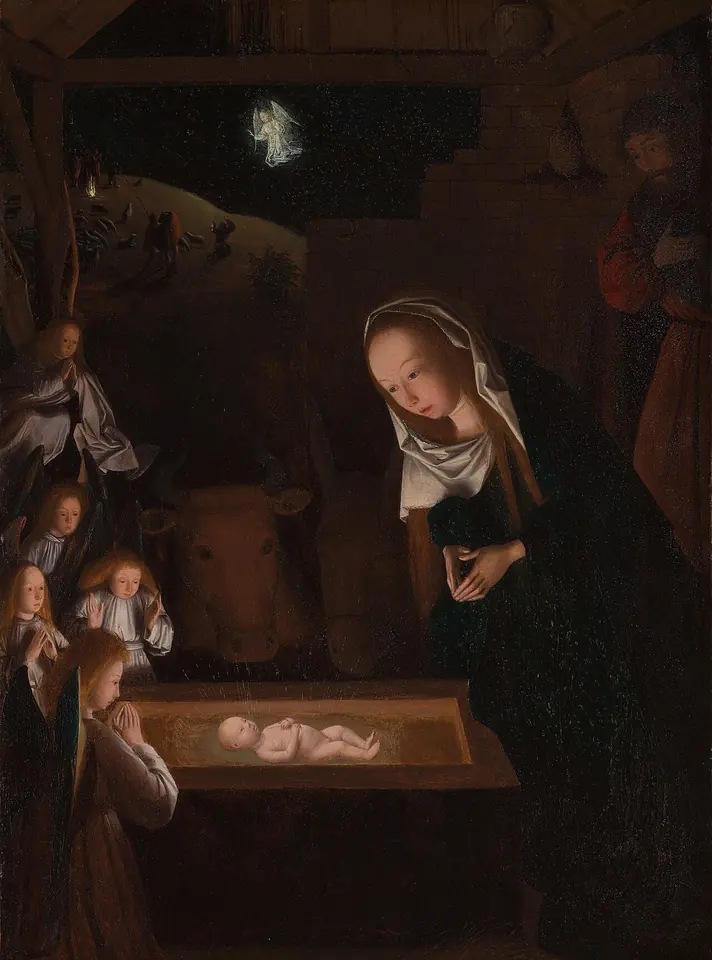
How to pray the St. Andrew Christmas novena
- Begin on November 30, the feast of St. Andrew.
- Say the prayer fifteen times each day. It does not have to be all at once: many people say five in the morning, five at midday and five at night.
- At the words "grant my desires," name your intention silently or aloud. Most people keep the same request for the whole season.
- Continue every day through December 24. Some families finish on Christmas Day.
From November 30 to December 24 is 25 days, so the full devotion comes to 375 prayers. Families with children often keep count with beads, coins moved from one jar to another, or tally marks on a paper chart. If you miss a day or start late, nothing in the old leaflets says the devotion is spoiled. Most people simply pick it up again.
Where the prayer comes from
What can be verified
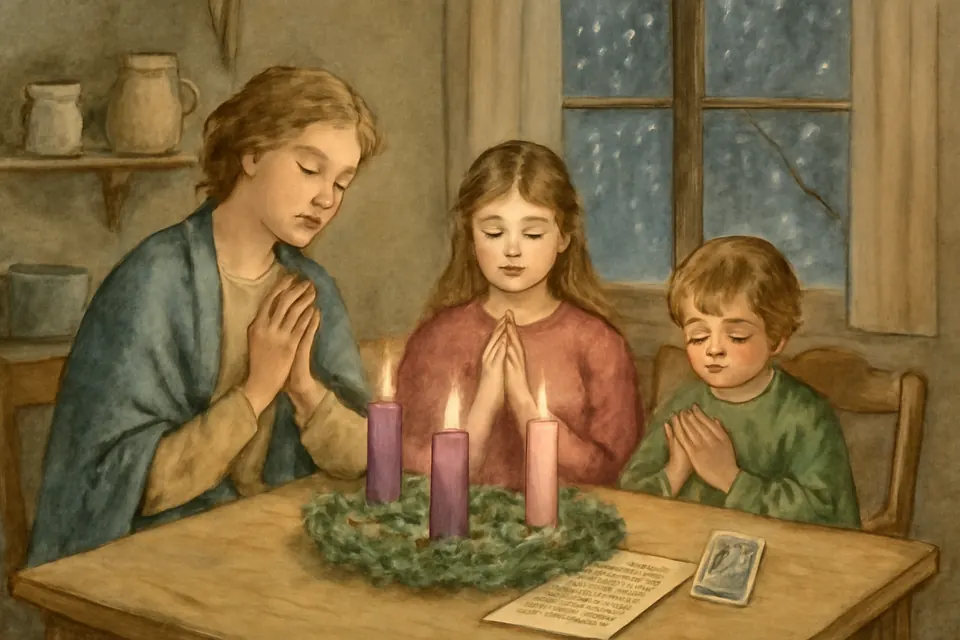
The author is unknown. The oldest printing we could find is the 1914 Little Treasury of Leaflets quoted above, which carries the Imprimi potest of William Walsh, Archbishop of Dublin. A letter in The Sign, the American Passionist monthly, in January 1929 confirms that it was already widespread. A reader answering another reader's question copied out the prayer, gave its leaflet number (No. 145 in the Little Treasury, "published by Gill & Sons, Ltd., Dublin, and approved by the Archbishop of Dublin"), and added, "I have said that prayer for over 35 years, and have taught it to my six children." That puts it in use by the early 1890s.
What cannot be verified
Many cards and websites say the prayer was written by an Irish nun, and that it was printed with the Imprimatur of Michael Augustine Corrigan, Archbishop of New York, on February 6, 1897. Corrigan was archbishop from 1885 to 1902, so the date is possible, but we could not find the 1897 printing or any document naming an Irish nun. Treat both claims as unverified. The Irish leaflet trail and the Dublin approval do fit the story of an Irish origin.
Why St. Andrew, and why it is not really a novena
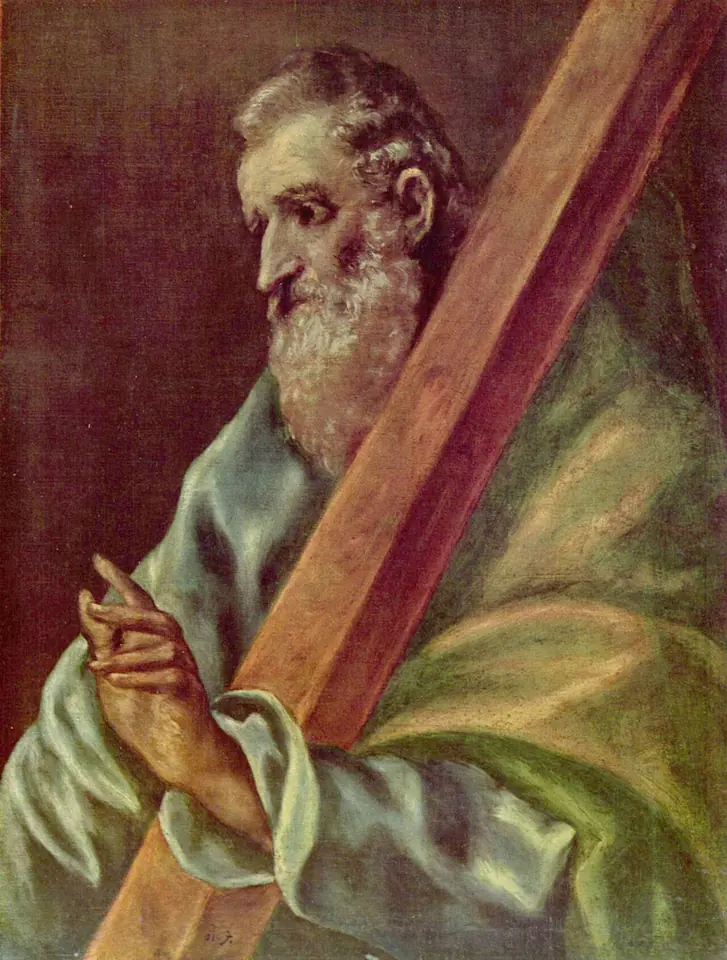
The prayer never mentions St. Andrew. His feast simply marks the start of Advent. The Catholic Encyclopedia explains that Advent begins "with the Sunday nearest to the feast of St. Andrew the Apostle (30 November)," so for generations of Catholics November 30 meant the beginning of the Christmas season of preparation. There is a fitting echo in the Gospel, too: in John 1:41, Andrew is the first to announce Christ, telling his brother Simon Peter, "We have found the Messias."
A true novena lasts nine days. The word comes from the Latin novem, nine, and the Catholic Encyclopedia defines a novena as "a nine days' private or public devotion" to obtain special graces. It gives the Christmas novena, kept from December 16 to 24, as an example of a novena of preparation, and suggests the nine days recall the nine months Christ spent in his mother's womb. That older Christmas novena was indulgenced by Pius VII in 1815, according to the 1878 Raccolta. The St. Andrew prayer, at 25 days, borrowed the name loosely, as many popular devotions have.
The promise attached to it
The leaflets promise nothing in the Church's name. They say only that "it is piously believed" the request will be granted, and that is the right status for the claim: a pious belief, not a promise of the Church. An imprimatur or imprimi potest means a bishop judged the text free of error in faith and morals. It does not guarantee results. The 1929 letter writer in The Sign put it in the plain terms of that generation: prayers are granted "if it is for the greater honor and glory of God and the good of their own souls."
Many Catholics value the devotion less for its promise than for what it does to the weeks before Christmas. Fifteen times a day, it brings the mind back to a single hour in Bethlehem, which is exactly what Advent is for.

Related saints and pages
- St. Andrew, the apostle whose feast begins the devotion.
- St. Nicholas Day on December 6 and Las Posadas, the Mexican Christmas novena of December 16 to 24.
- The Magi and the Epiphany house blessing, which close the Christmas season.
Frequently asked questions
When do you start the St. Andrew Christmas novena?
On November 30, the feast of St. Andrew the Apostle, and continue every day until Christmas. Most people pray it through December 24; some include Christmas Day. If you start late, the usual advice is to begin anyway, since the prayer carries no rule that it must be complete.
Is the St. Andrew Christmas novena a prayer to St. Andrew?
No. The prayer is addressed to God and honors the hour of Christ's birth. St. Andrew's feast only marks the starting date, because November 30 falls at the very beginning of Advent.
Why is it called a novena if it lasts 25 days?
A novena is strictly a prayer kept for nine days. This devotion borrowed the word loosely, as many popular devotions have. From November 30 to December 24 is 25 days, so saying it 15 times a day comes to 375 prayers.
Does the Church promise that the St. Andrew novena will be answered?
No. The old leaflets say only that "it is piously believed" that whoever says it will obtain what is asked. An imprimatur means a bishop found nothing in the text contrary to faith or morals; it is not a guarantee. Catholics pray it as a way of preparing for Christmas and placing a request before God.
Sources
- Little Treasury of Leaflets, Vol. II, revised edition (Benziger Bros.; Imprimi potest, Archbishop of Dublin, June 30, 1914), p. 410, Internet Archive
- The Sign (Passionist monthly), January 1929, Vol. 8, No. 6, readers' letters, Internet Archive
- Catholic Encyclopedia (1911): Novena
- Catholic Encyclopedia (1907): Advent
- The Raccolta, or Collection of Prayers and Good Works (1878 English edition), Novena preparatory to Christmas Day
- Arkansas Catholic (Diocese of Little Rock): Say St. Andrew Christmas Novena in Advent
- Douay-Rheims Bible: John 1