St. Fiacre

St. Fiacre was an Irish priest and hermit of the 600s who settled in the forest near Meaux, east of Paris, where he built an oratory, a guesthouse for travelers and a garden. He is the patron saint of gardeners, and Paris's hired carriages, the fiacres, were named after him. His feast day is August 30.
Who was St. Fiacre?
Fiacre (in Irish, Fiachra) was an Irish priest who left his country for France in the early 600s and lived the rest of his life as a hermit in a forest near Meaux, about 25 miles east of Paris. He grew vegetables and herbs, took in travelers, and became known as a healer. He died around 670.
The name Fiachra was common in early Ireland, and at least three Irish saints bore it. This entry is about Fiacre of Breuil, the one honored in France. Most of what is told about him comes from French tradition centered on his shrine at Meaux. The Catholic Encyclopedia gives the outline, and the more colorful stories are legends recorded centuries later.


The life of St. Fiacre
A hermit in Ireland
The Catholic Encyclopedia says Fiacre was born in Ireland toward the end of the 500s, became a priest, and lived as a hermit on the banks of the River Nore. A townland in County Kilkenny called Kilfiachra, or Kilfera, keeps his memory. Disciples gathered around him there, and he left Ireland to find more solitude.
Welcome at Meaux
He reached Meaux in 628. Its bishop, St. Faro, welcomed him warmly, because Faro's family owed much to an earlier Irish missionary, St. Columbanus, who had blessed his father's house. Faro gave Fiacre land from his own estate at a forest place called Brogilum, later Breuil.
There Fiacre built three things: an oratory dedicated to the Virgin Mary, a hospice where he received strangers, and a cell where he lived apart. His days were prayer, fasting, vigils and garden work. Disciples came again, and a small monastery grew up around him.

Death and shrine
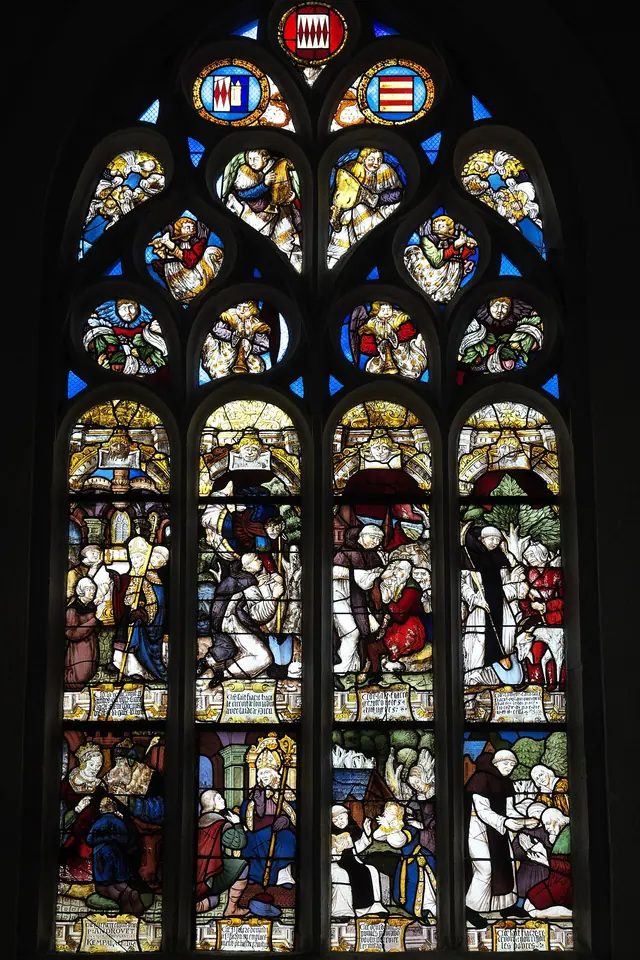
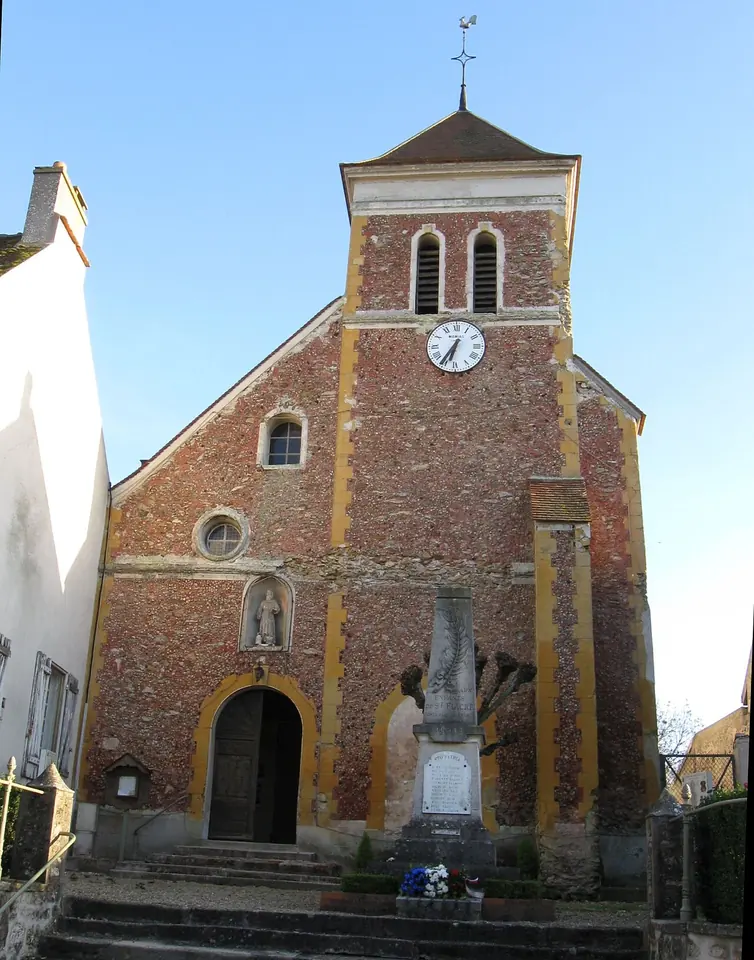
The Catholic Encyclopedia gives the date of his death as August 18, 670. He was buried in his church at Breuil, and cures were soon reported at his tomb. The village that grew up around the site took his name and is now Saint-Fiacre, in Seine-et-Marne.

The miracles and legends of St. Fiacre
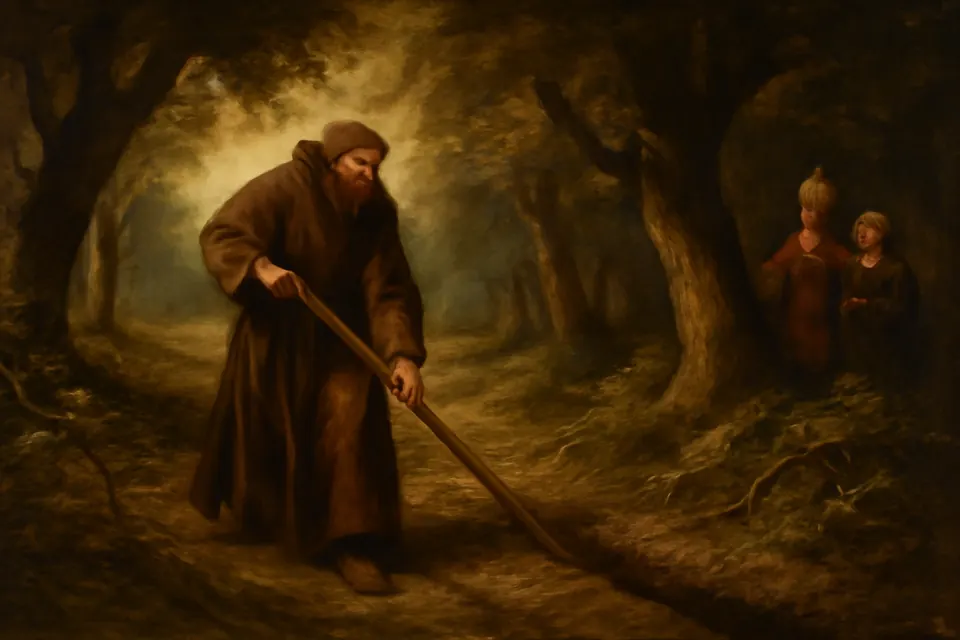
- The furrow (traditional). Faro promised Fiacre as much land as he could enclose with a furrow in one day. Fiacre dragged the point of his staff through the ground, and trees and brambles fell away along the line. A woman ran to tell the bishop that the monk was using witchcraft, but Faro saw the work of God.
- The exclusion of women (traditional). After that episode, the legend says, Fiacre barred women from his precincts on pain of sickness. The Catholic Encyclopedia comments that, in reality, keeping women out was a common rule in Irish monasteries.
- His sister's sight (traditional). The 19th-century Irish hagiographer John O'Hanlon retells a story that Fiacre's blind sister, Syra, recovered her sight through his prayers.
- Healings by laying on of hands (reported). Blindness, fevers and growths are named, and above all a painful swelling that people called le fic de saint Fiacre. Cures at his tomb are reported from soon after his death.
None of these has been examined by the Church in the modern way, since his cult is older than formal canonization.
Why St. Fiacre is the patron saint of gardeners
The Catholic Encyclopedia states it plainly: "He is the patron of gardeners." He spent his days working a garden, he fed guests from it, and his herbs were linked with his healing. Florists later claimed him too.
His connection with hemorrhoids comes from the swelling called "Saint Fiacre's fig," for which people sought his help at Meaux. The Catholic Encyclopedia names among his most famous clients the founder of the Trinitarians, St. John of Matha, and King Louis XIII and his queen, Anne of Austria. Find more patrons on our patron saints page, including St. Isidore the Farmer, patron of farm workers.
The Paris fiacre
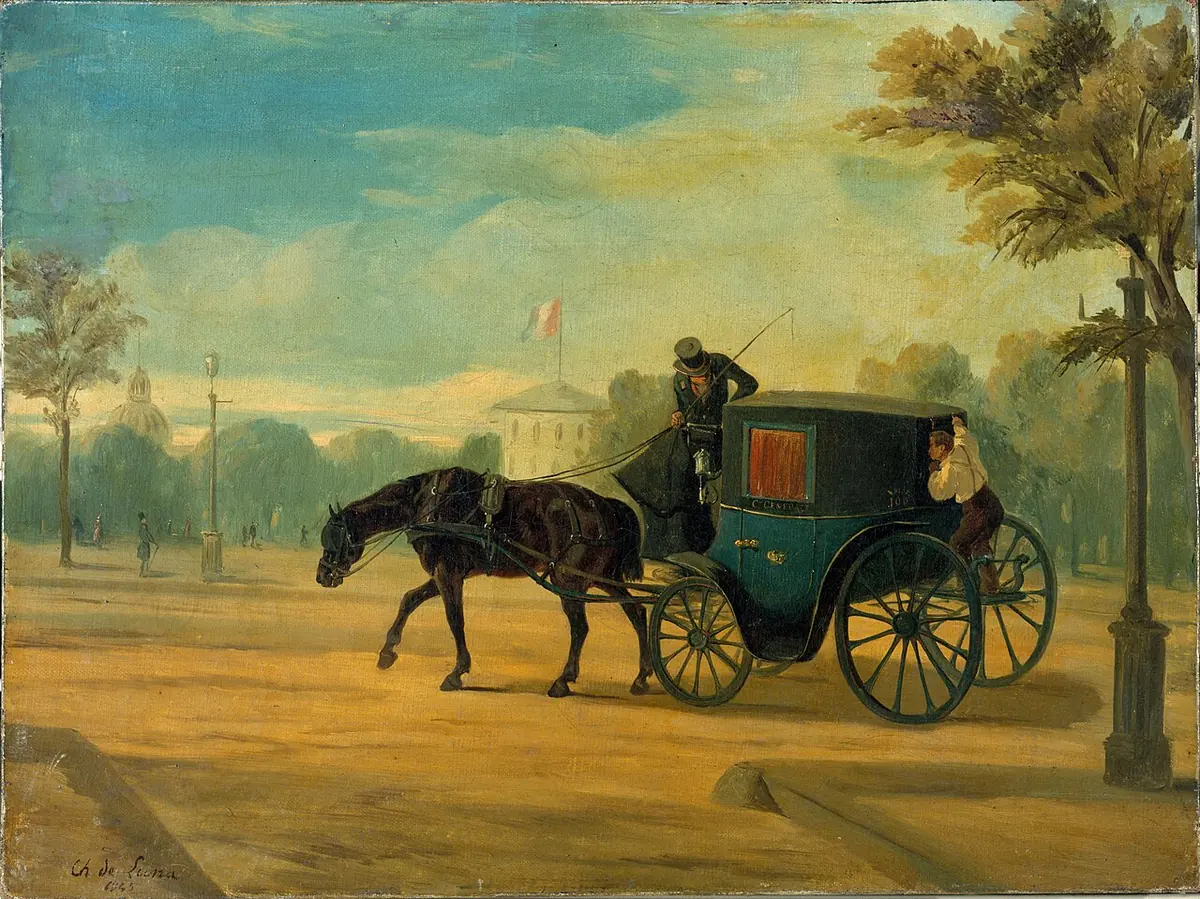
In the middle of the 1600s the Hôtel de Saint-Fiacre, an inn on the Rue Saint-Martin in Paris, began hiring out coaches. The inn's sign showed the saint, and Parisians started calling the coaches fiacres. The name stuck to horse-drawn cabs. Cab drivers took him as their patron, but this is a popular custom and not a formal designation.

Symbols of St. Fiacre in art
Fiacre is easy to spot once you know his attributes:
- A spade: the gardener's tool, his most common sign.
- A book: the hermit priest at prayer.
- A monk's habit, often with a hood.
- Vegetables or flowers, sometimes a basket of produce.
The 1455 miniature at the top of this page shows the spade and the open book together. Many French churches have a statue of him.


Feast day, shrine and relics
His feast is August 30 in the Roman Martyrology and in France; some Irish calendars use September 1. See our feast days calendar.
In 1234 Bishop Pierre of Meaux placed his remains in a shrine, with an arm in a separate reliquary. In 1479 they were put in a silver shrine, and in 1568 they were carried to Meaux Cathedral for safety during the Wars of Religion. In the 1600s parts were given to the Grand Duke of Tuscany and to Cardinal Richelieu. A 15th-century mystery play told his life on stage. The shrine at Breuil, the Catholic Encyclopedia wrote in 1909, "is still a resort for pilgrims with bodily ailments."
Prayer to St. Fiacre
No prayer to St. Fiacre with a citable traditional origin has come down in the standard prayer books. Short prayers to him for a good harvest and blessing on a garden circulate among gardeners, but their authors and dates are unknown, so they are not reproduced here. Catholics who ask his help usually do it simply, asking St. Fiacre to pray for them and for their gardens, or for healing.
Frequently asked questions
Why is St. Fiacre the patron saint of gardeners?
He worked his own garden at his hermitage near Meaux, and the Catholic Encyclopedia describes his life as one of prayer, fasting and "the manual labour of the garden." His legend of turning the earth with his staff added to the image. He is usually shown with a spade.
When is St. Fiacre's feast day?
August 30 in the Roman Martyrology and in France. Some calendars, especially in Ireland, keep him on September 1.
Why are Paris cabs called fiacres?
In the middle of the 1600s, the Hôtel de Saint-Fiacre on the Rue Saint-Martin in Paris began renting out coaches. Its sign showed the saint, and the hired coaches came to be called fiacres. Cab drivers adopted him as a patron, though the Church has never formally named him one.
Where are St. Fiacre's relics?
Most are in Meaux Cathedral, where they were taken in 1568 from his first shrine at Breuil (now the village of Saint-Fiacre). Parts were given away in the 1600s, including some vertebrae to Cardinal Richelieu.
Sources
- Catholic Encyclopedia (1909): St. Fiacre
- Wikipedia: Saint Fiacre (for the September 1 date and later patronages)
- Roman Martyrology, August 30