St. José Gregorio Hernández
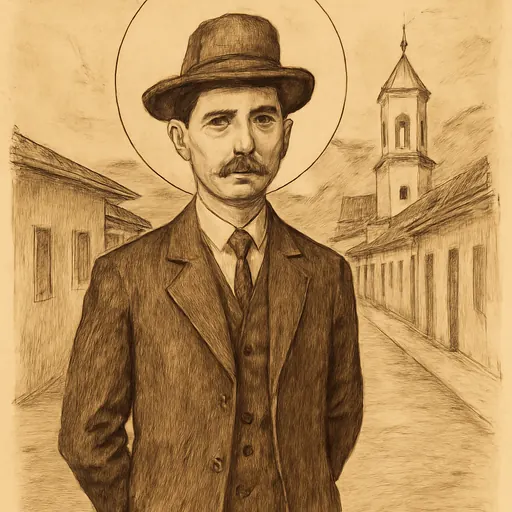
St. José Gregorio Hernández (1864–1919) was a Venezuelan physician, scientist and Secular Franciscan who treated the poor of Caracas for free and often paid for their medicine, earning the name "the doctor of the poor." He was killed by a car in 1919 while taking medicine to a patient. Pope Leo XIV canonized him on October 19, 2025, with Mother Carmen Rendiles as Venezuela's first saints. His feast day is October 26, and Catholics ask his prayers especially for the sick and for doctors.
Who was St. José Gregorio Hernández?
José Gregorio Hernández Cisneros was born on October 26, 1864, in Isnotú, a mountain village in the Venezuelan state of Trujillo. He became one of the best-trained doctors in Latin America, a founding professor of modern laboratory medicine in Caracas, and a man so generous with the poor that the whole city called him el médico de los pobres, "the doctor of the poor." He died on June 29, 1919, struck by a car on a Caracas street while carrying medicine to a sick person.
For a century Venezuelans prayed to him long before the Church declared anything. On October 19, 2025, Pope Leo XIV canonized him in St. Peter's Square, together with Mother Carmen Rendiles, making them the first saints of Venezuela. In his homily that day the pope named him, with Bartolo Longo, among the new saints who were "benefactors of humanity" with "hearts burning with devotion."
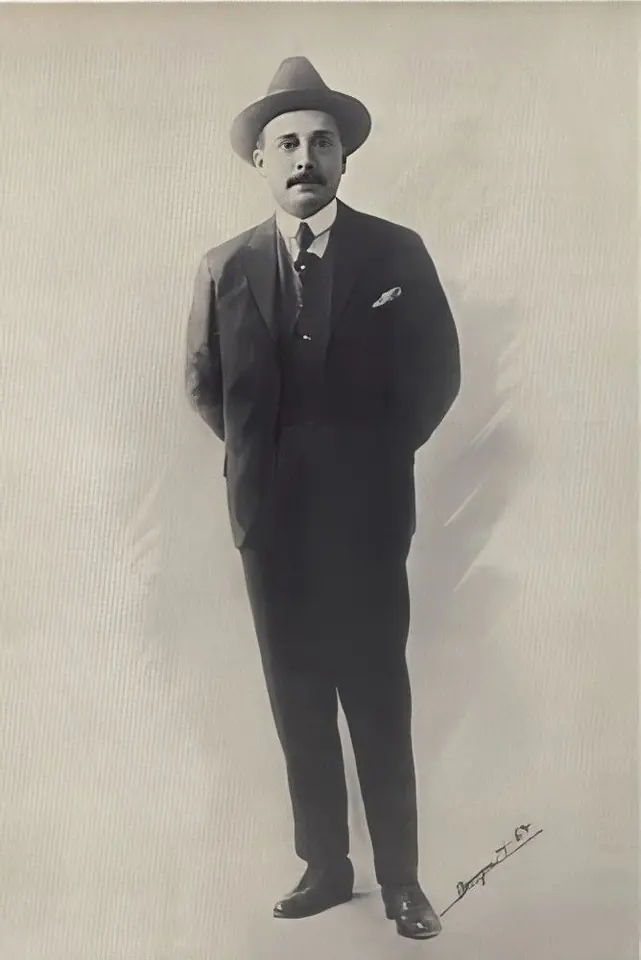
Because he lived in the age of photography, we know exactly how he looked. The best-known picture shows a slim man in a dark suit and fedora, hands behind his back, and that pose is the one his statues copy.

His life
A boy from Isnotú
He was the second of seven children of Benigno Hernández Manzaneda and Josefa Antonia Cisneros. He credited his mother with his faith. The biography published by the Dicastery for the Causes of Saints quotes him saying that from the cradle she taught him virtue, raised him in the knowledge of God and gave him charity as his guide.
After four years at the only school in Isnotú, he left in 1878 for the Colegio Villegas in Caracas, and then studied medicine at the University of Caracas. Classmates in a strongly materialist faculty respected him for his faith as well as his grades. He graduated on June 29, 1888.

Paris and the professor's chair
In 1889 the president of Venezuela sent the young doctor to Paris to study microbiology, bacteriology, histology and experimental physiology, subjects the University of Caracas did not yet teach. He also studied in Berlin. He came home at twenty-seven with laboratory equipment and founded the university's chairs of normal and pathological histology, experimental physiology and bacteriology. He was also a founding member of Venezuela's National Academy of Medicine.
He never hid his faith in the lecture hall. The Vatican's account says he went to Mass and received Communion every day and made the sign of the cross before each class. He joined the Third Order of St. Francis, today called the Secular Franciscan Order, and kept its rule.
The doctor of the poor
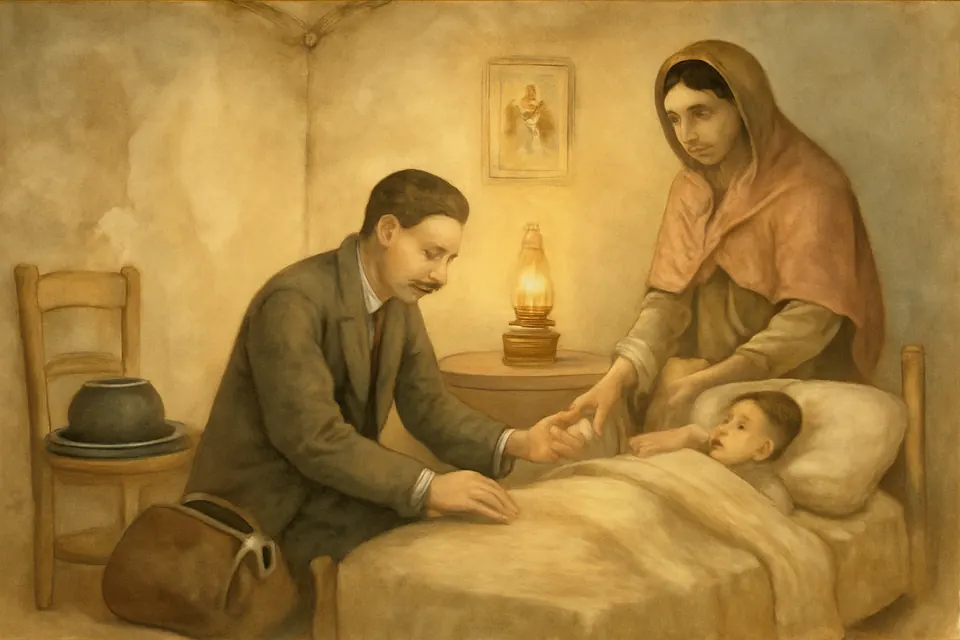
His practice is what Caracas remembered. He charged poor patients nothing, and the Dicastery's biography says he often gave them the money for their medicine as well.
Brother Marcello
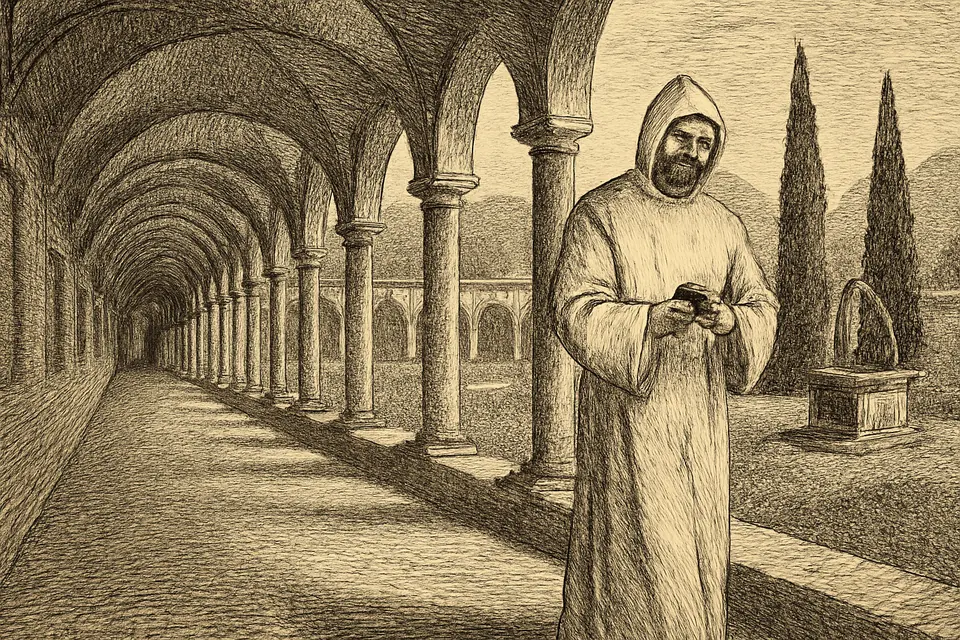
At forty-four he tried to leave medicine for the cloister. With the blessing of the Archbishop of Caracas, he entered the Carthusian charterhouse of Farneta, near Lucca in Italy, on July 16, 1908, and received the white habit on August 20 as Brother Marcello. Poor health sent him home after nine months. He then entered the diocesan seminary of Caracas to become a priest, but soon left it and went back to teaching and medicine.
In 1913 he tried once more, at the Pontifical Latin American College in Rome. Within eight months pleurisy and the first signs of tuberculosis forced him home again. From 1914 on, he gave himself entirely to his students and his patients, accepting that this was where God wanted him.
His death
On June 29, 1919, the thirty-first anniversary of his graduation, he told a friend that he had offered his life to God for peace in Europe, and that he was glad to hear the Treaty of Versailles had been signed. That afternoon, carrying medicine to a sick person, he was struck by a car and killed.
The Dicastery records that Dr. Razetti, a Caracas physician and an unbeliever, was called to the emergency room and, on seeing the body, exclaimed that this man was a saint. The epitaph chosen for his tomb called his death a national disaster.


The miracles of St. José Gregorio Hernández
The approved miracle: Yaxury Solórzano
On the afternoon of March 10, 2017, a ten-year-old girl was riding with her father on a motorbike in Venezuela when robbers fired a hunting gun at them from about two meters away. Several pellets went into her head. It took about four hours, partly by small motorboat, to reach a hospital, and a neurosurgeon could not see her for forty-eight hours. Doctors operated at a private clinic in San Fernando de Apure but warned her mother that, if the girl survived, she would be left disabled.
Her mother, her sister and the anesthesiologist asked José Gregorio Hernández to pray for her. On March 15 she suddenly improved, and on March 30 she went home with no neurological or cognitive damage. The Vatican's medical board found the healing quick, complete, lasting and unexplainable by current medicine, and Pope Francis approved it as a miracle on June 19, 2020. This is an approved miracle. The girl, Yaxury Solórzano, was present at the beatification Mass in Caracas on April 30, 2021.
Canonization without a second miracle
Usually the Church asks for a second miracle before canonization. In March 2024 Cardinal Baltazar Porras, Archbishop of Caracas, and the Venezuelan bishops asked the pope to proceed without one, and letters followed from bishops in Spain, Colombia, Argentina, the United States, Ecuador and elsewhere. Pope Francis authorized a special procedure that weighed the long, growing devotion to him instead. The cardinals and bishops of the Dicastery voted in favor, and Francis approved the canonization in February 2025, from his hospital bed.
Graces people report
For more than a hundred years Venezuelans have credited him with healings, and the Dicastery's own canonization file mentions spiritual and physical cures and "miraculous interventions" attributed to his prayers across Latin America and Spain. These are reported graces: real testimonies, but not formally investigated. The walls of thank-you plaques at Isnotú give some idea of their number.


Why he is the patron of doctors and the sick
No decree names him patron of anything, but Catholics turn to him as a doctor-saint. He was a scientist of the first rank who lived his faith openly, and that makes him a natural model for physicians and medical students. The sick, and those who care for them, ask for his prayers because so many of his patients were poor people who had no one else. At his beatification during the COVID-19 pandemic, the papal nuncio, Archbishop Aldo Giordano, said the Church was paying tribute through him to everyone who works in medicine and health care. He belongs with older physician saints such as Sts. Cosmas and Damian, St. Luke and St. Pantaleon. See more on our patron saints page.
Symbols of St. José Gregorio Hernández in art
Since real photographs of him exist, his image is fixed in a way older saints' never were. To recognize him:
- Dark suit, fedora and hands behind the back: copied from the famous photograph near the top of this page. This is how most statues and prints show him, and how Venezuelans picture him.
- White doctor's coat: newer images, including the portrait above his tomb, dress him as a physician.
- Medical bag or stethoscope: his profession and his house calls to the poor.
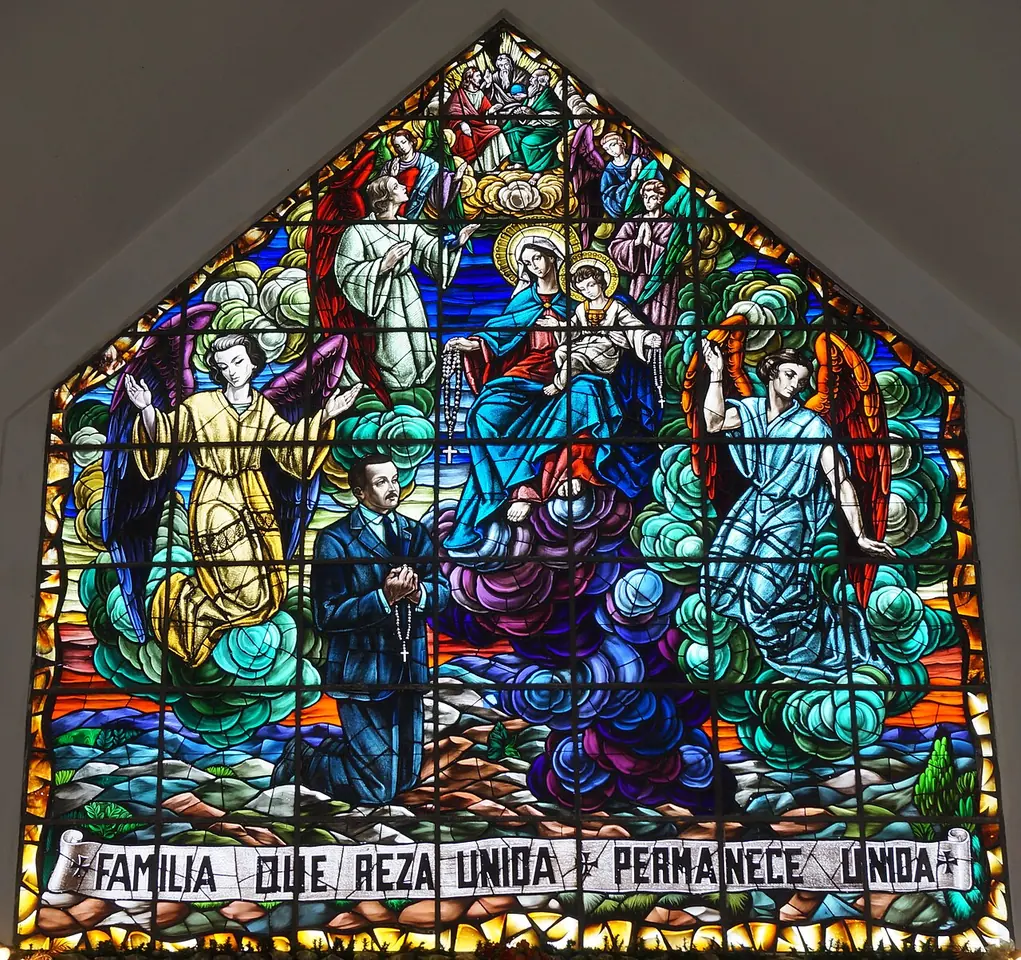
- Rosary: his daily prayer, as in the stained-glass window at Isnotú.
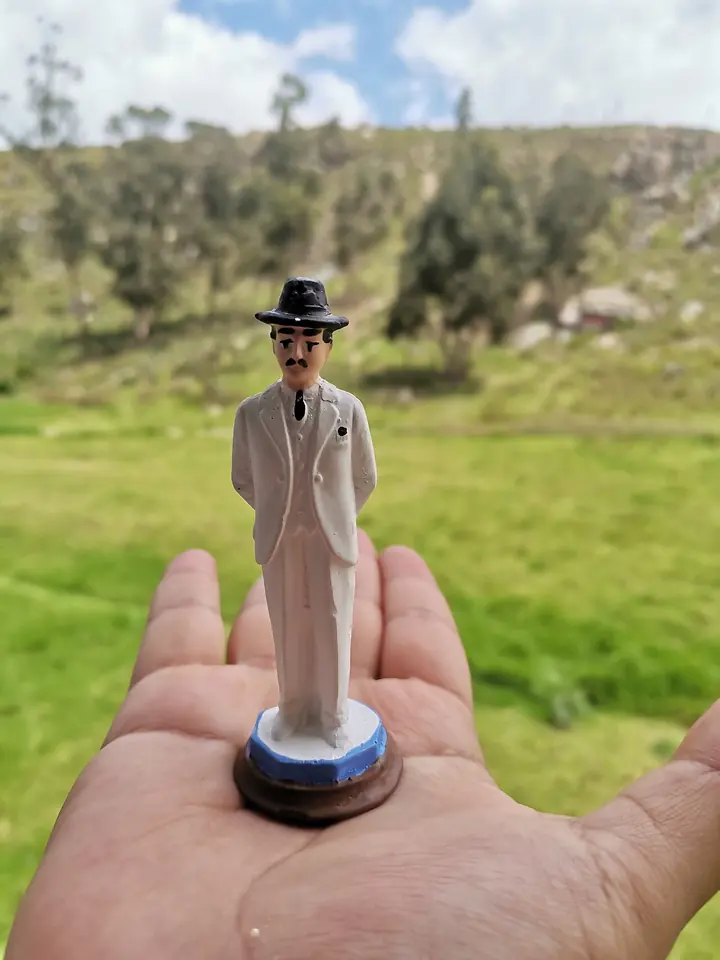
- Small painted figures in a white suit: a popular style of devotional statue kept at home.
The portrait on his tomb, which shows him in a white coat, is the one many pilgrims know best.

Popular devotion in Venezuela
Few saints were so loved before the Church acted. When Pope John Paul II visited Venezuela in 1996, he received a petition with five million signatures asking for the doctor's canonization, according to the Associated Press. The Dicastery's file notes his image in hospitals, schools and shrines, and even on vehicles and the backs of buses. Two places draw the most pilgrims: his tomb in the Church of La Candelaria in Caracas, where his remains were moved in 1975, and the sanctuary at Isnotú.


Devotion to him also spread beyond the Church. In some homes his statue stands on altars beside images from Afro-Caribbean religion. In the spiritist cult of María Lionza, mediums say they call on his spirit to heal. In October 2025 the Spanish news agency EFE described a center in Petare, Caracas, where a medium performs "operations" without a scalpel, drawing, he said, on the energy of José Gregorio's images. Catholic teaching rejects such practices: the Catechism (no. 2116) lists "conjuring up the dead" and "recourse to mediums" among forms of divination to be rejected. Catholics honor him as a saint who prays for them before God, the way the Church honors every saint.

How Catholics pray to St. José Gregorio Hernández
There is no ancient prayer to him, since his cult is modern. Catholics ask for his intercession in their own words, especially for the sick. They light candles at his tomb and at Isnotú, ask for Masses to be offered, and leave thank-you plaques when they believe a prayer has been answered; the Dicastery's file mentions both the requests for Masses and the stream of reported graces. His memorial falls on October 26, his birthday, the same day the Church chose in 2020 to open his tomb and gather his relics before the beatification.
Frequently asked questions
Who was St. José Gregorio Hernández?
A Venezuelan doctor and university professor (1864–1919) who brought modern microscopy, bacteriology and experimental physiology to the University of Caracas. He went to Mass daily, belonged to the Third Order of St. Francis, and treated poor patients without charge, often paying for their medicine himself. He died after being struck by a car in Caracas on June 29, 1919.
When is the feast day of St. José Gregorio Hernández?
October 26, the anniversary of his birth in 1864. The Dicastery for the Causes of Saints lists it as his liturgical memorial. It is kept in Venezuela and by his devotees elsewhere; he is not on the General Roman Calendar.
What miracle made José Gregorio Hernández a blessed?
The healing of a ten-year-old girl, Yaxury Solórzano, shot in the head during an armed robbery in Venezuela on March 10, 2017. Her mother prayed for his intercession, and the girl recovered without neurological damage. The Vatican's medical board called the healing quick, complete, lasting and unexplainable, and Pope Francis approved it on June 19, 2020.
Was a second miracle needed to canonize him?
No. After requests from the Archbishop of Caracas, the Venezuelan bishops and many others, Pope Francis allowed a special procedure based on the long, growing and widespread devotion to him. The cardinals and bishops of the Dicastery voted in favor, and Pope Leo XIV canonized him on October 19, 2025.
Where is José Gregorio Hernández buried?
In the Church of Our Lady of La Candelaria in Caracas, where his remains were moved from the city's General Cemetery of the South in 1975. His birthplace, Isnotú in Trujillo state, has a sanctuary that draws large pilgrimages.
Sources
- Dicastery for the Causes of Saints: José Gregorio Hernández Cisneros (biography, decree on the miracle, beatification homily, canonization)
- Holy See: Holy Mass and Canonization, homily of Pope Leo XIV (October 19, 2025)
- AP (via ABC7 News): Pope gives Venezuela reason to celebrate by canonizing its beloved 'doctor of the poor' as 1st saint
- EFE (via TVN Panamá): Venezuela certifica los restos del médico que esperan beatificar en 2021
- EFE (via La Prensa, Panama): La sala de Caracas donde José Gregorio Hernández 'opera' sin bisturí
- Catechism of the Catholic Church, no. 2116 (Holy See)