St. Kyriaki (Kyriake) of Nicomedia
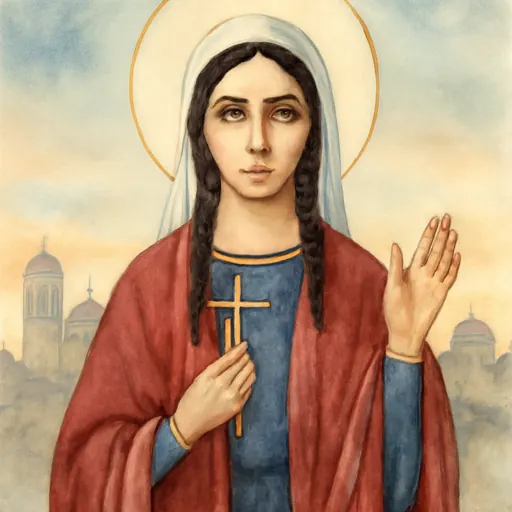
St. Kyriaki (Kyriake) of Nicomedia was a young Christian woman who, by tradition, was born on a Sunday, refused a pagan marriage, and died a virgin martyr in the persecution of Diocletian. Her name means "of the Lord" and is the Greek word for Sunday. The Eastern churches keep her feast on July 7.
Who was St. Kyriaki?
St. Kyriaki of Nicomedia, also written Kyriake, is a virgin martyr of the early Church, beloved in Greece, Cyprus and the Slavic Orthodox lands. Her name is the Greek word for Sunday, the Lord's Day, and tradition says her parents gave it to her because she was born on a Sunday. Her story is one of quiet courage: a young woman who refused a rich marriage because she had already given herself to Christ, and who kept her faith through every threat and torment until her death.
Because so many towns, chapels and families bear her name, the bare search "St. Kyriaki" can point in many directions. This page is about the martyr herself, whose feast is July 7.

The life of St. Kyriaki
What we know of Kyriaki comes from her Passion, the account of her martyrdom kept in the Greek Church and retold in the lives of the saints read each year on her feast. It does not survive in any record close to her own time, and some of its names and details cannot be matched with Roman history. We tell it here as the Church has handed it down.
A child of the Lord's Day
Kyriaki was the only child of a devout and wealthy Christian couple, Dorotheus and Eusebia. When a powerful magistrate sought her in marriage for his son, partly to gain her family's wealth, she told him that she wished to remain a virgin, "for she had dedicated herself to Christ." Angry at the refusal, the magistrate denounced the whole family to the emperor Diocletian as Christians who mocked the gods.
Confessing Christ
The family was arrested. Dorotheus was beaten, and he and Eusebia were sent into exile at Melitene, on the eastern frontier between Cappadocia and Armenia. Kyriaki was sent alone to Nicomedia to be questioned by the co-emperor Maximian. He promised her wealth and a marriage into the imperial family if she would worship the gods. She answered that she would never deny Christ and did not want worldly riches.
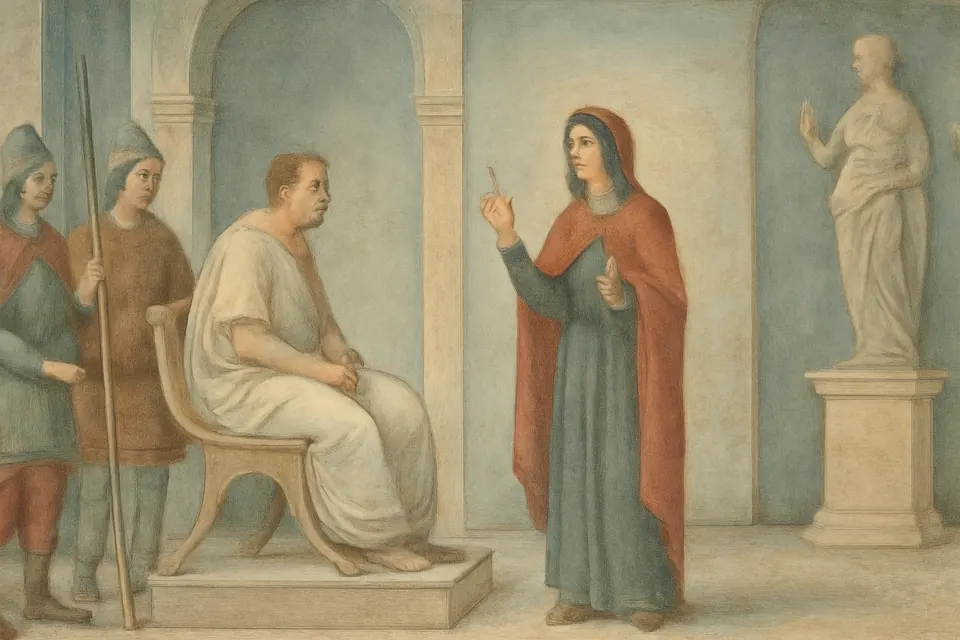
She was flogged and passed on to Hilarion, the governor of Bithynia, and later to his successor Apollonius. The Passion describes cruel torments and Kyriaki growing braver under each one. At last she was sentenced to death by the sword. Granted time to pray, she asked God to receive her soul and to remember all who would honor her martyrdom, and the OCA's life says that "angels took her soul before the soldiers could strike off her head." Christians buried her body with honor.
The miracles of St. Kyriaki
Her Passion tells of several wonders: Christ appeared to her in prison and healed her wounds; when she prayed in a pagan temple an earthquake threw down the idols; flames went out when she was cast into a fire, and wild beasts grew tame before her. These belong to the tradition of her martyrdom, and we count them as traditional. Their meaning is clear: God stood by a young woman whom the powers of the world tried to break.
Why St. Kyriaki is honored by Christians of the East
Kyriaki has no formal patronage in the Church's books. Her name is her bond with the faithful. Every Sunday is the "Kyriaki" of the Greek week, so she has always seemed close to the weekly celebration of the Resurrection. Women named Kyriaki and men named Kyriakos keep their name day on July 7, and Agia Kyriaki is one of the most common dedications for village chapels in Greece. In Bulgaria, Serbia and North Macedonia she is Sveta Nedelya, "Holy Sunday," and the great St. Nedelya Church in central Sofia bears her name.
Symbols of St. Kyriaki in art
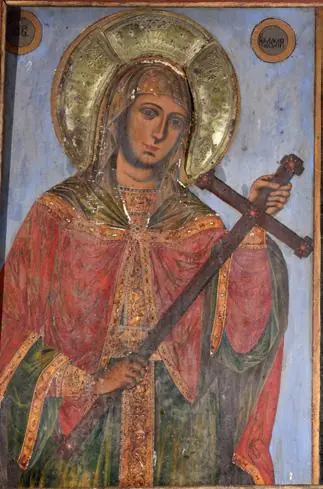
Kyriaki is painted in the Eastern way, as a young woman martyr standing in prayer.
- A red cloak: the color of martyrdom, often over a dark blue or green dress.
- A cross in her hand: the sign that she died for Christ, held at the breast or before her.
- An open palm: the right hand raised outward in confession of faith.
- Long braids or a veil: she is shown young and unmarried.
- A crown: in some Slavic icons, the crown of victory given to martyrs.
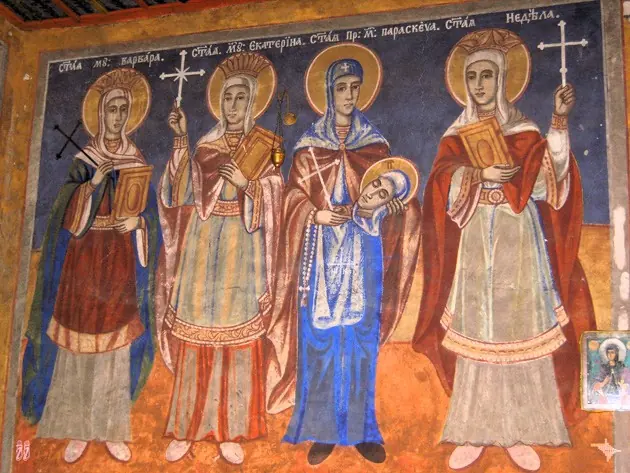
She looks much like other virgin martyrs, especially St. Barbara and St. Paraskeva, so the inscription ("Agia Kyriaki" in Greek, "Sveta Nedelya" in Slavonic) is the surest guide. The Pobožje fresco above places four of them side by side.
Feast day and where she is honored
We keep her feast on July 7; churches on the Julian calendar celebrate it on July 20. Wherever a church bears her name, its people gather for vespers on the eve and the Divine Liturgy on the day. The old chapel of Agia Kyriaki at Paliachora on Aegina, the island of St. Nektarios, is one of hundreds dedicated to her. See the other saints of July on our feast days page.

Prayer to St. Kyriaki
The Orthodox Church sings this troparion on her feast (Tone 5, in the translation of the Orthodox Church in America):
O virgin martyr Kyriake, you were a worthy sacrifice when you offered your pure soul to God; wherefore Christ has glorified you, and through you pours forth graces abundantly on all the faithful, for He is the merciful Loving God!
And the kontakion (Tone 2):
You appeared as a bright star announcing Christ with your radiance, which is repulsive to this world, O Martyr Kyriake; extinguishing the allure of false gods, you enlighten the faithful, always interceding for us all.
Let us ask St. Kyriaki to pray for us each Lord's Day, that we may keep Sunday holy and give our hearts to Christ as wholly as she did.
Frequently asked questions
Who was St. Kyriaki?
A virgin martyr of Asia Minor, honored in the Eastern churches. Tradition says she was the only child of Dorotheus and Eusebia, born on a Sunday and named for it, and that she refused marriage to a magistrate's son, confessed Christ before Maximian and two governors, and died near Nicomedia in the persecution of Diocletian.
When is the feast of St. Kyriaki?
July 7. Orthodox churches that follow the old Julian calendar celebrate it on July 20 of the civil calendar. It is a common name day in Greece and Cyprus for women named Kyriaki and men named Kyriakos.
Is St. Kyriaki the same as Sveta Nedelya?
Yes. Nedelya (Nedelja) is the Slavic word for Sunday, so Bulgarians, Serbs and Macedonians call her Sveta Nedelya, St. Sunday. The St. Nedelya Church in the center of Sofia is named for her.
What does the name Kyriaki mean?
Kyriake means "belonging to the Lord." It is the Greek name for Sunday, the Lord's Day, and her parents named her for the day she was born.
Sources
- Martyr Kyriake of Nicomedia, Orthodox Church in America. Her traditional life, quoted and summarized on this page
- Martyr Kyriake of Nicomedia: Troparion and Kontakion, Orthodox Church in America. Text of the troparion and kontakion quoted on this page