St. Andrew Wouters, Martyr of Gorkum
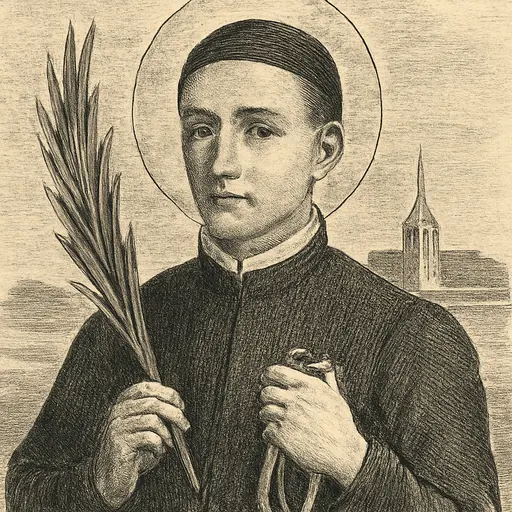
St. Andrew Wouters (about 1542 to 1572) was the parish priest of Heinenoord in Holland and one of the 19 Martyrs of Gorkum, hanged by Calvinist rebels at Brielle on July 9, 1572, for refusing to deny the Real Presence of Christ in the Eucharist and the authority of the pope. His life before his arrest was a scandal, but he died faithful. He was canonized in 1867, and his feast is July 9.
Who was St. Andrew Wouters?
St. Andrew Wouters was a Dutch parish priest who lived badly and died well. Born about 1542, he was pastor of Heinenoord, a village on the river south of Rotterdam, when the Calvinist rebels known as the Sea Beggars swept through Holland in the summer of 1572. They seized him and took him to Brielle, where he was hanged in the night of July 9 with eighteen other priests and religious, the Martyrs of Gorkum. All nineteen were offered their lives if they would deny the Real Presence of Christ in the Eucharist and the authority of the pope. None would.
The Catholic Encyclopedia does not hide what kind of priest he had been. Andrew's "conduct was not edifying up to the time of his arrest," it says, "but [he] made ample amends by his martyrdom." The tradition about him is blunter still: he had lived with women and broken his vows. That is exactly why so many Catholics love him. The Church canonized a man who had been a public sinner, because at the hour of trial he held on to Christ in the Eucharist.
How St. Andrew Wouters came to die at Brielle
The summer of 1572
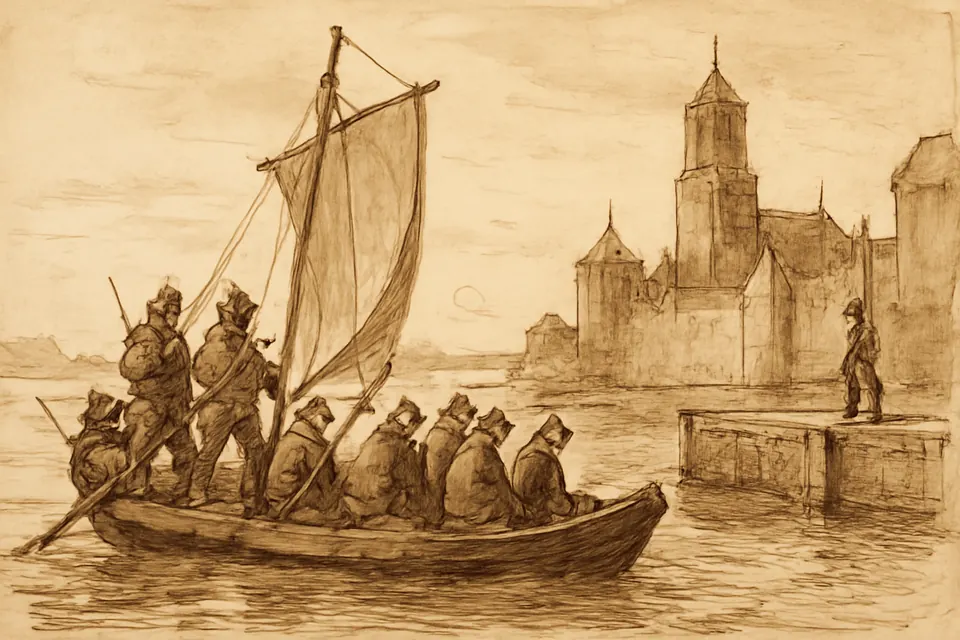
On April 1, 1572, the Sea Beggars took the port of Brielle, the first great success of the Dutch revolt against Spain. In June they captured Gorkum (Gorinchem) and imprisoned nine Franciscan friars, two Franciscan lay brothers, the town's two parish priests, another priest and an Augustinian canon. They were beaten and mocked in prison from June 26 to July 6 and then shipped to Brielle.
Four more prisoners joined them there, and Andrew was the last of them. The Diocese of Rotterdam's account says he was taken during a raid by the Beggars along the river Maas and brought to Brielle. A Dominican, John van Hoornaer, had already been arrested for slipping into Gorkum to give the prisoners the sacraments, and two Norbertines, James Lacops and Adrian Janssen, were brought in from the parish of Monster.
The question put to them
At Brielle the commander, William de la Marck, Lord of Lumey, had the prisoners paraded around a gallows, made to sing the Salve Regina in mockery, and questioned. The Catholic Encyclopedia says each was required to "abandon his belief in the Blessed Sacrament and in papal supremacy." A letter came from William of Orange ordering that priests and religious be left alone. Lumey ignored it.
A sinner, but no heretic
Tradition has kept Andrew's answer when he was pressed to give up the faith and save himself: he had been a fornicator, he admitted, but he had never been a heretic. Whatever the exact words, the record is clear that he would not deny the Eucharist, and he went to his death with the others.
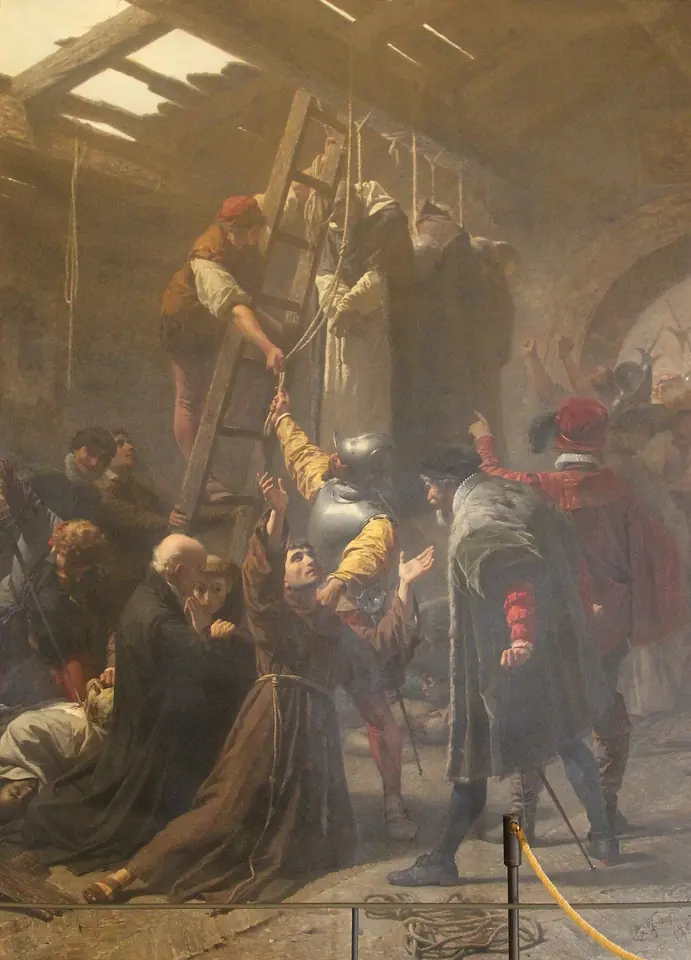
At about one in the morning on July 9, the nineteen were led to a turf shed of the plundered Ruggen monastery outside the town and hanged from its beams, one after another. The guardian of the Franciscans, Nicholas Pieck, went first and encouraged the rest as long as he could speak.
Miracles, beatification and canonization
The martyrs' cause rested on martyrdom, not on miracles. The traditional accounts of the 17th and 19th centuries tell of wonders at the martyrs' field: an old Lives of the Saints (1876) says God "honored them by many miracles" and that the nineteen appeared that night in shining garments to a praying citizen of Gorkum. These stories are reported in the older devotional books, not formally approved.
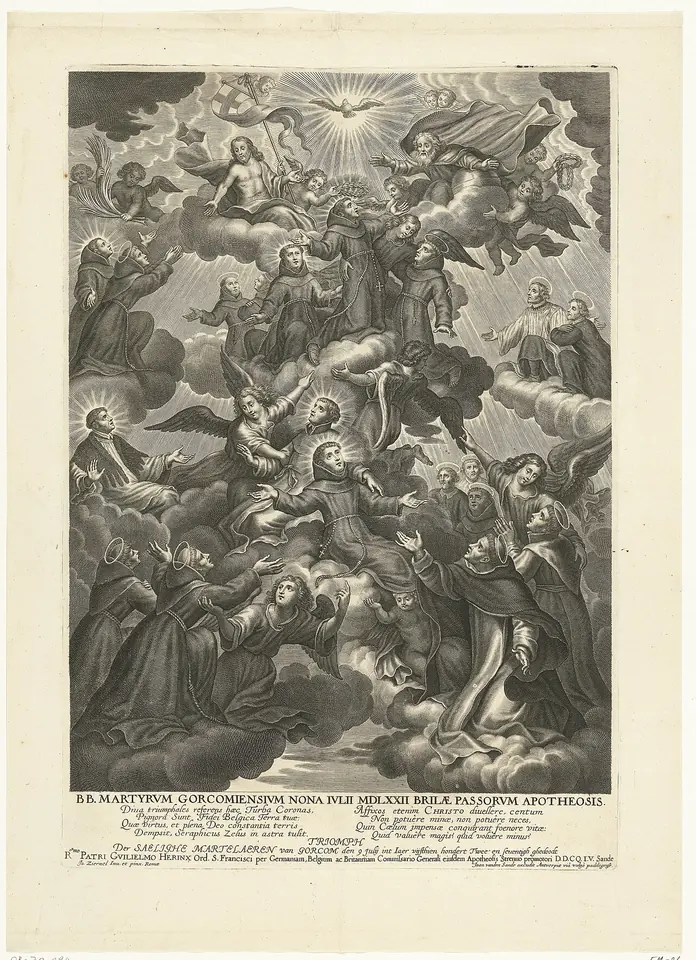
Their relics were secretly dug up and carried south to Brussels, and the cult spread through the Catholic Low Countries. Pope Clement X beatified the nineteen on November 14, 1675, and Pope Pius IX canonized them on June 29, 1867, the 1,800th anniversary of the martyrdom of Sts. Peter and Paul. The Roman Martyrology says they died "for vindicating the authority of the Roman Church and the real presence of Christ in the Eucharist."
Why St. Andrew Wouters gives hope to sinners
Andrew has no official patronage, but Catholics have adopted him as a saint for sinners, for those caught in sins of the flesh, and for priests who have fallen. He belongs with St. Dismas, the good thief, and with St. Peter, who denied the Lord and then died for him.
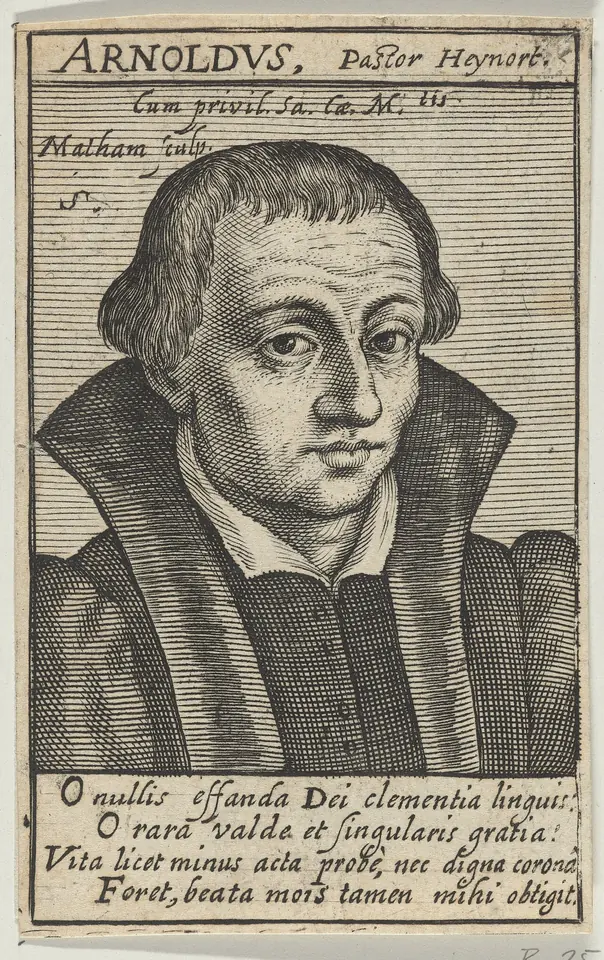
Matham's engraving of him, made about 1617, already says it in four lines of Latin verse:
O nullis effanda Dei clementia linguis!
O rara valde et singularis gratia!
Vita licet minus acta probe, nec digna corona
Foret, beata mors tamen mihi obtigit.
In our own translation: "O mercy of God that no tongue can tell! O grace most rare and singular! Though my life was not lived uprightly, nor worthy of a crown, a blessed death has fallen to me." Let us pray, through his intercession, for every priest and every sinner who thinks it is too late.
Symbols of St. Andrew Wouters in art
Andrew usually appears as one of the nineteen, so the group is the first clue. In paintings and prints of the Martyrs of Gorkum, look for:
- The black cassock of a secular priest: Andrew and the parish priests of Gorkum stand out in black among the brown Franciscan habits.
- A rope or halter: the instrument of their martyrdom, often worn around the neck in later images.
- A ladder and beam: the turf shed at Brielle.
- Palms and crowns: the martyrs' reward, as in the 1675 apotheosis above.
In Matham's series each martyr has his own numbered portrait; Andrew's is number 5, labeled "Arnoldus, Pastor Heynort," a variant of his name.
Feast day and the shrine at Brielle
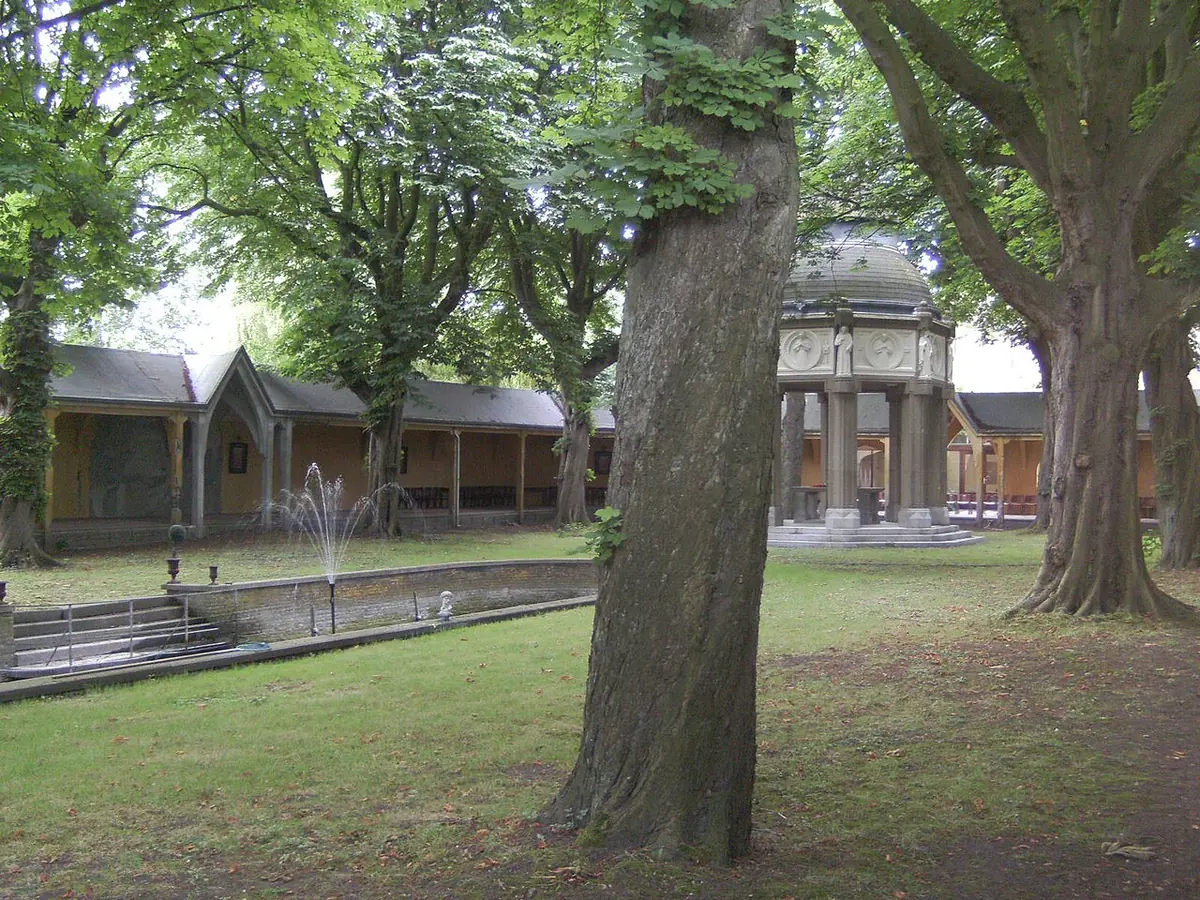
We keep his feast with all the Martyrs of Gorkum on July 9. Brielle has been a place of pilgrimage for centuries. The pilgrimage church stands near the martyrs' field, where a holy well and open galleries mark the ground of their death and burial.

The martyrs were found together in a common grave on that field, and the Diocese of Rotterdam notes that it cannot be known which relic belongs to which martyr. The relics rest in a shrine made in 1923 and restored in 2019.
Prayer to St. Andrew Wouters
There is no traditional prayer written to St. Andrew Wouters alone. Catholics pray to him with the other Martyrs of Gorkum on their feast and ask his help in their own words: "St. Andrew Wouters, who were a sinner and died a martyr, pray for us and for all priests." The Latin verse on his 1617 portrait, quoted above, can be prayed as a thanksgiving for God's mercy.
Frequently asked questions
Who was St. Andrew Wouters?
A Dutch diocesan priest, pastor of the village of Heinenoord south of Rotterdam, who was captured by the Sea Beggars in 1572 and hanged with 18 other priests and religious at Brielle. The Catholic Encyclopedia says his conduct "was not edifying up to the time of his arrest" but that he "made ample amends by his martyrdom."
Why is St. Andrew Wouters called the patron of sinners?
He has no official patronage, but many Catholics look to him as a sign of hope for sinners and for priests who have fallen. Tradition remembers his blunt answer at the end, that he had been a fornicator but never a heretic. An engraving of him made about 1617 thanks God's mercy that a life "not lived uprightly" was crowned with a blessed death.
When was St. Andrew Wouters canonized?
He was beatified with the other Martyrs of Gorkum on November 14, 1675, and canonized by Pope Pius IX on June 29, 1867. (The Catholic Encyclopedia gives 1865 by mistake; the Roman Martyrology gives 1867.)
When is the feast of St. Andrew Wouters?
July 9, the feast of the Martyrs of Gorkum. Pilgrims gather at their shrine in Brielle in July.
Sources
- Catholic Encyclopedia (1909): The Martyrs of Gorkum
- Roman Martyrology, July 9
- Rijksmuseum: Portrait of Arnoldus, pastor of Heynor (Jacob Matham, about 1617)
- Bisdom Rotterdam: Relieken, Heilige Martelaren van Gorcum
- Kerknet: H. Jacob Lacop, marteldood (relics taken to Brussels)
- Lives of the Saints, vol. 2 (1876): The Nineteen Holy Martyrs of Gorcum