St. Anna Wang, Teenage Martyr of China
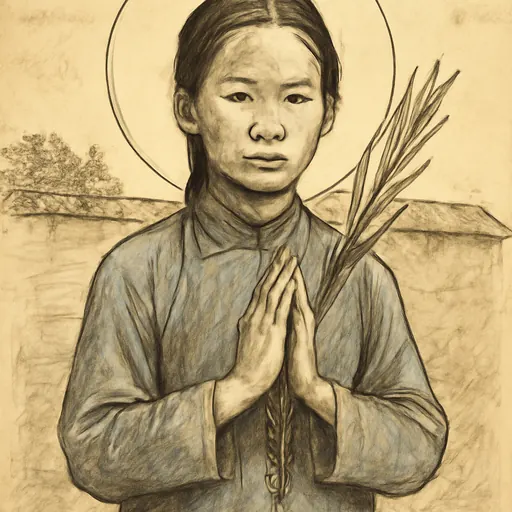
St. Anna Wang (1886–1900) was a fourteen-year-old Catholic girl from a farming village in Hebei, northern China, who was killed by the Boxers on July 22, 1900, after refusing to give up her faith. Her last words were "The door of heaven is open to all." She was canonized in 2000 with 119 other Martyrs of China, and we keep her feast with them on July 9. She is a patron for young people and for Christians who suffer for their faith.
Who was St. Anna Wang?
Anna Wang was a fourteen-year-old Catholic girl from Majiazhuang, a poor farming village in Wei County in the province of Hebei, in northern China. In the summer of 1900, during the Boxer Rebellion, she was taken prisoner with the Christians of her village and told to give up her faith or die. She refused. On July 22, 1900, she was beheaded, the last of her group to be killed.
Her words at the end have traveled around the world. Pope John Paul II quoted them when he canonized her on October 1, 2000, with 119 other Martyrs of China: "Young Ann Wang, a 14-year-old, withstood the threats of the torturers who invited her to apostatize. Ready for her beheading, she declared with a radiant face: 'The door of heaven is open to all', three times murmuring: 'Jesus'."
The life of St. Anna Wang
A hard childhood
Anna was born in 1886 into a poor Christian family. A short life prepared by the Chinese Catholic community of the Archdiocese of Toronto tells us that her mother died when she was five, that her grandmother treated her harshly, and that the other children mocked her shabby clothes. She did not answer back. She was known in the village for her prayer, and she would lead others in praying even as a little girl.
When she was eleven, her grandmother and stepmother arranged, with her father's consent, to betroth her to a young Catholic man. Anna said no. She wanted to keep herself for the Lord alone, and in that time and place, when parents decided whom their daughters would marry, that refusal took courage.
The Boxers come to Wei County
In 1900 the Boxer movement swept across northern China, killing missionaries and Chinese Christians alike. The Vatican's biography of the martyrs describes an imperial edict of July 1, 1900, ordering that the faithful "be forced to apostasize, on penalty of death." Anna's home lay in the Apostolic Vicariate of Southeastern Zhili, served by French Jesuits, where, the Vatican says, the Christians killed "could be counted in thousands." Four Jesuit priests and at least 52 Chinese lay Christians from that region are now saints. The oldest was 79; the youngest were nine.

The East Room and the West Room
On July 21, the Boxers raided the village and took the Christians away. The Toronto account says they first killed the elderly leader of the local church, St. Joseph Wang Yumei, who was 68. Then they shut the others in a house and gave them a choice. Those who would renounce the "Western religion" could walk into the West Room and go free. Those who stayed in the East Room would die.
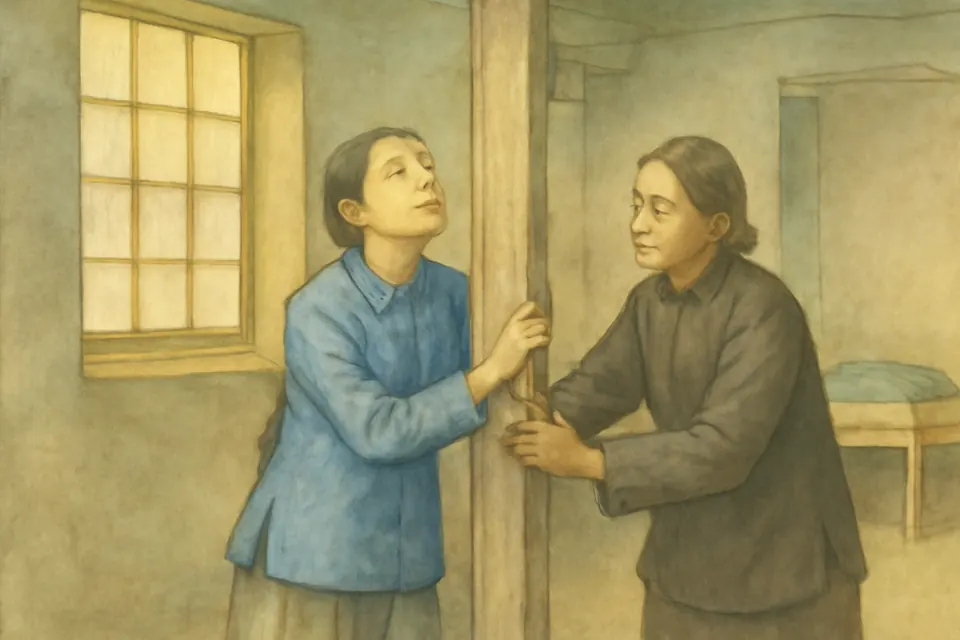
Anna's stepmother got up and started toward the West Room. Then she turned back, seized Anna by the arm and tried to pull her along. Anna grabbed the door frame and held on. Witnesses remembered her cry: "I want to believe in God. I want to be a Catholic. I do not want to leave the Church! Jesus, help me!" Her stepmother let go and left without her.
Her last night and morning
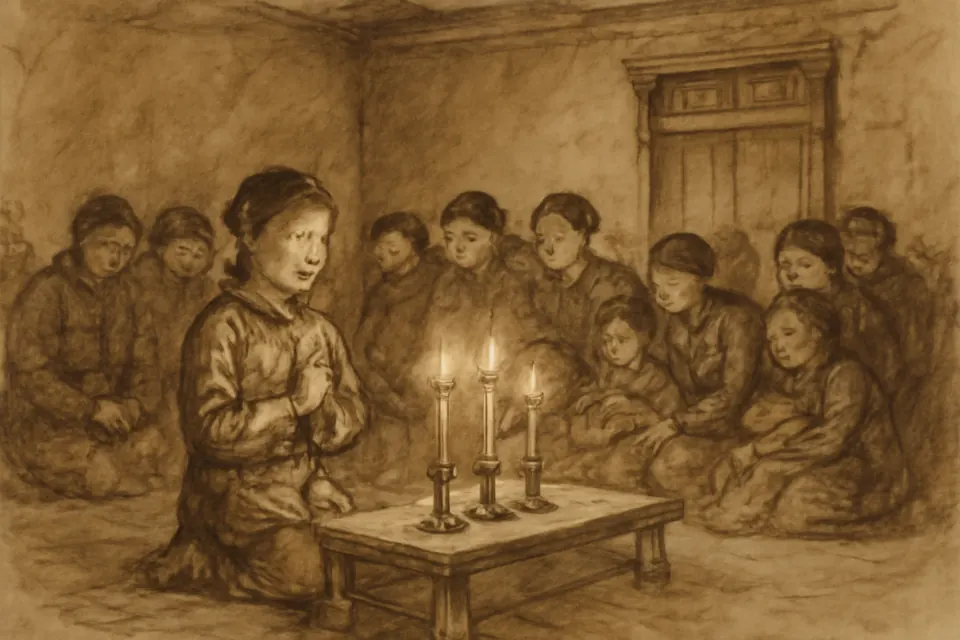
The men were gone, and the prisoners left in the East Room were women and children. As it grew dark the Boxers lit candles they had stolen from the church. Paul Hattaway, quoting eyewitness accounts first printed by the Cardinal Kung Foundation, records what Anna told the others: "These candles are from the church. Look how beautiful the flames are! However, the glory of heaven is a billion, billion times more glorious than these beautiful flames!" Then she led the evening prayers, their last.
In the morning they were taken out to be killed. Anna went on leading the prayers aloud. One by one the others died until she alone was left. The executioner hesitated. He urged her to leave her religion and offered to marry her into a rich family. She answered, in the words the witnesses remembered, "I will never leave my religion. Besides, I am already betrothed." She meant Christ.
He wounded her shoulder and cut off her arm, and still she knelt and refused. She said that the door of heaven was open, whispered the name of Jesus three times, and bowed her head for the sword. She was fourteen.
Miracles and marvels
There is no approved miracle tied to St. Anna Wang. The martyrs of China were beatified and canonized as martyrs, for whom the Church does not require a miracle for beatification.
- Her body stayed kneeling after death (reported). One eyewitness testified that after she was beheaded she remained kneeling upright until a Boxer kicked her body over.
- Seen rising to heaven (reported). An elderly Catholic woman said she saw Anna ascending to heaven in a blue and green silk dress with a crown of flowers. Both accounts come from the testimonies Hattaway quotes.
- The conversion of her family (reported). The Toronto account says that the grandmother who had mistreated her and the stepmother who had denied the faith both turned back and became devout and fervent Catholics.
Why St. Anna Wang is a patron of young people
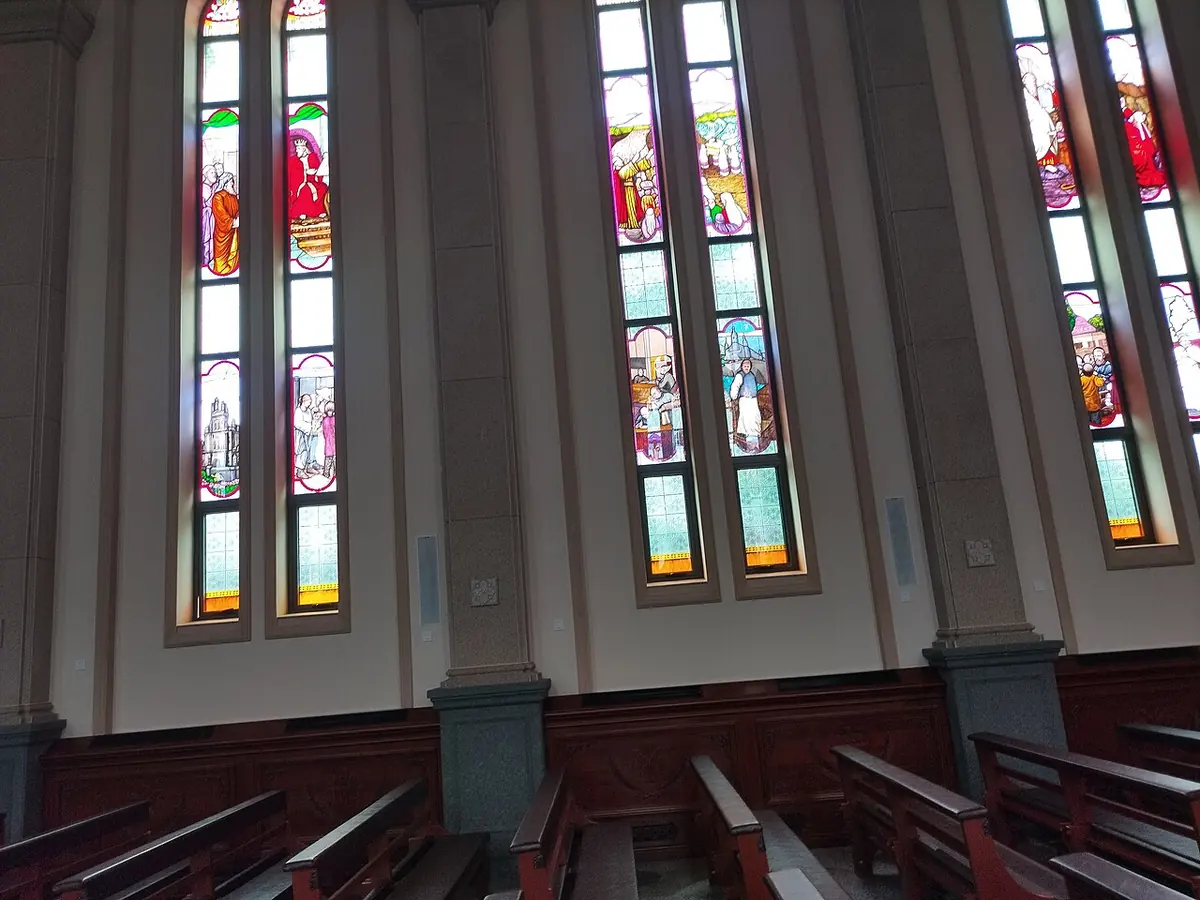
St. Anna Wang has no formal patronage assigned by Rome. Chinese Catholics, and many young Catholics elsewhere, have taken her as their own. She was a teenager. She was poor and overlooked. She refused an arranged marriage because she wanted to give herself to Christ, and she held on to her faith with both hands when the people closest to her let go. She is a natural friend for young people, teenagers and girls, for anyone trying to live chastely, and for the Church in China, where believers have suffered again and again. Browse other patronages on our patron saints page.
Symbols of St. Anna Wang in art
Images of St. Anna Wang are modern, made since her beatification in 1955. Look for these signs:
- The martyr's palm: the ancient sign of a martyr's victory.
- A crown: the crown of martyrdom, and the bridal crown of a girl who said she was "already betrothed."
- Plain Chinese peasant clothes: usually a simple cotton jacket and trousers, sometimes with a single long braid, marking her as a village girl, not a noblewoman.
- Joined hands: her leading of prayer to the very end.
- Group icons: she often appears among the 120 Martyrs of China, gathered around Our Lady of China or St. Augustine Zhao Rong. In such images, look for a young girl in the front row.
Western painters never knew her, so there are no old masters to look for. Holy cards and parish banners in Chinese Catholic communities are where you will find her most often.

St. Anna Wang's feast day
We keep her feast on July 9, the memorial of St. Augustine Zhao Rong and Companions, Martyrs of China, an optional memorial on the General Roman Calendar. July 22, the day she died, is listed as her own day in some calendars. See the other saints of July on our feast days page.
Prayer to St. Anna Wang
We know of no traditional prayer to St. Anna Wang. The Toronto archdiocese's reflection on her life ends with a simple invocation, which we can make our own:
May we learn from Saint Anna Wang to remain steadfast when faced with trials, and accompany those in need and pray with them.
Saint Anna Wang, pray for us.
Let us ask her to pray for young people who are mocked for their faith, for families divided over belief, and for the Catholics of China.
Frequently asked questions
Who was St. Anna Wang?
A Catholic girl from Majiazhuang in Wei County, Hebei, born in 1886. During the Boxer Rebellion she refused to renounce Christ, led her fellow prisoners in prayer, and was beheaded on July 22, 1900, at the age of fourteen. She is one of the 120 Martyrs of China canonized by Pope John Paul II on October 1, 2000.
What were St. Anna Wang's last words?
According to John Paul II's canonization homily, she declared with a radiant face, "The door of heaven is open to all," and then murmured "Jesus" three times before she was beheaded.
When is St. Anna Wang's feast day?
July 9, the memorial of St. Augustine Zhao Rong and Companions, the Martyrs of China. Some calendars also mark July 22, the day she died.
Why is St. Anna Wang a patron of young people?
She was only fourteen, and she faced death with a courage and calm that astonished the men who killed her. She had also refused an arranged betrothal because she wanted to belong to Christ alone, so young people who want to keep themselves pure and faithful look to her.
Sources
- John Paul II, Homily for the canonization of Augustine Zhao Rong and 119 companions, October 1, 2000. Her last words, "The door of heaven is open to all," and the threefold "Jesus"
- Vatican, Augustine Zhao Rong and 119 companions, martyrs in China: biography. The edict of July 1, 1900; the Apostolic Vicariate of Southeastern Zhili (Xianxian) in Jesuit care; "Blessed Ann Wang, aged 14" among the lay martyrs
- Kitty Chan, Saint of the Week: Saint Anna Wang (Archdiocese of Toronto, Chinese Martyrs Catholic Church). Her childhood, the refused betrothal, the East Room and West Room, her words at the door frame, the conversion of her grandmother and stepmother
- Paul Hattaway, 1900 – Anna Wang (from China's Book of Martyrs, Asia Harvest). Eyewitness accounts first printed in the Cardinal Kung Foundation newsletter, Christmas 2000: the candles, the offer of marriage, "I am already betrothed"
- GCatholic: Saints and Blesseds named Anna. Born 1886 at Machiazhuang, Weixian; died July 22, 1900; beatified April 17, 1955; canonized October 1, 2000