St. Francis Solanus: Franciscan Wonder-Worker of South America

St. Francis Solanus (1549–1610) was a Spanish Franciscan from Montilla who spent twenty years as a missionary in Tucumán (now northern Argentina) and Paraguay and died in Lima, Peru. His preaching, his gift for languages and the wonders told of him earned him the name "wonder-worker of the New World." He was canonized in 1726, and his feast is July 14.
Who was St. Francis Solanus?
St. Francis Solanus was a Spanish Franciscan friar who gave the last twenty years of his life to the peoples of South America. Born in Montilla, Andalusia, in 1549, he crossed to the New World at forty, walked the vast mission territory of Tucumán and Paraguay, and died in Lima in 1610. The Catholic Encyclopedia calls him "the Thaumaturgus of the New World," the wonder-worker, and Lima mourned him as a saint the day he died.
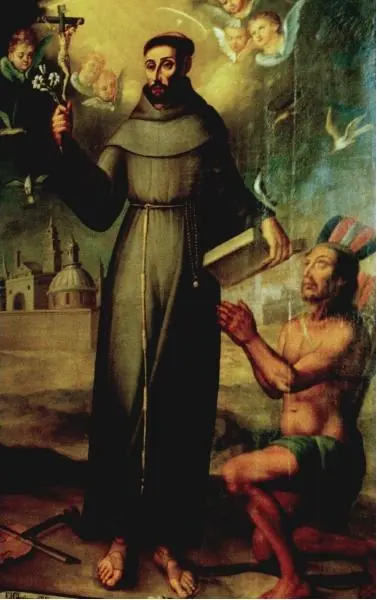
A friar of Andalusia
His parents, Mateo Sánchez Solano and Ana Jiménez, were respected and devout. At twenty Francis entered the Franciscans at Montilla, in a strict reformed house, and later studied at the friary of Our Lady of Loreto near Seville. After his ordination he served as master of novices and preached in the towns of Andalusia, until his superiors sent him to the missions of the New World.
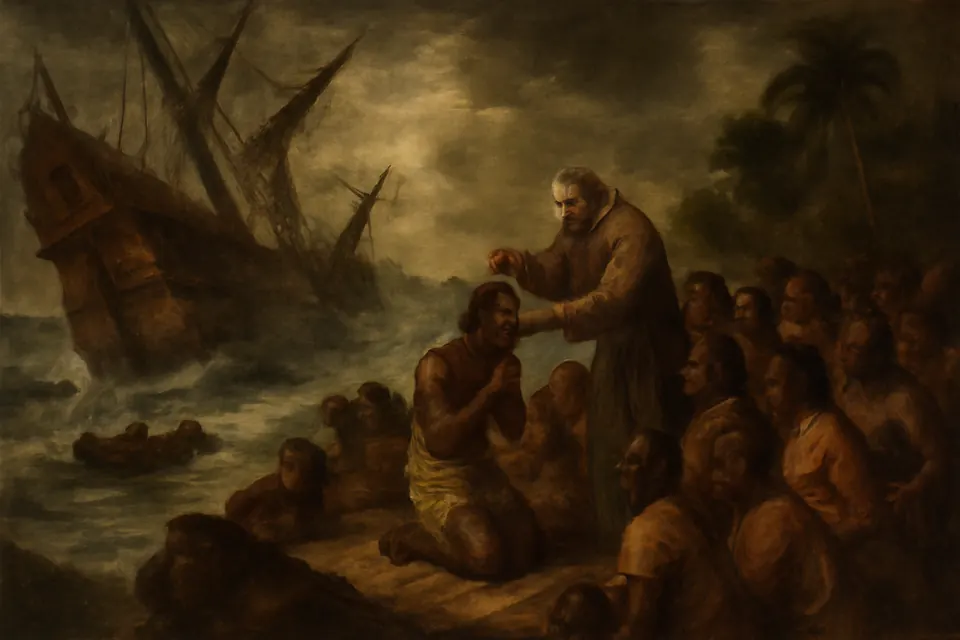
Shipwreck on the way to Peru
In 1589 Francis sailed for the Americas. He crossed the isthmus of Panama and boarded a ship for Peru, which was wrecked in a storm near the island of Gorgona. According to the Life of 1847, the captain escaped in the ship's boat with the friars and passengers of rank. Francis refused to go, because eighty enslaved Africans, newly brought from Guinea and most of them unbaptized, were left behind on the wreck. He stayed with them, taught them the faith as well as he could, and baptized them at their own request. Three days later the boat came back for the survivors, and he was the last to leave the ship.
Missionary in Tucumán and Paraguay
For the next years Francis worked in the immense province of Tucumán, today's northwest Argentina, and in Paraguay, walking from village to village. The Catholic Encyclopedia says he learned the many local languages "in a very short time" and that "it is said that he often addressed tribes of different tongues in one language and was understood by them all" (traditional). He also served as custos, the superior of the Franciscan houses of the region.
Lima and the call to repentance
He was then called to Lima, where he became guardian of the Franciscan friary. There he preached repentance to the Spanish colonists as well as to the Native people, as the Roman Martyrology remembers. In 1610, preaching at Trujillo, he foretold disaster for that city, which an earthquake destroyed eight years later.
About a year before his death, a strong earthquake shook Lima at night. The next day, while the people prayed before the Blessed Sacrament in the Franciscan church, new tremors sent everyone running. Francis, already ill, stood up, called them back and preached so movingly that, as his brothers testified, no one could remember that day without being touched.
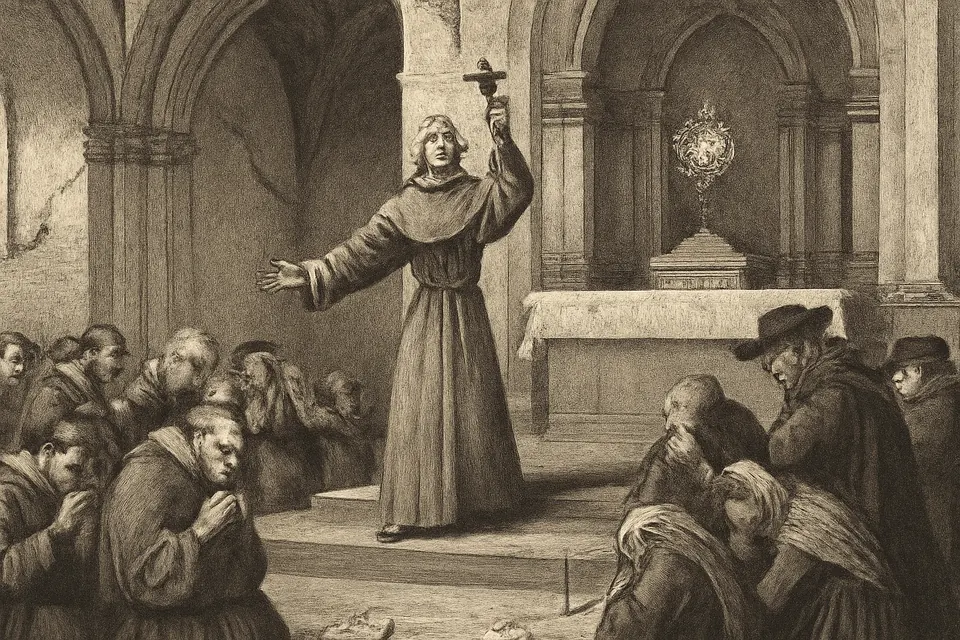
He died in Lima on July 14, 1610. Pope Clement X beatified him in 1675, and Pope Benedict XIII canonized him in 1726.
The miracles of St. Francis Solanus
Witnesses for his cause told of many wonders, and they are best called traditional:
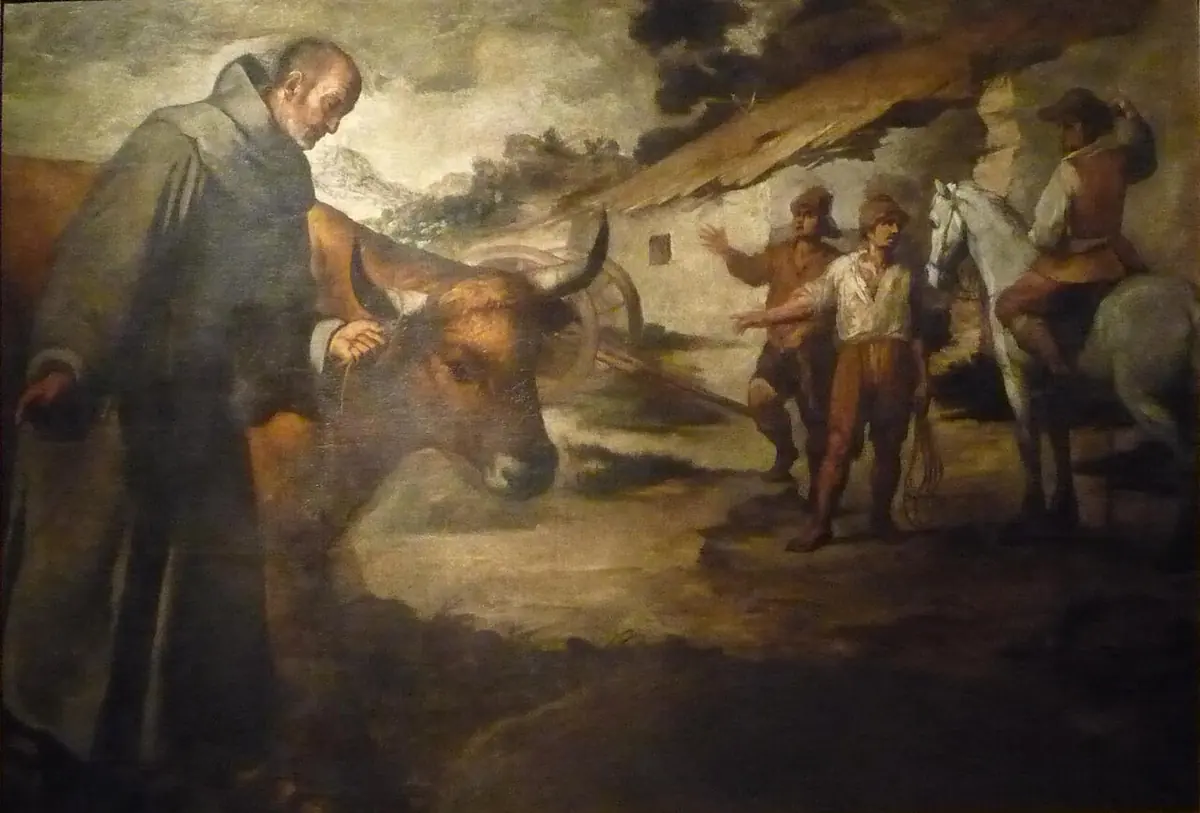
- The bull: at a bullfight in the town of San Miguel de Tucumán, a raging bull broke through the barriers and charged toward him. He waited calmly, and the animal came up to him, licked his cord and passed on. Murillo painted the story for the Franciscans of Seville.
- Languages: his reported gift of being understood by peoples of many tongues.
- Prophecy: his warning to Trujillo and his foretelling of his own death, both recorded in the Catholic Encyclopedia.
Why St. Francis Solanus is a patron
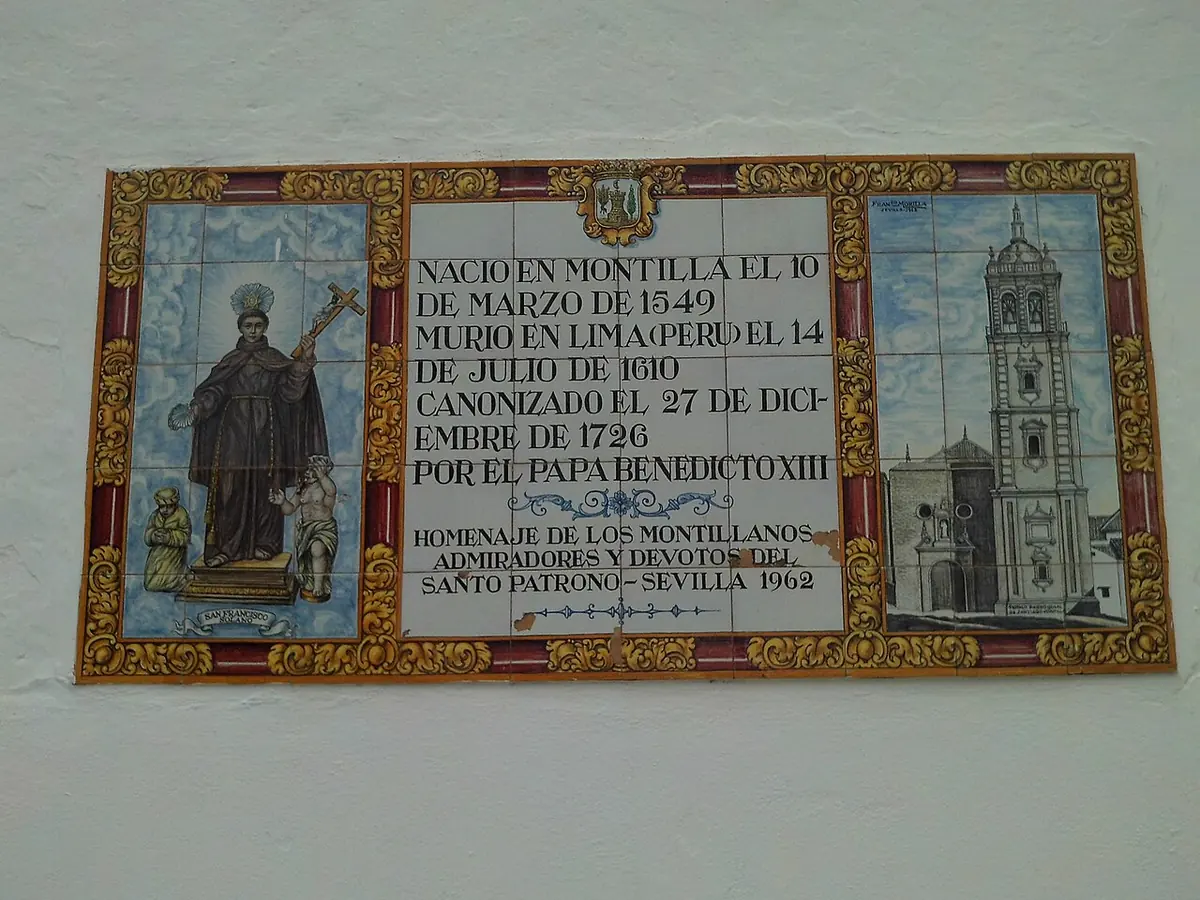
- Montilla: his home town honors him as its patron; the people of Montilla called him their "Santo Patrono" on the 1962 plaque pictured above.
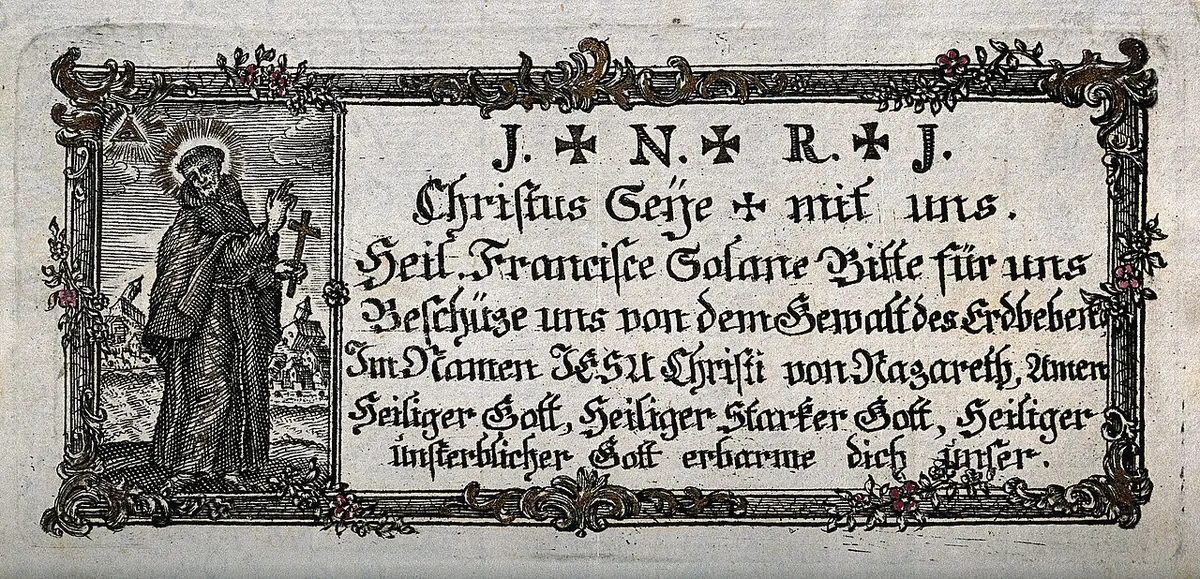
- Against earthquakes: because of his warning to Trujillo and his sermon in the Lima earthquake, the faithful asked his protection when the earth shook. An 18th-century German prayer card begs, Heil. Francisce Solane bitte für uns, beschütze uns von dem Gewalt des Erdbeben: "St. Francis Solanus, pray for us, protect us from the violence of the earthquake."
He is also loved across South America, especially in Argentina, Paraguay and Peru, the lands where he labored.
Symbols of St. Francis Solanus in art
- The Franciscan habit and cord: the gray or brown habit of the Friars Minor.
- A crucifix held high: the preacher of repentance.
- A violin: popular images give him a violin or fiddle, for the music he made for the people and before the Blessed Sacrament.
- A bull: as in Murillo's painting.
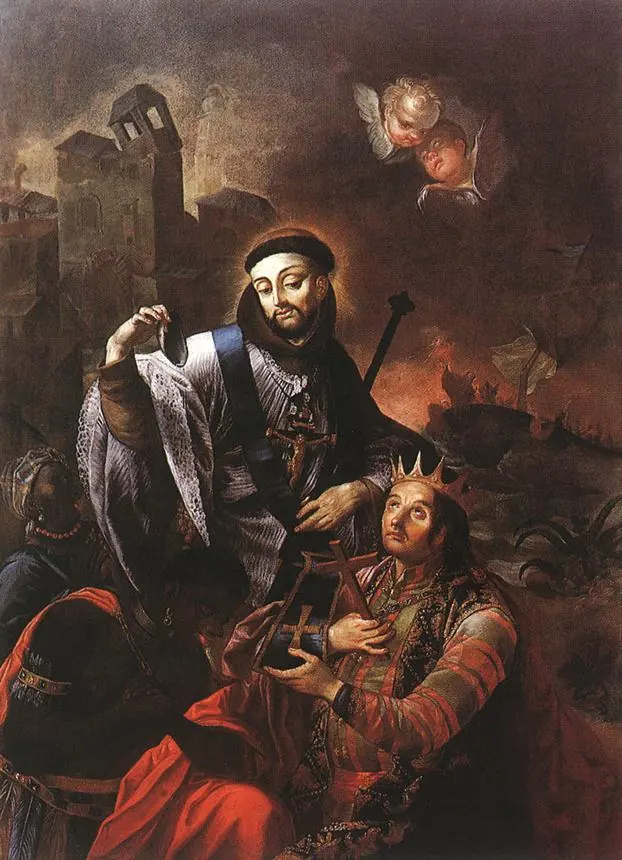
- Native people kneeling: often receiving baptism, as in Kracker's painting and the colonial portrait above.
Feast day and places named for him
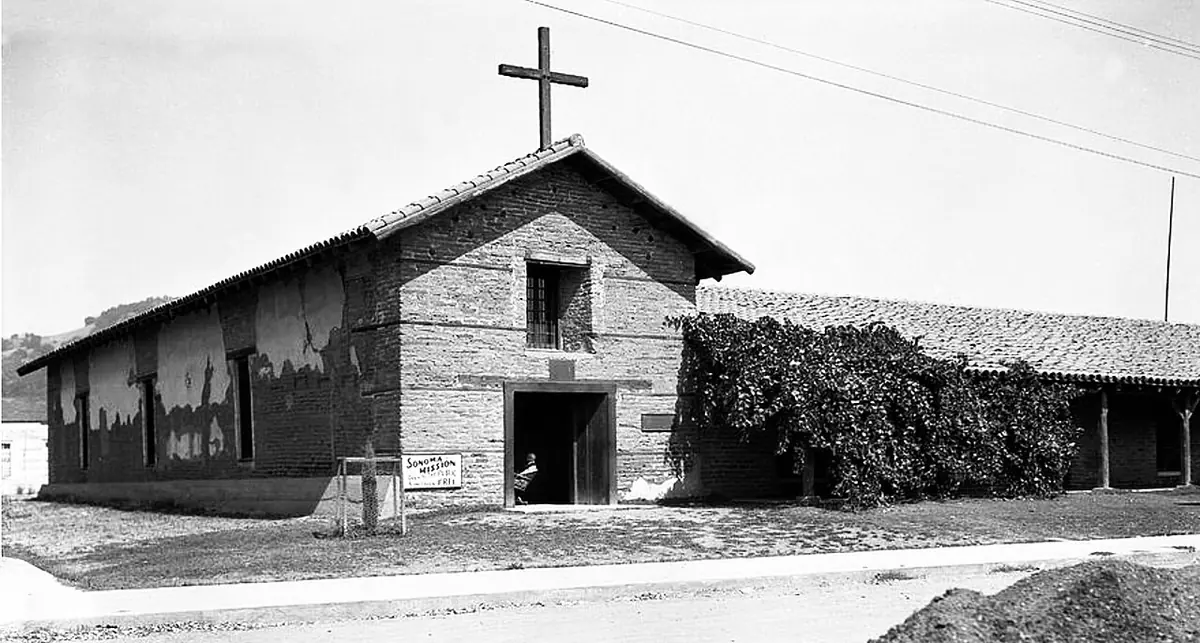
We keep his feast on July 14. His body rests in the Franciscan church of Lima, where a chapel was built for his remains soon after his death. Places across the Americas carry his name, including Mission San Francisco Solano at Sonoma, founded in 1823 as the last of the California missions.
There is no widely used traditional prayer to St. Francis Solanus with a known origin beyond simple invocations like the German one above. Let us ask him to pray for missionaries, for all who live where the earth shakes, and for the grace to stay with the forgotten when others leave them behind, as he stayed on the wreck.
Frequently asked questions
What is St. Francis Solanus known for?
For his missions among the Native peoples of Tucumán and Paraguay, where tradition says he learned their languages with astonishing speed, and for his preaching of repentance to the Spanish colonists of Lima. The Catholic Encyclopedia calls him "the Thaumaturgus of the New World," the wonder-worker.
When is the feast day of St. Francis Solanus?
July 14, the day he died in Lima in 1610, in the Roman Martyrology. Franciscan calendars long kept him on July 24.
Did St. Francis Solanus play the violin?
Popular tradition in South America says he played a violin, or a small fiddle, to draw people to hear the Gospel, and he is often painted with one. The older English Life of 1847 speaks instead of the psalms he chanted and the harp he played before the Blessed Sacrament at night. Either way, he was a musician who prayed with music.
Is Mission San Francisco Solano in Sonoma named for him?
Yes. The last and northernmost of the California missions, founded at Sonoma in 1823, bears his name.