St. John of Shanghai and San Francisco

St. John of Shanghai and San Francisco (John Maximovitch, 1896 to 1966) was a Russian Orthodox bishop who gathered orphans in Shanghai, led thousands of refugees from China to safety and ended his life as archbishop of San Francisco. His incorrupt relics rest in the Holy Virgin Cathedral in San Francisco, and his feast day is July 2.
Who was St. John of Shanghai and San Francisco?
St. John was a Russian Orthodox bishop of the 20th century whom the Orthodox Church honors as a wonderworker. Born Michael Maximovitch in 1896, he fled the Russian Revolution, became a monk in Serbia, and served as a bishop in Shanghai, in Western Europe and finally in San Francisco, where he died in 1966. His flock knew him as a man who almost never stopped praying, who walked barefoot even in the cold, and who went out day after day to bring Holy Communion to the sick. The Russian Orthodox Church Outside of Russia (ROCOR) glorified him as a saint in 1994, and his incorrupt relics rest in the cathedral he completed in San Francisco.

He is known by several names: St. John Maximovitch (or Maximovich), St. John of Shanghai, St. John of San Francisco, or simply St. John the Wonderworker. This encyclopedia describes him as the Orthodox Church keeps him.
The life of St. John
Childhood, exile and monastic vows
The Orthodox Church in America's life of the saint says he was born on June 4, 1896, in the village of Adamovka in Kharkiv province, to a devout family of the gentry, Boris and Glafira Maximovitch. He was baptized Michael, after the Archangel. He was a sickly child with little appetite but a deep love of the Church. He studied at the Poltava military school and took a law degree at Kharkiv University in 1918.
When the Bolsheviks took power, the family fled to Yugoslavia. Michael studied theology at the University of Belgrade, finishing in 1925. In 1926 Metropolitan Anthony (Khrapovitsky), later the first head of ROCOR, tonsured him a monk with the name John and ordained him a hierodeacon; he was ordained a priest on November 21 of that year. He taught at a Serbian school and, at the request of local Greeks, served the Liturgy for them in Greek.
Bishop of Shanghai
He was consecrated a bishop on May 28, 1934, and sent to Shanghai, home to a large community of Russian refugees. He worked to unite the quarreling Orthodox communities, finished a large cathedral dedicated to the icon of the Mother of God "Surety of Sinners," and inspired the building of churches, hospitals and orphanages. In 1946 he was made archbishop of China.
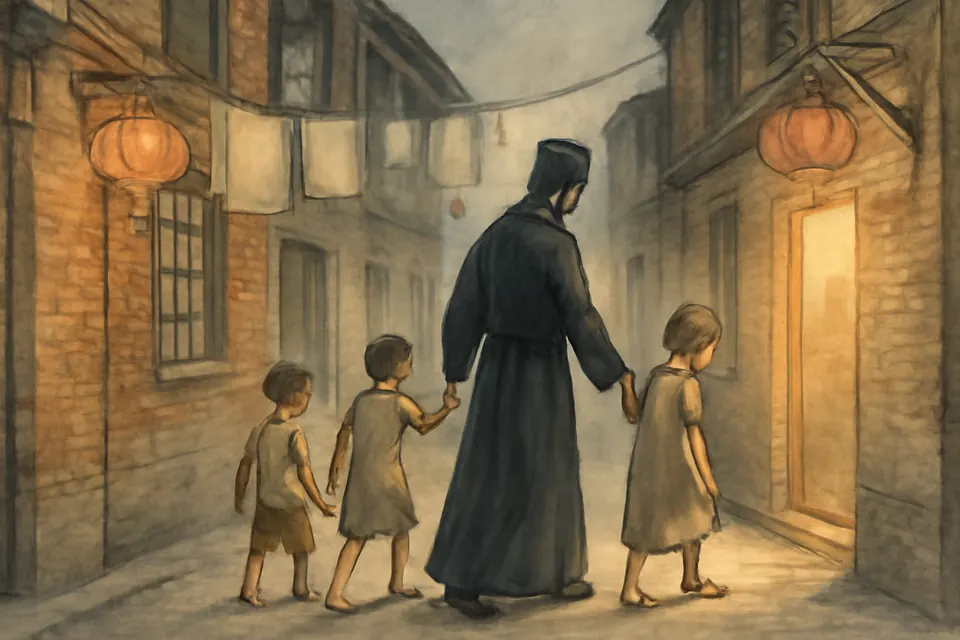
Of all this, it is his care for orphans that his spiritual children remember best: the children of Shanghai who had lost their parents found a home through him. The OCA life says he served the daily cycle of services without fail and visited the sick with the Holy Gifts; it adds that he often walked barefoot even on the coldest days and, to avoid praise, would sometimes act the fool.
Tubabao: the shepherd of refugees
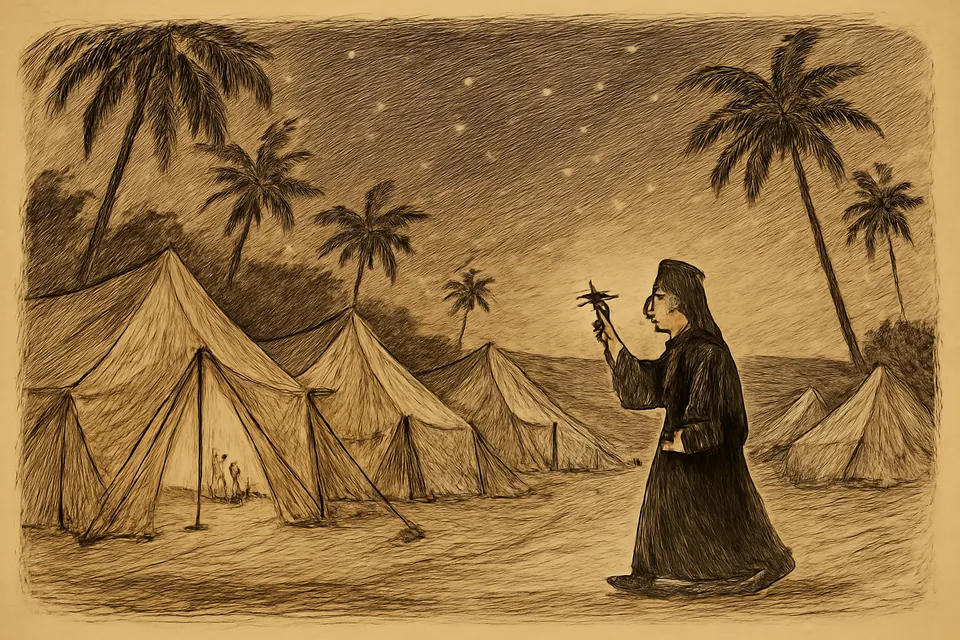
When the Communists came to power in China in 1949, Archbishop John led his flock out of Shanghai. About 5,000 refugees were taken to a camp of tents on Tubabao, a small island in the Philippines, and the orphanage went with them. John then traveled to Washington and lobbied for a change in the law so that the refugees could enter the United States. While he was there, he founded a parish dedicated to St. John the Baptist.
It is told that their bishop walked through the camp every night and blessed it on every side, and that the island, which lies in the path of Pacific typhoons, was spared while he was there. We label this account reported.
Paris and San Francisco
In 1951 he was assigned to Western Europe, with his see in Paris. He studied and celebrated the ancient Western rite restored by the Orthodox Church of France and was the principal consecrator of its first modern bishop.
In 1962 he was sent to San Francisco, where the Russian community was divided and the new cathedral stood half built. The OCA calls these years sorrowful for him, but he brought enough peace that the cathedral was finished. The orphanage, moved from the Philippines, had already found a home in a building on 15th Avenue that he had obtained in the early 1950s, today the Church of St. Tikhon of Zadonsk.
He died on July 2, 1966, in Seattle, where he had gone with the wonderworking Kursk Root icon of the Mother of God. He was buried in a crypt beneath the altar of the new cathedral, where the faithful kept coming to pray.
The miracles of St. John
The Orthodox Church glorifies its saints without the formal process the Catholic Church uses for canonization, so this encyclopedia labels the accounts of his miracles reported. Those who knew him told of healings through his prayers while he lived, and after his death people began to report healings at his tomb and through the oil from the lamp that burns there. The cathedral sends that oil worldwide to those who ask his help.
His incorrupt relics
In 1993, as ROCOR prepared to glorify him, a commission opened his tomb. Archpriest Peter Perekrestov, a priest of the cathedral who was there, wrote that the casket was badly rusted and the vestments had turned green and fell apart, but the body was whole. "He is incorrupt! His relics are incorrupt!" he remembered exclaiming. The relics were uncovered on September 30 (October 13), 1993. We label the incorruption reported.
He was glorified at the cathedral on July 2, 1994, the anniversary of his repose, and the relics were moved from the crypt into the cathedral itself. The Moscow Patriarchate recognized his glorification for the whole Russian Church in 2008, and in May 2024 its Holy Synod added the feast of the uncovering of his relics to the calendar.

Why St. John is the patron of orphans and refugees
The Orthodox Church does not assign patronages the way the Latin West does, but the faithful ask the prayers of saints whose lives fit their need. St. John is turned to above all by orphans, by those who care for children, by refugees and exiles, and by the sick. He was himself an exile from his homeland for more than forty years, and he spent his life finding homes for others. See more patron saints on our patron saints page.
Symbols of St. John in icons
St. John's icons follow the canon for holy bishops, with a few features of his own. Look for:
- The black klobuk: the monastic headdress of a Russian bishop, with a small cross on the front.
- Hierarch's vestments: a sakkos or mantle with the omophorion, the bishop's stole, marked with crosses.
- A hand raised in blessing: often with a Gospel book or scroll in the other hand.
- His face: slight, with long dark hair and a dark, untidy beard, faithful to the photographs.
- Bare feet: in some icons, recalling his ascetic life.

Icon painters work from his photographs, so his icons are unusually close to the real man.
Feast day and pilgrimage
The Orthodox Church keeps his feast on July 2, the day of his repose. In the Julian calendar used by ROCOR this is June 19, which falls on July 2 on the civil calendar. The uncovering of his relics is kept on September 29 / October 12. You'll find other feasts of July on our feast days calendar.
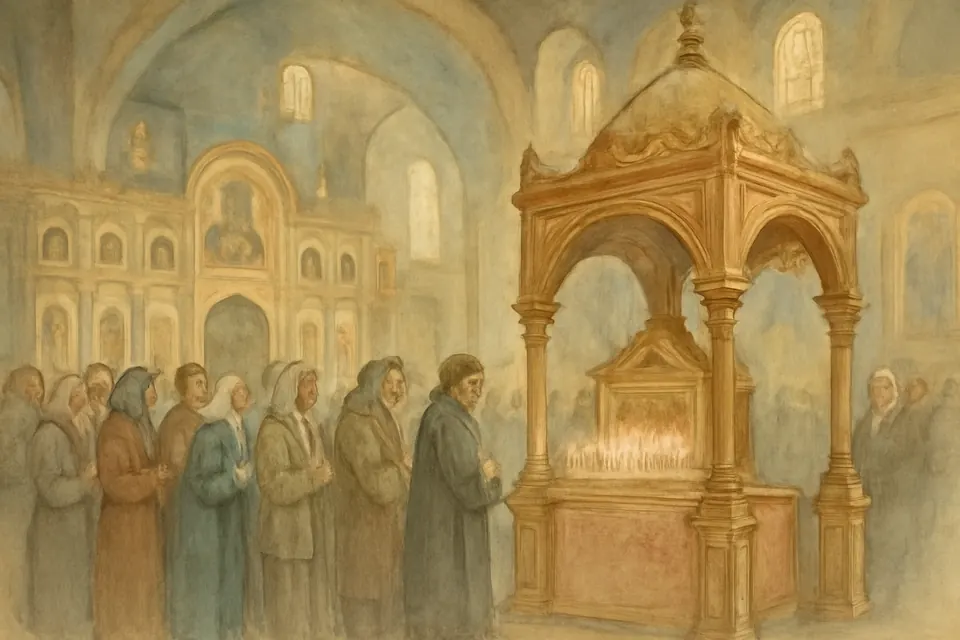
The Holy Virgin Cathedral, "Joy of All Who Sorrow," broke ground on June 25, 1961, and was consecrated on January 31, 1977. The cathedral says his relics are the only intact relics open for veneration in North America. The Liturgy is served daily, the relics can be venerated during all services, and on Saturday evenings a moleben (a service of intercession) is chanted before them, open to all. Oil from the lamp that burns before the relics is given to pilgrims to anoint the sick with prayer.
Prayer to St. John of Shanghai
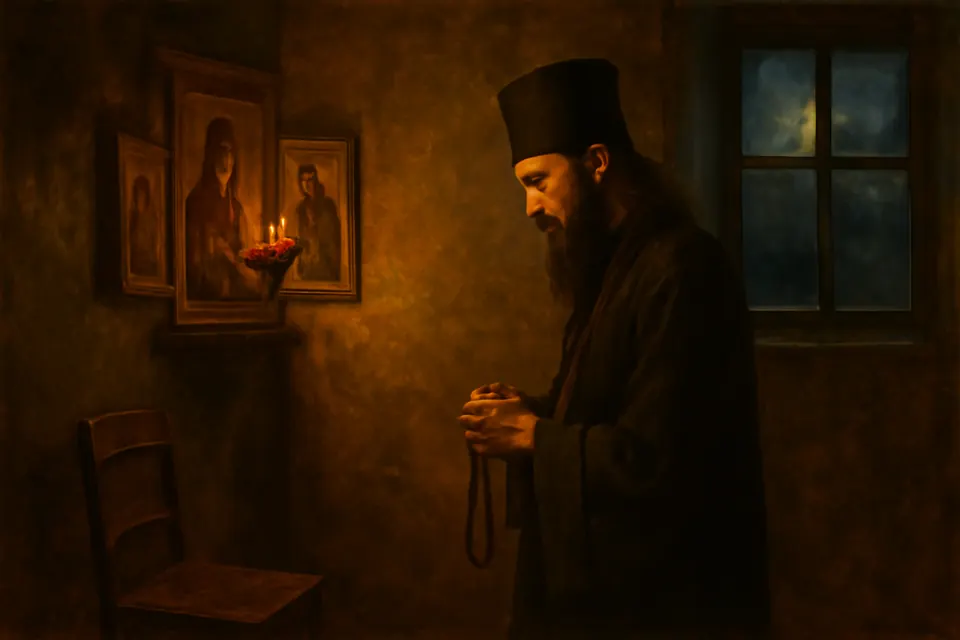
The Orthodox Church sings this troparion on his feast, in the translation of the Orthodox Church in America (Tone 5):
Your care for your flock in its sojourn prefigured your prayers, which you always offer up for the whole world. Thus we believe, having come to know your love, O holy hierarch and wonderworker John. Wholly sanctified by God through the ministry of the all-pure Mysteries, and ever strengthened by them yourself, you hastened to the suffering, O healer, easing their afflictions. Hasten now to help us, who honor you with all our heart.
Let us ask St. John to pray for orphans and refugees, for the sick, and for all who are far from home. Holy hierarch John, pray to God for us.
Frequently asked questions
Who was St. John Maximovitch?
Michael Maximovitch, born in 1896 in what is now Ukraine, became a monk in Serbian exile in 1926 and took the name John. He was bishop of Shanghai from 1934, archbishop in Western Europe from 1951 and archbishop of San Francisco from 1962. He died in Seattle in 1966, and the Russian Orthodox Church Outside of Russia glorified him as a saint in 1994.
When is the feast of St. John of Shanghai and San Francisco?
July 2, the anniversary of his repose in 1966 and of his glorification in 1994. In the Julian calendar the date is June 19, which falls on July 2 on the civil calendar. The Church also keeps the uncovering of his relics on September 29 / October 12; the Holy Synod of the Moscow Patriarchate added that feast to the calendar of the whole Russian Church in May 2024.
Where are the relics of St. John of Shanghai?
In the Holy Virgin Cathedral, "Joy of All Who Sorrow," of the Russian Orthodox Church Outside of Russia, on Geary Boulevard in San Francisco. His body was found incorrupt in 1993 and moved from the crypt into the cathedral for his glorification in 1994. The relics are open for veneration whenever services are held, and the Liturgy is served daily.
What is St. John of Shanghai known for?
His care for orphans and refugees, his constant prayer and fasting, and the healings reported through his prayers in life and after death. In 1949 he led about 5,000 Russian refugees from Shanghai to a camp on Tubabao island in the Philippines, then went to Washington to win them entry into the United States.
Is St. John of Shanghai a Catholic saint?
He is a saint of the Orthodox Church, glorified by the Russian Orthodox Church Outside of Russia and recognized by the Moscow Patriarchate. He is not on the Catholic calendar. Catholics who love the Eastern saints know and admire him, and this encyclopedia describes him as the Orthodox Church keeps him.
Is St. John Maximovitch the same as St. John of Shanghai and San Francisco?
Yes. Maximovitch (also spelled Maximovich) was his family name; he is called "of Shanghai and San Francisco" for the two cities where he served as bishop. Some also call him St. John the Wonderworker.
Keep exploring
Sources
- Orthodox Church in America: Saint John (Maximovitch), Archbishop of Shanghai and San Francisco
- Orthodox Church in America: Troparion of St. John (Maximovitch)
- Holy Virgin Cathedral, San Francisco: The Incorrupt Relics of Saint John
- Archpriest Peter Perekrestov, Opening of the Relics, and Glorification of St. John Maximovitch (OrthoChristian)
- OrthoChristian: Uncovering of relics of St. John (Maximovitch) added to Russian Church calendar (2024)
- Sergei Mudrov, San Francisco: the City of St. John (OrthoChristian)
- Holy Virgin Cathedral, San Francisco: History