St. John Cassian, Monk and Teacher of Prayer
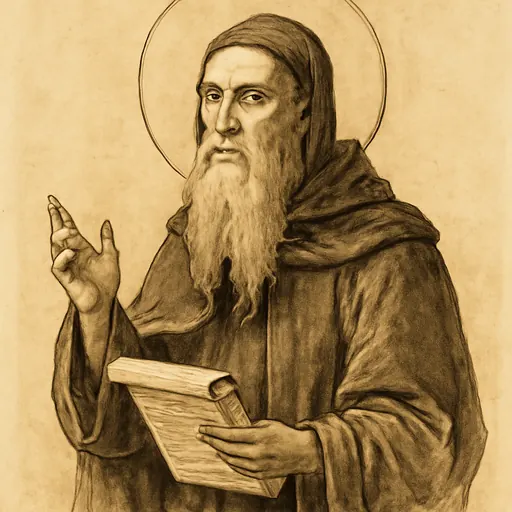
St. John Cassian (about 360–435) was a monk who spent years with the desert fathers of Egypt and then founded monasteries at Marseille, bringing Eastern monastic life to the West. His Institutes and Conferences shaped St. Benedict's Rule. His feast is July 23 in the Roman Martyrology and February 29 in the Orthodox Church.
Who was St. John Cassian?
St. John Cassian was a monk of the late 4th and early 5th centuries who carried the wisdom of the Egyptian desert to the Latin West. As a young man he spent years among the hermits of Egypt, listening to the great old monks and writing down what they taught. Later he settled at Marseille, in southern Gaul, founded two monasteries there, and wrote two books, the Institutes and the Conferences, that taught Western Christians how monks pray, fight temptation and seek purity of heart.
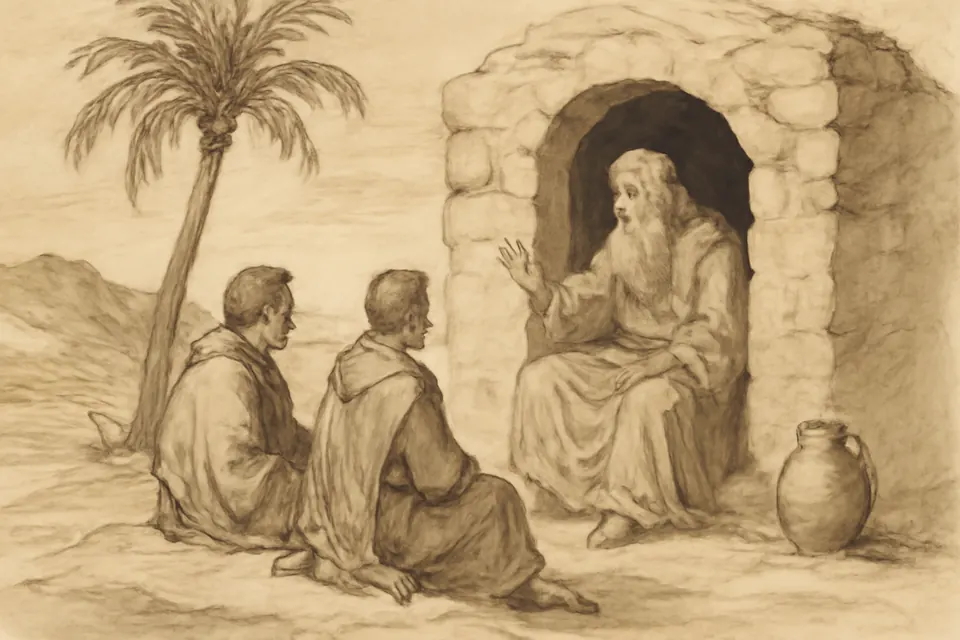
Those books went everywhere. St. Benedict built on them and told his monks to read them. Every time the Church begins an hour of the Liturgy of the Hours with "O God, come to my assistance," she prays the verse Cassian brought back from the desert.
The East honors him as St. John Cassian the Roman, the West as St. John Cassian. We keep his memory on July 23; the Orthodox Church on February 29.
The life of St. John Cassian
Youth and Bethlehem
Cassian was born around 360 into a well-to-do Christian family that gave him a good education in Latin and Greek. Where he was born is debated. The 5th-century writer Gennadius calls him a Scythian, and the Orthodox life places his birth in Scythia Minor, the Dobruja region on the Black Sea in present-day Romania, where Romanian Christians honor him as one of their own. The Catholic Encyclopedia, writing in 1908, preferred Provence.
As a young man he went on pilgrimage to the Holy Land with an older friend and kinsman, Germanus. The two became monks in a monastery at Bethlehem, near the cave of the Nativity. They soon heard about the monks of Egypt and longed to learn from them.
Among the desert fathers
They asked leave to go and promised to come back quickly. As the Catholic Encyclopedia dryly puts it, they interpreted the promise "rather broadly": they did not see Bethlehem again for seven years. They traveled among the hermits of the Nile Delta and of Scetis, the desert where Sts. Macarius and Moses the Black lived, and sat at the feet of the abbas, asking questions and listening.
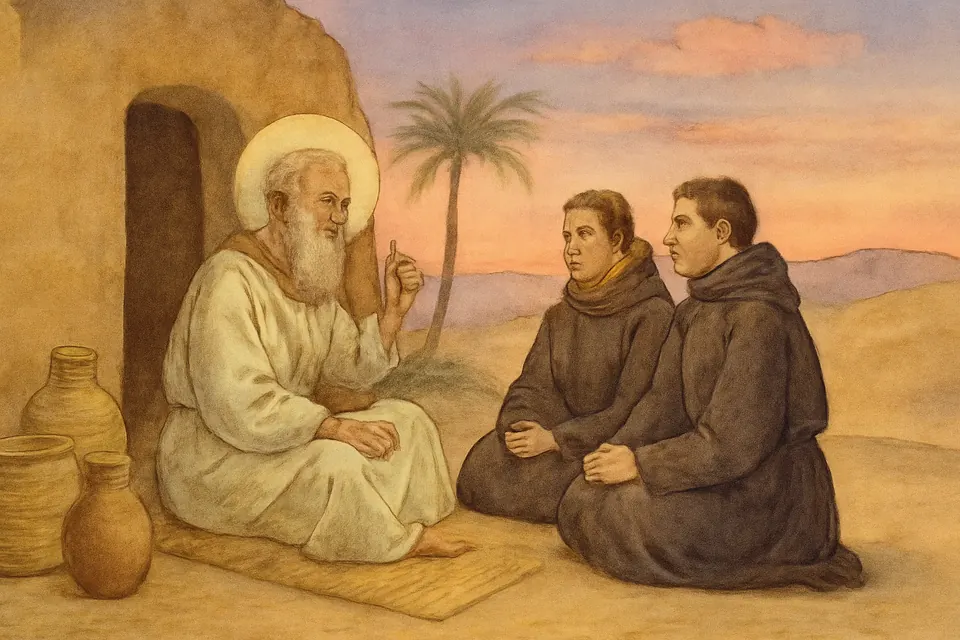
Those conversations became the Conferences. Abba Moses taught them that the goal of the monk is the kingdom of God, and the way to it is purity of heart. Abba Isaac taught them to pray without ceasing. Others spoke about discernment, friendship, chastity, the passions and grace. Cassian wrote them down years later, in Latin, for monks who would never see Egypt.
Constantinople and Rome
Around 399 a bitter quarrel in the Egyptian church drove many monks out, and Cassian and Germanus went to Constantinople. There St. John Chrysostom, the archbishop, ordained Cassian a deacon and, according to the Catholic Encyclopedia, put him in charge of the cathedral treasury. When Chrysostom was driven into exile in 404, the clergy loyal to him sent Cassian to Rome to plead his cause before Pope Innocent I. Cassian was probably ordained a priest in Rome. After that, Germanus disappears from the record, and so does Cassian for about ten years.
Marseille
By about 415 Cassian was at Marseille, a busy port in Roman Gaul. He founded two monasteries there, one for men, built over the tomb of the martyr St. Victor, and one for women. Monks were multiplying in Gaul, but often without much training, and the bishops of the region asked Cassian to write down what he had seen in the East.
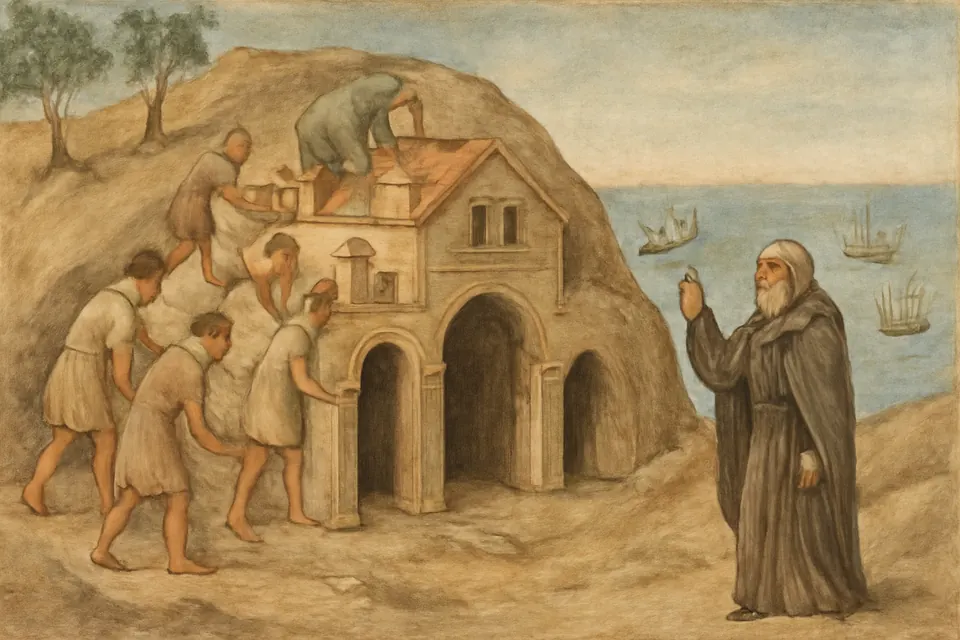
He wrote the Institutes first, for Bishop Castor of Apt, describing the dress, prayer and customs of the Egyptian and Palestinian monks, and then the remedies for the eight principal faults. The Conferences followed in three parts, dedicated to bishops and abbots of Provence, among them St. Honoratus of Arles. Around 430 the archdeacon of Rome, the future Pope St. Leo the Great, asked him to write against the heresy of Nestorius, and Cassian produced On the Incarnation of the Lord, defending the title of Mary as Mother of God. He died at Marseille around 435.
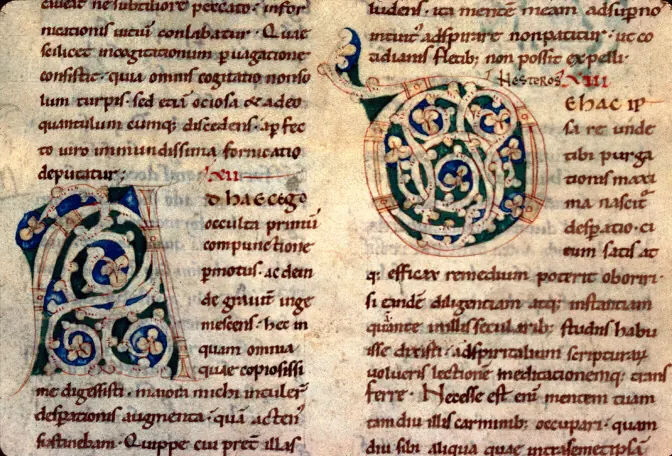
Cassian's teaching on prayer
The best-known page Cassian ever wrote is in his tenth Conference. Abba Isaac gives the two young monks one verse of Scripture to carry with them always, Psalm 70:1 (69:2 in older numbering). In the 1894 English translation of the Conferences:
And so for keeping up continual recollection of God this pious formula is to be ever set before you. O God, make speed to save me: O Lord, make haste to help me, for this verse has not unreasonably been picked out from the whole of Scripture for this purpose.
Isaac goes through every state of soul: hunger, sleeplessness, temptation, joy, dryness, fear. In each he says to pray the verse again. "We must then ceaselessly and continuously pour forth the prayer of this verse," he says, "in adversity that we may be delivered, in prosperity that we may be preserved and not puffed up."
St. Benedict made the same verse the opening of the hours of prayer in his Rule, and through the Rule it entered the Liturgy of the Hours, where almost every hour still begins with it. If you have ever wondered why the Office starts that way, this is the answer.
Cassian and the question of grace
Cassian is honored as a saint in both East and West, but one part of his teaching was disputed. In his thirteenth Conference he argued, against what he took to be an extreme reading of St. Augustine, that the first movement of a soul toward God can come from free will, which grace then helps and completes. Later theologians called this view Semipelagianism, and the Council of Orange in 529 taught that even the beginning of faith is a gift of grace.
The Catholic Encyclopedia sums up the debate with an image: Augustine saw fallen man as dead, Pelagius as perfectly healthy, Cassian as sick. Cassian never denied that we need grace; he took no part in the controversy that broke out late in his life, and his opponent Prosper of Aquitaine spoke of him with respect. The East, which never shared Augustine's emphasis, has always read him without suspicion, and St. John Climacus wrote that "great Cassian reasons loftily and excellently."
Miracles of St. John Cassian
No miracles are told of Cassian, traditional or otherwise, and no cures through his intercession have been formally examined. His cult rests on his holy life and his teaching. He was never formally canonized; such a process didn't exist in his day. The Catholic Encyclopedia notes that Pope St. Gregory the Great regarded him as a saint, and that Pope Urban V, once abbot of St. Victor, had the words "Saint Cassian" engraved on the silver reliquary of his head.
Why St. John Cassian is honored as a patron of monks
No pope or council has named Cassian a patron of anything. Monks and nuns of East and West honor him as one of the founders of their way of life in the West, alongside St. Anthony the Great, whose disciples he met in Egypt, and St. Benedict, who learned from his books. His list of eight principal faults, which he learned from the desert fathers, passed through St. Gregory the Great into the Western list of the seven capital sins. See the other patrons of monks on our patron saints page.
Symbols of St. John Cassian in art
Western art rarely shows him, so most images of Cassian are Eastern icons. Look for:
- An elderly monk with a long beard: in the dark habit and hood of an Orthodox monk.
- A scroll with a saying: Greek and Russian icons often give him an unrolled scroll with a sentence from his writings on the virtues or on love.
- A book: his Institutes or Conferences.
- Scenes from his life: larger icons surround him with small panels showing his journeys, his years in the desert and his monasteries.
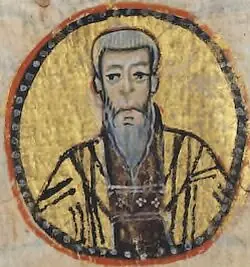
In medieval manuscripts he appears as a small portrait among the Fathers whose words were collected, as in the Byzantine Sacra Parallela above. The 15th-century Nuremberg Chronicle gives him a woodcut portrait as one of the learned men of his age.
Feast day and where St. John Cassian is honored
We keep his feast on July 23, the date in the Roman Martyrology and in the Archdiocese of Marseille. The Orthodox Church keeps February 29. See other saints of July on our feast days page.
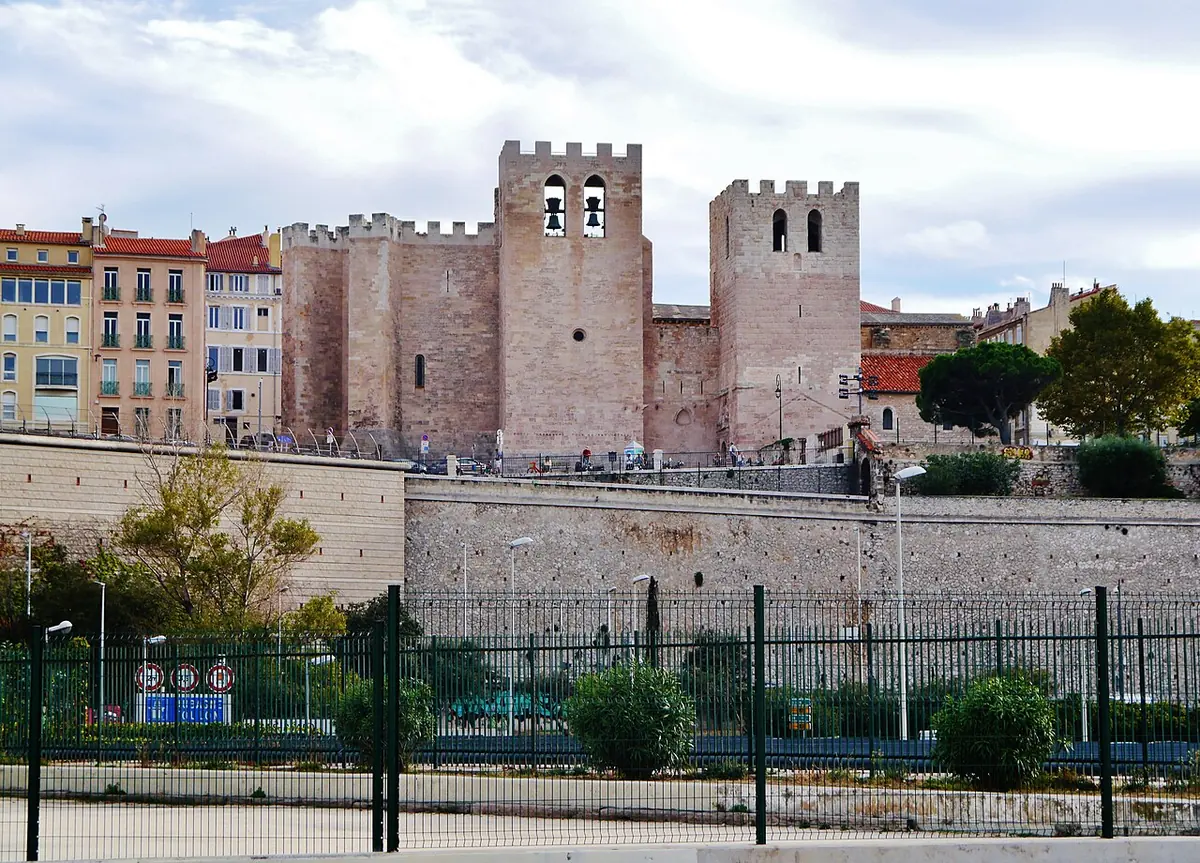
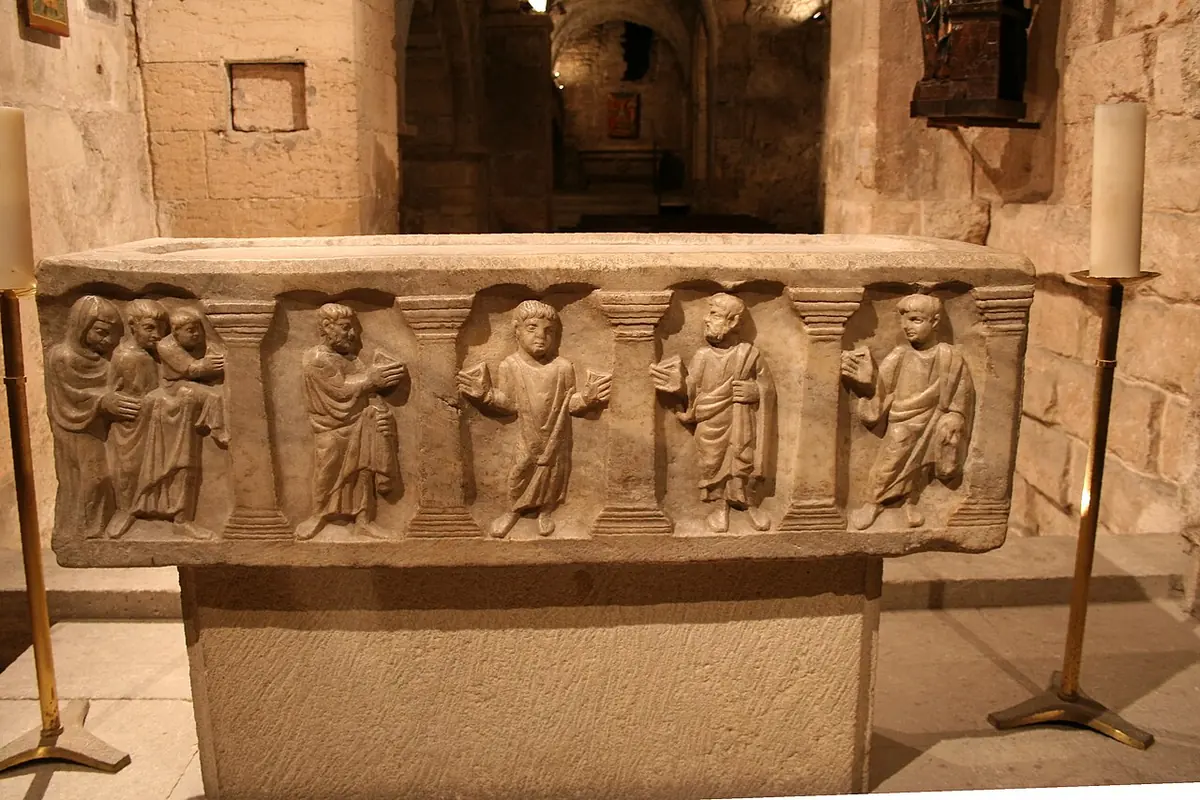
The Abbey of St. Victor still stands above the Old Port of Marseille, a fortress-like church rebuilt in the Middle Ages over the crypts of Cassian's monastery. The Orthodox life says his relics rest in an underground chapel there and his head and right hand in the upper church.
The crypts below the church keep early Christian tombs from Cassian's own century.
Prayer of St. John Cassian
Cassian left us no prayer of his own composition, but he gave the Church its shortest and most-used prayer. With him, let us pray it at every hour of the day, in joy and in trouble:
O God, come to my assistance; O Lord, make haste to help me.
That is the wording of the Liturgy of the Hours in English. And let us ask St. John Cassian to pray for all monks and nuns, and for everyone who is trying, in the middle of an ordinary life, to pray without ceasing.
Frequently asked questions
When is St. John Cassian's feast day?
July 23 in the Roman Martyrology, and the Archdiocese of Marseille and some monastic communities celebrate him that day. He is not on the General Roman Calendar. The Orthodox Church keeps him on February 29, a date that comes only in leap years, so in other years his service is usually sung on February 28.
What prayer did John Cassian teach?
In his tenth Conference, the hermit Abba Isaac teaches Cassian and Germanus to repeat one verse of the Psalms at all times, "O God, make speed to save me, O Lord, make haste to help me" (Psalm 70:1). The Church still opens almost every hour of the Liturgy of the Hours with it, in today's English as "O God, come to my assistance; O Lord, make haste to help me."
Is John Cassian a saint in the Catholic Church?
Yes, though he was never formally canonized, a process that began centuries after his death. The Catholic Encyclopedia notes that Pope St. Gregory the Great regarded him as a saint, and Pope Urban V, a former abbot of St. Victor in Marseille, had "Saint Cassian" engraved on the silver casket holding his head.
What are the eight deadly thoughts in Cassian?
In the last eight books of his Institutes, Cassian describes eight principal faults that block the way to holiness (gluttony, impurity, covetousness, anger, dejection, acedia or spiritual listlessness, vainglory and pride) and the remedies for each. His list, learned in the Egyptian desert, stands behind the later Western list of the seven capital sins.
What did St. Benedict say about Cassian?
The Rule of St. Benedict tells monks to read Cassian's Conferences aloud in the evening and, in its last chapter, names the Conferences and Institutes among the books that help monks toward perfection. The Catholic Encyclopedia says Benedict called the Conferences a mirror of monastic life.