St. Praxedes, Virgin of Rome
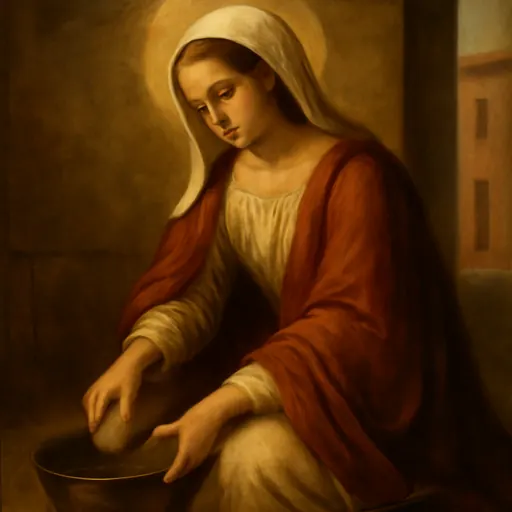
St. Praxedes (Santa Prassede) was an early Roman Christian woman and martyr whose grave lay beside St. Pudentiana's in the catacomb of Priscilla. Legend makes them daughters of Pudens, a disciple of St. Peter, and tells how Praxedes hid, fed and buried persecuted Christians. We keep her feast on July 21, and her ninth-century basilica stands near St. Mary Major.
Who was St. Praxedes?
St. Praxedes, in Italian Santa Prassede, was a Christian woman of early Rome, honored as a virgin and martyr, whose name lives on in one of the most beautiful churches of the city. She is almost always paired with St. Pudentiana, whom tradition calls her sister.
What we know for certain is short. Pilgrim guides to the martyrs' graves of Rome, written in the seventh century, list two women martyrs, Potentiana and Praxedis, buried side by side in the catacomb of Priscilla on the Via Salaria. That is real history: Christians were praying at their tombs long before anyone wrote down their story. Everything else comes from a later legend, and the Church has always read it as such.
The life and legend of St. Praxedes
History and legend
The Catholic Encyclopedia's article, by the archaeologist J.P. Kirsch, separates the two plainly. The graves and the names are old. The date of July 21 appears in only one manuscript of the ancient martyrology called the Hieronymianum, and Kirsch thought it a later addition. The family story, he wrote, belongs to "later legends" that tied the two women to Pudens, founder of the old title-church of Pudens in Rome, and made Pudens a disciple of St. Peter. Some readers link that Pudens with the Christian of the same name whom St. Paul greets in his second letter to Timothy, but nothing proves it.
The story as tradition tells it
The legend, as Butler's Lives of the Saints retells it, sets Praxedes in the reign of the emperor Marcus Aurelius, when Christians were again being hunted. She was a young woman of means. Seeing her fellow believers suffer, she "sought them out to relieve them with money, care, comfort and every charitable aid." Some she hid in her own house, some she encouraged to stand firm, and those who were killed she buried.

Worn out by so much grief, she prayed to be taken from the sight of their sufferings, and she died on July 21. The priest Pastor, the legend continues, laid her body in the tomb of her father Pudens and her sister Pudentiana in the catacomb of Priscilla. Because she gave her life to the persecuted Church, she has always been honored among the martyrs, though the legend tells of no violent death.

The Basilica of Santa Prassede
A church named for her, the titulus Praxedis, stood near St. Mary Major by the end of antiquity. Pope Paschal I (817–824) rebuilt it in the form we see today and moved into it the bones of Praxedes, Pudentiana and a great number of other martyrs from the catacombs, which were then falling into ruin.

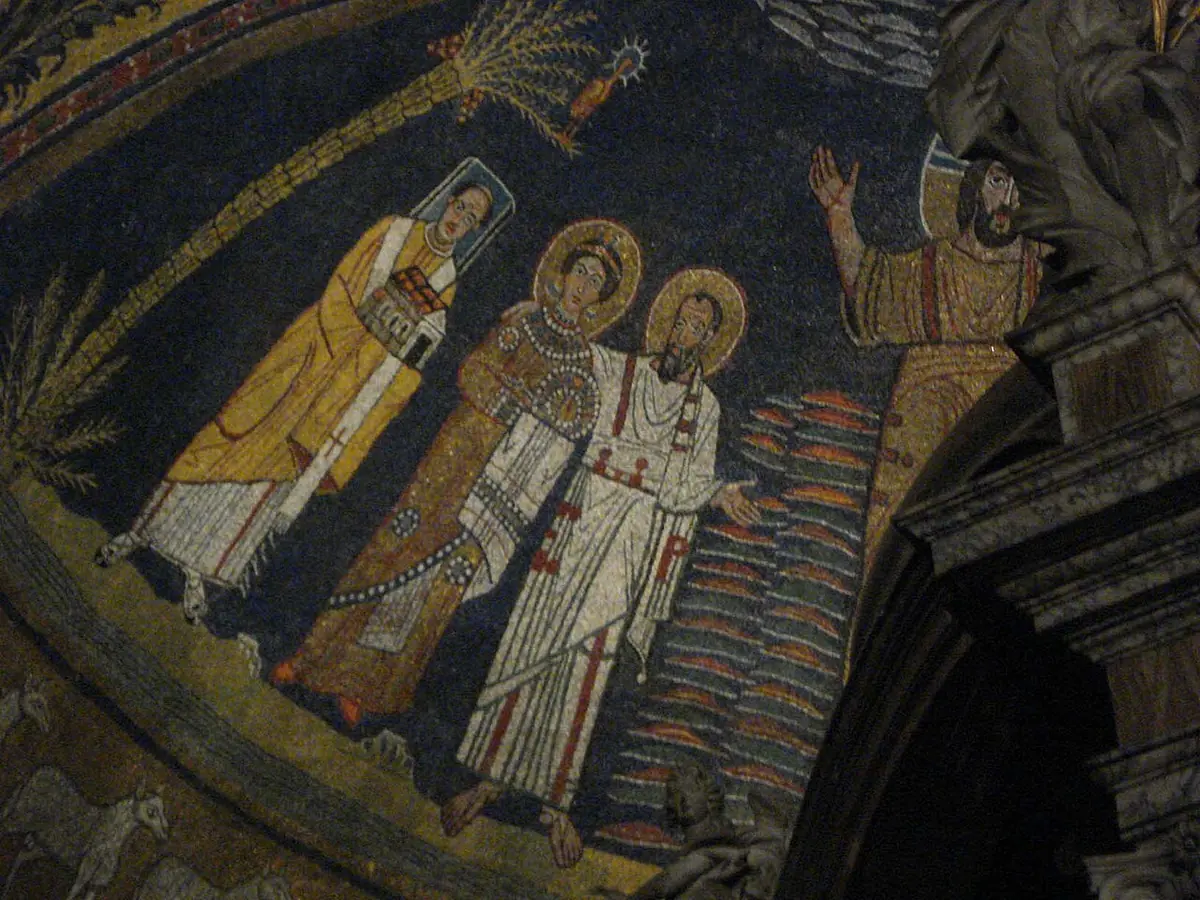
His mosaics still shine there. In the apse, Christ stands on the clouds of heaven while St. Peter and St. Paul lead the two sisters toward him, each woman carrying a crown. Paschal himself stands at the edge, holding a model of the church, with the square halo used for the living.
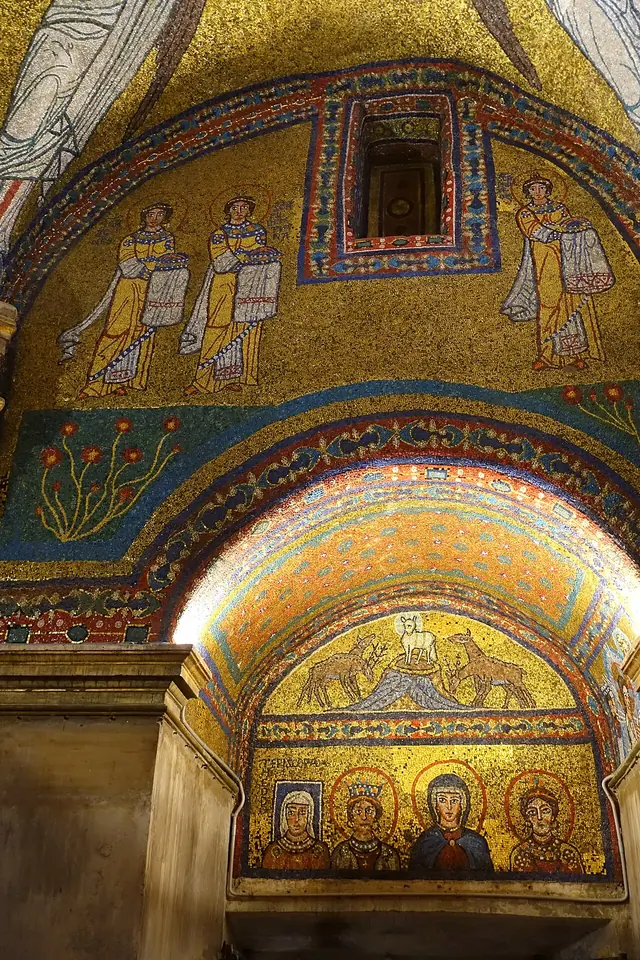
Off the right aisle is the Chapel of St. Zeno, which Paschal built for his mother Theodora, its walls and vault covered in gold mosaic. There Praxedes and Pudentiana appear again, beside St. Agnes and the Virgin Mary. The church also keeps a column venerated as part of the pillar at which Christ was scourged.
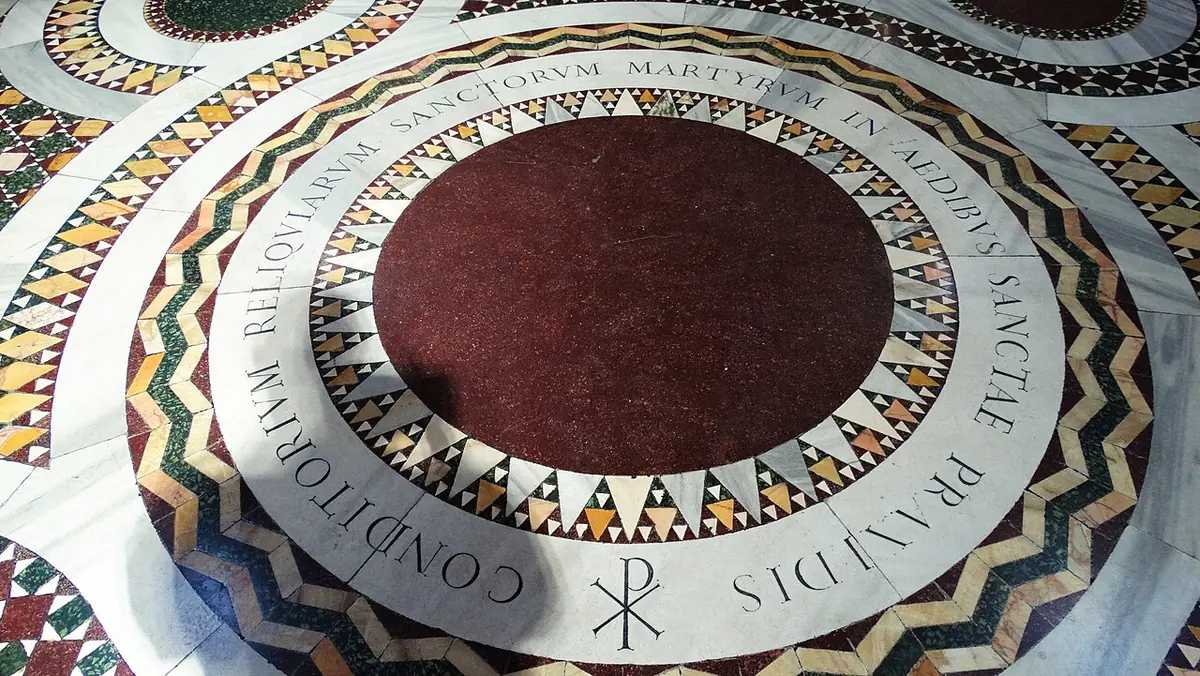
In the floor of the nave, a round slab of red porphyry marks the place tradition calls the well of St. Praxedes, where she is said to have laid the remains and the blood of the martyrs. Its Latin inscription honors the relics of the holy martyrs kept in her house.
Miracles and legends
No miracles are told of St. Praxedes, not even in her legend. What the Church remembers is her charity: the hidden Christians fed and sheltered, and the martyrs buried with reverence. The details of that story are traditional, and the only firm facts are her name and her grave.
Symbols of St. Praxedes in art
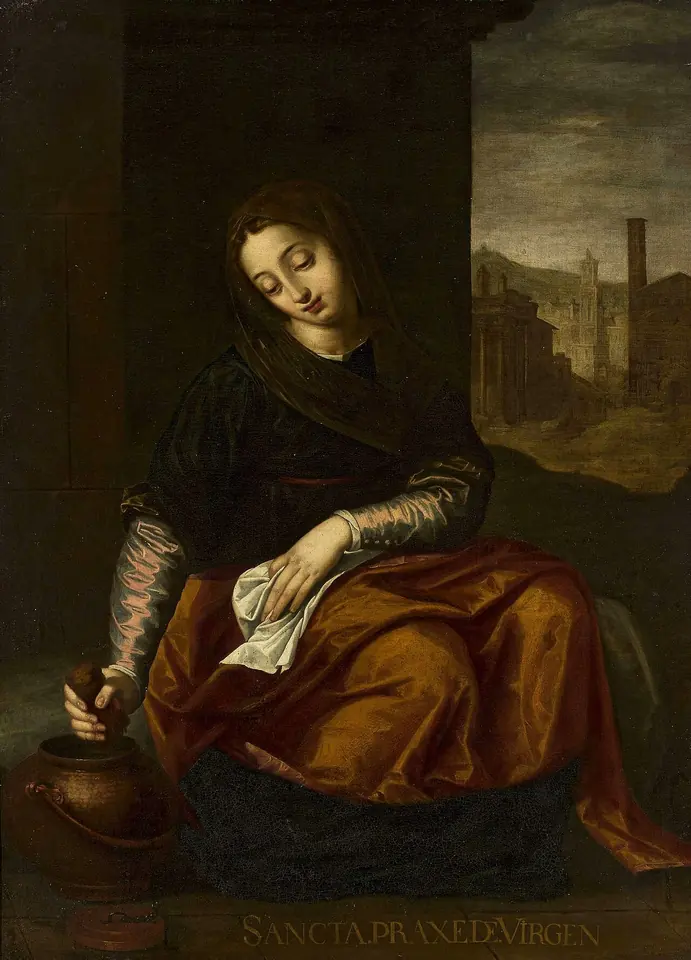
- Sponge: the most telling sign. She presses a sponge or cloth over a vessel, gathering the blood of the martyrs.
- Vessel or basin: the urn or jar that holds what she gathered.
- Well: sometimes shown nearby, from the tradition of the well in her basilica.
- Palm and crown: the signs of a martyr, as in the mosaics, where she holds her crown out to Christ.
- Rich Roman dress: in Byzantine-style mosaics she wears jeweled court robes, the dress of a noblewoman of heaven.
To tell her from St. Pudentiana, look for the sponge; the two sisters are dressed alike when they appear together.
Feast day and devotion
We keep her feast on July 21, the date in the Roman Martyrology. Her memorial left the General Roman Calendar in the 1969 reform, but at Santa Prassede, where the relics of so many martyrs rest, her feast is still kept. See the saints of each day on our feast days page.
Praying with St. Praxedes
We know of no traditional prayer to St. Praxedes with a citable origin. Her life gives us our intention. Let us ask St. Praxedes to pray for Christians who suffer persecution today, and for us, that we may help them with "money, care, comfort and every charitable aid," as she did for the persecuted Church of Rome.
Frequently asked questions
Who was St. Praxedes?
An early Christian woman of Rome, honored as a virgin and martyr. History tells us only that her grave was in the catacomb of Priscilla next to that of Potentiana (Pudentiana). Legend adds that she was the daughter of Pudens and spent her wealth helping persecuted Christians and burying the martyrs.
When is the feast of St. Praxedes?
July 21, the day the Roman Martyrology gives for her. Her sister St. Pudentiana is remembered on May 19.
Why is St. Praxedes shown with a sponge?
In her legend she gathered the blood of the martyrs with a sponge and kept it with reverence, as early Christians did with relics of those who died for Christ. Painters show her squeezing a sponge into a vessel.
Where are the relics of St. Praxedes?
In the Basilica of Santa Prassede in Rome, near St. Mary Major. Pope Paschal I rebuilt the church in the ninth century and moved her relics there from the catacomb of Priscilla, with those of St. Pudentiana and many other martyrs.
Keep exploring
Sources
- Praxedes and Pudentia, Catholic Encyclopedia (J.P. Kirsch, 1911), New Advent. The seventh-century pilgrim itineraries, the July 21 date, the titulus Praxedis and Paschal I's translation of the relics
- The Feast of Saint Praxedes, New Liturgical Movement (Gregory DiPippo), quoting Butler's Lives of the Saints (Thurston and Attwater, 1956). The legend as told in Butler, and the sponge in her iconography