St. Macrina the Younger
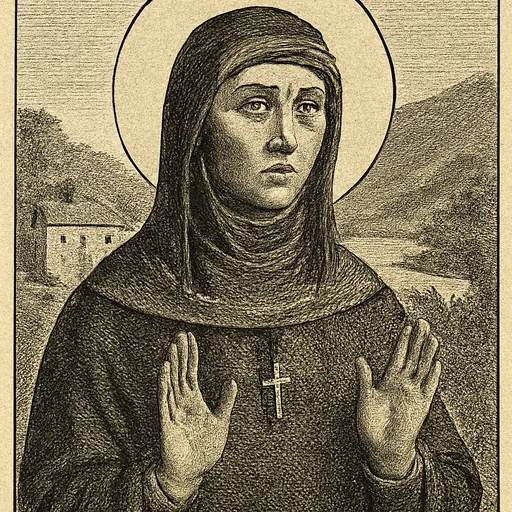
St. Macrina the Younger (about 330 to 379) was the eldest child of a holy family in Cappadocia and the elder sister of Sts. Basil the Great, Gregory of Nyssa and Peter of Sebaste. She turned the family estate in Pontus into one of the first communities of consecrated women and was, in Gregory's words, his teacher. Her feast is July 19, and she is honored as a model for nuns.
Who was St. Macrina the Younger?
St. Macrina the Younger was the eldest of ten children in one of the holiest families the Church has ever known. Her grandmother was St. Macrina the Elder, her mother St. Emmelia, and her brothers included St. Basil the Great, St. Gregory of Nyssa and St. Peter of Sebaste. Gregory, who wrote her Life, calls her simply "the great Macrina" and treats her as the teacher of them all.
She lived in Cappadocia and Pontus, in what is now Turkey, from about 330 to 379. She never wrote a book or held office. She turned her family's country estate into a community of prayer where mother, daughter and former servants lived as equals, and Pope Benedict XVI, speaking of Gregory in 2007, said he held up "the life of his sister Macrina, who was always a guide and example for him," as a model of consecrated virginity.

The life of St. Macrina
A name given in a dream
Everything we know comes from Gregory's Life of St. Macrina, written soon after her death by a brother who was with her at the end. That makes it one of the best eyewitness lives of the early Church, written with a brother's love.
Gregory says that before she was born, their mother dreamed that a shining figure called the child by the name of Thecla, after the virgin disciple of St. Paul. "Macrina" was her name to the world; Thecla was the family's secret name for her. Her mother taught her not the poets but the Scriptures, above all the Wisdom of Solomon and the Psalms, which she recited at every hour of the day. "The Psalter was her constant companion," Gregory writes.
At twelve she was betrothed to a young lawyer of good family. He died suddenly. Macrina refused all other suitors, saying she would keep faith with the one already chosen for her, and gave her life to God.
Teacher of her brothers
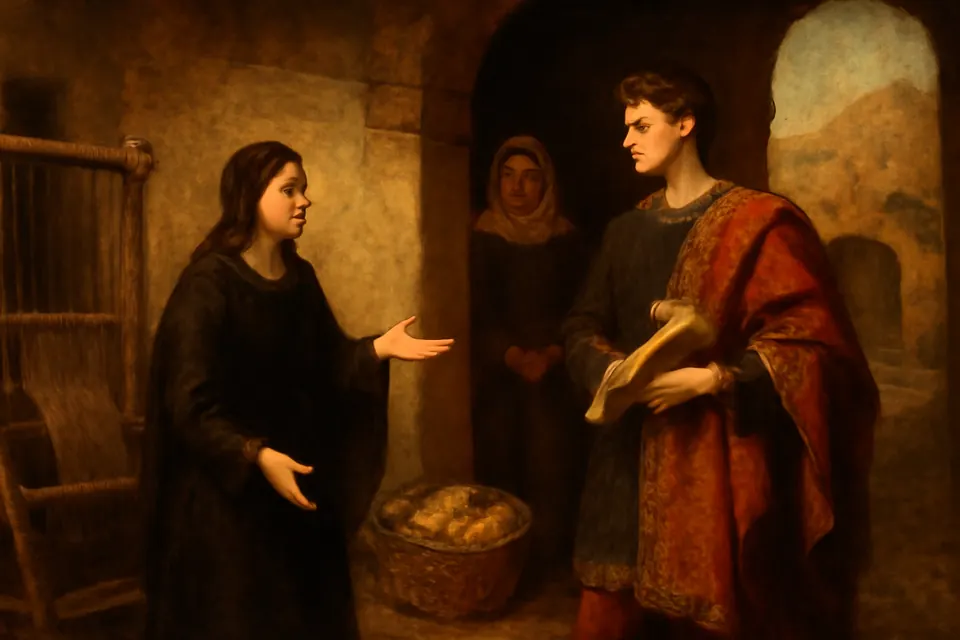
When their father died, Macrina became her mother's support and, in effect, the mother of the youngest child, Peter, whom she raised from infancy. She also took on the eldest brother. Gregory's account of it is frank:
Macrina's brother, the great Basil, returned after his long period of education, already a practised rhetorician. He was puffed up beyond measure with the pride of oratory and looked down on the local dignitaries.
Macrina "took him in hand," and Basil gave up his career, his property and his fame for the monastic life. The Church owes much of Eastern monasticism to his Rule, and he learned the life first at home.
The community on the Iris River
On the family estate by the Iris River in Pontus, Macrina persuaded her mother to free their slaves and live with them as sisters. The women prayed, worked with their hands and held everything in common. A community of men grew up beside them, later led by Peter. When famine struck and crowds came to the gates, the monastery fed them. After Emmelia died, Macrina led the community herself.
Her death in 379
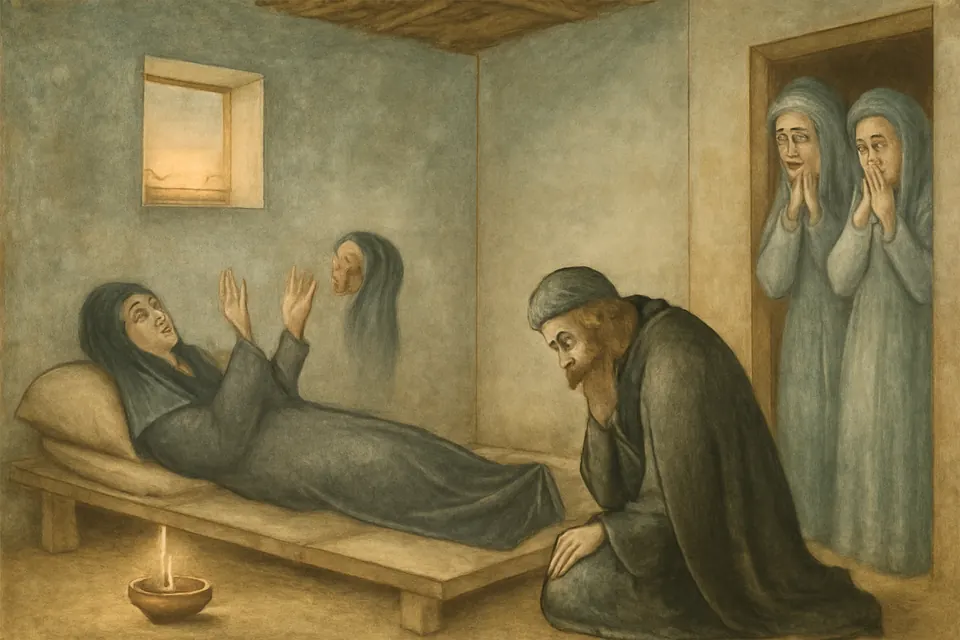
In 379, nine months after Basil's death, Gregory came home from a synod at Antioch. He had not seen his sister for nearly eight years. He found her dying, lying on the floor on a sack spread over a board, with another board for a pillow. They talked through the day of the soul and the resurrection, and Gregory later wrote that conversation up as his dialogue On the Soul and the Resurrection, with Macrina as the teacher.
That evening she prayed aloud, sealed her eyes, mouth and heart with the sign of the cross, and died soon after the evening lamp was brought in, still trying to pray the thanksgiving sung at the lighting of the lamps. When the women prepared her body, they found she had laid by no fine clothes for her burial, and on a thread at her neck an iron cross and an iron ring. The ring, Gregory learned, held a relic of the True Cross. She was buried in the grave of her parents, in the church of the Holy Martyrs a few miles from the monastery.
The miracles of St. Macrina
Gregory records two healings, both reported by people who knew her:
- The tumor: while preparing her body, the nun Vestiana showed Gregory a small faint mark below Macrina's neck. Years before, Macrina had a growth there that threatened her life, but she would not let a doctor see it. She prayed all night, and when her mother made the sign of the cross over the place, "the sign worked and the tumour disappeared."
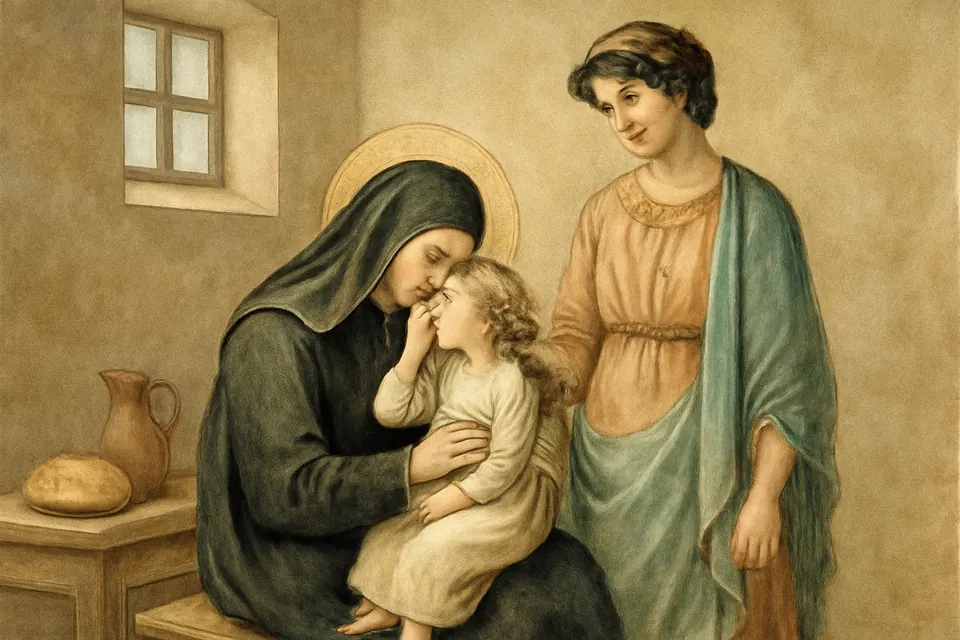
- The little girl's eye: on his way home, an army officer at Sebastopolis told Gregory how his small daughter, whose eye was badly diseased, had been held and kissed by Macrina, who promised a remedy. On the road home the parents realized they had forgotten the promised salve, and as they sent someone back for it, the mother looked at the child and saw the eye was healed. "She has indeed given her the true drug which cures disease," she cried; "it is the healing that comes from prayer."
The Orthodox life adds that through her prayers the monastery never ran short of wheat in time of famine. That is traditional.
Why St. Macrina is honored as a model for nuns
Macrina has no formal patronage, but she is one of the founders of consecrated life for women in the East. In Palermo, Sicily, the Italo-Albanian Basilian nuns, who follow the monastic tradition of her brother Basil, worship in a church dedicated to Santa Macrina. Families with many children, and older sisters who help raise their siblings, can rightly see her as their own.

Symbols of St. Macrina in art
Macrina is rarely shown, and almost always in Byzantine and Orthodox art:
- A dark monastic habit and veil: Gregory says she was buried in her mother's dark robe, the only covering she had.
- Hands raised in prayer: the old gesture of the orans, as in the 11th-century fresco in Kyiv.
- An iron cross: the cross she wore on her heart.
- A book: the Psalter of her childhood.
Western images of her are rare.
Feast day and prayer
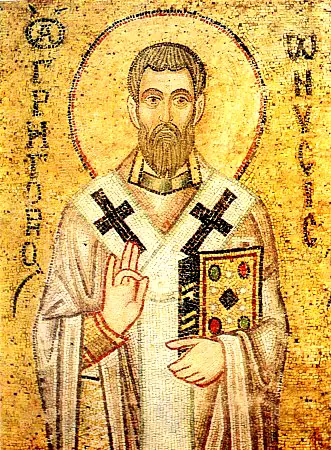
We keep St. Macrina's feast on July 19, the day of her death, in both the Roman Martyrology and the Orthodox calendar. See the other saints of mid-July on our feast days page.
The prayer most closely tied to her is her own, as Gregory wrote it down at her deathbed. It begins:
Thou, O Lord, hast freed us from the fear of death. Thou hast made the end of this life the beginning to us of true life. Thou for a season restest our bodies in sleep and awakest them again at the last trump.
And near its end:
O God eternal, to Whom I have been attached from my mother's womb, Whom my soul has loved with all its strength, to Whom I have dedicated both my flesh and my soul from my youth up until now----do Thou give me an angel of light to conduct me to the place of refreshment, where is the water of rest, in the bosom of the holy Fathers.
Let us ask St. Macrina to pray for all who are dying, and for every family, that its children may come to God as hers did.
Frequently asked questions
Who was St. Macrina the Younger?
The eldest daughter of Basil the Elder and St. Emmelia, born about 330. After her fiancé died she chose consecrated virginity, raised her youngest brother Peter, drew her brother Basil to the monastic life and led a community of women on the family estate in Pontus until her death in 379. Her brother Gregory of Nyssa wrote her Life.
What is the difference between Macrina the Elder and Macrina the Younger?
Macrina the Elder was their grandmother, who, Gregory says, "confessed Christ like a good athlete in the time of the persecutions." Macrina the Younger, named after her, is the granddaughter, sister of Basil and Gregory. The Elder's feast is January 14; the Younger's is July 19.
What miracles are told of St. Macrina?
Gregory of Nyssa records two healings: a tumor on her own breast that vanished when her mother made the sign of the cross over it, and a little girl's diseased eye cured after Macrina kissed it. The Orthodox life adds that through her prayers her monastery never lacked wheat in a famine.
Is there a prayer of St. Macrina?
Yes. Gregory of Nyssa wrote down the prayer she said aloud on the evening she died, beginning, "Thou, O Lord, hast freed us from the fear of death." Pope Benedict XVI quoted from it in a general audience in 2007.
Sources
- Catholic Encyclopedia (1910): St. Macrina the Younger
- Gregory of Nyssa, Life of St. Macrina, trans. W. K. Lowther Clarke (1916), tertullian.org
- Benedict XVI, General Audience of 29 August 2007: Saint Gregory of Nyssa (1)
- Benedict XVI, General Audience of 5 September 2007: Saint Gregory of Nyssa (2)
- Orthodox Church in America: Venerable Macrina, sister of Saint Basil the Great