Famous saints
The most famous saints are the Blessed Virgin Mary and St. Joseph, followed by St. Francis of Assisi, St. Anthony of Padua, St. Patrick, St. Nicholas, St. Peter, St. Paul, St. Jude, St. Thérèse of Lisieux and modern saints such as Padre Pio and Mother Teresa. Below are 30 of the most popular saints and why we love them.
Famous saints become famous for different reasons. Some stood beside Jesus in the Gospels. Some left a story so vivid that painters never stopped painting it: a friar preaching to birds, a bishop slipping gold through a window at night, a knight on horseback with a dragon under his lance. Others are famous because so many people have asked their prayers and received help. And a few are famous because a whole holiday grew up around their feast.
Here are 30 of the most popular Catholic saints, grouped by era, with a short word on who each one was and why we love them. Each name links to a full entry with the life, miracles, prayers and the saint's symbols in art.

Why we honor the saints
The saints are not only heroes from the past. They are alive in Christ, and they pray for us. The Second Vatican Council put it simply: "Nor is it by the title of example only that we cherish the memory of those in heaven, but still more in order that the union of the whole Church may be strengthened in the Spirit by the practice of fraternal charity" (Lumen Gentium, 50). When we ask a famous saint to pray for us, we join a conversation that millions of believers have already had with that same friend of God.
Mary, Joseph and the saints of the Gospels
- The Blessed Virgin Mary, Mother of God, first among the saints and loved under countless titles, from Our Lady of Guadalupe to Our Lady of Lourdes. We honor her above all the saints and ask her prayers in every Hail Mary.
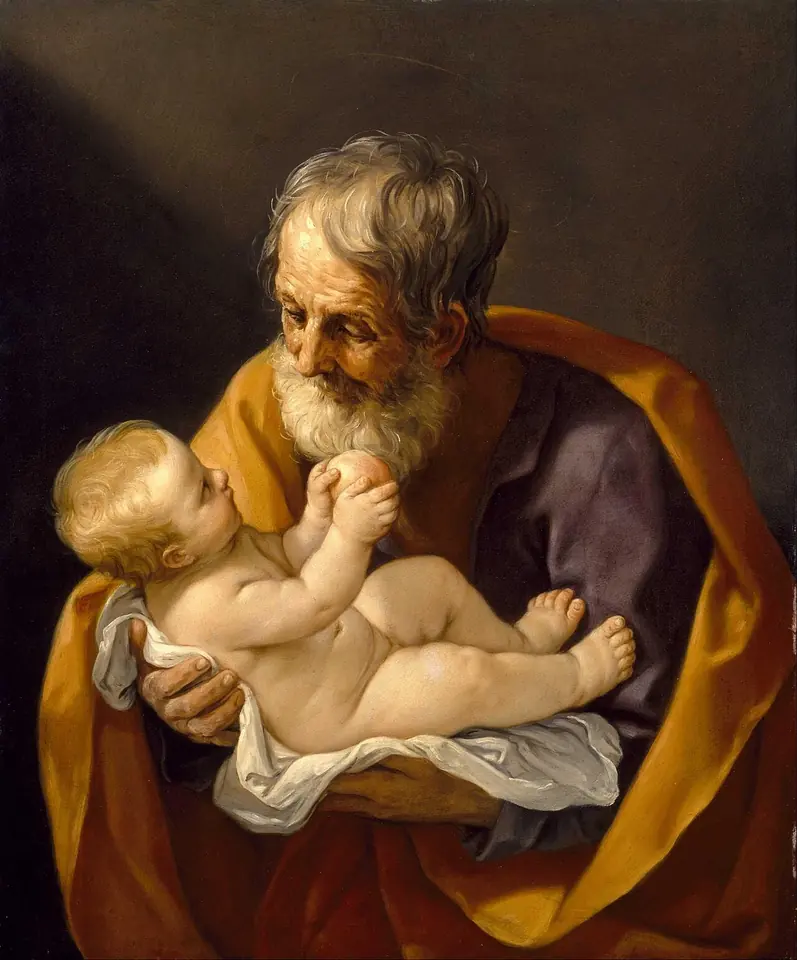
- St. Joseph, husband of Mary and guardian of the Holy Family, who never speaks a word in the Gospels. Blessed Pius IX declared him Patron of the Universal Church on December 8, 1870. We ask his help for workers, fathers, families and a holy death. Feast: March 19.
- St. John the Baptist, the voice crying in the wilderness who baptized Jesus in the Jordan. His birth, on June 24, is one of only three births the Church celebrates, with those of Our Lord and Our Lady.
- St. Peter, the fisherman who denied Jesus three times and was forgiven, the rock on whom Christ built his Church and the first pope. His tomb lies under the high altar of St. Peter's Basilica. Feast: June 29.
- St. Paul, the persecutor converted on the road to Damascus, missionary to the Gentiles, whose letters make up nearly half the books of the New Testament. Feast: June 29, with St. Peter.
- St. Mary Magdalene, first witness of the Resurrection, called "Apostle of the Apostles." Feast: July 22.
- St. Jude, the apostle we turn to in hopeless cases. Devotion to him grew so strong in the 20th century that the comedian Danny Thomas, after a prayer to St. Jude, founded St. Jude Children's Research Hospital in Memphis. Feast: October 28.
- St. Michael the Archangel, prince of the heavenly host, who casts Satan down in Revelation 12. Millions pray the St. Michael prayer every day. Feast: September 29.
Saints of the early Church
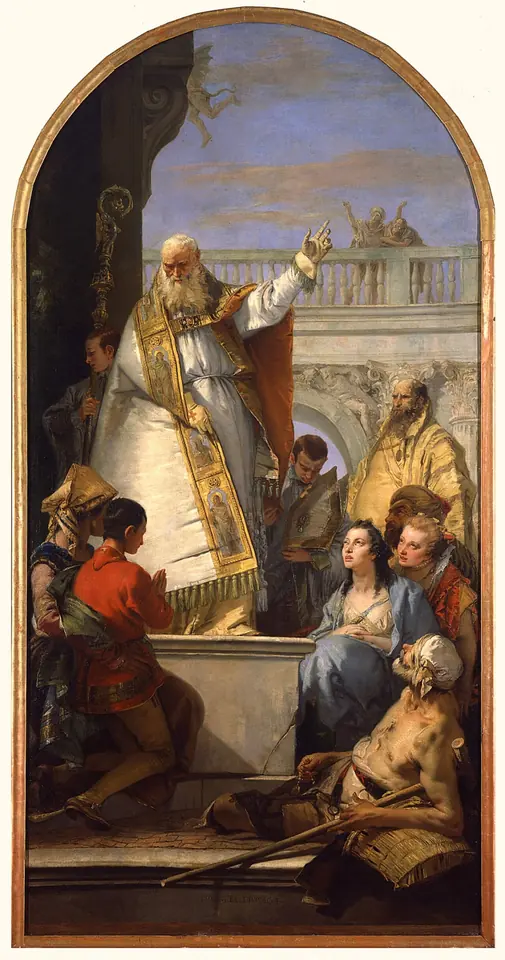
- St. Nicholas, bishop of Myra in the fourth century, who by tradition saved three poor girls from ruin by tossing bags of gold through their window at night. He is the saint behind Santa Claus; see St. Nicholas Day. Feast: December 6.
- St. Patrick, kidnapped from Britain as a teenager and enslaved in Ireland, who escaped and came back as a bishop to preach to his captors. His own Confessio survives and begins with startling humility: "My name is Patrick. I am a sinner, a simple country person, and the least of all believers." Feast: March 17.
- St. Augustine, the brilliant, restless young man whose mother St. Monica prayed for him for years, and who became bishop of Hippo and the most influential theologian of the West. His Confessions open with the line every seeker knows: "You have made us for Yourself, and our hearts are restless until they rest in You." Feast: August 28.
- St. George, the soldier-martyr of about 303 whom legend sets against a dragon. Patron of England, Georgia, soldiers and scouts. Feast: April 23.
- St. Valentine, a Roman priest martyred on the Via Flaminia in the third century. The custom of sending love notes on his feast came much later, probably from the English poets of the 14th century. Feast: February 14.
- St. Christopher, the giant of legend who carried the Christ Child across a river, and patron of travelers. His medal still hangs in countless cars. Remembered July 25.
- St. Benedict, whose Rule shaped Western monastic life for 1,500 years and whose medal is one of the most loved sacramentals. Pope St. Paul VI named him patron of Europe. Feast: July 11.
Saints of the Middle Ages
- St. Francis of Assisi, the rich young man who gave away everything for Lady Poverty, preached to the birds, set up the first living Christmas crèche at Greccio in 1223, and received the stigmata. He was canonized less than two years after his death. Feast: October 4.
- St. Anthony of Padua, the Franciscan preacher canonized less than a year after he died, the saint we ask to help us find what is lost. See the St. Anthony prayer. Feast: June 13.
- St. Thomas Aquinas, the Dominican who wrote the Summa Theologiae and the Eucharistic hymns sung at Benediction, the Tantum Ergo among them. Patron of Catholic schools and students. Feast: January 28.
- St. Catherine of Siena, the young Dominican laywoman who told popes what to do and is a Doctor of the Church. Feast: April 29.
- St. Joan of Arc, the farm girl who led the armies of France at 17 and was burned at 19. Feast: May 30.

Saints of the Reformation era and the missions
- St. Ignatius of Loyola, the Spanish soldier whose leg was shattered by a cannonball in 1521 and who, during his long recovery, read the lives of the saints and gave his life to God. He founded the Jesuits and wrote the Spiritual Exercises. Feast: July 31.
- St. Francis Xavier, Ignatius's friend, who carried the Gospel to India and Japan and died within sight of China. Patron of the missions. Feast: December 3.
- St. Teresa of Ávila, reformer of Carmel, mystic and the first woman Doctor of the Church. Feast: October 15.
- St. Thomas More, Lord Chancellor of England, beheaded in 1535 for refusing to accept Henry VIII as head of the Church. Pope St. John Paul II named him patron of statesmen and politicians. Feast: June 22.
Modern saints
- St. Thérèse of Lisieux, the Little Flower, who promised to "spend my heaven doing good upon earth." Her "little way" made her the most popular saint of the 20th century. Feast: October 1.
- St. Pio of Pietrelcina, Padre Pio, the Capuchin friar who bore the wounds of Christ for 50 years and heard confessions for hours a day. See the Padre Pio prayer. Feast: September 23.
- St. Maximilian Kolbe, the Franciscan who offered to die in place of a stranger, the family man Franciszek Gajowniczek, in the starvation bunker at Auschwitz in 1941. Feast: August 14.
- St. Teresa of Calcutta, Mother Teresa, who founded the Missionaries of Charity and served the dying on the streets of Calcutta. Feast: September 5.
- St. John Paul II, the Polish pope who reigned for 26 years, visited 129 countries and told the world, "Be not afraid." Feast: October 22.
- St. Carlo Acutis, the Italian teenager who loved the Eucharist, built a website cataloging Eucharistic miracles, and died of leukemia at 15 in 2006. Pope Leo XIV canonized him on September 7, 2025. Feast: October 12.

More saints people love
Thirty names leave out many who could easily be on the list. St. Rita of Cascia, patron of impossible causes. St. Faustina, apostle of Divine Mercy. St. Bernadette of Lourdes. St. Juan Diego, who carried Our Lady's image on his tilma. St. Martin de Porres, the barber-surgeon of Lima. St. Dymphna, St. Lucy, St. Peregrine and St. Expedite. For the great women of the Church, see our page of female saints; for the Twelve, see the 12 apostles.
Finding your own saint
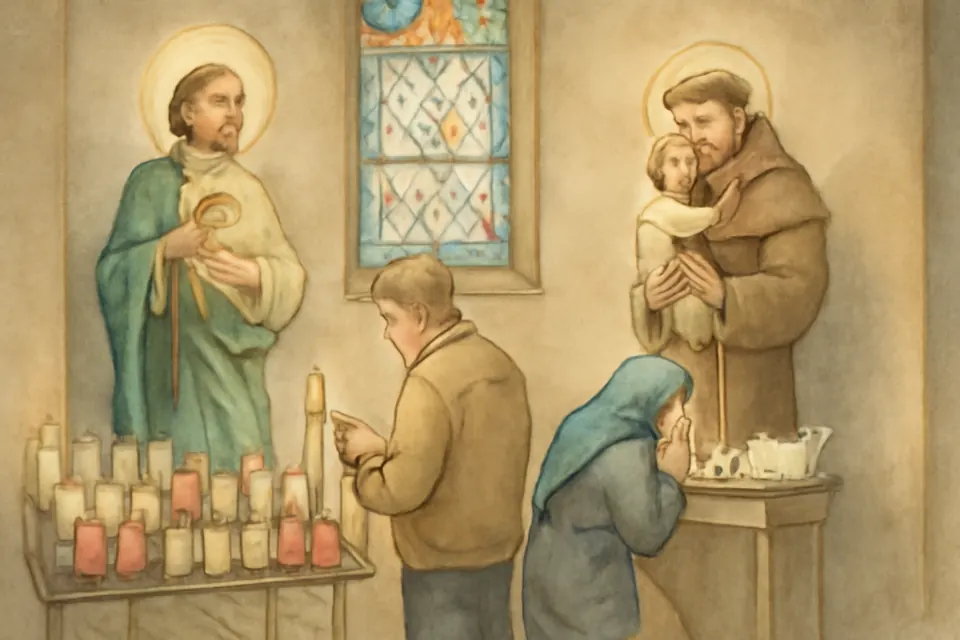
Fame is not the measure of holiness. Heaven is full of saints whose names no one remembers, and on All Saints' Day we honor them all. Still, the famous saints are famous partly because they are easy to love, and many Catholics find that one of them becomes a lifelong friend. Read their stories, find one whose life speaks to yours, and begin to ask that saint's prayers. Browse every saint on the site at Saints A to Z, by feast day, or by cause on patron saints.

St. Joseph, St. Francis, St. Anthony, St. Thérèse, all you holy men and women, pray for us.
Frequently asked questions
Who is the most famous saint?
The Blessed Virgin Mary is honored above all the saints. After her, St. Joseph, St. Peter and St. Paul are the best known in the whole Church, and St. Francis of Assisi is probably the most loved saint outside it. In the United States, St. Patrick, St. Nicholas and St. Valentine are household names because of the holidays that grew from their feasts.
Who are the most popular Catholic saints to pray to?
St. Jude for hopeless cases, St. Anthony for lost things, St. Joseph for work, families and a happy death, St. Michael the Archangel for protection, St. Rita for impossible causes, Padre Pio for healing and St. Thérèse for every kind of need. We ask their intercession; every grace comes from God.
Who is the most famous modern saint?
St. Teresa of Calcutta (Mother Teresa), St. John Paul II and St. Pio of Pietrelcina (Padre Pio) are the best-known saints of the 20th century. Among the newest, St. Carlo Acutis, canonized on September 7, 2025, is the first saint of the millennial generation.
Why is St. Christopher not a saint anymore?
He still is. In 1969 his memorial was moved from the General Roman Calendar to local calendars, because his story is mostly legend, but he remains in the Roman Martyrology on July 25. Catholics may honor him and ask his prayers, and his medal is as popular as ever.
Which saint became Santa Claus?
St. Nicholas, a fourth-century bishop of Myra in what is now Turkey, famous for secretly giving dowries to three poor girls. Dutch settlers brought the Sinterklaas custom to New York, and the American Santa Claus grew from it. His feast is December 6.
Sources
- Second Vatican Council, Lumen Gentium, chapter 7, no. 50 (on the union of the pilgrim Church with the saints in heaven)
- Pope Francis, Apostolic Letter Patris Corde (2020), on the 150th anniversary of St. Joseph's proclamation as Patron of the Universal Church
- St. Patrick's Confessio (English translation), Royal Irish Academy
- St. Augustine, Confessions, Book I (New Advent)
- Dicastery for the Causes of Saints: Carlo Acutis