Mexican saints
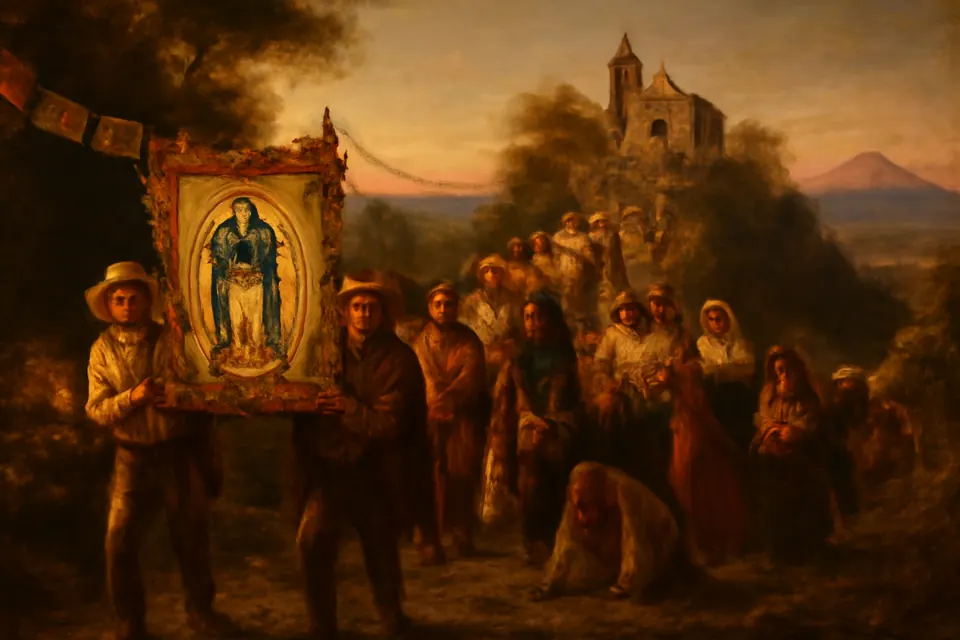
The Mexican saints include St. Juan Diego, the visionary of Our Lady of Guadalupe; St. Felipe de Jesús, the first Mexican saint; St. Cristóbal Magallanes and 24 Cristero martyrs, among them St. Toribio Romo; the boy martyr St. José Sánchez del Río; Bishop St. Rafael Guízar y Valencia; and the child martyrs of Tlaxcala.
Mexico's saints were born of an apparition and tested by persecution. The faith of the country has a mother at its center, Our Lady of Guadalupe, and a long line of martyrs: a young Franciscan crucified in Japan, three Tlaxcalan boys killed for their faith within a decade of the first baptisms, and the priests, farmers and teenagers who died crying "¡Viva Cristo Rey!" in the 1920s. This page gathers the Mexican saints, the blesseds whose causes are close, and the places where Mexicans honor them, with each one's exact status.
A word on titles. A saint has been canonized. A blessed has been beatified, the step before canonization. We give each person the title the Church gives, and we pray for the day when the blesseds below will be saints too.
St. Juan Diego and Our Lady of Guadalupe
Every list of Mexican saints begins at Tepeyac. In December 1531, the Blessed Virgin appeared to St. Juan Diego Cuauhtlatoatzin, a Nahua farmer and recent convert, and sent him to the bishop with roses in his cloak. When he opened it, her image was on the cloth. That tilma still hangs in the Basilica in Mexico City, the most visited Marian shrine in the world. St. John Paul II canonized Juan Diego there on July 31, 2002, the first Indigenous saint of the Americas. His feast is December 9.
Our Lady of Guadalupe is not a saint but the Mother of God herself, honored under the title she gave at Tepeyac. She is patroness of Mexico and of the Americas, and her feast on December 12 is the great day of the Mexican Catholic year. Juan Diego is her saint; every other saint on this page prayed before her image.
St. Felipe de Jesús, the first Mexican saint
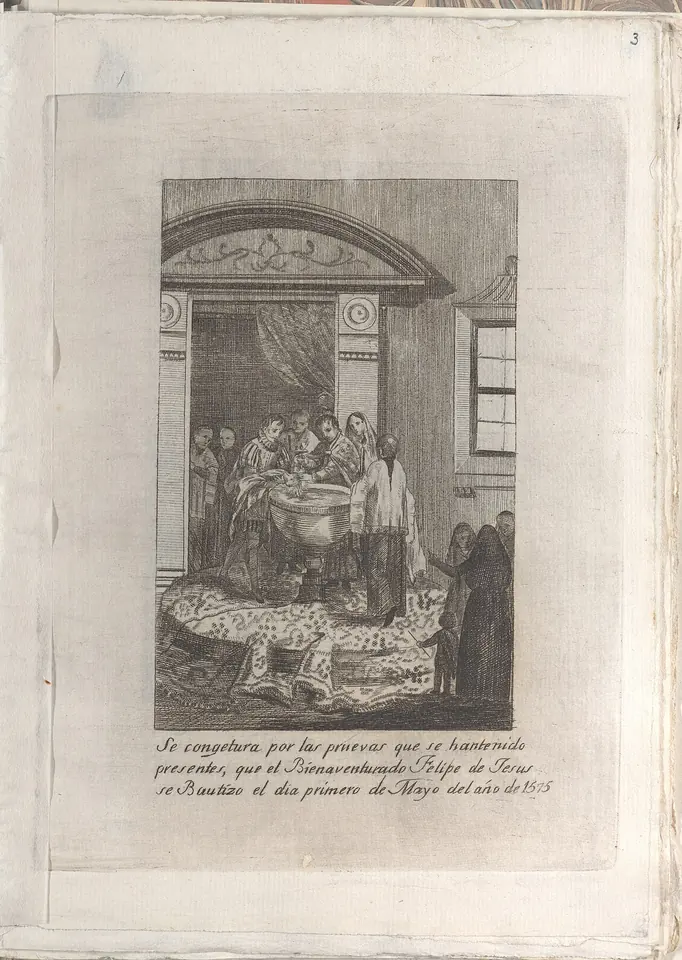
Felipe de las Casas was born in Mexico City in 1572. The 1911 Catholic Encyclopedia says frankly that he was "unusually frivolous as a boy." He joined the Franciscans, left, went to the Philippines as a merchant, and there came back to the friars. In 1596 he sailed for Mexico to be ordained, but a storm drove his ship onto the coast of Japan. He was arrested in Kyoto with other Franciscans, Japanese Christians and the Jesuit St. Paul Miki, marched to Nagasaki, and crucified with them on February 5, 1597. He was beatified in 1627 and canonized by Pius IX on June 8, 1862, the first saint born in Mexico. He is the patron of Mexico City, and his feast is February 5.

The child martyrs of Tlaxcala
Cristóbal, Antonio and Juan were Tlaxcalan boys of about twelve or thirteen, among the first generation baptized in New Spain. In 1527 Cristóbal begged his father, a local lord, to give up drunkenness and the old gods, and his father beat him to death. Two years later, in 1529, Antonio and Juan were killed while helping Franciscan missionaries gather up idols in the villages. The Church honors them as the protomartyrs of the Americas. St. John Paul II beatified them at the Basilica of Guadalupe on May 6, 1990, and Pope Francis canonized them on October 15, 2017. Tlaxcala keeps their feast on September 23.
The Cristero martyrs
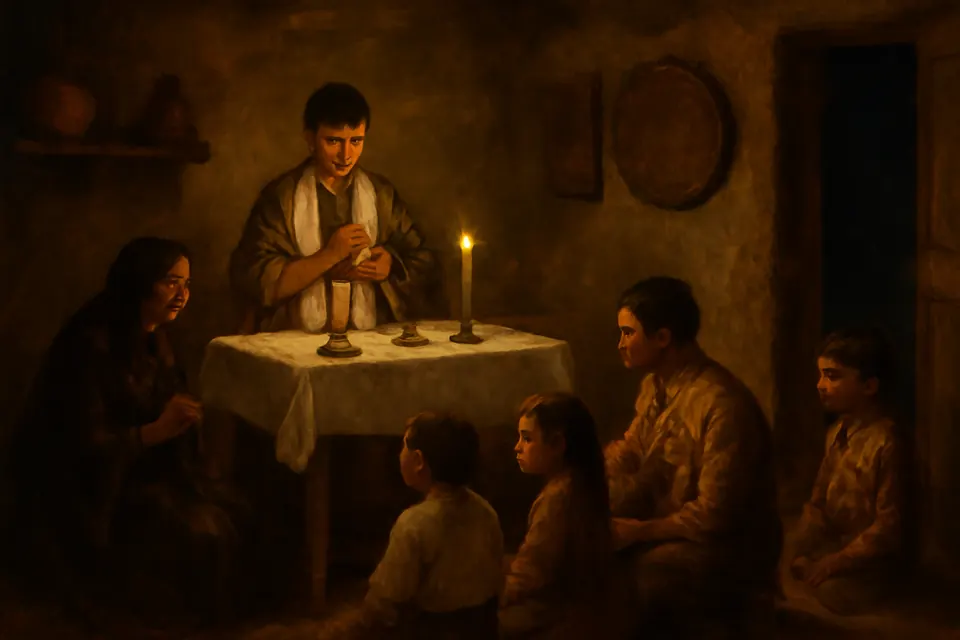
From 1926 the Mexican government enforced laws that closed churches, expelled foreign priests and made public worship nearly impossible. The bishops suspended public Masses in protest, and parts of the country rose in the Cristero War. Priests who stayed with their people said Mass in houses and barns, heard confessions at night and were shot when they were caught.
St. Cristóbal Magallanes and his 24 companions
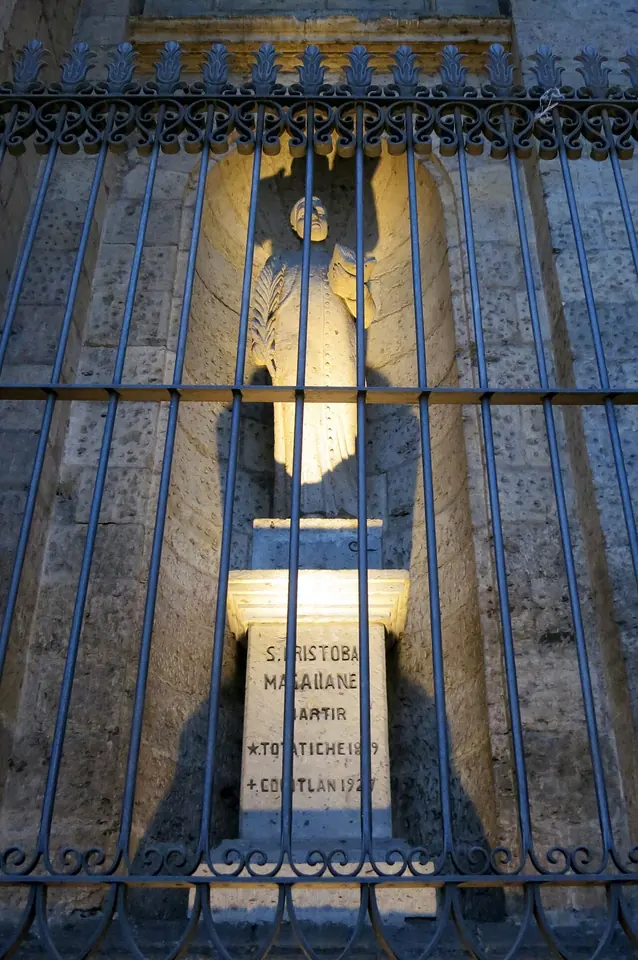
St. John Paul II canonized St. Cristóbal Magallanes and 24 companion martyrs on May 21, 2000. In his homily he said that "most of them belonged to the secular clergy and three were laymen," and that "they all freely and calmly accepted martyrdom as a witness to their faith, explicitly forgiving their persecutors." Cristóbal Magallanes was the parish priest of Totatiche, in Jalisco, where he founded a seminary and taught his people not to take up arms. He was arrested on his way to a ranch to say Mass and shot at Colotlán on May 25, 1927. The group's feast is May 21.
Among the 25 is St. Toribio Romo, shot by soldiers who broke into the room where he slept at Agua Caliente on February 25, 1928, aged 27. Today he is invoked by migrants, and many have reported being helped in the desert by a young priest whom they later recognized in his picture; the Church has not judged these accounts, and we label them as reported. His shrine at Santa Ana de Guadalupe, Jalisco, draws large pilgrimages.

St. José Sánchez del Río (1913 to 1928)
St. José Sánchez del Río was fourteen when he was captured with the Cristeros near Sahuayo, Michoacán. He refused to renounce his faith, even after he was tortured, and was killed on February 10, 1928, still crying "¡Viva Cristo Rey!" He was beatified in Guadalajara on November 20, 2005, with twelve other martyrs, and Pope Francis canonized him on October 16, 2016. Young Mexicans everywhere know his story.

The Cristero-era blesseds
- Blessed Miguel Pro (1891 to 1927), a Jesuit who ministered in disguise in Mexico City, was shot by firing squad on November 23, 1927, arms outstretched, saying "¡Viva Cristo Rey!" St. John Paul II beatified him in 1988.
- Blessed Anacleto González Flores (1888 to 1927), a lawyer, teacher and father from Jalisco who led the Catholic laity in peaceful resistance, was tortured and shot on April 1, 1927. He was beatified with twelve companions in Guadalajara in 2005, before a crowd that filled the city's stadium.
Founders and servants of the poor
Not every Mexican saint died a martyr. These men and women spent their lives on the sick, the poor and the children no one else would take:
- St. Rafael Guízar y Valencia (1878 to 1938), bishop of Veracruz, gave away his goods and handed back the gifts of the powerful, so that his people called him the "Bishop of the poor." Through years of persecution and exile he kept his seminary going, often in hiding. Pope Benedict XVI canonized him on October 15, 2006, holding him up "as an example of one who has left all to 'follow Jesus'."
- St. José María de Yermo y Parres (1851 to 1904), a priest of the diocese of León who later worked in Puebla, founded the Servants of the Sacred Heart of Jesus and of the Poor. He was canonized on May 21, 2000, with the Cristero martyrs.
- St. María de Jesús Sacramentado Venegas (1868 to 1959) founded the Daughters of the Sacred Heart of Jesus in Guadalajara to care for the sick. Canonized on the same day, she was, in St. John Paul II's words, "the first Mexican woman to be canonized."
- St. Guadalupe García Zavala (1878 to 1963), "Madre Lupita," broke off her engagement to found the Servants of St. Margaret Mary and of the Poor in Guadalajara, and hid priests during the persecution. Pope Francis canonized her on May 12, 2013.
- Blessed Concepción Cabrera de Armida (1862 to 1937), "Conchita," a wife and mother of nine from San Luis Potosí, wrote thousands of pages on the spiritual life and inspired the Works of the Cross. She was beatified at the Basilica of Guadalupe on May 4, 2019, the first Mexican laywoman to be beatified.

Missionaries in Mexico
St. Junípero Serra spent nearly twenty years in Mexico before he ever saw California, preaching in the Sierra Gorda of Querétaro, where his missions still stand. St. Toribio Romo, St. Felipe de Jesús and the friars of New Spain belong to a single story of the faith carried across land and sea.
Honoring the Mexican saints
Mexicans keep their saints close. The relics of the Cristero martyrs rest in their home parishes in Jalisco, Zacatecas, Michoacán and Guanajuato, and pilgrims walk to Santa Ana de Guadalupe for St. Toribio, to Sahuayo for St. José and to Mexico City for Padre Pro. In December, the Las Posadas novena and the vigil of December 12 at Tepeyac gather families who carry pictures of their saints alongside the Virgin's.
Let us ask the Mexican martyrs to pray for every place where faith still costs something, and for the families of Mexico and its migrants. St. Juan Diego, St. Felipe de Jesús, St. Cristóbal Magallanes and companions, St. José Sánchez del Río, pray for us. Our Lady of Guadalupe, Mother of the Americas, pray for us.
For more, see American saints, what is a martyr, Marian apparitions and the feast days calendar.
Frequently asked questions
Who was the first Mexican saint?
St. Felipe de Jesús, a Franciscan born in Mexico City in 1572, who was crucified at Nagasaki, Japan, on February 5, 1597, with St. Paul Miki and their companions. He was beatified in 1627 and canonized by Pius IX in 1862. He is the patron of Mexico City, and his feast is February 5.
How many Mexican saints are there?
Mexico has about 35 canonized saints, most of them martyrs. The largest group is St. Cristóbal Magallanes and his 24 companions, canonized together in 2000, along with St. José Sánchez del Río, St. Juan Diego, St. Felipe de Jesús, the three child martyrs of Tlaxcala and several founders of religious congregations. Many more Mexicans are blesseds.
Who was the first Mexican woman saint?
St. María de Jesús Sacramentado Venegas (1868 to 1959) of Jalisco, who founded the Daughters of the Sacred Heart of Jesus to care for the sick. St. John Paul II canonized her on May 21, 2000, and called her 'the first Mexican woman to be canonized.'
Who are the Cristero saints?
They are the priests and laymen killed during the persecution of the Church in Mexico in the 1920s and 1930s. Twenty-five, led by St. Cristóbal Magallanes and including St. Toribio Romo, were canonized in 2000, and St. José Sánchez del Río, a 14-year-old, in 2016. Blessed Miguel Pro and Blessed Anacleto González Flores are among the Cristero-era blesseds.
Is Our Lady of Guadalupe a saint?
Our Lady of Guadalupe is the Blessed Virgin Mary herself, under the title she gave at Tepeyac in 1531. She is above all the saints, as the Mother of God, and she is the patroness of Mexico and of all the Americas. Her feast is December 12.
Who is the patron saint of Mexican immigrants?
St. Toribio Romo, a Cristero martyr killed in 1928, is widely invoked by migrants crossing the border, and many people report that a young priest helped them on the journey. These accounts are reported, not approved. St. Frances Cabrini is the Church's patron of immigrants generally.
Sources
- John Paul II, Homily at the canonization of 27 saints, May 21, 2000
- Catholic Encyclopedia (1911): St. Philip of Jesus
- Benedict XVI, Homily at the canonization of Rafael Guízar y Valencia and three others, October 15, 2006
- Pope Francis, Homily at the canonization of the Martyrs of Otranto, Laura Montoya and Guadalupe García Zavala, May 12, 2013
- Pope Francis, Homily at the canonization of Cristóbal, Antonio and Juan and others, October 15, 2017
- Agenzia Fides (2005): Over 50,000 gather in Guadalajara for the beatification of 13 martyrs
- Vatican News (2019): Blessed Conchita, beatification by Cardinal Angelo Becciu