Church Fathers
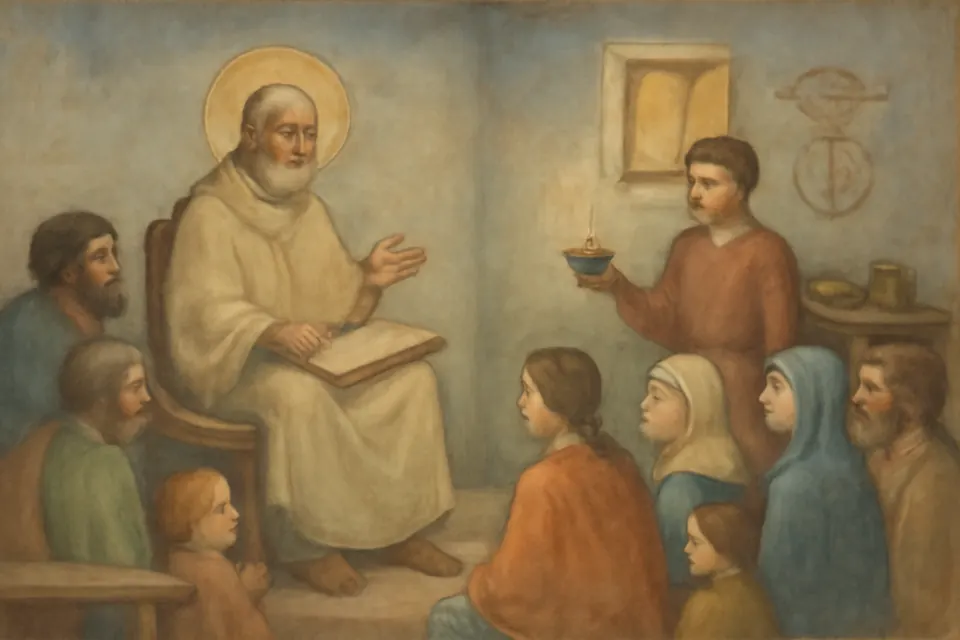
The Church Fathers are the holy writers of the early centuries, roughly from the end of the first century to St. John of Damascus in the 700s, whose teaching the Church received as a faithful witness to the faith of the apostles. A Father is recognized by four marks: antiquity, orthodox teaching, holiness of life and the Church's approval.
The Church Fathers are the saints and teachers of the first Christian centuries who received the faith from the apostles and their successors and handed it on to us. They wrote letters on the road to martyrdom, preached to crowded basilicas, argued before emperors and sat in the great councils that gave us the Creed. When the Church explains Scripture or settles a question of doctrine, she still turns to them.
Why we call them "Fathers"
St. Paul wrote to the Corinthians, "For if you have ten thousand instructors in Christ, yet not many fathers. For in Christ Jesus, by the gospel, I have begotten you" (1 Corinthians 4:15). From the beginning, a father in the faith was someone through whom others came to new life in Christ. St. Irenaeus said that a teacher is a father and a disciple is a son.
So the bishops of each generation called the holy bishops before them "the Fathers," and the bishops gathered at Nicaea and later councils became "the Fathers of Nicaea." Over time the name settled on the great Christian writers of the early centuries, the teachers who instructed the Church, in the words of the Catholic Encyclopedia, "during her infancy and first growth."

The four marks of a Father of the Church
Theologians have long used four tests to decide who counts as a Father of the Church in the full sense:
- Antiquity. A Father belongs to the early Church. In the West the age of the Fathers is usually closed with St. Isidore of Seville, who died in 636, and in the East with St. John of Damascus, who died around 750.
- Orthodox teaching. His teaching as a whole agrees with the faith of the Church.
- Holiness of life. The Fathers are honored as saints.
- The Church's approval. The Church has received his writings as a witness to her faith, whether by a council citing him, a Pope commending him, or his long use in the liturgy and in theology.
The fourth test explains some famous exceptions. Tertullian, Origen and others were brilliant early writers, and the Church still draws on much of what they wrote, but parts of their teaching went astray, and so they are called "ecclesiastical writers" rather than Fathers. As St. Vincent of Lérins put it around 434, we must hold "that faith which has been believed everywhere, always, by all." The Fathers matter most when they speak together.
The Apostolic Fathers
The earliest Fathers are called the Apostolic Fathers, because they knew the apostles or learned from those who had. The name itself is not ancient: the Catholic Encyclopedia traces it to a French scholar, Jean-Baptiste Cotelier, who published their writings together in 1672. The group includes:
- St. Clement of Rome, the third successor of St. Peter, who wrote to the Church at Corinth around 96 to heal a quarrel there. St. Irenaeus says Clement had seen the apostles and spoken with them.
- St. Ignatius of Antioch, bishop of Antioch, who wrote seven letters while being taken to Rome to die in the arena, around 107 to 117.
- St. Polycarp, bishop of Smyrna and a disciple of St. John the Apostle, martyred around 155.
- The Didache, or "Teaching of the Twelve Apostles," a short manual of Christian life, Baptism and the Eucharist from the late first century.
- The Shepherd of Hermas, the Letter of Barnabas, the fragments of Papias of Hierapolis and the Letter to Diognetus.
These writings are simple letters and handbooks, not treatises, yet they show us the Church just after the apostles: bishops, priests and deacons, the Eucharist celebrated on the Lord's Day, and a deep love for Christ. St. Ignatius is the first writer we know of to use the words "the Catholic Church":
Wherever the bishop shall appear, there let the multitude [of the people] also be; even as, wherever Jesus Christ is, there is the Catholic Church. (Ignatius, Letter to the Smyrnaeans, 8)
After them came the apologists of the 100s who defended the faith before pagan rulers, above all St. Justin Martyr, and the first great theologian, St. Irenaeus of Lyon, who had heard Polycarp preach as a boy. In the 200s came St. Cyprian of Carthage, bishop and martyr.
The Greek Fathers
The 300s and 400s were the golden age of the Fathers, when the Church, newly free to worship in the open, had to defend the divinity of Christ and the Holy Spirit against Arianism and other errors.
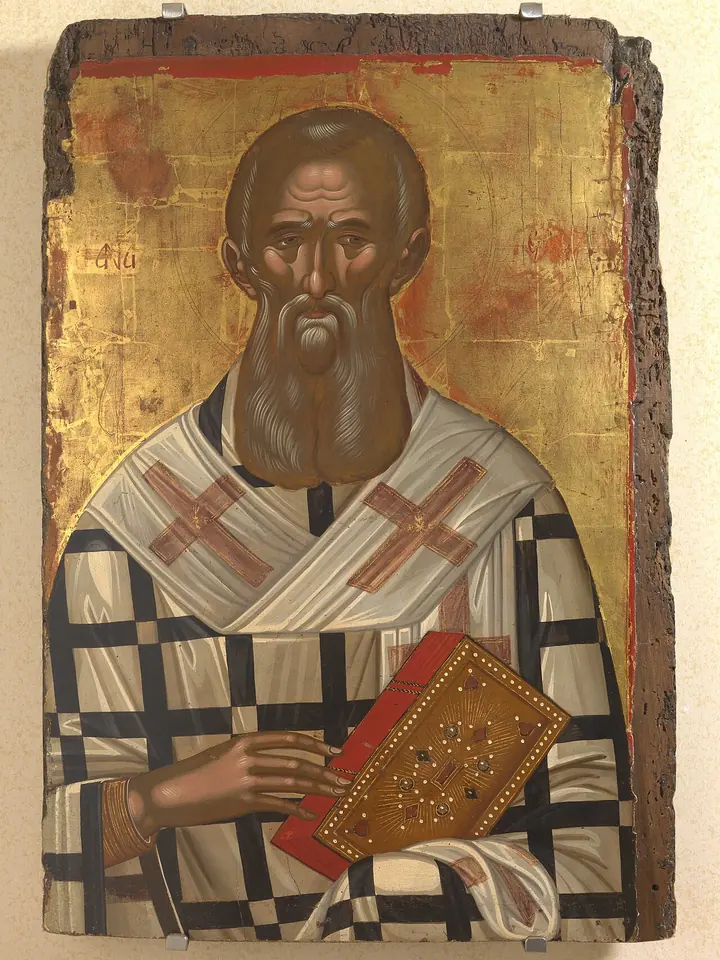
- St. Athanasius (about 296 to 373), bishop of Alexandria, who stood for the faith of Nicaea through five exiles and wrote On the Incarnation and the Life of St. Anthony.
- St. Basil the Great (about 329 to 379), bishop of Caesarea in Cappadocia, theologian of the Holy Spirit and lawgiver of Eastern monks.
- St. Gregory of Nazianzus (about 329 to 390), Basil's friend, called "the Theologian" for his sermons on the Trinity.
- St. Gregory of Nyssa, Basil's younger brother, the third of the three "Cappadocian Fathers."
- St. John Chrysostom (about 347 to 407), the "Golden Mouth" preacher of Antioch and archbishop of Constantinople.
- St. Cyril of Jerusalem, whose instructions to the newly baptized describe the liturgy of the 300s, and St. Cyril of Alexandria, defender of Mary's title Mother of God at the Council of Ephesus in 431.
- St. Ephrem the Syrian, deacon and hymn writer, the great Father of the Syriac tradition.

The East has honored Basil, Gregory and John together as the Three Holy Hierarchs since the eleventh century. According to the account in the Greek service books, the three appeared in a dream to Bishop John of Euchaita and asked for a common feast, to end the rivalry among their admirers over which of them was greatest. The West added Athanasius to make four great Eastern Fathers.
The Latin Fathers
The West had its own great four, honored together since the Middle Ages and made Doctors of the Church by Pope Boniface VIII in 1298:
- St. Ambrose (about 340 to 397), bishop of Milan, preacher and hymn writer, who baptized St. Augustine.
- St. Jerome (about 347 to 420), the scholar who translated the Bible into Latin (the Vulgate) and wrote commentaries on nearly every book of Scripture.
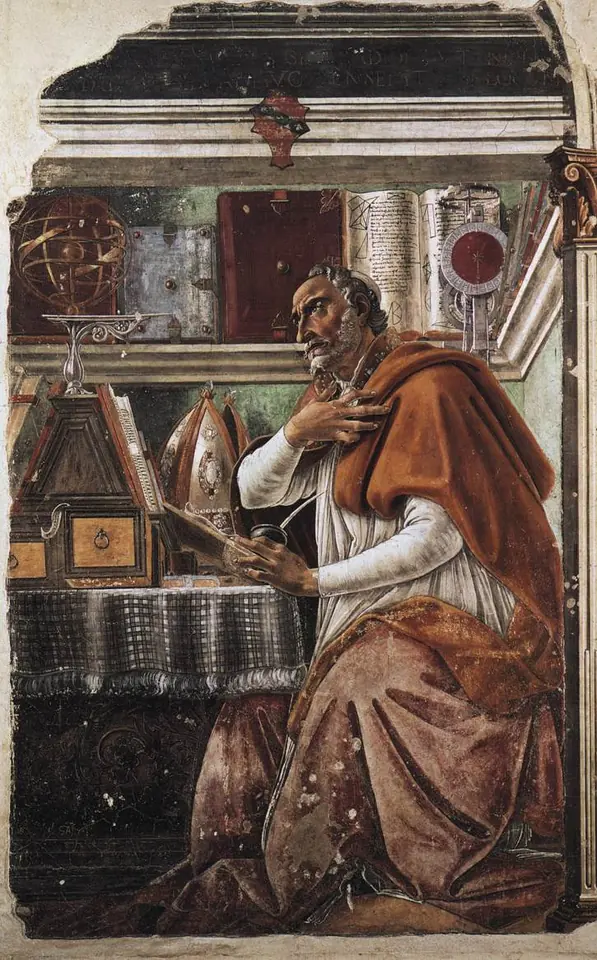
- St. Augustine (354 to 430), bishop of Hippo, author of the Confessions and The City of God, whose influence on Western theology is beyond measuring.
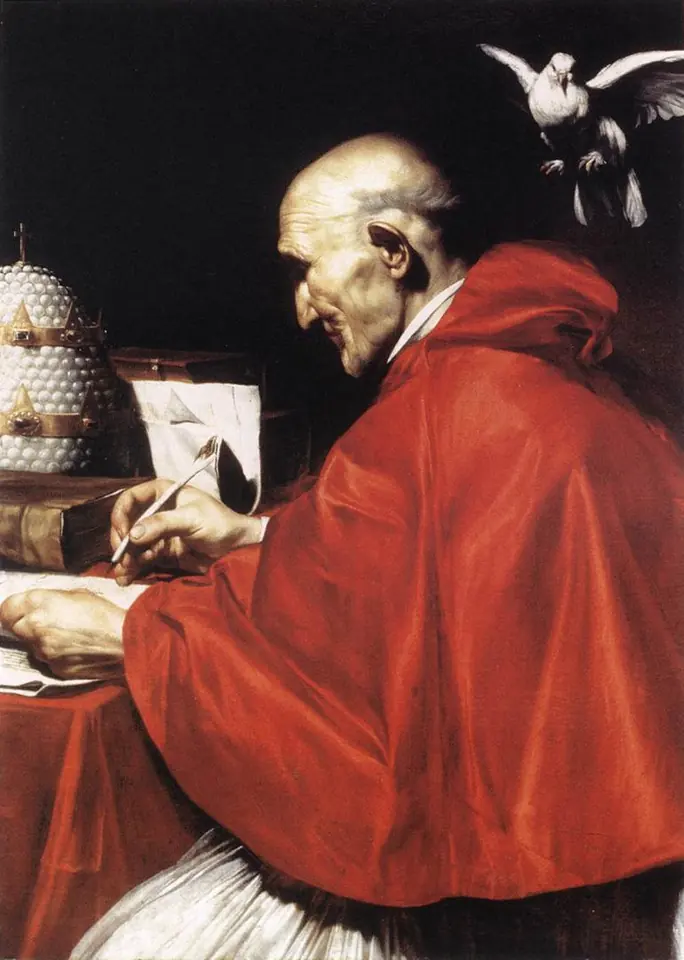
- St. Gregory the Great (about 540 to 604), the monk who became Pope, sent missionaries to England and wrote the Pastoral Rule.
Other great Latin Fathers include St. Hilary of Poitiers, called "the Athanasius of the West," and Pope St. Leo the Great, whose letter on the two natures of Christ was acclaimed at the Council of Chalcedon in 451 with the cry, according to the council's acts, "Peter has spoken through Leo." The age closes in the West with St. Isidore of Seville and St. Bede the Venerable, whom the Catholic Encyclopedia calls Fathers "born out of due time."
Fathers and Doctors: what's the difference?
The two titles overlap but are not the same. "Father of the Church" belongs only to the early centuries and comes from the Church's long reception of a writer. "Doctor of the Church" can be given to a saint of any age, but only by a formal declaration of the Pope. So Augustine, Jerome and Chrysostom are both Fathers and Doctors; St. Teresa of Avila and St. Thomas Aquinas are Doctors but not Fathers; and St. Ignatius of Antioch and St. Polycarp are Fathers who have never been named Doctors.
The Desert Fathers are a related but different group: the monks and nuns of the Egyptian desert, whose wisdom comes down to us mostly in short sayings rather than in books. We tell their story in the Desert Fathers.
How to start reading the Fathers
The Fathers are much easier to read than people expect. Many of their writings are letters and sermons meant for ordinary Christians. The old English translations of the Ante-Nicene Fathers and Nicene and Post-Nicene Fathers, made in the 1800s, are in the public domain and free online at newadvent.org.
A good path for a beginner:
- The seven letters of St. Ignatius of Antioch, each only a few pages long.
- The Didache, which takes about twenty minutes.
- St. Athanasius, On the Incarnation.
- St. Augustine, Confessions, perhaps one book a week.
- A few sermons of St. John Chrysostom on a Gospel you know well.
The Church also gives us the Fathers every day in the Office of Readings of the Liturgy of the Hours, where a passage from a Father or another great teacher follows the Scripture reading. Many of the faithful first meet Augustine, Ambrose and Gregory there.
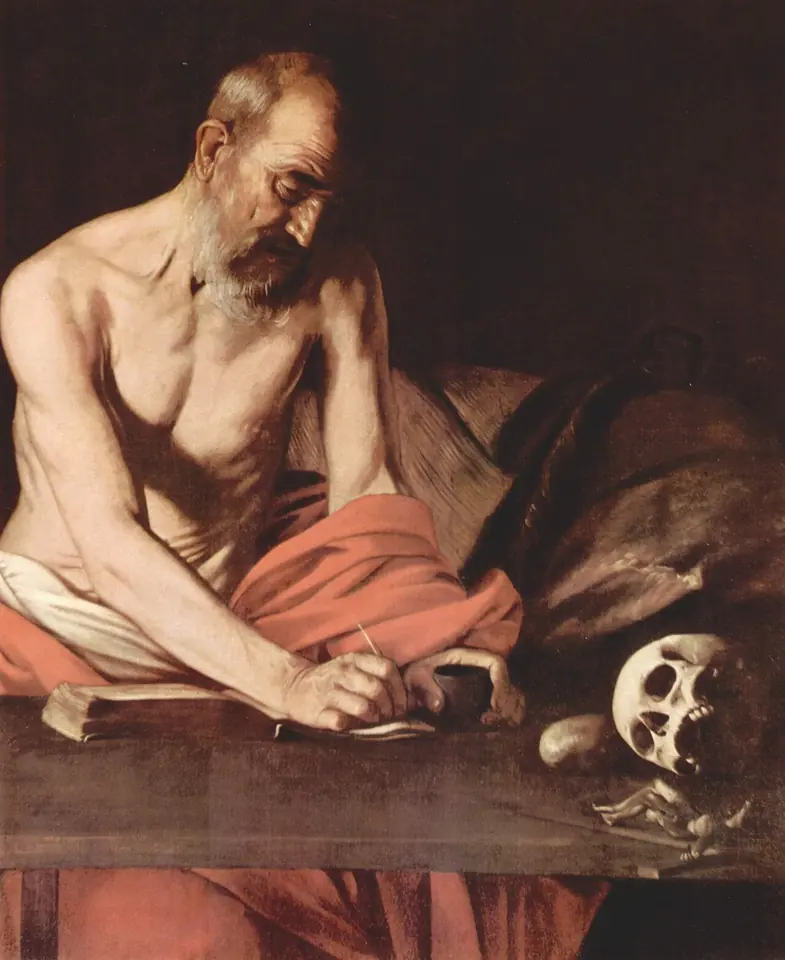
The Fathers are not only scholars for us to study. They are saints in heaven who still care for the Church they served. Holy Fathers of the Church, who handed on to us the faith of the apostles, pray for us, that we may keep it whole and pass it on.
Frequently asked questions
Who are the early Church Fathers?
They are the bishops, priests, monks and lay teachers of the first Christian centuries whose writings handed on the faith of the apostles. The earliest are the Apostolic Fathers, such as St. Clement of Rome, St. Ignatius of Antioch and St. Polycarp. The best known are the great Greek and Latin Fathers of the 300s and 400s, among them St. Athanasius, St. Basil, St. John Chrysostom, St. Ambrose, St. Jerome and St. Augustine.
Who are the four great Latin Fathers?
St. Ambrose, St. Jerome, St. Augustine and St. Gregory the Great. They were the first four Doctors of the Church, and Pope Boniface VIII made their feasts universal in 1298.
Who are the great Greek Fathers?
The East honors St. Basil the Great, St. Gregory of Nazianzus and St. John Chrysostom together as the Three Holy Hierarchs, on January 30 in the Byzantine calendar. The West adds St. Athanasius to make four great Eastern Fathers, matching the four Latin ones.
What is the difference between a Church Father and a Doctor of the Church?
A Father belongs to the early centuries and is recognized by antiquity, orthodoxy, holiness and the Church's approval. A Doctor can come from any age but must be formally declared by the Pope for eminent teaching. Many Fathers are also Doctors, such as Augustine and Chrysostom, while later Doctors like St. Teresa of Avila are not Fathers.
When did the age of the Church Fathers end?
The usual answer is with St. Isidore of Seville (died 636) in the West and St. John of Damascus (died about 750) in the East. Some writers call St. Bernard of Clairvaux, in the 1100s, "the last of the Fathers" because his writing is so close to theirs in spirit.
Where can I read the early Church Fathers online?
The 19th-century English translations in the Ante-Nicene Fathers and Nicene and Post-Nicene Fathers series are in the public domain and free to read at newadvent.org and ccel.org. A good first reading is the seven letters of St. Ignatius of Antioch, then St. Augustine's Confessions.
Are Tertullian and Origen Church Fathers?
They are great early Christian writers, and the Church still learns from much of what they wrote, but they are not usually counted as Fathers in the strict sense, because parts of their teaching were not orthodox and Tertullian left the Church's communion late in life. Theologians call them "ecclesiastical writers."
Sources
- Fathers of the Church, Catholic Encyclopedia (1909). The meaning of "Father"; Gregory the Great and John Damascene as the limits; Bernard as "the last of the Fathers"
- The Apostolic Fathers, Catholic Encyclopedia (1907). Who counts among the Apostolic Fathers and the dates of their writings; the name coined by Cotelier in 1672
- Doctors of the Church, Catholic Encyclopedia (1909). The four Latin Doctors and Boniface VIII's decree of 1298; the Three Hierarchs and Athanasius
- Vincent of Lérins, Commonitorium, chapter 2 (NPNF). "Everywhere, always, by all"
- Ignatius of Antioch, Epistle to the Smyrnaeans, chapter 8 (ANF). The first known use of "the Catholic Church"