Marian apparitions
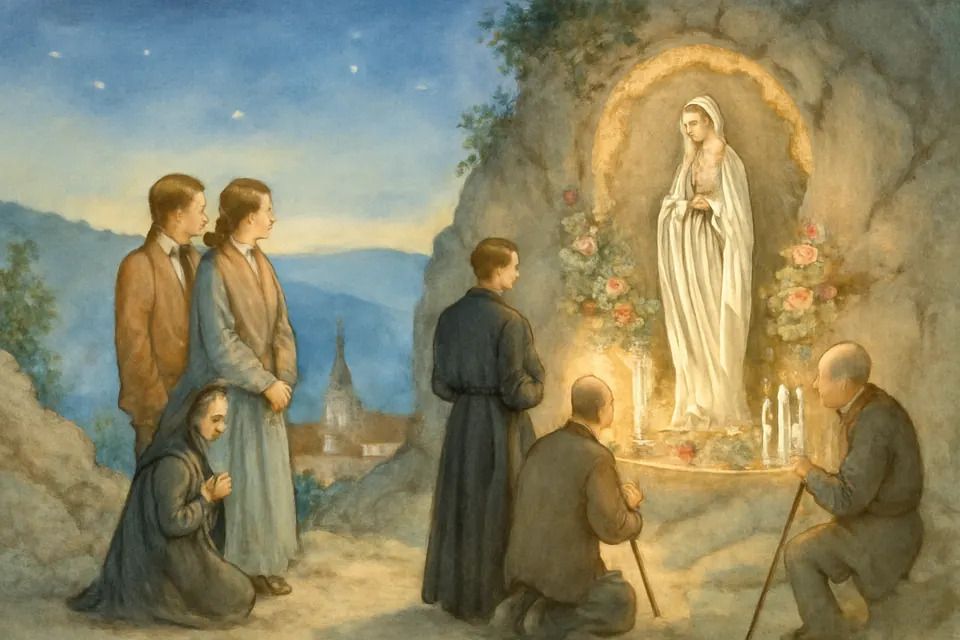
Marian apparitions are appearances of the Blessed Virgin Mary reported by one or more people, such as those at Guadalupe, Lourdes and Fátima. The Church treats them as private revelation: they add nothing to the faith, and no Catholic is obliged to believe them. The local bishop investigates, and since May 2024 the Holy See's norms let him conclude with one of six judgments, from a nihil obstat to a declaration that a claim is not supernatural.
What are Marian apparitions?
Marian apparitions are reported appearances of the Blessed Virgin Mary to particular people at particular places. A peasant on a hill outside Mexico City, a poor girl gathering firewood by a French river, three shepherd children in a Portuguese pasture: again and again, the people who say they saw her were small, unknown and often doubted. Out of their testimony grew some of the largest shrines in the world, where millions of us go each year to pray, to confess our sins and to ask Our Lady's intercession.
The Church has always been careful with these events. She honors the apparitions she has recognized, and her popes have gone to Lourdes and Fátima as pilgrims. She is just as clear that an apparition, however beloved, is never the foundation of our faith. Jesus Christ is the fullness of God's revelation, and Mary always points to him.
This page explains how the Church tells the difference between a genuine gift and a human mistake, what the new norms of 2024 changed, and where the best-known apparitions stand today. Each one has its own page on this site with the full story, and the Blessed Virgin Mary page tells the life of Our Lady herself.
Private revelation: what the Church asks us to believe
To understand apparitions we start with a distinction. Public revelation is what God revealed in Jesus Christ and handed on through the apostles in Scripture and Tradition. It is complete. The Catechism of the Catholic Church says plainly that there will be no new public revelation before Christ returns.
Apparitions belong to what the Church calls private revelation. The Catechism puts it this way in paragraph 67:
Throughout the ages, there have been so-called "private" revelations, some of which have been recognized by the authority of the Church. They do not belong, however, to the deposit of faith. It is not their role to improve or complete Christ's definitive Revelation, but to help live more fully by it in a certain period of history.
So when the Church recognizes an apparition, she is not adding an article to the Creed. She is saying that this event, with its messages and its shrine, can help us live the Gospel more fully, and that nothing in it contradicts the faith. Pope Benedict XVI, quoted in the 2024 norms, said that the faithful who receive such a judgment "are authorized to give [the phenomenon] their adhesion in a prudent manner," and that it is "a help which is proffered, but its use is not obligatory."
That is why a faithful Catholic can love Lourdes and never go there, or pray the Fátima prayers without having read the secrets. It is also why the Church can say no to a claimed apparition without any loss to the faith.
How the Church discerns an apparition
The first responsibility belongs to the local bishop. When people begin to say that Our Lady has appeared in his diocese, he has to look into it, protect the faithful from error and, if the fruits are good, guide the devotion. For most of history bishops did this by their own lights, with Rome stepping in only now and then.

The 1978 norms
In 1978 the Sacred Congregation for the Doctrine of the Faith, with the approval of Pope St. Paul VI, issued norms for "the discernment of presumed apparitions or revelations." They were kept confidential and only published in 2011. They gave bishops criteria to weigh together.
On the positive side: moral certainty, or at least great probability, that something really happened; the personal qualities of the visionary, including "psychological equilibrium, honesty and rectitude of moral life, sincerity and habitual docility towards Ecclesiastical Authority"; doctrine free from error; and "healthy devotion and abundant and constant spiritual fruit (for example, spirit of prayer, conversion, testimonies of charity, etc.)."
On the negative side: manifest error about the facts, doctrinal errors attributed to God or to Our Lady, a search for profit, gravely immoral acts, and psychological disorder or "collective hysteria." The norms add that these criteria "are not peremptory but rather indicative, and they should be applied cumulatively."
The traditional verdicts were three Latin formulas: constat de supernaturalitate (it is established as supernatural), constat de non supernaturalitate (it is established as not supernatural) and non constat de supernaturalitate (it is not established as supernatural). The 1978 norms themselves admitted that reaching such verdicts quickly had become "more difficult, if not almost impossible."
The 2024 norms and the six judgments
On May 17, 2024, the Dicastery for the Doctrine of the Faith published new Norms for Proceeding in the Discernment of Alleged Supernatural Phenomena, approved by Pope Francis on May 4 and in force from Pentecost, May 19, 2024. They "entirely replace" the 1978 norms. The presentation explains why: decisions had taken decades, and "since 1950, no more than six cases have been officially resolved."
Under the new norms the bishop investigates, writes a report and proposes one of six judgments. The Dicastery then confirms or does not confirm it before he announces it. The six are:
- Nihil obstat. "Without expressing any certainty about the supernatural authenticity of the phenomenon itself, many signs of the action of the Holy Spirit are acknowledged 'in the midst' of a given spiritual experience." The bishop is encouraged to value the devotion, "and even to promote its spread, including possibly through pilgrimages."
- Prae oculis habeatur ("let it be kept in view"). Important positive signs, but also some confusion or risk; the bishop must keep discerning, and messages may need doctrinal clarification.
- Curatur ("it is being looked after"). Significant critical elements, but the devotion has spread widely with real spiritual fruit, so a ban is not recommended. The bishop should not encourage it and should guide it in better directions.
- Sub mandato ("under mandate"). The phenomenon is good, but a person or group is misusing it, for money or outside the bishop's authority, so the Holy See entrusts its pastoral care to the bishop or a delegate.
- Prohibetur et obstruatur ("it is prohibited and to be obstructed"). The risks are very serious. The bishop declares publicly that adherence is not allowed, and explains why.
- Declaratio de non supernaturalitate. The bishop, authorized by the Dicastery, declares the phenomenon not supernatural. This needs concrete proof, "if an alleged visionary admits to having lied," for example.
Why the Church rarely says "supernatural" now
The most striking change is this: "as a rule, neither the Diocesan Bishop, nor the Episcopal Conferences, nor the Dicastery will declare that these phenomena are of supernatural origin." The Pope can still authorize such a declaration, but the normal positive verdict is now the nihil obstat.
This is not suspicion of Our Lady. The norms point out that most of the shrines dearest to the People of God "have never had an official declaration of the supernatural nature of the events," and that a "supernatural" verdict can be reversed later, causing great confusion. They recall one case from the 1950s that took "about seventy excruciating years" to settle. That case was Amsterdam, as we will see below. The new approach lets the Church welcome the good fruits of a devotion quickly while leaving the deeper question to God.
The older approvals still stand. Lourdes, Fátima and the others were judged under the older practice, and nothing in the 2024 norms withdraws them.
The approved Marian apparitions
These are the major apparitions that the Church has recognized, in the order they happened. "Approved" here means the local bishop declared them worthy of belief, often with later honors from Rome.
Our Lady of Guadalupe, Mexico (1531)
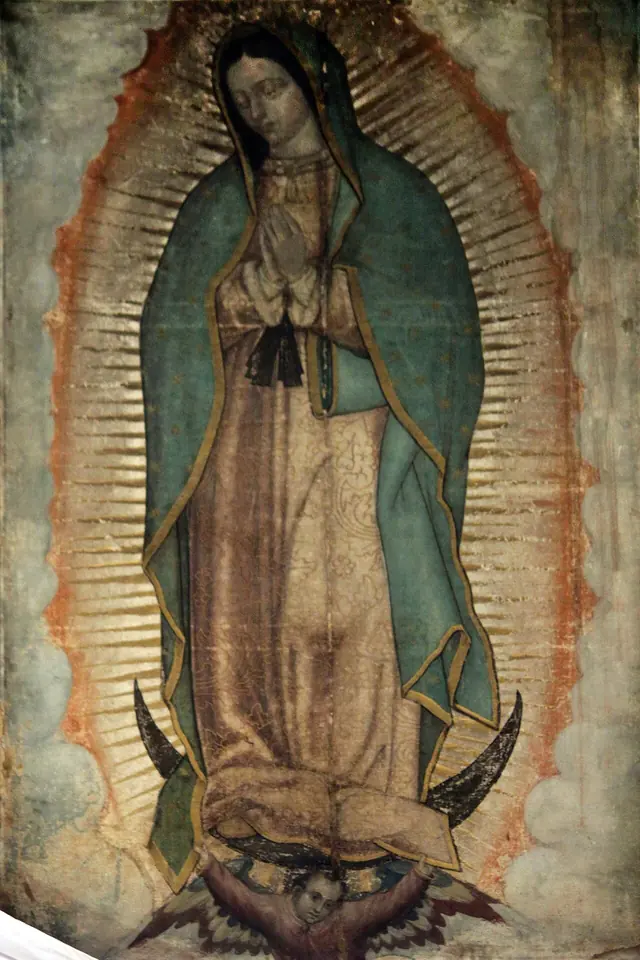
In December 1531 Our Lady appeared four times to St. Juan Diego on the hill of Tepeyac near Mexico City and left her image on his cloak, the tilma. There is no modern-style bishop's decree for Guadalupe; its recognition came through centuries of veneration and papal acts. Pope Benedict XIV approved its feast and Mass in 1754, and Pope St. John Paul II canonized Juan Diego in 2002. Status: approved. See Our Lady of Guadalupe.
The Miraculous Medal, rue du Bac, Paris (1830)
In 1830 Our Lady appeared to a young Daughter of Charity, St. Catherine Labouré, in the chapel of her motherhouse and showed her the design of a medal, with the words "O Mary, conceived without sin, pray for us who have recourse to thee." The archbishop of Paris approved the medal, and the first medals were struck on June 30, 1832. Pope Leo XIII granted a feast in 1894. Status: approved. See Our Lady of the Miraculous Medal.

Our Lady of La Salette, France (1846)
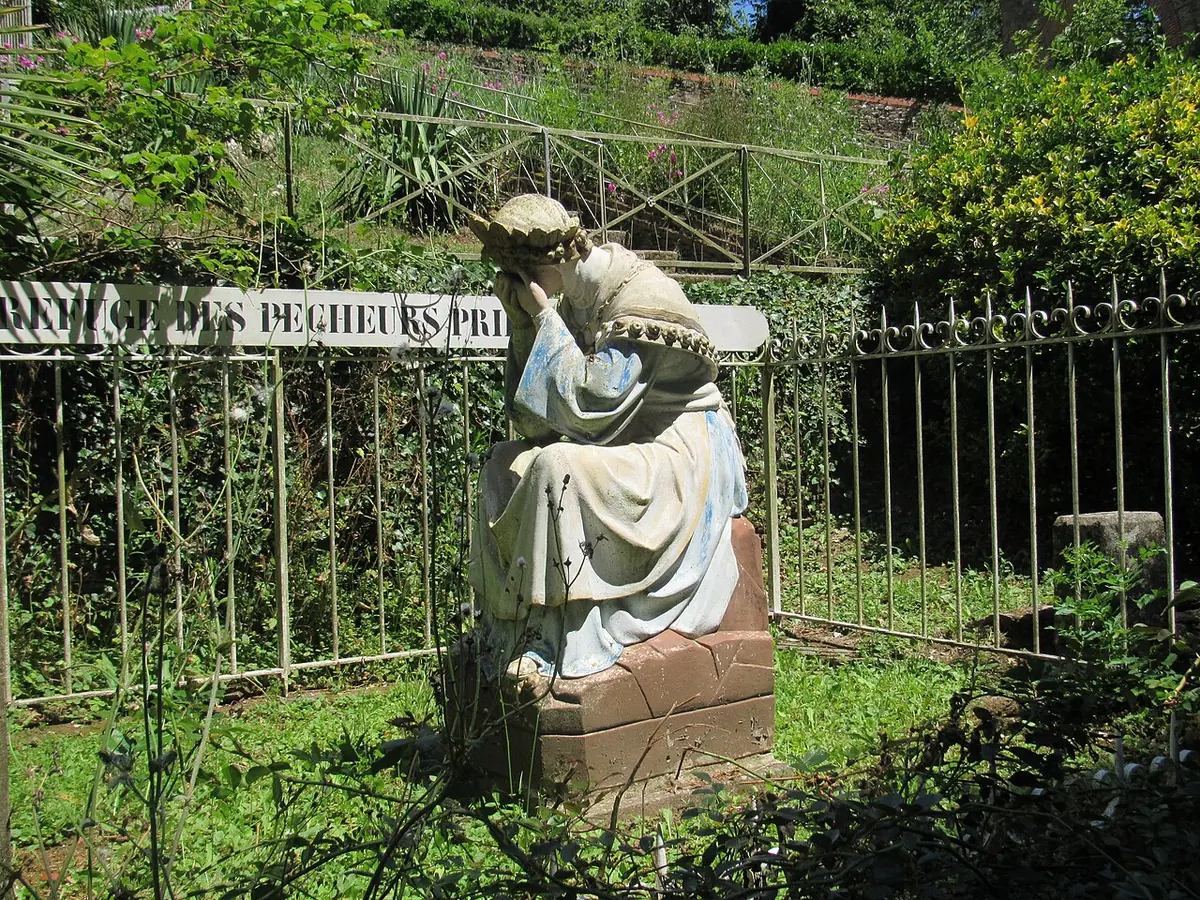
On September 19, 1846, two shepherd children, Maximin Giraud and Mélanie Calvat, saw a weeping Lady on a mountain pasture above La Salette who spoke of sin, penance and conversion. Bishop Philibert de Bruillard of Grenoble approved the apparition on September 19, 1851; the 2024 norms quote his decree as an example of the older, very confident form of approval. Status: approved. See Our Lady of La Salette.
Our Lady of Lourdes, France (1858)
Between February 11 and July 16, 1858, St. Bernadette Soubirous saw the Lady eighteen times in the grotto of Massabielle. On March 25 the Lady said, "I am the Immaculate Conception." Bishop Bertrand-Sévère Laurence of Tarbes approved the apparitions on January 18, 1862, and the Church has since recognized 72 miraculous cures there. Status: approved. See Our Lady of Lourdes.

Our Lady of Good Help, Champion, Wisconsin (1859)
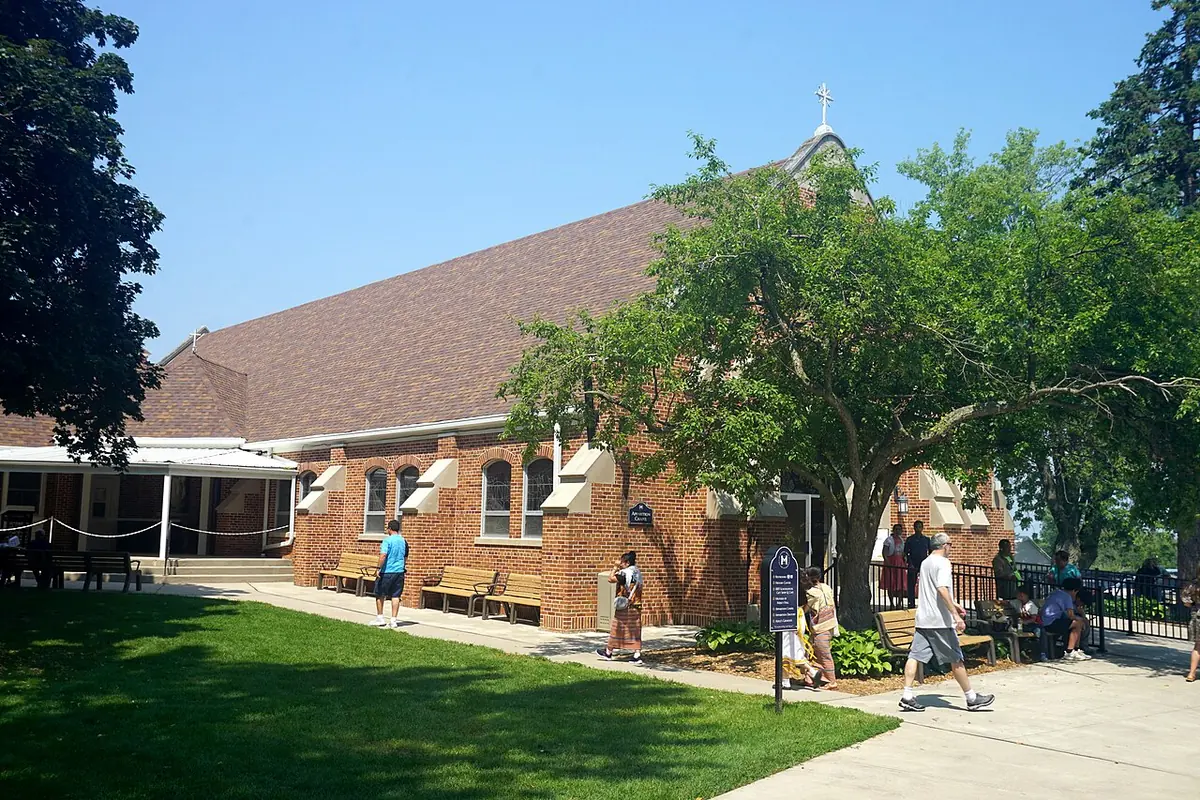
In October 1859 Our Lady appeared three times to Adele Brise, a young Belgian immigrant, in the woods of northeastern Wisconsin. The Lady called herself the "Queen of Heaven who prays for the conversion of sinners" and asked Adele to teach the children of the frontier their faith. On December 8, 2010, Bishop David Ricken of Green Bay declared "with moral certainty" that the events "exhibit the substance of supernatural character" and approved them "as worthy of belief (although not obligatory)." It was the first such approval in the United States. Status: approved. See Our Lady of Good Help.
Our Lady of Hope, Pontmain, France (1871)
On the evening of January 17, 1871, while Prussian armies advanced across France, children in the village of Pontmain saw a Lady in a blue robe covered with gold stars in the night sky. A message unrolled beneath her on a banner, beginning "But pray, my children." Within days the Prussian advance stopped short of the region, and an armistice followed on January 28. Bishop Casimir Wicart of Laval recognized the apparition on February 2, 1872. Status: approved.

Our Lady of Knock, Ireland (1879)
On the rainy evening of August 21, 1879, fifteen people in Knock, County Mayo, saw Our Lady, St. Joseph and St. John the Evangelist, with a lamb on an altar, on the gable of their parish church. Nothing was said. Commissions of the Archdiocese of Tuam in 1879 and 1936 found the witnesses trustworthy, and Pope Francis made Knock an International Marian and Eucharistic Shrine in 2021. Status: approved. See Our Lady of Knock.
Our Lady of Fátima, Portugal (1917)
From May 13 to October 13, 1917, three shepherd children, Lúcia dos Santos and her cousins Francisco and Jacinta Marto, saw the Lady of the Rosary six times at the Cova da Iria. On October 13 a crowd of tens of thousands reported the Miracle of the Sun. Bishop José Alves Correia da Silva of Leiria declared the apparitions "worthy of belief" on October 13, 1930. Francisco and Jacinta were canonized in 2017. Status: approved. See Our Lady of Fátima.

Our Lady of Beauraing, Belgium (1932–1933)
Between November 29, 1932, and January 3, 1933, five children in Beauraing reported 33 apparitions of the Virgin in a convent school garden. She showed them a golden heart and asked them to pray. Bishop André-Marie Charue of Namur authorized public devotion in 1943 and recognized the apparitions on July 2, 1949. Status: approved.

Our Lady of Banneux, Belgium (1933)
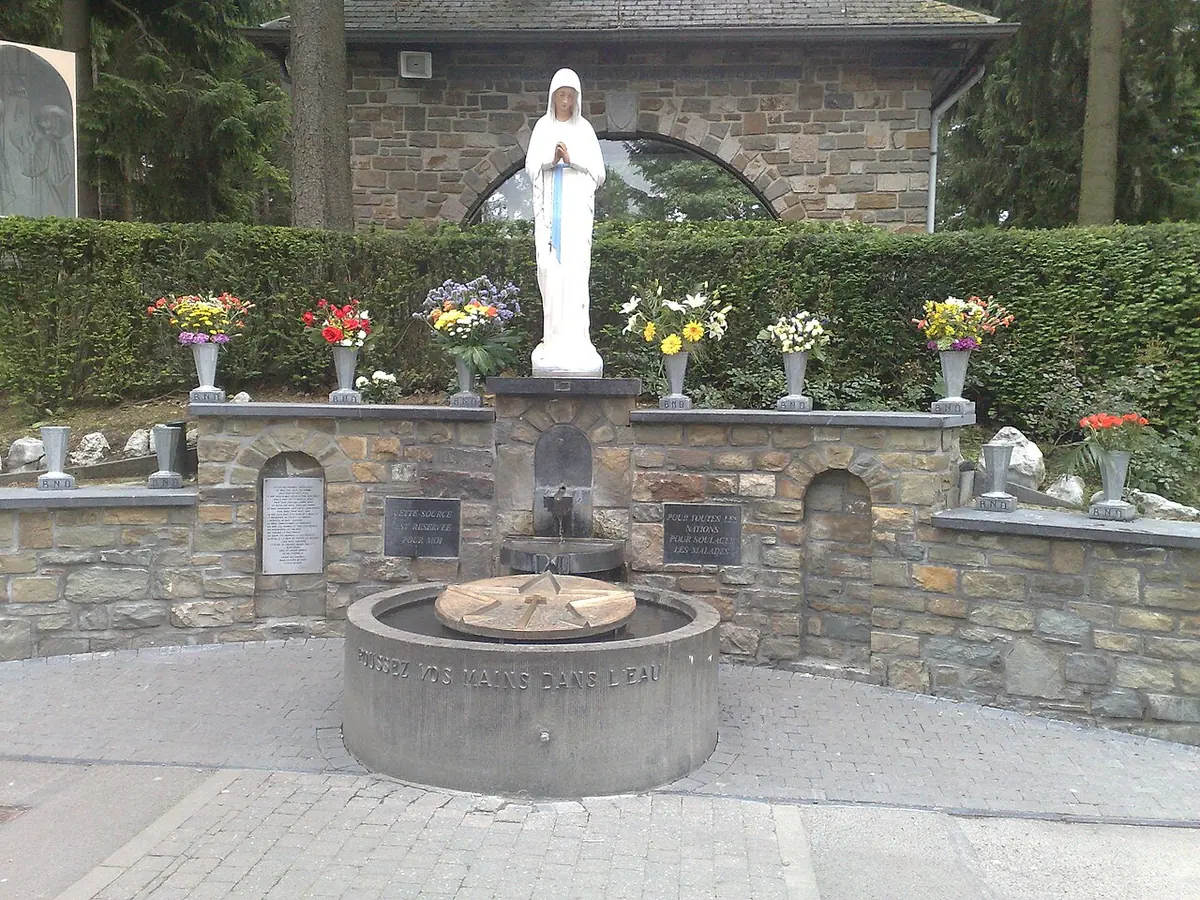
From January 15 to March 2, 1933, Mariette Beco, an eleven-year-old girl in Banneux near Liège, saw the Lady eight times. The Lady called herself "the Virgin of the Poor," led Mariette to a small spring and said it was set aside for all nations, to bring relief to the sick. Bishop Louis-Joseph Kerkhofs of Liège approved the apparitions in 1949. Status: approved.
Our Lady of Akita, Japan (1973)
From 1973 Sister Agnes Katsuko Sasagawa, a member of a small community of sisters near Akita, reported messages from Our Lady, and a wooden statue of the Virgin in their chapel was reported to weep. On April 22, 1984, Bishop John Shojiro Ito of Niigata, after years of study, issued a pastoral letter recognizing the events as supernatural and authorizing veneration of the Holy Mother of Akita in his diocese. The Holy See has issued no judgment of its own. Status: approved by the local bishop. See Our Lady of Akita.
Our Lady of Kibeho, Rwanda (1981)
The apparitions began on November 28, 1981, at a girls' school in Kibeho. Our Lady called herself Nyina wa Jambo, "Mother of the Word," and warned of coming bloodshed, a warning many Rwandans later connected with the genocide of 1994. On June 29, 2001, Bishop Augustin Misago of Gikongoro declared, "Yes, the Virgin Mary appeared at Kibeho," recognizing only the first three visionaries, Alphonsine Mumureke, Nathalie Mukamazimpaka and Marie Claire Mukangango. Public devotion had been authorized in 1988, and the shrine is the Sanctuary of Our Lady of Sorrows. Status: approved. See Our Lady of Kibeho and the Seven Sorrows rosary that Kibeho revived.

Apparitions with a different status
Some well-known apparitions do not fit neatly into the approved list. Here is where each stands.
Our Lady of Zeitoun, Egypt (1968–1971)
Beginning on April 2, 1968, crowds in the Zeitoun district of Cairo, Christians and Muslims alike, reported seeing a luminous figure of the Virgin over the domes of the Coptic Orthodox Church of St. Mary, on many nights over about three years. Pope Kyrillos VI, the Coptic Orthodox patriarch, appointed a committee and issued a statement confirming the apparitions in May 1968. The Catholic Church has never issued a formal judgment of its own. Status: recognized by the Coptic Orthodox Church; no Catholic judgment. See Our Lady of Zeitoun.

Medjugorje, Bosnia and Herzegovina (1981 to the present)
Since June 24, 1981, six people from the parish of Medjugorje have said that Our Lady appears to them as the Queen of Peace, and some say the apparitions continue. Bishops and commissions disagreed for decades. On September 19, 2024, the Dicastery for the Doctrine of the Faith, with Pope Francis's approval, granted a nihil obstat to the spiritual experience connected with Medjugorje, recognizing its abundant fruits. It was careful to add that this "does not imply that the alleged supernatural events are declared authentic," and that the messages are always to be understood as "alleged messages." Status: nihil obstat for the spiritual experience; the apparitions are not declared supernatural. See Our Lady of Medjugorje.
Other recent judgments under the 2024 norms
The Dicastery has used the new norms often since 2024. It approved a nihil obstat for the spiritual experience of Estelle Faguette at Pellevoisin, France, on August 22, 2024, and for the Marian devotion on Mount Zvir at Litmanová, Slovakia, on July 4, 2025. In each case it praised the fruits without declaring the apparitions supernatural.
Apparitions that are not approved or were judged negatively
Here the Church has spoken against a claim, or has said that its supernatural character is not established. We state these plainly, for the good of souls, and with charity toward the people involved.
Garabandal, Spain (1961–1965)
Four girls in the mountain village of San Sebastián de Garabandal reported hundreds of apparitions and messages between 1961 and 1965. Every bishop of Santander from 1961 to 1970, Bishop José Vilaplana wrote, "asserted that the supernatural character of the said apparitions... could not be confirmed." A later interdisciplinary study reached the same conclusion. Vilaplana took it to the Congregation for the Doctrine of the Faith in 1991, and was advised that he might publicly reaffirm that "the supernaturality of the referenced apparitions was not proven." Mass may be celebrated in the parish church, but not in connection with the alleged apparitions. Status: not approved; supernatural character not established.
Necedah, Wisconsin (1949–1950)
Mary Ann Van Hoof, a farm wife in Necedah, Wisconsin, claimed apparitions from 1949 and drew huge crowds in 1950. Bishop John Treacy of La Crosse rejected the claims as not supernatural in 1955 and forbade worship at the site. When Van Hoof and her followers continued, Bishop Frederick Freking placed her and six of her closest followers under interdict in May 1975. The group left the Catholic Church. Status: condemned as not supernatural.
The "Lady of All Nations," Amsterdam (1945–1959)
This is the case the 2024 norms describe without naming it. On July 11, 2024, the Dicastery made public a decision of 1974, approved by Pope Paul VI: on the alleged apparitions in Amsterdam, "constat de non supernaturalitate," established as not supernatural. Local approvals in 1996 and 2002 had caused confusion, and the bishop reaffirmed the negative judgment in 2020 at Rome's request. Status: declared not supernatural.
How we approach an apparition as Catholics
The Church's guidance comes down to a few simple points.
- Christ comes first. Every genuine apparition leads to Jesus: to prayer, conversion, the sacraments and love of neighbor. The Medjugorje note gives the Church's advice for every shrine: pilgrims go not to meet visionaries but to encounter Mary "and, faithful to her love for her Son, to encounter Christ."
- Wait for the Church. When a new apparition is reported, we let the bishop do his work. We do not spread messages he has not cleared, and we do not go to sites he has asked us to avoid.
- Approval is permission, not obligation. We are free to love Fátima and free to pass it by. What we may not do is treat an approved apparition with contempt, or treat an unapproved one as if the Church had approved it.
- Look at the fruits. The 1978 norms named "spirit of prayer, conversion, testimonies of charity." Those are the marks of Our Lady's work, wherever we meet them.

For how the Church examines cures and other wonders at these shrines, see how the Church investigates miracles. For the feasts of Our Lady through the year, see the feast day calendar, where Guadalupe on December 12, Lourdes on February 11 and Fátima on May 13 all appear.
Let us close as the faithful do at every one of these shrines, whatever its name: Holy Mary, Mother of God, pray for us sinners, now and at the hour of our death. Amen.
Frequently asked questions
What are the approved Marian apparitions?
The best-known apparitions recognized by the Church are Guadalupe (Mexico, 1531), the rue du Bac (Paris, 1830), La Salette (France, 1846), Lourdes (France, 1858), Champion (Wisconsin, 1859), Pontmain (France, 1871), Knock (Ireland, 1879), Fátima (Portugal, 1917), Beauraing (Belgium, 1932–33), Banneux (Belgium, 1933), Akita (Japan, 1973) and Kibeho (Rwanda, 1981). Each was recognized by the local bishop, and many have been honored by popes.
Do Catholics have to believe in Marian apparitions?
No. Apparitions belong to private revelation, which the Catechism says does not belong to the deposit of faith. Even when the Church recognizes one, the faithful are free to accept it or not. What the Church affirms is that nothing in it is contrary to faith and morals and that it can help us live the Gospel.
What does nihil obstat mean for an apparition?
Nihil obstat, Latin for nothing stands in the way, is the most positive of the six judgments in the 2024 norms. It says the Church sees many signs of the Holy Spirit at work in a spiritual experience and nothing seriously troubling, so the bishop may promote the devotion and pilgrimages. It does not declare the apparition itself supernatural.
Is Medjugorje approved?
On September 19, 2024, the Dicastery for the Doctrine of the Faith granted a nihil obstat to the spiritual experience connected with Medjugorje, with Pope Francis's approval. The faithful may take part in it and pilgrimages are encouraged, but the Church has not declared that the apparitions are supernatural, and it calls the messages alleged messages.
Is Garabandal approved?
No. The bishops of Santander have said consistently since the 1960s that the supernatural character of the Garabandal events is not established. Bishop José Vilaplana reaffirmed this in the 1990s after consulting the Congregation for the Doctrine of the Faith, and Mass is celebrated in the village parish church without reference to the alleged apparitions.
What is the only approved Marian apparition in the United States?
Our Lady of Good Help at Champion, Wisconsin. Bishop David Ricken of Green Bay approved the 1859 apparitions to Adele Brise on December 8, 2010, as worthy of belief, although not obligatory. It was the first such approval by a bishop in the United States.
What are the six judgments in the 2024 norms?
Nihil obstat (positive); prae oculis habeatur (positive signs, but some points need clarifying); curatur (critical elements, but the devotion is widespread and fruitful, so it is not banned); sub mandato (the phenomenon is good but someone is misusing it); prohibetur et obstruatur (adherence is not allowed); and declaratio de non supernaturalitate (proven not supernatural).
Who decides whether an apparition is authentic?
The bishop of the diocese where it happens investigates and proposes a judgment. Under the 2024 norms he sends the results to the Dicastery for the Doctrine of the Faith in Rome, which confirms or does not confirm his proposal before he announces it. The Pope can also intervene directly.
Sources
- Dicastery for the Doctrine of the Faith: Norms for Proceeding in the Discernment of Alleged Supernatural Phenomena (17 May 2024)
- Sacred Congregation for the Doctrine of the Faith: Norms regarding the manner of proceeding in the discernment of presumed apparitions or revelations (25 February 1978)
- Catechism of the Catholic Church, nos. 65-67 (private revelation)
- Dicastery for the Doctrine of the Faith: "The Queen of Peace": Note About the Spiritual Experience Connected with Medjugorje (19 September 2024)
- Dicastery for the Doctrine of the Faith: Press Release about Alleged Apparitions in Amsterdam from 1945 to 1959 (11 July 2024)
- Holy See Press Office bulletin, 29 June 2001: Declaration of the Bishop of Gikongoro on the apparitions of Kibeho (French)
- Diocese of Green Bay release, December 8, 2010: Bishop Ricken approves Marian apparitions at Shrine of Our Lady of Good Help (EWTN Library)
- Bishop José Vilaplana of Santander: The Alleged Apparitions at Garabandal (EWTN Library)
- Necedah Shrine (Wikipedia; citing the La Crosse Tribune, May 5, 1975, and the Madison Capital Times, July 15, 1955). only source found for the 1975 interdict