How to pray the rosary
How to pray the rosary: make the Sign of the Cross and say the Apostles' Creed on the crucifix, an Our Father, three Hail Marys and a Glory Be on the first beads, then five decades. Each decade is one mystery: an Our Father, ten Hail Marys, a Glory Be and the Fatima prayer. Close with the Hail Holy Queen.
 Free printable prayer card 5 × 7 inch PDF, ready to print, frame or tuck in a missal.
Five decades of beads, a handful of prayers most of us learned as children, and twenty scenes from the Gospel: that is the whole rosary. Below is how to pray it step by step, with every prayer printed in full, the mysteries for each day of the week, and the true story of where the rosary came from.
How to pray the rosary, step by step
The order below is the one most English-speaking parishes use, and it matches the method the Baltimore Catechism taught in 1891 and the Holy See's own rosary page gives today. If you are new to the rosary, keep this page open beside you the first few times. After a week you will not need it.
- Holding the crucifix, make the Sign of the Cross and say the Apostles' Creed.
- On the first large bead, say the Our Father.
- On each of the next three small beads, say a Hail Mary. By custom these three are offered for an increase of faith, hope and charity.
- On the chain or the next large bead, say the Glory Be.
- Announce the first mystery, for example "The first Joyful Mystery, the Annunciation," and pause for a moment to picture the scene.
- On the large bead, say the Our Father.
- On each of the ten small beads, say a Hail Mary, keeping the mystery before your mind.
- After the tenth Hail Mary, say the Glory Be, then the Fatima prayer. That is one decade.
- Announce the next mystery and repeat steps 6 to 8 until you have prayed all five decades and come back around to the centerpiece.
- Say the Hail Holy Queen, then the versicle and the closing prayer, and finish with the Sign of the Cross.
The rosary is a prayer with the lips and the heart together. St. John Paul II called the Hail Mary "the most substantial element in the Rosary," but he also said its repetition only makes sense as love that "tirelessly returns to the person loved." The words carry us; the mysteries are where the mind rests. If your thoughts wander, simply bring them back to the scene of the decade.
The beads, one by one
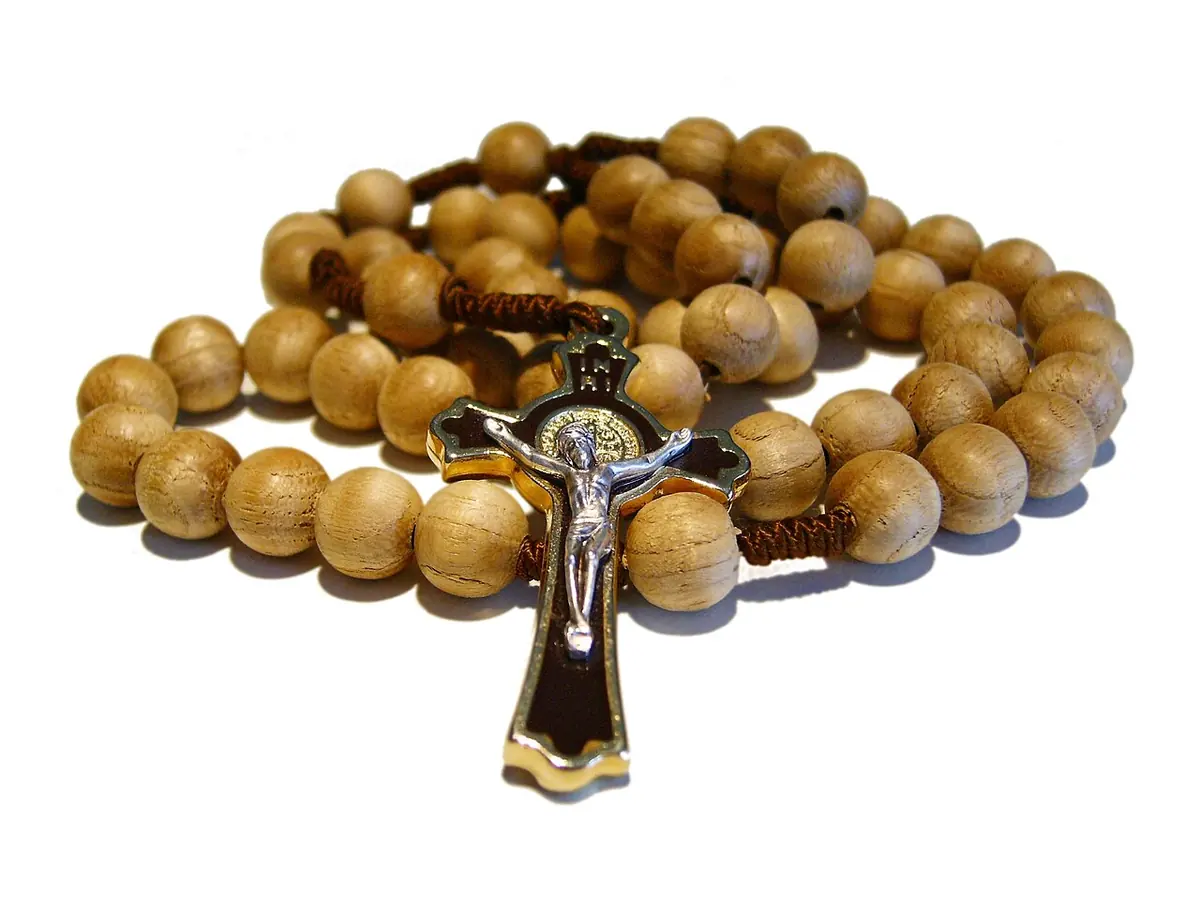
A standard five-decade rosary has 59 beads. Starting from the crucifix there is a short strand: one large bead, three small beads, and one more large bead (or a space on the chain). The strand joins the loop at a centerpiece, often a medal of Our Lady. The loop holds five groups of ten small beads, each group separated from the next by a single large bead. The crucifix, St. John Paul II wrote, "both opens and closes the unfolding sequence of prayer," because everything in the rosary begins and ends with Christ.
The rosary prayers in full
These are the traditional English texts. The Sign of the Cross and the Apostles' Creed are given as the 1891 Baltimore Catechism prints them; the Our Father, Hail Mary, Glory Be and Hail Holy Queen as the Holy See's rosary page gives them. Many people today say "Holy Spirit" where the older texts say "Holy Ghost"; both are correct.
The Sign of the Cross
In the name of the Father, and of the Son, and of the Holy Ghost. Amen.
The Baltimore Catechism describes it this way: we put "the right hand to the forehead, then on the breast, and then to the left and right shoulders" while saying the words.
The Apostles' Creed
I believe in God, the Father Almighty, Creator of heaven and earth; and in Jesus Christ, His only Son, our Lord; who was conceived by the Holy Ghost, born of the Virgin Mary, suffered under Pontius Pilate, was crucified; died, and was buried. He descended into hell; the third day He arose again from the dead; He ascended into heaven, sitteth at the right hand of God, the Father Almighty; from thence He shall come to judge the living and the dead. I believe in the Holy Ghost, the Holy Catholic Church, the communion of Saints, the forgiveness of sins, the resurrection of the body, and the life everlasting. Amen.
The Our Father
Our Father, who art in heaven, hallowed be thy name, thy kingdom come, thy will be done on earth as it is in heaven. Give us this day our daily bread and forgive us our trespasses as we forgive those who trespass against us, and lead us not into temptation but deliver us from evil. Amen.
The Hail Mary
Hail, Mary, full of grace, the Lord is with thee: blessed art thou among women, and blessed is the fruit of thy womb, Jesus. Holy Mary, Mother of God, pray for us sinners, now, and at the hour of our death. Amen.
The first half is the greeting of the angel Gabriel (Luke 1:28) joined to the words of St. Elizabeth (Luke 1:42). The second half is the Church's own petition.
The Glory Be
Glory be to the Father, and to the Son, and to the Holy Spirit. As it was in the beginning, is now, and ever shall be, world without end. Amen.
The Fatima prayer
O my Jesus, forgive us, save us from the fire of hell; lead all souls to Heaven, especially those who are most in need.
This is the English text published by the Shrine of Fatima. Sister Lúcia wrote that Our Lady taught it on July 13, 1917, saying, "When you pray the Rosary, say after each mystery." Its full story is on our page for the Fatima prayer.
The Hail Holy Queen
Hail, holy Queen, mother of mercy; hail, our life, our sweetness and our hope. To thee do we cry, poor banished children of Eve; to thee do we send up our sighs, mourning and weeping in this valley of tears. Turn then, most gracious advocate, thine eyes of mercy towards us; and after this our exile, show unto us the blessed fruit of thy womb, Jesus. O clement, O loving, O sweet Virgin Mary. Amen.
Its Latin original, the Salve Regina, and its history are on our page for the Hail Holy Queen. The Holy See also names the Litany of Loreto as a fitting close.
The closing prayer
This is the versicle and prayer as printed after the rosary in The Dominican Manual (Dublin, 1913). The prayer is the collect of the old Mass of the Most Holy Rosary.
V. Pray for us, O holy Mother of God. R. That we may be made worthy of the promises of Christ.
>
Let us pray. O God, whose only-begotten Son, by his life, death, and resurrection, has purchased for us the rewards of eternal life, grant, we beseech thee, that meditating upon these mysteries in the most holy Rosary of the Blessed Virgin Mary, we may imitate what they contain, and obtain what they promise. Amen.
Many prayer books add "Through the same Christ our Lord" before the Amen. St. John Paul II quoted the last line of this prayer in Rosarium Virginis Mariae: we meditate on the mysteries so that we may "imitate what they contain and obtain what they promise." It is also the custom to add an Our Father, a Hail Mary and a Glory Be for the intentions of the Holy Father, which is one of the conditions for the rosary's indulgence.
The mysteries of the rosary
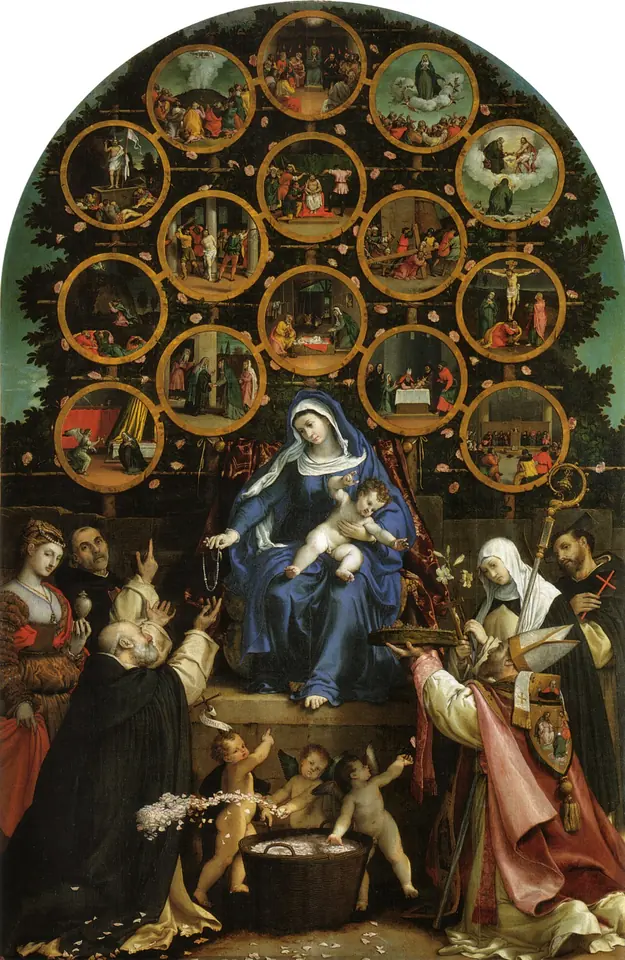
A mystery is an event in the life of Jesus or His Mother that we hold before our eyes while we pray a decade. St. John Paul II, borrowing an older phrase, called the rosary "a compendium of the Gospel," and that is a good way to understand the mysteries: twenty windows onto the life of Christ, seen with Mary.
The Joyful Mysteries
- The Annunciation (Luke 1:26–38)
- The Visitation (Luke 1:39–56)
- The Nativity of Our Lord (Luke 2:1–20)
- The Presentation in the Temple (Luke 2:22–38)
- The Finding of the Child Jesus in the Temple (Luke 2:41–52)
Meditations for each are on our page for the Joyful Mysteries.

The Luminous Mysteries (Mysteries of Light)
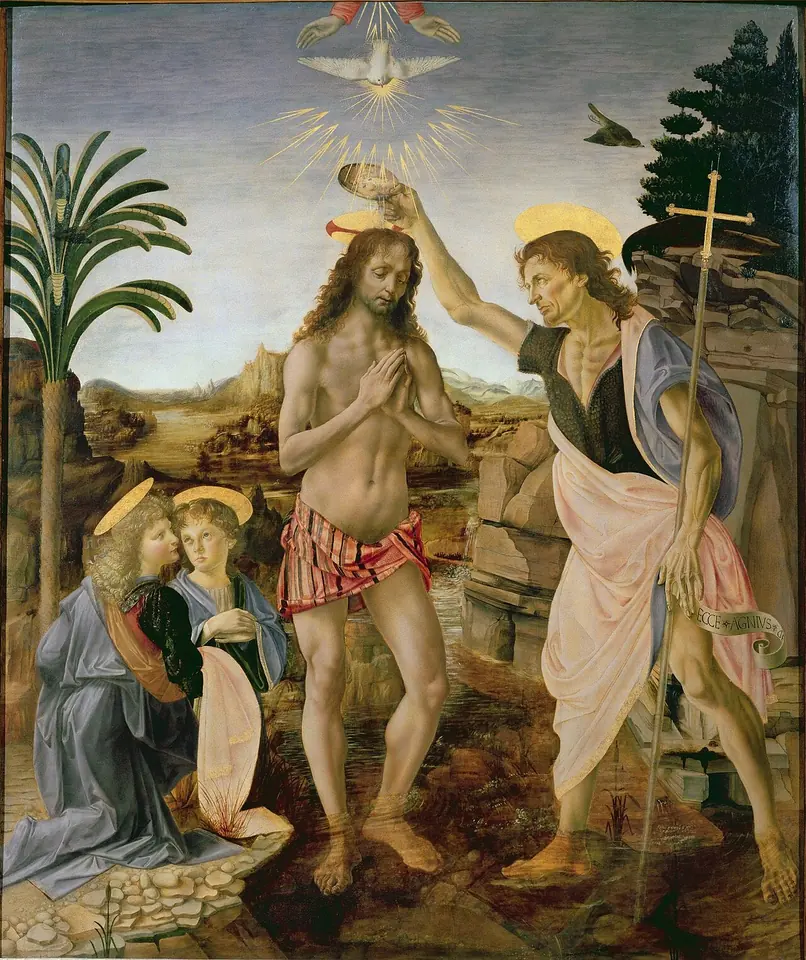
- The Baptism of Jesus in the Jordan (Matthew 3:13–17)
- The Wedding at Cana (John 2:1–12)
- The Proclamation of the Kingdom of God, with the call to conversion (Mark 1:14–15)
- The Transfiguration (Luke 9:28–36)
- The Institution of the Eucharist (Matthew 26:26–29)
St. John Paul II proposed these five in 2002, so that the rosary would include Christ's public life between His childhood and His Passion. See the Luminous Mysteries.
The Sorrowful Mysteries
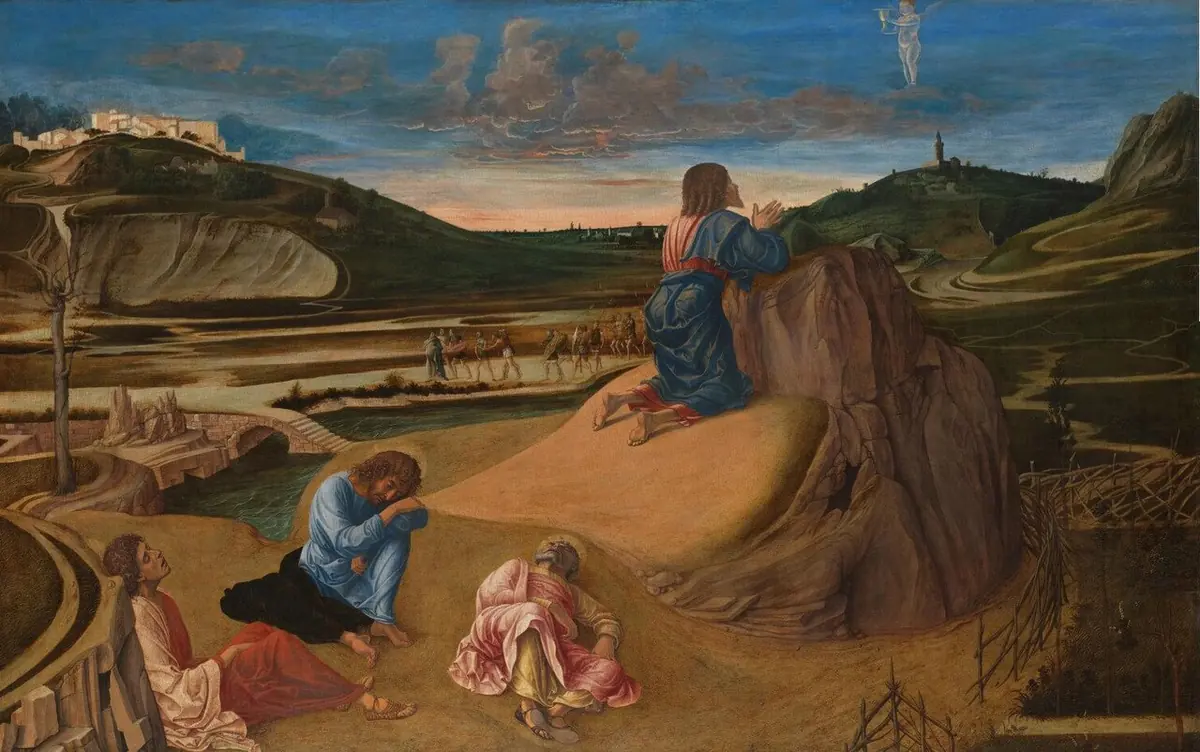
- The Agony in the Garden (Luke 22:39–46)
- The Scourging at the Pillar (John 19:1)
- The Crowning with Thorns (Matthew 27:27–31)
- The Carrying of the Cross (John 19:17)
- The Crucifixion and Death of Our Lord (Luke 23:33–46)
See the Sorrowful Mysteries.
The Glorious Mysteries
- The Resurrection (Matthew 28:1–10)
- The Ascension (Acts 1:6–11)
- The Descent of the Holy Spirit at Pentecost (Acts 2:1–13)
- The Assumption of the Blessed Virgin Mary into heaven
- The Coronation of Mary as Queen of Heaven and Earth
The last two are not narrated in Scripture. The Church teaches that Mary was taken up body and soul into heavenly glory, a truth Pope Pius XII defined in 1950, and the faithful have long seen her crowning in the "woman clothed with the sun" of Revelation 12:1. See the Glorious Mysteries.

Which mysteries on which day?
For four centuries the faithful prayed the Joyful Mysteries on Monday and Thursday, the Sorrowful on Tuesday and Friday, and the Glorious on Wednesday, Saturday and Sunday. That is the pattern the 1891 Baltimore Catechism gives, calling it "the pious custom of the faithful."
When St. John Paul II added the Luminous Mysteries, he suggested a new week in Rosarium Virginis Mariae (section 38). Since Saturday "has always had a special Marian flavour," he moved the second day of Joyful Mysteries there, which left Thursday free for the mysteries of light. The schedule most of the Church follows today is:
- Monday: Joyful Mysteries
- Tuesday: Sorrowful Mysteries
- Wednesday: Glorious Mysteries
- Thursday: Luminous Mysteries
- Friday: Sorrowful Mysteries
- Saturday: Joyful Mysteries
- Sunday: Glorious Mysteries
The Holy See adds, quoting the same letter, that this "is not intended to limit a rightful freedom in personal and community prayer," and that the seasons of the Church year may call for adaptations. So many families pray the Joyful Mysteries on the Sundays of Advent and Christmastide and the Sorrowful Mysteries on the Sundays of Lent. The Luminous Mysteries are a proposal, not an obligation: John Paul II left them to "the freedom of individuals and communities." Praying the traditional fifteen is still a complete rosary.
A short history of the rosary
Counting prayers: the paternoster
Christians have counted their prayers for a very long time. Herbert Thurston's article in the Catholic Encyclopedia (1912) gathers the evidence. In the fourth century Paul the Hermit said three hundred prayers a day, dropping a pebble for each. Monks who could not read the 150 psalms for a deceased brother said the Our Father instead; the customs of Cluny in 1096 allowed fifty Our Fathers in place of fifty psalms. About 1075, Lady Godiva of Coventry left to a statue of Our Lady "the circlet of precious stones which she had threaded on a cord in order that by fingering them one after another she might count her prayers exactly." Strings of beads were so common in the Middle Ages that they were simply called "paternosters," and London's Paternoster Row is named for the craftsmen who made them.
Our Lady's Psalter
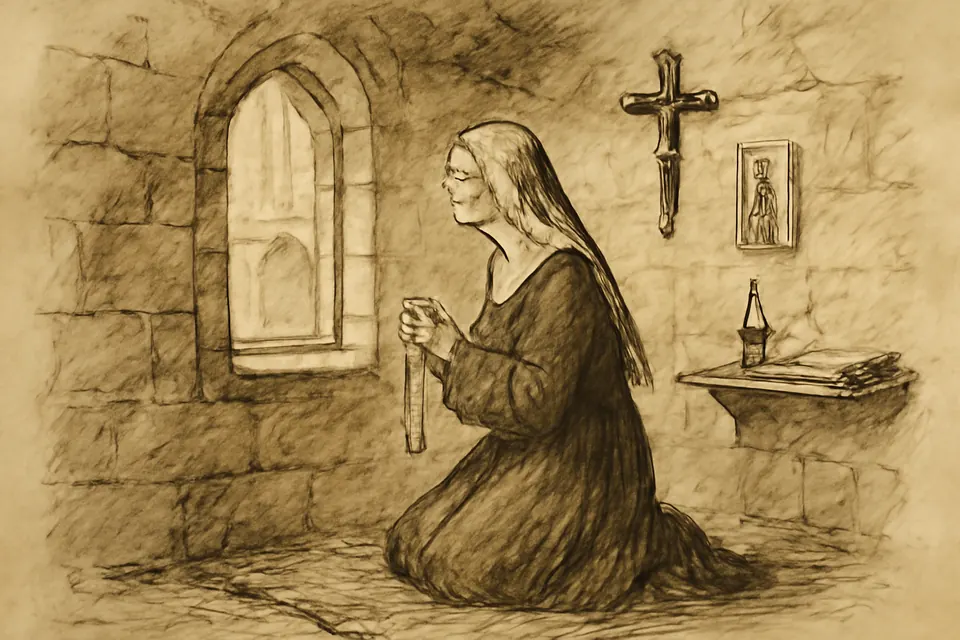
As the Hail Mary came into common use in the 12th century, the faithful began to repeat it in fifties and hundred-and-fifties, matching the 150 psalms of the Psalter. That is why the rosary was long called "Our Lady's Psalter." Thurston cites the Ancrene Riwle, a rule for English anchoresses from about 1200, which already directs that fifty Aves be said in sets of ten. The habit of meditating on a set mystery with each decade came later. Thurston credits a 15th-century Carthusian, Dominic of Prussia, with joining the Hail Marys to a series of reflections on the life of Christ.
St. Dominic and Blessed Alan de la Roche
The best-loved story about the rosary is that the Virgin Mary gave it to St. Dominic during his preaching in southern France in the early 13th century. Pope St. Pius V told it in his bull Consueverunt Romani Pontifices (1569), many popes repeated it, and the Baltimore Catechism taught American children that "St. Dominic taught the use of the Rosary in its present form." The story is traditional. Thurston, writing in a Catholic encyclopedia with a cardinal's imprimatur, found that none of the eight or nine early lives of Dominic mention the rosary, and he traced the story to the preaching of the Dominican Blessed Alan de la Roche (Alanus de Rupe) around 1470 to 1475.
Alan was a zealous friar from Brittany. The Confraternities of the Rosary that he and his fellow friars organized at Douai, Cologne and elsewhere spread with astonishing speed, and they turned the rosary into the prayer of ordinary Catholics across Europe. Whatever the truth of the Dominic story, the rosary as we know it was spread by Dominic's sons, and Thurston himself concluded that its worldwide reach was their work. Later, St. Louis de Montfort preached the rosary across western France and wrote The Secret of the Rosary.


Lepanto, 1571, and the feast of Our Lady of the Rosary
On Sunday, October 7, 1571, the fleet of the Holy League met the Ottoman fleet off Lepanto in western Greece. Pope St. Pius V, himself a Dominican, had called Christendom to prayer, and that day the Rosary confraternity in Rome walked in procession through the city. The Christian victory, in the words of the Catholic Encyclopedia, "responded wonderfully" to their prayers. Pius V ordered a yearly commemoration, Gregory XIII in 1573 allowed a feast of the Rosary in churches with a Rosary altar, and Clement XI extended it to the whole Church after another victory over the Ottomans in 1716. The faithful have always seen Lepanto as an answer to prayer; it is a traditional attribution rather than a miracle the Church examined. We keep the feast of Our Lady of the Rosary on October 7.

Two years before the battle, the same pope had fixed the form of the rosary in Consueverunt Romani Pontifices: 150 Hail Marys in fifteen decades, each begun with an Our Father. That form stood until 2002.

From Leo XIII to Fatima to John Paul II
Pope Leo XIII wrote his first encyclical on the rosary, Supremi Apostolatus Officio, on September 1, 1883, and kept writing about it nearly every year; he dedicated October to the rosary and added "Queen of the Most Holy Rosary" to the Litany of Loreto. At Lourdes in 1858, St. Bernadette said the Lady carried a rosary. At Fátima, according to Sister Lúcia's account published by the shrine, Our Lady said on May 13, 1917, "Pray the Rosary every day, in order to obtain peace for the world, and the end of the war," and on October 13 she named herself: "I am the Lady of the Rosary."
St. John Paul II told the world two weeks after his election in 1978, "The Rosary is my favourite prayer." On October 16, 2002, he published Rosarium Virginis Mariae, added the Luminous Mysteries and declared a Year of the Rosary.

The promises of the rosary
You will often see a list titled "The Fifteen Promises of Mary to Christians Who Recite the Rosary," headed "Given to St. Dominic and Blessed Alan." The first reads, in the usual English, "To all those who will recite my Rosary devoutly, I promise my special protection and very great graces." Others promise that the rosary will be "a very powerful armor against hell," that those devoted to it will not die without the sacraments, and that Mary will free them from purgatory.
What is their status? Honestly put:
- Origin. They come from the writings of Blessed Alan de la Roche in the 1400s, more than two centuries after St. Dominic. There is no witness to them apart from Alan.
- Approval. The Church has never approved them as a revelation. Catholic apologist Jimmy Akin searched for papal or curial documents endorsing them and found none. The common leaflet carries the imprimatur of Cardinal Patrick Hayes of New York, but an imprimatur only declares that a text contains nothing contrary to faith or morals. It does not vouch that a private revelation is authentic.
- How to read them. Taken as a whole, the promises say what the Church does teach: that Mary is a loving mother who intercedes for those who turn to her, and that persevering prayer bears fruit. They are not a contract, and no one should treat the beads as a charm. The power is God's, and the rosary leads us to Him through the life of His Son.
The Church's own promise is the indulgence. The Enchiridion Indulgentiarum (2004) grants a plenary indulgence to the faithful who pray the rosary in a church or oratory, in a family, in a religious community or in a pious association, and a partial indulgence in other settings. For the plenary indulgence, five decades are enough but must be prayed without interruption, the vocal prayer must be joined to meditation on the mysteries, and the usual conditions apply (sacramental confession, Holy Communion, prayer for the pope's intentions, and freedom from attachment to sin).
Praying the rosary well
- Pray it slowly. The Blessed Virgin, in a medieval legend Thurston mentions, told a woman who said 150 Hail Marys a day to say only fifty, but more slowly.
- Picture the scene. Read the Gospel passage for the mystery before you begin the decade, or hold a holy picture of it.
- Name an intention. Offer each decade for someone: the sick, a child far from the faith, the souls in purgatory, peace in the world.
- Pray with others. St. John Paul II called the rosary "a prayer of and for the family." A decade a night at the kitchen table is a good start for a family that has never prayed together.
- Don't be discouraged by distraction. The rosary is a prayer for busy and tired people, too. Come back to the mystery and keep going.
Let us take up the beads today, and ask Our Lady of the Rosary to lead us, one mystery at a time, closer to her Son. For the October 7 feast and the art of the rosary, see Our Lady of the Rosary; for a longer devotion of rosaries, see the 54-day rosary novena; and for more of the Church's Marian feasts, see our feast days calendar.
Frequently asked questions
What are the steps to pray the rosary?
Holding the crucifix, make the Sign of the Cross and say the Apostles' Creed. On the first large bead say the Our Father; on the next three small beads, three Hail Marys; then the Glory Be. For each of the five decades, announce the mystery, say the Our Father on the large bead, ten Hail Marys on the small beads, then the Glory Be and the Fatima prayer. End with the Hail Holy Queen and the closing prayer, and make the Sign of the Cross.
Which mysteries of the rosary are prayed on each day?
Following St. John Paul II's Rosarium Virginis Mariae (2002): the Joyful Mysteries on Monday and Saturday, the Sorrowful on Tuesday and Friday, the Glorious on Wednesday and Sunday, and the Luminous on Thursday. The Holy See notes that this pattern is not meant to limit freedom; many pray the Joyful Mysteries on the Sundays of Advent and Christmas and the Sorrowful on the Sundays of Lent.
How long does it take to pray the rosary?
Five decades usually take fifteen to twenty minutes said at an unhurried pace, a little longer in a group. The old full rosary of fifteen decades took about three times as long, and the twenty mysteries in a day take a little over an hour.
Can I pray the rosary without beads?
Yes. The beads only help us count; you can count the ten Hail Marys on your fingers. The Church's current handbook of indulgences asks for five decades prayed without interruption and meditation on the mysteries; it does not require blessed beads, although blessed beads are a good and holy custom.
What prayers are said on the rosary?
The Sign of the Cross, the Apostles' Creed, the Our Father, the Hail Mary, the Glory Be, the Fatima prayer ("O my Jesus"), the Hail Holy Queen and a closing prayer. All of them are printed in full on this page.
What are the 15 promises of the rosary?
They are fifteen promises the Blessed Virgin is said to have made to those who pray the rosary devoutly, such as her special protection and the grace not to die without the sacraments. They come from the writings of the 15th-century Dominican Blessed Alan de la Roche. Leaflets carry them with an imprimatur, which only means the text contains nothing against faith or morals; no pope or Vatican office has approved them as a revelation.
Is there an indulgence for praying the rosary?
Yes. The Enchiridion Indulgentiarum (2004 edition, concession 17) grants a plenary indulgence, under the usual conditions, to the faithful who pray the rosary in a church or oratory, as a family, in a religious community or in a pious association; elsewhere the indulgence is partial. Five decades are enough, prayed continuously, with meditation on the mysteries.
Did Our Lady give the rosary to St. Dominic?
That is the tradition, repeated by many popes and painted by Tiepolo and Murillo. The early lives of St. Dominic do not mention the rosary, and the story is first found in the preaching of Blessed Alan de la Roche around 1470. What is certain is that the Dominican friars spread the rosary through the whole Church.
Sources
- John Paul II, Apostolic Letter Rosarium Virginis Mariae (October 16, 2002)
- The Holy See: The Mysteries of the Rosary (how to pray the rosary, prayer texts)
- A Catechism of Christian Doctrine No. 3 (Baltimore Catechism, 1891), prayers and Q. 1080–1087 on the rosary, Project Gutenberg
- The Dominican Manual: A Selection of Prayers and Devotions (Dublin: Browne and Nolan, 1913), the Rosary and its closing prayer, Internet Archive
- Catholic Encyclopedia (1912): The Rosary, by Herbert Thurston
- Shrine of Fatima: Narrative of the Apparitions
- Apostolic Penitentiary, Enchiridion Indulgentiarum, 4th edition (2004), concession 17
- Jimmy Akin, Are the 15 Promises of the Rosary Reliable? (2010)