Doctors of the Church
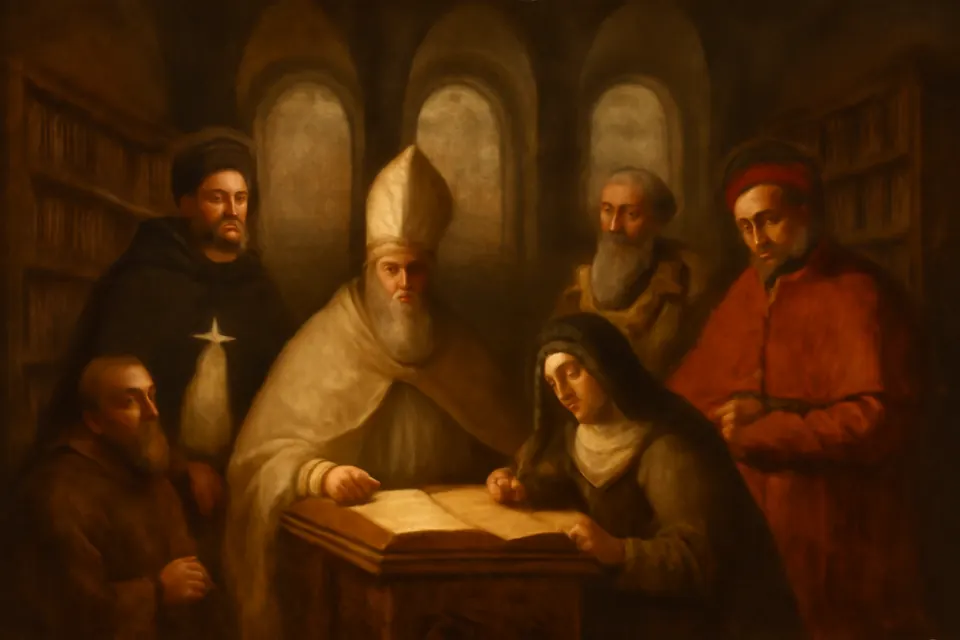
The Doctors of the Church are 38 saints whom the Church has formally declared outstanding teachers of the faith for every age. The title needs three things: eminent teaching, real holiness of life and a declaration by the Pope. The first four were named in 1298; the most recent is St. John Henry Newman, declared on November 1, 2025.
The Doctors of the Church are the saints the Church holds up as her great teachers. There are 38 of them today, from St. Ambrose in fourth-century Milan to St. John Henry Newman in Victorian Birmingham. Their writings have fed the whole Church, East and West, and when we read them we are learning from teachers whom the Church herself has vouched for.
What "Doctor of the Church" means
The word comes from the Latin doctor, a teacher. Every saint teaches us something by the way they lived, but a Doctor of the Church is a saint whose teaching has served the whole Church, not only one country or one century. The Church keeps their feasts with a proper antiphon at Vespers that begins O Doctor optime, "O most excellent teacher."
The 1909 Catholic Encyclopedia gives the three conditions in Latin, as Pope Benedict XIV set them out in the 1700s:
- Eminens doctrina: eminent teaching, learning that has proved fruitful for the whole Church.
- Insignis vitae sanctitas: a high degree of holiness. Every Doctor is a canonized saint.
- Ecclesiae declaratio: a declaration by the Church, which in practice means by the Pope.
St. John Paul II, when he named St. Thérèse a Doctor in 1997, called eminent doctrine "the fundamental element for conferring the title." Her case shows that eminent doesn't have to mean academic. Thérèse had no theological training at all, yet the Church judged that her "little way" of trust and love had become a school of holiness for millions.
The title isn't a declaration that a Doctor never made a mistake. The Catholic Encyclopedia says plainly that it "is not in any way an ex cathedra decision," and it notes that even the greatest of the Doctors held some opinions the Church did not follow. What the Church affirms is that their teaching as a whole is a safe and fruitful guide.
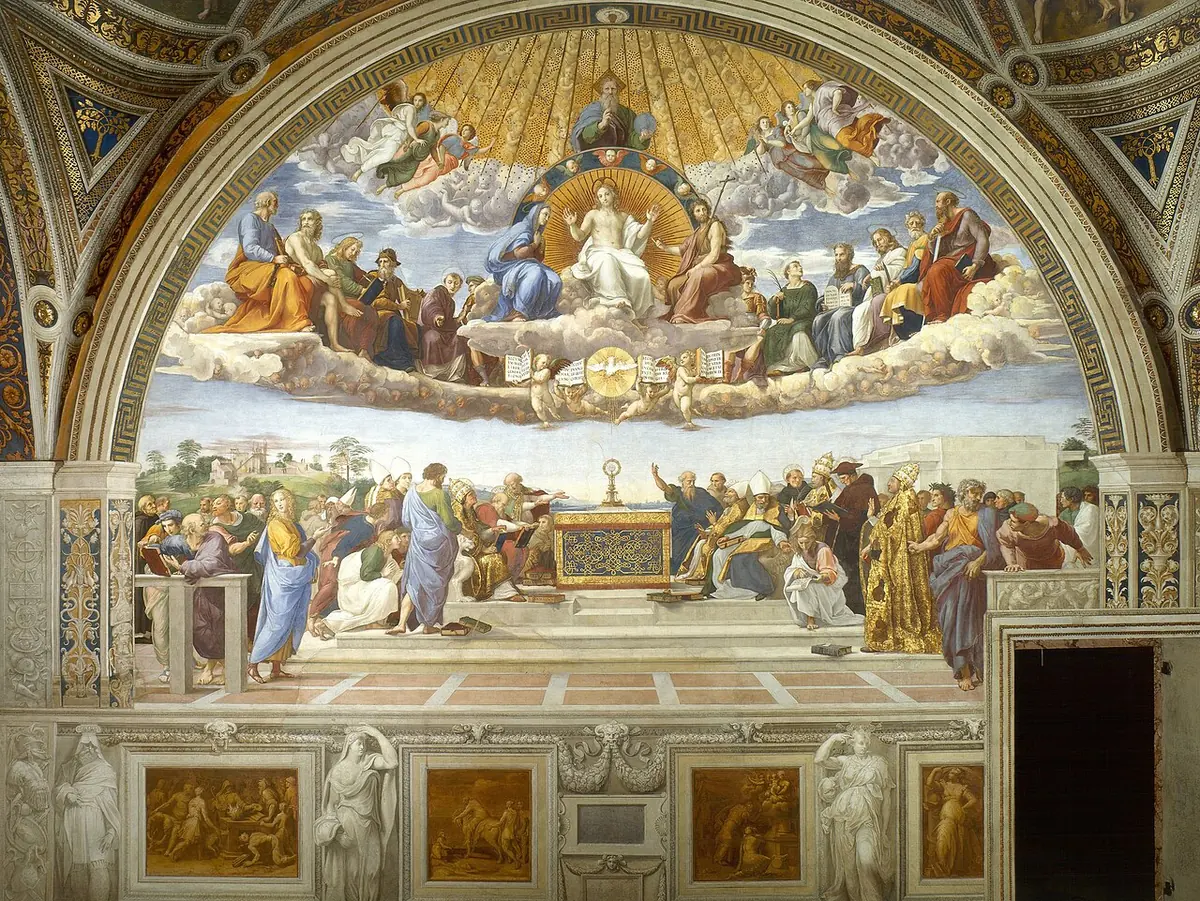
The complete list of the 38 Doctors of the Church
Here is every Doctor in the order the Church declared them, with the year, the Pope who declared them and the name each is often known by. Some of these names were given in the decree itself, such as Doctor of Unity for St. Irenaeus and Evangelical Doctor for St. Anthony; most are older titles from the medieval schools and from popular devotion.
The first nine: the great Latin and Greek Doctors and St. Thomas
- St. Ambrose, 1298, Boniface VIII.
- St. Augustine, 1298, Boniface VIII. The Doctor of Grace.
- St. Jerome, 1298, Boniface VIII. Honored in the old Roman Missal as the greatest Doctor in explaining the Scriptures.
- St. Gregory the Great, 1298, Boniface VIII.
- St. Thomas Aquinas, 1567, St. Pius V. The Angelic Doctor, also the Common Doctor.
- St. Athanasius, 1568, St. Pius V. The Father of Orthodoxy.
- St. Basil the Great, 1568, St. Pius V.
- St. Gregory of Nazianzus, 1568, St. Pius V. The Theologian.
- St. John Chrysostom, 1568, St. Pius V. "Golden Mouth."
Boniface VIII's decree of 1298 made the feasts of the four Latin Doctors universal. The East had long honored Basil, Gregory and John Chrysostom together as the Three Holy Hierarchs, and the West added Athanasius to make four Greek Doctors to match the four Latin ones. St. Pius V, a Dominican, placed them all in his new Breviary of 1568 along with his fellow Dominican, Thomas Aquinas.
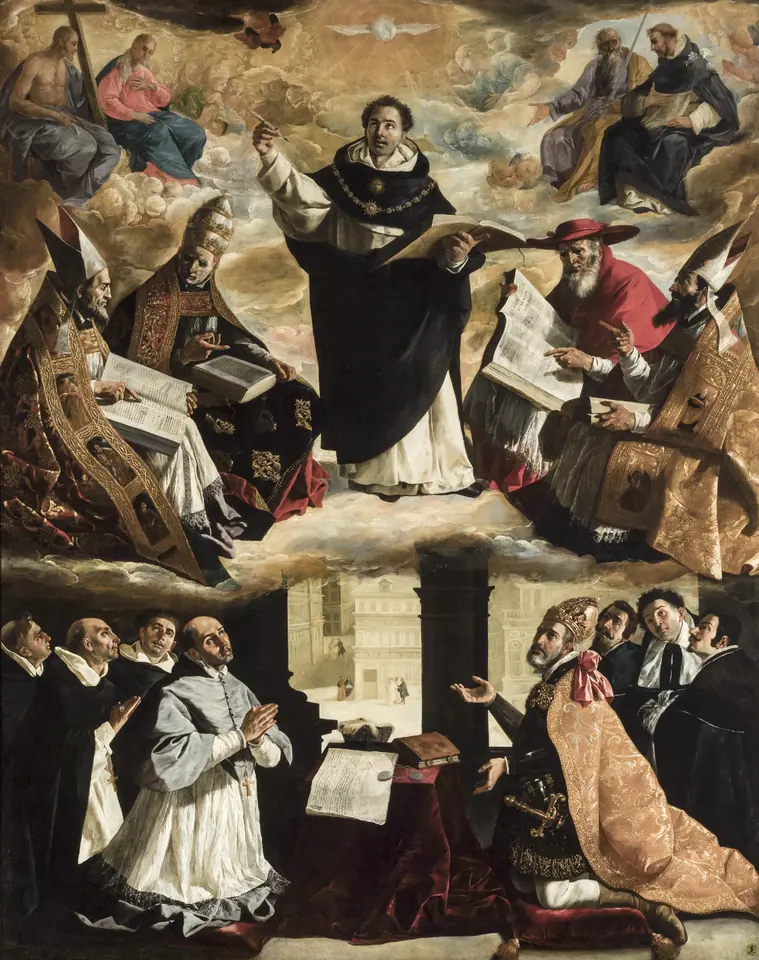
From the 1500s to the 1800s
- St. Bonaventure, 1588, Sixtus V. The Seraphic Doctor.
- St. Anselm, 1720, Clement XI. The Father of Scholasticism.
- St. Isidore of Seville, 1722, Innocent XIII.
- St. Peter Chrysologus, 1729, Benedict XIII. The Doctor of Homilies.
- St. Leo the Great, 1754, Benedict XIV.
- St. Peter Damian, 1828, Leo XII.
- St. Bernard of Clairvaux, 1830, Pius VIII. The Mellifluous Doctor.
- St. Hilary of Poitiers, 1851, Bl. Pius IX. The Hammer of the Arians.
- St. Alphonsus Liguori, 1871, Bl. Pius IX. The Most Zealous Doctor.
- St. Francis de Sales, 1877, Bl. Pius IX.
- St. Cyril of Alexandria, 1883, Leo XIII. The Doctor of the Incarnation.
- St. Cyril of Jerusalem, 1883, Leo XIII.
- St. John of Damascus, 1890, Leo XIII. "Golden Stream."
- St. Bede the Venerable, 1899, Leo XIII.
The Catholic Encyclopedia, written in 1909, calls St. Leo's declaration "a well-deserved but belated" one. It took the Church more than thirteen centuries to name the Pope whose Tome was acclaimed at the Council of Chalcedon.
The 1900s
- St. Ephrem, 1920, Benedict XV. The Harp of the Holy Spirit.
- St. Peter Canisius, 1925, Pius XI.
- St. John of the Cross, 1926, Pius XI. The Mystical Doctor.
- St. Robert Bellarmine, 1931, Pius XI.
- St. Albert the Great, 1931, Pius XI. The Universal Doctor.
- St. Anthony of Padua, 1946, Pius XII. The Evangelical Doctor.
- St. Lawrence of Brindisi, 1959, St. John XXIII. The Apostolic Doctor.
- St. Teresa of Avila, 1970, St. Paul VI. The first woman Doctor.
- St. Catherine of Siena, 1970, St. Paul VI.
- St. Thérèse of Lisieux, 1997, St. John Paul II.
The 2000s
- St. John of Avila, 2012, Benedict XVI. The Apostle of Andalusia.
- St. Hildegard of Bingen, 2012, Benedict XVI.
- St. Gregory of Narek, 2015, Francis.
- St. Irenaeus of Lyon, 2022, Francis. The Doctor of Unity.
- St. John Henry Newman, 2025, Leo XIV.
Benedict XVI proclaimed John of Avila and Hildegard together on October 7, 2012, at the Mass that opened the Synod on the New Evangelization. He called them "two radiant figures" and presented them as models for proclaiming the Gospel in a new age.

The four women Doctors
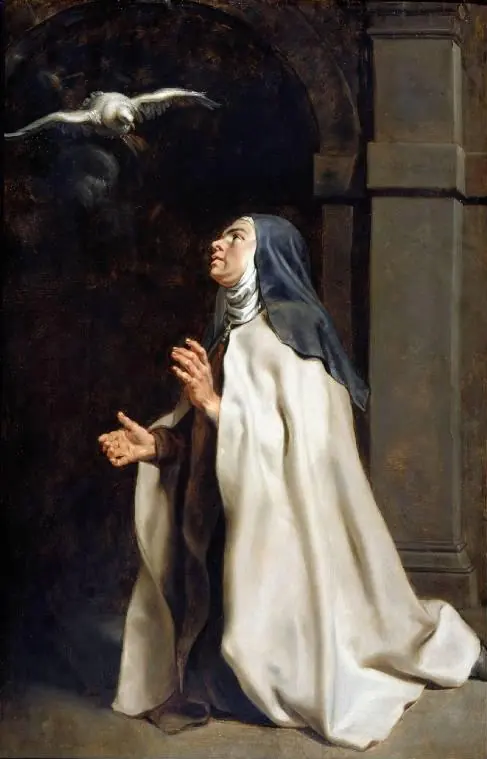
For seven centuries every Doctor was a man. St. Paul VI changed that in 1970, naming St. Teresa of Avila on September 27 and St. Catherine of Siena a week later, on October 4. Neither had formal schooling in theology. Teresa wrote her Interior Castle and Way of Perfection to teach her sisters to pray. Catherine dictated her Dialogue and hundreds of letters, many to popes and princes, and she helped bring the papacy back from Avignon to Rome.
St. John Paul II added St. Thérèse of Lisieux on October 19, 1997, the centenary of her death, in the apostolic letter Divini Amoris Scientia, "the science of divine love." He wrote that Thérèse "is not only the youngest Doctor of the Church, but is also the closest to us in time." Benedict XVI then named St. Hildegard of Bingen in 2012. She was a Benedictine abbess of the 1100s who wrote on theology, medicine and music, and she was only formally canonized that same year, when Benedict extended her cult to the universal Church.

The newest Doctors: Gregory of Narek, Irenaeus and Newman
The three most recent names show the Church reaching both back to her roots and out to her many traditions.
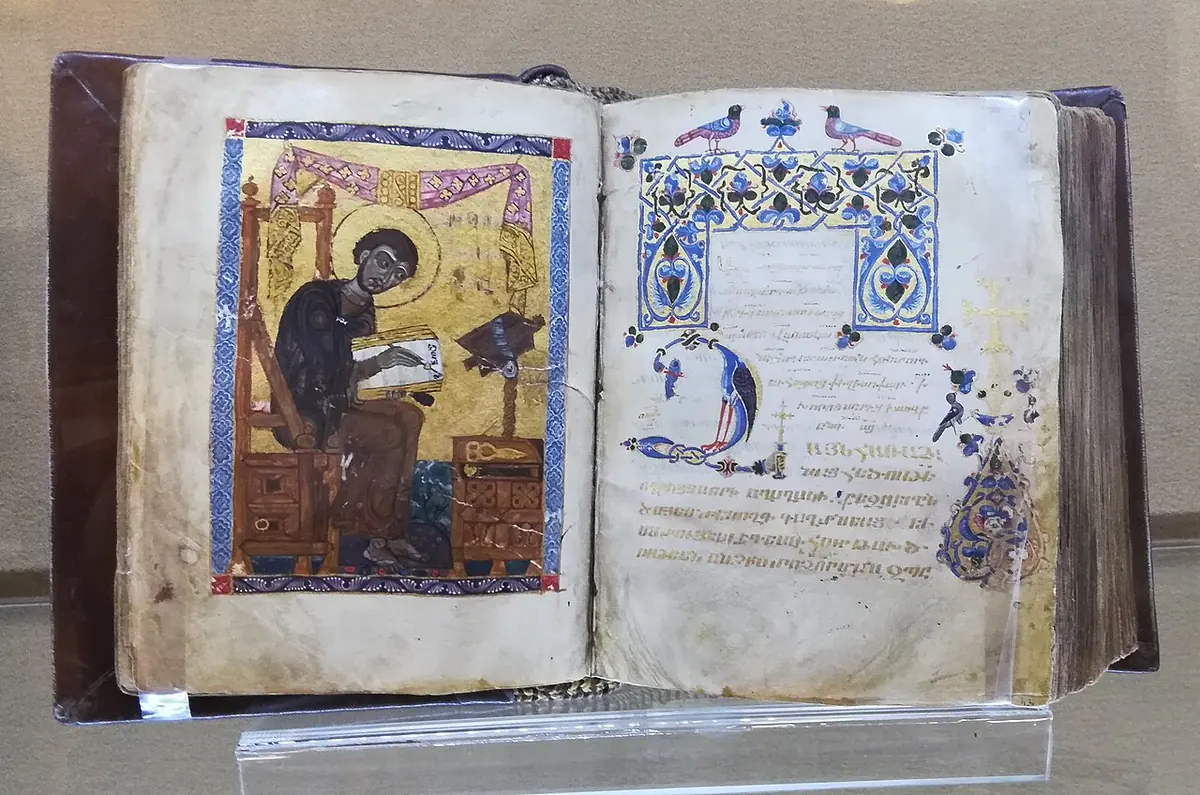
St. Gregory of Narek (about 950 to 1003) was an Armenian monk and poet whose Book of Lamentations, a long cycle of prayers "from the depths of the heart," is still beloved in Armenia. Pope Francis named him a Doctor in 2015, the centenary year of the Armenian genocide, and celebrated Mass with the Armenian Catholic faithful in St. Peter's on April 12 of that year.
St. Irenaeus of Lyon (about 130 to 202) heard St. Polycarp preach as a boy and became bishop of Lyon. Pope Francis declared him a Doctor on January 21, 2022, with the title Doctor unitatis, Doctor of Unity, because he came from the Greek East and served the Latin West. His case is unusual. The Catholic Encyclopedia explained in 1909 that no martyr had ever been named a Doctor, since the old Mass and Office of Doctors belonged to confessors, and it gave Irenaeus as an example. The Roman Calendar keeps his memorial on June 28 as bishop and martyr, so he is the first Doctor the Church honors as a martyr.
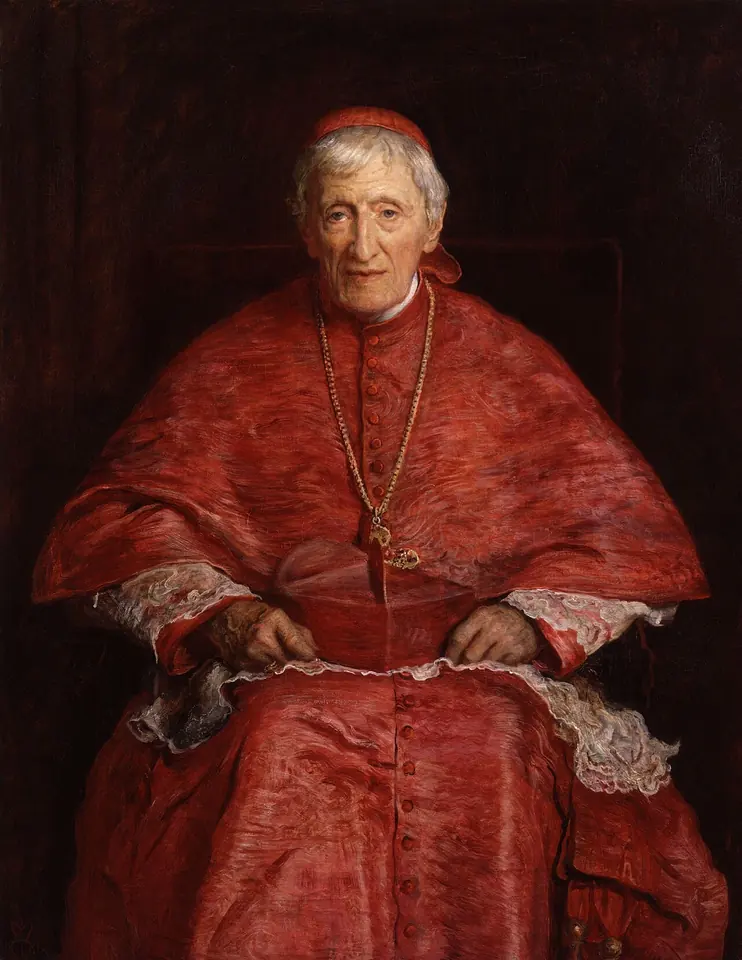
St. John Henry Newman (1801 to 1890) was the Oxford scholar who became a Catholic in 1845 and later a cardinal. Pope Leo XIV proclaimed him the 38th Doctor of the Church at the All Saints' Day Mass on November 1, 2025, during the Jubilee of the World of Education. In his homily the Pope said it was "a great joy to include Saint John Henry Newman among the Doctors of the Church," and he named Newman co-patron of the Church's educational mission with St. Thomas Aquinas.
How a saint becomes a Doctor of the Church
The process has changed over the centuries. In the old days a Pope simply extended to the whole Church the Office and Mass of a saint with the title of Doctor, through a decree of the Congregation of Rites. Today the request usually comes from bishops' conferences or religious orders. The Dicastery for the Causes of Saints studies the saint's writings and their reception in the Church, the Dicastery for the Doctrine of the Faith gives its judgment on the teaching, and the Pope makes the final decision, often proclaiming the new Doctor at a solemn Mass.
The list is short on purpose. Only 38 names in the whole history of the Church have received the title, out of the thousands of saints we venerate. Each was chosen because their words still help ordinary believers to know and love God.
Praying with the Doctors
We don't have to be scholars to learn from the Doctors. Many of their most beloved pages are prayers: the opening of Augustine's Confessions, Thomas Aquinas's hymns for Corpus Christi, Teresa's little poem Nada te turbe, Thérèse's offering to merciful love. Begin with one Doctor whose life speaks to yours and read a little each day. The Church keeps their feasts through the year on our feast days calendar, and every one of them can be asked to pray for us.
Holy Doctors of the Church, you who taught the faith with your words and your lives, pray for us, that we may know the truth and love it.
Frequently asked questions
How many Doctors of the Church are there?
There are 38. Pope Leo XIV added the 38th, St. John Henry Newman, on November 1, 2025. Before him came St. Irenaeus of Lyon in January 2022, St. Gregory of Narek in 2015, and St. John of Avila and St. Hildegard of Bingen in 2012.
Who are the four female Doctors of the Church?
St. Teresa of Avila and St. Catherine of Siena, both declared by St. Paul VI in 1970; St. Thérèse of Lisieux, declared by St. John Paul II in 1997; and St. Hildegard of Bingen, declared by Benedict XVI in 2012.
Who was the most recent Doctor of the Church?
St. John Henry Newman. Pope Leo XIV proclaimed him a Doctor of the Church at the All Saints' Day Mass in St. Peter's Square on November 1, 2025, during the Jubilee of the World of Education, and named him co-patron of the Church's educational mission with St. Thomas Aquinas.
What does "Doctor of the Church" mean?
The word "doctor" comes from the Latin docere, to teach. A Doctor of the Church is a saint whose teaching has helped the whole Church, not just one place or one age, and whom the Pope has formally declared a sure guide in the faith.
Is being a Doctor of the Church the same as being infallible?
No. The declaration recognizes eminent teaching and holiness, not freedom from every error. The Catholic Encyclopedia notes that it "is not in any way an ex cathedra decision," and that even the greatest Doctors were not wholly immune from mistakes in particular opinions.
Why is St. Thomas Aquinas called the Angelic Doctor?
The name goes back to the medieval schools and refers to the purity of his life and the clarity of his mind, as well as his long treatment of the angels in the Summa Theologiae. He is also called the Common Doctor, because the Church has so long used his teaching in the formation of priests.
Who was the youngest Doctor of the Church?
St. Thérèse of Lisieux, who died at 24 in 1897. St. John Paul II called her "the youngest Doctor of the Church" and "the closest to us in time" when he declared her in 1997.
Sources
- Doctors of the Church, Catholic Encyclopedia (1909). The three conditions; the 1298 decree of Boniface VIII; the declarations up to 1899; why no martyr had been named
- John Paul II, Apostolic Letter Divini Amoris Scientia (October 19, 1997). Thérèse of Lisieux declared a Doctor; "eminent doctrine" as the fundamental element
- Benedict XVI, homily of October 7, 2012, proclaiming St. John of Avila and St. Hildegard of Bingen Doctors of the Church
- Dicastery for Promoting Christian Unity: Saint Irenaeus of Lyon, Doctor unitatis (2022)
- Leo XIV, homily for the proclamation of St. John Henry Newman as Doctor of the Church (November 1, 2025)