What is purgatory?

What is purgatory? Purgatory is the final purification of those who die in God's grace and friendship but are not yet fully purified. Every soul in purgatory is saved and will enter heaven. The Church names this cleansing purgatory (Catechism 1030–1031) and has always helped the holy souls with Masses, prayers, almsgiving and indulgences.
What is purgatory?
Purgatory is the final purification of God's friends. When a person dies in the state of grace, joined to Christ and forgiven, but not yet completely free of the effects of sin, God finishes in them what he began at baptism. The Catechism of the Catholic Church puts it in one sentence:
All who die in God's grace and friendship, but still imperfectly purified, are indeed assured of their eternal salvation; but after death they undergo purification, so as to achieve the holiness necessary to enter the joy of heaven.
The next paragraph (1031) adds two things we should never forget. The Church calls this purification "Purgatory," and it "is entirely different from the punishment of the damned." Everyone in purgatory is saved. Every one of them will see God. There is no soul in purgatory who could still be lost, and no soul there who would wish to be anywhere else until the work is done.
So when we say a loved one may be in purgatory, we are not saying something grim. We are saying that we hope they died in God's friendship and that they are now on the last stretch of the road home. And we are saying we can still help them.

Why a purification is needed
Scripture says of the heavenly Jerusalem, "There shall not enter into it any thing defiled" (Apocalypse 21:27, Douay-Rheims). Jesus said, "Blessed are the clean of heart: for they shall see God." Most of us, if we are honest, are not yet clean of heart. We may be forgiven our sins, even our grave ones, and still be attached to comfort, to our own way, to small resentments and habits we never fully gave up.
The Catechism explains this with the old distinction between the guilt of sin and its temporal punishment. Grave sin cuts us off from God, and that loss is the "eternal punishment" of sin, which God forgives in the sacrament of Penance. But "every sin, even venial, entails an unhealthy attachment to creatures, which must be purified either here on earth, or after death in the state called Purgatory" (CCC 1472). The Catechism is careful to say these punishments are not "a kind of vengeance inflicted by God from without," but follow from the nature of sin itself. A burned hand heals after the fire is out; a soul that has loved the wrong things needs time, or something like time, to love rightly.
Pope Benedict XVI, in his encyclical on hope, described most of us this way: deep down we still thirst for God, but our openness to him "is covered over by ever new compromises with evil." Purgatory is where that covering comes off.
Purgatory in Scripture
The word "purgatory" is not in the Bible, just as the word "Trinity" is not. The teaching, the Church says, comes from Scripture read within the living tradition of the Church.
2 Maccabees 12:46: praying for the dead
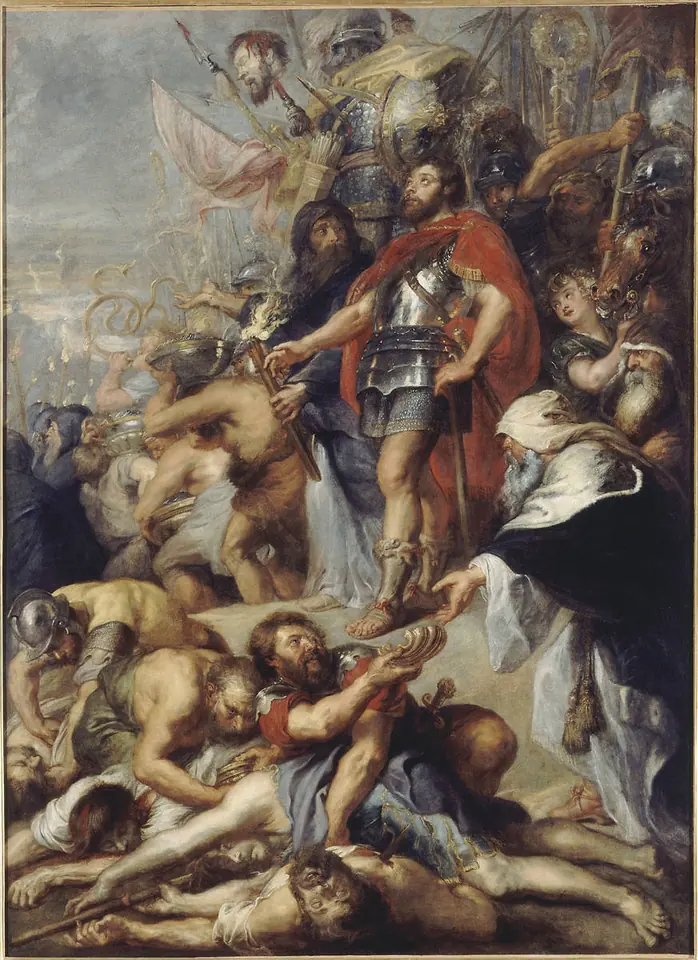
The clearest text comes from the Second Book of Maccabees, part of the Old Testament as the Church received it. After a battle around 163 BC, Judas Maccabeus found pagan amulets under the tunics of his fallen soldiers. He did not give them up for lost. He took up a collection and sent it to Jerusalem "for sacrifice to be offered for the sins of the dead, thinking well and religiously concerning the resurrection." The sacred writer concludes, in the Douay-Rheims translation:
It is therefore a holy and wholesome thought to pray for the dead, that they may be loosed from sins.
The Catechism cites this verse (CCC 1032) as the root of the Church's practice. Prayer for the dead only makes sense if some of the dead can still be helped: not the saints in heaven, who need nothing, and not the lost, who cannot be helped, but souls in between.
1 Corinthians 3:15: "saved, yet so as by fire"
St. Paul writes that every Christian builds on the one foundation, Jesus Christ, some with gold and silver, some with wood, hay and stubble. On "the day of the Lord," fire will test each one's work:
If any man's work burn, he shall suffer loss; but he himself shall be saved, yet so as by fire. (1 Corinthians 3:15, Douay-Rheims)
The Catechism lists this verse in its notes on purgatory, and Benedict XVI devoted a whole passage of Spe salvi (no. 46) to it. A person can be saved, he says, and still find that part of what they built "may be burned down," so that "in order to be saved we personally have to pass through 'fire.'"
Matthew 12:32: forgiveness "in the world to come"
Jesus said that whoever speaks against the Holy Spirit will not be forgiven, "neither in this world, nor in the world to come" (Matthew 12:32). St. Gregory the Great, quoted by the Catechism (CCC 1031), drew the plain conclusion: "certain offenses can be forgiven in this age, but certain others in the age to come." He wrote around 593, and he was repeating what the Church already believed.
What the Church teaches: the councils
The faith in purgatory was lived long before it was defined. The Catechism says the Church "formulated her doctrine of faith on Purgatory especially at the Councils of Florence and Trent."
The Council of Florence (1439)
At Florence, bishops of the Latin West and the Greek East met to heal the schism between them. The bull of union, Laetentur caeli, signed in July 1439, stated the common faith on the dead:
if truly penitent people die in the love of God before they have made satisfaction for acts and omissions by worthy fruits of repentance, their souls are cleansed after death by cleansing pains; and the suffrages of the living faithful avail them in giving relief from such pains, that is, sacrifices of masses, prayers, almsgiving and other acts of devotion.
Notice what the council did not say. It did not speak of a fire, a place or a number of years. It taught three things: the penitent who die in God's love are cleansed after death; that cleansing involves pain; and our prayers help.
The Council of Trent (1563)
A century later, in its last session in December 1563, the Council of Trent issued a short Decree concerning Purgatory. It taught "that there is a Purgatory, and that the souls there detained are helped by the suffrages of the faithful, but principally by the acceptable sacrifice of the altar." Then it turned to preachers. Bishops were to keep "the more difficult and subtle questions," which bring no "increase of piety," out of popular sermons, and to forbid anything that tended to "curiosity or superstition" or that "savour[ed] of filthy lucre."
Trent wanted the doctrine taught plainly and the speculation kept quiet. That is still good advice. The Church teaches that there is a purification and that we can help; she has never defined how it feels, where it is or how long it lasts.
More recent teaching
St. John Paul II, in a general audience on August 4, 1999, said the term purgatory "does not indicate a place, but a condition of existence," and that those being purified "are not separated from God but are immersed in the love of Christ." He also said that purification is not "a prolungation of the earthly condition, almost as if after death one were given another possibility to change one's destiny." The choice is made in this life. Purgatory is for those who chose God.
Benedict XVI added a meditation that many people find consoling. In Spe salvi (no. 47) he wrote:
Some recent theologians are of the opinion that the fire which both burns and saves is Christ himself, the Judge and Saviour.
Meeting his gaze, all that is false in us melts away. "But it is a blessed pain, in which the holy power of his love sears through us like a flame."
What the first Christians did
The early Church prayed for the dead from the start, and that practice is the strongest witness to the faith in purgatory.
- Around 203, in a prison in Carthage, the young martyr St. Perpetua prayed for her little brother Dinocrates, who had died of a disease at seven. In her first vision she saw him thirsty in "a gloomy place"; after days of prayer she saw the same place "bright," and the boy "with a clean body well clad, was finding refreshment."
- Around 211, Tertullian wrote in De Corona that "as often as the anniversary comes round, we make offerings for the dead as birthday honours." The anniversary of death was the Christian's birthday into eternity.
- In 387, as St. Monica lay dying at Ostia, she told her sons, in the words of her son St. Augustine's Confessions: "Lay this body anywhere, let not the care for it trouble you at all. This only I ask, that you will remember me at the Lord's altar, wherever you be." Augustine asked every reader of his book to do the same.
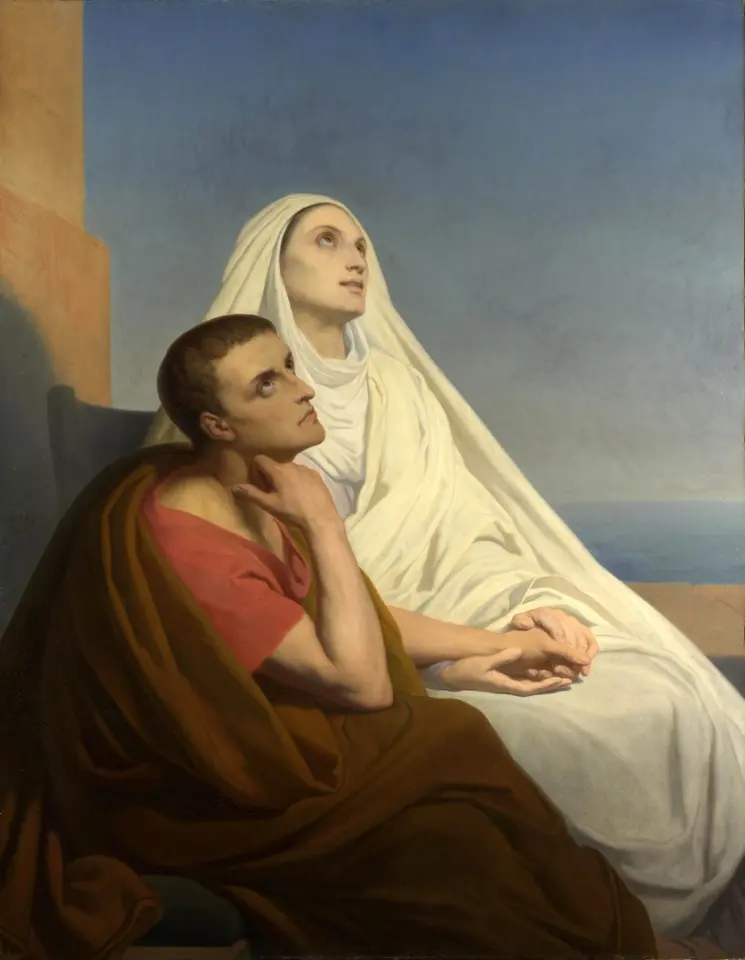
St. Augustine did not think his holy mother needed nothing. He loved her too much for that. He prayed for her, as every Christian family has done since.
What the saints wrote about purgatory
St. Catherine of Genoa: the fire of love
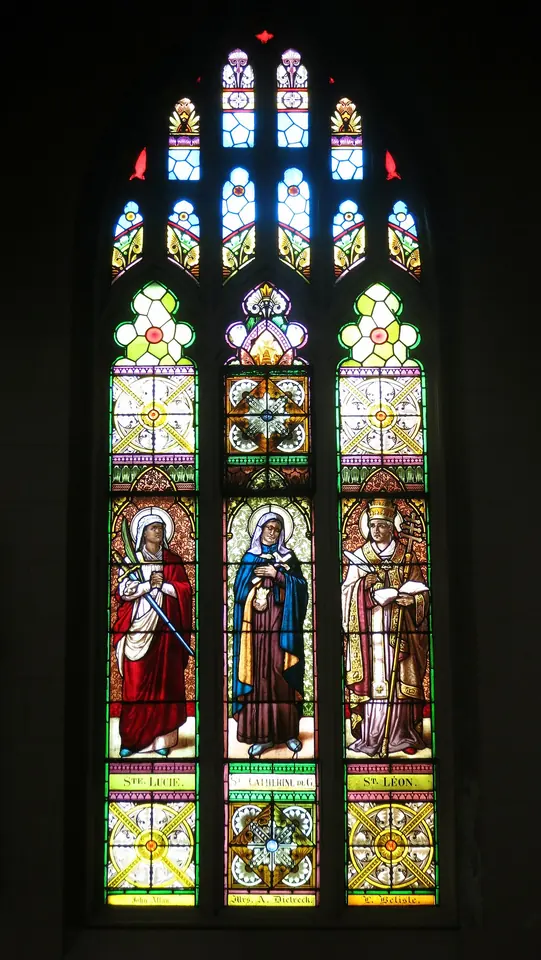
No one has written about purgatory with more joy than St. Catherine of Genoa (1447–1510), the Genoese noblewoman who spent decades nursing the sick at the Pammatone hospital. Her teaching, written down by her confessor and disciples and published in 1551, became the Treatise on Purgatory. The English translation in Life and Doctrine of Saint Catherine of Genoa (New York, 1874) is in the public domain.

Catherine begins with something that surprises most readers. The souls in purgatory are content:
There is no peace to be compared with that of the souls in purgatory, save that of the saints in paradise, and this peace is ever augmented by the inflowing of God into these souls, which increases in proportion as the impediments to it are removed.
The impediment, she says, is "the rust of sin," and the fire consumes it, so that the soul "reflects more and more perfectly the true sun who is God." She compares the soul to a covered mirror: the sun never stops shining, and as the covering is lifted the light comes through.
She does not pretend it is painless. The souls "suffer torments which no tongue can describe," and the deepest pain is the delay in reaching God. She compares it to hunger: imagine one loaf in all the world that would satisfy every hunger, and a man who cannot yet reach it. The souls in purgatory, she says, are different from the lost in one thing, hope:
But the souls in purgatory have an assured hope of seeing him and of being entirely satisfied; and therefore they endure all hunger and suffer all pain until that moment when they enter into eternal possession of this bread, which is Jesus Christ, our Lord, our Saviour, and our Love.
And in chapter 8 she writes the line that has comforted many grieving families:
I see that as far as God is concerned, paradise has no gates, but he who will may enter. For God is all mercy, and his open arms are ever extended to receive us into his glory.
It is not God who holds the soul back, Catherine says. The soul, seeing God's purity and its own stains, "would rather cast itself into a thousand hells than appear, so stained, in the presence of the divine majesty," and so it goes into purgatory "quickly and willingly." Purgatory is a gift the soul accepts with love.
Other saints and the holy souls
- St. Gregory the Great told, in his Dialogues, the story of a monk named Justus for whom thirty Masses were offered on thirty days after his death. The custom of "Gregorian Masses," thirty Masses on consecutive days for one soul, comes from it. The story is traditional; the practice is approved and still offered by many religious communities.
- St. Gertrude the Great prayed constantly for the holy souls; the popular "St. Gertrude prayer" is a later text, as we explain on our page about the St. Gertrude prayer.
- St. Nicholas of Tolentino, an Augustinian friar who died in 1305, is honored as patron of the souls in purgatory. His life tells that a dead friar he had known came to him at night and begged him to offer Mass for him and the other holy souls; Nicholas did so for seven days and was told that many of them were now with God. The story is traditional.
- St. Thomas Aquinas and St. Robert Bellarmine gave the Church's teaching its classic theological form.
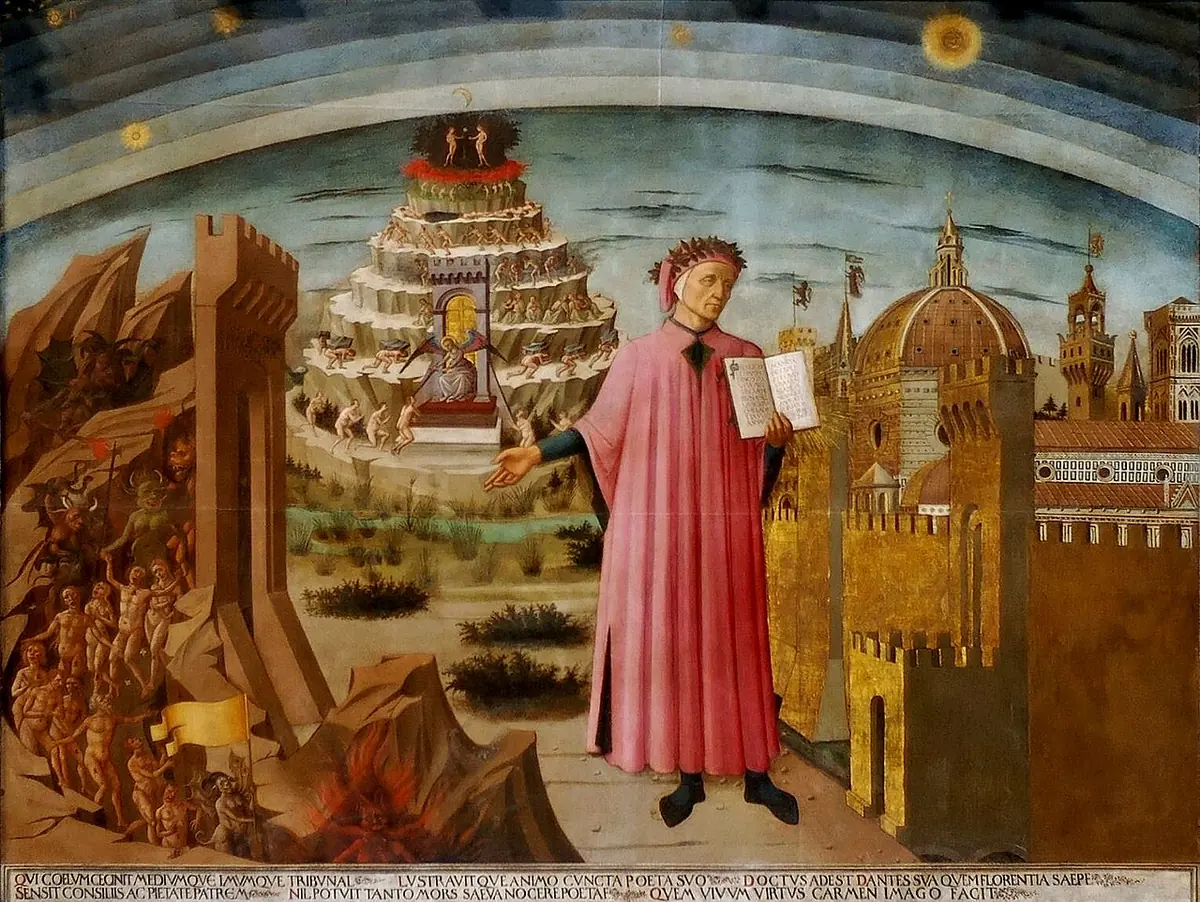
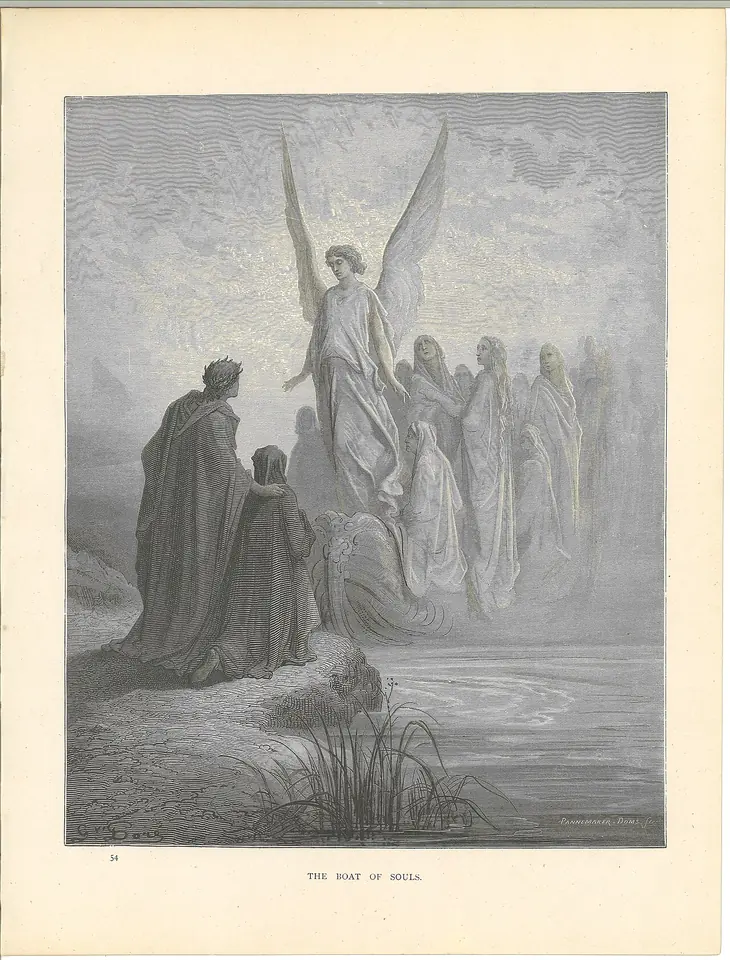
Dante's Purgatorio (about 1308–1320), the second part of the Divine Comedy, is the most famous picture of purgatory ever made: a mountain on which repentant souls climb terrace by terrace, singing psalms. It is a great Christian poem, not Church doctrine, but it captures something true. Dante's purgatory is full of hope, and nobody on the mountain wants to go back down.
What purgatory is not
Because purgatory has been painted and preached in so many ways, it helps to say plainly what the Church does not teach.
- It is not a second chance. Purgatory is only for those who die in God's grace. It does not rescue anyone from hell, and no one in purgatory can be lost.
- It is not a lesser hell. The Catechism says it is "entirely different from the punishment of the damned." Catherine of Genoa calls the souls there joyful.
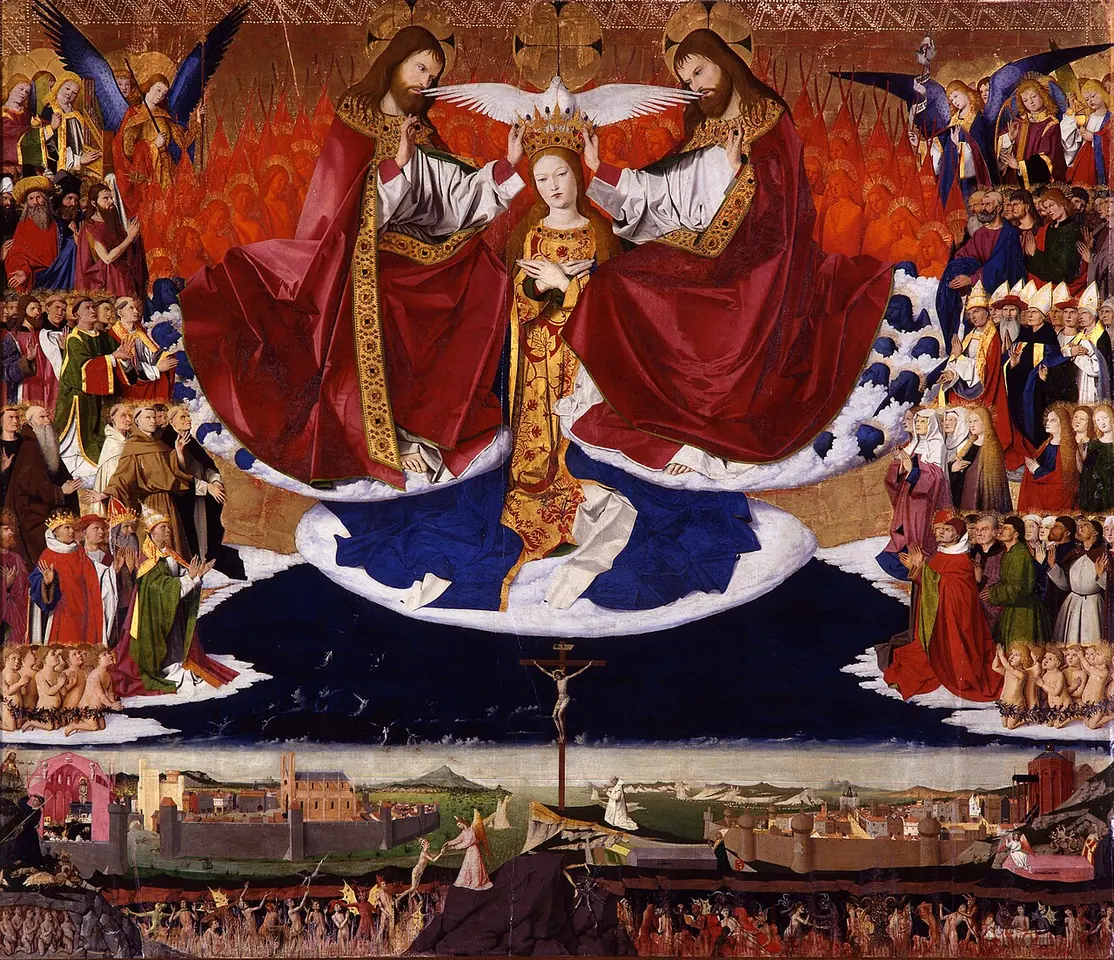
- It is not a place on a map. St. John Paul II called it "a condition of existence." The flames in art are images.
- It is not a waiting room measured in years. The old "days" and "years" attached to indulgences referred to the penances of the early Church, not to time in purgatory, and Paul VI removed them in 1967. Benedict XVI wrote that the duration of this purification cannot be calculated "in terms of the chronological measurements of this world."
- It is not God's anger. It is his mercy finishing its work, so that we can see him face to face.
How we help the holy souls
Here the doctrine becomes practical, and loving. The Church has always taught that the living can help the dead. "Let us help and commemorate them," St. John Chrysostom preached, in words the Catechism quotes (CCC 1032). "Let us not hesitate to help those who have died and to offer our prayers for them."
Have Mass offered
The Council of Trent said the souls are helped "principally by the acceptable sacrifice of the altar." Ask your parish to offer a Mass for a deceased parent, spouse or friend, on the anniversary of death, a birthday or any day. A Mass stipend is a customary offering, not a price; no one is ever refused a Mass because they cannot give.

Pray for them
The simplest prayer is the one the Church herself prays:
Eternal rest grant unto them, O Lord, and let perpetual light shine upon them. May they rest in peace. Amen.
Many families pray it after grace at meals or at the end of the rosary. Psalm 130, the De profundis, is the Church's great psalm for the dead. You will find these and other prayers, with their sources and the Latin, on our page of prayers for the dead. The Divine Mercy chaplet and the rosary may also be offered for the holy souls.
Gain indulgences for them
An indulgence is the Church's help in remitting the temporal punishment due to sins already forgiven, and the Church allows every indulgence to be applied to the dead. The Catechism (CCC 1479) names this as one of the ways "we can help them." From November 1 to 8, the faithful who devoutly visit a cemetery and pray for the dead, even silently, can gain a plenary indulgence each day, applicable only to the souls in purgatory, under the usual conditions. Our guide to indulgences explains the conditions and the most common plenary indulgences.
Give alms and do works of mercy
Almsgiving and penance offered for the dead are among the ways the Catechism names (CCC 1032). Paying for a funeral Mass for someone who has no family, visiting the grave of a forgotten relative, giving to the poor in someone's memory: all of this can be offered for a soul.
Keep November
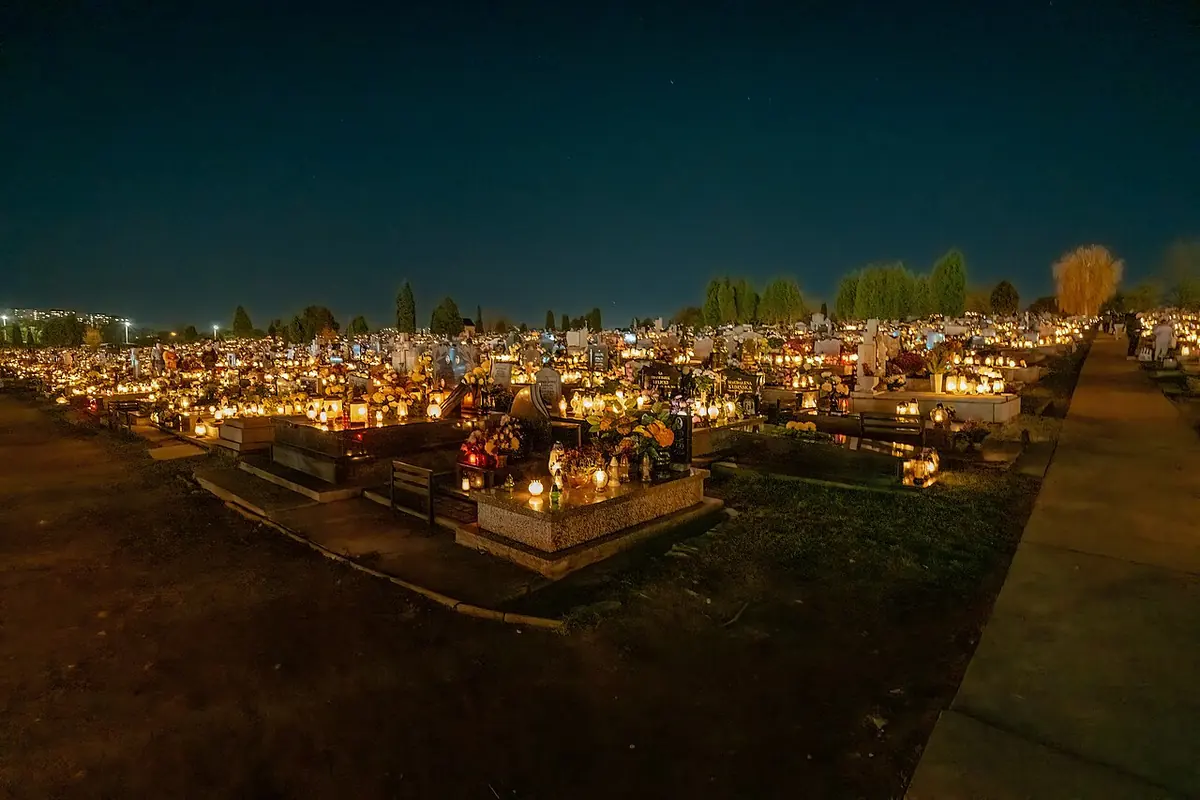
November is the Church's month of the holy souls, opening with All Saints' Day and All Souls' Day. In Poland, Mexico, Italy, the Philippines and many other places, families crowd the cemeteries with candles and flowers, and parishes keep books of remembrance where the names of the dead are written and prayed for all month.
A prayer for the holy souls
Let us end where the Church ends every Requiem, with confidence in God's mercy. We pray for our own dead by name, and for those who have no one to pray for them:
Eternal rest grant unto them, O Lord, and let perpetual light shine upon them. May the souls of the faithful departed, through the mercy of God, rest in peace. Amen.
St. Monica asked only to be remembered at the altar. That is what the holy souls ask of us too. One day, please God, we will ask the same of those who come after us.
Frequently asked questions
What is purgatory in simple terms?
Purgatory is the final cleansing that some of the saved go through after death before they enter heaven. The Catechism says that those who "die in God's grace and friendship, but still imperfectly purified, are indeed assured of their eternal salvation; but after death they undergo purification." It is a mercy, not a punishment of the lost.
Is purgatory in the Bible?
The word is not, but the teaching rests on Scripture. The Church points to 2 Maccabees 12:46 ("It is therefore a holy and wholesome thought to pray for the dead, that they may be loosed from sins"), to 1 Corinthians 3:15 ("he himself shall be saved, yet so as by fire"), and to Matthew 12:32, where Jesus speaks of sins that will not be forgiven "in the world to come," which implies that some are.
Is purgatory a place?
Not in the way a city is a place. St. John Paul II said in 1999 that the term "does not indicate a place, but a condition of existence." The fire, the mountain and the flames in paintings are images of a real purification of the soul by God's love.
Is purgatory a second chance after death?
No. Everyone in purgatory has already been saved; they died in God's friendship. Purgatory does not change anyone's eternal destiny. It completes the healing of those who are already on their way to heaven.
How long does purgatory last?
The Church has never said. Earthly time does not measure the life after death, and Benedict XVI wrote that we cannot calculate the "duration" of this purification in the chronological measurements of this world. That is why the faithful keep praying for their dead for years, and leave the rest to God.
How can I help souls in purgatory?
Above all by having Mass offered for them. Then by prayer (the Eternal Rest prayer, the rosary, the Office of the Dead), by almsgiving and works of mercy offered for them, and by gaining indulgences on their behalf, especially the plenary indulgence for visiting a cemetery from November 1 to 8.
Do the souls in purgatory pray for us?
The Church has not defined it, but many saints and theologians, St. Alphonsus Liguori among them, taught that the holy souls can pray for us, and the faithful have long asked for their prayers. The Church's settled teaching is that we can help them.
Who is the patron saint of the souls in purgatory?
St. Nicholas of Tolentino is the best-known patron of the holy souls. St. Gertrude the Great and St. Catherine of Genoa are also closely linked with them, and November, with All Souls' Day on November 2, is the month the Church devotes to praying for them.
Sources
- Catechism of the Catholic Church, 1030–1032: The Final Purification, or Purgatory
- Council of Florence, Session 6 (1439), bull of union with the Greeks, Laetentur caeli
- Council of Trent, Session 25 (1563), Decree concerning Purgatory
- St. Catherine of Genoa, Treatise on Purgatory, in Life and Doctrine of Saint Catherine of Genoa (New York, 1874; CCEL). Quotations from chapters 1, 2, 6 and 8
- Benedict XVI, Spe salvi (2007), nos. 45–48
- St. John Paul II, General Audience of August 4, 1999 (purgatory as a condition, not a place)
- St. Augustine, Confessions, Book IX (Monica's request, chapter 11)
- Tertullian, De Corona, chapter 3 (offerings for the dead on the anniversary)