What is a martyr?

What is a martyr? A martyr is a Christian who freely accepts death rather than deny Christ or the faith, killed out of hatred for that faith. The word comes from the Greek martys, "witness." The Catechism calls martyrdom "the supreme witness given to the truth of the faith." The first Christian martyr was St. Stephen, stoned in Jerusalem in the 30s.
A martyr is a witness. That is what the Greek word martys means, and it is the oldest title of honor the Church gives her children. Before there were Doctors of the Church or founders of orders, there were martyrs, and the first saints Christians honored at all were the men, women and children who died rather than deny Christ. Here is what the word means, what the Church teaches about martyrdom, and who the great Christian martyrs are, from the stones outside Jerusalem to the camps of the 20th century.
What is a martyr? The meaning of the word
In ordinary Greek a martys was a witness in court, someone who testified to what he had seen. The apostles used the word that way about themselves: they were witnesses that Christ had risen. The Catholic Encyclopedia traces how quickly the meaning changed. Witnessing to Christ put the apostles in danger every day, and one after another they paid for it with their lives. By the end of the first century, St. John could call Antipas of Pergamum a "faithful witness" who "was slain among you" (Revelation 2:13), and the word had come to mean a witness who seals his testimony with his blood.
For a while the title was used loosely. The Christians of Lyons who survived torture in 177 were hailed as martyrs, but they refused the name. "They are already martyrs whom Christ has deemed worthy to be taken up in their confession," they wrote, "but we are confessors mean and lowly." From then on the Church kept the distinction. A martyr died for the faith; a confessor suffered for it, or lived it heroically, but was not put to death.
Two things make a martyr in the Church's sense. The martyr is killed out of hatred for the faith (the old Latin phrase is in odium fidei), and the martyr accepts death freely, out of love for Christ, rather than renounce him. Seeking death was never encouraged. St. Gregory of Nazianzus summed up the rule: it is rash to seek death, and cowardly to refuse it.
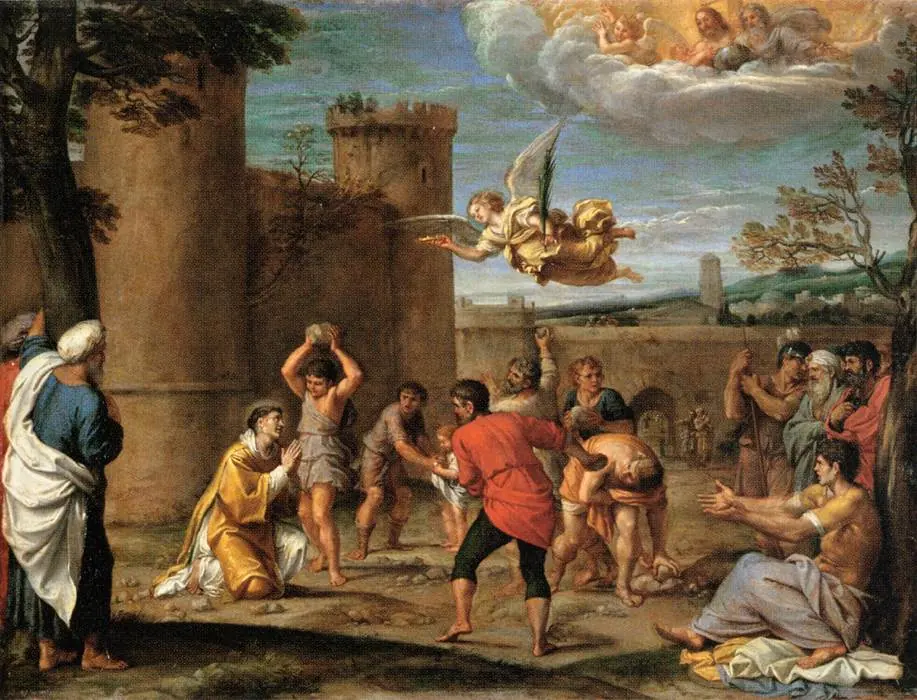
St. Stephen, the first martyr
St. Stephen was one of the seven deacons the apostles chose to serve the poor of the Jerusalem church. Brought before the Sanhedrin, he preached Christ to them, and when he cried out that he saw "the Son of man standing on the right hand of God," they dragged him outside the city and stoned him. Acts records his last words in the Douay-Rheims translation:
Lord Jesus, receive my spirit.
Lord, lay not this sin to their charge.
He died praying for his killers, as Christ had on the cross, and a young man named Saul stood by holding the cloaks. That young man became St. Paul. The Church calls Stephen the Protomartyr, the first martyr, and keeps his feast on December 26, the day after Christmas, so that the birth of Christ and the first death for Christ stand side by side.
What the Church teaches about martyrdom
The Catechism treats martyrdom under the Eighth Commandment, the commandment about truth, because the martyr is the ultimate truthful witness. Paragraph 2473 reads: "Martyrdom is the supreme witness given to the truth of the faith: it means bearing witness even unto death." The martyr, it continues, "bears witness to Christ who died and rose, to whom he is united by charity," and "endures death through an act of fortitude." It then quotes St. Ignatius of Antioch, on his way to the lions in Rome: "Let me become the food of the beasts, through whom it will be given me to reach God."
Paragraph 2474 explains why we have the acts of the martyrs at all. "The Church has painstakingly collected the records of those who persevered to the end in witnessing to their faith," it says. "They form the archives of truth written in letters of blood." It closes with the prayer of St. Polycarp, the old bishop of Smyrna, at the stake in about 155: "I bless you for having judged me worthy from this day and this hour to be counted among your martyrs."
Baptism of blood
The Church has always taught that martyrdom can do what baptism does. Catechism 1258 says: "The Church has always held the firm conviction that those who suffer death for the sake of the faith without having received Baptism are baptized by their death for and with Christ." This baptism of blood "brings about the fruits of Baptism without being a sacrament." The catechumens who died in the persecutions before they could reach the font were honored as martyrs, and the Holy Innocents, the baby boys Herod killed at Bethlehem, have been venerated as martyrs since the early centuries.
Martyrs and the miracle rule
Martyrdom also changes the road to sainthood. A candidate who was not a martyr normally needs one approved miracle to be beatified. A martyr does not. Once the Church proves martyrdom, the candidate can be beatified without a miracle, though one is still required for canonization. St. Maximilian Kolbe, who offered his life for another prisoner at Auschwitz in 1941, was beatified in 1971 as a confessor and then canonized by John Paul II in 1982 as a martyr. Blessed Miguel Pro, shot in Mexico City in 1927, was beatified as a martyr in 1988 and still awaits a miracle for canonization.
Red vestments and the palm: martyrs in the liturgy and in art
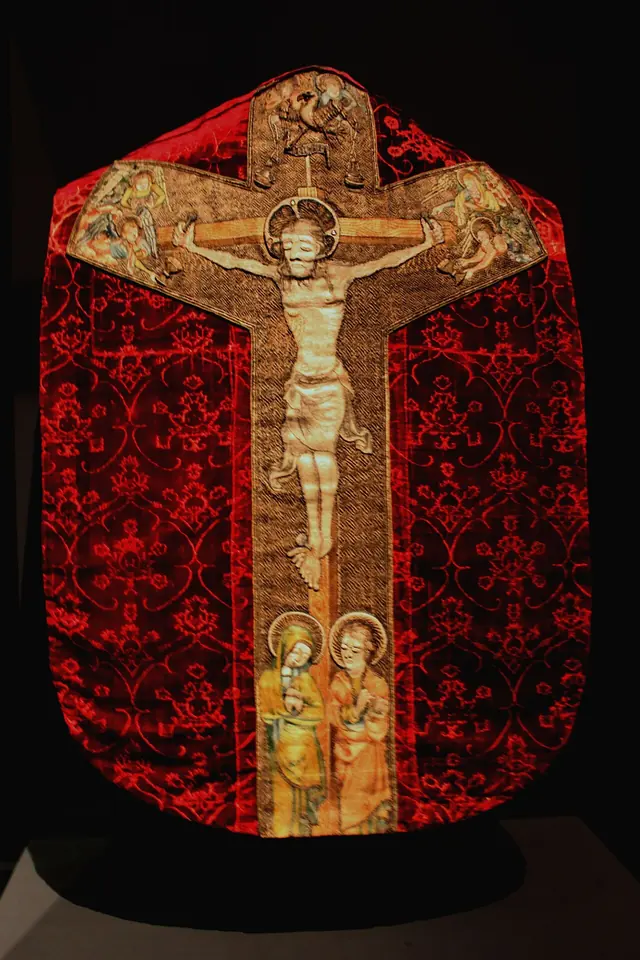
When we keep a martyr's feast, the priest wears red. The General Instruction of the Roman Missal (no. 346) assigns red to Palm Sunday, Good Friday and Pentecost, to the feasts of apostles and evangelists, "and on celebrations of Martyr Saints." Red is the color of blood given for Christ and of the fire of the Holy Spirit who gave the martyrs their courage.
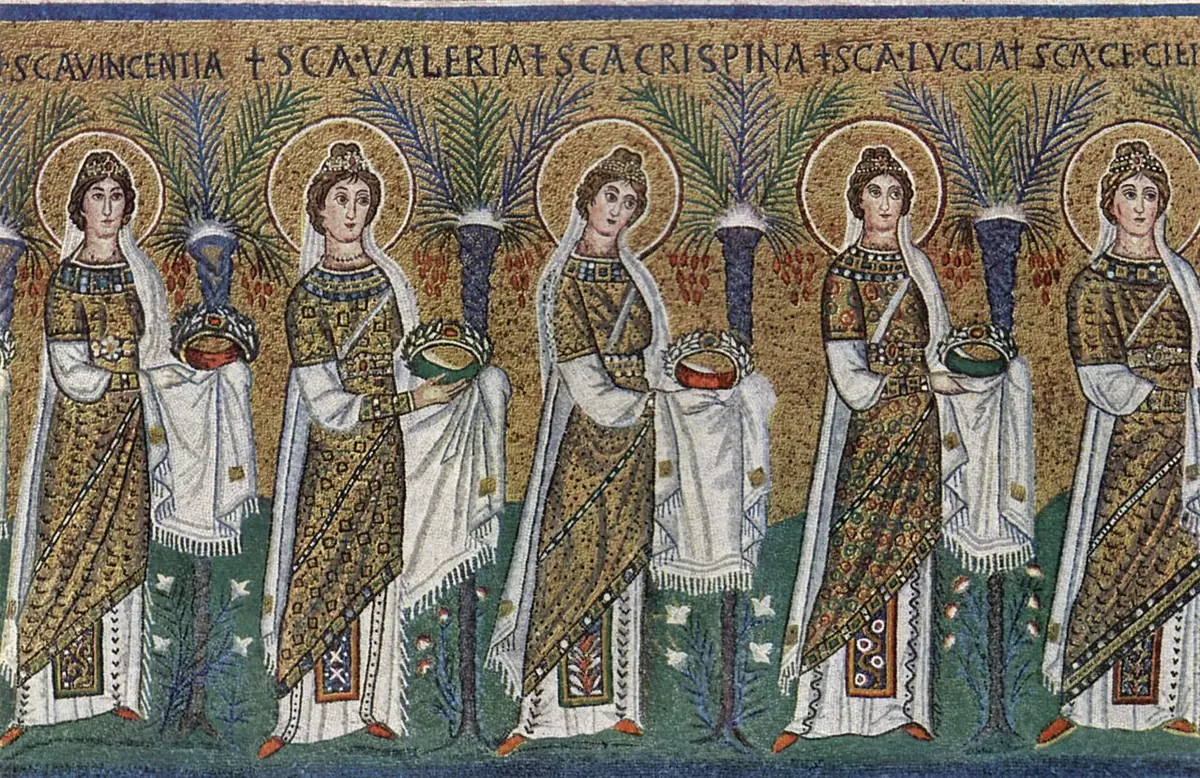
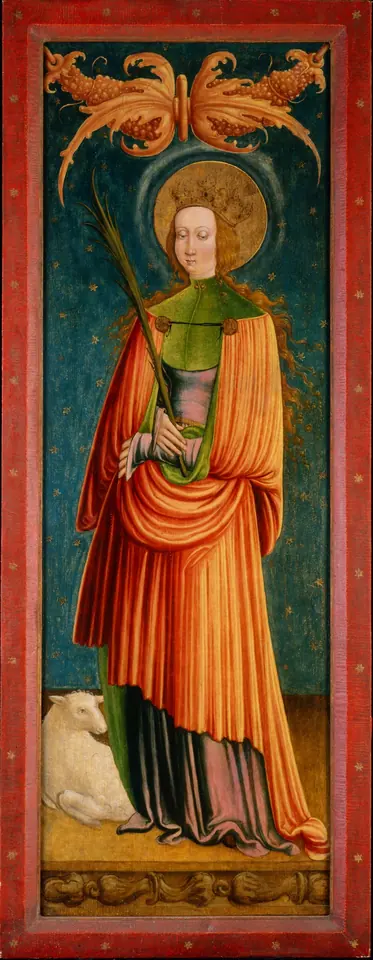
In art, the sign of a martyr is the palm branch. It comes from St. John's vision of the multitude before the throne, "clothed with white robes, and palms in their hands," of whom the elder says, "These are they who are come out of great tribulation" (Revelation 7:9, 14, Douay-Rheims). The palm was the Roman sign of victory, and the martyrs were the victors. Martyrs are also shown with a crown, the "crown of life" promised to those faithful unto death (Revelation 2:10), and with the instrument of their death: St. Lawrence with his gridiron, St. Catherine of Alexandria with her wheel, St. Lucy with her eyes on a dish. Our guide to saints' symbols in art explains more of them.
"The blood of martyrs is the seed": Tertullian
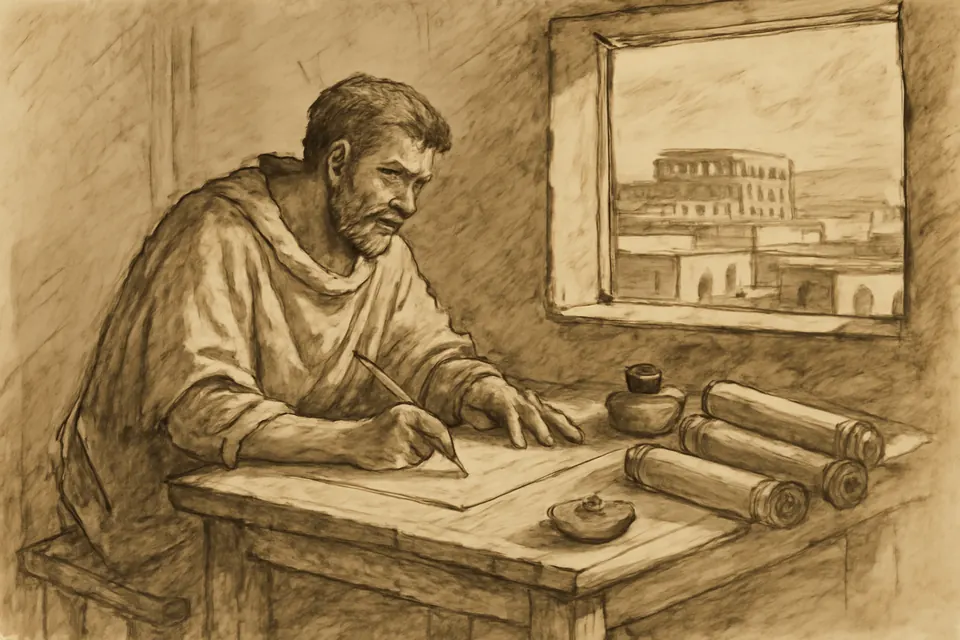
The most quoted line about martyrdom comes from North Africa. Around 197, the lawyer Tertullian of Carthage wrote his Apology to the Roman governors, defending Christians against the charges that were sending them to their deaths. In chapter 50 he tells the persecutors that their cruelty is useless: "The oftener we are mown down by you, the more in number we grow; the blood of Christians is seed."
His Latin is semen est sanguis Christianorum. The form most people know, "the blood of the martyrs is the seed of the Church," is a later paraphrase. St. John Paul II quoted it as Sanguis martyrum, semen christianorum in Tertio millennio adveniente (1994), adding that "the Church of the first millennium was born of the blood of the martyrs." Tertullian himself later broke with the Church, but this sentence of his has belonged to every generation of Christians since.
The great martyr eras
Rome and the early Church
Roman persecution began under Nero in 64, and St. Peter and St. Paul died in Rome during his reign. It came in waves until the Great Persecution of Diocletian ended in 311. Its martyrs are the Church's oldest saints: St. Ignatius of Antioch, St. Polycarp, St. Justin Martyr, Sts. Perpetua and Felicity in the arena at Carthage in 203, St. Lawrence in 258, and the young virgin martyrs St. Agnes, St. Agatha, St. Lucy and St. Cecilia, along with St. Sebastian and, in Britain, St. Alban. Christians met at their tombs on the anniversaries of their deaths, which they called their birthdays into heaven.
Japan
On February 5, 1597, twenty-six Christians, among them the Jesuit St. Paul Miki, Franciscan friars and three boys, were crucified on Nishizaka Hill above Nagasaki. Persecution went on for more than two centuries. St. Lorenzo Ruiz, a Filipino layman and the first Filipino saint, died on the same hill in 1637. Japanese Christians kept the faith in secret for over two hundred years without priests.
North America
Eight Jesuits and lay missionaries, St. Isaac Jogues among them, were killed in the Mohawk country and in Huronia between 1642 and 1649. Pius XI canonized them together in 1930 as the North American Martyrs.
Uganda
On June 3, 1886, St. Charles Lwanga and his young companions, pages at the court of King Mwanga of Buganda, were burned alive at Namugongo for refusing to give up the faith and submit to the king's demands. Paul VI canonized twenty-two Catholic martyrs of Uganda on October 18, 1964. Every June 3, huge crowds of pilgrims walk to Namugongo, many of them for days.

Korea
The Church in Korea was founded by laypeople, and it was baptized in blood. Thousands died in persecutions between 1791 and 1866. St. Andrew Kim Taegon, the first Korean priest, was beheaded by the Han River in 1846. On May 6, 1984, in Seoul, John Paul II canonized him with 102 companions, Korean laymen and laywomen and French missionaries.

Mexico
During the persecution of the 1920s and the Cristero War, priests were hunted and Masses said in secret. St. Toribio Romo was shot in 1928, and fourteen-year-old St. José Sánchez del Río was killed the same year after refusing to renounce Christ. Blessed Miguel Pro died before a firing squad in 1927 with his arms outstretched, saying "¡Viva Cristo Rey!", "Long live Christ the King!"
The 20th century
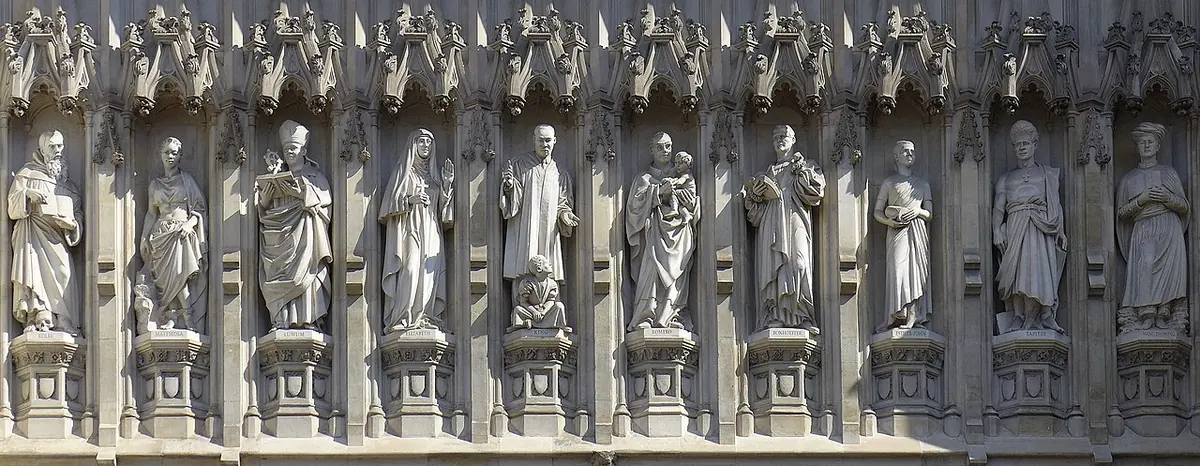
John Paul II wrote in 1994 that "at the end of the second millennium, the Church has once again become a Church of martyrs." Christians died under Nazism and Communism and in civil wars on every continent. Among them are St. Maximilian Kolbe, St. Edith Stein, killed at Auschwitz in 1942, the Carmelite journalist St. Titus Brandsma, who died at Dachau the same year, and St. Oscar Romero, shot at the altar in San Salvador in 1980. The same letter notes that this witness "has become a common inheritance of Catholics, Orthodox, Anglicans and Protestants."
Red, white and green martyrdom
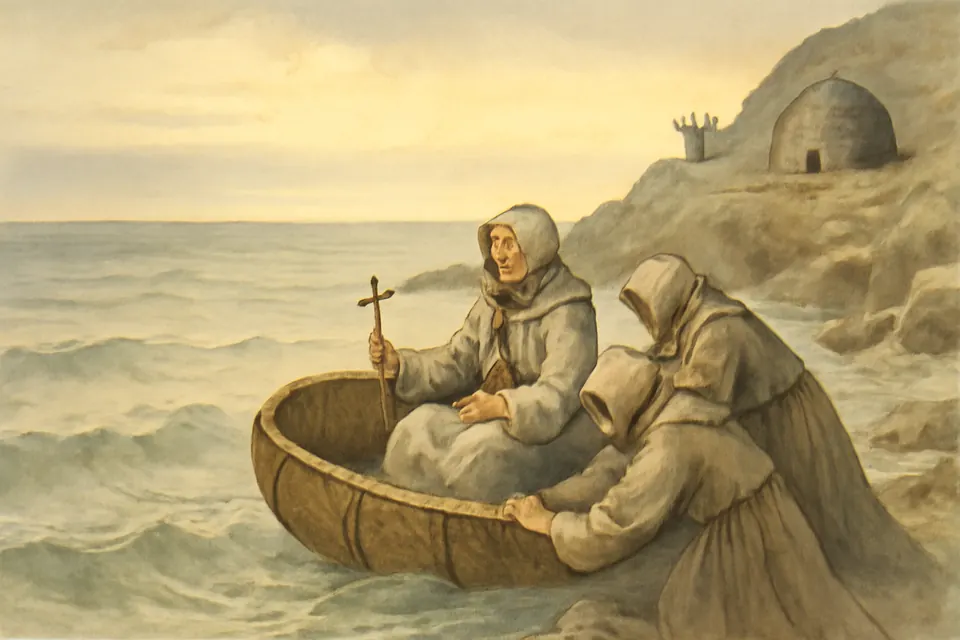
Not every Christian is called to die for Christ, but every Christian is called to give up something for him. The early Irish put this into colors. A sermon from the 7th or 8th century, preserved in a manuscript at Cambrai, names "three kinds of martyrdom": white, green and red. In the 1903 translation by Whitley Stokes and John Strachan, white martyrdom is "when he separates for sake of God from everything he loves." Green martyrdom is "when by means of them (fasting and labour) he separates from his desires, or suffers toil in penance and repentance." Red martyrdom is "endurance of a cross or destruction for Christ's sake, as has happened to the apostles." (Some scholars translate the middle color as blue.)
White martyrdom described the Irish monks who left home forever, like St. Columba, who sailed for Iona, and St. Brendan. The idea reaches every one of us. A mother who gives up her plans for a sick child, a convert who loses his family's approval, a religious who leaves everything at the convent door, all bear a quiet witness.
Praying with the martyrs
The Church asks the martyrs' prayers every day. At Mass the Roman Canon names Stephen, Ignatius, Lawrence, Perpetua, Felicity, Agatha, Lucy, Agnes and Cecilia, and the Te Deum sings martyrum candidatus laudat exercitus, "the white-robed army of martyrs praises you." On their feasts we see the red vestments and remember what the faith cost. Let us ask the martyrs, who were faithful unto death, to pray for the Christians who are persecuted today and for the courage to bear our own witness. Their feasts are on our feast day calendar, and more about how the Church recognizes them is in how to become a saint.
Frequently asked questions
What is a martyr in simple terms?
A martyr is someone who is killed because of his or her faith in Christ and who accepts death rather than give that faith up. The word means "witness." A martyr bears witness to Christ with his or her life.
Who was the first Christian martyr?
St. Stephen, one of the seven deacons chosen by the apostles, stoned to death outside Jerusalem in the mid-30s. The Acts of the Apostles, chapters 6 and 7, tells his story. That is why he is called the Protomartyr, "first martyr," and why his feast, December 26, comes the day after Christmas.
What is baptism of blood?
It is the Church's teaching that a person who dies for the faith before being baptized receives the grace of baptism through that death. The Catechism (1258) says such people "are baptized by their death for and with Christ." The Holy Innocents, killed by Herod, are honored as martyrs in this sense.
Do martyrs need a miracle to become saints?
Not for beatification. Once the Church proves that a person was killed out of hatred for the faith, he or she can be beatified without an approved miracle. One miracle is still required for canonization, though the pope may dispense from it.
What is the difference between red and white martyrdom?
Red martyrdom is the shedding of blood for Christ. White martyrdom, a term from early Irish Christianity, is leaving everything one loves for God's sake, as the monks did who went into exile. A 7th- or 8th-century Irish sermon also names a green (or blue) martyrdom of fasting and penance.
Who said "the blood of the martyrs is the seed of the Church"?
Tertullian, writing in Carthage around 197, in chapter 50 of his Apology. His exact words are shorter, "the blood of Christians is seed" (in Latin, semen est sanguis Christianorum). The longer form is a later paraphrase.
Sources
- Catechism of the Catholic Church, nos. 2471-2474 (martyrdom), Vatican
- Catechism of the Catholic Church, nos. 1257-1261 (baptism of blood), Vatican
- Tertullian, Apology, chapter 50 (Ante-Nicene Fathers translation), New Advent
- Catholic Encyclopedia (1910): Martyr
- General Instruction of the Roman Missal, no. 346 (liturgical colors), Vatican
- John Paul II, Apostolic Letter Tertio millennio adveniente (1994), no. 37
- Whitley Stokes and John Strachan, Thesaurus Palaeohibernicus, vol. 2 (1903), the Cambrai Homily, Internet Archive