Coptic Saints
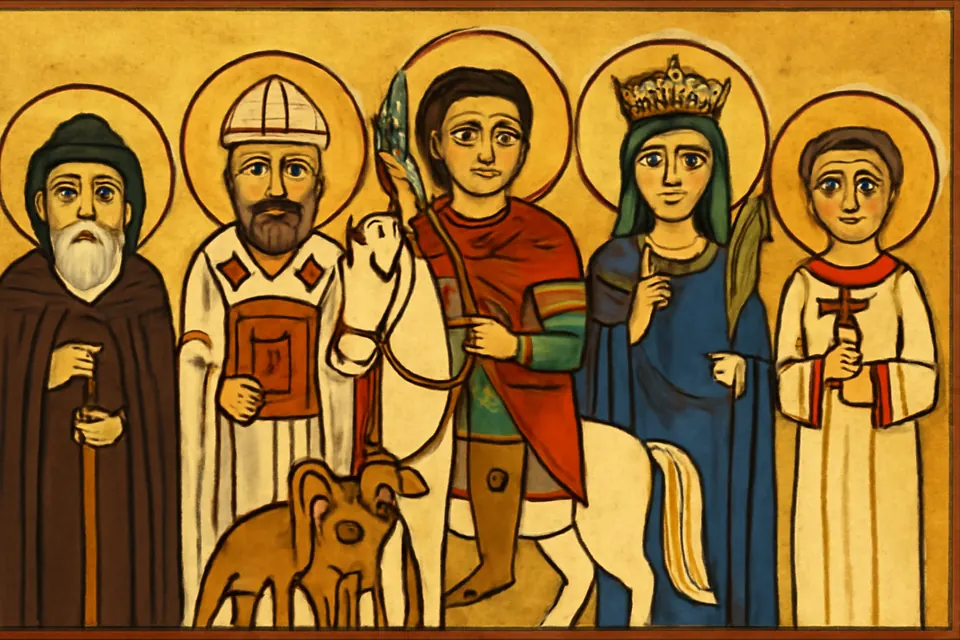
Coptic saints are the saints honored by the Church of Egypt, the Coptic Orthodox Church founded by St. Mark, and by the Coptic Catholic Church. They include the Desert Fathers, St. Athanasius, St. Cyril, thousands of martyrs from the persecution of Diocletian, and modern saints such as Pope Kyrillos VI and the 21 martyrs of Libya, whom Pope Francis added to the Roman Martyrology in 2023.
What are Coptic saints?
Coptic saints are the saints of the Church of Alexandria, the ancient Church of Egypt. "Copt" comes from the Greek word for Egyptian, and the Coptic Church traces its founding to St. Mark the Evangelist, who preached in Alexandria and, by its tradition, was martyred there. Its saints are some of the oldest and greatest in Christian history: the first monks of the desert, the patriarchs who defended the faith at the great councils, and a multitude of martyrs from the persecutions of the Roman emperors.
Two churches today keep this heritage. The Coptic Orthodox Church, led by the Pope of Alexandria (since 2012, Pope Tawadros II), is the Church of most Egyptian Christians. The Coptic Catholic Church is an Eastern Catholic Church in full communion with Rome, with its own Patriarch of Alexandria, which prays in the same Coptic rite and keeps the same calendar of saints. When we Catholics speak of the Coptic saints, then, we are speaking of saints who belong in part to our own family, and the rest to a sister Church whose martyrs' blood, Pope Francis said in 2023, is "a seed of unity for all followers of Christ."

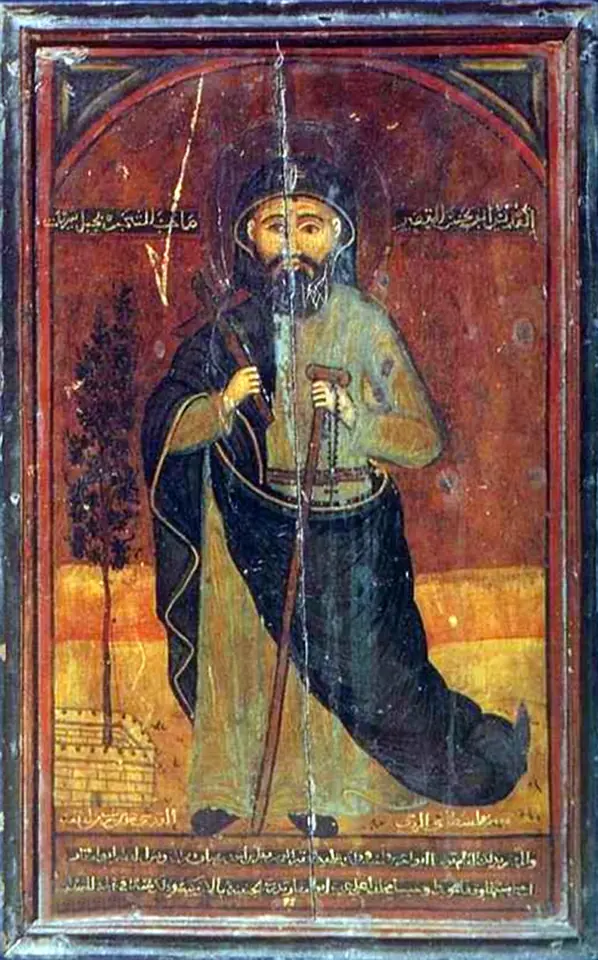
That icon, one of the oldest in the world, says something about how Coptic Christians think of their saints: as friends of Christ who walk beside us. Pope Francis spoke of it when he received Pope Tawadros II in Rome on May 11, 2023: "the Lord seems to want to accompany his friend and walk with him."
Let us ask the holy martyrs and saints of Egypt to pray for us and for the unity of the Church.
The Synaxarium: the Coptic book of saints
The Coptic Church remembers its saints through the Synaxarium (in Arabic, al-Sinaksar), a book of short lives arranged by the days of the year. A reading from it is chanted in the Divine Liturgy every day, after the reading from the Acts of the Apostles. Each entry tells the story of the saint or event of the day and ends with a short blessing such as "May his prayers be with us. Amen."
The Synaxarium in its present form was compiled in the Middle Ages, in Arabic, from older Coptic and Greek lives, and it keeps growing: the Holy Synod adds new saints, and modern entries describe events as recent as the return of St. Mark's relics from Rome in 1968. Its stories mix history and legend. For the martyrs especially, we often have little more than the Synaxarium's account, written centuries later. On this site we tell those stories as the Synaxarium tells them and label the miracles traditional where that is what they are.

The Coptic calendar and the Era of the Martyrs
Thirteen months
Coptic saints' days are kept by the Coptic calendar, which descends from the calendar of ancient Egypt. It has thirteen months: twelve months of thirty days and a little thirteenth month of five or six days at the end of the year. The year begins on September 11, or September 12 in the year before a Gregorian leap year. That makes it easy to convert Coptic feast days, because each month begins on nearly the same Gregorian date every year.
- Tout (Thout): begins September 11
- Baba (Paopi): October 11
- Hator (Hathor): November 10
- Kiahk (Koiak): December 10
- Toba (Tobi): January 9
- Amshir (Meshir): February 8
- Baramhat: March 10
- Baramouda: April 9
- Bashans: May 9
- Paona (Paoni): June 8
- Abib (Epip): July 8
- Mesra (Mesori): August 7
- Nasie, the little month: September 6
From September to February, the dates shift one day later in the year before a Gregorian leap year. Christmas, for example, is Kiahk 29, which is January 7.
Anno Martyrum
The Coptic Church counts its years not from the birth of Christ but from the Era of the Martyrs (Anno Martyrum, A.M.). Year 1 began on August 29, 284, the year Diocletian became emperor, the emperor whose persecution filled Egypt with martyrs. The Catholic Encyclopedia notes that Eusebius and other early Church writers used the same era. The Coptic year that began in September 2026 is the year 1743 of the Martyrs. Every Coptic date is a reminder of what the Church of Egypt paid for its faith.
Nayrouz
The Coptic new year, Nayrouz, on Tout 1, is a feast of the martyrs. The Synaxarium asks that it be kept "a holy day with full purity and chastity," with the intercessions of "the pure Saint Mary, all the Martyrs and Saints." The Church begins each year by remembering those who gave their lives for Christ.
Feasts of Coptic saints through the year
Here are some of the best-known Coptic feasts, with their Gregorian dates in most years. For the Roman Catholic dates of the same saints, see our feast day calendar.
- Tout 1 (September 11): Nayrouz, the new year and feast of the martyrs.
- Hator 15 (November 24): St. Mina the Wonder Worker.
- Hator 29 (December 8): St. Peter of Alexandria, "the Seal of the Martyrs," the last bishop martyred in the Great Persecution.
- Toba 13 (January 21): St. Demiana and the forty virgins.
- Toba 22 (January 30): St. Anthony the Great, father of monks.
- Amshir 8 (February 15): the 21 martyrs of Libya, the same day the Roman Martyrology keeps them.
- Amshir 30 (March 9): Pope Kyrillos VI.
- Baramouda 23 (May 1): St. George, "Prince of the Martyrs."
- Baramouda 30 (May 8): St. Mark, the Apostle of Egypt.
- Bashans 7 (May 15): St. Athanasius the Apostolic.
- Bashans 12 (May 20): the consecration of St. Demiana's church, and the great pilgrimage to her convent.
- Paona 17 (June 24): the return of St. Mark's relics from Rome in 1968.
- Paona 24 (July 1): St. Moses the Black.
- Abib 3 (July 10): St. Cyril of Alexandria, the Pillar of Faith.
- Abib 24 (July 31): St. Abanoub, the boy martyr.
The Desert Fathers: Egypt's gift to the whole Church
Christian monasticism began in Egypt. Around 270, a young Christian named Anthony heard the Gospel words "go, sell what thou hast" and gave away his inheritance, and in time went deep into the desert to pray. Thousands followed him. By the late 300s the deserts of Egypt were full of monks and nuns: hermits like Anthony, communities like those St. Pachomius organized along the Nile, and the clusters of cells at Scetis, today's Wadi el-Natrun. Their sayings, gathered as the Sayings of the Desert Fathers, shaped the spiritual life of every Christian tradition, East and West. See our full page on the Desert Fathers.
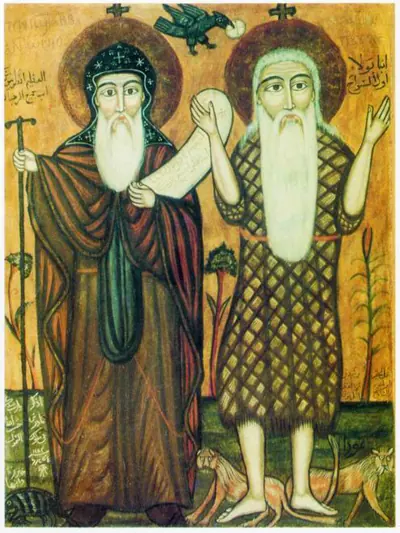
The best-loved desert saints of the Coptic Church include:
- St. Anthony the Great, the father of monks. His Monastery of St. Anthony near the Red Sea is one of the oldest monasteries in the world still lived in.
- St. Paul of Thebes, the first hermit, whom Anthony visited near the end of Paul's life. The Monastery of St. Paul stands on the other side of the same mountain.
- St. Pachomius, founder of the common life, whose monastic rule St. Jerome translated into Latin.
- St. Macarius the Great, father of the monks of Scetis, whose monastery in Wadi el-Natrun still flourishes.
- St. Moses the Black, the robber who became a monk of Scetis and died a martyr.
- St. Bishoy (Pishoy) and St. John the Short, disciples of the monks of Scetis.
- St. Mary of Egypt, the penitent of the Jordan desert, honored across East and West.
- St. Shenouda the Archimandrite, abbot of the White Monastery near Sohag in the 5th century and one of the great writers of the Coptic language.
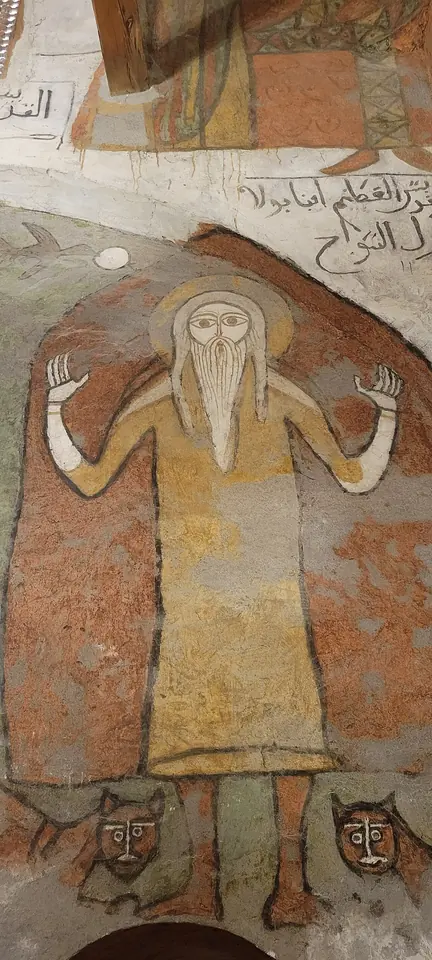
The four ancient monasteries of Wadi el-Natrun, the Monastery of St. Macarius, the Monastery of St. Bishoy, the Syrian Monastery and the Baramous Monastery, have been homes of monks since the 4th century. In the 20th century they came back to life with a wave of young, educated monks, and Coptic monasticism is flourishing today.

The martyrs of Egypt
The Great Persecution
Egypt gave more martyrs to the early Church than almost any other land. The worst years came under Diocletian and his successor Maximinus, from 303 to about 311. The Church historian Eusebius of Caesarea was an eyewitness of martyrdoms in the Thebaid, the Nile Valley of Upper Egypt, and wrote in his Church History (Book VIII, chapter 9):
We, also being on the spot ourselves, have observed large crowds in one day; some suffering decapitation, others torture by fire; so that the murderous sword was blunted, and becoming weak, was broken, and the very executioners grew weary and relieved each other.
Eusebius adds that as soon as one was sentenced, "one after another rushed to the judgment seat, and confessed themselves" Christians. The Coptic Church remembers these martyrs by the thousand, and its calendar is named for them.
The best-loved martyrs
- St. Mina (Menas), the soldier who left the army rather than sacrifice to idols. His shrine at Abu Mena was the great pilgrimage center of early Christian Egypt.
- St. George, called Mar Girgis, the "Prince of the Martyrs." He was not Egyptian, but few saints are loved more by the Copts.
- St. Mercurius, called Abu Sefein, "the father of two swords," a soldier-martyr whose great church in Old Cairo bears his name.
- St. Demiana and her forty virgins, the best-loved woman saint of the Coptic Church after the Virgin Mary.
- St. Abanoub, the twelve-year-old martyr of Nehisa.
- St. Catherine of Alexandria, the learned virgin martyr, and St. Apollonia, the aged deaconess of Alexandria who died in 249.
- St. Maurice and the Theban Legion, Christian soldiers from Upper Egypt martyred in the Alps, according to their old passion, for refusing to persecute fellow Christians.
- St. Peter of Alexandria, the patriarch beheaded in 311, whom the Copts call "the Seal of the Martyrs," the last martyr bishop of the Great Persecution.

The Coptic Church has kept giving martyrs through the centuries, under later rulers and in our own time. The Synaxarium tells of new martyrs in every age, and Coptic Christians speak of their history as one long witness.

The great patriarchs of Alexandria
The Church of Alexandria gave the whole Church some of its greatest theologians. St. Athanasius, patriarch from 328 to 373 and five times exiled, defended the divinity of Christ against Arius and wrote the Life of Antony, the book that carried the monastic ideal to the West. St. Cyril of Alexandria, patriarch from 412 to 444, defended the title Theotokos, Mother of God, for the Virgin Mary at the Council of Ephesus in 431, and the Catholic Church honors him as a Doctor of the Church. The Copts call Athanasius "the Apostolic" and Cyril "the Pillar of Faith." Others they honor include St. Peter, the Seal of the Martyrs, St. Alexander, who first stood against Arius, and St. Dioscorus, whom the Coptic Church honors and whose role after the Council of Chalcedon (451) the two Churches have understood differently.
That council divided the Church of Alexandria, and most Egyptian Christians did not accept it. In 1973, Pope St. Paul VI and Pope Shenouda III signed a common declaration on faith in Christ, the beginning of a long road toward unity that both Churches still walk.
Modern Coptic saints
The Coptic Church has never stopped producing saints, and some of the best-loved are close to our own time.
- Pope Kyrillos VI (1902–1971), the hermit who lived in a windmill and became the 116th Pope of Alexandria. A man of prayer and miracles, he founded the Monastery of St. Mina and received the relics of St. Mark from Pope St. Paul VI in 1968. The Coptic Holy Synod recognized him as a saint in 2013.
- St. Abraam, Bishop of Fayoum (died 1914), remembered for his love of the poor and the healings reported through his prayers.
- The 21 martyrs of Libya (2015), described below.
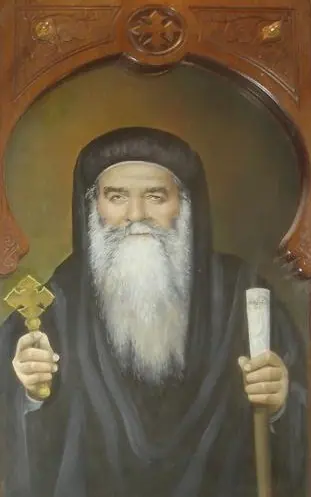
The Coptic Orthodox Church honors new saints by a decision of its Holy Synod, which enters their names in the Synaxarium and in the commemoration of the saints in the liturgy. It does not use the Catholic process of beatification and approved miracles, so on this site we label the miracles of Coptic saints reported or traditional, never approved.
The 21 Coptic martyrs of Libya
On February 15, 2015, militants of the so-called Islamic State beheaded twenty-one Christian men on a beach in Libya. Twenty were Coptic Christians from Egypt, many of them laborers from villages in Minya; one was a young man from Ghana who died with them. The video their killers released to frighten the world showed them praying as they died, and many say the name of Jesus was on their lips. The Coptic Orthodox Church soon counted them among its martyrs and keeps their feast on February 15.
On May 11, 2023, Pope Tawadros II visited Pope Francis in Rome for the fiftieth anniversary of the meeting of Pope St. Paul VI and Pope Shenouda III, and brought him a relic of the martyrs. Pope Francis thanked him and said:
These martyrs were baptized not only in water and the Spirit, but also in blood, with a blood that is a seed of unity for all followers of Christ. I am pleased to announce today that, with Your Holiness' consent, these 21 martyrs will be included in the Roman Martyrology as a sign of the spiritual communion uniting our two Churches.
On February 15, 2024, the Catholic Church kept their first commemoration with an ecumenical prayer in St. Peter's Basilica, led by Cardinal Kurt Koch with a Coptic Catholic bishop and Coptic Orthodox clergy.

Their relics rest in the Church of the Martyrs of Faith and Homeland in Minya, built in the home village of many of them, where pilgrims now come to pray.
Other Coptic saints you will meet
Coptic churches are full of icons, and these names come up again and again.
- St. Marina the Monk, a young woman who lived disguised as a monk and bore a false accusation in silence.
- St. Karas the Anchorite, a hermit of the desert whose life is one of the Synaxarium's best-loved stories.
- St. Samuel the Confessor, abbot of the Monastery of al-Qalamun, whose monastery Pope Kyrillos VI restored as a young priest.
- Sts. Cosmas and Damian, the unmercenary physicians, whom the Copts honor with their mother and brothers.
- The Holy Family in Egypt: the Copts keep a feast of the entry of the Holy Family into Egypt and honor the places where tradition says they rested, from Samannoud to the cave under the Church of Sts. Sergius and Bacchus in Old Cairo.
Coptic icons: how to recognize the saints
Coptic icons have a style of their own: large, dark, wide-open eyes, flat bright colors, and simple gold or plain backgrounds. Many modern icons follow the revival style of the 20th century. Saints carry clear signs:
- Martyrs on horseback: St. George with his dragon, St. Mina with his camels, St. Mercurius with two swords, St. Abanoub as a boy on a white horse.
- Monks in black or brown habits with a cap or hood, often with a T-shaped staff (St. Anthony) or lions (St. Paul).
- Patriarchs in white vestments with an omophorion and a Gospel book.
- Virgin martyrs with crowns and palm branches, like St. Demiana with her forty companions in tiers beside her.

For more on reading the signs in sacred art, see saints' symbols in art.
Where to visit the Coptic saints
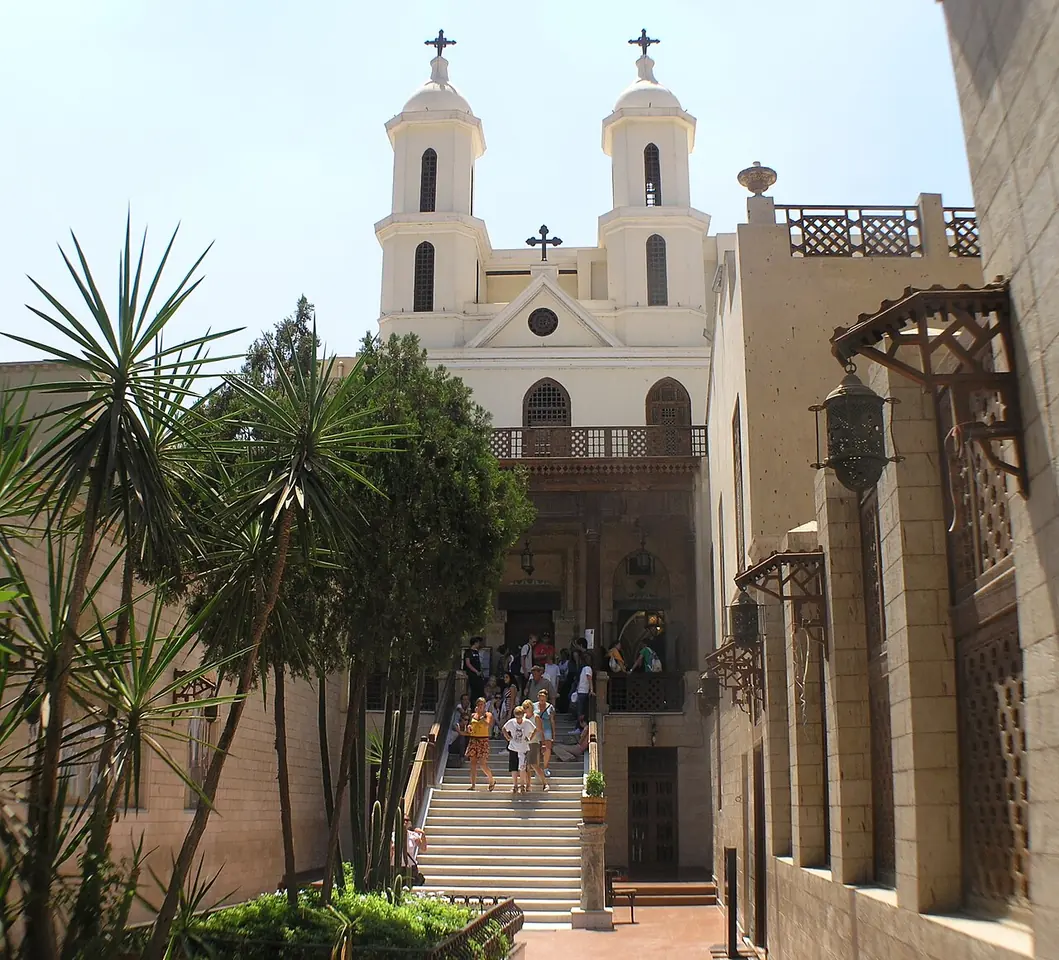
The Old Cairo quarter, built over the Roman fortress of Babylon, holds the Hanging Church of the Virgin Mary, the Church of Sts. Sergius and Bacchus with its crypt of the Holy Family, the churches of St. Barbara, St. George and St. Mercurius, and the Coptic Museum. Outside Cairo, pilgrims go to the monasteries of Wadi el-Natrun, to St. Anthony's and St. Paul's by the Red Sea, to St. Mina's at Mariut near Alexandria, to the convent of St. Demiana near Bilqas, and to the Church of St. Mark in Alexandria. Coptic parishes in North America, Europe and Australia welcome visitors, and their icons are a good first introduction to these saints.
A prayer with the Coptic saints
The Coptic Church closes its readings from the Synaxarium with a short blessing, and we can make it our own as we ask the prayers of all the saints of Egypt:
Their prayers be with us and Glory be to our God forever. Amen.
Holy martyrs of Egypt, St. Mark, St. Anthony and all the saints of Alexandria, pray for us, and pray for the unity of Christ's Church.
Frequently asked questions
What are Coptic saints?
Coptic saints are the saints honored by the Church of Alexandria in Egypt, the Coptic Orthodox Church and the Coptic Catholic Church. They include St. Mark, its founder, the great patriarchs such as St. Athanasius and St. Cyril, the Desert Fathers, a vast number of martyrs, and modern saints such as Pope Kyrillos VI and the 21 martyrs of Libya.
Are Coptic saints recognized by the Catholic Church?
Many are. The saints of the first centuries, such as St. Mark, St. Anthony, St. Athanasius, St. Cyril, St. Mina and St. Catherine of Alexandria, belong to the whole Church and are in the Roman Martyrology. Later Coptic Orthodox saints are not in the Roman calendar, with one striking exception: in 2023 Pope Francis added the 21 Coptic Orthodox martyrs of Libya to the Roman Martyrology. The Coptic Catholic Church keeps the Coptic calendar and its saints.
Who is the most popular Coptic saint?
After the Virgin Mary, the saints most loved by Coptic Christians are probably St. George (Mar Girgis), St. Mina the Wonder Worker, St. Demiana, St. Mercurius (Abu Sefein), St. Anthony the Great and, in recent times, Pope Kyrillos VI. Countless Coptic churches and children are named for them.
What is the Coptic Synaxarium?
The Synaxarium is the Coptic Church's book of saints and feasts, arranged by the days of the Coptic year. A short reading from it is chanted in the Divine Liturgy each day after the reading from the Acts of the Apostles. Its accounts were compiled in the Middle Ages from older lives and traditions.
What is the Coptic calendar?
The Coptic calendar has thirteen months: twelve of thirty days and a short thirteenth month of five or six days. Its years are counted from the Era of the Martyrs, which begins in 284, the year Diocletian became emperor. The new year, Nayrouz, falls on September 11 (September 12 before a Gregorian leap year).
Who are the 21 Coptic martyrs?
Twenty Egyptian Coptic Christians and one man from Ghana who were beheaded by militants of the so-called Islamic State on a beach in Libya on February 15, 2015. The video of their deaths showed them praying. The Coptic Orthodox Church honors them as martyrs on February 15, and Pope Francis announced their inclusion in the Roman Martyrology on May 11, 2023.
What do "Abba," "Anba" and "Apa" mean in the names of Coptic saints?
All three mean "father" and are titles of respect. Abba and Apa are used for monks and martyrs of the early centuries (Abba Moses, Apa Mena), and Anba is the Arabic form used today for bishops and great monastic saints (Anba Bishoy, Anba Shenouda). "Mar" or "Mari," from Syriac, means "my lord," as in Mari Mina and Mar Girgis.
How does the Coptic Orthodox Church canonize saints?
The early martyrs and monks were honored by the people and the Church from the start. In modern times, the Holy Synod of the Coptic Orthodox Church formally recognizes new saints and enters their names in the Synaxarium, as it did for Pope Kyrillos VI in 2013 and for the 21 martyrs of Libya after 2015.
Sources
- Vatican: Address of Pope Francis to Pope Tawadros II, May 11, 2023 (the 21 martyrs and the Roman Martyrology)
- Dicastery for Promoting Christian Unity: First commemoration of the 21 Coptic Martyrs of Libya (February 15, 2024)
- Vatican News: Pope Francis adds 21 Coptic Orthodox martyrs to Catholic list of saints
- CopticChurch.net: The Coptic Calendar of Martyrs (months and start dates)
- CopticChurch.net: Synaxarium (Lives of Saints)
- Eusebius, Church History, Book VIII, chapter 9: Those in Thebais (New Advent)
- Catholic Encyclopedia (1911): Coptic Persecutions
- Catholic Encyclopedia (1908): General Chronology (Era of the Martyrs, August 29, 284)