The four evangelists

The four evangelists are St. Matthew, St. Mark, St. Luke and St. John, the writers of the four Gospels. In Christian art each has a symbol taken from the four living creatures of Ezekiel 1 and Revelation 4: Matthew a winged man, Mark a lion, Luke an ox and John an eagle. Their feasts are September 21, April 25, October 18 and December 27.
The four evangelists are St. Matthew, St. Mark, St. Luke and St. John, the four men who wrote the Gospels. Two of them walked with the Lord as apostles; two learned the Gospel from apostles. For nearly two thousand years the Church has pictured them as a man, a lion, an ox and an eagle, and once you know the code you will find them in almost every old church you enter.
Who were the four evangelists?
"Evangelist" comes from the Greek euangelion, "good news." In the New Testament the word means a preacher of the Gospel; St. Philip the deacon is called "the evangelist" in Acts. Over time, the Catholic Encyclopedia explains, it came to mean only the writers of the four Gospels.
St. Irenaeus of Lyons, writing about 180, gives the oldest full account of who wrote what:
Matthew also issued a written Gospel among the Hebrews in their own dialect, while Peter and Paul were preaching at Rome, and laying the foundations of the Church. After their departure, Mark, the disciple and interpreter of Peter, did also hand down to us in writing what had been preached by Peter. Luke also, the companion of Paul, recorded in a book the Gospel preached by him. Afterwards, John, the disciple of the Lord, who also had leaned upon His breast, did himself publish a Gospel during his residence at Ephesus in Asia.
St. Irenaeus had learned the faith from St. Polycarp, who had known St. John, so his testimony stands only two links from an apostle.
St. Matthew
St. Matthew was the tax collector at Capernaum whom Jesus called from his table with two words, "Follow me" (Matthew 9:9). Mark and Luke call him Levi. He was one of the twelve apostles. Papias, bishop of Hierapolis early in the second century, wrote that "Matthew wrote the oracles in the Hebrew language, and every one interpreted them as he was able," as Eusebius records. His Gospel, placed first in the New Testament, was written for readers who knew the Law and the prophets, and it constantly shows Jesus fulfilling them. Tradition holds that he died a martyr, though the place is uncertain. Feast: September 21 (November 16 in the Byzantine churches).

St. Mark
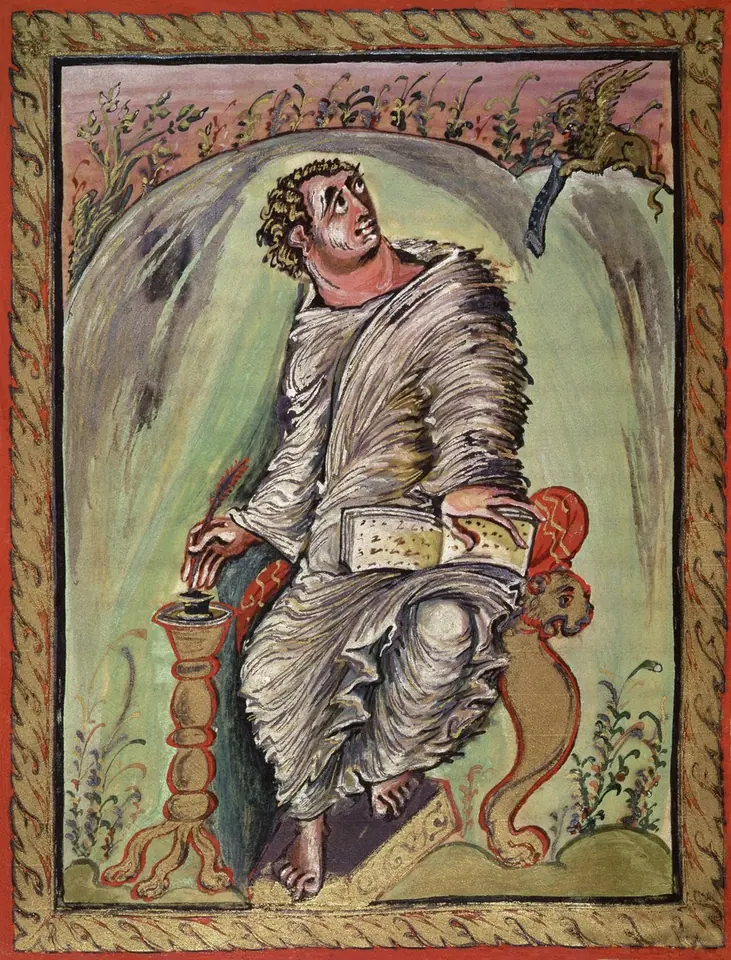
St. Mark is the John Mark of the Acts of the Apostles, the young man whose mother's house in Jerusalem was a meeting place for the first Christians. He traveled with St. Paul and his cousin St. Barnabas, and later with St. Peter in Rome, who calls him "my son" (1 Peter 5:13). Papias recorded the tradition that "Mark, having become the interpreter of Peter, wrote down accurately, though not in order, whatsoever he remembered of the things said or done by Christ." His is the shortest Gospel and, in the judgment of most scholars, the earliest. Tradition makes him the founder of the Church of Alexandria, and since 828 his relics have rested in Venice. Feast: April 25.
St. Luke
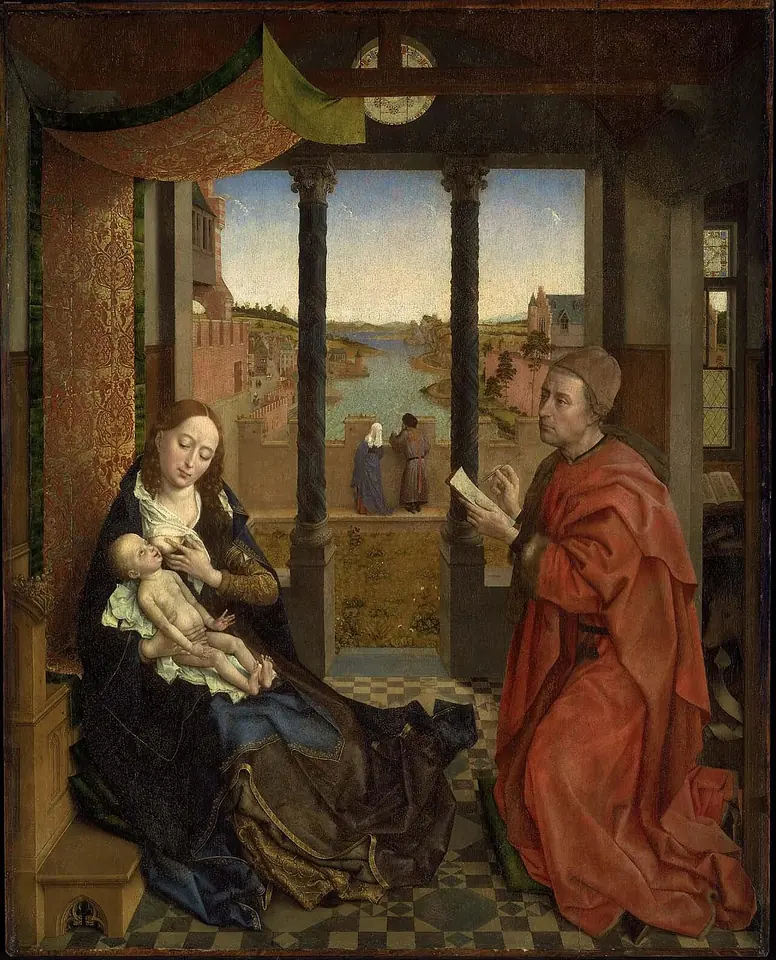
St. Luke was a Gentile and, as St. Paul calls him, "Luke the most dear physician" (Colossians 4:14). He traveled with Paul and wrote both the third Gospel and the Acts of the Apostles, addressing them to a certain Theophilus. Luke alone gives us the Annunciation, the Visitation, the Magnificat and the shepherds at Bethlehem, and many of the parables we love best, the Prodigal Son and the Good Samaritan among them. A tradition first recorded centuries later makes him a painter of the Virgin Mary; it is traditional, but it made him the patron of artists. Feast: October 18.
St. John
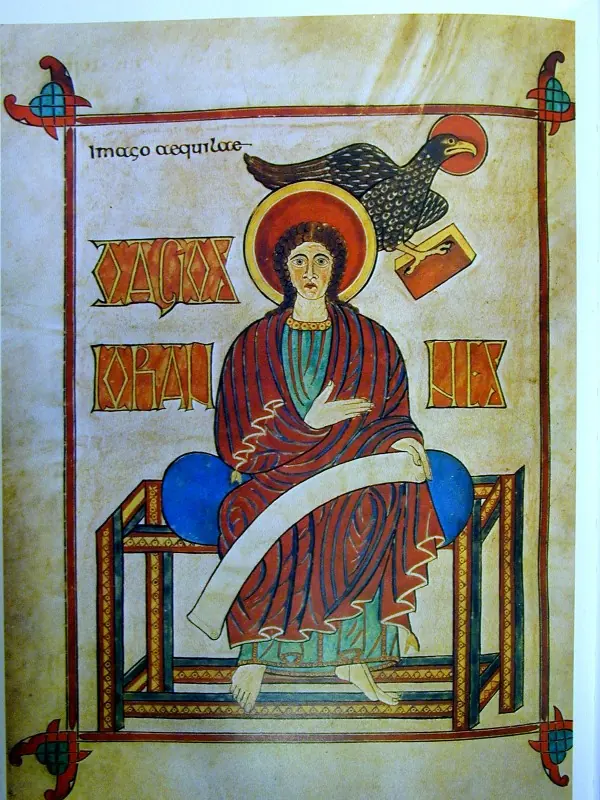
St. John, son of Zebedee and brother of St. James the Greater, was a fisherman of Galilee and "the disciple whom Jesus loved," who leaned on the Lord's breast at the Last Supper and stood at the foot of the Cross with Mary. The Church has always held him to be the author of the fourth Gospel, which he wrote, as Irenaeus says, at Ephesus. The same tradition gives him three letters and the Book of Revelation. Alone among the apostles he is held to have died of old age, at Ephesus. Feast: December 27 (September 26 in the Byzantine churches).
The symbols of the four evangelists
The four symbols come from two visions in Scripture. The prophet Ezekiel, among the exiles by the river Chobar, saw four living creatures around the throne of God, each with four faces. In the Douay-Rheims:
And as for the likeness of their faces: there was the face of a man, and the face of a lion on the right side of all the four: and the face of an ox, on the left side of all the four: and the face of an eagle over all the four. (Ezekiel 1:10)
Six centuries later St. John, in the Apocalypse, saw four living creatures around the throne again, crying day and night, "Holy, holy, holy, Lord God Almighty":
And the first living creature was like a lion: and the second living creature like a calf: and the third living creature, having the face, as it were, of a man: and the fourth living creature was like an eagle flying. (Apocalypse 4:7)
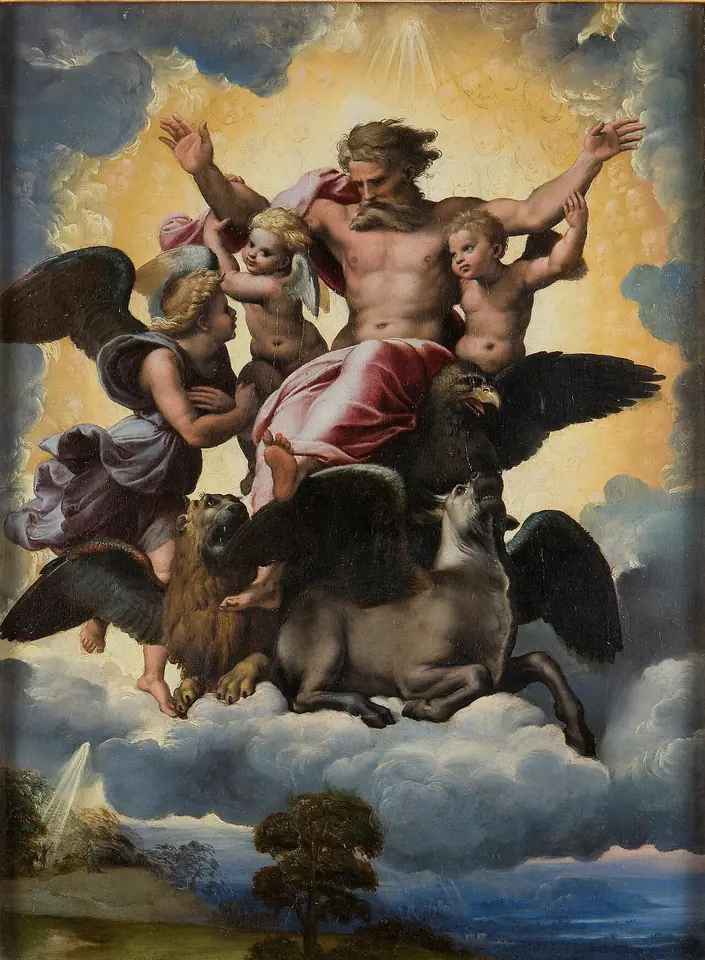
The Fathers saw in these four creatures the four Gospels, which also stand around Christ and proclaim his glory. Irenaeus made the connection about 180. "It is not possible that the Gospels can be either more or fewer in number than they are," he wrote, since the Church needs "four pillars"; and the Word "has given us the Gospel under four aspects, but bound together by one Spirit."
Three ways the Fathers matched them
The Fathers agreed that the four creatures were the four Gospels, but not on which creature belonged to which writer.
- St. Irenaeus gave the lion to John, the calf to Luke, the man to Matthew and the eagle to Mark.
- St. Augustine, in The Harmony of the Gospels, gave the lion to Matthew, for the royal line of Christ, the man to Mark, the calf to Luke and the eagle to John. St. Bede followed him.
- St. Jerome gave the man to Matthew, the lion to Mark, the ox to Luke and the eagle to John. St. Ambrose and St. Gregory the Great used the same scheme, and it is the one, the Catholic Encyclopedia notes, that "finally prevailed in the Latin Church."
St. Jerome's reasons, drawn from how each Gospel begins, are the ones Christian art still follows:
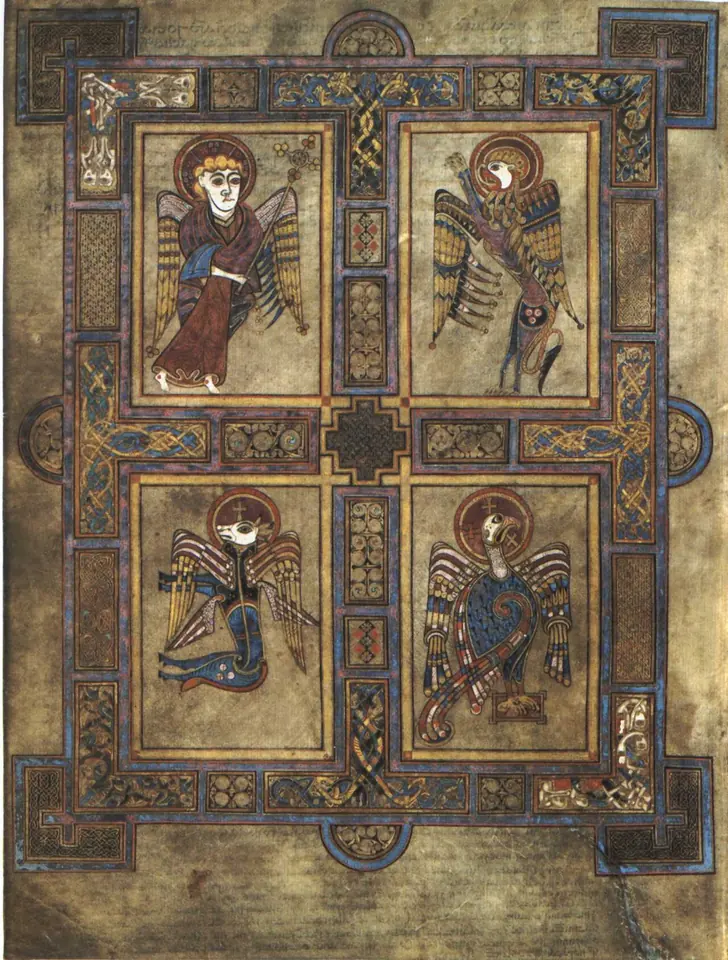
- Matthew, the man. His Gospel opens with "The book of the generation of Jesus Christ, the son of David, the son of Abraham," the human ancestry of the Lord. The man has wings, so painters often make him an angel, as Caravaggio did.
- Mark, the lion. He begins with John the Baptist, "the voice of one crying in the desert," a voice like a lion's roar in the wilderness.
- Luke, the ox. He begins in the Temple with the priest Zachary offering sacrifice, and the ox or calf was the great animal of sacrifice.
- John, the eagle. He begins in heaven itself, "In the beginning was the Word," and his Gospel soars like an eagle to the divinity of Christ.
St. Gregory the Great added a second reading, in which the four are Christ himself: a man in his birth, an ox in his sacrifice on the Cross, a lion in his resurrection, and an eagle in his ascension.
The four evangelists in art
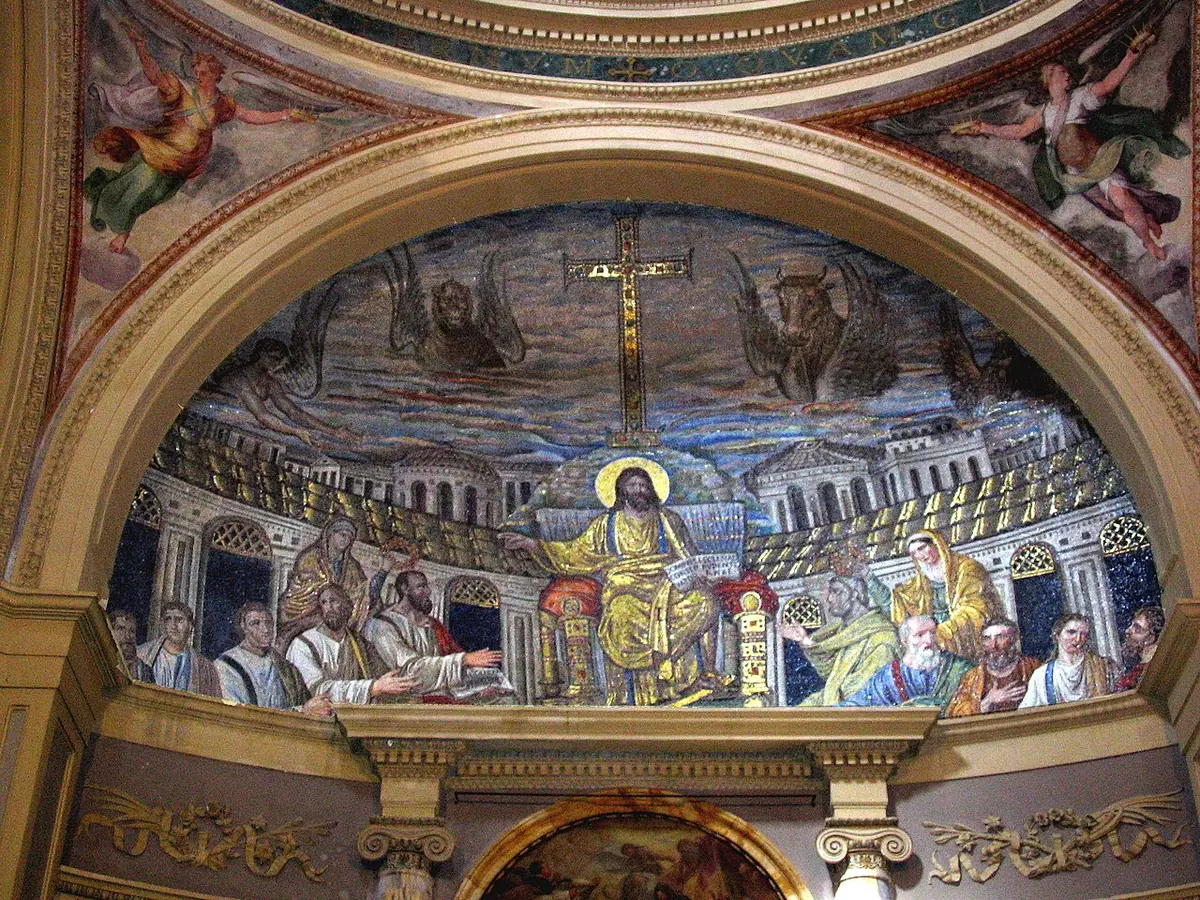
Once you know the symbols, you can read them anywhere. In the oldest images, like the apse of Santa Pudenziana in Rome, the four creatures appear alone in the sky around the cross or the throne of Christ. In Romanesque churches they surround Christ in majesty, carved over doorways and on altars; art historians call the group the tetramorph, "four forms." In Irish and Anglo-Saxon Gospel books like Kells and Lindisfarne, each Gospel opens with a portrait of its evangelist and his creature. From the Renaissance on, painters showed the evangelists as men at work, writing, with the creature at their side as a kind of signature.

Look up as well as ahead. The evangelists often fill the four pendentives, the curved triangles that carry a dome, because they hold up the Church's preaching as the pendentives hold up the dome. In Eastern churches they are painted on the Royal Doors of the iconostasis, beside the Annunciation, since the Gospel is carried out through those doors. Pulpits, lecterns and Gospel book covers carry them too. And on the 12 apostles page and the guide to symbols of the saints in art you will find the other emblems that let you name a saint at a glance.
Honoring the evangelists
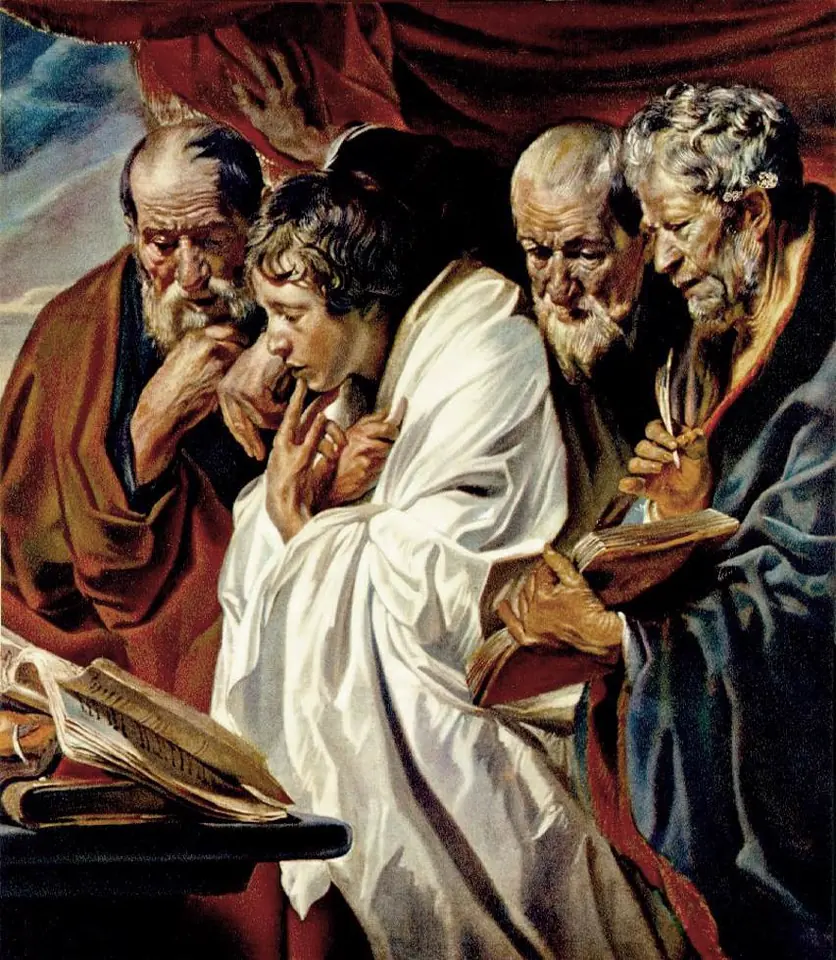
Each Gospel is read through the year at Mass. On Sundays the Church follows a three-year cycle, with Matthew in Year A, Mark in Year B and Luke in Year C, and John is read in every year, above all in Lent and Easter. When we stand for the Gospel and trace small crosses on our forehead, lips and heart, we are asking that the word these four men wrote may be in our minds, on our lips and in our hearts.
On their four feast days, let us thank God for the men who handed on to us the life, death and resurrection of the Lord, and ask them to pray that we may read their words as the Fathers did: as one Gospel, bound together by one Spirit. For the full calendar of the saints, see the feast days page.
Frequently asked questions
Who are the four evangelists?
St. Matthew, St. Mark, St. Luke and St. John, the authors of the four Gospels. Matthew and John were among the twelve apostles; Mark was the companion and interpreter of St. Peter, and Luke the companion of St. Paul.
What are the symbols of the four evangelists?
Matthew is a winged man (often painted as an angel), Mark a winged lion, Luke a winged ox or calf, and John an eagle. The images come from the four living creatures in Ezekiel 1:10 and Revelation 4:7.
Why is St. Mark a lion?
His Gospel opens with St. John the Baptist, "the voice of one crying in the desert," which the Fathers compared to a lion roaring in the wilderness. The lion also stands for Christ's royal power and his resurrection.
Why is St. John an eagle?
John's Gospel begins in heaven, "In the beginning was the Word," and rises higher than the others in speaking of Christ's divinity, as an eagle soars higher than any other bird.
What are the feast days of the four evangelists?
In the Roman calendar, St. Matthew on September 21, St. Mark on April 25, St. Luke on October 18 and St. John on December 27. The Byzantine churches keep Matthew on November 16 and John's repose on September 26.
What is the tetramorph?
Tetramorph is the art historians' name for the four living creatures shown together, usually around Christ in majesty, each one standing for an evangelist.
Sources
- Douay-Rheims Bible: Ezechiel (Ezekiel), chapter 1
- Douay-Rheims Bible: Apocalypse (Revelation), chapter 4
- St. Irenaeus, Against Heresies, Book III, chapter 11
- St. Augustine, The Harmony of the Gospels, Book I, chapter 6
- Eusebius, Church History, Book III (Papias on Mark and Matthew, ch. 39)
- Catholic Encyclopedia: Evangelist