Female saints
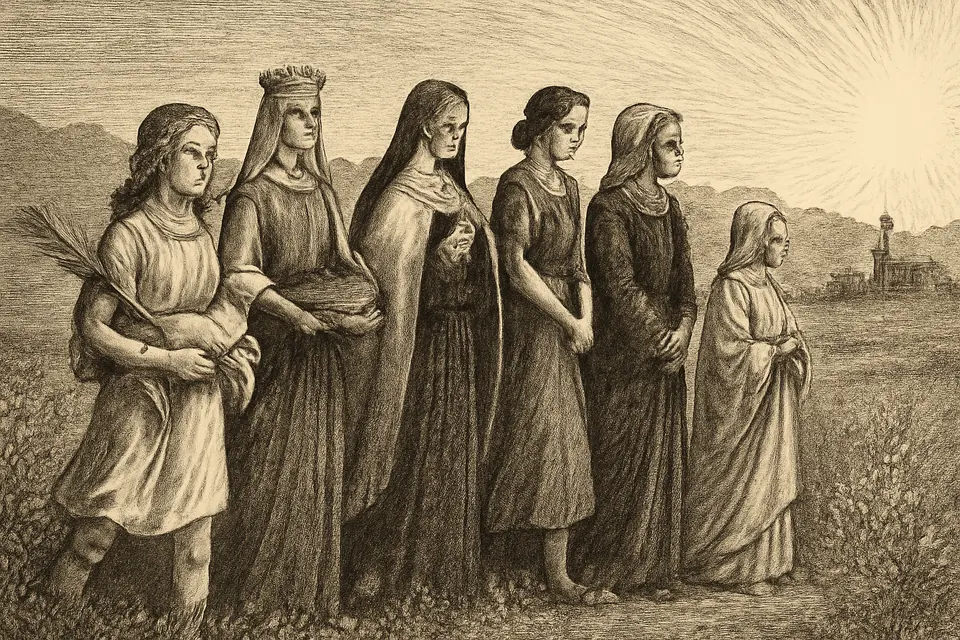
The best-known female saints are the Blessed Virgin Mary, the four women Doctors of the Church (Teresa of Ávila, Catherine of Siena, Thérèse of Lisieux and Hildegard of Bingen), Mary Magdalene, the early martyrs Agnes, Agatha, Lucy and Cecilia, and modern women such as Mother Teresa, Faustina and Kateri Tekakwitha. Below are about 60 women saints, grouped by the way each served God.
Female saints have stood at the center of the Church's life from the first Easter morning, when women came to the tomb with spices and found it empty. They have been martyrs and queens, servants and abbesses, mystics who wrote some of the finest spiritual books we have, and mothers who raised saints. Four of them are Doctors of the Church. Many more founded the schools, hospitals and orders that carried the Gospel across the world.
Here are about 60 women saints, grouped by the way each one served God: the Doctors, the women of the Gospels, the early martyrs, queens and mothers, abbesses and mystics, founders, young saints and modern witnesses. Each has a short sketch and her feast day, and most link to a full entry with her story, miracles, prayers and the way she is shown in art. You can also browse them all on the Saints A to Z page or by date on the feast days calendar.

Why we honor women saints
The Church has always known that holiness is not a man's work with women watching. "The Church sees in Mary the highest expression of the 'feminine genius,'" wrote Pope St. John Paul II in his 1995 Letter to Women. Years earlier he had written that the Church "gives thanks for all the manifestations of the feminine 'genius' which have appeared in the course of history" and "for all the fruits of feminine holiness" (Mulieris Dignitatem, 31). The saints on this page are those fruits, with names and faces.
They also pray for us. A woman saint is not only a model to admire from a distance; she is a sister in heaven who intercedes before God. When we ask St. Monica to pray for a son who has walked away from the faith, or St. Gianna to pray for a hard pregnancy, we are asking a woman who knows that road from the inside. Let us read their stories with that in mind, and ask their prayers as we go.
The four women Doctors of the Church
The title Doctor of the Church is given to saints whose teaching has served the whole Church in a lasting way. For most of history every Doctor was a man. That changed in the autumn of 1970, when Pope St. Paul VI named two women in the space of a week.
- St. Teresa of Ávila (1515–1582) reformed the Carmelite order, founded 17 convents of Discalced Carmelite nuns, and wrote The Interior Castle, a map of the soul's journey to union with God. She was the first woman declared a Doctor, on September 27, 1970. Feast: October 15.
- St. Catherine of Siena (1347–1380), a Dominican tertiary who learned to write only near the end of her short life, dictated The Dialogue and some 380 letters, and urged Pope Gregory XI to return the papacy from Avignon to Rome. She died at 33 and was declared a Doctor on October 4, 1970. Feast: April 29.
- St. Thérèse of Lisieux (1873–1897), the Little Flower, entered Carmel at 15 and died of tuberculosis at 24. Her "little way" of trust and small acts of love, told in The Story of a Soul, made her the most popular saint of the 20th century. Pope St. John Paul II named her a Doctor in 1997, calling her teaching a "science of divine love." Feast: October 1.
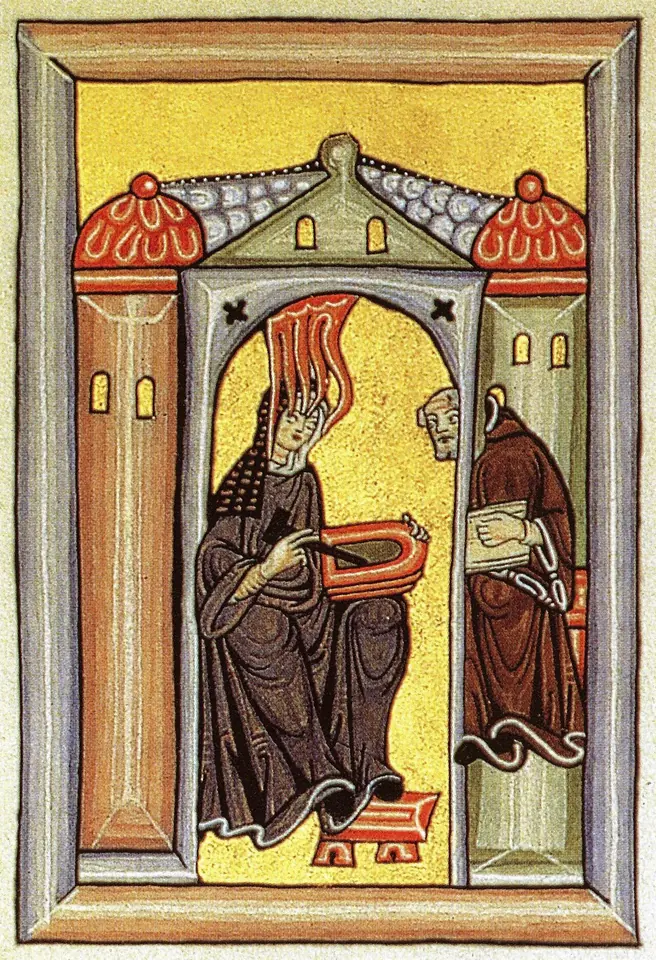
- St. Hildegard of Bingen (1098–1179), Benedictine abbess on the Rhine, recorded her visions in the Scivias, composed music still sung today, and wrote on medicine and the natural world. Pope Benedict XVI extended her feast to the universal Church in May 2012 and declared her a Doctor that October 7. Feast: September 17.

Three of the four were nuns who lived enclosed lives, and one never went to school. None held office in the Church. Their authority came from prayer, and the Church recognized it.
Mary and the women of the Gospels
The Blessed Virgin Mary
The Blessed Virgin Mary is first among all the saints, the Mother of God, conceived without sin and assumed body and soul into heaven. We honor her above every other saint, and we never worship her; she points always to her Son. Her many feasts run through the year, from the Solemnity of Mary, Mother of God, on January 1 to Our Lady of Guadalupe on December 12 and the Immaculate Conception on December 8.
The women around Jesus
- St. Anne, mother of Mary and grandmother of Jesus. Her name comes from the second-century Protoevangelium of James, not the Gospels, but the Church has honored her for more than a thousand years. She is the patron of grandmothers and of Quebec. Feast: July 26, with St. Joachim.
- St. Elizabeth, Mary's kinswoman and mother of St. John the Baptist. Her greeting at the Visitation, "Blessed art thou among women," became part of the Hail Mary. Feast: September 23 in the Roman Martyrology.
- St. Mary Magdalene, freed by Jesus of seven demons, who stood at the foot of the cross and was the first to see the risen Lord. The Church calls her "Apostle of the Apostles," and in 2016 Pope Francis raised her memorial to a feast, the same rank the apostles hold. Feast: July 22.
- St. Martha of Bethany, who welcomed Jesus into her home and made one of the great professions of faith in the Gospels: "I have believed that thou art Christ the Son of the living God" (John 11:27). Since 2021 her July 29 memorial also honors her sister Mary and brother Lazarus.
- St. Veronica, who by tradition wiped the face of Jesus on the way to Calvary and found his image on her veil. She is not named in the Gospels; we remember her at the Sixth Station of the Cross. Remembered July 12 in some calendars.

The virgin martyrs and women martyrs of the early Church
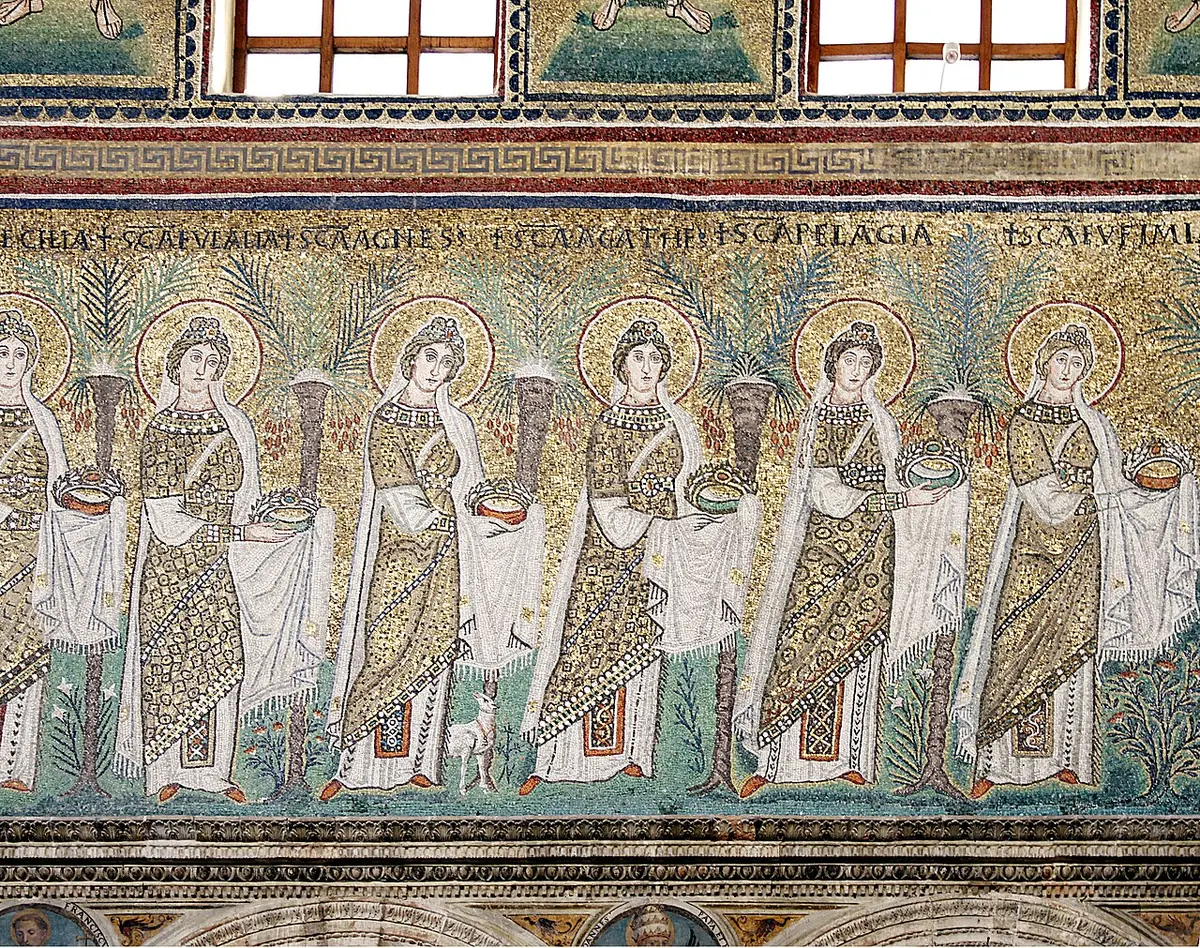
In the persecutions of the first four centuries, young women died rather than deny Christ or give themselves to a pagan husband. The Roman Canon of the Mass still names seven women martyrs in its prayer after the consecration: Felicity, Perpetua, Agatha, Lucy, Agnes, Cecilia and Anastasia. Some of their stories are well documented; others come to us mainly through later legends, and we say so plainly in each saint's entry.
- Sts. Perpetua and Felicity, a young noblewoman nursing her baby and her slave who gave birth in prison, martyred together at Carthage on March 7, 203. Perpetua's own prison diary survives, one of the oldest texts we have from a Christian woman. Feast: March 7.
- St. Agnes, martyred in Rome at 12 or 13, about 304. On her feast the Pope blesses two lambs whose wool is woven into the pallium worn by archbishops. Feast: January 21.
- St. Agatha of Catania, Sicily, tortured for refusing a Roman official around 251. We ask her prayers for those with breast cancer and for protection from fire and from Mount Etna. Feast: February 5.
- St. Lucy of Syracuse, whose name means light, martyred about 304. Sweden and Italy keep her feast with candles in the darkest weeks of the year, and she is the patron of the blind. Feast: December 13.
- St. Cecilia, the Roman martyr who "sang in her heart to the Lord" on her wedding day and became the patron of musicians. Feast: November 22.
- St. Catherine of Alexandria, the learned young woman who by tradition out-argued the emperor's philosophers and was condemned to the spiked wheel. She is a patron of students and philosophers. Feast: November 25.
- St. Barbara, locked in a tower by her father in the legend, and the patron of miners, artillerymen and firefighters. Feast: December 4.
- St. Margaret of Antioch, shown trampling a dragon, one of the voices St. Joan of Arc heard, and long invoked by women in childbirth. Feast: July 20.
- St. Apollonia, an elderly virgin of Alexandria whose teeth were broken by a mob in 249, now the patron of dentists. Feast: February 9.
- St. Philomena, a young martyr whose tomb was found in the Catacomb of Priscilla in 1802, beloved of St. John Vianney. Feast: August 11 in some places.
- St. Ursula and her companions, the virgin martyrs of Cologne, patrons of the Ursuline sisters. Feast: October 21.
- St. Christina of Bolsena, the young martyr of central Italy. Feast: July 24.
- St. Anastasia, the last woman named in the Roman Canon, was martyred at Sirmium in the Balkans, not in Rome. Her name was added to the Canon toward the end of the fifth century, and the Church still remembers her at the Mass at dawn on Christmas Day. Feast: December 25.
Queens, mothers and widows
Some women saints wore crowns. Others ran households, buried husbands and prayed for wayward children. Both kinds of holiness belong here.
- St. Helena (about 250–329), mother of the emperor Constantine. Tradition credits her with finding the True Cross in Jerusalem. Feast: August 18.
- St. Monica (331–387), who prayed and wept for years for her son, the future St. Augustine. A bishop told her, Augustine recalls in his Confessions, that "it is not possible that the son of these tears should perish." Patron of mothers. Feast: August 27.
- St. Olga of Kyiv (died 969), the fierce widowed princess who was baptized and prepared the way for her grandson St. Vladimir to bring Christianity to Rus'. The Orthodox honor her as Equal-to-the-Apostles. Feast: July 11.
- St. Margaret of Scotland (about 1045–1093), queen, mother of eight, who washed the feet of the poor and brought the Scottish Church closer to Rome. Feast: November 16.
- St. Elizabeth of Hungary (1207–1231), a princess widowed at 20 who built a hospital at Marburg and nursed the sick herself. She died at 24. Feast: November 17.
- St. Elizabeth of Portugal (1271–1336), the peacemaker queen who rode between armies to stop a civil war. Feast: July 4.
- St. Rita of Cascia (1381–1457), wife of a violent husband, mother of two sons, then an Augustinian nun who bore a wound on her forehead from a thorn of the crucifix. Patron of impossible causes and of women in hard marriages. Feast: May 22.
- St. Jane Frances de Chantal (1572–1641), widowed with four young children, who founded the Visitation nuns with St. Francis de Sales. Feast: August 12.
- St. Zélie Martin (1831–1877), lacemaker of Alençon and mother of nine, five of whom became nuns, including St. Thérèse. She and her husband Louis were the first married couple canonized together, in 2015. Feast: July 12.
- St. Gianna Beretta Molla (1922–1962), an Italian pediatrician who refused treatment that would have ended her unborn daughter's life, and died a week after the birth. Her daughter, also named Gianna, was present at her canonization in 2004. Feast: April 28.
Abbesses, mystics and contemplatives
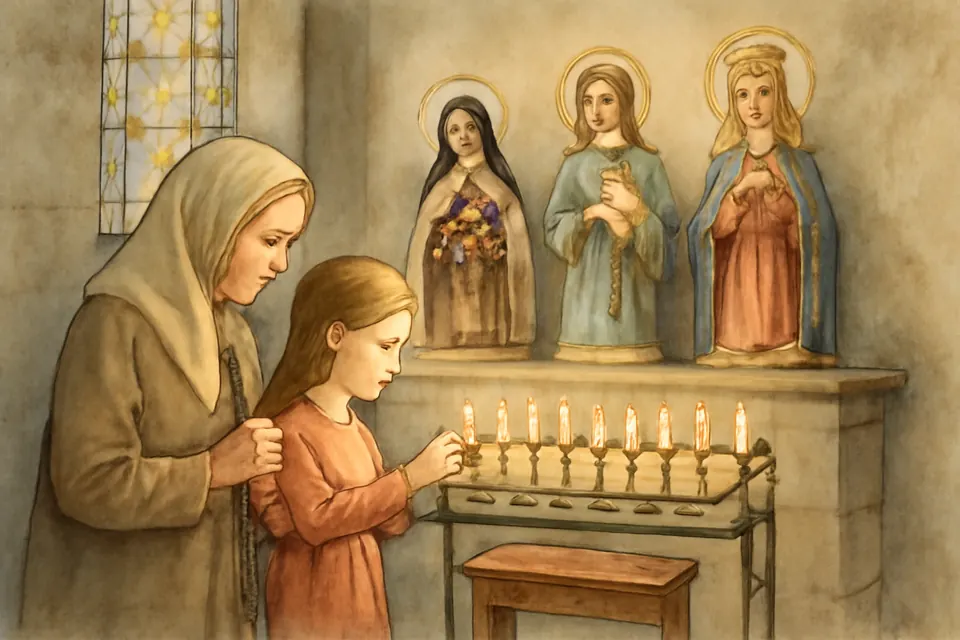
For many centuries the convent was where a woman could study, lead, write and pray without the demands of marriage. Some of the Church's greatest teachers came out of the cloister.
- St. Scholastica (about 480–543), by tradition the twin sister of St. Benedict. St. Gregory the Great tells how her prayer brought a storm that kept her brother talking with her through their last night together. Feast: February 10.
- St. Brigid of Kildare (about 451–525), founder of a double monastery at Kildare and, with St. Patrick and St. Columba, a patron of Ireland. Ireland made her feast a public holiday in 2023. Feast: February 1.
- St. Hilda of Whitby (614–680), abbess of Whitby, who hosted the Synod of Whitby in 664 and encouraged the cowherd Caedmon, the first English poet whose name we know. Feast: November 17.
- St. Gertrude of Nivelles (626–659), abbess while still a young woman, in what is now Belgium, patron of travelers and, in modern times, of cats. Feast: March 17.
- St. Clare of Assisi (1194–1253), who left her noble family at 18 to follow St. Francis and founded the Poor Clares. Pius XII named her patron of television because she saw the Christmas Mass on her sickroom wall. Feast: August 11.
- St. Gertrude the Great (1256–1302), mystic of the Helfta monastery, among the first to write of devotion to the Sacred Heart. We ask her prayers for the souls in purgatory; see the St. Gertrude prayer. Feast: November 16.
- St. Bridget of Sweden (1303–1373), mother of eight, widow, visionary and founder of the Bridgettines, now a co-patroness of Europe. Feast: July 23.
- St. Catherine of Genoa (1447–1510), who ran Genoa's great hospital and wrote the Treatise on Purgatory. Feast: September 15.
- St. Rose of Lima (1586–1617), a Dominican tertiary who lived in a tiny hermitage in her parents' garden and cared for the poor of Lima. She was the first saint of the Americas, canonized in 1671. Feast: August 23.
- St. Margaret Mary Alacoque (1647–1690), the Visitation nun of Paray-le-Monial to whom Our Lord revealed his Sacred Heart. Feast: October 16.
- St. Gemma Galgani (1878–1903), a young laywoman of Lucca who bore the stigmata and lived in close friendship with her guardian angel. Feast: April 11.
- St. Elizabeth of the Trinity (1880–1906), a Carmelite of Dijon who wanted to be "a praise of glory" to the Trinity. Feast: November 8.
- St. Faustina Kowalska (1905–1938), the Polish sister who received the Divine Mercy revelations. At her canonization in 2000, the Sunday after Easter became Divine Mercy Sunday for the whole Church. Feast: October 5.
- Blessed Anne Catherine Emmerich (1774–1824), the bedridden Augustinian nun of Dülmen known for her visions of the Passion. Remembered February 9.
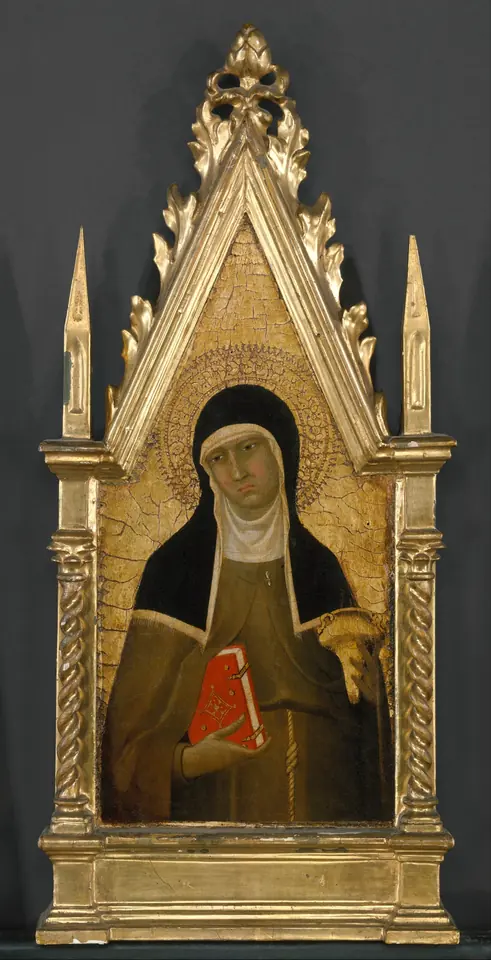
The penitents
Two of the most loved women saints came to holiness after years far from God. St. Mary of Egypt lived a dissolute life in Alexandria until she was stopped at the door of the Church of the Holy Sepulchre; she spent the rest of her life in the desert beyond the Jordan. The East reads her life during Lent; her feast is April 1. St. Margaret of Cortona (1247–1297) lived for nine years with a nobleman and bore his son; after he was murdered, she gave her life to penance and the poor as a Franciscan tertiary. Feast: February 22.

Founders, teachers and nurses
From the 16th century on, women religious built much of the Church's work of teaching and care. The United States and Canada owe them nearly every early Catholic school and hospital.
- St. Angela Merici (1474–1540) founded the Ursulines in 1535 to teach girls the faith. Feast: January 27.
- St. Louise de Marillac (1591–1660) founded the Daughters of Charity with St. Vincent de Paul, sisters who worked in the streets instead of behind a cloister. Feast: May 9.
- St. Marguerite Bourgeoys (1620–1700), the first schoolteacher of Montreal and the first woman saint of Canada. Feast: January 12.
- St. Elizabeth Ann Seton (1774–1821), a New York widow and convert, mother of five, who founded the Sisters of Charity and one of the first free Catholic schools in America. She was the first saint born in the United States. Feast: January 4.
- St. Rose Philippine Duchesne (1769–1852) brought the Society of the Sacred Heart to Missouri in 1818. In her old age the Potawatomi called her "Woman Who Prays Always." Feast: November 18.
- St. Théodore Guérin (1798–1856) came from France to the Indiana woods in 1840 to found the Sisters of Providence of Saint Mary-of-the-Woods. Feast: October 3.
- St. Frances Xavier Cabrini (1850–1917), who founded 67 institutions for Italian immigrants in the Americas. She was the first U.S. citizen canonized. Feast: November 13.
- St. Katharine Drexel (1858–1955), a Philadelphia heiress who gave her fortune to schools for Native American and Black children and founded Xavier University of Louisiana. Feast: March 3.
- St. Marianne Cope (1838–1918), a Franciscan from Syracuse, New York, who cared for people with leprosy on Molokai for 30 years. Feast: January 23.
- St. Teresa of Calcutta (1910–1997), Mother Teresa, who founded the Missionaries of Charity to serve "the poorest of the poor" and received the Nobel Peace Prize in 1979. Feast: September 5.

Young women saints
Holiness does not wait for old age. Several of the Church's most beloved women died young.
- St. Joan of Arc (about 1412–1431), the farm girl from Domrémy who heard the voices of St. Michael, St. Catherine and St. Margaret, led the French army to raise the siege of Orléans, and was burned at Rouen at 19. Her conviction was overturned in 1456, and she was canonized in 1920. Feast: May 30.
- St. Kateri Tekakwitha (1656–1680), the Lily of the Mohawks, baptized at 20 against her family's wishes. She died at 24 and was canonized in 2012, the first Native American saint. Feast: July 14 in the United States.
- St. Bernadette Soubirous (1844–1879), the poor miller's daughter who saw Our Lady 18 times at Lourdes in 1858. Feast: April 16.
- St. Catherine Labouré (1806–1876), the young Daughter of Charity to whom Our Lady gave the design of the Miraculous Medal in 1830. Feast: November 28.
- St. Maria Goretti (1890–1902), who died at 11 forgiving the young man who attacked her. He repented in prison and was present, with her mother, at her canonization in 1950. Feast: July 6.
- St. Dymphna, the young Irish princess of legend martyred at Geel in Belgium, where families have cared for people with mental illness for centuries. Feast: May 15.
- St. Winifred of Wales, whose holy well at Holywell has drawn pilgrims for more than a thousand years. Feast: November 3.
- St. Genevieve (about 422–512), who as a young consecrated virgin urged Paris to pray and stay when Attila's Huns approached in 451. Patron of Paris. Feast: January 3.
- St. Zita (about 1212–1272), a household servant in Lucca from the age of 12, patron of domestic workers. Feast: April 27.

Witnesses of the 20th century
Two women saints of the last century carried the cross in the darkest places of their age.
St. Josephine Bakhita (about 1869–1947) was kidnapped as a child in Darfur and sold several times, so brutally treated that she forgot her own name. Brought to Italy, she was baptized and became a Canossian sister, known for her gentleness. Her feast, February 8, is the Church's World Day of Prayer against Human Trafficking.
St. Teresa Benedicta of the Cross (Edith Stein) (1891–1942) was a Jewish philosopher who became a Catholic and a Carmelite. Arrested by the Nazis in the Netherlands, she was killed at Auschwitz in August 1942. In 1999 Pope St. John Paul II named her a co-patroness of Europe with St. Bridget and St. Catherine of Siena. Feast: August 9.
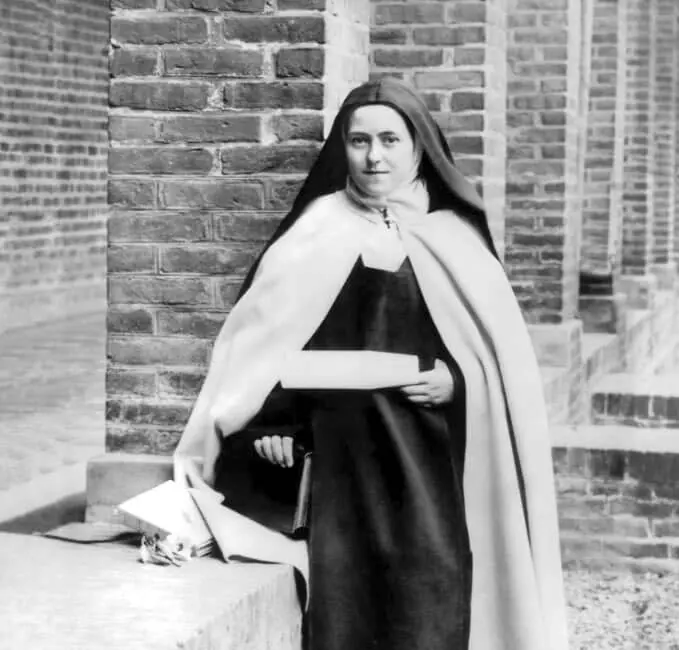
Female saints by country
Many families look for a woman saint from their own homeland. A quick guide to the saints above:
- United States: Elizabeth Ann Seton, Katharine Drexel, Frances Cabrini, Kateri Tekakwitha, Rose Philippine Duchesne, Théodore Guérin, Marianne Cope.
- Canada: Marguerite Bourgeoys and Kateri Tekakwitha. St. Anne is patron of Quebec.
- Ireland: Brigid and, in legend, Dymphna.
- England, Scotland and Wales: Hilda, Margaret of Scotland, Winifred.
- France: Joan of Arc, Thérèse, Bernadette, Catherine Labouré, Louise de Marillac, Zélie Martin, Margaret Mary Alacoque, Elizabeth of the Trinity, Genevieve.
- Italy: Catherine of Siena, Clare, Rita, Agnes, Agatha, Lucy, Cecilia, Gemma, Maria Goretti, Gianna Molla, Zita, Angela Merici, Frances Cabrini, Catherine of Genoa.
- Spain and Portugal: Teresa of Ávila and Elizabeth of Portugal.
- Germany and Central Europe: Hildegard, Gertrude the Great, Elizabeth of Hungary, Edith Stein, Bridget of Sweden for Scandinavia.
- Poland, Ukraine and Russia: Faustina and Olga.
- Latin America: Rose of Lima, and the Virgin of Guadalupe, patroness of the Americas.
- Africa: Perpetua and Felicity, Monica, Josephine Bakhita.
- India: Teresa of Calcutta.
There are many more not yet written up on this site, such as St. Mary MacKillop, the first saint of Australia, canonized in 2010.
How to choose a female patron saint
For Confirmation, a new baby or simply a friend in heaven, start with a woman whose life looks a little like yours or the one you hope to live. A nurse might pick St. Marianne Cope, a teacher St. Angela Merici, a mother with a struggling child St. Monica. A student might choose St. Catherine of Alexandria or St. Thérèse. Read the full entry, then talk to her in prayer. See our guides to confirmation saints, saint names for girls and what a patron saint is.
Praying with the holy women
The Church has always prayed with these women by name. Every time the Roman Canon is offered, the priest asks God to grant us "some part and fellowship" with the apostles and martyrs, naming among them "Felicity, Perpetua, Agatha, Lucy, Agnes, Cecilia, Anastasia." On November 1, All Saints' Day, we honor all of them together, the famous and the forgotten.
Let us ask them now. Holy Mary, Mother of God, pray for us. St. Mary Magdalene, St. Agnes, St. Monica, St. Clare, St. Teresa, St. Catherine, St. Thérèse, St. Kateri, St. Gianna, all you holy women of God, pray for us.
Frequently asked questions
Who is the most famous female saint?
After the Blessed Virgin Mary, who stands above all the saints, the most famous female saints are probably St. Mary Magdalene, St. Thérèse of Lisieux, St. Teresa of Calcutta (Mother Teresa), St. Joan of Arc, St. Teresa of Ávila and St. Catherine of Siena. In Latin America St. Rose of Lima is just as loved, and in Ireland St. Brigid.
How many women are Doctors of the Church?
Four. St. Teresa of Ávila was the first, declared on September 27, 1970, by Pope St. Paul VI, followed a week later by St. Catherine of Siena on October 4, 1970. Pope St. John Paul II added St. Thérèse of Lisieux in 1997, and Pope Benedict XVI added St. Hildegard of Bingen on October 7, 2012.
Who was the first female saint?
The Blessed Virgin Mary is the first of all the saints. Among the women honored as martyrs, the earliest whose deaths are documented in their own words are Sts. Perpetua and Felicity, who died at Carthage on March 7, 203. Perpetua's prison diary is one of the oldest surviving writings by a Christian woman.
Who are some modern women saints?
Recent women saints include St. Teresa of Calcutta (canonized 2016), St. Gianna Beretta Molla (2004), St. Josephine Bakhita (2000), St. Katharine Drexel (2000), St. Faustina Kowalska (2000), St. Edith Stein (1998), St. Kateri Tekakwitha and St. Marianne Cope (both 2012), and St. Elizabeth of the Trinity (2016).
Who are the American women saints?
St. Elizabeth Ann Seton was the first saint born in the United States; St. Katharine Drexel was the second. St. Frances Xavier Cabrini was the first U.S. citizen canonized. Others who served in what is now the United States include St. Kateri Tekakwitha, St. Rose Philippine Duchesne, St. Théodore Guérin and St. Marianne Cope.
Which female saint is the patron of women?
No single saint holds that title. Mothers often turn to St. Anne and St. Monica, expectant mothers to St. Gerard Majella and St. Gianna, girls to St. Agnes and St. Maria Goretti, and women in hard marriages to St. Rita of Cascia. Above all, women ask the Blessed Virgin Mary to pray for them.
What are good female saint names?
Mary, Anne, Elizabeth, Catherine, Teresa, Clare, Lucy, Cecilia, Agnes, Rose, Bernadette, Monica, Gianna and Kateri are all classic choices. Our page of saint names for girls lists more than 100 names with their variants and feast days.
Sources
- John Paul II, Apostolic Letter Divini Amoris Scientia (1997), proclaiming St. Thérèse of the Child Jesus a Doctor of the Church
- Benedict XVI, Apostolic Letter proclaiming St. Hildegard of Bingen a Doctor of the Universal Church (October 7, 2012)
- John Paul II, Apostolic Letter Spes Aedificandi (1999), proclaiming Sts. Bridget of Sweden, Catherine of Siena and Teresa Benedicta of the Cross co-patronesses of Europe
- John Paul II, Letter to Women (June 29, 1995)
- John Paul II, Apostolic Letter Mulieris Dignitatem (1988), on the dignity and vocation of women
- The Passion of the Holy Martyrs Perpetua and Felicitas (Ante-Nicene Fathers translation)
- Catholic Encyclopedia (1907): St. Anastasia (her name added to the Roman Canon toward the end of the 5th century)