What is a patron saint?
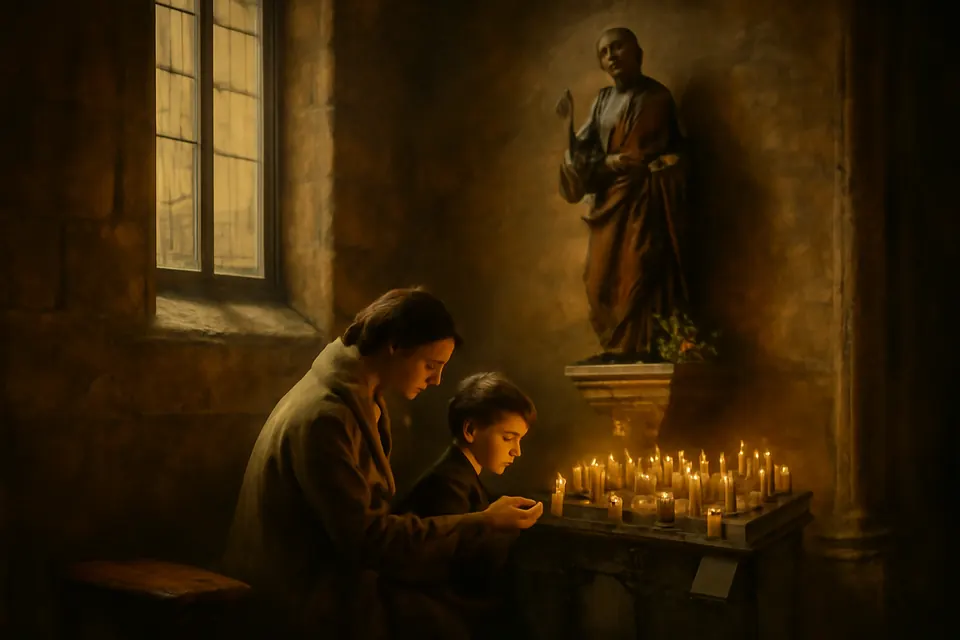
What is a patron saint? A patron saint is a saint honored as a special protector and intercessor for a person, a place, a church, a trade or a cause. Patronages grow from a saint's life, a martyrdom, a legend or even a play on words, and some are declared by popes. Every Christian can have one, usually the saint of their baptismal name.
Every Catholic church in the world is named for someone. Walk into St. Patrick's or Our Lady of Guadalupe or St. Joseph the Worker and you are standing in a house of God placed under the care of a friend of God. The same is true of nations, cities, trades, hospitals and schools, and of each of us, who were baptized with a name. Here is what a patron saint is, where the custom came from, how saints become patrons, and how to find your own and pray with him or her.
What is a patron saint? The meaning of the word
A patron saint is a saint in heaven whom we honor as a special protector and intercessor for a particular person, place, church, community, work or need. The Catholic Encyclopedia defines a patron as one "assigned by a venerable tradition, or chosen by election, as a special intercessor with God and the proper advocate" of a place or group.
The word itself is Roman. In Latin a patronus (from pater, father) was a man of standing who took ordinary people under his protection. His clients came to him for help, advice and a good word in the right ear, and in return they gave him their loyalty. When Christians spoke of a saint as their patronus, they took over a picture everyone in the Roman world understood: someone close to the seat of power who knows you by name and speaks for you.
The difference, of course, is that the saints have no power of their own. Everything they obtain for us comes from God. What they offer is their prayer, joined to Christ's, in the communion of saints. That is the teaching behind every patron, and the Catholic Encyclopedia says so plainly: "The underlying doctrine of patrons is that of the communion of saints." The saints in heaven and the Church on earth are one family, and a patron is the member of the family who has promised to look out for us.
Where patron saints began: the martyrs' tombs
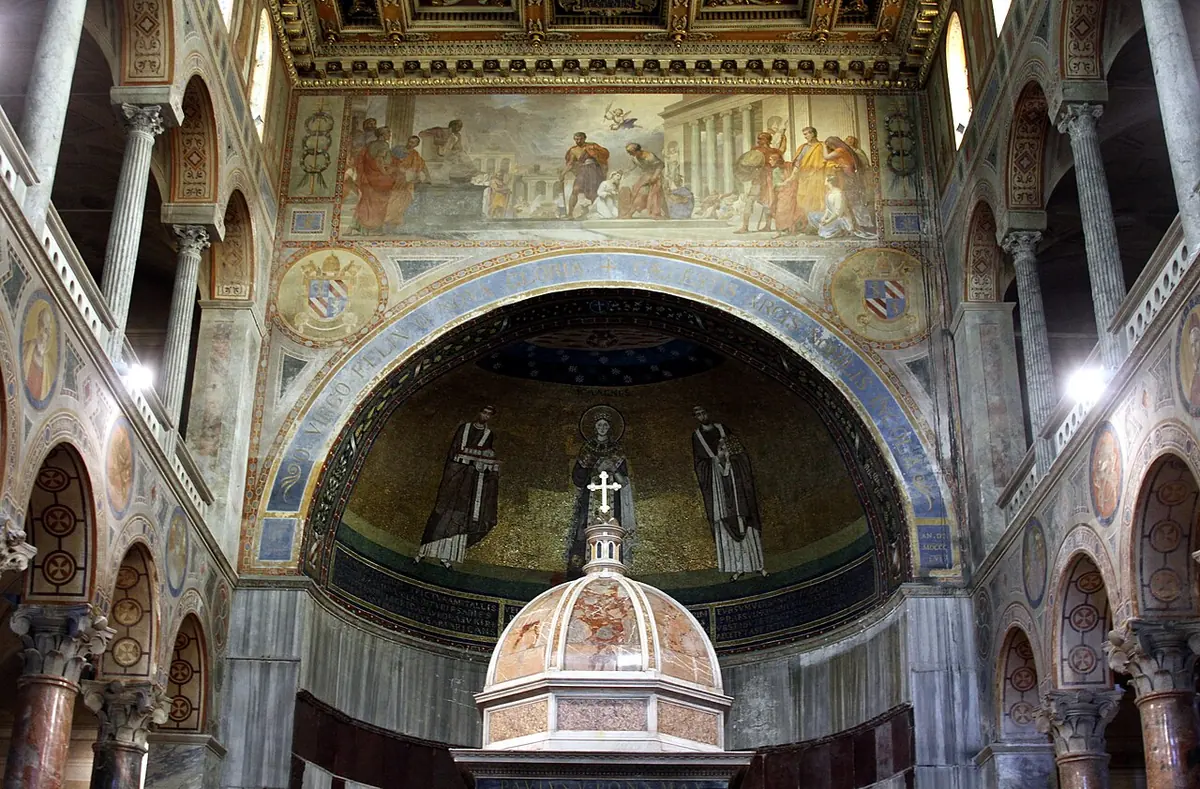
The first patrons were the martyrs. For three centuries Christians met in houses and cemeteries, and they gathered every year at the graves of their martyrs on the anniversary of their deaths, which they called the martyrs' birthdays into heaven. When Constantine gave peace to the Church in 313, the great new churches rose on exactly those spots.
The Catholic Encyclopedia lists them: the churches of St. Peter, St. Paul Outside the Walls, St. Lawrence, St. Sebastian and St. Agnes on the Via Nomentana "were all cemeterial basilicas, i.e. they were built over the spot where the bodies of each of these saints lay buried." The saint who rested beneath the altar became the church's patron. From that custom came the practice, still kept, of placing relics of saints in altars, and the name of the saint over the door. The church itself is always dedicated to God; the saint is honored there as its patron.

Little by little the honor spread beyond the martyrs. Bishops, monks, hermits and holy women whose lives had shone with the Gospel were chosen as patrons too. A town that held a saint's relics, or had heard the Gospel from his lips, or had seen him die, naturally looked to him. St. Patrick became the patron of Ireland because he brought it the faith; St. Genevieve the patron of Paris because she prayed for it in its hour of danger; St. Mark the patron of Venice because Venetian merchants carried his relics home from Alexandria in 828.
How are patron saints chosen?
There is no single path. Some patronages are almost as old as the Church; others were declared last century. Most of them come about in one of five ways.
From the saint's life and work
The most natural reason is that the saint did the thing, or suffered the thing, while on earth. St. Joseph worked with his hands, so carpenters and workers claim him. St. Luke was "the most dear physician" (Colossians 4:14), so doctors look to him, and tradition adds that he painted Our Lady, so artists do too. Sts. Cosmas and Damian were doctors who took no fees. St. Crispin made shoes. St. Eligius was a goldsmith before he was a bishop, and metalworkers of every kind have honored him ever since.

From a martyrdom or a miracle
Many patronages come from how a saint died or from what God did through his or her prayers. St. Apollonia, whose teeth were broken by her persecutors in Alexandria, is the patron of dentists and those with toothache. St. Blaise, who is said to have saved a boy choking on a fish bone, is invoked for the throat. St. Dismas, the good thief, is the patron of prisoners and the condemned.
From a legend
Some patronages grow from stories that are traditional, handed down rather than documented. St. Christopher, who in legend carried the Christ Child across a river, is the patron of travelers. St. Anthony of Padua is the patron of lost things because of the story of a novice who ran off with his precious book of psalms and, frightened by a vision, brought it back. The legends may be hard to verify, but the saints are real, and their prayers are real.
From a symbol or a play on words
The Catholic Encyclopedia admits frankly that some patrons were chosen "by reason of some play on words." St. Lucy, whose name comes from lux, light, is invoked for the eyes. St. Lawrence, martyred on a gridiron, became the patron of cooks; St. Ambrose records his jest from the fire: "The flesh is roasted, turn it and eat." St. Agatha is honored by bell-founders, because the dishes she holds in her pictures look like bells. Such patronages are a sign of affection, the way a family gives its own nicknames.
By the decree of a pope
Over the last two centuries the popes have also named patrons officially. A few examples, with their dates:
- St. Joseph, Patron of the Catholic Church, proclaimed under Blessed Pius IX on December 8, 1870, as Pope Francis recalled in Patris corde for the 150th anniversary.
- St. Thomas Aquinas, patron of Catholic universities and schools, and St. Camillus de Lellis, patron of the sick and those who care for them, both named by Leo XIII, in 1880 and 1886.
- St. Clare of Assisi, patron of television, named by Pius XII in 1958, because one Christmas, too sick to leave her bed, she heard the friars' Christmas service as if she were there.
- St. Benedict, patron of Europe, proclaimed by Paul VI on October 24, 1964, the day he reconsecrated the rebuilt abbey church of Monte Cassino. John Paul II later added Sts. Cyril and Methodius, and then St. Bridget of Sweden, St. Catherine of Siena and St. Edith Stein.
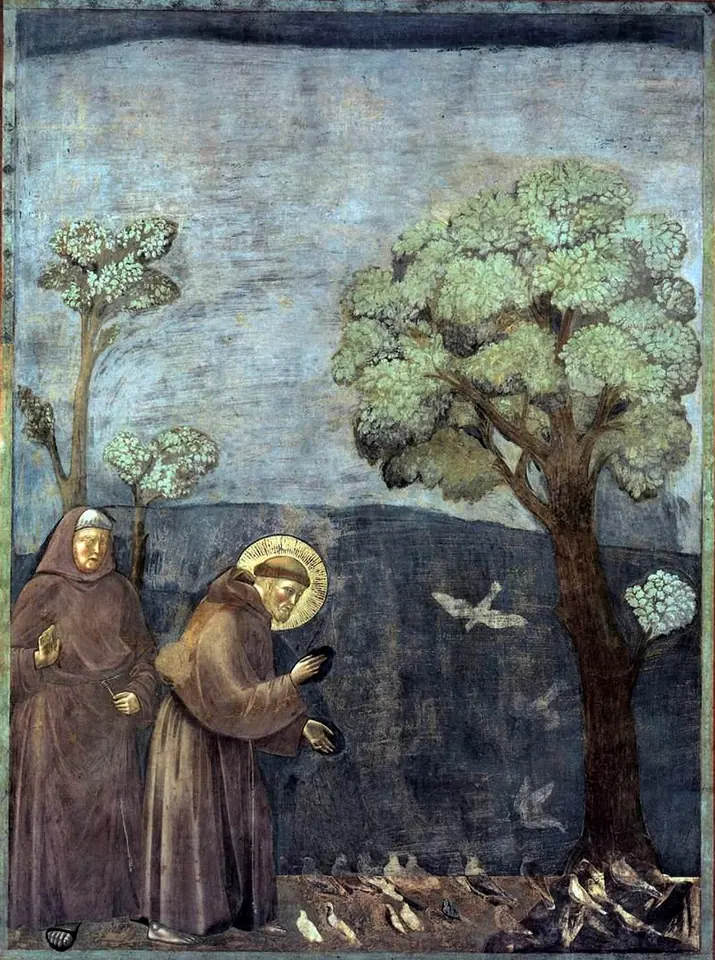
- St. Francis of Assisi, patron of ecology, proclaimed by John Paul II in the letter Inter sanctos on November 29, 1979.
- St. Thomas More, patron of statesmen and politicians, proclaimed by John Paul II on October 31, 2000, at the request of heads of state, politicians and bishops "from different political, cultural and religious allegiances."
Many famous patronages were never declared at all, and that is no fault in them. St. Isidore of Seville is widely called the patron saint of the internet, but no pope has made it official; the title grew up among the faithful, as most patronages have. St. Jude became the patron of hopeless causes through centuries of grateful prayer, not a decree.
For places, the Church has kept order since 1638, when Pope Urban VIII laid down rules for choosing the patrons of churches, cities and countries, without disturbing the patrons already honored. A diocese or nation that wants a new principal patron today asks the Holy See to confirm its choice.
Patron saints of places, trades, causes and people
Put together, the Church's patronages cover nearly all of life. Through the Middle Ages each guild had its patron, its altar and its feast; the Catholic Encyclopedia repeats an estimate of 40,000 religious corporations in pre-Reformation England, guilds and brotherhoods among them, each with its own patron.
Places. Nations, regions, cities, dioceses and parishes all have patrons. Our Lady under many titles is patroness of whole countries: the Immaculate Conception of the United States, Our Lady of Guadalupe of the Americas.

Work. Almost every occupation has a heavenly friend. Browse our pages on the patron saints of nurses, doctors, teachers, students, lawyers, police, firefighters, soldiers, sailors and athletes.
Needs and causes. We have patrons for illness and healing, for anxious minds and hard roads: the patron saints of healing, cancer, anxiety, alcoholics, pregnancy, lost causes and lost things.
People and creatures. There are patrons for mothers, for children and the elderly, and even for the creatures in our care: the patron saints of animals, dogs and cats.

The full list, from accountants to young people, is on our patron saints page.
Your own patron saint: baptism and confirmation
The most personal patron of all is the saint whose name you carry. The Catechism of the Catholic Church teaches that "in Baptism, the Lord's name sanctifies man, and the Christian receives his name in the Church. This can be the name of a saint, that is, of a disciple who has lived a life of exemplary fidelity to the Lord. The patron saint provides a model of charity; we are assured of his intercession" (no. 2156). It adds that a baptismal name "can also express a Christian mystery or Christian virtue," and that parents, godparents and the pastor are to see that the name is not "foreign to Christian sentiment."
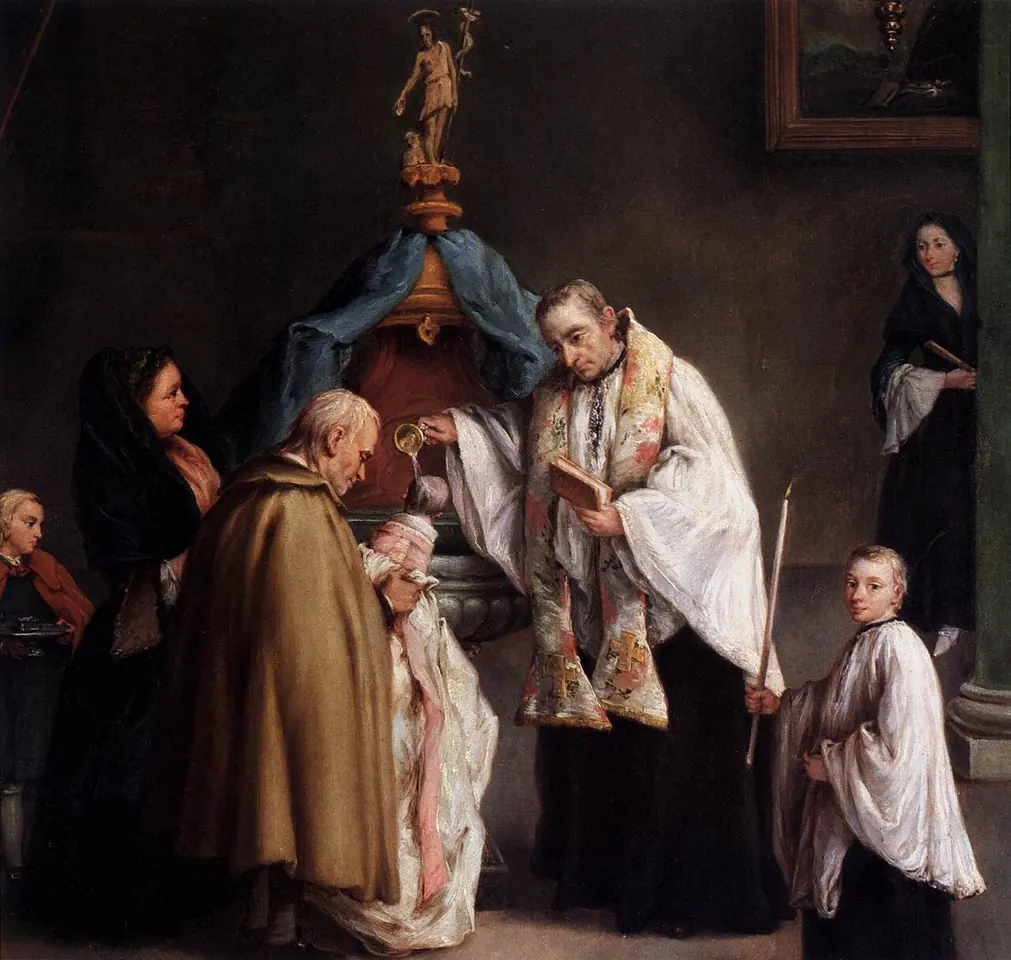
So if your name is Joseph or Mary, Thérèse or Patrick, your patron has been with you from the font. Parents looking for a name can browse our lists of saint names for boys and saint names for girls.
Many Catholics take a second patron at confirmation, often adding the saint's name to their own. The custom is beloved but optional, and keeping your baptismal saint is a fine choice. Our guide to confirmation saints explains how to choose one.
In much of Europe and Latin America, the feast of your patron is your name day, kept with as much joy as a birthday. It is a lovely custom to bring home: a candle at dinner, a holy card at your place, a few lines from your saint's life read aloud.

How to find your patron saint
"Do I have a patron saint?" Yes, and probably more than one. If you are not sure where to begin, here are some ways to find yours:
- Your baptismal name. If you were named for a saint, start there. Look up which saint your parents had in mind; there are several Johns and Catherines.
- Your confirmation saint, if you took one.
- Your parish, diocese and country. Each has a patron who already prays for your community.
- Your work and your needs. A nurse, a teacher, a mother, someone sick or grieving: each has saints who walked that road.
- The calendar. Some people adopt the saint whose feast falls on their birthday or the day of their baptism. Our feast days calendar and saint of the day page can help.
- Friendship. Read the lives of the saints. Often one simply catches your heart, and that is a call worth answering.
How to pray to your patron saint
Praying to a patron is not complicated. We speak to the saints the way we would ask a faithful friend to pray for us, knowing that all our prayers rise to God. Here are simple ways to begin:
- Learn the saint's life. You cannot be friends with someone you don't know. Read their story and anything they wrote.
- Keep the feast day. Go to Mass if you can, and mark it at home.
- Ask for their prayers every day. The Church's oldest form is the short invocation used in the Litany of the Saints: "St. N., pray for us." Add it to your morning prayers or say it when you are in need.
- Imitate them. The Catechism calls the patron saint "a model of charity." The best honor we can give our patron is to live a little more like them.
- Keep their image near. A medal, a holy card in your wallet or a statue at home is a reminder to pray, not a charm.
So let us turn to our patrons now. Think of the saint whose name you bear, or the one who has been drawing you, and say from the heart: "St. N., pray for us." And let us thank God, who never leaves his children alone and has given us so many friends in heaven.
Frequently asked questions
What is a patron saint in simple terms?
A saint in heaven whom the Church, or a person, looks to as a special friend and intercessor for a particular person, place, job or need. We ask our patron to pray for us before God, the way we would ask a trusted friend to pray for us.
How are patron saints chosen?
Most patronages grew up naturally over centuries. A saint becomes patron of the place where he preached or where his relics rest, of the trade he practiced, of the illness he suffered or healed, or of something tied to his legend or even his name. Since Urban VIII's rules of 1638, patrons of places are chosen under the guidance of the Holy See, and popes have also named patrons by decree, as Pius IX did for St. Joseph in 1870.
How do I find my patron saint?
Start with your baptismal name. If you were named for a saint, that saint is your patron. You can also take a patron at confirmation, look to the saint of your parish, your country or your work, or pray and read about the saints until one draws you. Our Saints A to Z and patron saints list are good places to begin.
Do I have a patron saint if my name isn't a saint's name?
Yes, you can. The Catechism says a baptismal name can also express a Christian mystery or virtue, so names like Grace or Faith fit. Many people with no saint's name choose a patron at confirmation, adopt the saint whose feast falls on their birthday or baptism day, or simply ask a saint they love to be their patron.
Can you have more than one patron saint?
Yes. Most Catholics have several without thinking about it: the saint of their baptismal name, their confirmation saint, the patron of their parish and country, and the patrons of their work and their needs. There is no limit on the friends we may ask to pray for us.
Do Catholics worship patron saints?
No. Worship belongs to God alone. We honor the saints and ask for their prayers, and every grace they obtain for us comes from God. A patron saint is an intercessor, never a source of power in his own right.
Is St. Isidore officially the patron saint of the internet?
No. The title is popular but no pope has declared it. It is a good example of how many patronages are born among the faithful rather than by decree. See our page on the patron saint of the internet.
Sources
- Catholic Encyclopedia (1911): Patron Saints. Martyrs' tombs and the first titular churches; Urban VIII's rules of 1638; trade and illness patrons; "some play on words"
- Catechism of the Catholic Church, nos. 2156–2167 (the Christian name and the patron saint)
- Pope Francis, Patris corde (December 8, 2020), on St. Joseph as Patron of the Catholic Church
- Pope Paul VI, Pacis nuntius (October 24, 1964), proclaiming St. Benedict patron of Europe (Latin)
- Pope John Paul II, Inter sanctos (November 29, 1979), proclaiming St. Francis patron of ecology (Latin)
- Pope Pius XII, apostolic letter naming St. Clare patron of television (February 14, 1958) (French)
- Pope John Paul II, motu proprio proclaiming St. Thomas More patron of statesmen and politicians (October 31, 2000)