Elena of Montenegro
Who was Elena of Montenegro?
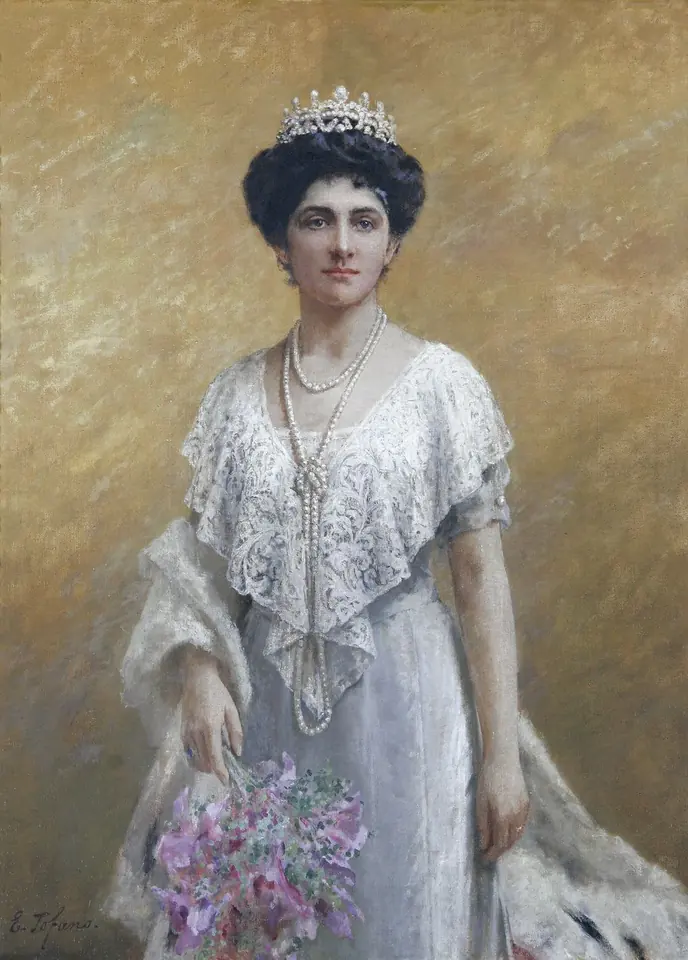
Elena of Montenegro was a princess of the small Balkan kingdom of Montenegro who became Queen of Italy as the wife of King Victor Emmanuel III, and who is remembered in Italy above all for her charity to the sick, the wounded and the poor. She was born Jelena Petrović-Njegoš in Cetinje on January 8, 1873, and died in exile in Montpellier, France, on November 28, 1952. Her son was Umberto II, Italy's last king.
In 2001 the bishop of Montpellier opened her cause for beatification, and she has since been called the Servant of God Elena. That is the first step on the road to sainthood, not the last. She has not been declared Venerable or Blessed, and she has no feast day.
Italians gave her another title long before the Church did. Wartime postcards called her l'angelo della carità, "the angel of charity."
A princess of Montenegro
Elena was one of the twelve children of Prince Nicholas I of Montenegro, who later took the title of king, and of his wife, Milena Vukotić. She grew up in Cetinje, then the little mountain capital of Montenegro, in the Orthodox faith of her people. Like several of her sisters she was sent to Russia and educated at the Smolny Institute for noble girls in St. Petersburg. The exhibition catalog of the Stupinigi palace notes that she spoke French, Russian, Serbian and modern Greek and published poems under the pen name "Blue Butterfly."
She loved the outdoors all her life. She fished and hunted, and with her husband she took up photography, developing her own negatives in a darkroom at the royal castle of Racconigi.
Conversion and marriage
Elena met Prince Victor Emmanuel of Savoy, heir to the Italian throne, at La Fenice theater in Venice, and again in Russia at the coronation of Tsar Nicholas II in 1896. Their engagement was announced in Montenegro that summer.
Marriage to the heir of a Catholic throne meant a change of faith. Elena was received into the Catholic Church before the wedding, after landing at Bari, the city of St. Nicholas, whom Orthodox and Catholics both love. The couple married in Rome on October 24, 1896, with a civil ceremony at the Quirinal Palace and the religious rite in the Basilica of Santa Maria degli Angeli. She kept the faith she had embraced for the rest of her life.
Queen of Italy
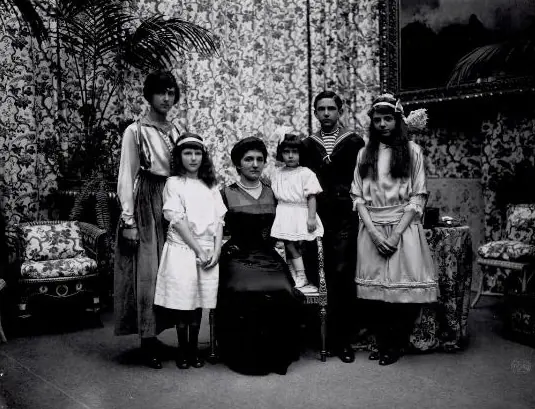
Elena became queen in July 1900, when her father-in-law, King Umberto I, was assassinated. She and Victor Emmanuel had five children: Yolanda, Mafalda, Umberto, Giovanna, who became Queen of Bulgaria, and Maria Francesca. Elena disliked court display and kept a simple household. She wanted her children raised without airs.
The angel of charity
Elena's charity was practical. When the earthquake of December 1908 destroyed Messina and Reggio Calabria, she went to the ruined city and helped nurse the injured herself. During the First World War she served as a nurse, and the royal palaces in Rome were opened as military hospitals.
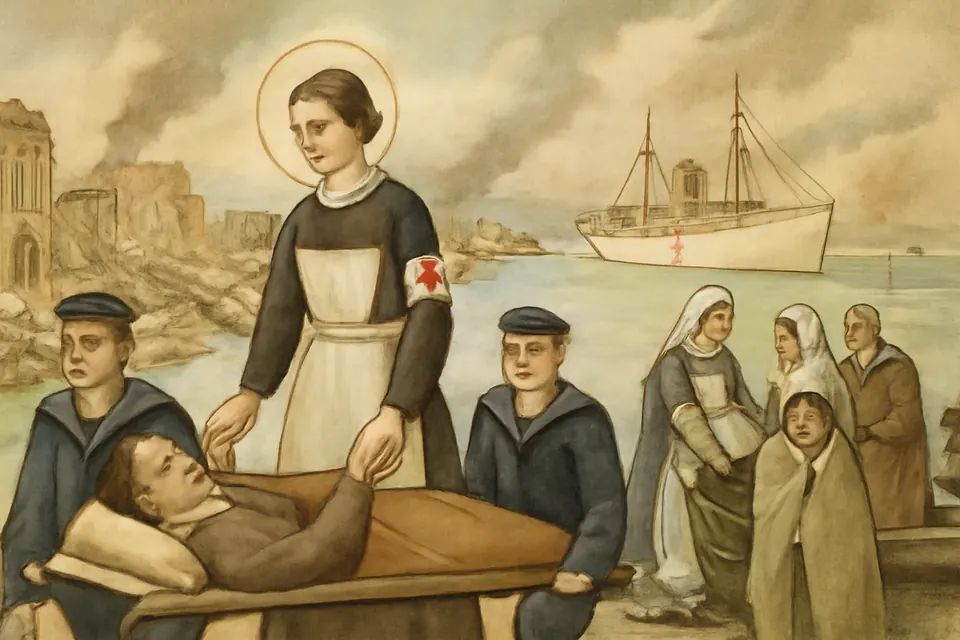
She studied medicine seriously enough to receive an honorary degree. According to the Stupinigi exhibition, she paid for research on polio, Parkinson's disease, cancer and childhood encephalitis. The committee promoting her cause says she founded the first specialized school for nurses in Italy and supported a hospital that still bears her name.

Her small kindnesses are remembered too. Ilario Bortolan of the International Queen Elena Association told Rome Reports how she once sat down on a park bench beside an old woman in distress who had no idea who she was, and later sent her an armchair, two blankets and money.
The Golden Rose
On March 7, 1937, Pope Pius XI gave Elena the Golden Rose, the blessed golden ornament that popes have long given to Catholic sovereigns and shrines, in recognition of her charitable work. Her son Umberto II gave the rose to the Basilica of St. John Lateran in 1983, and it is shown in the basilica's treasury museum.
That same year, Avvenire reports, Elena worked to advance the cause of another queen of the House of Savoy, Maria Cristina of Savoy, Queen of the Two Sicilies. Maria Cristina was beatified in 2014.

War, Fascism and the cost of a crown
Elena's reign cannot be told honestly without her husband's. In 1922 Victor Emmanuel III refused to resist Mussolini's March on Rome and gave him power. In 1938 he signed the racial laws against Italy's Jews, which historians and Italy's Jewish community have never forgiven. When his remains were returned to Italy in 2017, The Local quoted the historian Piero Craveri calling him a king who "accepted fascism" and "signed the racial laws." These were the king's acts, and the queen did not hold political power. They belong to her story all the same, because they are the reason her cause is approached with care.
What is recorded of Elena herself points toward peace. On November 27, 1939, after war had broken out in Europe, she wrote an appeal to the six queens of the countries still neutral, proposing a "Peace of the Ladies" to keep their nations out of the war. She took the idea from the Peace of Cambrai of 1529, negotiated by two women. Luciano Regolo, who leads the committee for her cause, says documents in the archive of Mussolini's secretary show that Mussolini blocked it.
The war took her daughter. Princess Mafalda was arrested by the Germans in 1943 and died in the Buchenwald concentration camp in August 1944.
Exile and death
After the war Victor Emmanuel abdicated on May 9, 1946, and a referendum that June ended the monarchy. The old king and queen went into exile in Alexandria, Egypt, as guests of King Farouk. Victor Emmanuel died there on December 28, 1947.
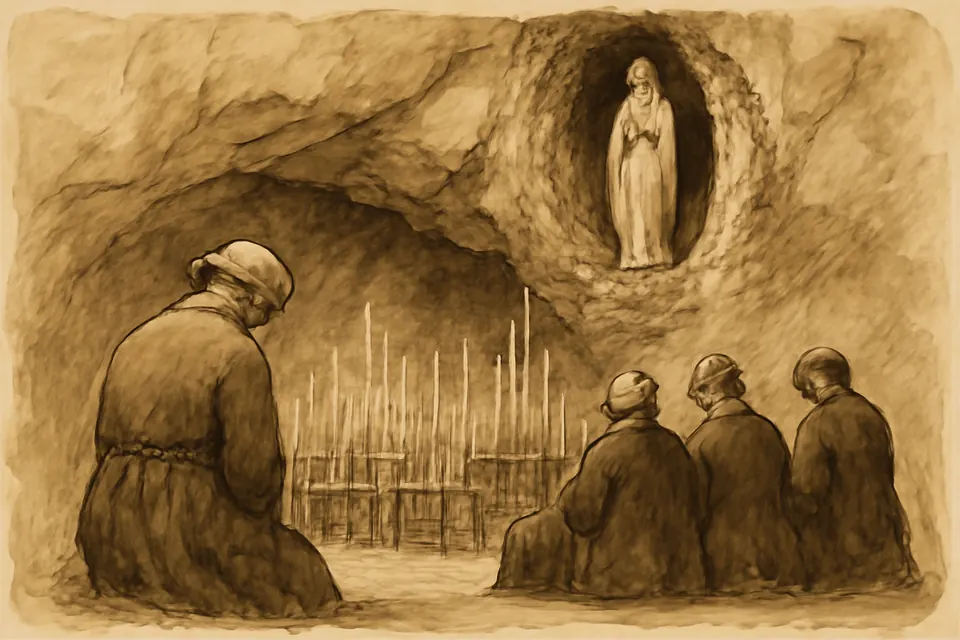
Elena learned that she had cancer and moved to Montpellier in the south of France in 1949. Two memories of these last years come from Regolo. Shortly before her death she made a pilgrimage to the grotto of Our Lady of Lourdes and asked those with her not to pray for her healing, but for all suffering souls, and above all for mothers who had lost children in the war, as she had. And once, waiting to be seen in a French hospital, she stopped her maid from telling the staff who she was, because she did not want to go ahead of the people who had come before her.
She died in Montpellier on November 28, 1952, and was buried in the Saint-Lazare cemetery. The city named an avenue after her. In 1989 the International Queen Elena Association put up a monument and built a burial ground for two thousand of the poor beside her tomb.
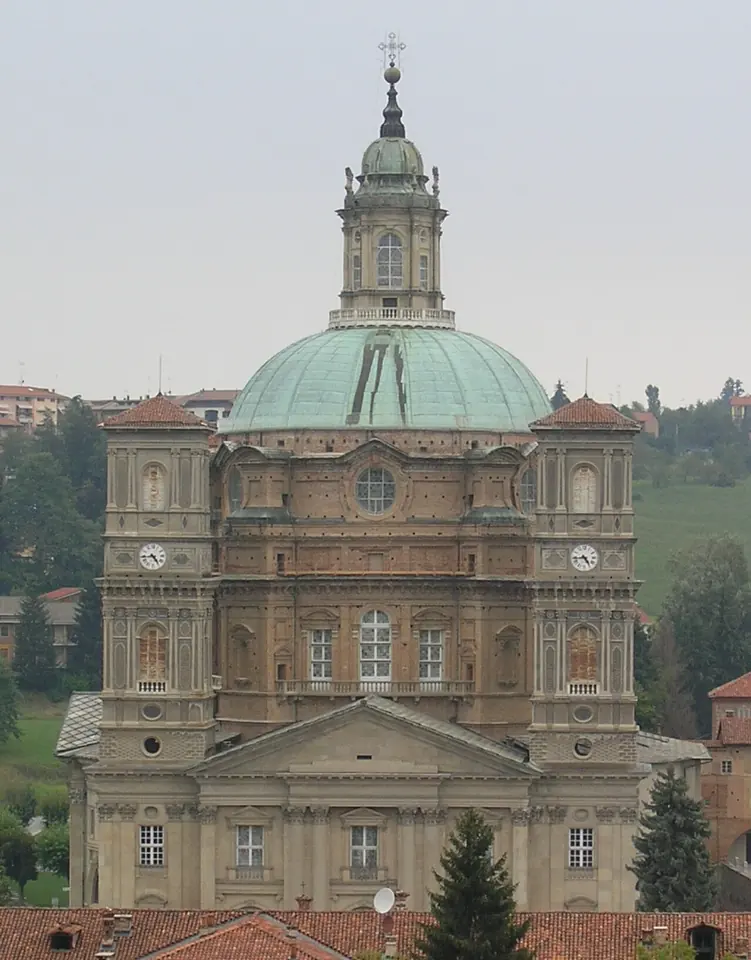
On December 15, 2017, her remains were moved to the Sanctuary of Vicoforte in Piedmont, the great domed shrine of the Nativity of Mary near Mondovì. Two days later the remains of Victor Emmanuel III were brought from Alexandria and laid beside her.
The cause for her beatification
In 2001, as the fiftieth anniversary of her death approached, Jean-Pierre Ricard, then bishop of Montpellier and later a cardinal, opened the diocesan inquiry into her life and virtues. From that moment she has been a Servant of God.
The steps that remain are the usual ones. The Church must first study her life and writings and decide whether she practiced the virtues to a heroic degree, which would make her Venerable. Beatification would then require a miracle attributed to her intercession and approved after investigation, and canonization a second one. Avvenire noted in 2024 that the cause had made little progress in more than twenty years.
A committee for her beatification, led by Luciano Regolo, co-editor of Famiglia Cristiana, announced in 2024 that it would work to relaunch the cause: by seeking a second diocesan inquiry in Rome, where she lived for almost fifty years, and by gathering testimonies, letters and documents about her. A conference on her life in Rome in 2025 brought new attention to her, as Rome Reports described. Regolo's argument for her is simple: that she made her whole life, including the role of queen, a service of love for others.
Praying with Queen Elena
The Church allows the faithful to ask the private intercession of a Servant of God, though not to honor her publicly in the liturgy before beatification. We know of no approved prayer for her cause whose text we can verify, so we print none here. Anyone who believes they have received a favor through her intercession should report it to the diocese handling her cause, since favors like these are part of what the Church studies.
Let us pray for the sick, for nurses and doctors who care for them, and for mothers who have lost children to war, as she asked at Lourdes. And let us pray that the Church will judge her life truly, in God's time.
Frequently asked questions
Is Queen Elena of Montenegro a saint?
Not yet. Her cause for beatification opened in the diocese of Montpellier, France, in 2001, so the Church calls her Servant of God. She has not been declared Venerable, and beatification would also require a miracle attributed to her intercession.
Was Elena of Montenegro Catholic or Orthodox?
She was born and raised Orthodox in the royal family of Montenegro and became a Catholic before her marriage to Prince Victor Emmanuel of Italy in October 1896. She lived and died a Catholic.
What did Queen Elena do for the poor and sick?
She nursed the injured after the Messina earthquake of 1908 and the wounded of the First World War, studied medicine and received an honorary degree, funded research on polio, Parkinson's disease, cancer and encephalitis, and helped found a school for nurses. Italians called her the angel of charity.
What is the Golden Rose Queen Elena received?
It is a blessed ornament of gold that popes gave to Catholic sovereigns and shrines as a mark of honor. Pope Pius XI gave one to Queen Elena on March 7, 1937, for her charitable work. Her son Umberto II gave it to the Lateran Basilica in 1983, and it is kept in the basilica's treasury museum.
Where is Queen Elena buried?
She died in Montpellier, France, on November 28, 1952, and was buried in the city's Saint-Lazare cemetery. On December 15, 2017, her remains were moved to the Sanctuary of Vicoforte in Piedmont, Italy, where her husband's remains were laid beside her two days later.
Where does Queen Elena's cause stand?
The diocesan inquiry opened in Montpellier in 2001 and moved slowly for two decades. In 2024 a committee led by the journalist Luciano Regolo announced it would work to relaunch the cause, including a diocesan inquiry in Rome, where she lived for nearly fifty years, and the gathering of testimonies and documents.
Sources
- Avvenire: Elena di Savoia, riparte la causa di beatificazione (August 18, 2024). The opening of the cause in 2001, the 2024 relaunch, the Lourdes and hospital anecdotes
- Artribune: Elena regina di carità e di pace (exhibition at Stupinigi). Biographical outline, the Golden Rose of 1937, the 1939 appeal, her death and reburial
- Rome Reports: Queen Elena of Montenegro, From Royalty to Sainthood (July 27, 2025)
- The Local Italy: Royal row as body of king who aided Mussolini returns to Italy (December 17, 2017)