Venerable Mary of Jesus of Agreda
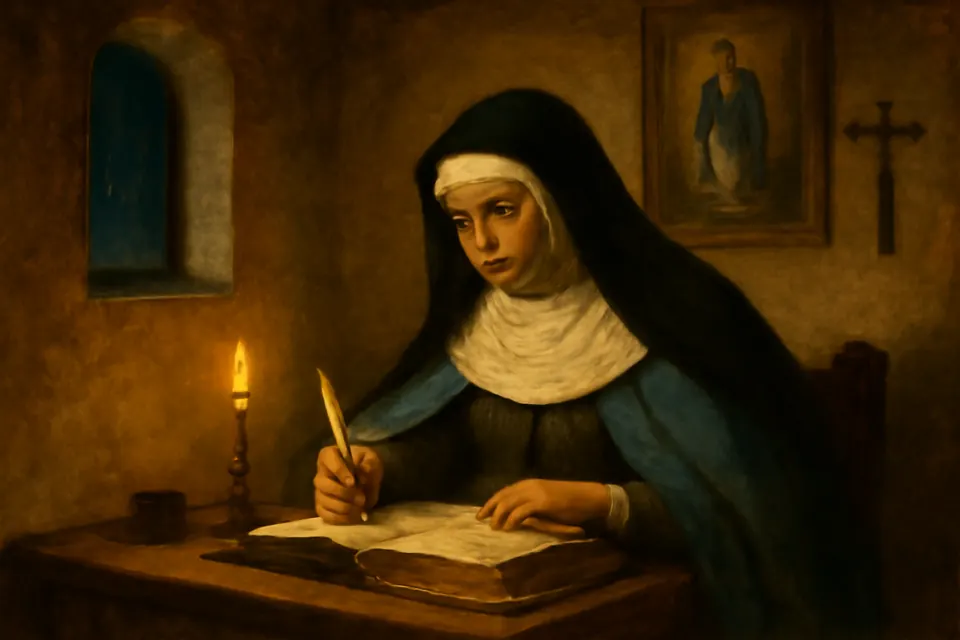
Venerable Mary of Jesus of Agreda (1602–1665), Sor María de Jesús de Ágreda in Spanish, was a Franciscan Conceptionist abbess in the small Spanish town of Ágreda who never left her convent, yet was said to have preached to the peoples of New Mexico and Texas as the "Lady in Blue." She wrote The Mystical City of God, a life of the Virgin Mary that has been loved and fought over for three and a half centuries. Many people search for "St. Mary of Agreda," but she is not a saint, at least not yet. The Church calls her Venerable, and her cause is still open.
Let us look at her life, at the questions that have held up her cause, and at what we can honestly say about the wonders told of her.
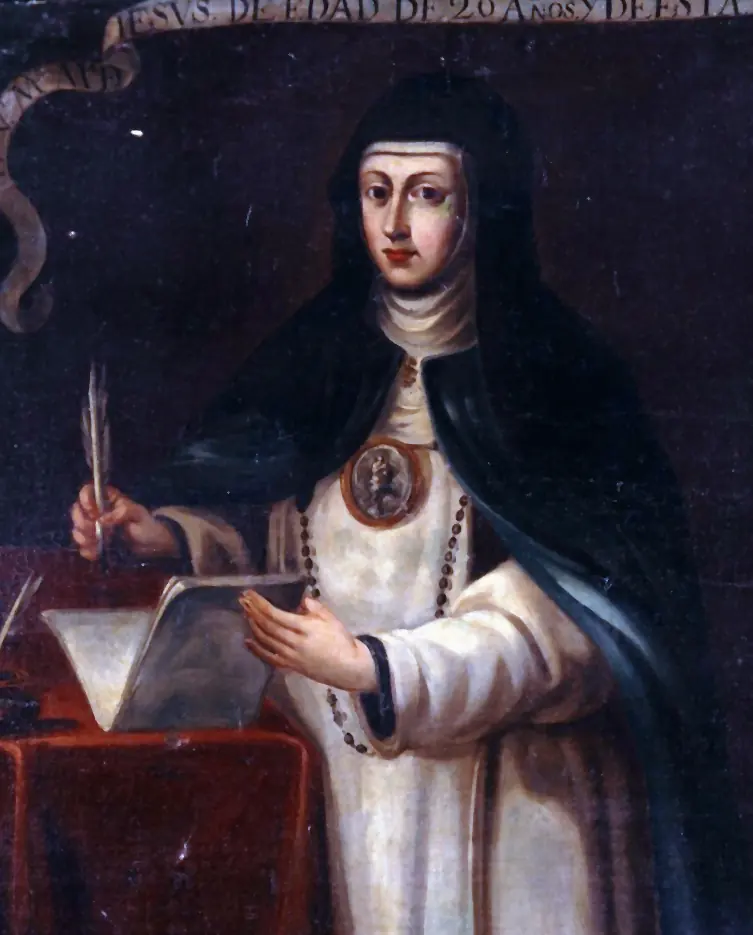
Who was Mary of Agreda?
She was born in 1602 in Ágreda, in Old Castile near the border of Aragon, to a devout family named Coronel. In January 1619 something remarkable happened: she and her mother entered the new convent of Franciscan Conceptionist nuns that the family had founded in Ágreda, while her father and her two brothers became Franciscan friars. The Conceptionists, founded by St. Beatriz de Silva, honor the Immaculate Conception and wear a white habit with a blue mantle.
At only twenty-five, against her own wishes and by papal dispensation, she was made abbess. Except for an interval of three years she governed the community for the rest of her life. Under her, the Catholic Encyclopedia says, a decaying convent became "one of the most fervent in Spain." She died on May 24, 1665, with a reputation for holiness that, the same article notes, met with "general consent."
The Lady in Blue
In 1630 Fray Alonso de Benavides, the Franciscan head of the missions of New Mexico, reported to King Philip IV a strange thing. The Jumano people of the plains had come to the friars asking for baptism, saying a woman in blue had preached to them in their own language and told them to seek out the priests. Benavides went to Ágreda in 1631 and spent time with the young abbess. She told him that from the early 1620s she had been carried to those lands many times, and he concluded she was the Lady in Blue. The National Park Service, which cares for the Salinas Pueblo Missions today, records that Benavides sent an expanded report to Pope Urban VIII in 1634, and that the Spanish Inquisition looked into her claims in 1635 and found nothing to discredit them.
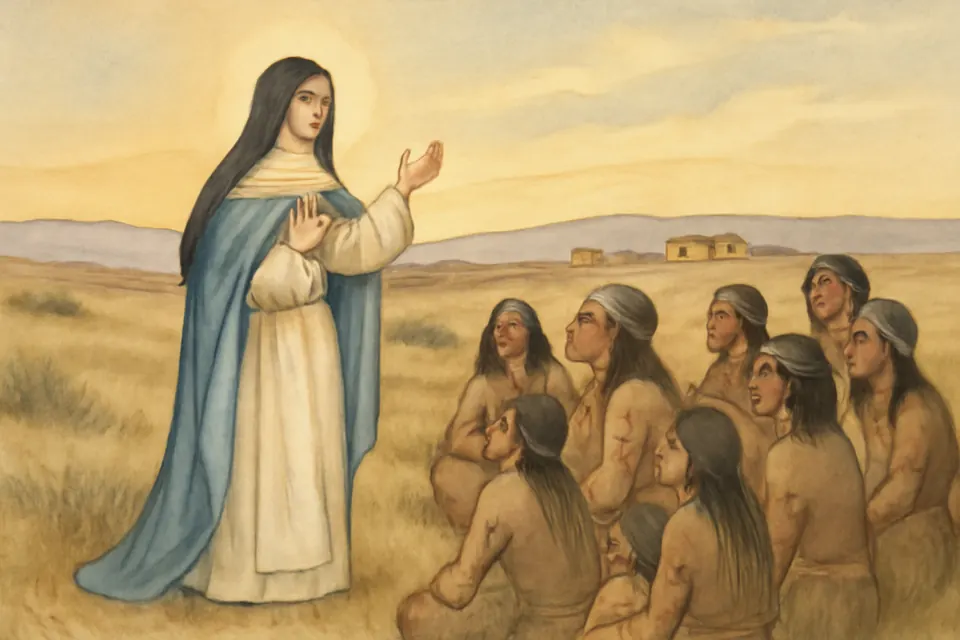
How she was present, whether in body or in spirit, she herself spoke of with caution, and the Church has never ruled on it. We call it a reported wonder. For the wider story of saints said to be in two places at once, see our page on bilocation.

The Mystical City of God
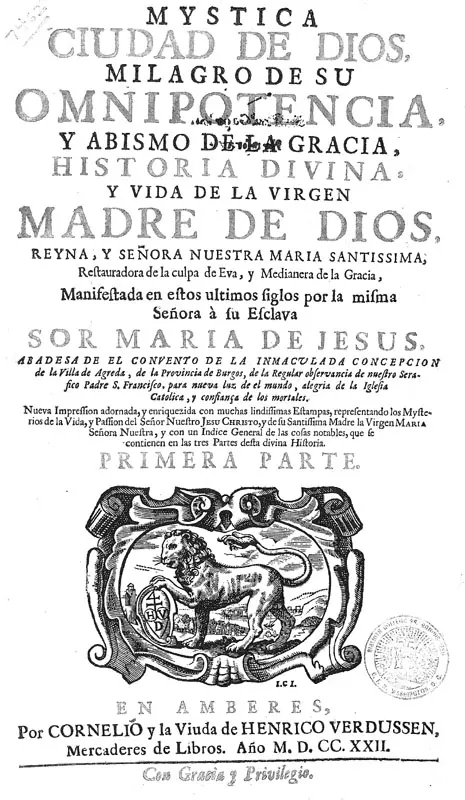
Her great book is a life of the Virgin Mary, which she said God revealed to her in contemplation. She first wrote it in the 1630s at her confessor's command. Later, obeying another confessor, she threw it and all her writings into the fire "without any apparent repugnance," as the Catholic Encyclopedia puts it. In 1655 a third director ordered her to write it again, and she finished it in 1660. It was printed in Madrid in 1670, five years after her death.

The book defended the Immaculate Conception long before Pius IX defined it in 1854, and King Philip IV, who visited her in 1643 and wrote to her for twenty-two years, was one of her many admirers. It also drew fire. The Roman Holy Office condemned it in 1681, though the decree was suspended for Spain. In 1696 the theologians of the Sorbonne censured a French translation, objecting to its many details of Mary's life not found in Scripture and to what they took for exaggerations. Its defenders replied that the translation was poor and that the Spanish Inquisition had studied the book for years and approved it.
Why she is Venerable, not St. Mary of Agreda
Her cause was introduced in Rome in 1672, only seven years after her death, and Pope Clement X opened it in 1673, which gave her the title Venerable. It then stalled again and again over the Mystical City. The monastery of Ágreda notes that she is the only woman whose cause two popes ordered silenced: Clement XIV in 1773 and Leo XIII in 1887.
In 1999 a letter from the Vatican Secretariat of State to the postulator recognized the book as free of errors but judged it out of step with Scripture and with the Marian teaching of the Second Vatican Council, and so refused permission to continue. The Spanish bishops have worked to revive the cause, and in 2017 the vice postulator, Fr. Stefano Cecchin, traveled to the Diocese of San Angelo in Texas to study the devotion there. A miracle would still be needed for beatification.
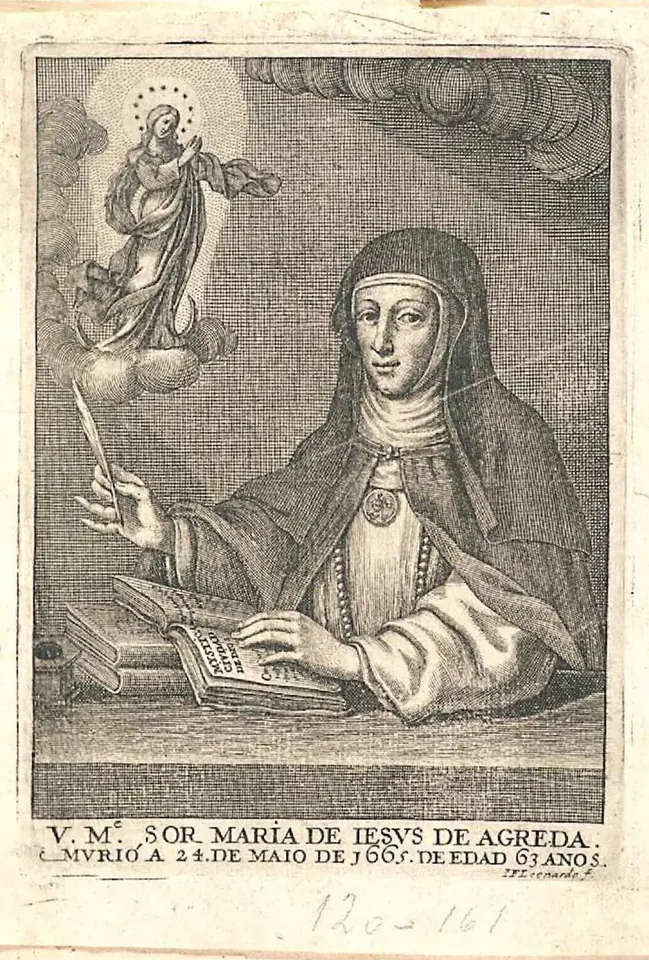
Her incorrupt body at Ágreda
She rests in the Monastery of the Conception in Ágreda, which her community still occupies. Her body was found incorrupt when it was exhumed in 1909, Catholic World Report recorded, and in 1989 it was moved from the convent museum into the church, where pilgrims can see it. Read more about incorrupt saints and relics.
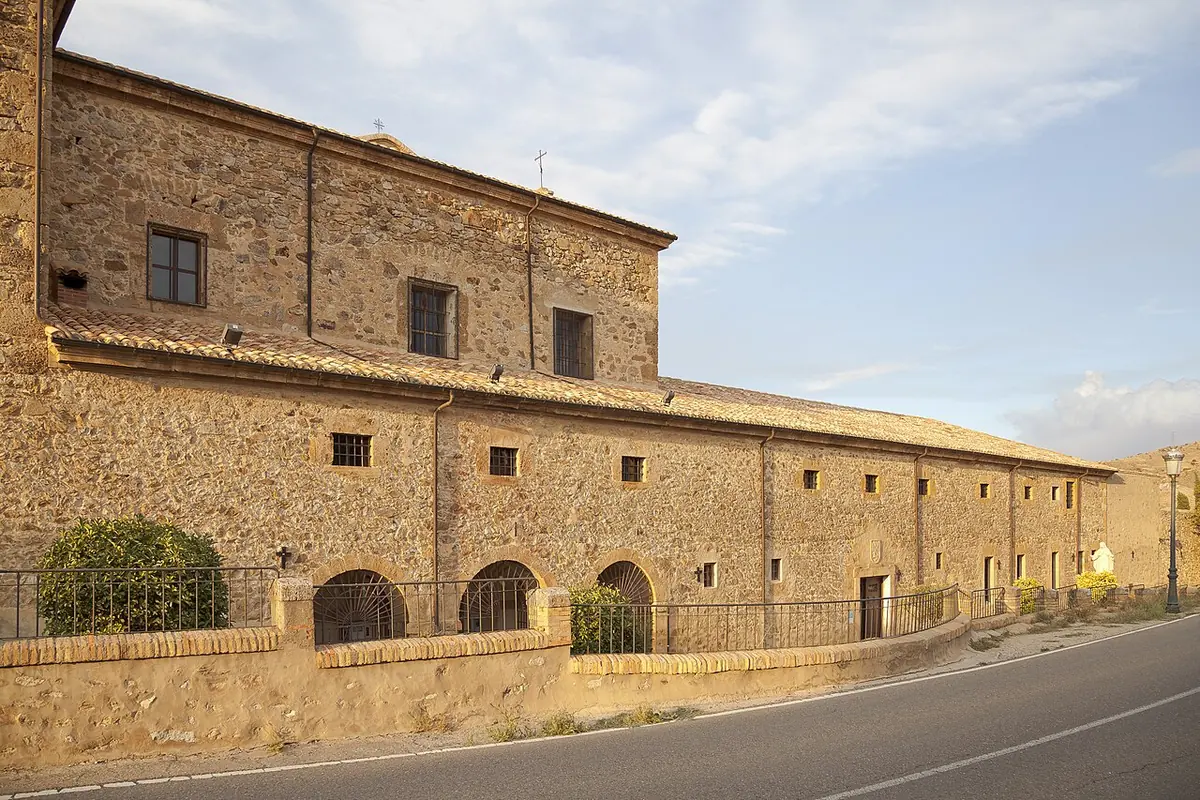
How to pray with Venerable Mary of Agreda
Because she is not beatified, there is no feast or public Mass in her honor; she died on May 24. The faithful may ask her prayers privately, and the nuns of her monastery publish prayers for her beatification on their website. Let us ask her to pray for the missions of the Americas and for a deeper love of the Mother of God, and let us pray that, if it is God's will, the Church may one day call her blessed.
Frequently asked questions
Is Mary of Agreda a saint?
Not yet. The Church calls her Venerable, a title that goes back to the opening of her cause in Rome in 1672–1673, but she has not been beatified or canonized. Searchers often call her "St. Mary of Agreda," but the correct title is Venerable Mary of Jesus of Agreda. She has no feast day on the Church's calendar.
Why has Mary of Agreda not been canonized?
Mostly because of her book, The Mystical City of God. Rome's Holy Office condemned it in 1681, the Sorbonne censured a French translation in 1696, and Popes Clement XIV (1773) and Leo XIII (1887) imposed silence on her cause. In 1999 a letter from the Secretariat of State to the postulator judged the book free of errors but out of step with Scripture and Vatican II's teaching on Mary, and withheld the nihil obstat to proceed. The cause has since been taken up again.
Who was the Lady in Blue?
A woman whom the Jumano people of New Mexico and Texas said had preached to them in the 1620s before any missionary reached them. In 1631 the Franciscan Fray Alonso de Benavides concluded that she was Mother Mary of Jesus of Agreda, who said she had been carried there many times while in prayer in her convent in Spain. The name comes from the blue mantle of her order. The Church has never ruled on whether this was true bilocation.
Is Mary of Agreda's body incorrupt?
Her body was found incorrupt when it was exhumed in 1909, according to Catholic World Report, and it lies on view in the church of her convent in Ágreda, Spain, where her relics were moved from the convent museum in 1989.
What is The Mystical City of God?
A long life of the Virgin Mary that Mother Mary of Agreda said was revealed to her in prayer. She first wrote it in the 1630s, burned it on a confessor's order, rewrote it between 1655 and 1660, and it was published in Madrid in 1670, five years after her death. It has drawn deep devotion and sharp criticism ever since.
Sources
- Catholic Encyclopedia (1907): Maria de Agreda. Her family and entry in 1619, abbess at 25 by papal dispensation, the writing and burning of the Mystical City, the 1681 condemnation, the Sorbonne censure of 1696, cause introduced June 21, 1672
- Antonio M. Artola, La venerable Madre Ágreda: un drama con desenlace retardado (Alpha Omega 21, 2018). The February 1999 letter of the Secretariat of State and the refusal of the nihil obstat
- Monastery of the Conception, Ágreda: Second difficulty (beatification process). The decrees of silence of 1773 and 1887
- Monastery of the Conception, Ágreda: A new hope. Her relics moved to the church on May 20, 1989
- National Park Service, Salinas Pueblo Missions National Monument: María de Ágreda. Benavides's visit, the 1634 report to Urban VIII, the 1635 Inquisition inquiry, Philip IV's visit of 1643, Clement X and the title Venerable
- Catholic World Report (CNA): Did this Spanish nun bi-locate to Texas? Vatican aims to find out (September 14, 2017). The 2017 reopening, the vice postulator's visit to San Angelo, the 1909 exhumation