Miracle of Lanciano
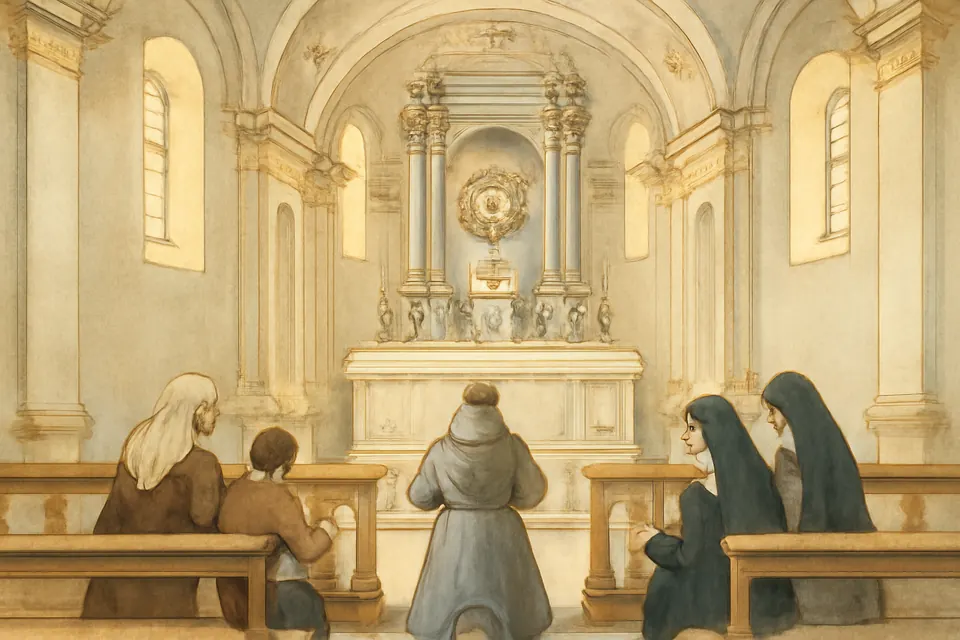
The miracle of Lanciano is the Eucharistic miracle that tradition places in the 8th century, when a Basilian monk who doubted the Real Presence saw the Host become flesh and the wine become blood at the consecration. The relics are venerated in the Church of San Francesco in Lanciano, Italy. In 1970–71 Prof. Odoardo Linoli reported human heart tissue and blood of type AB.
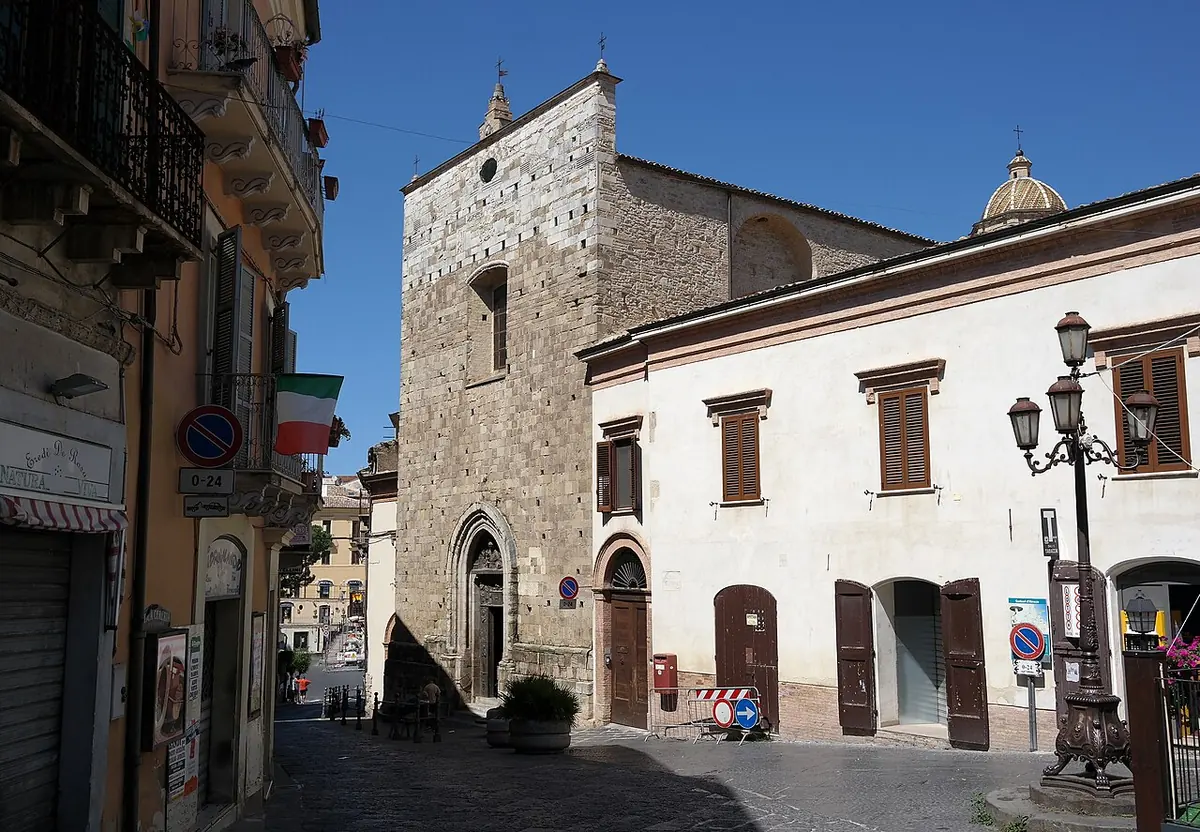
Lanciano is a hill town in the Abruzzo, a few miles in from the Adriatic coast of Italy. In the Church of San Francesco, above the high altar, a silver monstrance holds a thin, round, brownish piece of flesh with a hole near its center, and below it a crystal chalice holds five small, hard clots of blood. For centuries the faithful have climbed the narrow stair behind the altar to kneel before them. They are the relics of the miracle of Lanciano, the most famous Eucharistic miracle in the world, and the story behind them begins with a priest who doubted.
The miracle of Lanciano: the doubting monk
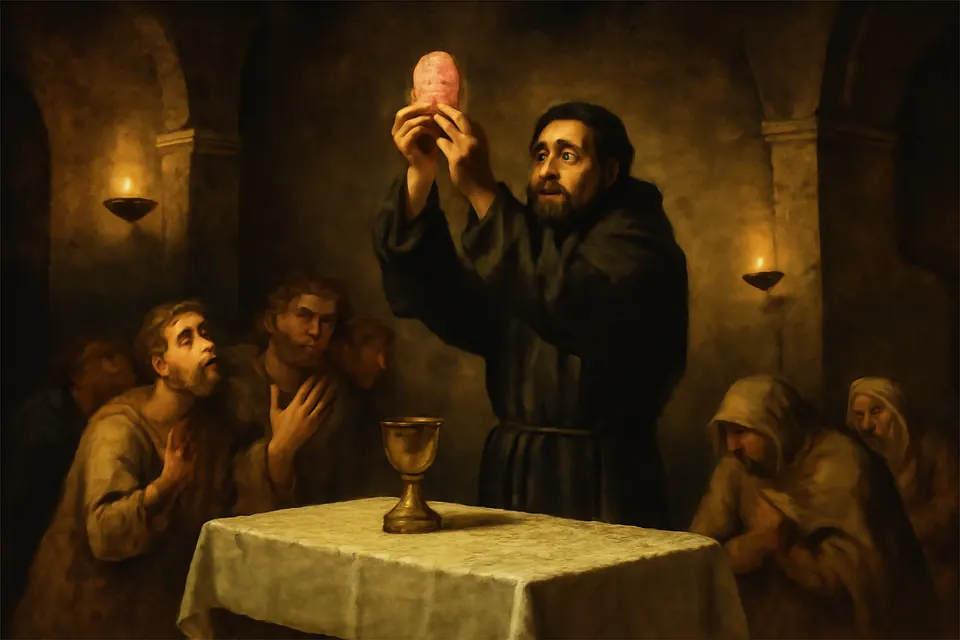
Tradition holds that in the first half of the 8th century a monk of the Order of St. Basil, a priest of the Greek East living in Italy, was celebrating Mass in the little church of St. Legontian at Lanciano, then called Anxanum. He was a learned man, the old account says, but his faith had grown thin, and day after day he wondered whether the consecrated Host was truly the Body of Christ and the wine truly His Blood.
That morning, as he spoke the words of consecration, the Host in his hands became flesh and the wine in the chalice became blood. Trembling, he showed the people what had happened. The flesh kept its shape. The blood later clotted into five small pellets of different sizes. Both were kept in the church as relics, and they have never left Lanciano.
Historians often place the event in the decades after 730, when the Byzantine emperor Leo III began his campaign against holy images and many Greek monks fled to southern Italy. That setting fits the story of an Eastern monk saying Mass in an Italian town, but it is a reasonable guess rather than a record.
Status: traditional. No document from the 8th century survives. The relics themselves are a different matter: they have been kept, examined, weighed and studied for more than four hundred years.
How the story came down to us
The written trail is late, and it is best to say so plainly. According to the cardiologist Franco Serafini, who has studied the case closely, the first text that clearly names a Eucharistic miracle kept at Lanciano dates from 1574, and the oral tradition about the monk was first written down in 1631.
There is one older hint. Around 1073 the Norman monk Guitmund of Aversa, writing in defense of the Real Presence, recalled a story told to him by his teacher Lanfranc of Pavia. As a boy in Italy, Lanfranc had heard of a priest who "saw the true Flesh on the altar and the true Blood in the chalice," and of bishops who sealed them in a chalice to be kept "amongst the most important relics." Fr. Nicola Petrone, a recent historian of the miracle, believes Lanfranc was speaking of Lanciano. It cannot be proved, but no other early Italian case fits so well.
The relics passed from the Basilian monks to the Benedictines, and in the 13th century to the Franciscans, who built the Church of San Francesco on the site of the old church of St. Legontian. The friars have kept them since, apart from a long break after 1809, when Napoleon's laws closed the convent; the Conventual Franciscans returned in 1952.
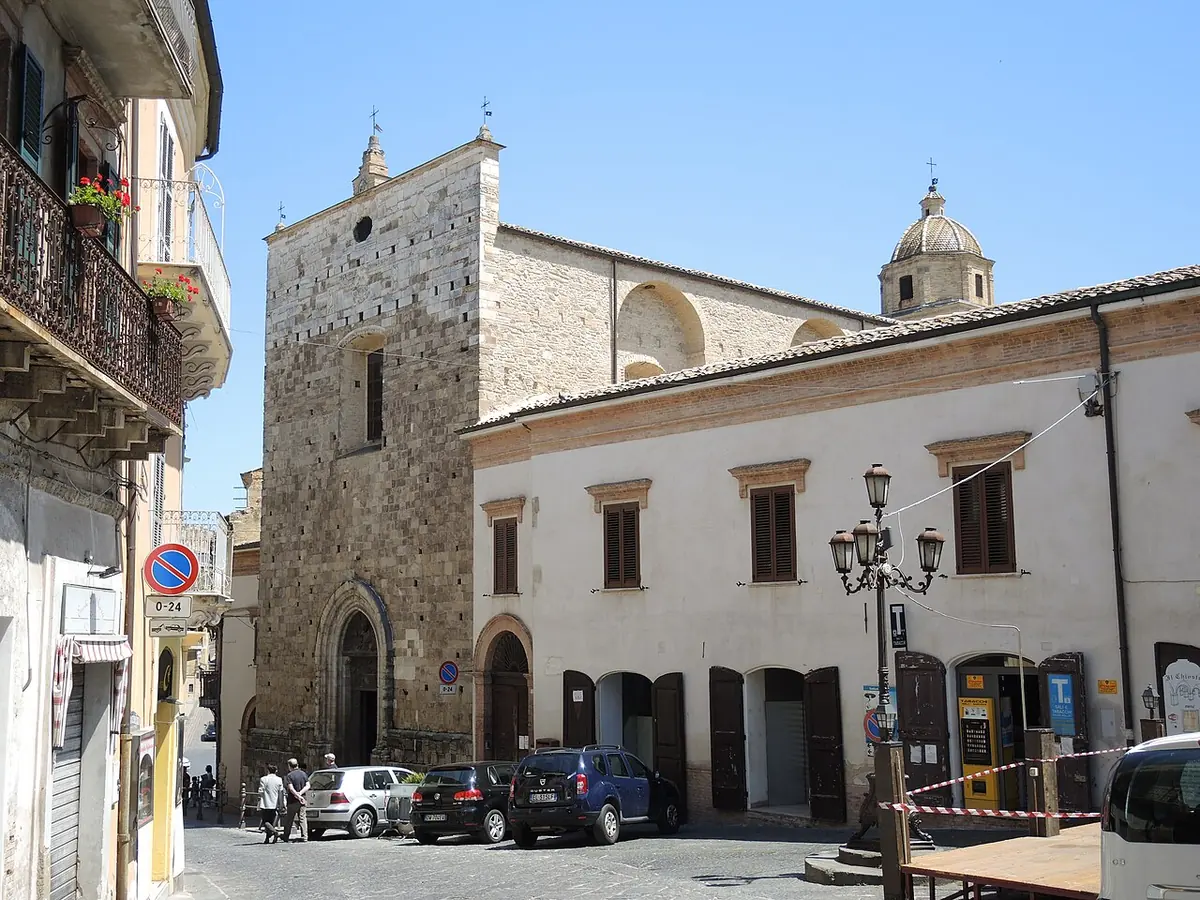
The relics in the Church of San Francesco
The flesh is a roughly circular membrane, about the size of a large priest's Host, yellowish brown and darker in places. Around its edge are small holes, as if it was once pinned to a board, and its center has opened into a large hole. The blood is five irregular clots of an earthy brown color.
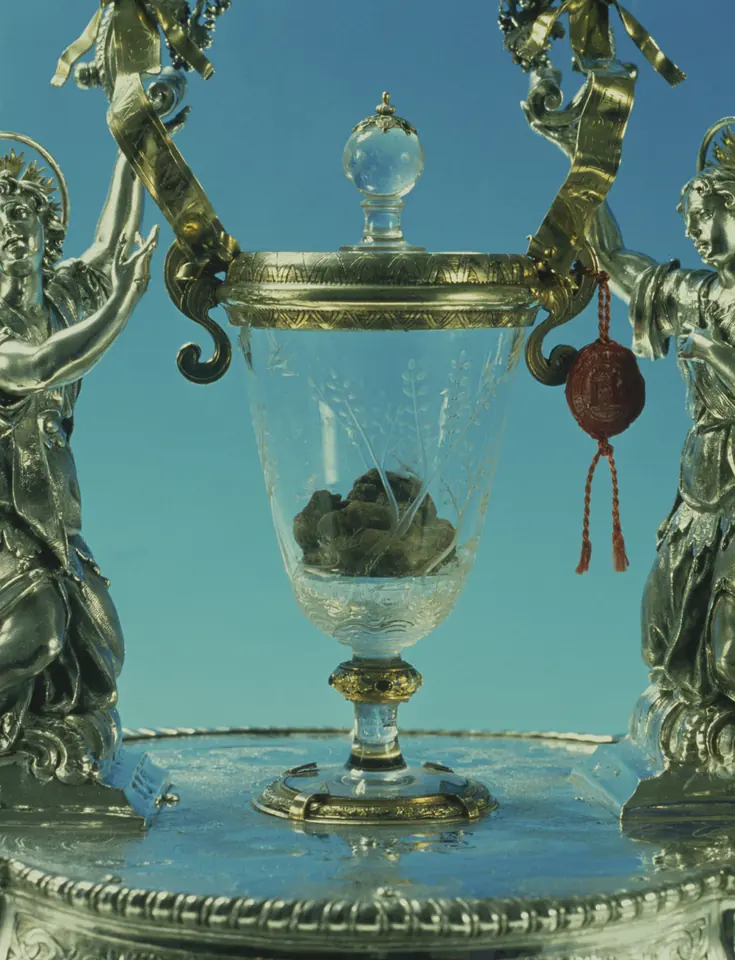
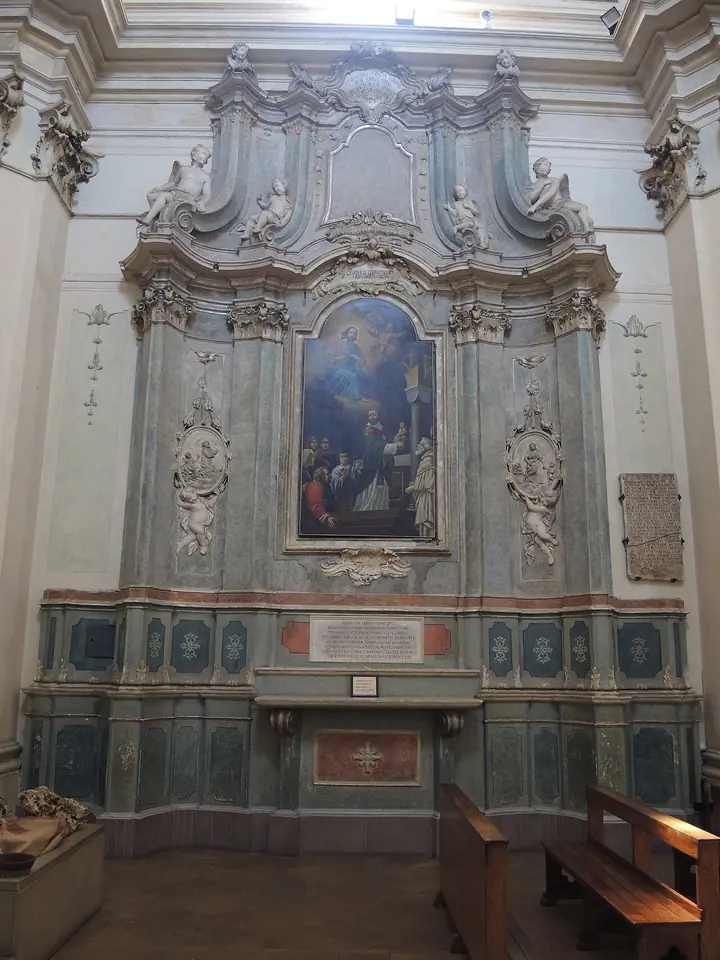
The flesh is kept in a silver monstrance made by a Neapolitan craftsman in the early 18th century; the blood is in a rock-crystal chalice. For about three centuries they were shown in a side chapel of the church and exposed only on certain feasts. In the early 20th century they were placed in a marble tabernacle above the high altar, where they are today.
The 1574 examination
The first recorded examination took place in 1574, during a visit of Archbishop Gaspare Rodriguez of Lanciano. The reliquaries were opened before the people, and the relics were inspected and weighed. The account of that day records something remarkable: the five clots, plainly different in size, each weighed the same on the scale, and all five together weighed the same as any one alone. Theologians saw in it a sign of what the Church teaches, that the whole Christ is present in every particle of the sacred species.
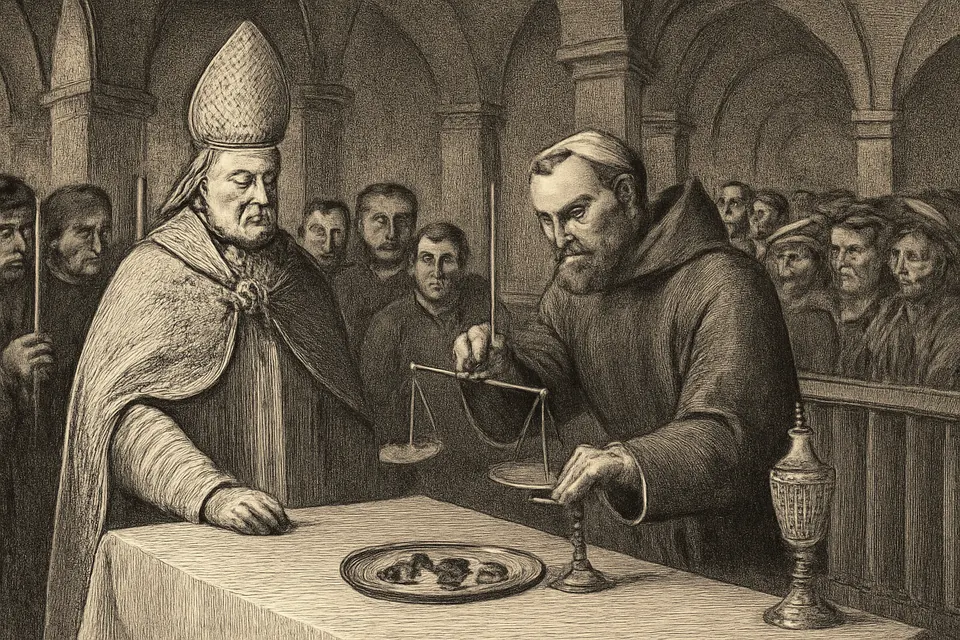
It is honest to add that the later inspections, held roughly once a century down to 1886, did not find it again. In 1886 the five clots weighed 8.00, 2.45, 2.85, 2.05 and 1.15 grams. The 1574 weighing is therefore a reported wonder belonging to that one day, and it is never offered today as evidence in the way the relics themselves are.
Odoardo Linoli's study of 1970–71
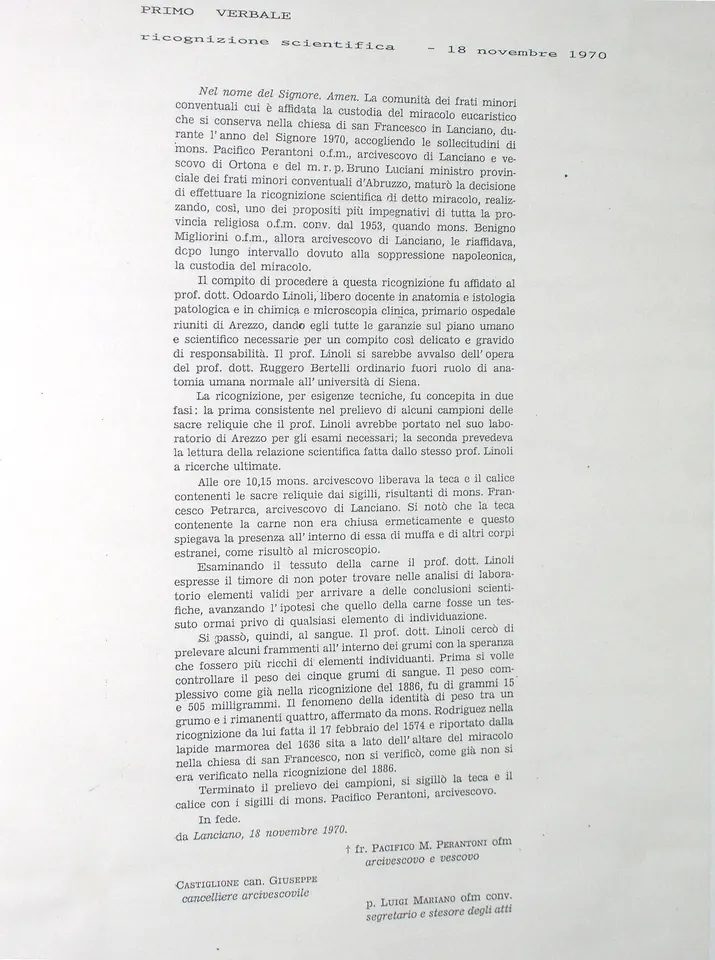
In November 1970, at the initiative of Archbishop Pacifico Perantoni of Lanciano and the Franciscan provincial of the Abruzzo, and with authorization from Rome, the friars agreed to a scientific study. They chose Prof. Odoardo Linoli, a professor of anatomy and pathological histology and head of the laboratory of pathological anatomy at the hospital of Arezzo. Prof. Ruggero Bertelli, a retired professor of human anatomy at the University of Siena, assisted him.
On the morning of November 18, 1970, in the sacristy, the archbishop broke the seals of 1886 and opened the reliquaries before witnesses. Linoli asked permission to touch the flesh, and found it hard, almost wooden. He took small samples and returned to Arezzo.
Linoli sent the friars two telegrams while he worked. On December 11, 1970, he wired the opening of St. John's Gospel: "In principio erat Verbum, et Verbum caro factum est" (In the beginning was the Word, and the Word was made flesh). On February 11, 1971: "Further research allows confirmation of the presence of cardiac striated muscle. Alleluia."
He presented his report in Lanciano on March 4, 1971, and published it that year in the medical journal Quaderni Sclavo di Diagnostica. His main findings were:
- The flesh is true flesh, made of striated muscle tissue of the heart (myocardium).
- The blood is true blood.
- Both are human, and both belong to blood group AB.
- The proteins in the blood were present in the proportions of normal fresh blood.
- No trace of salts or preservatives used for embalming was found.
"As regards the flesh," Linoli told ZENIT in 2005, "I had in my hand the endocardium. Therefore, there is no doubt at all that it is cardiac tissue." He also argued that only a very skilled anatomist could have cut so thin and even a slice from a heart in earlier centuries.
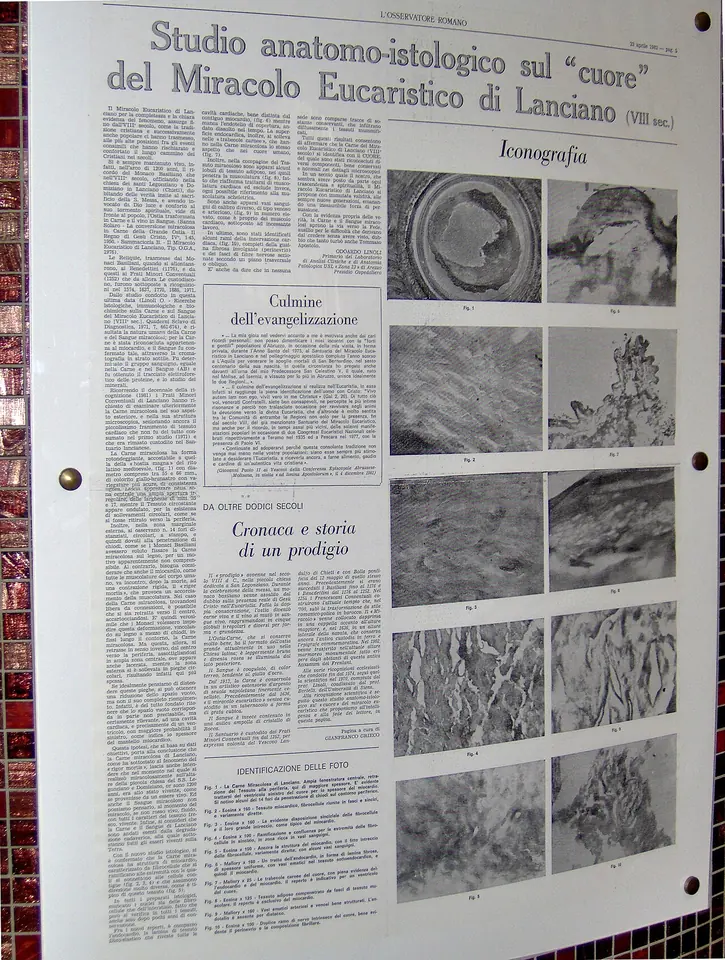
In 1981 the friars asked him to look again, using a small fragment not used before. His anatomical study, published in L'Osservatore Romano in 1982, described the endocardium (the inner lining of the heart), fat tissue, small arteries and veins, and nerve fibers. He came to believe the round relic is a cross-section of a heart, and that the hole at its center corresponds to a ventricle.
What later scientists have said
Linoli's work was the first serious scientific study of a Eucharistic miracle, and it deserves respect. It also has limits, and Catholic scientists have been the first to name them. Serafini, who admires the study, points out that Linoli worked alone, without a supervising committee. In 2024 the Catholic immunologist Kelly Kearse and Frank Ligaj reviewed the 1971 report and noted that Linoli himself recorded fungal spores on the samples, that two standard chemical tests for hemoglobin came back negative, and that the test used to identify the blood as human was checked against only two other species. They also note that bacteria carry markers similar to the A and B blood-group antigens, so the AB result would benefit from modern methods that can tell them apart.
You may also read that a commission of the World Health Organization later confirmed Linoli's findings. That claim should be set aside. Kearse writes that he and others asked the WHO and the United Nations, who had no record of any such study, and that Serafini, examining the document kept at Lanciano, found a cover page about Lanciano attached to hundreds of unrelated pages. The relics of Lanciano do not need it.
What the Church asks of us
The Church has never made the miracle of Lanciano an article of faith. Private signs never are. She believes in the Real Presence because Christ said, "This is my body," not because of any sign. The Catechism, quoting St. Thomas Aquinas, says that Christ's presence in the sacrament "cannot be apprehended by the senses ... but only by faith, which relies on divine authority." A Host on a weekday altar in any parish is as truly Christ as the relics of Lanciano.
At the same time, the Church has honored these relics for centuries, and their veneration is approved. St. John Paul II recalled in 2004 that as Archbishop of Kraków he "visited the Church of St Francis in Lanciano where the relics are preserved of the famous miracle that dates back to the eighth century." His counsel to the people of Lanciano belongs to every pilgrim: "do not fail to adore the Holy Eucharist, not only in the church of the miracle but in all the churches of your beautiful region."
The story of Lanciano begins with a doubt, and that may be its gift to us. Many of the faithful know the monk's struggle. The answer given to him is the answer the Church gives us at every Mass, in the words of St. Thomas's hymn Adoro te devote: sight, touch and taste are deceived, and hearing alone is safely believed.
Lanciano, St. Carlo Acutis and the shrine today
Lanciano is one of the cases in the Eucharistic miracles exhibition that St. Carlo Acutis researched and designed as a teenager. His panels have been shown in thousands of parishes, and they have brought pilgrims to Lanciano from far beyond Italy. For the other great cases, from Bolsena to Legnica, see our guide to Eucharistic miracles.

Beneath the church, excavations show remains of the old church of St. Legontian, where tradition places the miracle. Above all, go to pray. Kneel before the relics, and then before the tabernacle, and ask for the faith of the saints who adored Christ hidden under the appearance of bread.
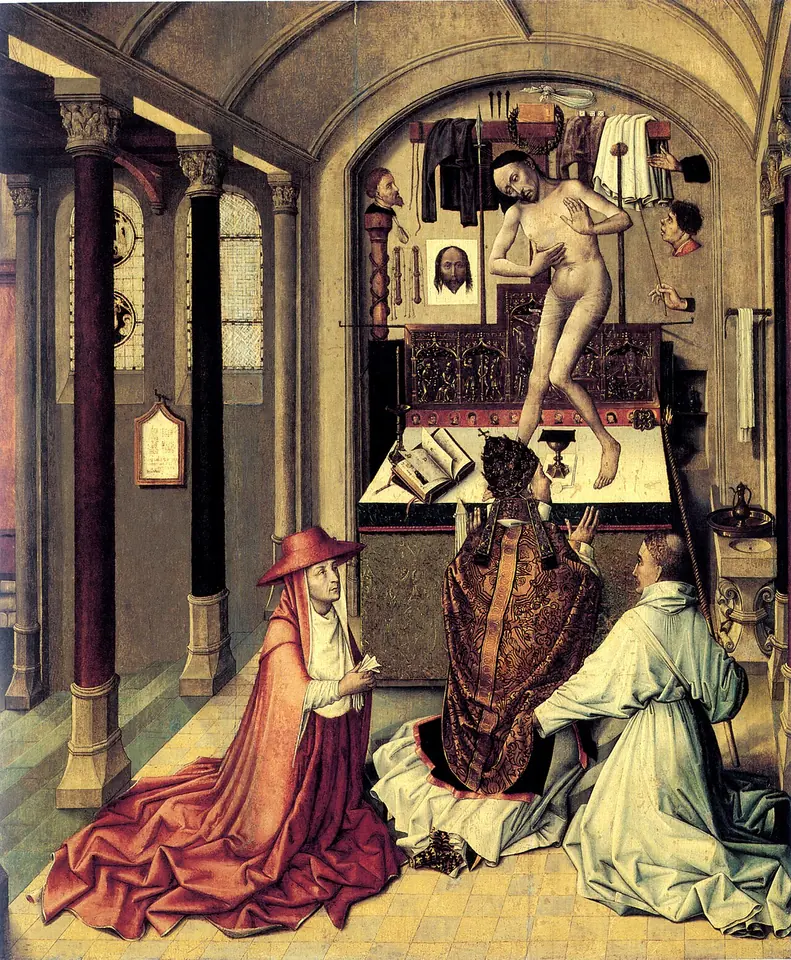
The doubting monk at the altar is an old image in Christian art. Painters of the late Middle Ages loved the related legend of the Mass of St. Gregory the Great, in which Christ appears on the altar to a pope celebrating Mass; the miracles of Lanciano and Bolsena belong to the same family of stories, each pointing back to the altar.
For how the Church weighs claims of the miraculous today, see how the Church investigates miracles. On relics more broadly, see relics and incorruptible saints.
Frequently asked questions
What happened at the miracle of Lanciano?
Tradition holds that in the 8th century a Basilian monk celebrating Mass in the church of St. Legontian at Lanciano was troubled by doubts about whether Christ is truly present in the Eucharist. As he spoke the words of consecration, the Host became flesh and the wine became blood, which later clotted into five small pellets. The flesh and blood have been kept and venerated ever since.
Is the Lanciano Eucharistic miracle real?
The relics are real and have been venerated for centuries with the Church's blessing, and St. John Paul II prayed before them as a cardinal. The 8th-century event itself belongs to tradition, since no record survives from that time. The faithful are free to accept it; what the Church requires us to believe is the Real Presence of Christ in every Eucharist, with or without a miracle.
What did the scientific tests on the Lanciano miracle find?
In 1970–71 Prof. Odoardo Linoli of Arezzo, assisted by Prof. Ruggero Bertelli of Siena, studied samples and reported on March 4, 1971, that the flesh is human heart muscle and the blood is human blood, both of group AB, with no trace of preservatives. A follow-up study of the flesh in 1981 described the inner lining of the heart, fat tissue and blood vessels. Later scientists have asked for newer methods to confirm these results.
What blood type is the Lanciano miracle?
Linoli reported blood group AB, the same in the flesh and in the blood. The Catholic immunologist Kelly Kearse has noted that blood typing of very old material can be thrown off by bacteria, which carry similar markers, so modern testing would help settle the point.
Where is the miracle of Lanciano kept?
In the Church of San Francesco in Lanciano, in the Abruzzo region of Italy, in the care of the Conventual Franciscans. The flesh is in an 18th-century silver monstrance and the blood in a crystal chalice, inside a marble tabernacle above the high altar. A stairway behind the altar lets pilgrims pray close to the relics.
Sources
- Catechism of the Catholic Church, nos. 1373–1381 (The presence of Christ by the power of his word and the Holy Spirit)
- John Paul II, Letter to Archbishop Carlo Ghidelli of Lanciano-Ortona (October 4, 2004)
- Odoardo Linoli, Ricerche istologiche, immunologiche e biochimiche sulla carne e sul sangue del miracolo eucaristico di Lanciano, Quaderni Sclavo di Diagnostica 7, no. 3 (1971)
- EWTN (ZENIT): Physician Tells of Eucharistic Miracle of Lanciano (May 5, 2005)
- Franco Serafini, The Ancient Eucharistic Miracle at Lanciano (Catholic Exchange, February 1, 2022; from A Cardiologist Examines Jesus)
- Kelly Kearse and Frank Ligaj, Scientific Analysis of Eucharistic Miracles: Importance of a Standardization in Evaluation, Journal of Forensic Science and Research 8 (2024)
- Bret Thoman, Visit the relics of the Eucharistic miracle of Lanciano, Italy (Aleteia, November 13, 2020)