Robert Schuman
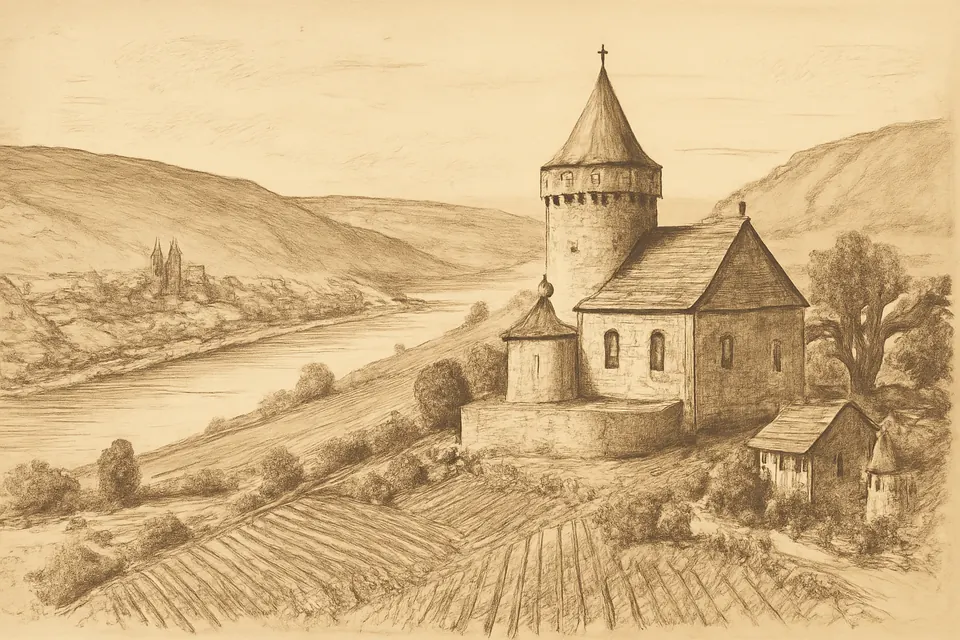
Robert Schuman (1886–1963) was a French Catholic statesman who, as foreign minister, proposed on May 9, 1950, the plan that began the European Union. Pope Francis declared him Venerable on June 19, 2021, recognizing that he lived the Christian virtues to a heroic degree. He is not yet beatified or canonized; that would require approved miracles.
Robert Schuman was a quiet, unmarried lawyer from Lorraine who prayed the rosary, went to Mass every morning and, as France's foreign minister, proposed in 1950 the plan that began the European Union. He saw politics as a way of serving God and neighbor, and in June 2021 the Church declared him Venerable, recognizing that he lived the Christian virtues to a heroic degree. He is not a saint or a blessed, but his cause is open, and we may ask him privately to pray for us.
Fr. Bernard Ardura, the Vatican official then in charge of French causes, put it simply when the decree was published: Schuman's work for peace was "the work of a Christian, which serves as an example," even though the statesman "remained very discreet about his personal life and his faith."
Who was Robert Schuman?
Robert Schuman was born on June 29, 1886, in Clausen, a district of Luxembourg City. His mother was from Luxembourg and his father from the Moselle region of Lorraine, which Germany had annexed after the war of 1870, so Robert was born a German citizen. The decree on his virtues says that his mother had a special influence on him: she raised him in prayer, devotion to Mary and daily Mass.
He studied at the Athénée in Luxembourg, finished secondary school in Metz and studied law at the universities of Bonn, Munich, Berlin and Strasbourg. As a student he belonged to Unitas, a Catholic student association built on three words: virtus, scientia et amicitia, virtue, knowledge and friendship. In 1912 he opened a law office in Metz.

A layman in the service of the Church
The same year, Bishop Benzler of Metz made him president of the diocesan federation of Catholic youth associations. The Dicastery's biography notes that he also worked for abandoned and delinquent children, and that in 1913 he helped organize the 60th Katholikentag, the great congress of German Catholics, which met that year in Metz. During the First World War he served in the civil administration, at the sub-prefecture of Boulay in the Moselle.
When Lorraine returned to France in 1919, Schuman became a French citizen and was elected deputy for the Moselle. He would hold a seat for forty years. In parliament he defended the Concordat, which still governed the Church in Alsace and the Moselle, and worked for social justice and for the fair integration of his region into France.
War, prison and hiding
In March 1940 the French government made him under-secretary of state for refugees, responsible for the hundreds of thousands of people driven from the border regions. The Dicastery's biography singles out this work as one of the clearest signs of his charity. That September, after the fall of France, the Gestapo arrested him. He was held in prison until April 1941 and then placed under house arrest at Neustadt in the Palatinate.
On August 1, 1942, he escaped. For the rest of the war he lived in hiding, mostly in convents and monasteries, sheltered by religious communities. Those abbeys stayed dear to him. The Dicastery notes his love for the great abbeys, where he went for periods of prayer and meditation for the rest of his life.

Minister, prime minister and the Schuman Declaration
After the liberation he was elected to both constituent assemblies and then to the National Assembly. He was minister of finance from June 1946 to November 1947, then President of the Council, the head of government, until July 1948. From July 1948 to January 1953 he was minister of foreign affairs. In those years he worked on the Brussels Pact, the North Atlantic Treaty and the reconciliation of France with Germany, the enemy that had overrun his homeland three times in his own lifetime.
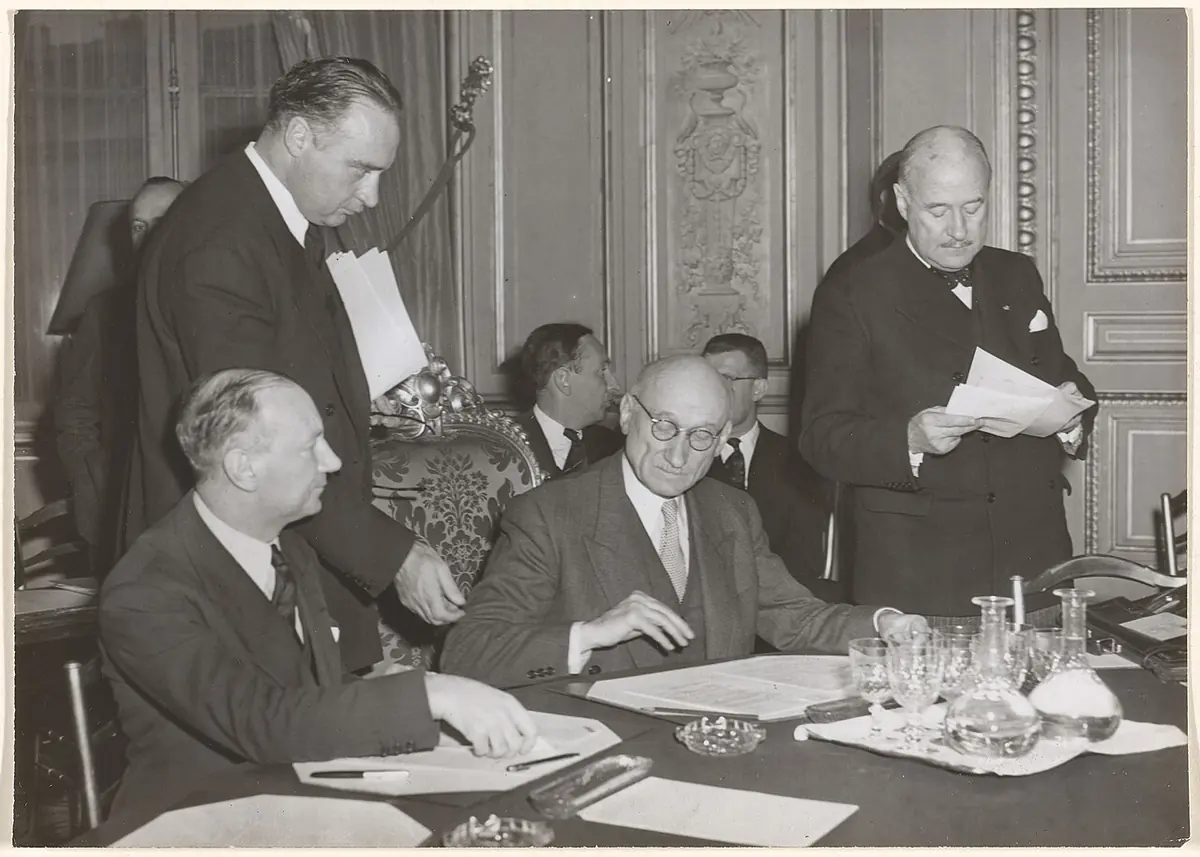
May 9, 1950
On May 9, 1950, in the Salon de l'Horloge of the foreign ministry on the Quai d'Orsay in Paris, Schuman read a short statement to the press. It took up an idea of Jean Monnet: to place all French and German coal and steel production under a common High Authority, open to any other European nation. The Schuman Declaration begins:
World peace cannot be safeguarded without the making of creative efforts proportionate to the dangers which threaten it.
Its most famous lines explain the method:
Europe will not be made all at once, or according to a single plan. It will be built through concrete achievements which first create a de facto solidarity.
The aim was peace. Pooling the industries of war, the declaration says, would make any war between France and Germany "not merely unthinkable, but materially impossible." In 1951 six countries (France, West Germany, Italy, Belgium, the Netherlands and Luxembourg) founded the European Coal and Steel Community, the first step toward the European Union. The EU now keeps May 9 as Europe Day.

The Dicastery's decree calls the declaration "the founding act of a new Europe," which Schuman understood as a project of fraternity and peace among nations. He worked ever more closely with two other Catholic statesmen, Konrad Adenauer of Germany and Alcide De Gasperi of Italy.
The European Parliament
Schuman was minister of justice in 1955 and 1956. In March 1958, the new European Parliamentary Assembly, the forerunner of the European Parliament, elected him its first president by acclamation. That year he received the Charlemagne Prize. When illness forced him to step down, the Assembly honored him with the title "Father of Europe."
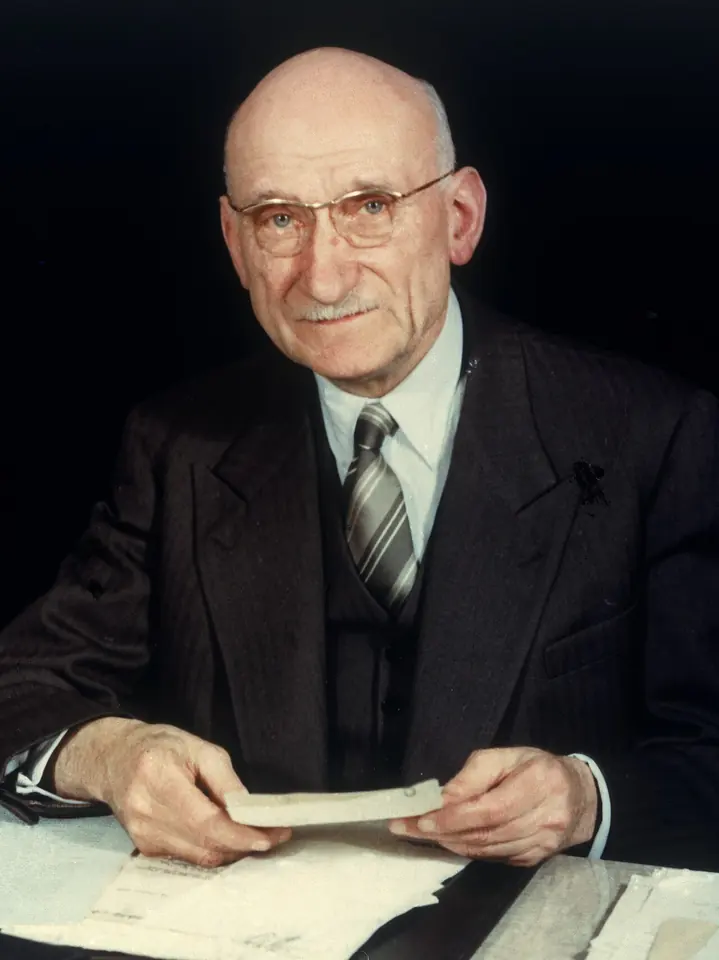
His faith
What the Church examined in his cause was not his politics but his holiness. The decree on his virtues and the Dicastery's biography describe a man whose day was built around prayer:
- The Eucharist: he went to Mass every day, quietly and with a recollection that struck those who met him, and visited the Blessed Sacrament whenever he could.
- Confession and prayer: he went to confession regularly, prayed the Liturgy of the Hours and the rosary, and meditated on Scripture every day.
- Charity: no one who knocked at his door left empty-handed, the biography says. He gave his own money to work for lepers, refugees and the disabled, and loved to visit children in orphanages.
- Conscience: he served a secular state and respected its laws, but would not act against a conscience formed by God's commandments and the teaching of the Church.
He never married. He lived simply, in a plain eighteenth-century winegrower's house at Scy-Chazelles, on the slope of Mont Saint-Quentin above Metz, which he bought in 1926. The house, now a museum run by the Department of the Moselle, keeps his study and his small rooms much as they were in the early 1960s.


Death and burial
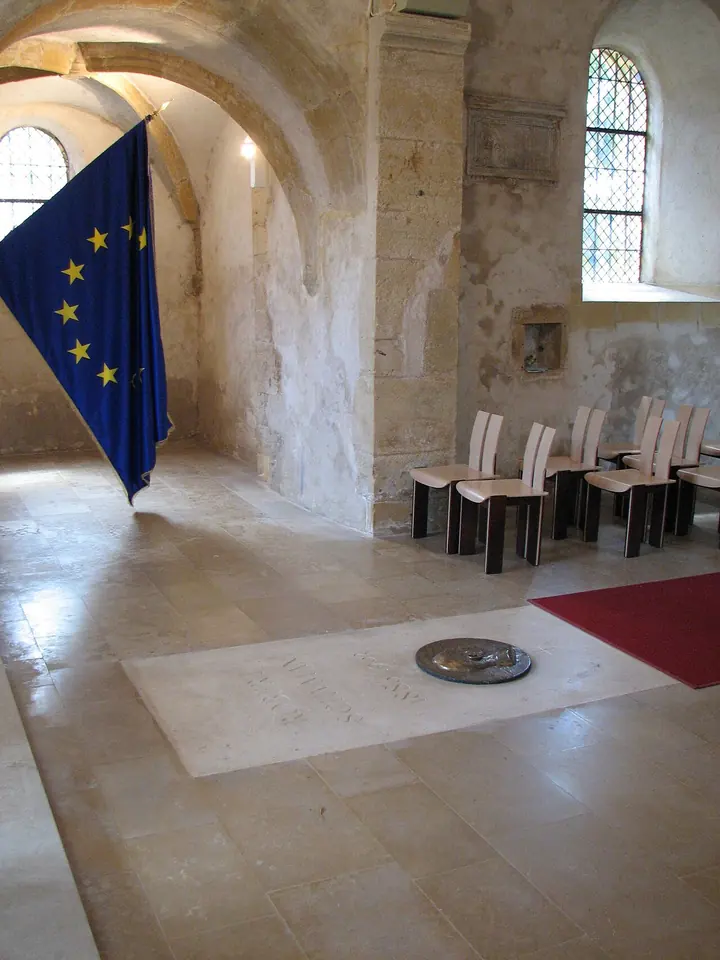
In 1959 he fell seriously ill with a progressive cerebral sclerosis. He withdrew to Scy-Chazelles and died there on September 4, 1963, at seventy-seven, with a reputation for holiness. St. Paul VI honored him at his death and called him a "tireless pioneer of united Europe," the Dicastery records. His solemn funeral was held in the cathedral of Metz. He was buried in the village cemetery, and in 1966 his body was moved into the little fortified church of Saint-Quentin.

Is Robert Schuman a saint? His cause for canonization
Not yet. Robert Schuman is Venerable. Here is how his cause has moved, from the Dicastery for the Causes of Saints:
- 1990 to 2004: The diocese of Metz held its inquiry into his life and reputation for holiness, from May 9, 1990, the fortieth anniversary of his declaration, to May 29, 2004.
- 2006: On February 10, the Congregation for the Causes of Saints in Rome declared the diocesan inquiry legally valid, and the positio, the formal study of his life and virtues, was prepared.
- 2020: On October 29, the theologian consultors gave a positive vote.
- 2021: On June 15, the cardinals and bishops of the Congregation agreed that he had practiced the theological and cardinal virtues to a heroic degree. On June 19, Pope Francis approved the decree, and Schuman became Venerable.
The next step, beatification, requires a miracle obtained through his intercession, investigated and approved by the Church. No miracle has been approved yet. Favors people say they have received through his prayers are reported, not approved. Read more about each step on our pages on beatification and how someone becomes a saint.
St. John Paul II praised him in 2003 for spending his political life "in the service of the fundamental values of freedom and solidarity, understood fully in the light of the Gospel." Pope Francis, in a letter, urged Europeans to "rediscover the path of fraternity that inspired and guided the founders of modern Europe, beginning precisely with Robert Schuman."
Praying with Robert Schuman
The Church does not allow public veneration of a Venerable, so Robert Schuman has no feast day, no Mass in his honor and no public shrine. Europe Day on May 9 is a civic day, not a church feast. But we may ask him, privately, to pray for us, as we would ask any friend in Christ, and any favor received through his prayers can be reported to the diocese of Metz, where his cause began.
He is a natural friend in prayer for everyone in public life, for lawmakers, diplomats and civil servants, and for anyone working to reconcile people who have been enemies. Let us ask Venerable Robert Schuman to pray for peace among nations, and for the grace to serve, as he did, through concrete acts of solidarity, one patient step at a time.
He walks in the company of other lay men and women who served God in the world, among them St. Thomas More, patron of statesmen and politicians, Blessed Frédéric Ozanam, and the American Servant of God Dorothy Day. Like them, he shows that holiness is not only for the cloister, and that a Christian can carry the Gospel into the halls of government without raising his voice.
Frequently asked questions
Is Robert Schuman a saint?
Not yet. On June 19, 2021, Pope Francis approved the decree recognizing his heroic virtues, so the Church calls him Venerable. Beatification would require a miracle through his intercession, investigated and approved by the Church, and canonization a second one. No miracle has been approved for him so far.
Why is Robert Schuman called the Father of Europe?
Because his declaration of May 9, 1950, proposed pooling French and German coal and steel under a common High Authority. That became the European Coal and Steel Community, the first of the institutions that grew into today's European Union. The European Parliamentary Assembly, which he led as its first president in 1958, gave him the title when he left office.
Was Robert Schuman Catholic?
Yes, a devout one. The Dicastery for the Causes of Saints records that he went to Mass daily, prayed the rosary and the Liturgy of the Hours, went to confession regularly and loved to make retreats in great abbeys. He led the Catholic youth federation of the diocese of Metz before the First World War and saw his political life as a mission of service.
When did Robert Schuman's cause for canonization begin?
The diocese of Metz held its inquiry from May 9, 1990, the fortieth anniversary of his declaration, to May 29, 2004. Rome confirmed its validity in 2006. The theologians voted in favor of his heroic virtue in October 2020, the cardinals and bishops on June 15, 2021, and Pope Francis approved the decree on June 19, 2021.
Where is Robert Schuman buried?
In the small fortified church of Saint-Quentin at Scy-Chazelles, near Metz, close to the house where he lived from 1926 until his death. He was first buried in the village cemetery and moved into the church in 1966. His house is now a museum run by the Department of the Moselle.
What is Europe Day?
May 9, the anniversary of the Schuman Declaration of 1950, kept by the European Union as Europe Day. It is not a church feast. As a Venerable, Schuman has no liturgical feast day.
Sources
- Holy See Press Office: Promulgation of decrees of the Congregation for the Causes of Saints (June 19, 2021). The decree on his heroic virtues, with his birth and death dates
- Dicastery for the Causes of Saints: Robert Schuman, biography and decree on the virtues. The diocesan inquiry 1990–2004, the votes of 2020 and 2021, his arrest and escape, his prayer life and charity, and Paul VI's "tireless pioneer of united Europe"
- European Union: Schuman Declaration, May 1950 (full text)
- Moselle Culture: Maison de Robert Schuman. The house he bought in 1926, his funeral in Metz cathedral and his transfer to the church of Saint-Quentin in 1966
- Catholic News Agency: EU founding father Robert Schuman declared 'venerable' by Pope Francis (June 19, 2021). The words of Fr. Bernard Ardura and St. John Paul II's 2003 tribute