Marthe Robin

Marthe Robin was a French farm girl who spent more than fifty years in bed, paralyzed and finally blind, in a darkened room of her parents' farmhouse in the Drôme. From that room she prayed, counseled more than 100,000 visitors, and gave the first impulse to the Foyers de Charité, communities that now preach retreats in some forty countries. Pope Francis declared her Venerable in 2014. She is not a saint or a blessed; the Church is still studying a healing attributed to her prayers.
Her story has drawn love and doubt in equal measure, and both deserve an honest hearing. Let us look first at her life, and ask her to pray for us as we go.
Who was Marthe Robin?
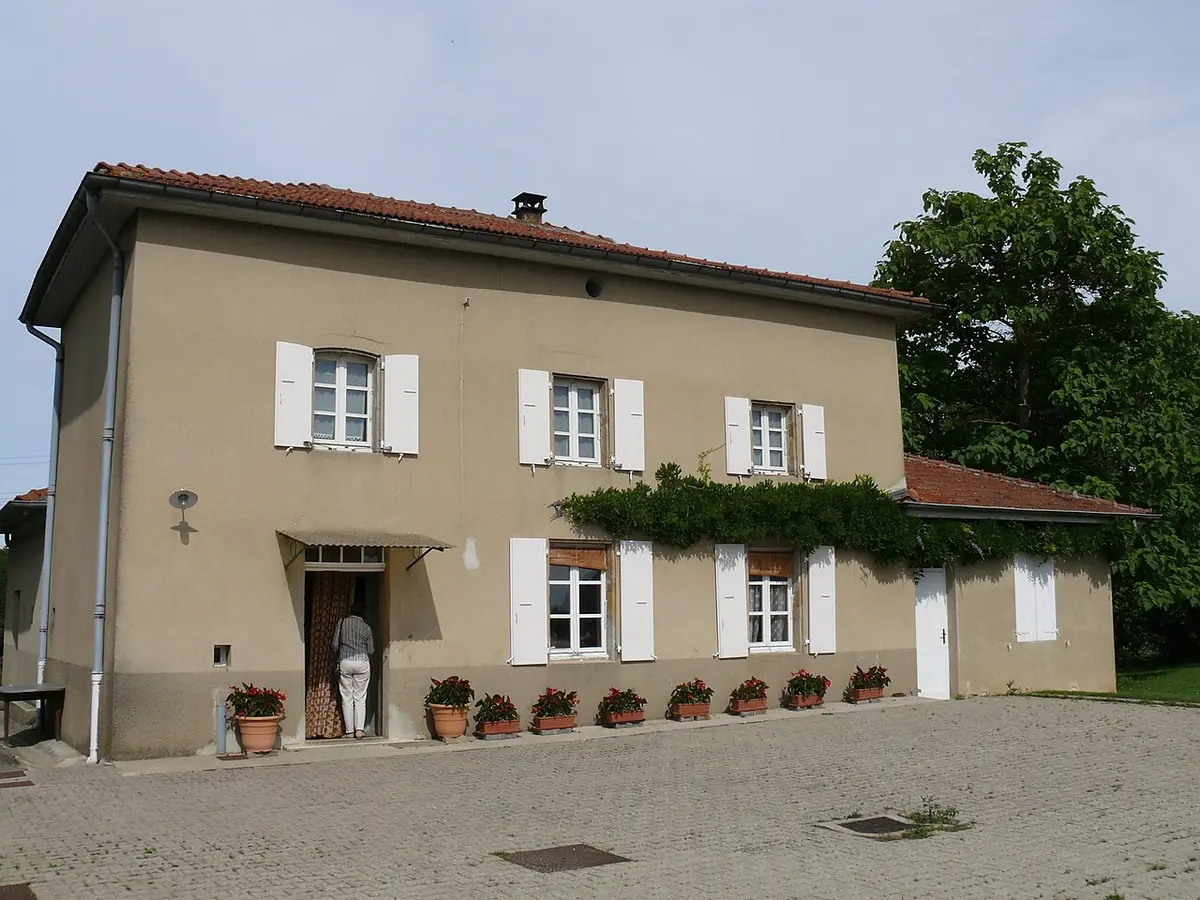
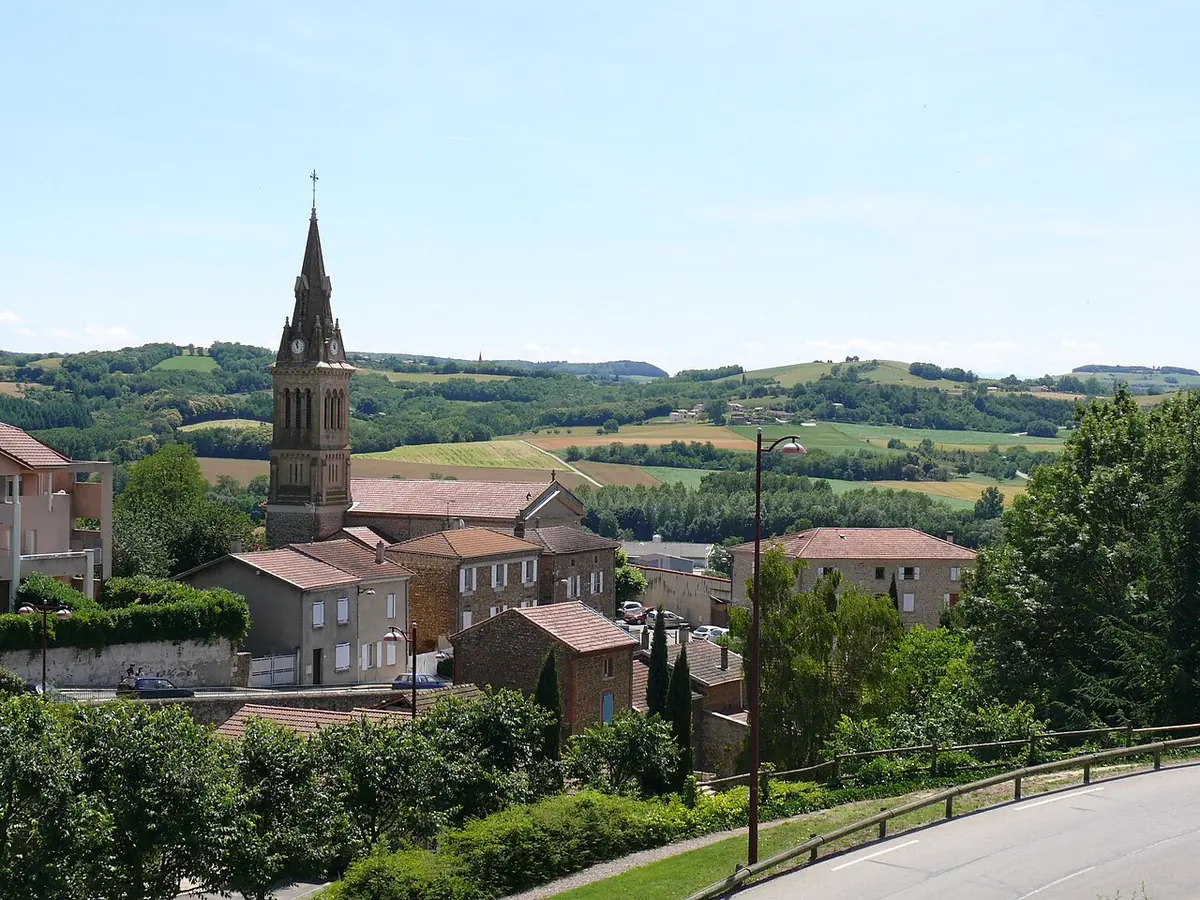
Marthe Louise Robin was born on March 13, 1902, at the family farm in the hamlet of Les Moïlles, in the parish of Châteauneuf-de-Galaure, in the hills of the Drôme south of Lyon. She was the youngest of six children of Joseph-Michel Robin and Amélie-Célestine Chosson, a family of small farmers. The official biography of her cause describes a lively, mischievous child raised in an ordinary country faith, where church attendance depended on the farm work and the parish church was several miles away.
The illness
At sixteen she began to suffer persistent headaches. On December 1, 1918, she collapsed in the farm kitchen. The doctors suspected a brain tumor, then meningitis. She fell into a lethargic state that lasted twenty-seven months. Her cause's biographers now think it may have been encephalitis lethargica, the "sleeping sickness" that swept Europe in those years.
From April 1921 she slowly recovered and learned to walk again, but her legs stayed weak and painful. During this illness, in 1921, she said she saw the Blessed Virgin come to her room. "We never call on Mary in vain," she told a friend. In 1927 a serious digestive hemorrhage, caused by the aspirin she took for the pain, left her bedridden for good, and from then on she had more and more difficulty eating. Gossip in the village said she had a "mysterious illness," and visitors stopped coming.
In 1928 she wrote to her friend Albertine Delatour that she felt "broken physically, morally," and would be "better under the earth than on it." She did not give up. She did embroidery in bed to earn her keep and not be a burden to her family.
Offering her life
In October 1925, adapting an older prayer, she wrote an act of abandonment giving her whole life to God. It begins, in French, "Seigneur ! mon Dieu ! Vous avez tout demandé à votre petite servante ; prenez donc et recevez tout": "Lord, my God, you have asked everything of your little servant; take then and receive everything." Around the same time she entered the Third Order of St. Francis, today's Secular Franciscan Order, following St. Francis of Assisi from her bed.
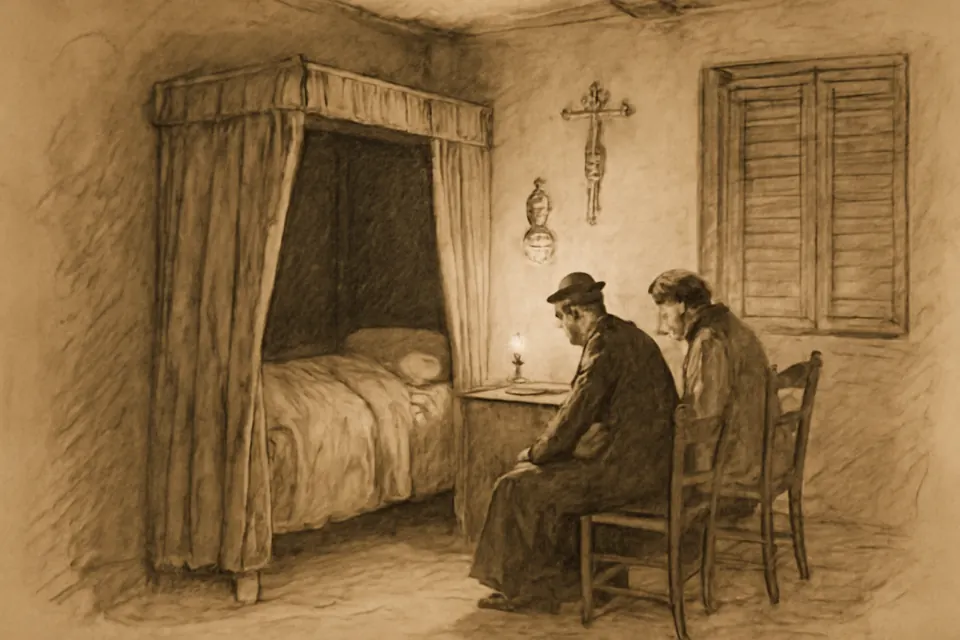
In December 1928, during a visit from two priests, she had the experience that she later said changed her life: she understood that Jesus loved her, that he was always at her side, and that she could offer her sufferings with his on the Cross for the salvation of others. Her official biography connects it to St. Paul's words in Colossians 1:24, which the Douay-Rheims renders, "Who now rejoice in my sufferings for you, and fill up those things that are wanting of the sufferings of Christ, in my flesh, for his body, which is the church."
The Passion every Friday
According to the Foyers' account, she received the stigmata in October 1931; at her own request the visible wounds closed, but from then on, every Friday, she relived the Passion of Christ in her body, and witnesses saw blood on her forehead and face. Some of her biographers date the first stigmata a year earlier. People who knew her also testified that for most of her life she took no food or drink except Holy Communion. She had also lost her sight, and she lay in a shuttered, darkened room.
She herself refused any fascination with suffering. When a visitor proudly said that she gritted her teeth in her trials by looking at the cross, Marthe answered, "You must not look at the Cross, but at Jesus on the Cross." Late in life she told the philosopher Jean Guitton, of the Académie française, "I no longer see the details of the Passion... I am in Jesus."
The school and the Foyers de Charité
In 1933, the Foyers' history says, Marthe understood that Christ wanted a work to begin at Châteauneuf-de-Galaure. The first step was a school, in a village where militant unbelief was strong. Seven girls started classes in the fall of 1934.
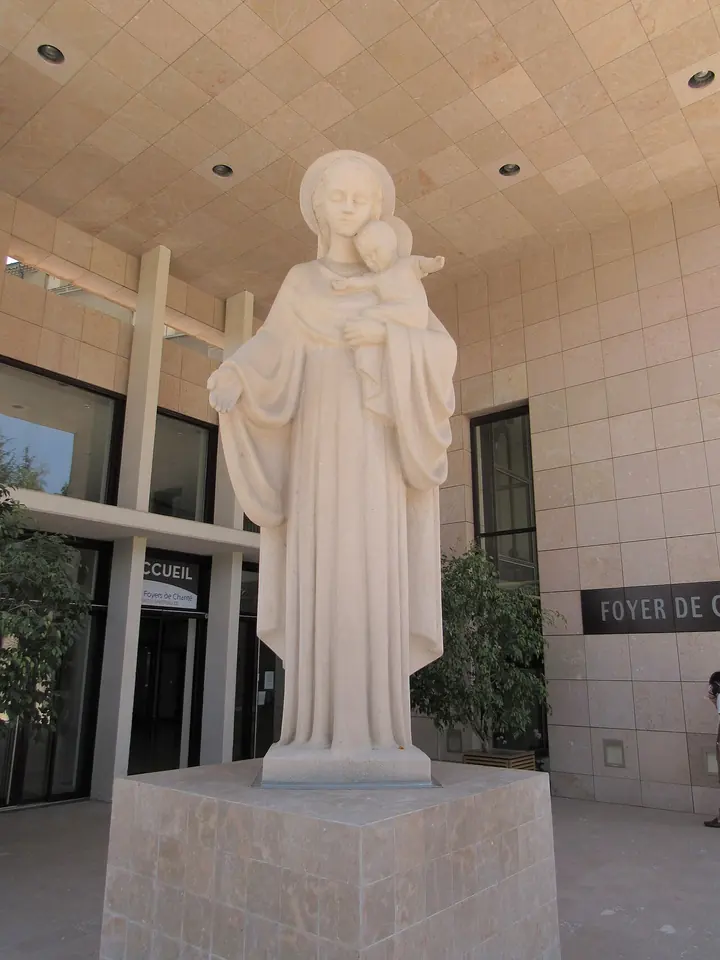
The second step came in February 1936, when a priest of Lyon, Father Georges Finet, came to see her. Together they founded the first Foyer de Charité, a community of lay men and women with a priest at its head, living like a family and giving silent retreats of several days to anyone who came. Marthe described the words she received in prayer: the work should be "a shining Foyer of Light, of Charity, of Love, the life-giving oasis for discouraged souls, the house of my Heart open to all." During her lifetime about fifty Foyers were founded around the world, and at her death the work had about 600 members.

More than 100,000 visitors
She never left her room, yet in time she became one of the best-known spiritual figures in France. The Foyers estimate she received more than 100,000 people at her bedside: farmers from the canton, truck drivers, actresses, government ministers, priests and bishops. Theologians such as the Dominican Réginald Garrigou-Lagrange began coming to see her during the Second World War. Founders of new communities sought her counsel, among them Little Sister Magdeleine of Jesus, foundress of the Little Sisters of Jesus, and Father Epagneul, founder of the Missionary Brothers of the Countryside. Several new communities, including the Emmanuel Community, keep close ties to her.
She loved St. Thérèse of Lisieux, whom the Foyers call her "big sister," and her own prayers are full of Thérèse's trust in God's merciful love. In one of her best-known lines, she said Christ had told her, "I have chosen you to rekindle in the world the love that is growing cold."
Her death
She died at the farm on February 6, 1981, at the age of seventy-eight. Her funeral was celebrated at Châteauneuf-de-Galaure on February 12, and she was buried in the cemetery of Saint-Bonnet-de-Galaure. Her room at the farm is kept as it was, and pilgrims visit it.
Her cause for beatification
At the request of the Foyers, the Bishop of Valence opened her cause in 1986. After a long inquiry Pope Francis approved the decree on her heroic virtues on November 7, 2014. The Foyers note that the decree concerns her virtues, not the extraordinary phenomena of her life; quoting the Dicastery for the Causes of Saints, they say her life was extraordinary "beyond the mystical phenomena, above all by her generous availability to God and neighbor, even in the painful experience of illness."
In December 2014 a dossier on a healing attributed to her intercession was sent to Rome. It has gone through a diocesan inquiry and is under study by the Dicastery's medical experts. This healing is reported; it has not been approved.
The questions raised
Honesty requires us to add that her cause has been troubled. Conrad De Meester, a Belgian Carmelite theologian who had examined her writings for the diocesan inquiry in the late 1980s, left a severe report, published after his death as La fraude mystique de Marthe Robin (2020). He charged that many of her texts were copied from other spiritual writers and that her fasting was not what it seemed. The Foyers answered that his was one unfavorable opinion among 28 expert studies weighed in Rome, and other authors defended her. Reviewing the debate in 2023, the historian Claude Langlois found De Meester's charges "unevenly supported" and suggested that her borrowing could reflect a remarkable memory and the way she taught, as with the Curé of Ars, St. John Vianney.
Langlois also notes that the cause was shaken by grave allegations of abuse against Father Finet, which the Foyers investigated after 2019, and by a change of postulator in 2017. None of this has closed her cause. The Church judges the holiness of a soul slowly, and we can wait in prayer.

Praying with Marthe Robin
Because she is Venerable, Marthe Robin has no feast day and no public cult, but anyone may ask for her prayers privately. The Foyers publish a prayer for her beatification, which asks the Sacred Heart that her offering "of compassion and mercy" may share in "a new Pentecost," and they ask that favors received be reported to the Cause Marthe Robin at the Foyer de Charité in Châteauneuf-de-Galaure.

Her own act of abandonment ends with words we can make ours:
Mon Dieu aimé, aidez-moi, prenez-moi avec vous, c'est en vous seul que je veux vivre pour ne mourir qu'en vous.
"My beloved God, help me, take me with you; it is in you alone that I want to live, so as to die only in you." Let us ask Venerable Marthe to pray for the sick, for those who feel useless and forgotten, and for all who come to the Foyers seeking God.
Frequently asked questions
Is Marthe Robin a saint?
Not yet. Pope Francis approved the decree recognizing her heroic virtues on November 7, 2014, so the Church calls her Venerable. Beatification requires a miracle through her intercession; a healing has been under study in Rome since December 2014. Canonization would need a second miracle.
Who was Marthe Robin?
A French laywoman born on March 13, 1902, on a farm at Châteauneuf-de-Galaure in the Drôme. An illness that began in 1918 left her paralyzed, bedridden and finally blind. From her room she received more than 100,000 visitors and, with Father Georges Finet, inspired the Foyers de Charité, communities that preach retreats. She died on February 6, 1981.
Did Marthe Robin have the stigmata and live without food?
Witnesses reported that she bore the stigmata from the early 1930s and relived Christ's Passion every Friday, and that for most of her life she took no food but Holy Communion. These phenomena are reported, not approved: the Church did not judge them when it declared her Venerable, and the Foyers stress that her virtues, not the phenomena, were the subject of the decree.
What are the Foyers de Charité?
Communities of lay men and women and a priest, called the father of the Foyer, who live together and give silent retreats, usually of five days, open to anyone. The first was founded at Châteauneuf-de-Galaure in 1936. During her life about fifty were founded, and today they are present in some forty countries.
What is the controversy about Marthe Robin?
In 2020 a posthumous book by the Belgian Carmelite Conrad De Meester, who had studied her writings for the diocesan inquiry, accused her of copying passages from other authors and of faking her fasting. The Foyers replied that his was one unfavorable opinion among 28 expert studies weighed by Rome. The historian Claude Langlois judged the charges unevenly supported. The cause remains open.
Where is Marthe Robin buried?
In the cemetery of Saint-Bonnet-de-Galaure, near the family farm. Her funeral was held at Châteauneuf-de-Galaure on February 12, 1981. Her bedroom in the farmhouse is kept as it was and is open to pilgrims.
Sources
- Marthe Robin (official site of her cause and the Foyers de Charité): L'épreuve de la maladie. Her collapse on December 1, 1918, the 27 months of lethargy, the 1927 hemorrhage and the letter of 1928
- Marthe Robin (official site): Une grande mystique française. The act of abandonment (1925), December 1928, the stigmata in October 1931 and her words to Jean Guitton
- Marthe Robin (official site): Un rayonnement immense. The school of 1934, the meeting with Father Finet in February 1936, the fifty Foyers and 100,000 visitors
- Marthe Robin (official site): La béatification. The healing submitted to Rome in December 2014
- Ann Schneible, "Pope Francis recognizes 'heroic virtue' of 12-year-old boy," EWTN News / CNA (November 8, 2014). The decree of November 7, 2014
- Claude Langlois, "La fabrique des saints à l'épreuve en catholicisme," Archives de sciences sociales des religions 204 (2023). De Meester's book and the replies to it, the Finet allegations and the change of postulator in 2017
- Franciscan Media: Seven Followers of St. Francis, Venerable Marthe Robin. Her membership in the Secular Franciscan Order